
Fast, Reliable Attic Insulation Across Canyon Lake
Attic insulation in Canyon Lake costs $1.40 to $3.10 per square foot for blown-in work, and $1.80 to $4.00 per square foot for batt installation. Most homes here run between $1,900 and $5,400 for a full attic retrofit depending on access, existing material condition, and whether we’re topping up or starting over. We know Canyon Lake’s gated-access requirements, ARB review process, and the specific heat load that lakefront and west-facing homes carry. That local knowledge means we don’t show up blind. If your upstairs rooms run ten degrees hotter than the living room all summer, call (855) 773-6429 for a free estimate.
Why Placentia Insulation Is Canyon Lake’s Preferred Attic Insulation Company
We’re an insulation-only contractor. That’s the whole trade for us, which matters in a community like Canyon Lake where the wrong product choice or a botched venting detail becomes an HOA compliance headache. Homeowners here tell us the same thing: they’d rather deal with a crew that spends every week inside Riverside County attics than a generalist squeezing insulation in between plumbing jobs. Our team coordinates gate access at the main gate, East Gate, and North Gate without needing the homeowner to babysit the process. We’ve worked homes from Canyon Lake Drive to Blue Bird Drive, and we understand the architectural review rules that govern changes inside this community.
We carry eight brands: Owens Corning, Johns Manville, Knauf, Rockwool, CertainTeed, Icynene, Demilec, and GreenFiber. Most insulation contractors carry one or two product lines. We carry eight, so your home gets what it actually needs. That matters for a lakefront property with intense west-facing sun exposure versus a shaded home off Longhorn Drive. Same community, different attic. Different solution. Alan Whitcomb leads our team, and he’ll tell you directly: we match the material to the job, not the job to whatever we have on the truck.
Insulation Contractors in Canyon Lake
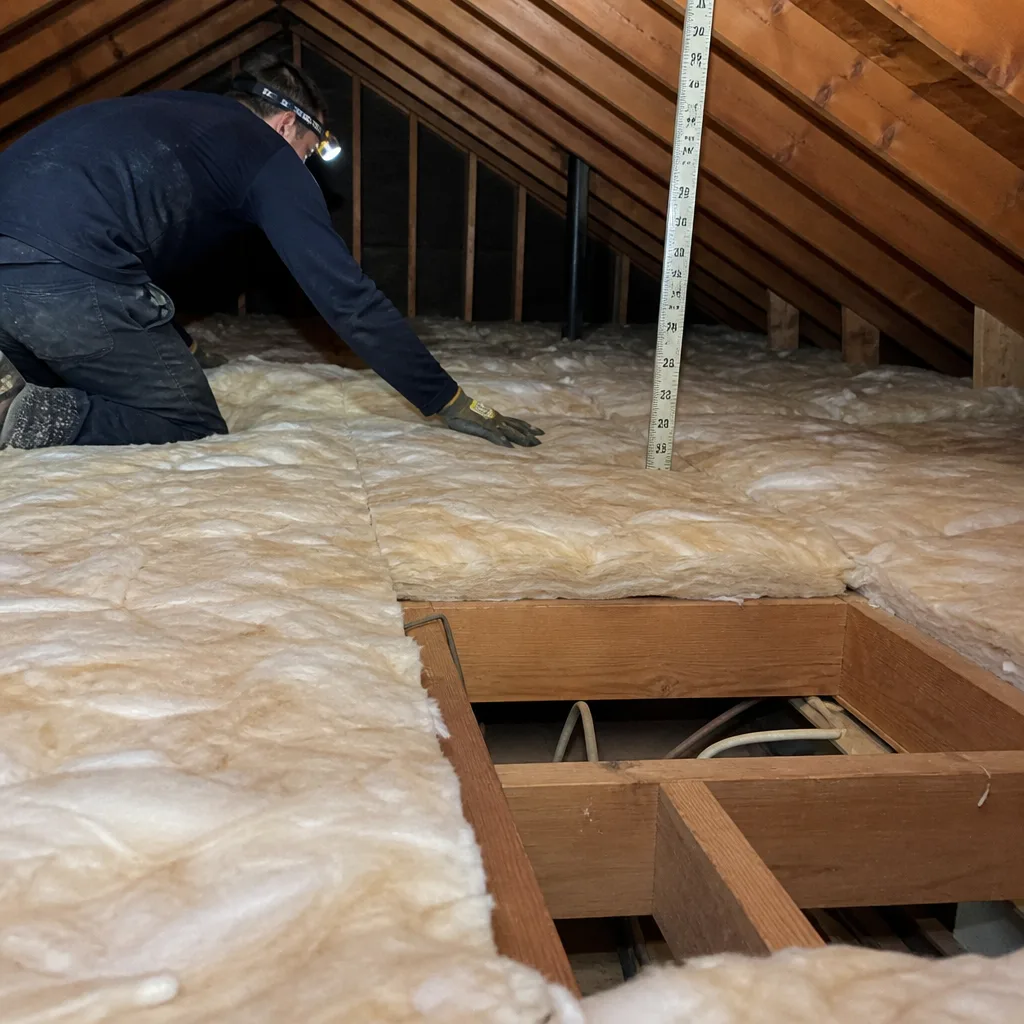
Insulation contractors working Canyon Lake have to handle a set of conditions you won’t find in neighboring Lake Elsinore. Every job starts with gate-access coordination, and depending on scope, an ARB review may come before any insulation goes in. That’s baked into how we schedule, not an afterthought. A typical full-attic replacement in Canyon Lake runs $2,200 to $5,400. A simple top-up over existing batts runs $900 to $1,800. What’s the difference? If your original 1970s or 1980s fiberglass has matted down to a thin, papery layer, we need to remove it before we can rebuild the R-value. If it’s intact but just undersized, we blow over it.
Blown-In and Batt Work
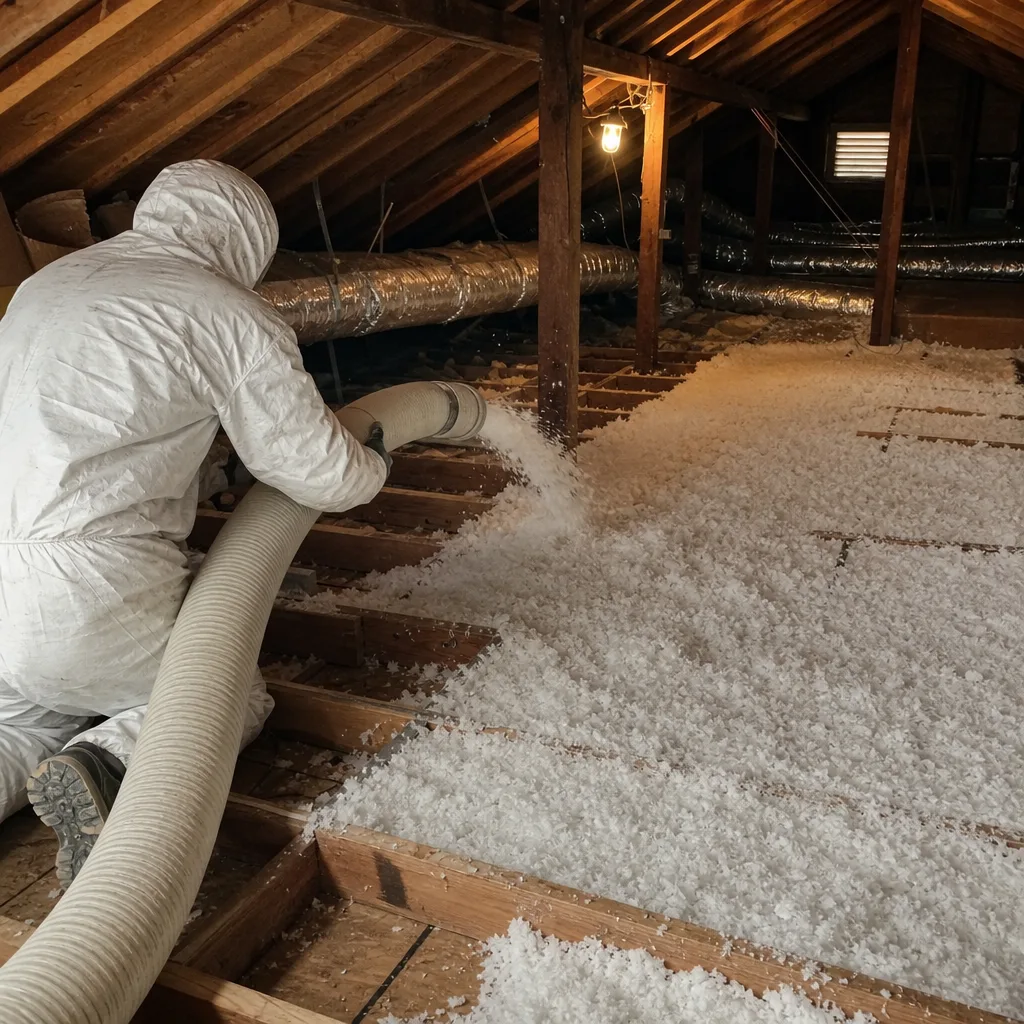
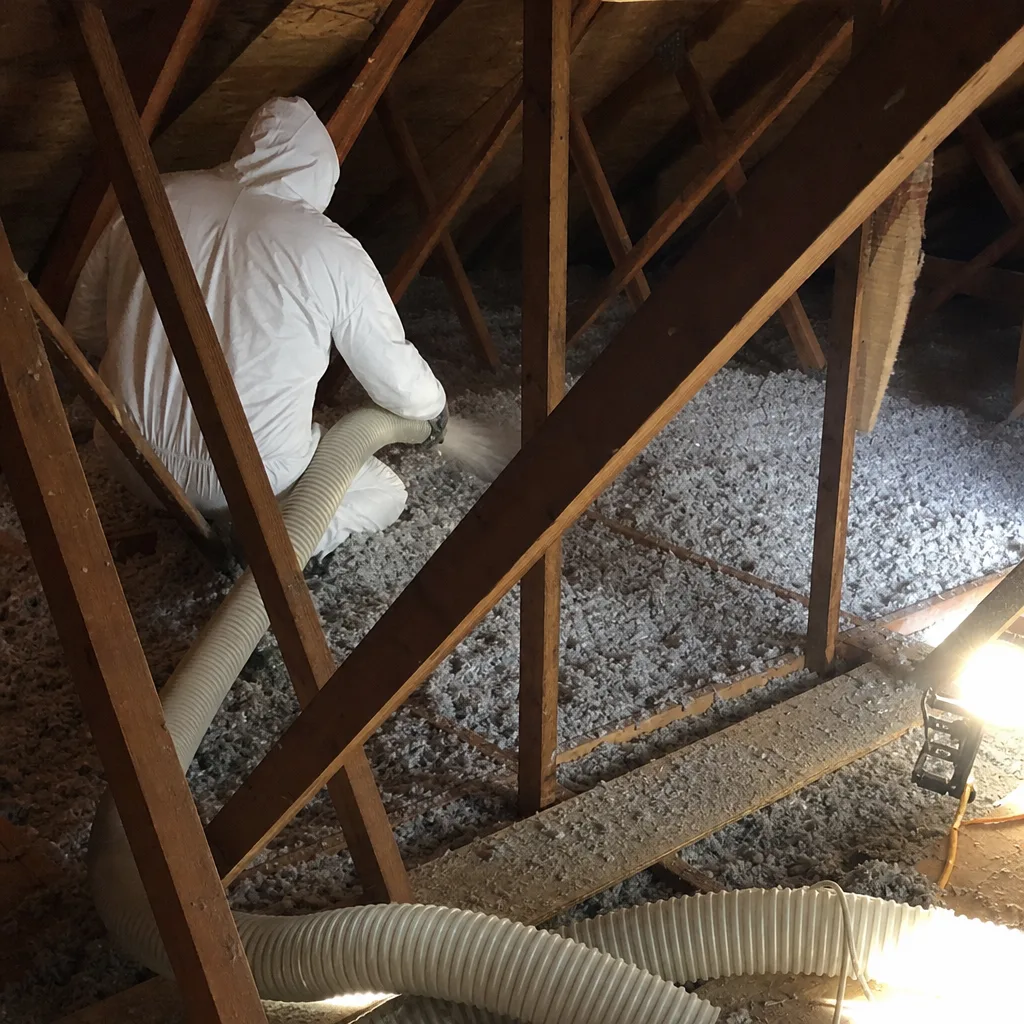
For most Canyon Lake attics with standard framed construction, blown-in fiberglass or cellulose does the job. We use CertainTeed InsulSafe and GreenFiber cellulose depending on your priority: recycled-content and air-sealing performance from GreenFiber, or consistent coverage and proven R-value from CertainTeed. Batt work fits homes where we’re working around recessed lighting, HVAC runs, or walk-in storage platforms.
Vaulted Ceiling Callouts
Vaulted and cathedral ceilings in Canyon Lake’s stucco-era homes are a different animal. There’s often no accessible attic cavity above them, so the ceiling itself carries the insulation load. When those spaces were built thin in the 1970s and 1980s, radiant heat pours straight through. We inspect those areas before recommending anything.
Attic Ventilation in Canyon Lake
Attic ventilation in Canyon Lake is not optional. Summer afternoons push attic temperatures past 150 degrees in unshaded lakefront homes, and without proper airflow that heat cooks insulation and radiates into bedrooms below. A ventilation assessment and baffle installation typically runs $350 to $800 depending on how many soffit bays we’re opening up and whether exhaust capacity needs upgrading. This is the part of the job that separates a real insulation contractor from a blow-and-go crew.
Soffit Baffles and Airflow
Baffles keep blown-in material from blocking the soffit vents, so intake air still moves through the attic. In Canyon Lake homes where homeowners added insulation years ago without baffles, we often find completely choked intake airflow. The classic sign: an attic that’s brutally hot even on a mild day.
Exhaust Balancing
Attics over 1,200 square feet in Canyon Lake usually need mechanical or passive exhaust help. We check what’s already venting, calculate the net free area, and recommend whether to add turbines, ridge vent, or a powered fan. The goal is simple: give the heat a path out instead of letting it bake the insulation and the ceiling drywall.
Trusted Brands We Service in Canyon Lake
We’re not tied to one manufacturer’s inventory, which means your Canyon Lake home gets the correct product rather than the one we happen to stock. For blown-in work we lean on CertainTeed and GreenFiber. For spray foam applications, including the tight rim-joist and vaulted-ceiling cavities common in lakefront construction, we install Icynene and Demilec, both open-cell and closed-cell. We keep local stock ready for Canyon Lake jobs, so top-up material and replacement batts don’t require a two-week lead time. And because we’re an insulation-only shop, these brand choices come from trade-level familiarity, not a sales arrangement.
Common Attic Insulation Problems We See in Canyon Lake Homes
- Cooked, matted batts on sun-exposed roofs. West- and south-facing lakefront attics get hammered by full afternoon sun, and 1970s-era fiberglass loses its loft quickly. We see batts compressed to half their original thickness, which means they’re holding a fraction of their rated R-value.
- Thin vaulted-ceiling insulation. Many Canyon Lake homes built before the 1990s have minimal insulation above cathedral ceilings. The upstairs rooms become ovens in summer even when the HVAC runs constantly.
- Soffit intake blocked by old blow-in jobs. Previous insulation work sometimes buried the soffit vents entirely. Trapped heat then decays the roofing materials faster and drives cooling costs up.
- HOA and ARB complications from past work. We’ve walked into attics where a previous contractor left loose material blocking gable vents or left visible fiberglass trails around the attic hatch. Inside a gated community, sloppy work doesn’t just cost you comfort. It can trigger a compliance notice.
Pricing for Attic Insulation in Canyon Lake, CA
You should know what you’re walking into before you call. Here are real numbers for Canyon Lake’s market. A standard blown-in top-up over existing insulation runs $1.40 to $2.20 per square foot, with the low end covering open attics with easy access and the high end covering tight or multi-level attics. Full batts-and-baffles replacement on a 1,500 to 2,500 square foot home typically lands between $2,800 and $5,800. Spray foam on vaulted-ceiling cavities or rim joists runs $2.75 to $5.50 per square foot depending on open-cell versus closed-cell chemistry. Job access, existing material removal, and ARB-required documentation add time but rarely surprise when you get a written quote upfront. Call (855) 773-6429 for an exact number. Estimates are free.
We Also Serve Cities Near Canyon Lake
Our crews work Canyon Lake daily, and we also cover the surrounding communities of Meadowbrook, Sedco Hills, Lakeland Village, and Quail Valley. If you’re just outside the gate, learn more about our Attic Insulation services or see how we handle Attic Insulation in Canyon Lake specifically. Same team, same eight-brand material library, same insulation-only focus.
Serving Canyon Lake, CA — Our Local Coverage Area
We’re based in the Canyon Lake area and know this community well. Use the map below to see our service coverage — if you’re nearby, we can almost certainly help.
FAQs About Attic Insulation in Canyon Lake
In most cases, no. Attic insulation that doesn’t change the exterior appearance, roofline, or visible vents usually falls outside ARB review. What does matter: gate access. We coordinate visitor passes and arrival windows at the main gate, East Gate, and North Gate so your contractor visit doesn’t require special approvals. If your project touches visible components like new roof vents or exterior exhaust fans, we flag it early and help you understand what the ARB needs to see. Call (855) 773-6429 and we’ll walk through your specific situation.
Full afternoon sun with zero shade. Lake-facing and west-facing attics catch direct exposure from about 1pm until sunset, which bakes the roof deck and everything under it. Original 1970s and 1980s fiberglass batts can’t hold their loft under that kind of sustained heat, so they mat down and lose R-value years before a shaded home’s insulation does. The lake’s reflective surface can also push additional glare heat toward these rooflines. If your home sits on the water side of Canyon Lake Drive, you’re probably in the worst heat-gain zone in the community.
Yes. We schedule gate passes for every Canyon Lake visit, including same-day work when needed. You provide the homeowner’s association contact info or your gate code, and we handle the rest. Our crews are used to the visitor-pass process at all three gates, so you won’t get a call from the guard shack saying your contractor is stuck outside.
It helps, but only if the right approach is used. Vaulted and cathedral ceilings often have little to no accessible attic above them, so standard blown-in insulation won’t reach those areas. The solution is typically spray foam applied directly to the ceiling cavity or roof deck, using either Icynene open-cell for tight spaces or Demilec closed-cell when we need maximum R-value per inch. We’ll inspect your ceiling structure and tell you exactly what’s possible before quoting anything.
We install CertainTeed, Owens Corning, Johns Manville, Knauf, Rockwool, Icynene, Demilec, and GreenFiber. For attic insulation specifically, we typically use CertainTeed blown-in fiberglass or GreenFiber cellulose. Ventilation work uses baffles and exhaust products matched to your existing attic geometry. We don’t push a single brand. We pick the product that matches your home’s construction and the heat load it actually carries. Call (855) 773-6429 for a recommendation specific to your Canyon Lake property.
We recently took an attic job off a west-facing lakefront property near the Canyon Lake main gate, where full afternoon sun had cooked the original 1970s batts down to a matted layer and vaulted ceilings were radiating heat into the living room. Our crew coordinated gate access and confirmed the scope didn’t trip any ARB review, then installed Owens Corning blown-in over the existing field and opened up soffit airflow with baffles to vent the radiant heat. The homeowner reported the upstairs bedrooms finally held temperature through the afternoon instead of climbing all day.
Written by Alan Whitcomb, Owner at Placentia Insulation, serving Canyon Lake and the surrounding Riverside County communities.