
Fast, Reliable Attic Insulation Across Cathedral City
Attic insulation in Cathedral City is an attic-first retrofit game. The city’s 1950s through 70s tract homes were framed for evaporative coolers, not the modern AC units most now run, so the real payoff comes from stopping heat at the roof deck before it reaches your ceiling. Most homes in the 92234 and 92235 zips have original or thin insulation, and with summer highs above 110°F, that translates directly into cooling dollars leaving through the attic. We serve all of Cathedral City, from Cathedral City Cove up to the master-planned communities near Date Palm Drive, and our crews know what these specific rooflines do under a Coachella Valley sun. Call (855) 773-6429 if your upstairs rooms run hot or your AC never seems to shut off.
Why Placentia Insulation Is Cathedral City’s Preferred Attic Insulation Company
We are a dedicated Attic Insulation contractor, not a generalist that also paints or plumbs. Alan Whitcomb built this company around one trade, and the difference shows when our crew maps a Cathedral City attic. Every job starts with a materials-level assessment: what is in there now, what has degraded, and what the roofline actually needs. Most insulation companies carry one or two brands. We stock eight, which means a 1960s ranch in the Cove gets a different build than a newer two-story off Ramon Road, and neither gets a default product just because it was on the truck.
Our Cathedral City customers regularly tell us the same thing: they called other companies and got vague answers. We give specifics. We match the material to the job, not the job to whatever is on the shelf. That has built our reputation here one attic at a time, and we respond to Cathedral City calls fast because we understand a 150°F attic does not wait.
Attic Mold Removal in Cathedral City
Attic Mold Removal in Cathedral City usually starts with a call about a musty smell coming from the ceiling or dark staining around bathroom vents seen during a roof inspection. Cathedral City’s humidity swings between bone-dry days and the occasional monsoonal push from the Gulf of California, and when warm attic air meets cooler surfaces inside a poorly vented attic, condensation forms and mold follows. In older Cathedral City ranches, single-pane windows and uninsulated ducting make the condensation cycle worse, meaning the mold problem is often a symptom of a bigger ventilation or insulation failure. We remove and treat affected materials, then correct the airflow or insulation issue so the mold does not return. Attic mold removal in Cathedral City typically runs $1,200 to $4,200 depending on square footage and how far the growth has spread into porous materials like old batt insulation or the underside of roof sheathing. The mold has to be addressed before any new insulation goes in.
Source Correction Before Remediation
Popping moldy batts out and spraying biocide without fixing ventilation is a waste of money. Cathedral City attics built in the 1960s and 70s often have gable vents that were adequate for evaporative cooling but starve modern AC-era homes of airflow. We find roof jacks venting bathroom fans directly into the attic in older Cathedral City homes, pumping moist air into fiberglass that now holds it against drywall. That moisture, combined with 110°F heat, breeds mold quickly. Our order of operations here is always the same: fix the source, remove the contaminated material, treat the framing, install new insulation.
What Removal Actually Involves
Removing mold-contaminated attic insulation in Cathedral City homes means bagging the material in the attic and lowering it out through the access, never through the living space. In low-slope attics common off Vista Chino and Landau Boulevard, crews often work on their knees or bellies near the eaves, so the process is slower than in a walkable attic. We also inspect for roof leaks that fed the mold in the first place, because Cathedral City homes with aging rolled-roof or built-up flat roofs often have hairline cracks at flashing points that let monsoon rains in. Mold removal without leak repair is just mold removal practice.
Attic Insulation Removal in Cathedral City
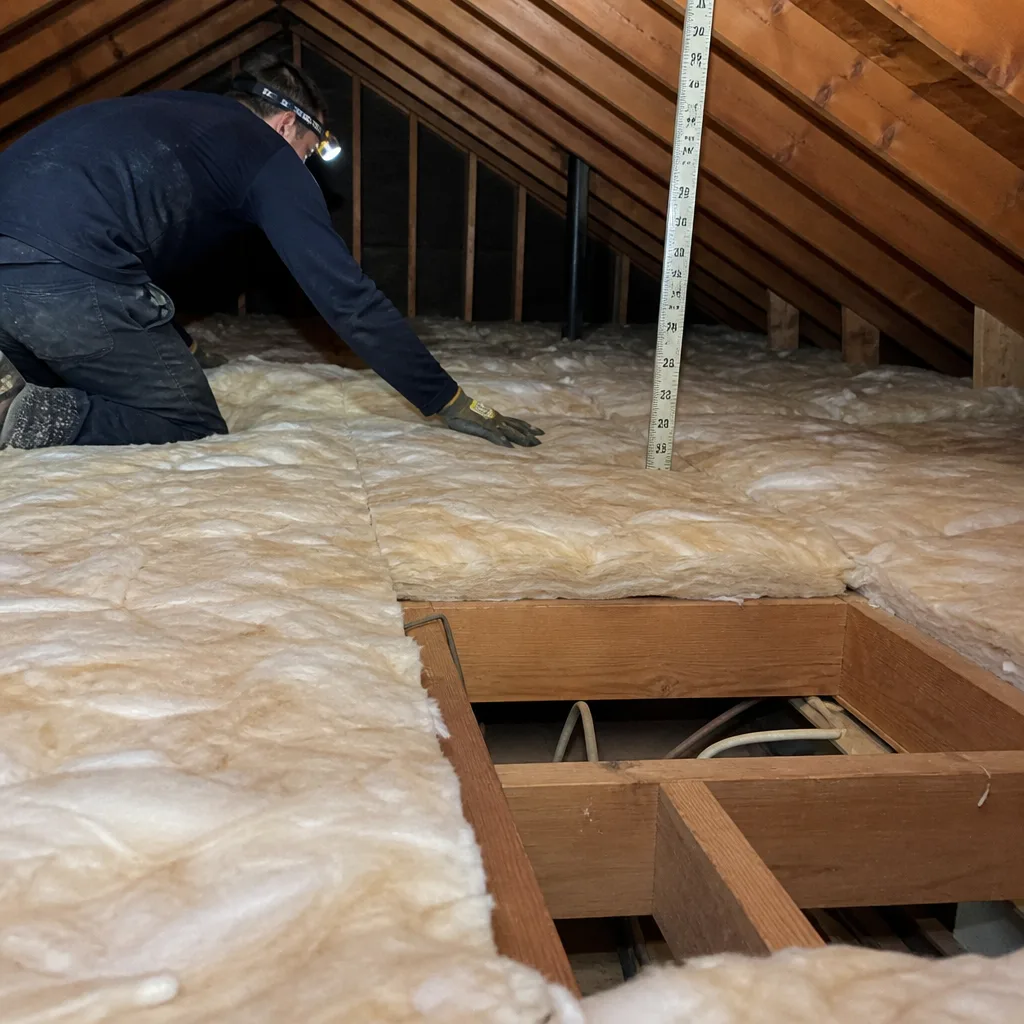
Attic Insulation Removal in Cathedral City is most often needed when a house has been updated piecemeal over 50 or 60 years and the attic now holds layers of different materials that have stopped working together. We regularly pull out original fiberglass batts that have compressed to R-7 or around, vermiculite from the 1960s, and blown cellulose that has settled into a thin, dusty mat over time. Cathedral City’s dry heat bakes insulation, and once the paper or foil facing on old batts degrades, the material loses its loft and its R-value. Attic insulation removal in Cathedral City typically runs $1.50 to $3.50 per square foot, so a standard 1,200-square-foot attic lands between $1,800 and $4,200. The range depends on depth, whether there are contaminants present, and how accessible the low-slope sections are.
When Your Old Insulation Has Failed
Attic insulation that has been in a Cathedral City home since the Johnson administration is not doing much. If your AC runs constantly, your ceiling feels warm to the touch on August afternoons, or you can see the tops of your ceiling joists in the attic, the insulation has lost its air-trapping structure. That is the physical failure mode. There is also the contamination mode: decades of rodent activity, roof leaks from Cathedral City’s monsoonal storms, or construction debris from past remodels all make old insulation something you do not want in your home. Removal is also the necessary first step before any air-sealing work. You cannot properly seal ceiling penetrations with old insulation in the way.
Removal Before Air Sealing
In Cathedral City’s older tract homes, removing insulation opens up the attic floor for what actually makes the difference: air sealing around ceiling light fixtures, duct boots, plumbing stacks, and interior wall top plates. Those gaps leak cooled air straight from your living space into a 140°F attic, and new insulation alone will not stop that stack effect. We focus on Cathedral City homes that have never been air-sealed, because the 1950s-to-70s building envelope here was loose by design, built for an era when electricity was cheap and evaporative coolers pushed air through open windows. Today you need a sealed attic floor before R-38 does its job.
Trusted Brands We Service in Cathedral City
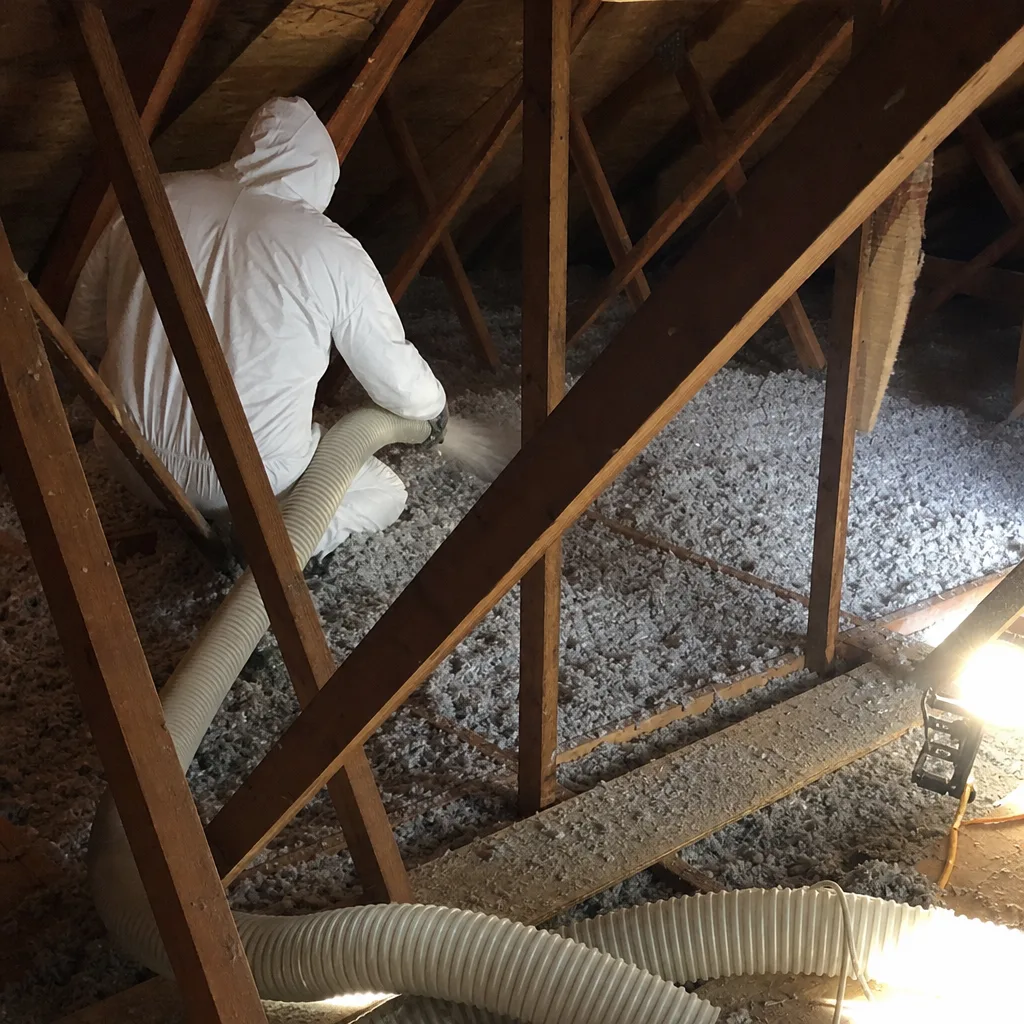
Placentia Insulation carries an eight-brand material library, and Cathedral City customers get the benefit of that breadth on every job. For Cathedral City’s low-slope and flat roofs, we often recommend CertainTeed fiberglass for its consistent loft and thermal performance, while Rockwool mineral wool comes out when clients want the fire resistance and sound dampening that matters in denser Cathedral City neighborhoods. For tight attic cavities and duct-heavy retrofits, Icynene open-cell or Demilec closed-cell spray foam gives us the right chemistry for the application instead of a default product. Stocking this many brands means a Cathedral City homeowner is not forced into the one batt type we happen to have on hand. We can match the material to the roofline, the access, and the goal, whether that is thermal performance, noise control, or moisture resistance.
Common Attic Insulation Problems We See in Cathedral City Homes
- Builder-grade attic access doors and pull-down stairs. Cathedral City’s master-planned communities built in the 1990s and 2000s often shipped with uninsulated attic access panels, and those thin plywood or drywall doors create a direct chute for 110°F+ attic air to pour into the hallway below. It is one of the easiest fixed problems we find.
- Failed or missing radiant barriers under low-slope roofs. A huge portion of Cathedral City’s housing stock has low-pitch or flat roofs that bake all day. Standard fiberglass batts without a functioning radiant barrier above them will underperform, because the heat they are fighting is radiant, not conductive.
- Unsealed duct boots leaking cooled air into the attic. In older Cathedral City ranches that have been updated piecemeal, we regularly find gaps around ceiling registers where cooled air escapes into the attic before it ever reaches the room you paid to cool.
- Compressed, sagging batts at the eaves. Cathedral City’s shallow attics on single-story ranchers often have almost no working space near the roof edges. Original batts get compressed during past roof work or wiring projects, and once compressed, they stop insulating altogether.
Pricing for Attic Insulation in Cathedral City, CA
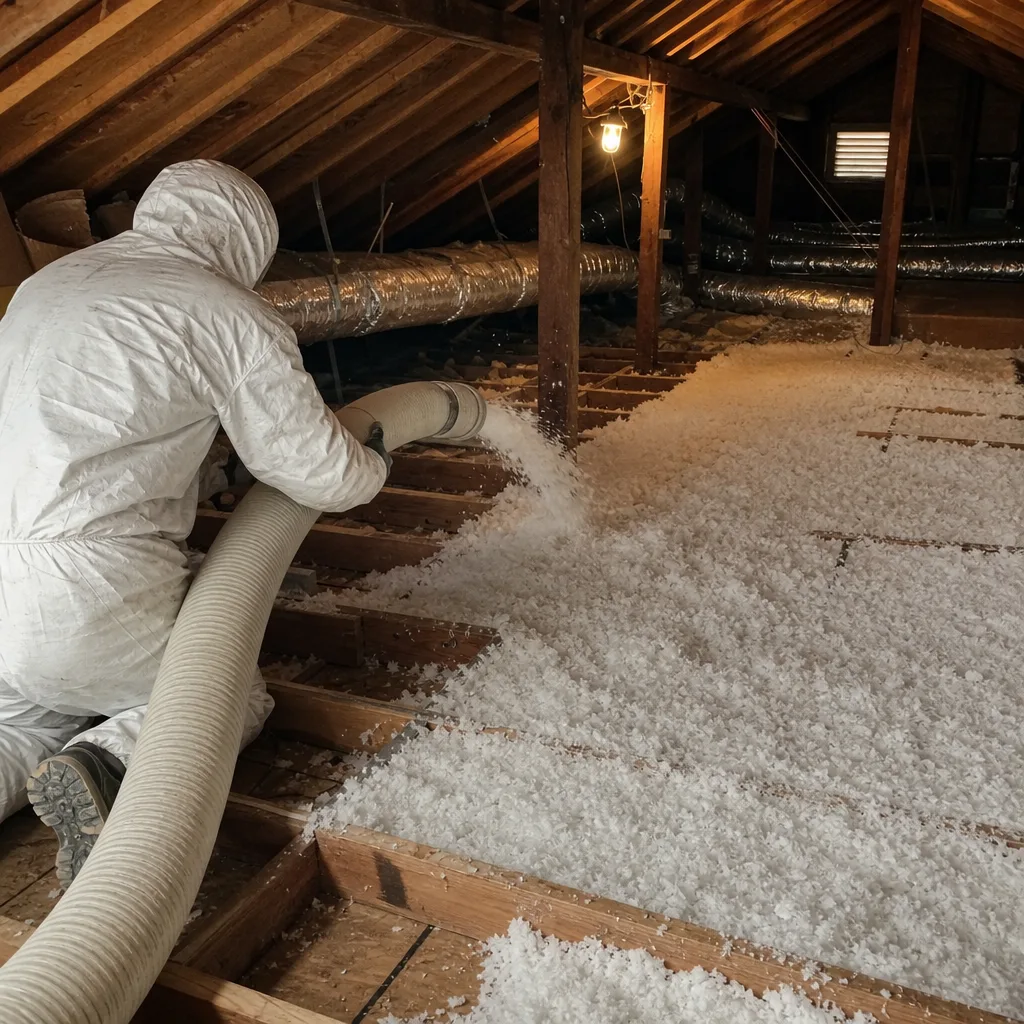
Attic insulation in Cathedral City spans a range based on what is already in the attic. A top-up over existing, still-functional batts in a 1,200-square-foot home runs $900 to $1,600. Full removal and replacement of failed insulation, with air sealing, typically lands between $2,800 and $5,500 for the same footprint. Blown-in cellulose from GreenFiber runs $1.75 to $3.25 per square foot installed. Spray foam runs higher because the material does more per inch; open-cell in a Cathedral City attic typically runs $2.50 to $4.50 per square foot, closed-cell $3.75 to $6.75. The biggest cost driver is not square footage, it is what is already up there and how much of it has failed. Call (855) 773-6429 and we will give you a straight number for your specific attic and roofline.
We Also Serve Cities Near Cathedral City
Our crews work throughout the Coachella Valley, and we serve Cathedral City alongside the surrounding communities. If you are in Cathedral City or nearby, we cover Rancho Mirage, Palm Springs, Thousand Palms, and Palm Desert with the same insulation-only focus. Same crew, same eight-brand material library, same attic-first approach no matter which side of the wash you are on.
Serving Cathedral City, CA — Our Local Coverage Area
We’re based in the Cathedral City area and know this community well. Use the map below to see our service coverage — if you’re nearby, we can almost certainly help.
FAQs About Attic Insulation in Cathedral City
You can in some cases, but not always, and in Cathedral City specifically we usually recommend removal first. The reason is that 1960s-era batts under a low-slope roof have typically been heat-cycled for 50 or 60 summers and have compressed or degraded past the point where new insulation on top would help. More importantly, you cannot air seal an attic floor with old insulation covering the ceiling penetrations, and air sealing is where the real cooling savings come from in Cathedral City’s heat. Removal also lets us inspect the roof deck from inside for heat damage, failed radiant barriers, or old leaks that need addressing before you bury them under new material. Call (855) 773-6429 for an assessment of your specific attic.
Cathedral City’s attic temperatures in summer routinely hit 140 to 160°F, and that heat has two direct effects: it degrades insulation and it makes your ducts work against you. Fiberglass batts lose their loft and R-value after years of extreme heat cycling, especially under low-slope roofs that radiate heat downward all day. Ductwork running through that environment can leak 20 to 30 percent of your cooled air before it reaches the registers, because the ducts themselves are often uninsulated or wrapped in failing insulation. The right sequence in Cathedral City is to address the ducts and air sealing first, then install new ceiling insulation, because R-38 over a leaky, hot attic floor still leaves you paying to cool the attic.
For Cathedral City, we recommend R-38 to R-49 in the attic, and the higher end matters more here than in coastal cities because the cooling season dominates. The Department of Energy puts Cathedral City in a hot-dry climate zone where R-38 is the minimum for new attic insulation, but with flat and low-slope roofs pushing attic temperatures higher than standard pitched roofs, R-49 often makes more sense for anyone running AC from May through October. The material type matters just as much as the number: a radiant barrier above R-38 fiberglass will outperform R-49 fiberglass alone under Cathedral City’s solar load, because it stops radiant heat before it ever reaches the insulation. Call (855) 773-6429 for a recommendation based on your roofline and current setup.
Yes, and the signs can be subtle: rooms that never quite cool down on summer afternoons, AC that runs constantly without hitting the setpoint, or a fine dust coming from your ceiling registers. In Cathedral City’s older homes, heat damage typically shows up as batts that are fused, crispy, or collapsed flat under the roof deck, while pest damage from roof rats shows up as matted, urine-stained insulation with tunnels running through it. If you hear scratching in the attic at night, especially in Cathedral City neighborhoods with mature citrus trees or date palms nearby, roof rats are a common culprit. We inspect for both during any Cathedral City estimate, and removal of contaminated or heat-degraded insulation is a standard first step before new material goes in.
Yes, and this is actually one of the most common projects we do in Cathedral City’s newer communities. Builders install insulation to meet minimum code, not to optimize comfort, and the standard in many Cathedral City master-planned homes is R-30 fiberglass batts over an unsealed attic floor with an uninsulated access door. That setup leaves a lot of performance on the table. We upgrade by air sealing the attic floor, adding insulation to reach R-38 to R-49, installing a proper attic access door with weatherstripping, and insulating or replacing the pull-down stairs if present. In Cathedral City’s summer heat, those upgrades typically show up as lower cooling bills and rooms that actually hold their temperature by late afternoon. Call (855) 773-6429 for a free estimate on your home.
Written by Alan Whitcomb, Owner at Placentia Insulation, serving Cathedral City and the Coachella Valley.