
Fast, Reliable Attic Insulation Across Desert Hot Springs
Attic insulation in Desert Hot Springs is a heat-defense problem first and foremost. Summer highs push past 110°F, and when your attic isn’t properly insulated, that heat radiates straight down into your living space, forcing your AC to fight a losing battle from June through October. We serve every corner of Desert Hot Springs, from the 92240 tracts off Palm Drive to the newer builds in 92241, and we’ve spent years learning exactly how this city’s heat, wind, and sand break down insulation. Call us at (855) 773-6429 and we’ll have a specialist at your door with a free assessment.
Why Placentia Insulation Is Desert Hot Springs’s Preferred Attic Insulation Company
Placentia Insulation is a pure-play insulation contractor. Every crew member thinks about one trade: insulation, insulation, insulation. Not plumbing today and insulation tomorrow. That single-trade focus matters in Desert Hot Springs because this city’s climate punishes insulation failures more brutally than almost anywhere else in Southern California. We match the material to the job – not the job to whatever we have on the truck. Across our truck inventory, you’ll find Owens Corning, Johns Manville, Knauf, Rockwool, CertainTeed, Icynene, Demilec, and GreenFiber. Eight brands. Three installation methods. One specialty.
Most insulation contractors carry one or two product lines. We carry eight – so your home gets what it actually needs. For a 1970s stucco tract house in 92240, that might mean GreenFiber blown-in cellulose over a sealed attic floor. For a manufactured home in the western foothills, that might mean Demilec closed-cell spray foam where wind-driven sand keeps finding its way in. We also stock parts and materials specifically for the retrofits Desert Hot Springs homes tend to need: top-plate sealant, vent chutes, baffles, and loose-fill that won’t degrade under relentless UV and heat cycling. The result is an insulation system built for this city, not a template imported from a coastal job.
Alan Whitcomb, our owner, has made it a point that Placentia Insulation serves Desert Hot Springs as a local trade partner, not a distant vendor from Placentia. That means our crews know where the manufactured-home parks sit in relation to the wind corridors, and they know that a west-facing attic vent in 92240 is going to need more attention than an east-facing one. When you call, you’re talking to people who know your streets, your housing stock, and your utility-bill pain.
Attic Insulation Removal in Desert Hot Springs
Attic insulation removal in Desert Hot Springs is not a luxury service – it’s often the only honest starting point. Wind-driven sand entering through west-facing attic vents over years of desert wind packs loose-fill flat against one side of the joist bays. Then the 110°F-plus heat bakes what’s left into a compacted, ineffective mat. At that point, adding new insulation on top of the old is like painting over rot. Removal clears the deck so we can see what’s actually happening up there: cracked top plates, broken vent chutes, gaps around can lights, and rodent or pest damage that desert conditions make worse. A typical attic insulation removal in Desert Hot Springs runs $1.20 to $2.50 per square foot depending on access, depth, and whether the old material is batt, blown-in, or both.
Full Removal and Prep
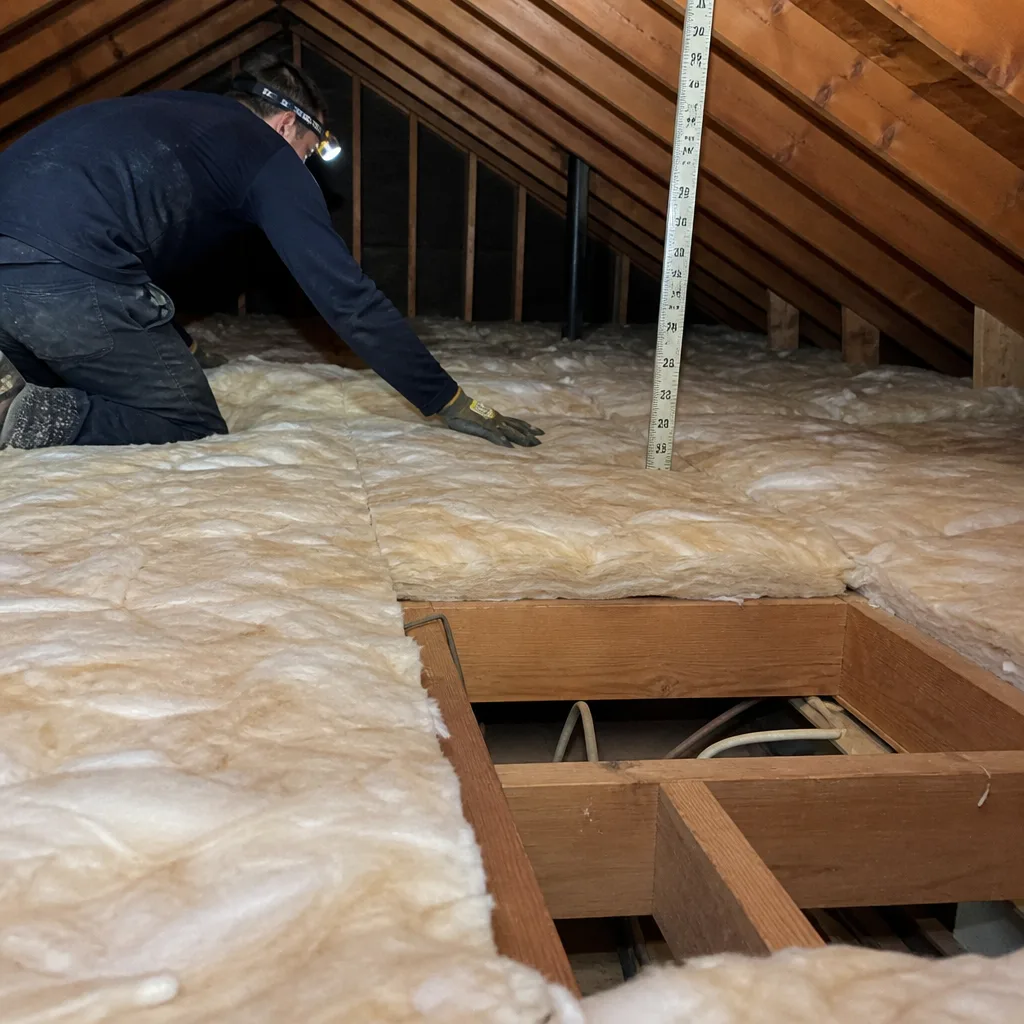
When we remove old insulation, we’re not just vacuuming and walking away. We inspect the attic floor for air-infiltration paths, seal top plates and penetrations, and prep the space for whatever system you choose next. In a city where stucco cracks open air paths as it heat-cycles, that prep work is the difference between a fix that lasts and one that fails again in three summers.
Sand-Fouled and Packed-Down Removal
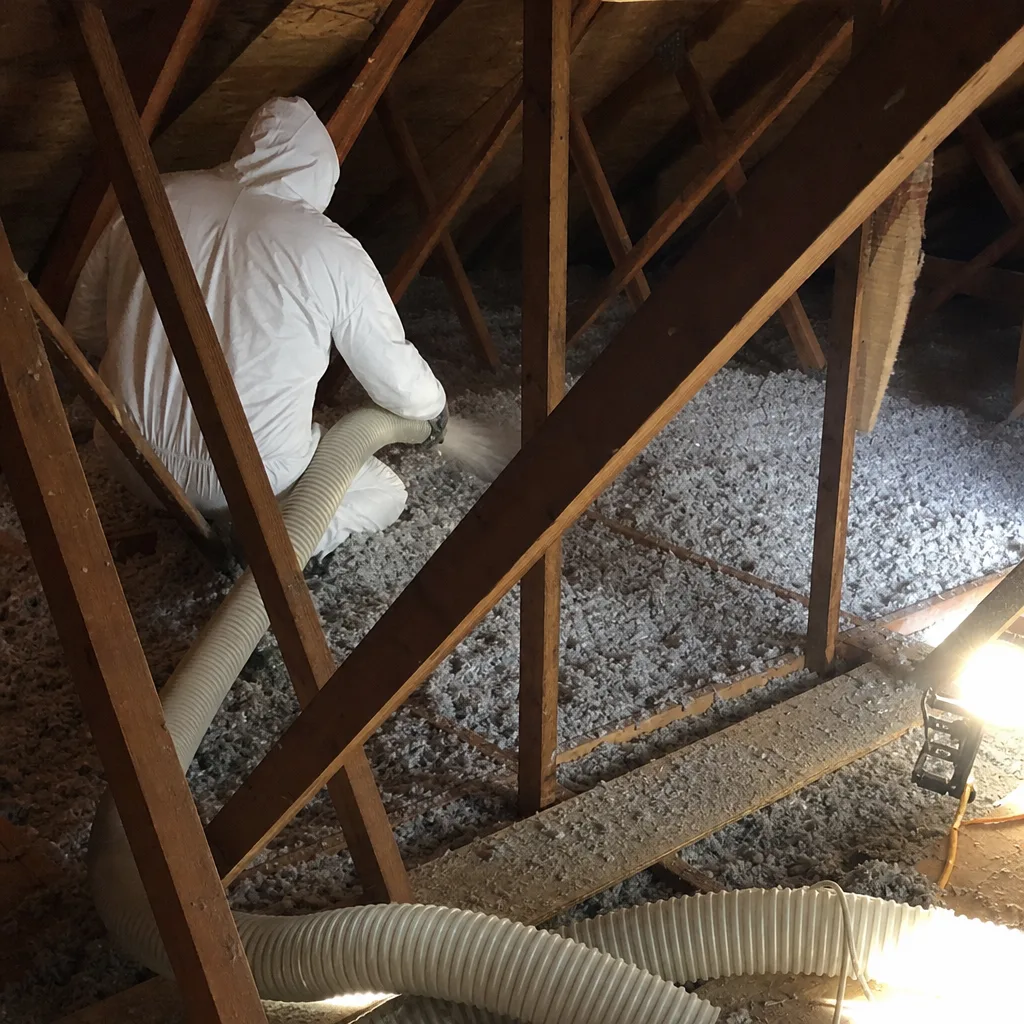
On a 1970s single-story stucco tract house off Palm Drive in 92240, our crew pulled sand-fouled batt and clumped fiberglass from the west joist bays, sealed the top plates and vent chutes, and re-blew GreenFiber and Owens Corning loose-fill to a level blanket. The homeowner’s attic went from a wind-scoured, heat-soaked void to an even thermal blanket that finally let the year-round HVAC catch up. That’s the kind of before-and-after we see regularly in Desert Hot Springs – not because the original insulation was bad, but because the desert demands more than it was built for.
Insulation Contractors in Desert Hot Springs
Insulation contractors in Desert Hot Springs range from generalist handymen who’ll throw a few batts in your attic and call it done, to dedicated specialists who understand this city’s wind, sand, and heat loads. Placentia Insulation is the latter. Our crews specialize in three installation methods: attic insulation, spray foam, and blown-in. That means when we assess your Desert Hot Springs home, we’re actually choosing among three approaches – not defaulting to the one product we happen to stock. It also means we can handle a whole-home insulation project without bringing in outside subs, from the attic floor to the knee walls to the garage ceiling.
Retrofit Work in Older Desert Homes
Much of Desert Hot Springs’ housing stock is mid-century-to-1990s single-story stucco construction, plus a large share of manufactured and mobile homes. Many of these were built with minimal attic insulation – sometimes R-11 or less, sometimes nothing but a thin reflective layer. Retrofitting these homes means air-sealing first, then building up to an appropriate R-value for the high desert. We do that work every week across 92240 and 92241.
Spray Foam and Blown-In Options
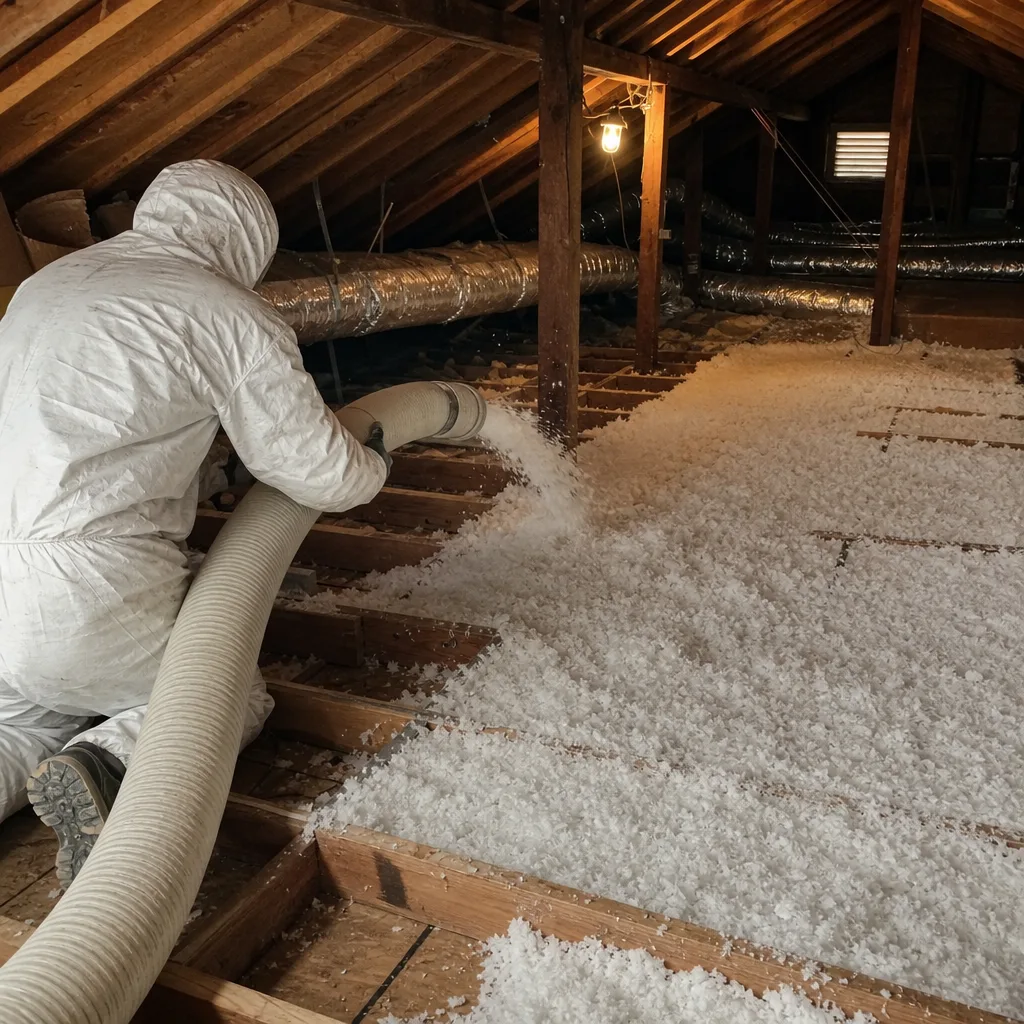
For tight attics, cathedral ceilings, or manufactured homes with shallow joist bays, we often recommend Icynene open-cell or Demilec closed-cell spray foam. Closed-cell is particularly well-suited to the desert edge because it’s an air barrier and a vapor retarder in one – which means wind-driven sand and dust stay out of your attic envelope. For standard attic floors, we’re big advocates of blown-in cellulose and fiberglass, re-leveled properly across the joist bays so no heat paths open up.
Trusted Brands We Service in Desert Hot Springs
We service and install materials from eight industry-leading manufacturers because a single-brand shop can only sell you what it stocks. In Desert Hot Springs, that breadth translates directly to better outcomes. Owens Corning fiberglass works well for standard retrofit batts. GreenFiber blown-in cellulose is excellent for re-leveling over older attics and for its recycled content. Icynene and Demilec spray foams cover both open-cell and closed-cell applications depending on whether you need air-sealing, moisture control, or thermal resistance. We keep local inventory staged for Desert Hot Springs projects so lead times stay short – typically same-week scheduling for most attic jobs in 92240 and 92241.
Common Attic Insulation Problems We See in Desert Hot Springs Homes
- Wind-driven sand packing loose-fill to one side of the joist bays. West-facing attic vents in Desert Hot Springs act like scoop inlets during the afternoon winds that sweep the Coachella Valley’s western edge. Over five or ten years, loose-fill insulation migrates eastward inside the attic, leaving a bare strip of uninsulated ceiling along the west wall where the afternoon sun hits hardest.
- Degraded original insulation in mid-century-to-1990s homes. Most original attic insulation in Desert Hot Springs was installed to modest R-values – sometimes R-11 or less. After decades of 110°F-plus heat cycling, that material settles, compresses, and loses much of its already-inadequate thermal resistance.
- Stucco cracking and air-infiltration paths. Desert stucco expands and contracts dramatically with the day-night temperature swings. Cracks open up around windows, top plates, and rooflines, and every one of those cracks is a path for hot, dusty air to enter the attic and defeat the insulation system.
- Inadequate ventilation overwhelmed by radiant-heat gain. Many Desert Hot Springs attics were set up with minimal soffit and ridge ventilation. When the attic air can’t escape, summer attic temperatures climb well past 140°F, and that heat radiates down through the ceiling regardless of how much insulation sits on the floor.
Pricing for Attic Insulation in Desert Hot Springs, CA
Attic insulation in Desert Hot Springs typically runs $1.50 to $2.25 per square foot for blown-in fiberglass or cellulose, including removal of old material when needed. Batt insulation retrofits land in the $2.00 to $3.50 per square foot range depending on R-value and access. Spray foam is the premium option: open-cell runs $2.50 to $4.00 per square foot, closed-cell $3.50 to $5.50, but it often eliminates the need for separate air-sealing. For a typical 1,200-square-foot attic in a Desert Hot Springs tract home, plan on $2,700 to $4,200 for a complete blown-in retrofit with top-plate sealing, or $4,500 to $7,000 if you opt for closed-cell spray foam. These are real market rates for this city’s housing stock. Every estimate is free, and we’ll walk the attic with you and show you exactly what we’re seeing before we quote a dollar.
We Also Serve Cities Near Desert Hot Springs
Besides our work throughout the 92240 and 92241 ZIP codes, we run regular service routes to Attic Insulation in Desert Hot Springs neighboring communities: Desert Edge, Sky Valley, Garnet, and Thousand Palms. If you’re on the edge of the city limits or just outside, call us – we’re likely already scheduling work in your area this week. You can also learn more about our full Attic Insulation service line and see what we do across the Coachella Valley.
Serving Desert Hot Springs, CA — Our Local Coverage Area
We’re based in the Desert Hot Springs area and know this community well. Use the map below to see our service coverage — if you’re nearby, we can almost certainly help.
FAQs About Attic Insulation in Desert Hot Springs
Desert Hot Springs fails faster because of wind-driven sand, not just heat. The city sits on the hot, windy western edge of the Coachella Valley, and west-facing attic vents act as scoops during the afternoon winds that whip through every week of the year, not just the summer monsoon season. That sand packs loose-fill insulation flat against one side of the joist bays and abrades batt facing over time. Then the 110°F-plus summer heat bakes the remaining material until it loses loft and R-value. No other Coachella Valley city gets quite this combination of persistent wind, blowing sand, and extreme heat. Call (855) 773-6429 and we’ll assess what’s actually happening in your attic.
Sometimes you can add on top. Sometimes you need removal first. It depends on what we find when we get up there. If your old insulation is clean, dry, and evenly distributed – even if it’s thin – we can often blow new material right over it after air-sealing. But if it’s sand-fouled, clumped, pest-damaged, or packed to one side of the joist bays, top-dressing it is a waste of your money. The new insulation can’t fix the physical damage underneath it. In Desert Hot Springs, we remove and re-blow more often than we top-dress, simply because the wind and sand here do that much damage. We’ll show you photos from your own attic before we recommend anything. Estimates are free – call (855) 773-6429.
Yes, blown-in cellulose and fiberglass both handle high-desert heat well when installed at sufficient depth, typically R-38 to R-49 for attics in this climate. What matters just as much is air-sealing. If your top plates, can lights, and vent chutes aren’t sealed, hot attic air bypasses the insulation entirely. In Desert Hot Springs, we also make sure blown-in material gets re-leveled evenly across joist bays after wind and sand have had years to push it around. Rockwool is another option worth considering if you also want fire resistance and sound dampening – and we stock it. We can talk you through the right material for your home on a free visit.
Manufactured and mobile homes in Desert Hot Springs have their own set of insulation problems. The joist bays are often shallower than in site-built homes, so standard fiberglass batts don’t fit well and lose R-value the moment they’re compressed. Many manufactured homes also have unsealed vent penetrations and underbelly gaps that let hot air pour in during summer. We typically recommend closed-cell spray foam for these homes – it air-seals and insulates in a single application, and it works in the shallow cavities. Demilec and Icynene are both in our roster, so we can choose the right foam chemistry for the application rather than defaulting to whatever one supplier stocks.
Yes. We work in both 92240 and 92241, covering every neighborhood from the hillside streets above Palm Drive to the flats south of the city center and the manufactured-home communities throughout the west side. Our crews are in Desert Hot Springs multiple times a week, and we can usually schedule an attic assessment within two to three days of your call. Emergency work – like a ceiling leak that’s soaked through insulation, or a rodent infestation that’s shredded your batts – gets priority. Call (855) 773-6429 and we’ll get you scheduled.
Contact Placentia Insulation for Attic Insulation in Desert Hot Springs
Whether you’re in a 1970s tract house off Palm Drive with original attic insulation that’s long past its useful life, a manufactured home on the city’s west side fighting wind-driven sand, or a newer build in 92241 that’s just not holding temperature, we’re ready to help. Call (855) 773-6429 for a free attic assessment and an honest, specific quote. Alan Whitcomb and the whole Placentia Insulation team serve Desert Hot Springs every week – and we’re familiar with this city’s heat, wind, sand, and housing stock in ways a coastal contractor never will be.
Written by Alan Whitcomb, Owner at Placentia Insulation, serving Desert Hot Springs and the surrounding Coachella Valley.