
Fast, Reliable Attic Insulation Across La Verne
Most La Verne attics from the 1950s through 1970s still carry original R-11 batts or thin settled cellulose that falls far below modern Title 24 insulation levels. That means attic temperatures that hit 140°F in summer and dip into the 30s in winter are leaking straight through your ceiling both directions. Placentia Insulation specializes in fixing exactly this, matching the right material and method to homes throughout the 91750 zip code instead of defaulting to whatever one supplier stocks. We serve La Verne homeowners directly, with crews who know the ranch layouts, the foothill sun exposure, and the venting problems these attics develop. Call us at (855) 773-6429 for a free estimate on attic insulation replacement, mold removal, or blown-in top-up.
Why Placentia Insulation Is La Verne’s Preferred Attic Insulation Company
La Verne homeowners call us because we carry eight insulation brands and three installation methods under one roof, so the recommendation you get is driven by what your attic actually needs, not what we happen to have on the truck. Most insulation contractors in this area carry one or two product lines. We stock Owens Corning, Johns Manville, Knauf, Rockwool, CertainTeed, Icynene, Demilec, and GreenFiber, which means a 1962 ranch off Damien Avenue and a newer infill home near Bonita High School get different, specific solutions. Alan Whitcomb leads our team with a material-first approach: we match fiberglass, mineral wool, spray foam, or cellulose to the failure mode we find in your attic, not the other way around.
Our business is insulation only. No plumbing tomorrow, no roofing next week. Every crew member, every tool, and every conversation is about one trade, and that focus shows up in how we diagnose problems. We have walked dozens of La Verne attics with the exact same original R-11 sagging off west-facing rafter bays, and we know what to do with them. Response time to La Verne is typically same-week for estimates, and we keep our scheduling burdened toward homeowners who have already run their last $400 summer cooling bill.
Attic Mold Removal in La Verne
Attic mold removal in La Verne usually starts with moisture, and in this foothill climate the moisture usually starts with poor ventilation meeting cold winter nights. When warm interior air leaks into a cold attic in December or January, condensation collects on the underside of the roof sheathing, and the dry rot and mold follow. La Verne’s older ranch homes often have original gable or passive soffit venting that cannot keep up, especially on the shaded north slopes where the roof never fully dries after a cold snap or Santa Ana rain event. If you see dark staining on rafters or smell a musty odor from the attic hatch, do not ignore it; mold in a tight attic cavity affects indoor air quality and can flag a venting problem that is also costing you money in summer. Attic mold removal in La Verne typically runs $1,200 to $3,800 depending on the square footage involved and whether the affected insulation must be pulled. For homes in the 91750 area with decades-old batts, removing moldy insulation is almost always part of the job; spraying over it is not a real fix.
Venting corrections that prevent recurrence
Mold removal without fixing the moisture source is a waste of money. On most La Verne ranch homes, the real culprit is inadequate intake venting at the eaves, often blocked by decades of dust or insulation stuffed into the soffit bays. Our crew will clear and correct baffle placement before reinstalling new insulation, because if the air flow is not working, the next cold snap brings the same condensation back.
When mold reaches the insulation itself
Fiberglass batts and blown-in cellulose both absorb and hold moisture, and once mold or dry rot odor has penetrated the material, cleaning is not effective. In those cases we remove the affected insulation completely, treat the cavity with an antimicrobial, and rebuild with new material matched to the attic’s thermal needs. Rockwool is a strong choice for many La Verne homes because its mineral wool construction resists moisture and does not feed mold growth even if a future venting issue occurs.
Attic Insulation Removal in La Verne
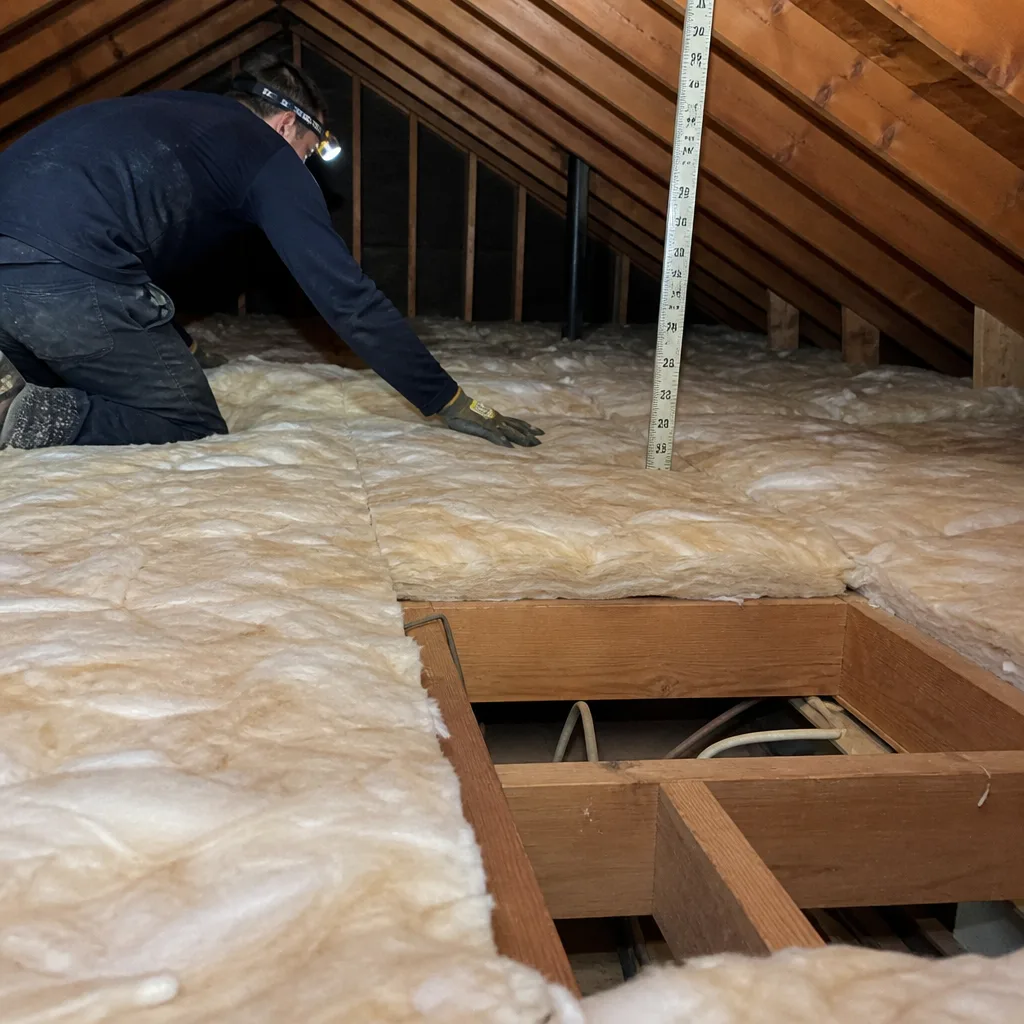
Attic insulation removal in La Verne is the right call when the existing material has degraded past the point where a top-up makes sense. That threshold is reached faster here than in many Inland Empire cities because of the radiant heat load on west- and south-facing attic slopes. On a 1958 ranch near the San Dimas/La Verne boundary, our crew opened an attic cavity on a sun-baked west slope and found original R-11 batts with the facer disintegrated and insulation sagging off the rafters, plus radiant heat driving straight into a run of ductwork. The homeowner had assumed a summer-only cooling problem until we stripped the degraded material and found the heating-season gaps underneath. We removed the old batts, sealed and vented the cavity, and rebuilt with Owens Corning high-R batts to close both the summer radiant load and the winter loss. Attic insulation removal in La Verne typically runs $1.50 to $3.00 per square foot for the removal phase, with disposal and prep included in most quotes. Full removal and replacement on a typical 1,200-square-foot attic footprint lands between $2,800 and $6,500 depending on depth, contamination, and the new material selected.
Signs removal beats a top-up
Settled cellulose that reads fine at the eaves but has compressed to an inch or two across the field is not worth covering; the thermal gap is already baked in. If you have rodent activity, mold, water staining, or original batts that have sagged off the rafters, adding new material on top traps the problem under a clean layer. Removal gets you a true reset, plus the chance to verify venting, air seal, and wiring before new insulation goes in.
What we do with the old material
We bag, remove, and dispose of the old insulation according to local waste requirements, then vacuum the cavity so the new material sits on a clean deck. That step matters for air sealing; you cannot seal penetrations through a layer of old dust and batt remnants, and unsealed penetrations are exactly how La Verne’s hot summer attic air pushes into living space.
Trusted Brands We Service in La Verne
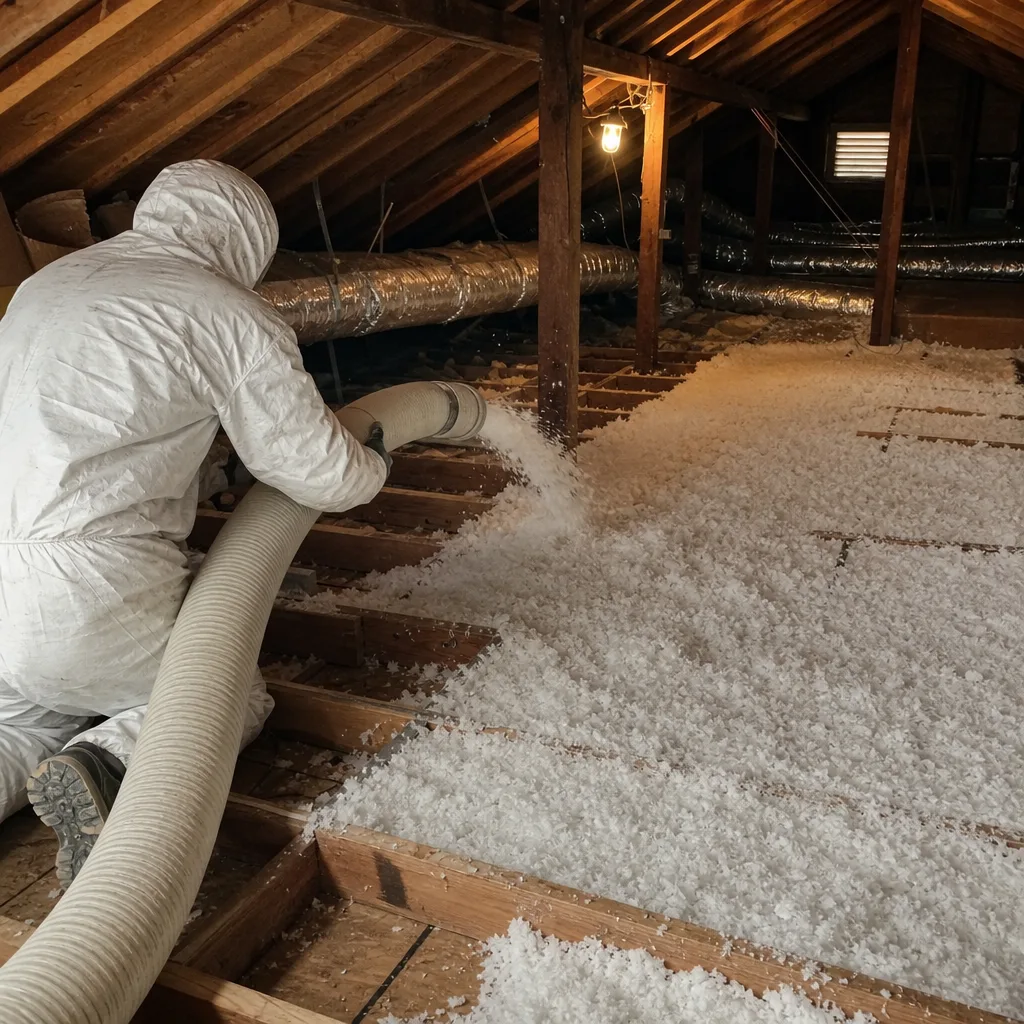
Placentia Insulation is brand-agnostic, so we are not pushing one product on every home in La Verne. Our active inventory includes Owens Corning and CertainTeed batts, Rockwool mineral wool for homes where fire resistance and moisture resilience matter, and Icynene and Demilec spray foam for closed attic and open attic applications. For a 1950s ranch with leaky ducts and a sun-blasted west slope, we might spec closed-cell spray foam for the roofline. For a newer home needing a simple top-up, GreenFiber blown-in cellulose does the job at a sensible cost. Having all of these brands in stock means faster turnaround for La Verne customers and no waiting on a distributor. We match the material to the job, not the job to whatever we have on the truck.
Common Attic Insulation Problems We See in La Verne Homes
- Original R-11 batts breaking down on west and south slopes. The afternoon sun on La Verne’s foothill-adjacent lots bakes these attics past 140°F for months each summer, and the faced batts disintegrate and sag off the rafters. Once that happens, you have bare radiant-heat surfaces transferring directly into the ceiling below.
- Settled blown-in cellulose reading fine at the eaves but almost nothing in the field. Decades of settling compress the material to an inch or two, and the depth at the eave edge fools the visual inspection. The result is an attic that looks insulated but is running at R-8 to R-12 effective instead of the R-38 to R-49 Title 24 now expects.
- Radiant heat driving into ductwork near the foothill boundary. Homes along the San Dimas/La Verne edge and up toward the hillsides often have duct runs in the attic cavity, and when the insulation above them fails, the ducts pick up heat directly. That means your AC is cooling air that gets reheated before it reaches the bedroom vents.
- Santa Ana wind events pushing dust and heat through compromised venting. The dry fall winds funnel through the east San Gabriel Valley and find every gap in fascia vents, gable louvers, and poorly sealed attic hatches. A well-sealed and properly vented attic stays cleaner and cooler during wind events than one left open to dust intrusion.
Pricing for Attic Insulation in La Verne, CA
We Also Serve Cities Near La Verne
Placentia Insulation works throughout the east San Gabriel Valley and Inland Empire foothill corridor. In addition to our Attic Insulation in La Verne service area, we regularly handle projects in Claremont, Pomona, Glendora, and Montclair. If you live near the Los Angeles County border or just over into San Bernardino County, call us and ask about scheduling. Our Attic Insulation team covers all of these communities with the same brand selection and the same single-trade focus.
Serving La Verne, CA — Our Local Coverage Area
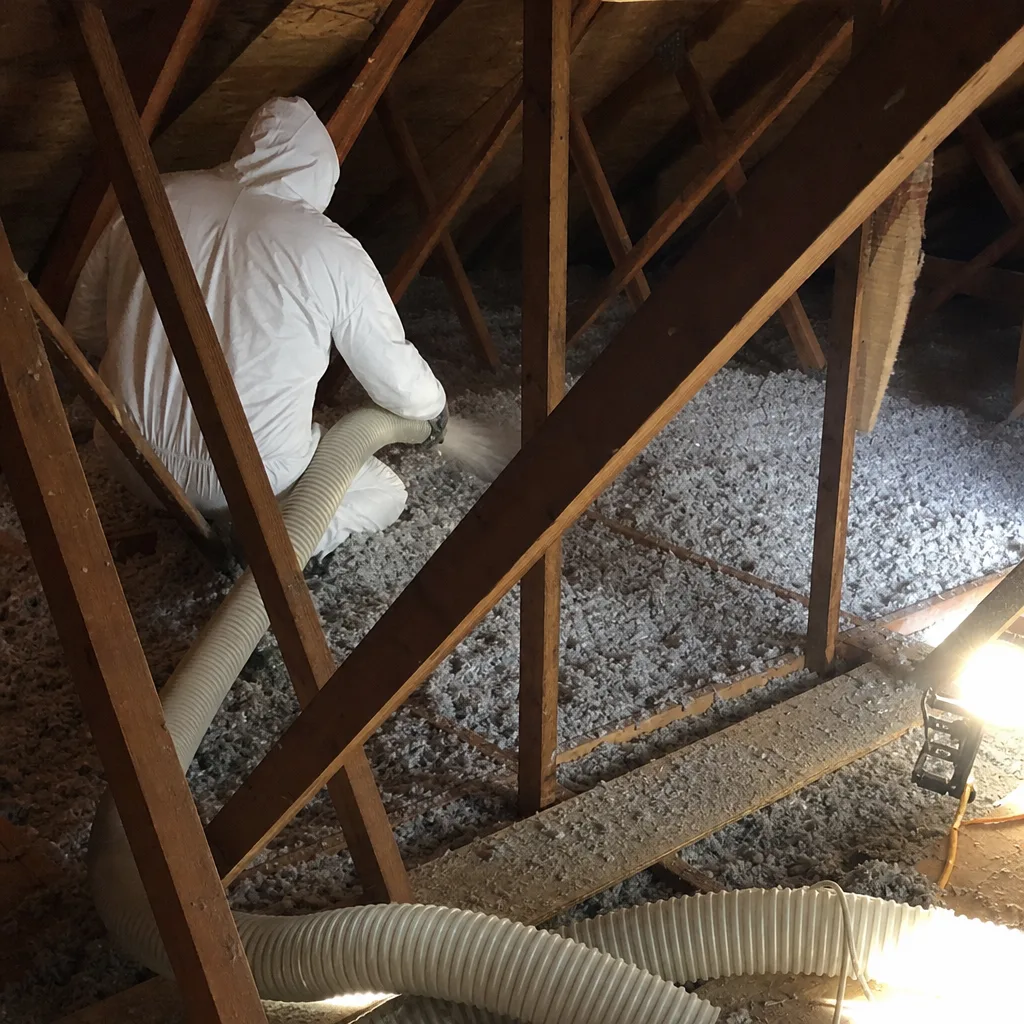
We’re based in the La Verne area and know this community well. Use the map below to see our service coverage — if you’re nearby, we can almost certainly help.
FAQs About Attic Insulation in La Verne
My La Verne ranch has the original insulation from the 1960s – can you just blow new material over it?
No, not if the original material has sagged, settled, or developed mold or rodent contamination. Adding new blown-in material over failed batts or compressed cellulose traps the problem under a fresh layer and leaves the west- and south-facing radiant heat load unaddressed. On most 1950s and 1960s La Verne ranches we recommend removal first, then air sealing and new material matched to the attic’s actual thermal demand. Call (855) 773-6429 for an honest assessment of whether your attic qualifies for a top-up or needs a reset.
Does a west-facing attic slope in the La Verne foothills really need different treatment than the rest of the attic?
Yes, and this is one of the most overlooked details in local attic work. A west-facing slope on a graded pad near the foothill boundary soaks up afternoon radiant heat for hours, driving attic air past 140°F while the north slope stays far cooler. That thermal imbalance stresses insulation, ductwork, and any stored items, and it wants a material and venting strategy that accounts for the asymmetry. We often spec additional venting and higher R-value coverage on those specific slopes while keeping the rest of the attic at standard levels, which saves money versus insulating the entire attic to the worst-case temperature.
How do Santa Ana wind events affect attic insulation in La Verne?
Santa Ana winds funnel through the east San Gabriel Valley and drive dust, debris, and hot dry air into any gap in the attic’s ventilation envelope. Compromised soffit vents, unsealed attic hatches, and degraded baffles let that dust accumulate in the insulation over time, reducing its effectiveness and creating a cleanup problem. A properly sealed attic with intact venting resists dust intrusion, stays cleaner through wind season, and maintains its thermal performance instead of slowly choking itself out. If you notice dust streaks near your attic access after a wind event, the insulation may need evaluation.
When should an older La Verne home get full insulation removal instead of a top-up?
Full removal is the right call when the existing material is moldy, rodent-contaminated, water-stained, settled below half its original depth, or physically sagging off the rafters. Any of those conditions means the attic is not performing even with new material on top, and removing it gives us the only real chance to inspect venting, air sealing, and structural condition underneath. Most La Verne homes built before 1980 are candidates for removal simply because the original material has been in place for 50 to 70 years, far past its useful service life.
Do La Verne homes on graded pads with exposed crawl spaces need attic mold checks too?
Yes, and not just for the attic. Homes on graded pads with exposed crawl spaces often have moisture moving up from the ground into the wall cavities, which then migrates into the attic through bypasses around plumbing and electrical penetrations. A mold issue in the crawl space or walls can show up as staining or odor in the attic, and a thorough attic inspection is the fastest way to catch whether the whole assembly has a moisture problem. We check for mold during every attic insulation estimate in La Verne, and if we find it, we will tell you honestly whether the issue is isolated or systemic before anyone spends money on new insulation.
Get Your La Verne Attic Insulation Quote Today
If your attic still has the insulation it was born with, you are paying for it every month in both summer cooling and winter heating. La Verne’s foothill climate punishes under-insulated attics harder than most of the Inland Empire, and the fix starts with an honest assessment of what is really up there. Call Placentia Insulation at (855) 773-6429 to schedule a free attic inspection and get a precise quote for removal, replacement, mold remediation, or a blown-in top-up. We carry eight brands, three methods, and one specialty: insulation done right for the home you actually live in.
Written by Alan Whitcomb, Owner at Placentia Insulation, serving La Verne and the east San Gabriel Valley.