
Fast, Reliable Attic Insulation Across Moreno Valley
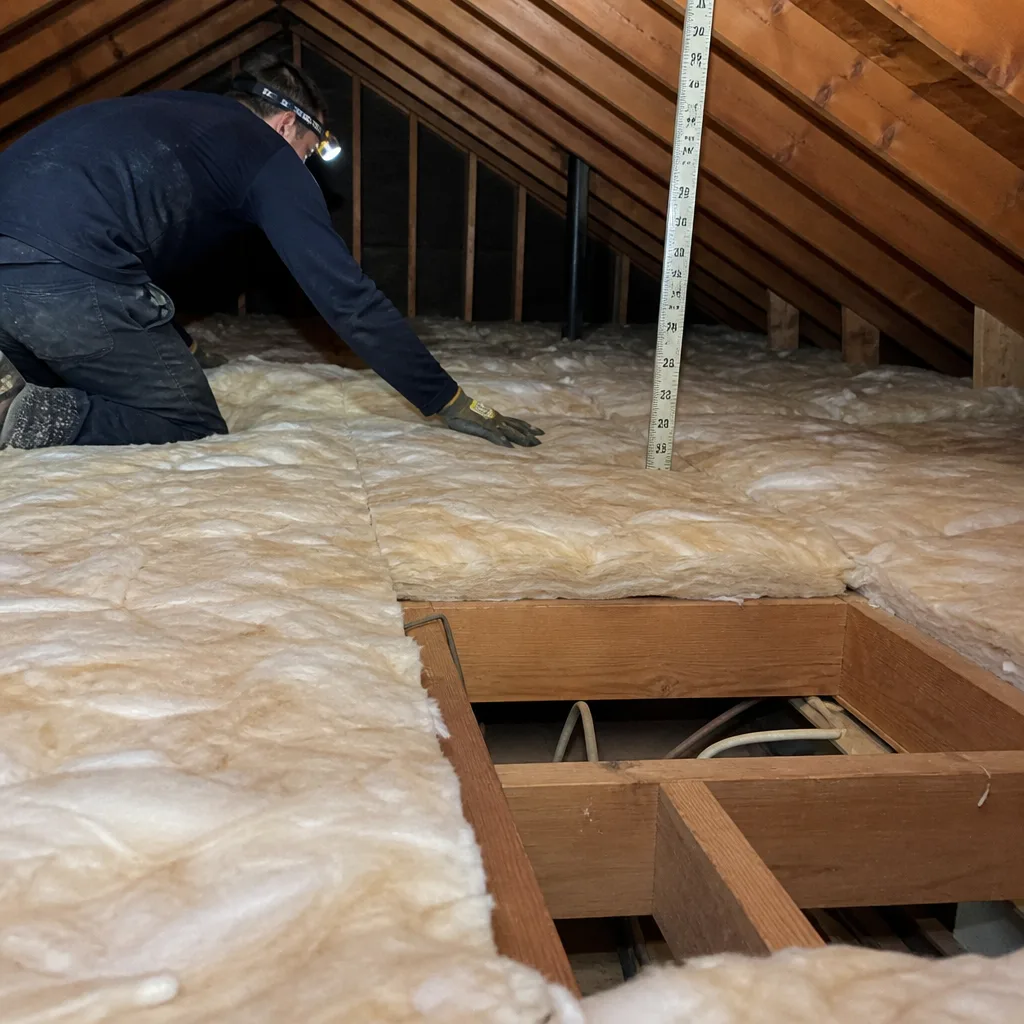
If your attic still has the thin fiberglass it was built with, you’re paying to cool air that leaks straight through your ceiling. In Moreno Valley, where summer highs routinely pass 100°F and tile roofs push attic temperatures past 140°F, the biggest energy loss in your home is almost certainly overhead. We’re Placentia Insulation, and we work exclusively on insulation – not roofing, not HVAC, not general contracting. Our crew knows the tract housing across 92553, 92555, and 92557, and we respond to Moreno Valley calls within one business day. Call (855) 773-6429 for a free attic assessment.
What makes Moreno Valley different from coastal cities is the heat load. Homes here were built to minimum California Title 24 standards from the 1980s through the early 2000s, which means many attics carry R-11 to R-19 fiberglass – fine for mild weather, but undersized when the sun beats on stucco and tile for six months straight. Attic Insulation in this climate isn’t just about adding material. It’s about matching the right product to a specific heat problem. We carry eight brands, including Rockwool, CertainTeed, Icynene, and Demilec, so the fix fits the failure instead of whatever happens to be on the truck.
Why Placentia Insulation Is Moreno Valley’s Preferred Attic Insulation Company
Homeowners across Moreno Valley call us because we treat insulation as the main trade, not a side line. Our only focus is attic insulation, spray foam, and blown-in – which means the technician who arrives at your door spent the morning thinking about R-values, air sealing, and venting, not a plumbing job across town. That single-trade focus shows up in how we diagnose problems. When a Sunnymead Ranch homeowner calls about an upstairs bedroom that won’t hold temperature, our first move is to check attic depth, not just assume the AC is weak.
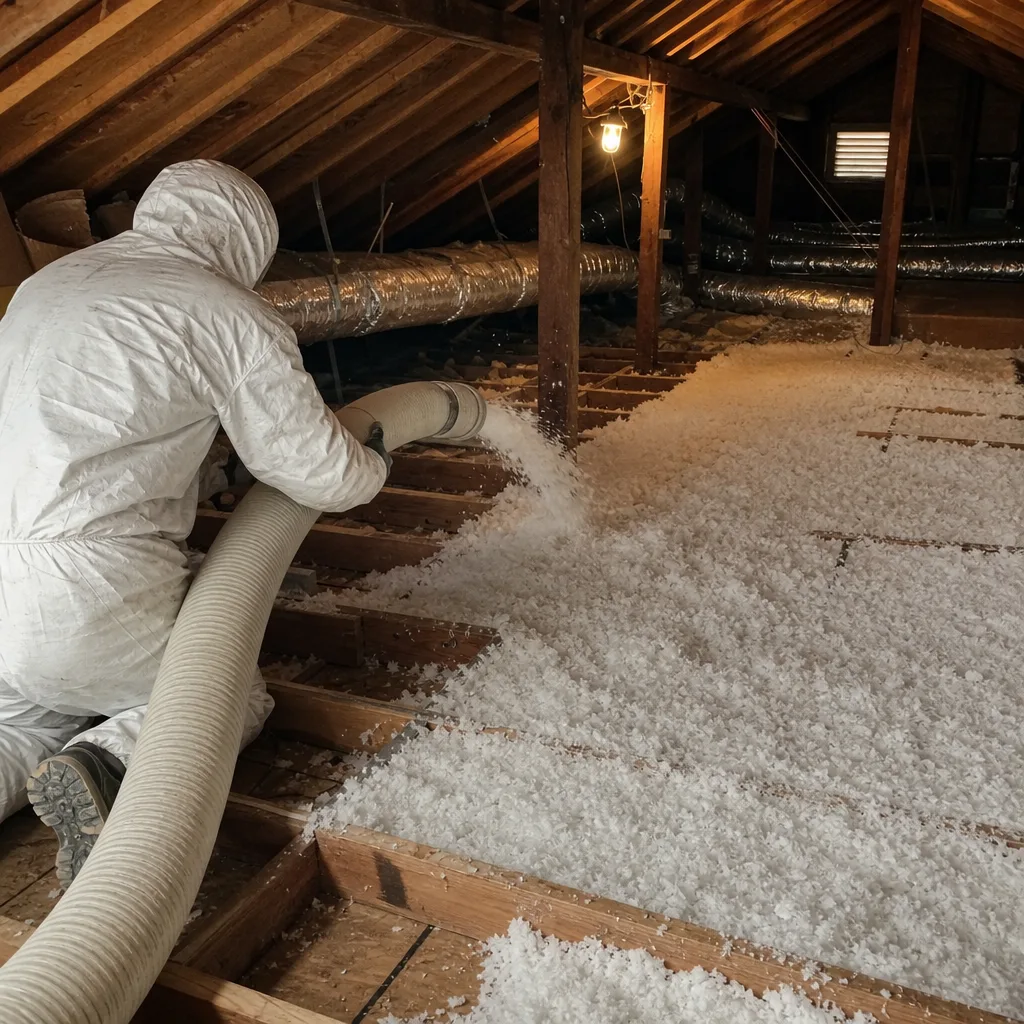
Alan Whitcomb, our owner, built the company around the idea that most insulation contractors limit themselves by carrying one or two product lines. We don’t. Owens Corning, Johns Manville, Knauf, Rockwool, CertainTeed, Icynene, Demilec, and GreenFiber sit in active inventory. That matters in Moreno Valley because older tract homes often need a hybrid approach – mineral wool batts near flue pipes for fire safety, blown-in fiberglass across the open attic floor, and a Reflectix repair in Moreno Valley or radiant barrier on the roof deck. Single-brand shops can’t offer that combination without improvising. We don’t improvise. We match the material to the job, not the job to whatever we have on the truck.
Radiant Barrier in Moreno Valley
Radiant Barrier is one of the most effective upgrades for tile-roof tract homes in Moreno Valley because it attacks the problem at the source: the sun hitting the roof deck all afternoon. A properly installed radiant barrier reflects a large share of that heat before it ever reaches your insulation, dropping attic temperatures by 20°F to 30°F on the worst days. In homes around Vista Verde and Hidden Springs, we often pair a radiant barrier with blown-in insulation because the two work on different physics – the barrier blocks radiant heat, the insulation slows conductive heat. Radiant barrier installation in Moreno Valley typically runs $1.50 to $2.75 per square foot of attic floor area, depending on whether it’s stapled to the rafters or laid over existing insulation.
Stapled Attic Radiant Barrier
For most Moreno Valley homes, we staple a double-sided foil radiant barrier to the underside of the rafters. This creates an air gap between the barrier and the roof deck, which is critical – without that gap, the foil conducts heat rather than reflecting it. The job usually takes one day for a standard 1,500 to 2,500 square foot attic, and it works immediately. Our installers leave the existing insulation in place and add the barrier above it.
Radiant Barrier Over Existing Insulation
In attics with steep roof pitches or tight access, we sometimes lay radiant barrier foil directly over the existing blown-in insulation. It reflects radiant heat downward before it hits the fiberglass below, though the performance is slightly less than a stapled installation. For Moreno Valley homes built on slab foundations with low attic clearance, this method often makes the most sense. We’ll tell you which approach fits your attic – and we’ll explain why, in plain language.
Attic Cleaning Services in Moreno Valley
Attic Cleaning Services in Moreno Valley are about more than tidiness. Decades of Santa Ana winds push fine dust, pollen, and debris through ridge vents and eave gaps, coating old insulation and reducing its effectiveness. In 92553 and 92555 especially, we see attics where the original blown-in fiberglass is so matted and dust-choked that it’s lost a third of its R-value. Rodent activity adds another layer of contamination, and dried droppings hold moisture that slowly breaks down insulation fibers. Attic cleaning plus insulation replacement in an average Moreno Valley tract home runs $2,000 to $4,500, while cleaning alone typically costs $800 to $1,600 depending on attic size and access.
Removing Old Insulation
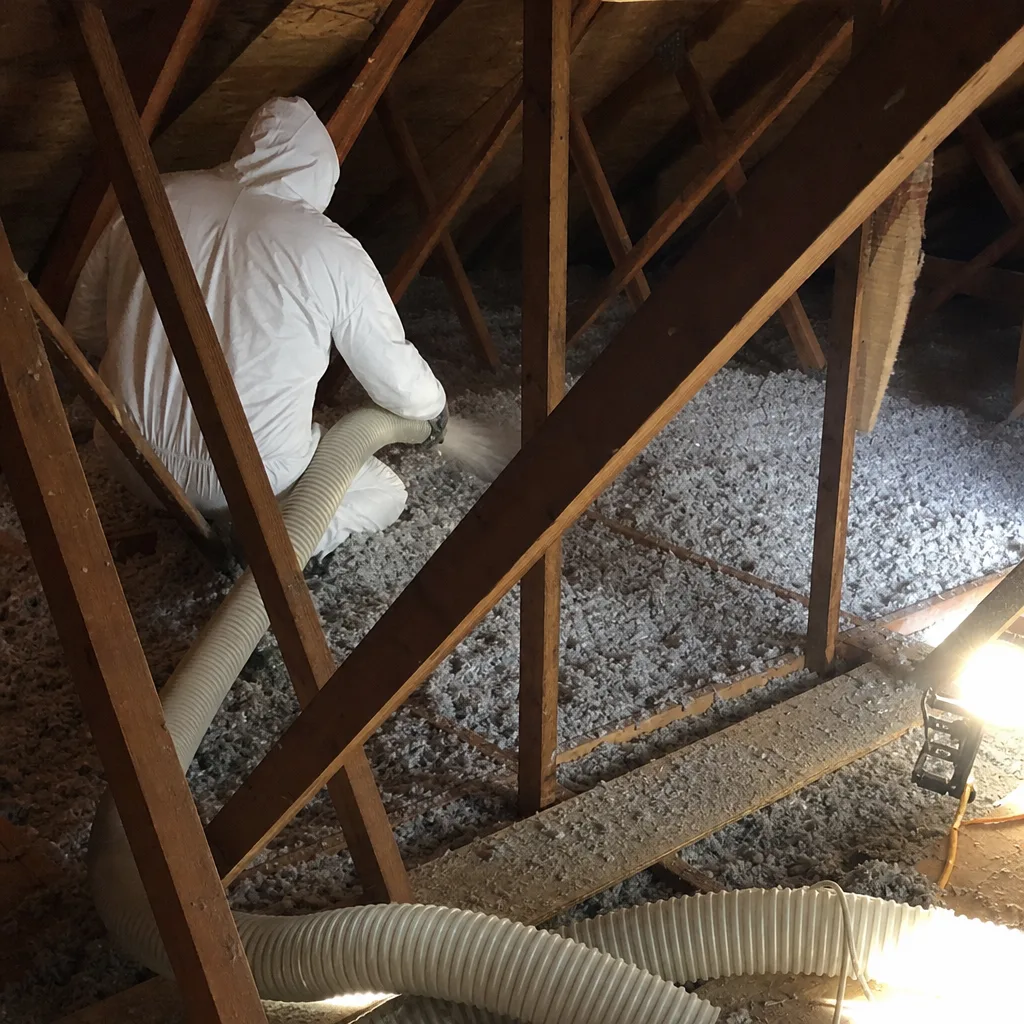
When insulation is compressed, damp, or contaminated, adding new material on top won’t fix the problem – the new layer simply settles into the same dead zones. We use commercial-grade vacuums to remove old fiberglass or cellulose down to the deck, then inspect for air leaks in the top plates, can light housings, and plumbing penetrations before anything new goes in. This is the step most handyman services skip, and it’s the step that makes the difference between an upgrade that lasts 20 years and one that underperforms in two.
Prepping for New Insulation
A clean attic gives new insulation room to reach its rated R-value evenly across the entire floor. We also check and repair baffles at the eaves so soffit vents keep drawing air, and we flag any moisture staining that points to a roof leak or bath fan venting problem. In Moreno Valley’s older central core, where some homes date to the 1960s, we frequently find knob-and-tube wiring that requires repair before insulation is safe to install. We won’t blow insulation over live knob-and-tube – that’s a fire hazard – and we’ll tell you exactly what needs to happen first.
What happens when you call
- 1
A real person answersNo phone trees — you reach a local pro.
- 2
You get an upfront price rangeHonest numbers before anyone is dispatched.
- 3
A background-checked tech heads outLicensed & insured, dispatched right away.
- 4
You approve before work beginsNothing starts until you say go.
Trusted Brands We Service in Moreno Valley
We carry eight material lines so a Moreno Valley homeowner never has to settle. Rockwool mineral wool, for example, offers fire resistance and sound dampening that fiberglass can’t match – useful when an attic shares a party wall or houses a furnace. CertainTeed fiberglass covers the mid-tier batt and blown-in range, while Icynene and Demilec give us both open-cell and closed-cell spray foam chemistry depending on whether an attic needs sealing power, R-value per inch, or both. Because we stock materials for these brands, turnaround in Moreno Valley ZIPs 92551 through 92557 runs fast. No waiting on a distributor order for the product your attic actually needs.
Common Attic Insulation Problems We See in Moreno Valley Homes
- Settled original fiberglass in 1980s and 1990s tract homes. The blown-in material installed when these houses were built has compressed over 30-plus years, often dropping from R-19 to R-9 or lower. The center aisle and hatch edges end up nearly bare, letting 140°F attic air radiate straight into bedrooms below.
- Scalding duct runs through uninsulated attic space. Ductwork routed through a Moreno Valley attic on a 105°F day loses 20 to 30 percent of its cooling before air reaches the registers. The homeowner thinks the AC is failing; the real problem is an attic acting like a convection oven around the ducts.
- Tile roofs with no radiant barrier. Clay and concrete tile absorb heat all afternoon and re-radiate it into the attic long after sunset. Even newer blown-in insulation alone can’t offset that radiant load – the heat bypasses the insulation entirely and warms the ceiling drywall directly.
- Wind-shifted insulation from Santa Ana events. High winds that drive dust through ridge vents also push loose-fill insulation away from the eaves and toward the center of the attic. We find bare drywall along the perimeter of attics throughout 92557, a telltale sign of wind migration over years of seasonal cycles.
Pricing for Attic Insulation in Moreno Valley, CA
Attic insulation pricing in Moreno Valley reflects the size of the attic and the scope of the fix. Blown-in fiberglass top-up for a standard 1,800 square foot attic runs $1,800 to $2,800. Full removal of old insulation, air sealing, and new blown-in fiberglass typically ranges from $3,500 to $6,500. Spray foam attic applications start around $4,000 for open-cell and $5,500 for closed-cell on the same footprint. Radiant barrier installation adds $1,500 to $3,000 depending on roof geometry. Call (855) 773-6429 for an exact quote – we measure the attic, test the existing material, and give you a written estimate before any work is scheduled.
We Also Serve Cities Near Moreno Valley
Beyond Moreno Valley, our attic insulation crews work regularly in March Air Force Base, Woodcrest, Colton, and Loma Linda. Each of these communities shares the same Inland Empire heat profile and aging Title 24 tract housing, so the solutions we apply in one city translate directly to the next. If you’re in a neighboring area and your attic hasn’t been inspected in more than 15 years, the math is simple: the insulation has settled, and the heat hasn’t.
Serving Moreno Valley, CA — Our Local Coverage Area
We’re based in the Moreno Valley area and know this community well. Use the map below to see our service coverage — if you’re nearby, we can almost certainly help.
FAQs About Attic Insulation in Moreno Valley
No, the material isn’t failing; it was never sufficient for this climate. R-11 met the minimum California Title 24 standard when homes were built in the 1980s, but those minimums assumed milder conditions than Moreno Valley’s sustained 100°F summers. The insulation has actually degraded further since installation – settling and dust accumulation typically cut the effective value to around R-7 or R-8. Call (855) 773-6429 for a free depth check and we’ll tell you exactly what your attic measures.
No. Adding insulation slows conductive heat transfer, but a 140°F attic radiates heat directly through the ceiling regardless of insulation depth. The effective fix in most Moreno Valley tract homes is a combination: a radiant barrier under the roof deck to block radiant heat, plus upgraded attic insulation to handle what gets through. Homes with scalding ducts benefit most from this pairing.
Ducts routed through a sun-baked Moreno Valley attic absorb heat from the surrounding air, so the cool air inside warms before it reaches your registers. We regularly measure 20 to 30 percent cooling loss in uninsulated attic duct runs during July and August. Insulating the attic floor and installing a radiant barrier drops the ambient attic temperature enough to cut that loss substantially without replacing your HVAC system.
It depends on what we find during the inspection. If the old fiberglass is dry, uncontaminated, and reasonably even, blowing new material on top is the cost-effective route. If it’s dust-matted, rodent-contaminated, or wind-shifted into bare patches, removal first makes more sense because the new insulation will otherwise settle into the same thin spots. We’ll show you photos of what we find and explain the recommendation before you spend a dollar.
We install Rockwool mineral wool, CertainTeed fiberglass, GreenFiber blown-in cellulose, Icynene spray foam, and Demilec spray foam, among eight total product lines. The right brand depends on your attic’s specific problem: mineral wool near heat sources for fire resistance, spray foam for sealing and high R-value per inch, fiberglass for open floor coverage. We don’t sell one brand; we stock options and match them to your attic’s condition. Call (855) 773-6429 for a free estimate – we’ll walk you through what fits.
Written by Alan Whitcomb, Owner at Placentia Insulation, serving Moreno Valley and the Inland Empire.