
Fast, Reliable Attic Insulation Across Tujunga
Attic insulation in Tujunga typically costs $1,800 – $4,600 for a full retrofit on a 1,200 – 1,800 sq ft postwar home, with blown-in top-ups running $900 – $2,200 and radiant barrier adding $1,400 – $2,800. We run crews into Tujunga weekly and most hillside jobs finish in a single day. If your ceiling feels like a heat lamp by 3 p.m. in July, the attic is almost always the problem. Call (855) 773-6429 and we’ll assess what’s actually happening above your ceiling, not guess from a photo.
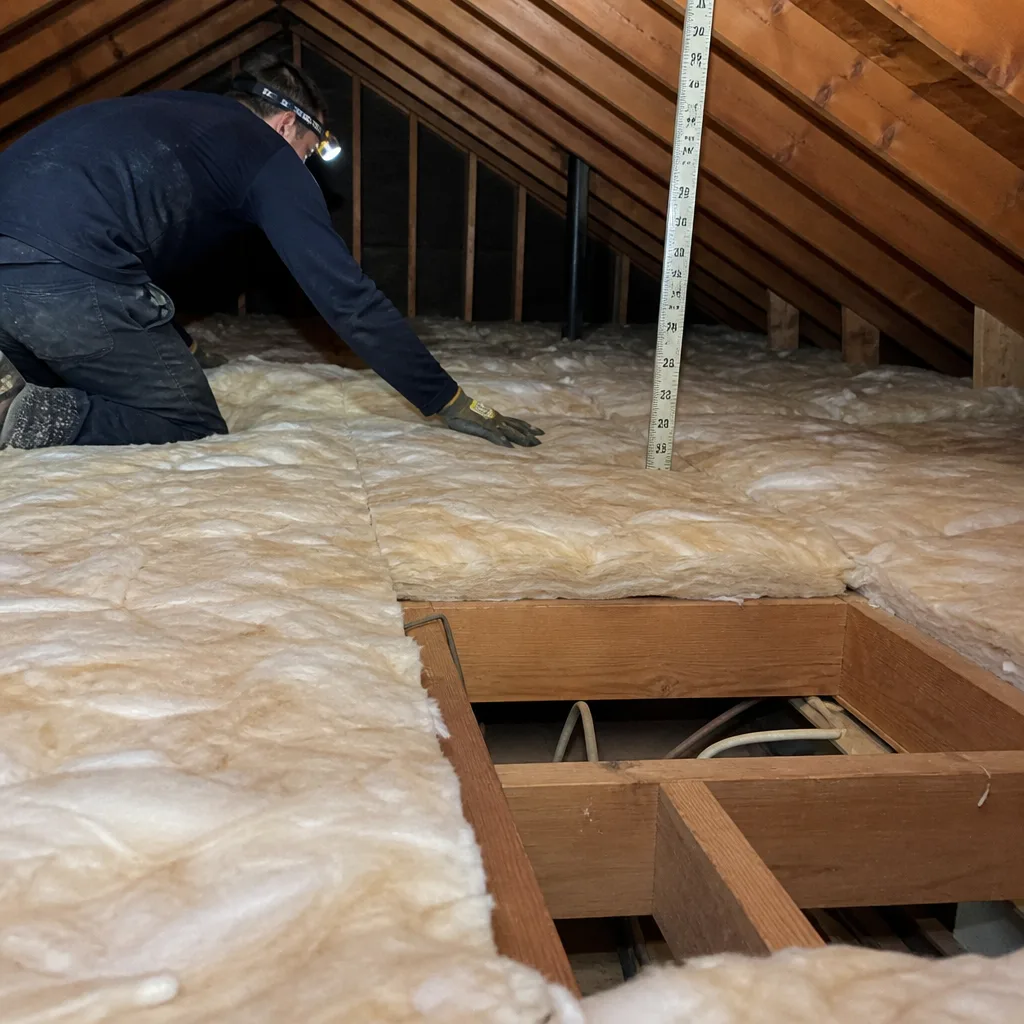
Tujunga’s housing stock was largely built between 1940 and 1965, when insulation codes were thin and attics were an afterthought. That means most homes here are running on original fiberglass batts that have compressed, settled, or simply never delivered the R-value the label promised. Add direct foothill sun and downslope winds off the San Gabriels, and the attic becomes an oven that radiates into every room below. We know these houses because we’ve worked in them, from the flat streets off Foothill Boulevard up to the hillside lots climbing toward the Angeles National Forest.
Why Placentia Insulation Is Tujunga’s Preferred Attic Insulation Company
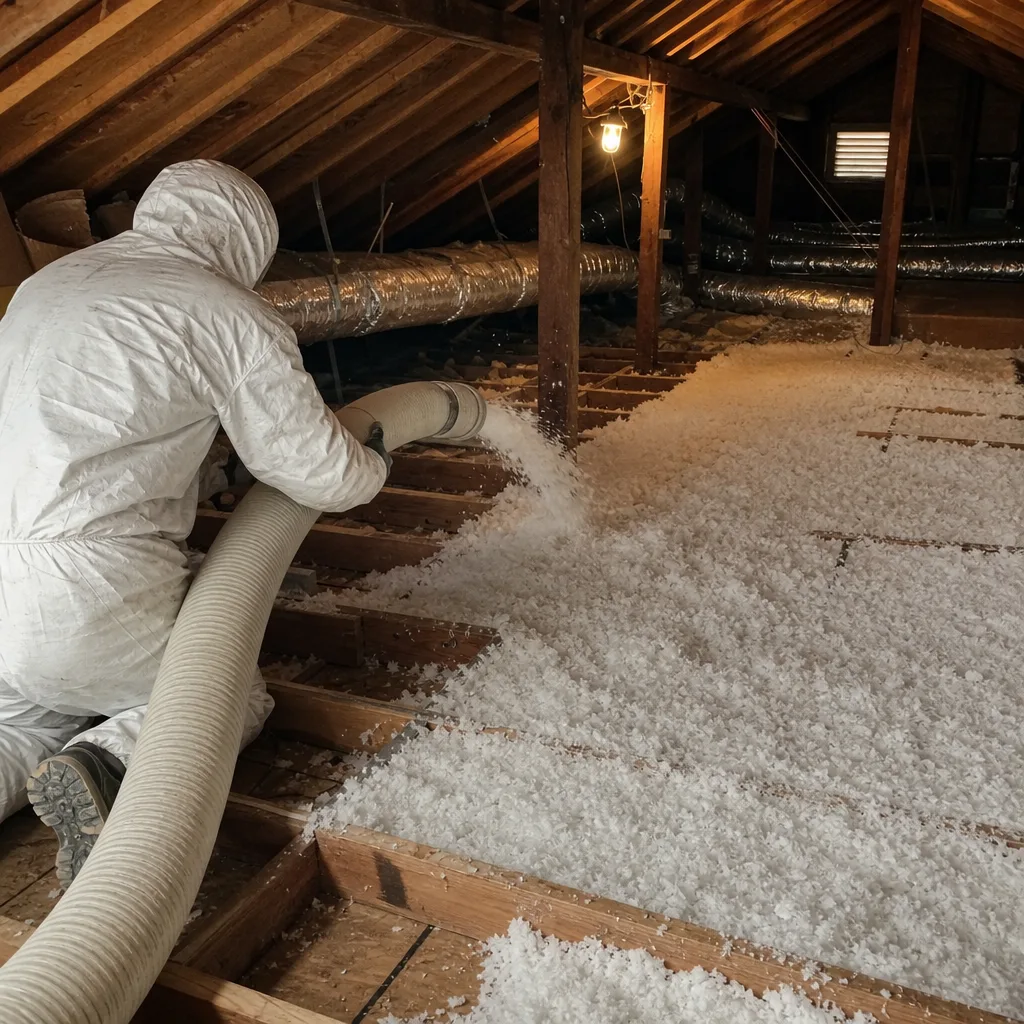
Tujunga homeowners call us because we talk about materials and methods, not vague promises. Alan Whitcomb built Placentia Insulation around a simple idea: match the material to the job, not the job to whatever’s on the truck. We stock product from eight manufacturers: Owens Corning, Johns Manville, Knauf, Rockwool, CertainTeed, Icynene, Demilec, and GreenFiber. That breadth matters in Tujunga especially, where older construction often needs a specific combination of air sealing, blown-in material, and radiant barrier rather than whatever one supplier happens to carry.
Our reputation in the 91042 and 91043 zip codes comes from showing up on time, keeping the work area clean, and explaining what we found and what we did in plain English. Homeowners tell us they appreciate that we don’t try to sell a full removal when a top-off will do the job, and we don’t recommend a top-off when the existing material has drifted so badly that leveling and air sealing are the only real fix. When you call from Tujunga, you’re talking to someone who knows the difference between a flat-lot attic and a slope-side attic; it changes the whole approach.
We commit to fast response for Tujunga calls, usually same-week scheduling with a one-day installation on most single-story homes. Estimates are free and come with a written scope of work, not a verbal handshake.
Attic Ventilation in Tujunga
Attic ventilation in Tujunga is the missing piece on most pre-1960s homes, where original roof vents were sized for a coastal climate, not the sustained canyon heat that builds up under a sun-baked composition roof. Without adequate airflow, the attic traps superheated air at 140 – 160°F and radiates that heat through the ceiling assembly even after new insulation is installed. Adding or upgrading ridge and soffit ventilation gives that heat a path out, which protects the insulation, lowers cooling loads, and extends the life of the roof deck itself.
Retrofit Ridge and Soffit Prep
On older Tujunga bungalows, the soffit is often solid stucco with no vent openings at all. We cut and install soffit vents, confirm the intake area is balanced against ridge exhaust, and clear any original vents that have been painted shut or blocked by old blown-in material.
Pairing Vents With New Insulation
Ventilation and insulation work as a system. Homeowners who insulate without addressing airflow often report that upstairs rooms got hotter, because the new insulation seals heat in. In Tujunga we plan both together; ventilation on these homes typically adds $600 – $1,400 depending on the roofline and existing vent count.
Radiant Barrier in Tujunga
Radiant barrier in Tujunga is one of the highest-return upgrades for foothill homeowners because it directly addresses the dominant heat source here: solar gain through the roof deck. A radiant barrier is a reflective foil installed on the underside of the rafters that bounces radiant heat back toward the roof instead of allowing it to soak into the attic air and the insulation below. On a July afternoon with the outside temperature at 98°F, a properly installed radiant barrier can drop attic floor temperatures by 20 – 30 degrees. That’s felt immediately in the rooms below the ceiling.
Slope-Side Install Challenges
Hillside attics in Tujunga often have tight framing and limited access on the uphill side, which is exactly where radiant gain concentrates. We’ve done enough of these to work around low-clearance rafter bays without compromising the foil’s continuity or the ventilation gap it needs to function.
What It Costs Here
Radiant barrier for a typical 1,200 – 1,600 sq ft Tujunga attic runs $1,400 – $2,800, including stapling to the rafter deck and integration with the intake and exhaust vents. We prefer to quote it alongside insulation because the combined benefit is greater than either improvement alone.
Trusted Brands We Service in Tujunga
Most insulation contractors carry one or two product lines and make your home fit whatever they stock. We carry eight, so Tujunga homeowners get what the home actually needs. In a 1948 stucco bungalow, that might mean GreenFiber blown-in cellulose for slope-leveling and air-sealing performance. In a home where fire resistance and sound dampening matter as much as thermal performance, Rockwool mineral wool is the better call. Where spray foam is appropriate, we work with Icynene for open-cell and Demilec for closed-cell, and we choose the chemistry based on the application; not habit. Because we stock these materials in volume, turnaround for Tujunga jobs stays fast; no waiting for a supplier to ship one-off orders.
Common Attic Insulation Problems We See in Tujunga Homes
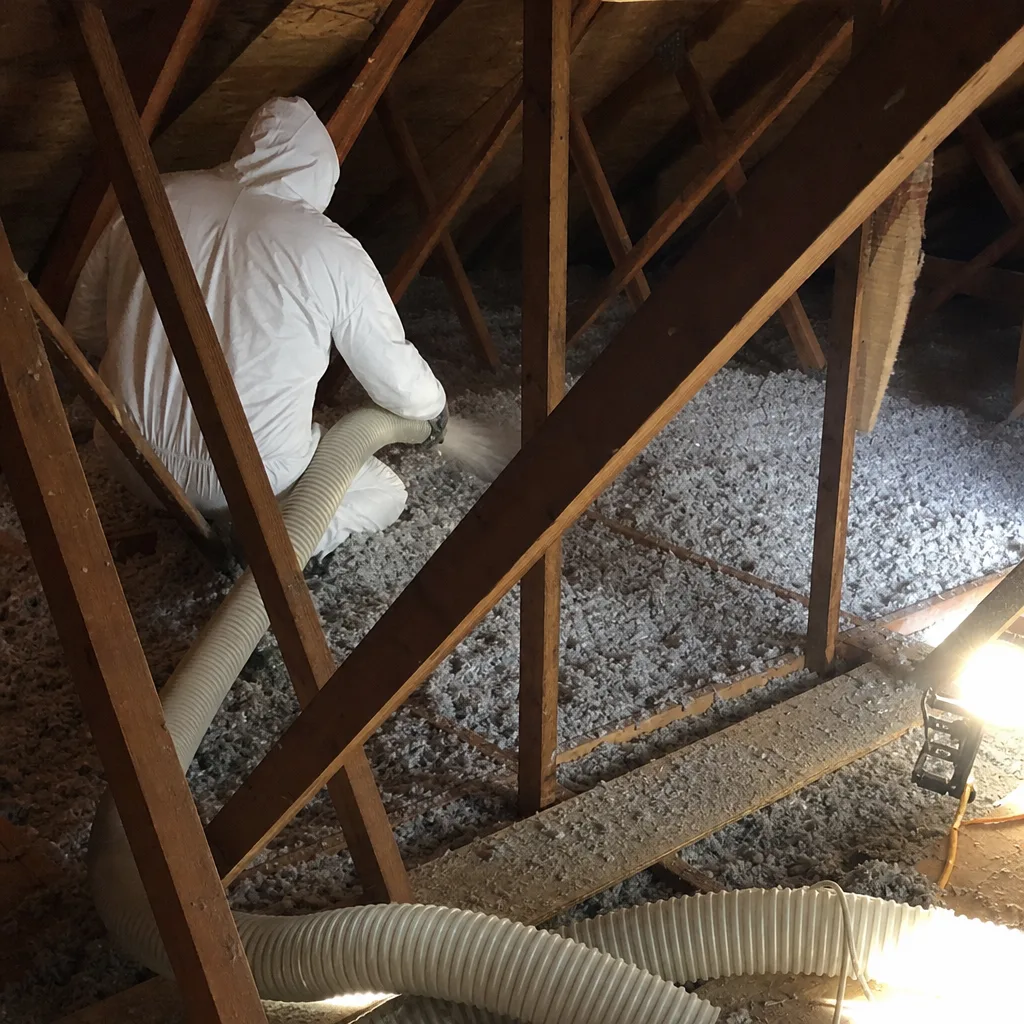
- Downhill drift on hillside lots. On slope-side properties toward the Angeles National Forest, blown-in insulation slowly migrates downhill over decades, so the low side of the attic reads as properly covered while the uphill edge is nearly bare. That uphill ceiling edge runs coldest in winter and hottest in summer, and no amount of topping off fixes it until you level the material.
- Compressed original batts in 1940s – 1960s homes. The fiberglass batts installed when these bungalows were built have settled and lost most of their rated R-value. A 6-inch batt from 1955 performs closer to R-8 today than the R-19 it once claimed. Homeowners wonder why their AC never cycles off; this is a big part of it.
- Undersized or blocked attic ventilation. Many Tujunga homes have one or two original gable or roof vents that were never enough for a foothill summer. When we pull back the insulation, we regularly find those old vents blocked by dust, bird nests, or years of paint, leaving superheated air trapped in the attic with no way out.
- Inconsistent ceiling temperatures room to room. The southeast-facing rooms baking under a full day of sun are almost always the ones sitting under the hottest section of attic. When insulation is uneven, thin on one side, or missing over a top plate, residents feel it as one warm bedroom and one comfortable one, a pattern we’ve been called out to diagnose across Tujunga.
Pricing for Attic Insulation in Tujunga, CA
A full attic insulation replacement in Tujunga typically runs $1,800 – $4,600 depending on the home’s square footage, the condition of the existing material, and whether air sealing is included. Blown-in top-ups land between $900 – $2,200 on homes where the existing insulation is intact but thin. Batt replacement with Owens Corning fiberglass or Rockwool mineral wool falls in the $2,200 – $3,900 range for most single-story homes. Radiant barrier adds $1,400 – $2,800, and ventilation work $600 – $1,400. Attic access condition, ceiling height, and hillside lot access can shift those numbers, but we quote in writing before any work begins. Call (855) 773-6429 for an exact quote; estimates are free and come with a full written scope.
We Also Serve Cities Near Tujunga
Our Attic Insulation crews cover Tujunga and the surrounding foothill communities. If you’re in Sunland, La Crescenta-Montrose, Shadow Hills, or Burbank, the same team and the same material library serve you; we schedule these areas alongside our Tujunga routes to keep response times short and pricing consistent.
Serving Tujunga, CA — Our Local Coverage Area
We’re based in the Tujunga area and know this community well. Use the map below to see our service coverage — if you’re nearby, we can almost certainly help.
FAQs About Attic Insulation in Tujunga
No. Blown-in insulation on sloped hillside lots migrates downhill over decades, so the low side of the attic looks thick while the uphill ceiling edge gets nearly bare. That uphill edge becomes the coldest spot in winter and the hottest in summer. The fix is re-leveling the material to a consistent depth and air sealing the top plates before any top-off. Call (855) 773-6429 and we’ll assess the actual distribution, not just the depth at the access hatch.
Because the attic is venting heat through the ceiling, not through the roof. Most pre-1960s Tujunga homes have undersized or blocked attic vents, so even new insulation sits in a superheated attic and radiates heat into the rooms below. Adding ridge and soffit ventilation, and often a radiant barrier, fixes the heat path. We see this exact pattern on ranches and stucco bungalows across the 91042 and 91043 zip codes.
Yes. We remove a small section, inspect what’s underneath, and show you photos of what we find. In Tujunga the answer usually comes down to two things: whether the original batts have compressed below effective R-value, and whether the blown-in material has drifted unevenly. If it’s intact but thin, a top-off makes sense. If it’s compressed, dusty, or uneven, replacement or re-leveling is the right call. The estimate is free, and you’ll know exactly which path applies before you decide.
Most Tujunga homes need a balanced system with at least one square foot of net free vent area for every 150 square feet of attic floor, and on hillside lots where heat concentrates, we lean toward the higher 1:150 ratio rather than the code-minimum 1:300. The practical answer is that most 1940s – 1960s bungalows here need both new soffit intake and ridge or gable exhaust, because the originals were never sized for 100°F canyon heat. We spec the exact vent count after measuring the attic footprint and existing openings.
We install blown-in cellulose from GreenFiber, fiberglass from Owens Corning and CertainTeed, mineral wool from Rockwool, and spray foam from Icynene and Demilec. In Tujunga attics we most often use GreenFiber blown-in cellulose for re-leveling hillside attics and air sealing, Rockwool for sound and fire resistance, and radiant barrier foil for the solar gain that defines foothill summers. What we install depends on the home’s age, framing, and what’s already up there; we’ll show you the options and explain why one material fits better than another.
Written by Alan Whitcomb, Owner at Placentia Insulation, serving Tujunga and the surrounding foothill communities.