
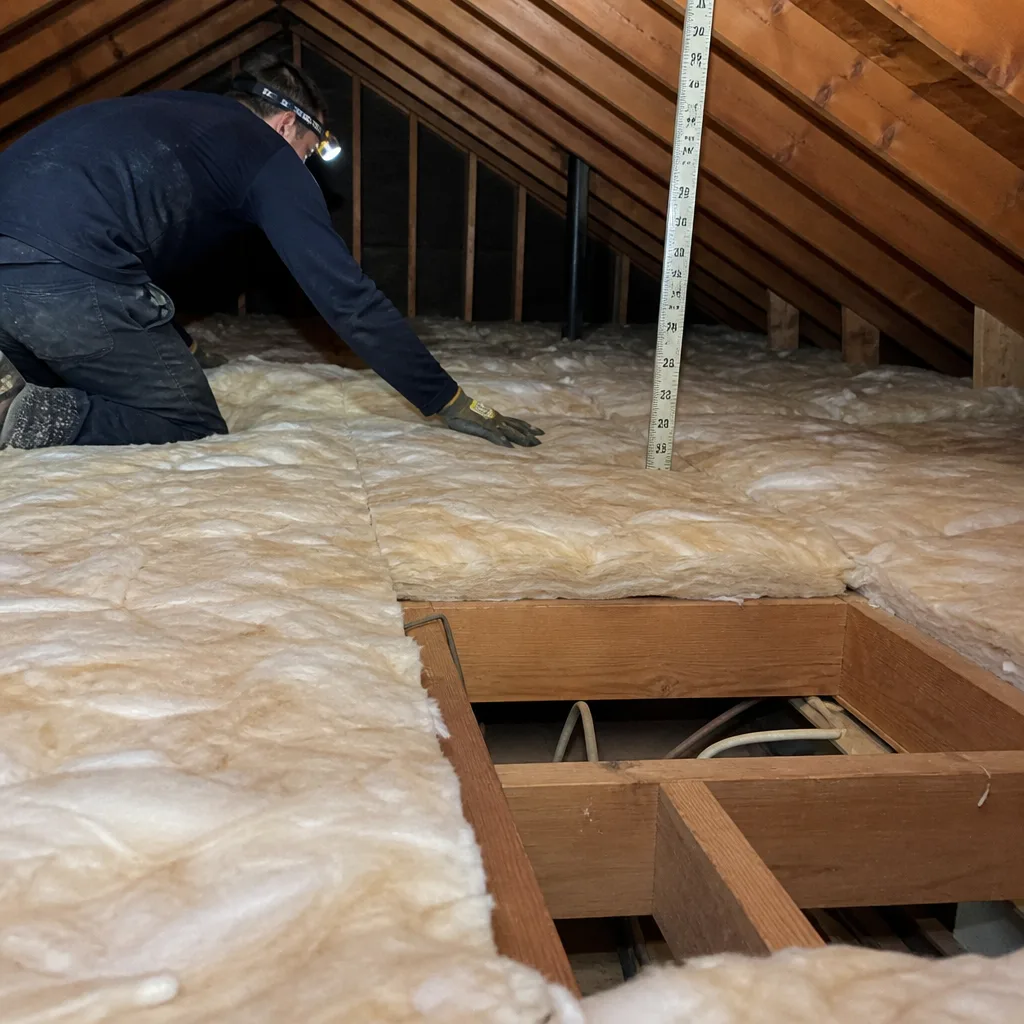
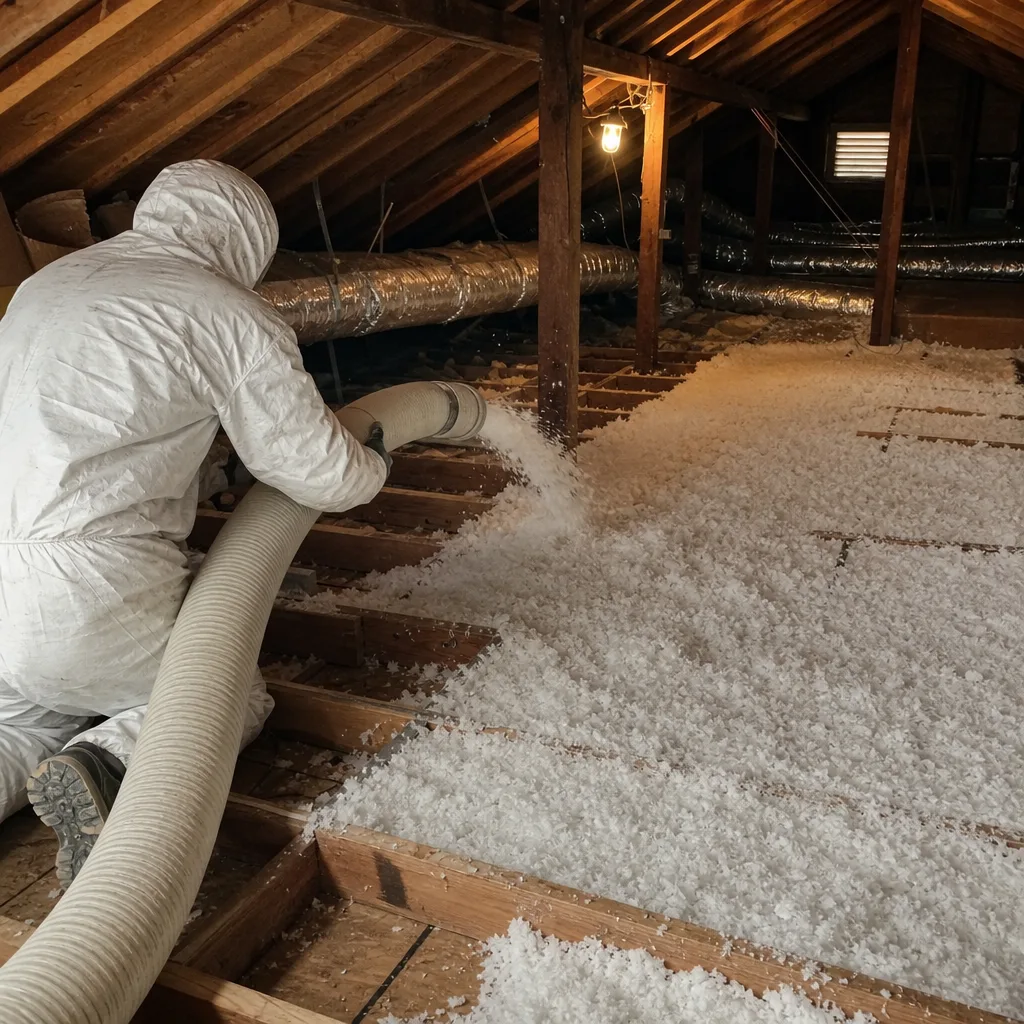
Fast, Reliable Attic Insulation Across Wrightwood
Attic insulation in Wrightwood is a mountain-climate job, not a desert job. At 6,000 feet in the San Gabriel Mountains, your attic has to handle heavy snow, hard freezes, and 40-degree temperature swings between day and night. That means the insulation depth, air sealing, and ventilation details matter more here than almost anywhere else in Southern California. Our team knows Wrightwood’s cabins, A-frames, and newer custom builds, and we stock the materials that actually work at elevation. Call (855) 773-6429 and we’ll get a specialist to your door, usually within a day or two depending on the season.
Why Placentia Insulation Is Wrightwood’s Preferred Attic Insulation Company
The big difference is that we only do insulation. Not roofing, not HVAC, not general contracting. Every crew member we send up to Wrightwood spends their whole week thinking about R-values, air sealing, and vent baffles. When you call Placentia Insulation, you’re talking to people who can explain why a vaulted ceiling in an A-frame needs different treatment than a flat attic in a ranch house, and who’ve actually done that work on Lone Pine Canyon Road, in Inspiration Point, and off Highway 2 near the ski area.
Alan Whitcomb built this company around a simple idea: match the material to the job, not the job to whatever’s on the truck. Most insulation outfits carry one or two product lines. We carry eight brands, including Icynene, Demilec, and GreenFiber, so a Wrightwood homeowner gets the right product for their roof pitch, their freeze-thaw reality, and their budget. That matters when the wrong call in a mountain attic means ice dams by February.
We’ve also seen how many Wrightwood properties are weekend homes. That shapes how we schedule, how we document the work, and how we speak with owners who might not be on-site every day. You get straight answers about what we found in the attic, what we did about it, and what you should watch for next winter.
Attic Ventilation in Wrightwood
Attic ventilation in Wrightwood is what stops snowmelt from becoming ice dams. When warm air leaks through a ceiling into the attic, it melts the snow on the roof deck. That water runs down to the cold eave, freezes, and backs up under shingles. A ventilated attic keeps the roof deck cold, so the snow stays frozen and the water flows away instead of damming at the edge.
Our ventilation work in Wrightwood starts with air sealing the ceiling plane, then adding baffles to the rafter bays so air can move from soffit to ridge. We inspect existing vents, verify they’re not buried under blown-in insulation, and recommend whether the roofline needs additional ridge or gable venting. In an older cabin with no soffit vents, sometimes the fix is a combination of baffles and a continuous ridge vent.
Baffled Rafter Bays for Steep-Pitched Roofs
Steep cabin roofs have narrow rafter bays and a lot of them. Baffles keep the insulation from blocking airflow at the eave, which is exactly where Wrightwood roof decks start to warm and melt snow. Each bay gets its own baffle, stapled to the roof deck and sized to the bay depth.
Air Sealing the Ceiling Plane Before Ventilation
Ventilation without air sealing just pulls more warm air out of the house, which drives up heating costs. We seal beam penetrations, wire holes, and ceiling fixtures first. Then the ventilation can actually do its job, keeping the attic temperature close to outdoor conditions.
Radiant Barrier in Wrightwood
Radiant barrier in Wrightwood works differently than it does in the low desert. Down in Victorville or Palmdale, radiant barrier is mostly about reflecting summer sun off the roof. Up here, it’s a secondary layer that helps slow radiant heat transfer in both directions. That means a cooler attic in August and a slightly warmer one during a January freeze. It’s rarely a standalone fix in Wrightwood, but it’s a useful supplement when paired with deep insulation and proper air sealing.
A radiant barrier is a reflective material, usually a foil-faced sheet, installed under the rafters or on the attic floor. In a mountain cabin with a south-facing roof that bakes all afternoon, it can keep the attic noticeably cooler and reduce the heat load on the living space below. In winter, it helps retain some of the heat that would otherwise radiate out through the roof assembly.
Rafter-Mounted Radiant Barrier Under a Metal or Shingle Roof
For Wrightwood attics with accessible rafter cavities, we staple the barrier to the underside of the rafters, leaving an air gap below the roof deck. That air gap is what makes the reflective surface effective. For attics that are already finished or have tight clearances, attic-floor application can work well.
Combining Radiant Barrier with Deep Blown-In Insulation
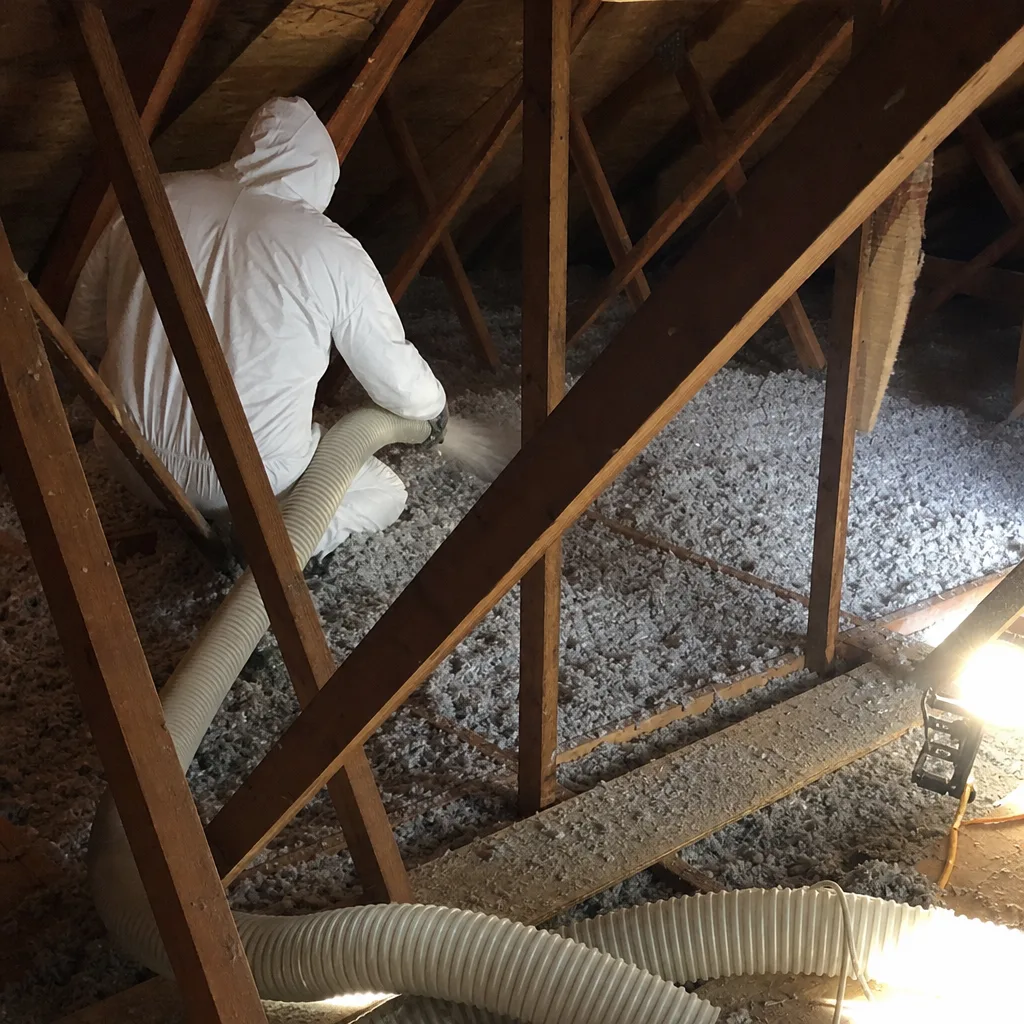
Radiant barrier addresses radiant heat, not conductive heat loss. That means it pairs best with a deep blanket of blown-in insulation on the attic floor. In Wrightwood, we typically target higher R-values than code minimums in the high desert, because heating degree days here are far higher.
Trusted Brands We Service in Wrightwood
We don’t push one brand on every Wrightwood home. Your cabin’s roofline, your ceiling type, and your winter temperature profile determine what goes in. For a vaulted A-frame with exposed beams, we might recommend Icynene open-cell for its air-sealing and sound dampening in tight rafter bays. For an attic floor that just needs depth, GreenFiber blown-in cellulose gets you high R-value per inch with good recycled content. Demilec closed-cell is on the list when we need air sealing plus structural rigidity in tricky roof assemblies. Most Wrightwood attics use a combination of materials, and we’re set up for that.
Common Attic Insulation Problems We See in Wrightwood Homes
- Original thin batts layered over newer insulation with no air sealing. We see this constantly in mid-century cabins and A-frames. The ceiling plane leaks warm air into the attic, the snowpack melts from underneath, and the water refreezes at the eaves. The old insulation on the bottom is doing almost nothing once it’s compressed and unsealed.
- Vaulted and exposed-beam ceilings with compressed insulation. A-frames and beam-ceiling cabins lose heat along the beam lines where insulation gets pinched into the rafter bay. Narrow bays also mean less room for proper venting, which compounds the ice-dam problem.
- Part-time homes with no monitoring between visits. Weekend cabins sit empty through freezes. A small air leak or a minor ice dam can do a lot of damage over a month. By the time the owner comes up in spring, the attic sheathing is stained and the insulation is compromised.
- Air sealing that was never done before old insulation was topped up. Some well-meaning owner added new batts or blew in cellulose years ago, but skipped the ceiling plane. Now the house still loses heat all winter and the roof still melts snow unevenly. We fix the sealing first, then address depth.
Pricing for Attic Insulation in Wrightwood, CA
Attic insulation in Wrightwood runs $1.50 to $4.50 per square foot installed, depending on the material and whether we’re air sealing the ceiling plane. A basic top-up of blown-in fiberglass in a 1,000-square-foot attic starts around $1,500 to $2,000. A full attic insulation replacement with air sealing and GreenFiber cellulose typically runs $3,000 to $6,000. Vaulted A-frame ceilings with open-cell Icynene come in higher, often $5,000 to $9,000 for a full cabin roof, because the work is more labor-intensive and requires baffling in narrow bays. Radiant barrier add-ons generally run $0.75 to $1.50 per square foot. Drive time from Placentia to Wrightwood doesn’t inflate the materials cost; we quote the job, not the commute.
Call (855) 773-6429 for a free estimate. We’ll walk you through what your specific attic needs, and the quote is free, with no obligation.
We Also Serve Cities Near Wrightwood
Our attic insulation crews work in Wrightwood and the surrounding mountain and high-desert communities. That includes Piñon Hills, Phelan, Oak Hills, and San Antonio Heights. If your home sits at elevation or nearby, the same mountain-climate expertise applies. Call us at (855) 773-6429 and we’ll figure out the fastest route to your door.
Serving Wrightwood, CA — Our Local Coverage Area
We’re based in the Wrightwood area and know this community well. Use the map below to see our service coverage — if you’re nearby, we can almost certainly help.
FAQs About Attic Insulation in Wrightwood
Ice dams form when warm attic air melts snow on the roof deck, and the meltwater refreezes at the cold eaves. Insulation alone doesn’t stop that if warm air is leaking through the ceiling plane into the attic. You need air sealing first, then deep insulation and proper ventilation so the roof deck stays cold. Call (855) 773-6429 for an attic inspection that identifies exactly where your ceiling plane is leaking.
Yes. Vaulted and exposed-beam ceilings need open-cell spray foam or carefully fitted batts in the rafter bays, along with baffles for ventilation. The key is keeping the insulation from compressing at the beam line and making sure each bay vents from soffit to ridge. We do this regularly on A-frames and beam-ceiling cabins throughout Wrightwood.
It does. At roughly 6,000 feet, Wrightwood has far more heating degree days than the high desert below. We recommend deeper attic insulation than standard Southern California minimums, generally R-49 to R-60 for flat attic floors, and the highest practical R-value per inch in vaulted or tight rafter bays. The freeze-thaw cycle makes air sealing equally critical to depth.
Look for ice dams at the eaves after storms, uneven snowmelt on the roof, or a cold ceiling on a winter morning. Stains on the ceiling near the wall line are a red flag. We can do an attic inspection on a schedule that works for you, and we’ll document what we find so you know whether the space is holding up or starting to leak air. Call (855) 773-6429 to set up a visit while you’re in town.
We work with eight brands and choose based on the roof assembly and ceiling type. Icynene open-cell handles vaulted and tight rafter bays. GreenFiber blown-in cellulose gives deep coverage on flat attic floors. Demilec closed-cell provides air sealing and structural support where the roof deck needs it. For Wrightwood specifically, we lean on materials that handle cold, moisture, and big temperature swings without losing performance.
Written by Alan Whitcomb, Owner at Placentia Insulation, serving Wrightwood and the San Gabriel Mountain communities.