
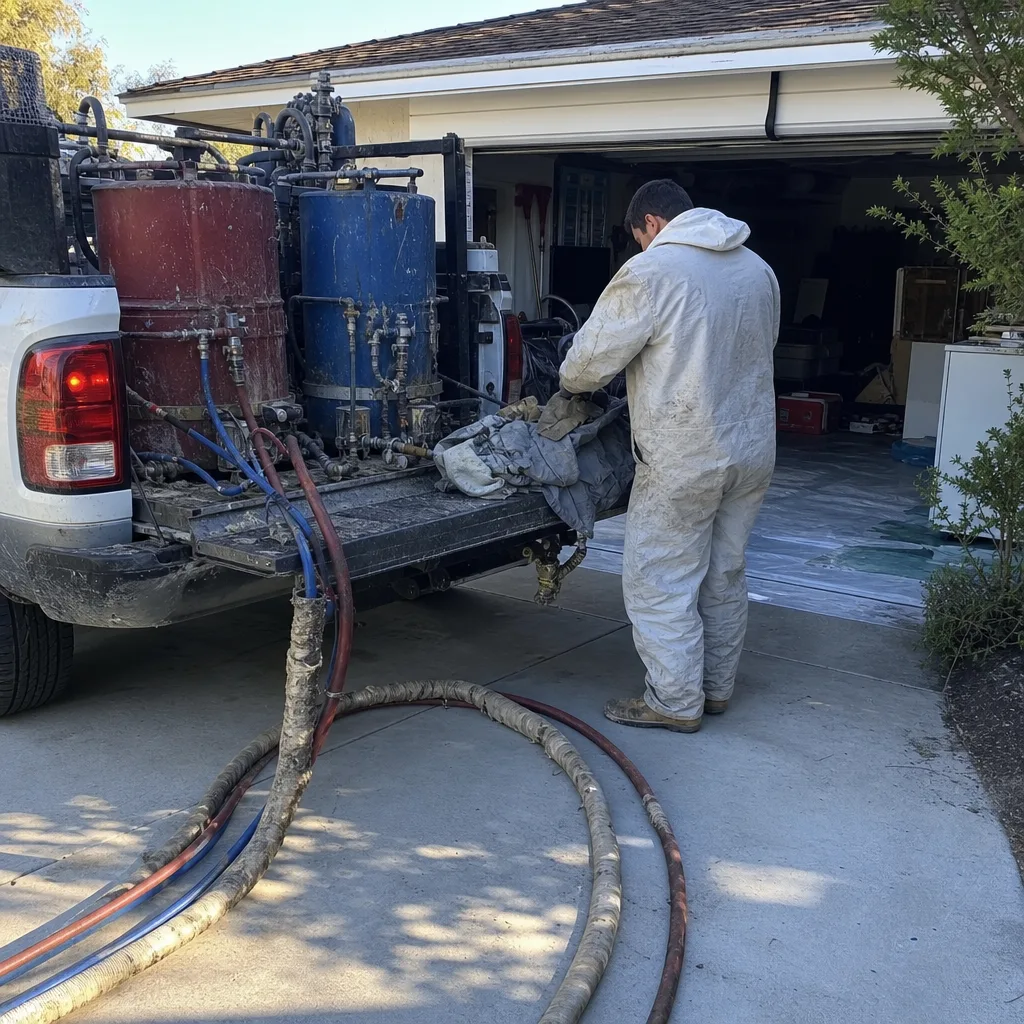
Fast, Reliable Spray Foam Insulation Across El Monte
Spray foam insulation in El Monte is usually a retrofit job, not new construction. Most homes here were built between the 1950s and 1970s with little to no cavity insulation, which means the work we do is about correcting what was never there in the first place. We run crews into El Monte from our Placentia shop regularly, and we know the tract layouts, the stucco exteriors, and the low-pitch attics that define this city’s housing stock. If your second bedroom is hot by mid-morning and your AC can’t keep up, that’s a wall and attic problem, not an HVAC problem. Call us at (855) 773-6429 and we’ll tell you what’s actually going on.
Why Placentia Insulation Is El Monte’s Preferred Spray Foam Insulation Company
We’re an insulation contractor, full stop. That’s different from what most El Monte homeowners encounter when they call a generalist who happens to offer insulation as a side service. Our crews install one trade, and every tool, truck, and conversation is built around that. We stock open-cell and closed-cell foam from Icynene and Demilec, two of the most recognized names in the category, and we match the chemistry to the application rather than defaulting to whatever’s on the truck.
Being based in Placentia gives us a real advantage for El Monte work. We can be on-site in most El Monte neighborhoods fast, and because we’re close enough to know the housing stock, we already understand what a 1960s stucco bungalow near Valley Boulevard needs before we even pull up. Alan Whitcomb, our owner, has built the company around one principle: match the material to the job. Eight brands, three installation methods, one trade. For El Monte’s older homes, that means we’re not guessing.
We carry Owens Corning, Johns Manville, Knauf, Rockwool, CertainTeed, Icynene, Demilec, and GreenFiber. Most insulation shops carry one or two lines. We carry eight, so the foam chemistry, density, and R-value are chosen for your specific attic or wall assembly, not for our inventory convenience.
Closed Cell Spray Foam Insulation in El Monte
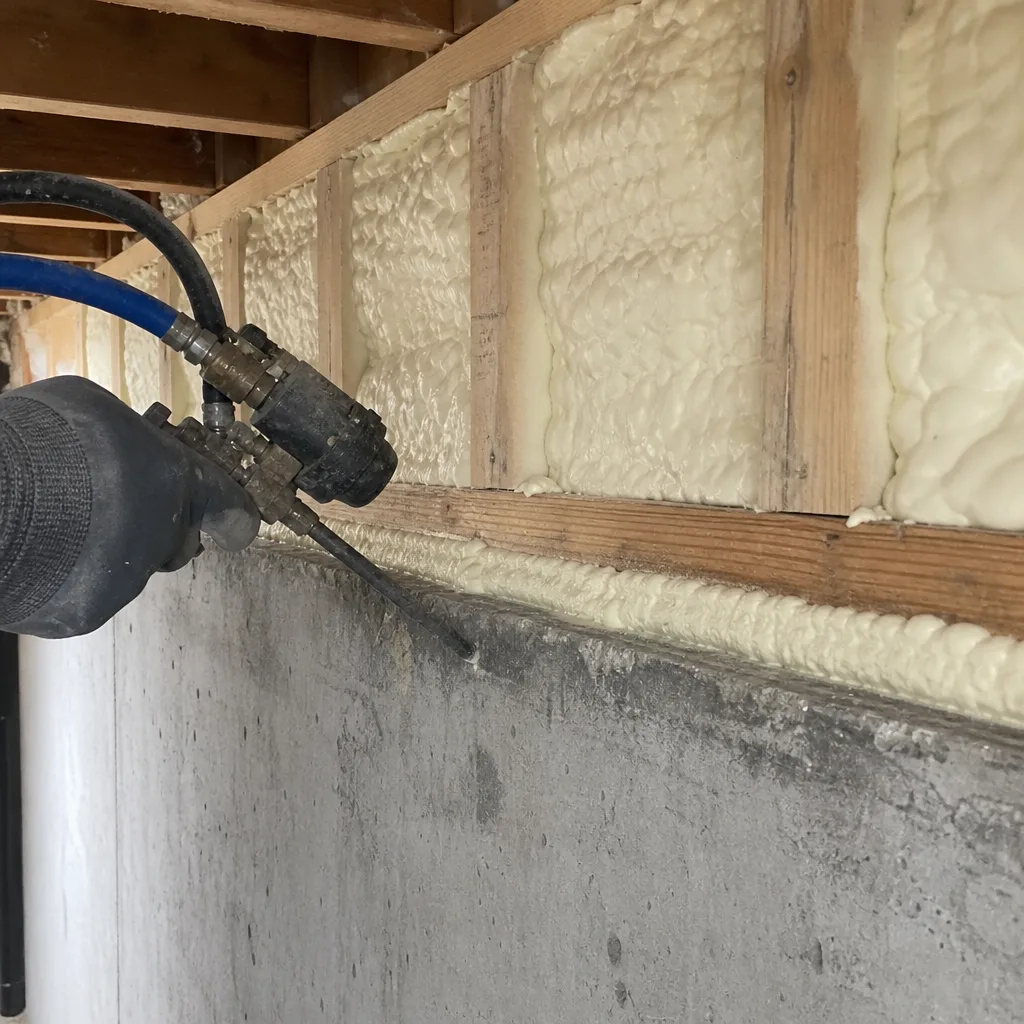
Closed Cell Spray Foam Insulation is the higher-density option we recommend for most El Monte retrofit work, especially when the home has stucco walls and zero existing cavity insulation. Closed cell foam cures into a rigid, air-sealing barrier at roughly R-6.5 to R-7 per inch, which makes it the right call when you need maximum thermal resistance in a shallow wall or attic space. In El Monte’s 1950s and 1960s tract homes, where stud bays are often only 3.5 inches deep, closed cell delivers real performance where open cell would underperform.
Exterior Wall Cavity Fills Through Stucco
We inject closed cell foam into wall cavities from the exterior, drilling through stucco in a pattern that lets foam fill the stud bays completely. This method addresses the single biggest problem in El Monte’s post-war bungalows: walls that were built with no insulation at all. A typical exterior wall fill for a 1,200-square-foot single-story El Monte home runs $3,800 to $6,500 depending on stud bay depth and access.
Attic Deck and Rim Joist Sealing
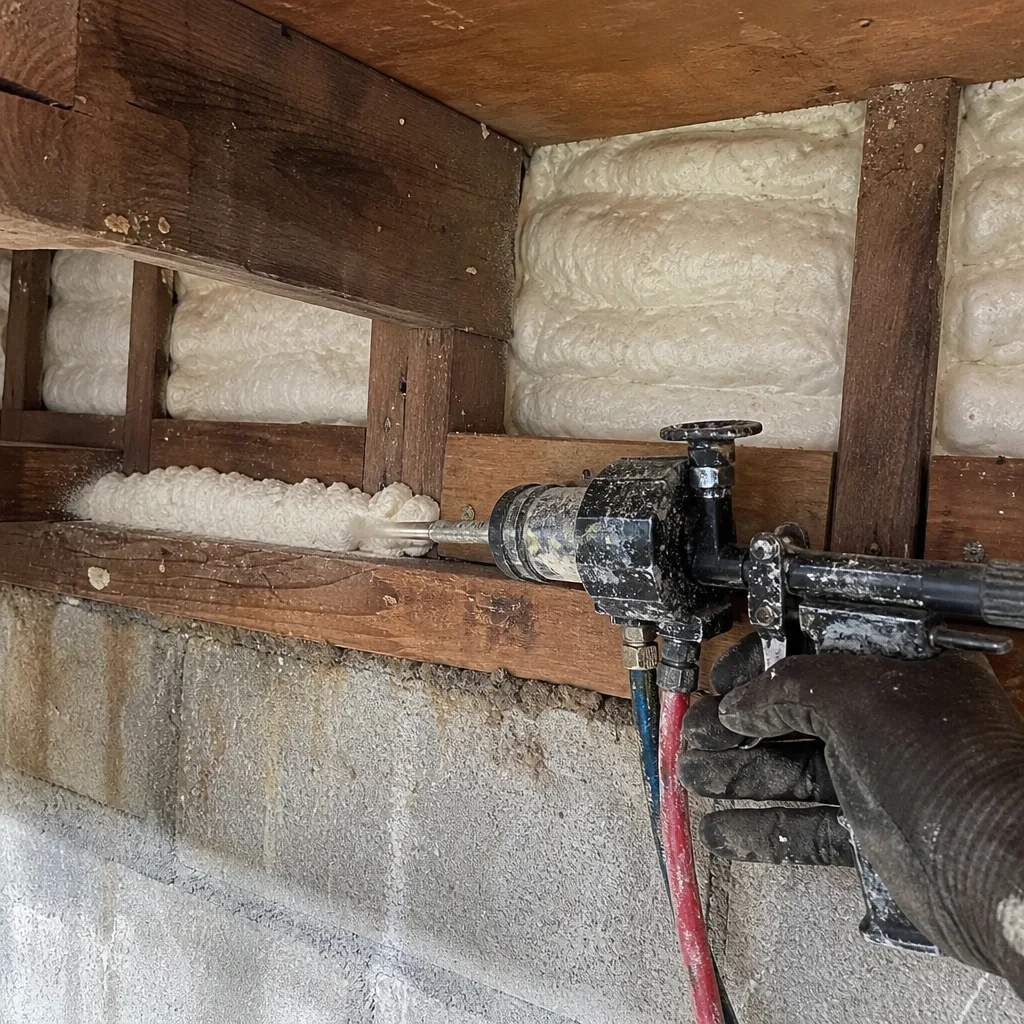
In low-pitch El Monte attics, closed cell applied to the attic side of the ceiling or directly to the roof deck stops the stack effect that pulls hot San Gabriel Valley air into the living space. Rim joist sealing in the crawlspace edge or slab perimeter runs $900 to $2,200 for a typical El Monte home, and it closes the air leaks that let afternoon heat bleed into the back bedrooms.
When the job calls for closed cell, we reach for Demilec or Icynene product depending on the substrate and the temperature conditions on install day. We don’t jerk the chemistry around to fit a supplier’s calendar.
Open Cell Spray Foam in El Monte
Open Cell Spray Foam is the lighter, more expansive foam we use in El Monte attics where the roof assembly has a proper venting path or where sound control matters as much as thermal performance. Open cell cures at roughly R-3.5 to R-4 per inch and is not an air barrier on its own, but it does a strong job at damping sound transfer and filling irregular cavities in older framing. For El Monte homes that already have adequate ventilation or where budget is the constraint, it’s a solid choice.
Attic Floor Applications for Low-Pitch Roofs
In a 1960s El Monte rancher with a low-pitch roof, open cell sprayed across the attic floor over the ceiling drywall stops the radiant heat from cooking the rooms below. The material fills the gaps between ceiling joists and seals the top plates, which is where most air leakage actually happens. A typical open cell attic floor job in El Monte runs $2,800 to $5,400 for a 1,200-to-1,500-square-foot footprint.
Interior Sound Dampening for Bedroom Walls
When a homeowner off Valley Boulevard tells us they can hear traffic from the 10 freeway through their bedroom wall, open cell sprayed into the wall cavity cuts sound transmission dramatically. It’s also the more sensible option for walls that don’t face extreme thermal loads, like interior partitions. Cost runs $1,800 to $3,800 per room depending on cavity depth and access.
Trusted Brands We Service in El Monte
We install and service spray foam from Icynene and Demilec, and we keep both open-cell and closed-cell formulations on hand for El Monte jobs. When a customer asks about a specific brand, we can actually talk through the performance differences because we work with the materials every day. We also carry CertainTeed and GreenFiber for the homes where a hybrid approach makes more sense than spraying everything. If you’ve got an old El Monte attic with degraded cellulose, we may recommend GreenFiber blown-in over air-sealed penetrations and then closed cell on the rim joists. The point is we stock enough to choose correctly.
Common Spray Foam Insulation Problems We See in El Monte Homes
- Delaminated closed cell over old cellulose: We see this a lot in the tracts near the 10 freeway. A previous contractor sprayed foam directly over a layer of decades-old, dusty cellulose without vacuuming it out or air-sealing first. The foam bonded to loose debris instead of the ceiling drywall, and within two seasons it was peeling away.
- Cooked open cell in unvented low-pitch attics: Open cell sprayed directly against the underside of a roof deck with no venting path traps San Gabriel Valley heat and moisture. During 95-degree summer weeks, that foam degrades and loses its insulative capacity. We see this in 1950s El Monte ranchers where someone sold open cell as a cheaper substitute for closed cell roof deck work.
- Skipped cavities behind stucco walls: Foaming wall cavities from the exterior through stucco without mapping the original wood-frame stud bays leaves gaps. Homeowners then wonder why one wall is cool and the adjacent wall still bleeds heat into the back bedroom. The foam was never in the cavity to begin with.
- Missing rim joist air sealing at slab edges: El Monte’s slab-on-grade homes have almost zero thermal break at the foundation perimeter. If a spray foam contractor fills the walls but skips the rim joists, the slab edge becomes a thermal highway. It’s one of the most common sources of residual heat gain we correct on follow-up inspections.
Pricing for Spray Foam Insulation in El Monte, CA
Here’s what El Monte homeowners should budget for, based on the job scope:
- Closed cell attic floor spray: $3,200 – $6,800 for a typical single-story El Monte home
- Open cell attic floor spray: $2,800 – $5,400 for the same footprint
- Exterior wall cavity fill through stucco (closed cell): $3,800 – $6,500 for a 1,200-square-foot home
- Rim joist sealing at slab edge: $900 – $2,200
- Garage ceiling spray foam: $1,400 – $3,200 depending on square footage
- Roof deck spray foam (closed cell): $4,800 – $9,500 for a low-pitch 1,200-square-foot roof assembly
Every El Monte home is different. Stud bay depth, stucco condition, attic access, and whether there’s existing insulation to remove all move the number. Call (855) 773-6429 and we’ll give you a written estimate based on an actual site visit, not a guess over the phone. Estimates are free.
We Also Serve Cities Near El Monte
Placentia Insulation serves the entire San Gabriel Valley corridor. If you’re in El Monte and need Spray Foam Insulation done right, we cover the surrounding communities too: South El Monte, North El Monte, Temple City, and Rosemead. Same crews, same brand portfolio, same straight answers.
Serving El Monte, CA — Our Local Coverage Area
We’re based in the El Monte area and know this community well. Use the map below to see our service coverage — if you’re nearby, we can almost certainly help.
FAQs About Spray Foam Insulation in El Monte
The second bedroom in an El Monte tract home almost always sits on the south or west side of the house, and in the original 1950s-1970s construction, those walls were framed without cavity insulation. By mid-morning the stucco has absorbed enough solar gain to radiate heat straight through the wall assembly into the room. The fix is closed cell spray foam injected into those wall cavities and, in most cases, air-sealing the attic above. Call (855) 773-6429 and we’ll inspect the specific bedroom and wall orientation.
Closed cell, almost always. The walls are only 3.5 inches deep in most of those post-war El Monte bungalows, and closed cell delivers R-6.5 to R-7 per inch versus open cell’s R-3.5 to R-4. That difference matters when every inch counts. Open cell still has a place in vented attics and interior sound-control walls, but for stucco exterior walls with no existing insulation, closed cell is the right chemistry.
Only after removing or properly dealing with the old cellulose. In most El Monte homes built before 1980, the attic holds a degraded, dusty layer of original cellulose that won’t bond with spray foam. We either vacuum it out entirely or, in some cases, blow fresh GreenFiber cellulose over the top after air-sealing. Spraying foam directly on top of loose debris is how you get delamination failures. We won’t do it, and if someone already did, we’ll fix it.
Yes, and this is where a lot of El Monte installs go wrong. If you’re spraying directly against the underside of the roof deck, the assembly needs a defined ventilation path above the foam, typically a ridge vent paired with eave vents. Without that, San Gabriel Valley summer heat gets trapped against the foam and shortens its service life. We map the venting before we spray, not after.
A full retrofit, meaning exterior wall cavities, attic floor or roof deck, and rim joists, takes two to four days on a typical 1,200-square-foot El Monte rancher. Attic-only jobs are usually done in a single day. Stucco drilling and patching adds time to wall-fill work. We’ll give you a schedule before we start and stick to it.
We Were Called to a 1958 Post-War Bungalow Off Valley Boulevard
We were called to a 1958 post-war bungalow off Valley Boulevard near the 10 freeway where the homeowner’s second bedroom was hitting the high 80s by mid-morning every July. Pulling the attic hatch showed a bare scatter of degraded gray cellulose over the ceiling joists and no radiant barrier. We air-sealed the top plates and flash-filled the wall cavities from the exterior with closed cell before laying a full spray foam cap over the attic deck. The room’s mid-morning temperature swing flattened out within the first heat wave, and the stucco walls stopped bleeding afternoon heat into the bedrooms.
That’s the typical El Monte retrofit. It’s not glamorous work. It’s not visible once it’s done. But it changes how a house lives through a San Gabriel Valley summer.
Ready to Fix the Heat in Your El Monte Home?
If your El Monte home was built before 1980, chances are the walls and attic are working against you. We’ll inspect it, tell you what’s actually there, and recommend the right foam chemistry for the job. Call (855) 773-6429 for a free estimate, or ask for Alan Whitcomb if you want to talk through the options directly.
Written by Alan Whitcomb, Owner at Placentia Insulation, serving El Monte since we started taking on San Gabriel Valley retrofit work.