
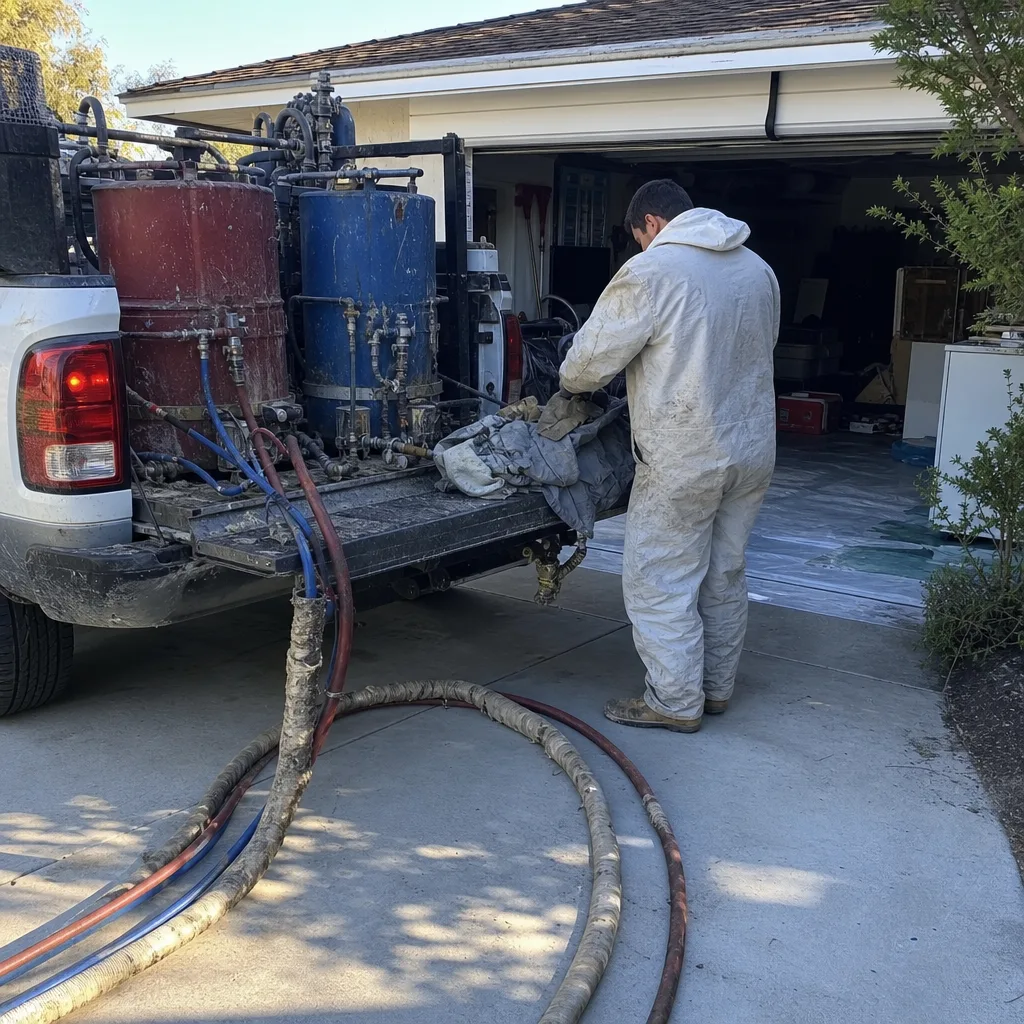
Fast, Reliable Spray Foam Insulation Across Huntington Beach
Spray foam insulation in Huntington Beach typically runs $2,200 to $7,800 depending on the area being treated, with rim joist work landing between $900 and $2,400 and crawl space encapsulation projects ranging from $3,500 to $9,000. Most jobs are completed within one to three days once materials are on site. The marine layer that rolls in off the Pacific changes everything about how insulation performs here: it’s not bitter cold you’re fighting, it’s moisture-laden fog working its way through unsealed soffit vents, rim joists, and wall cavities in homes built between the 1950s and 1970s. Our Spray Foam Insulation team knows those older Huntington Beach tracts well, because we’ve opened up dozens of attics in the 92646 and 92647 zip codes and found the same story: insulation that was never designed for salt air and persistent damp. If you’re tired of musty smells, uneven room temperatures, or energy bills that climb every summer, call (855) 773-6429 for a free assessment.
Why Placentia Insulation Is Huntington Beach’s Preferred Spray Foam Insulation Company
Placentia Insulation is a pure-play insulation contractor. That’s not a marketing line; it means every crew member, every tool, and every conversation is about one trade. Most insulation contractors carry one or two product lines. We carry eight: Owens Corning, Johns Manville, Knauf, Rockwool, CertainTeed, Icynene, Demilec, and GreenFiber, and we also handle Reflectix repair in Huntington Beach. For Huntington Beach homeowners, that breadth matters because your home’s problem isn’t always the same as your neighbor’s. A 1968 ranch off Magnolia Street in 92647 has different failure modes than a newer build near the wetlands in 92648. We match the material to the job, not the job to whatever we have on the truck.
Alan Whitcomb leads our team with a straightforward approach: assess first, recommend second, sell nothing you don’t need. Homeowners in Huntington Beach consistently tell us they appreciate that we explain the difference between open-cell and closed-cell foam, show them where air is leaking, and let them decide with real information. We’re not a generalist contractor that treats insulation as an afterthought.
Rim Joist Spray Foam in Huntington Beach
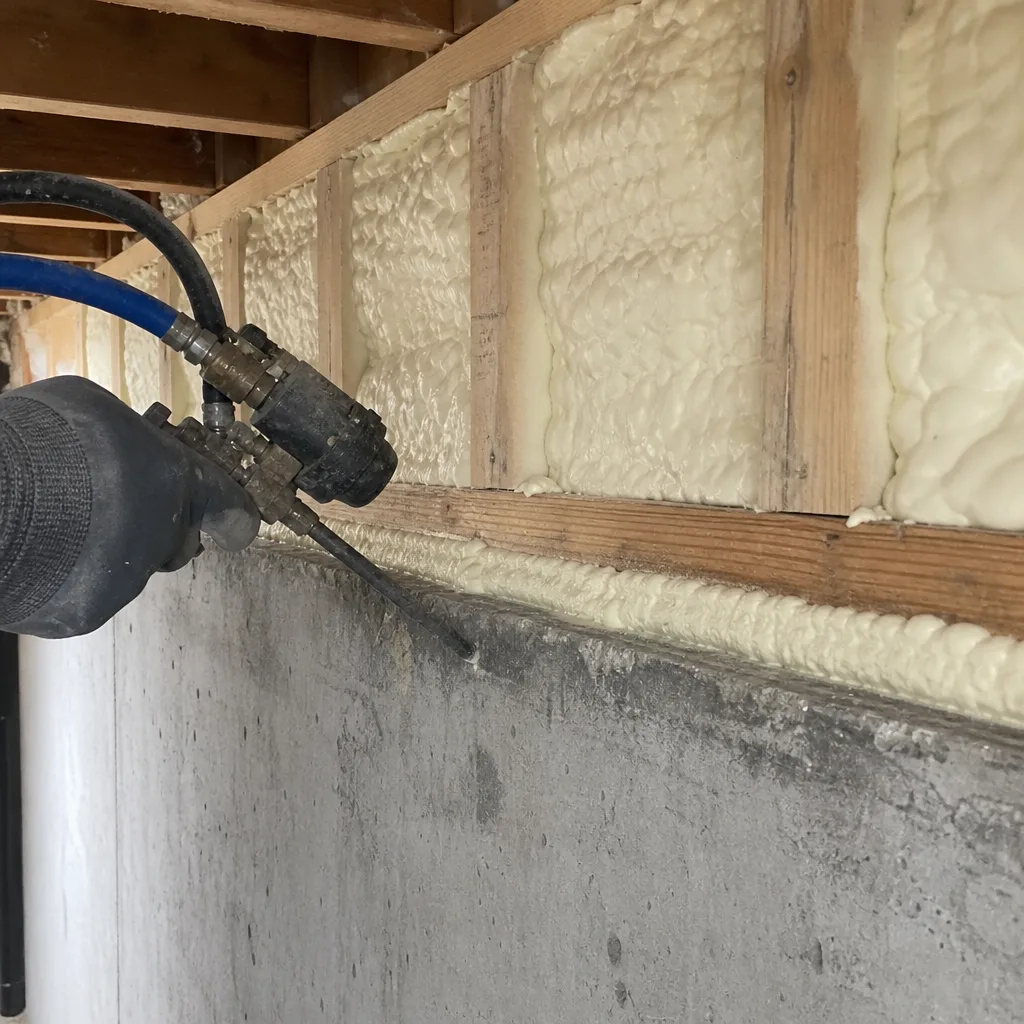
Rim joist spray foam is one of the most overlooked air-sealing upgrades for Huntington Beach homes, particularly in the 1950s and 1960s single-story tracts where the rim joist – the wood band where your floor framing meets the foundation – was never sealed. In those older homes, marine-layer fog and damp air push through the rim joist gap constantly, and that’s why you’ll feel cold floors in January and notice musty smells in closets near exterior walls. We spray closed-cell foam directly onto the rim joist, sealing the gap and creating a vapor barrier in one application. A typical rim joist spray foam job in Huntington Beach runs $900 to $2,400 depending on linear footage and access.
Closed-Cell for Rim Joists
We use Demilec closed-cell foam for rim joist work in Huntington Beach for one reason: it’s the only foam chemistry that stops moisture vapor while also sealing air. Open-cell foam breathes, which is fine for attic rafters in some climates, but Huntington Beach’s marine layer pushes damp air against the rim joist for most of the year. Closed-cell foam stops that vapor migration at the source.
Why Wait Until You Smell It?
By the time you notice a musty smell near exterior walls, moisture has already been migrating through the rim joist for years. In older inland tracts like 92646 and 92647, we routinely find rim joists that have been leaking marine air since the home was built. Sealing them early prevents mold, reduces drafts, and keeps floor temperatures steadier throughout the year.
Crawl Space Spray Foam Insulation in Huntington Beach
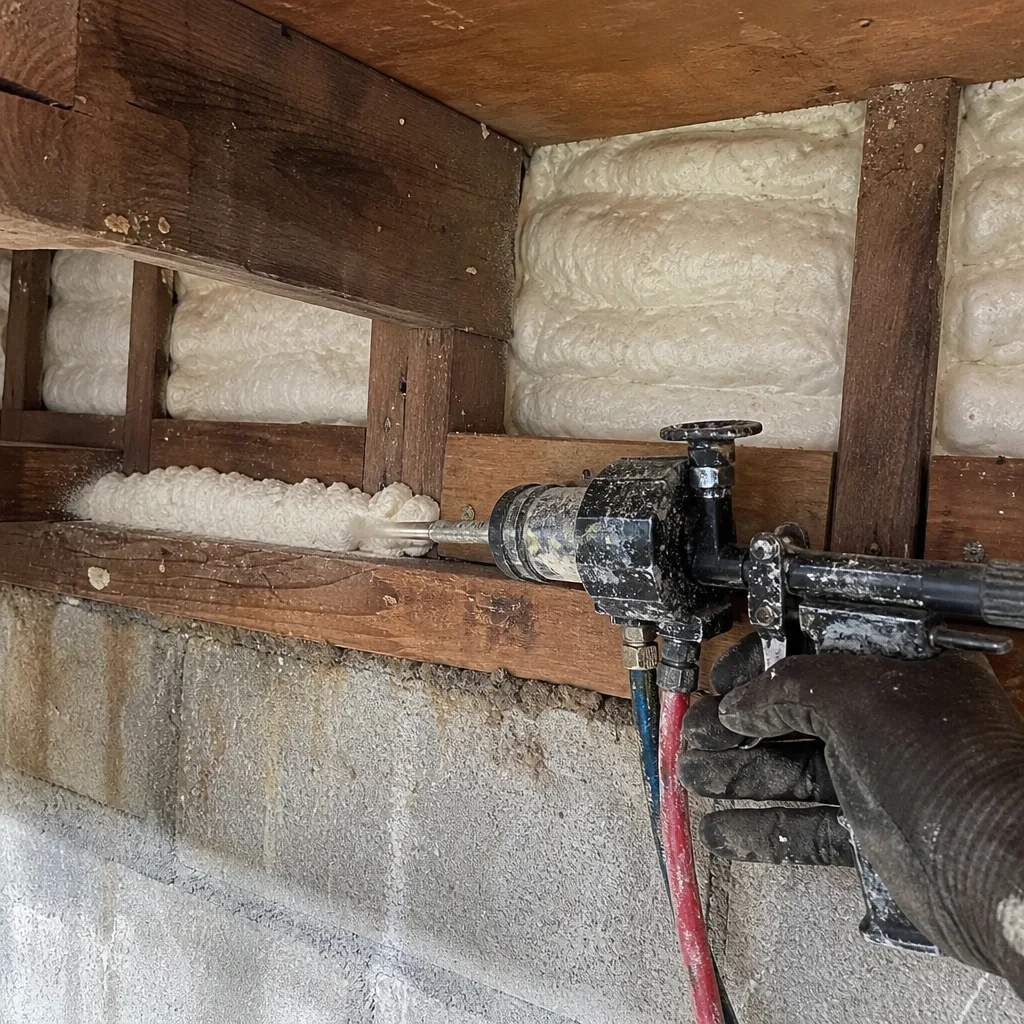
Crawl space spray foam insulation in Huntington Beach is a targeted solution for homes built on raised foundations, which covers a significant share of the 1950s and 1960s ranch-style stock in 92646 and 92647. The crawl space is where marine-layer moisture pools first: damp soil, exposed framing, and unsealed vents all pull fog-laden air under the house. That moisture migrates up into the floor system, and eventually into the living space. We spray closed-cell foam directly onto the crawl space walls and rim joist area, sealing the space from the soil vapor and the outside air. A full crawl space encapsulation in Huntington Beach typically runs $3,500 to $9,000 depending on square footage, access height, and whether a vapor barrier is already installed.
Closed-Cell Foam on Foundation Walls
For coastal Huntington Beach crawl spaces, we recommend closed-cell foam on the foundation walls rather than open-cell or fiberglass batts. Closed-cell foam doesn’t absorb moisture, and it doesn’t provide a food source for mold. That’s not a preference; it’s the right chemistry for a crawl space that sees damp conditions for most of the year.
Salt Air and Fastener Corrosion
If your home sits closer to the coast in 92648 or 92649, the salt air accelerates corrosion on exposed fasteners, staples, and radiant barrier materials in the crawl space. We see rusted-out nails and staples that have failed prematurely, especially in older homes where the original vapor barrier was thin or torn. Spray foam applied over those corroding metal components isn’t just ineffective; it traps moisture and accelerates the damage. We inspect for corrosion before we spray, and we address it.
Trusted Brands We Service in Huntington Beach
We service and install spray foam from Icynene and Demilec, and we also offer Rockwool mineral wool for Huntington Beach homeowners who want fire resistance and sound dampening alongside thermal performance. Because Placentia Insulation stocks eight brands, we’re not tied to one manufacturer’s answer for every situation. For a 1960s ranch in 92646 with unsealed wall cavities, we’re likely recommending Icynene closed-cell foam for the rim joist and crawl space. For a newer addition that needs sound control between rooms, Rockwool might be the better call. Our Huntington Beach customers get the right material for their specific problem, not whatever happens to be on our truck that week.
Common Spray Foam Insulation Problems We See in Huntington Beach Homes
- Condensation trapped between spray foam and original fiberglass batts in unsealed wall cavities. In older Huntington Beach homes, original fiberglass batts were often installed without air-sealing. When foam is sprayed over the top, moisture migrates through the unsealed gap and condenses on the batts, leading to mold growth behind the foam.
- Salt-air corrosion of fasteners and radiant barrier staples in attics near the coast. Homes in 92648 and 92649 see rusted-out staples and nails in attic spaces, which compromises the foam’s adhesion. We inspect for corrosion before spraying; it’s a step most general contractors skip entirely.
- Foam applied over unsealed soffit and attic vents in 1950s to 1970s tracts. In the older inland tracts around 92646 and 92647, original soffit vents were never sealed. When foam is sprayed without addressing those vents, it blocks necessary ventilation and worsens moisture buildup in the marine layer.
- Original fiberglass batts that have compressed and moisture-stained from decades of fog infiltration. That 1968 ranch home off Magnolia Street we worked on? The batts had sagged so badly they were doing almost nothing. Air-sealing comes first. R-value is secondary when the air is leaking through the ceiling plane.
Pricing for Spray Foam Insulation in Huntington Beach, CA
Here’s what you can expect to pay for spray foam work in Huntington Beach. Rim joist sealing runs $900 to $2,400. Crawl space encapsulation with closed-cell foam typically runs $3,500 to $9,000. Attic roof deck spray foam for a standard 1,200 to 1,800 square foot ranch home in 92646 or 92647 runs $4,500 to $7,800. What moves the number: access height in the crawl space, whether existing insulation needs removal, how much air-sealing is required before spraying, and whether corrosion has damaged the substrate. We give free estimates, and we give them honestly. Call (855) 773-6429 and we’ll come out, assess what’s actually wrong, and quote you a real number.
We Also Serve Cities Near Huntington Beach
Placentia Insulation serves the entire coastal Orange County area around Spray Foam Insulation in Huntington Beach, including Midway City, Fountain Valley, Westminster, and Costa Mesa. If you’re in a neighboring city and dealing with the same marine-layer moisture issues, we’ll bring the same assessment process and the same brand selection to your project.
Serving Huntington Beach, CA — Our Local Coverage Area
We’re based in the Huntington Beach area and know this community well. Use the map below to see our service coverage — if you’re nearby, we can almost certainly help.
FAQs About Spray Foam Insulation in Huntington Beach
Huntington Beach’s marine layer pushes moisture-laden fog through unsealed soffit and attic vents for most of the year, so the primary threat is condensation, damp attic spaces, and mold growth, not extreme heat or cold. Closed-cell spray foam is the right tool here because it acts as a vapor barrier while also sealing air leaks. Inland Orange County cities like Westminster or Fountain Valley don’t face the same persistent fog, so open-cell foam or fiberglass batts perform differently there.
We inspect for corrosion before we spray. Homes near the coast in 92648 and 92649 often have rusted fasteners, staples, and radiant barrier materials from years of salt-air exposure. Spraying foam over corroded metal doesn’t work; it traps the moisture and makes the problem worse. We remove or treat the corroded components first, then apply the foam. It’s a step most insulation contractors skip because it adds time to the job, but it’s the difference between a foam application that lasts 20 years and one that fails in five.
No, and we get asked this constantly. If you have original fiberglass batts from the 1960s, they’ve likely compressed, moisture-stained, and lost most of their R-value. More importantly, they were never air-sealed. Spraying foam over the top traps condensation between the foam and the batts, which leads to mold growth behind the foam. The correct sequence is: remove the old batts, air-seal the cavity, then apply closed-cell foam. That’s the only way to block the marine air that’s been leaking through your home for 50 years.
For raised foundations in 92646 and 92647, we recommend closed-cell foam on the crawl space walls and rim joist area, not open-cell foam or fiberglass. Closed-cell foam doesn’t absorb moisture and doesn’t provide a food source for mold, which matters when the crawl space sees damp soil and marine-layer air for most of the year. Pair it with a proper vapor barrier on the ground, and the crawl space stops contributing moisture to the rest of the house.
Musty odors come from moisture, and in Huntington Beach that moisture is coming from the marine layer migrating through unsealed gaps in the attic, rim joist, and crawl space. Closed-cell spray foam seals those gaps and blocks the vapor migration at the source. In that 1968 ranch off Magnolia Street, the homeowner noticed a drop in musty odors within weeks of us air-sealing the attic floor and rim joists. We can’t promise every home responds that quickly, but we can promise that sealing the air leaks is the only way to stop the moisture that causes the smell in the first place. Call (855) 773-6429 for a free assessment of where your home is leaking.
Ready to fix the actual problem instead of treating symptoms? Call Placentia Insulation at (855) 773-6429 for a free estimate on spray foam insulation in Huntington Beach. We’ll assess your home, explain what’s wrong in plain language, and quote you a real number. No pressure, just answers.
Written by Alan Whitcomb, Owner at Placentia Insulation, serving Huntington Beach and coastal Orange County.