
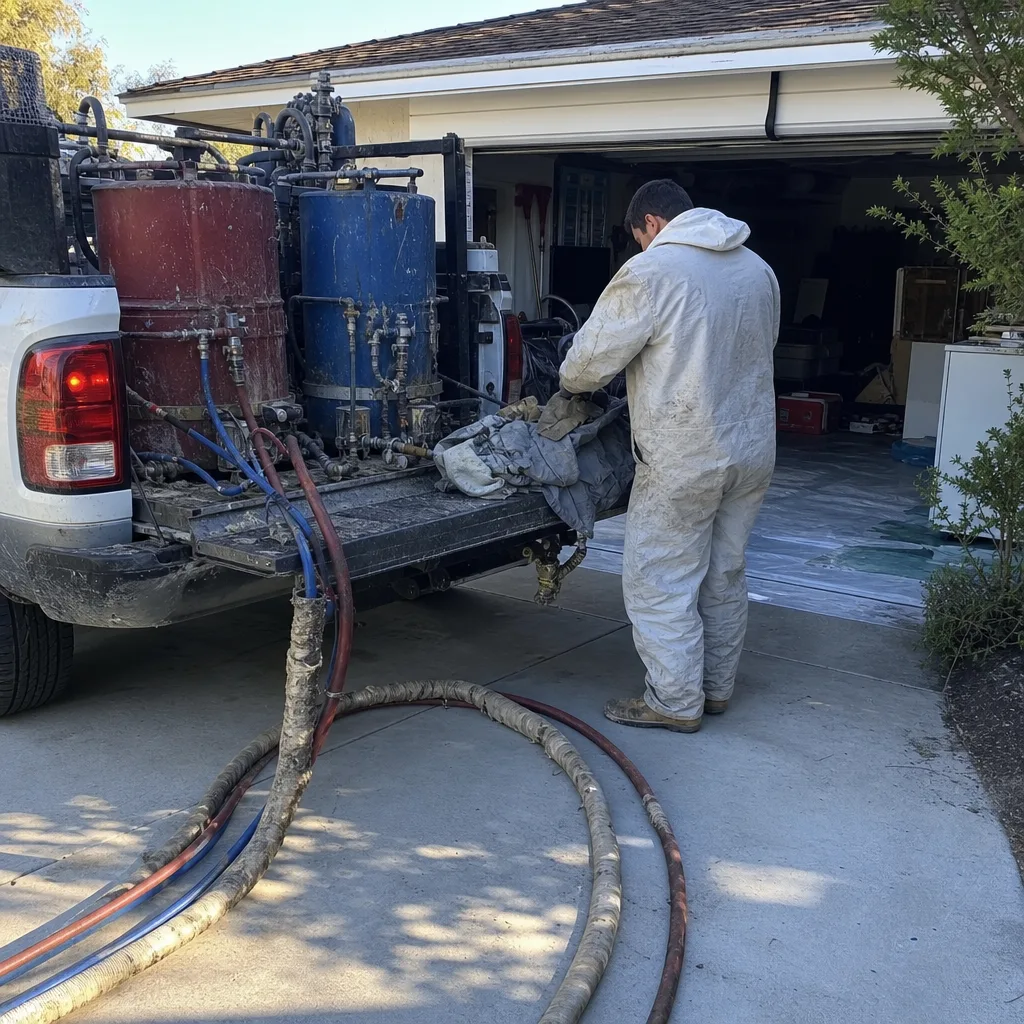
Fast, Reliable Spray Foam Insulation Across Lawndale
Spray foam insulation in Lawndale typically runs $2.50 to $6.00 per board foot installed, with most whole-attic or rim joist jobs landing between $1,800 and $4,500 depending on foam type and square footage. That’s the honest math we walk every Lawndale homeowner through before any work begins. Our crews know the tract blocks off Hawthorne Boulevard and the apartment conversions near Prairie Avenue, which means we arrive prepped for shallow attics, unvented roof decks, and the condensation patterns the marine layer leaves behind. Call (855) 773-6429 and we’ll schedule a free attic assessment, usually within 48 hours of your call.
Why Placentia Insulation Is Lawndale’s Preferred Spray Foam Insulation Company
We focus on one trade: insulation. No plumbing, no roofing side jobs. When a Lawndale homeowner calls us about a hot south-facing wall or a damp attic, the person who shows up is a spray foam installer who has spent years working with Icynene and Demilec open-cell and closed-cell chemistry. Alan Whitcomb started this company on the principle that a specialist solves problems a generalist doesn’t even see, and that distinction matters in Lawndale’s 90260 and 90261 ZIP codes, where half the homes still have original 1950s attics with no real air barrier at all.
Lawndale homeowners tell us the same thing after we finish: the upstairs stops baking in the afternoon, or the musty smell near the sill plate disappears. We work fast but we don’t rush. A typical rim joist job in Lawndale takes a day. A full attic lift done right, including air sealing and ventilation corrections, takes two to three. We carry eight brands on our trucks, which means we pick the foam chemistry that fits your attic’s ventilation reality, not whatever one supplier happened to stock that week.
When a Lawndale homeowner calls at 7 a.m. because they just found water staining on a bedroom ceiling below an unvented roof deck, we answer. Our typical response to Lawndale is same-day or next-morning for urgent assessments. You’re not waiting on a dispatcher in another county. You’re talking to the crew that will actually be in your attic.
Spray Foam Wall Insulation in Lawndale
Spray foam wall insulation in Lawndale is often the only practical retrofit for 1950s stucco tract houses on slab foundations, because those walls typically have no cavity insulation at all, just empty space between the stucco lath and the drywall. The afternoon sun that hits south- and west-facing walls in Lawndale soaks through that stucco, and without insulation, that heat pours straight into bedrooms and living spaces. We typically install closed-cell Demilec or Icynene foam into wall cavities from the interior or exterior, depending on access, at a cost of $3.50 to $6.00 per board foot, with most single-wall Lawndale jobs landing between $1,200 and $3,000.
What makes spray foam wall insulation the right choice in Lawndale is that it creates an air seal as well as a thermal barrier. The marine layer that rolls in almost every evening pushes humid air against exterior walls, and in older Lawndale homes that humidity can condense inside the wall cavity. Closed-cell foam stops that air movement entirely.
Closed-Cell for Stucco Cavities
On Lawndale’s stucco tract homes, we lean toward closed-cell foam for wall cavities because its density holds up against the moisture that migrates through stucco after heavy marine-layer nights. Closed-cell also adds structural rigidity, which matters on 70-year-old framing. At roughly R-6.5 per inch, it delivers the thermal performance a 2×4 wall cavity needs without requiring us to tear out interior drywall.
Injection Through Small Access Points
Many Lawndale homeowners don’t want us removing large sections of stucco or drywall. We can inject open-cell foam through small drilled access points, usually 1 to 2 inches, which keeps the work minimally invasive. Icynene open-cell works well here because it expands gently and fills odd-shaped cavities without over-pressurizing old plaster. This approach usually carries a lower material cost per board foot, though we may be in the home longer for installation.
Rim Joist Spray Foam in Lawndale
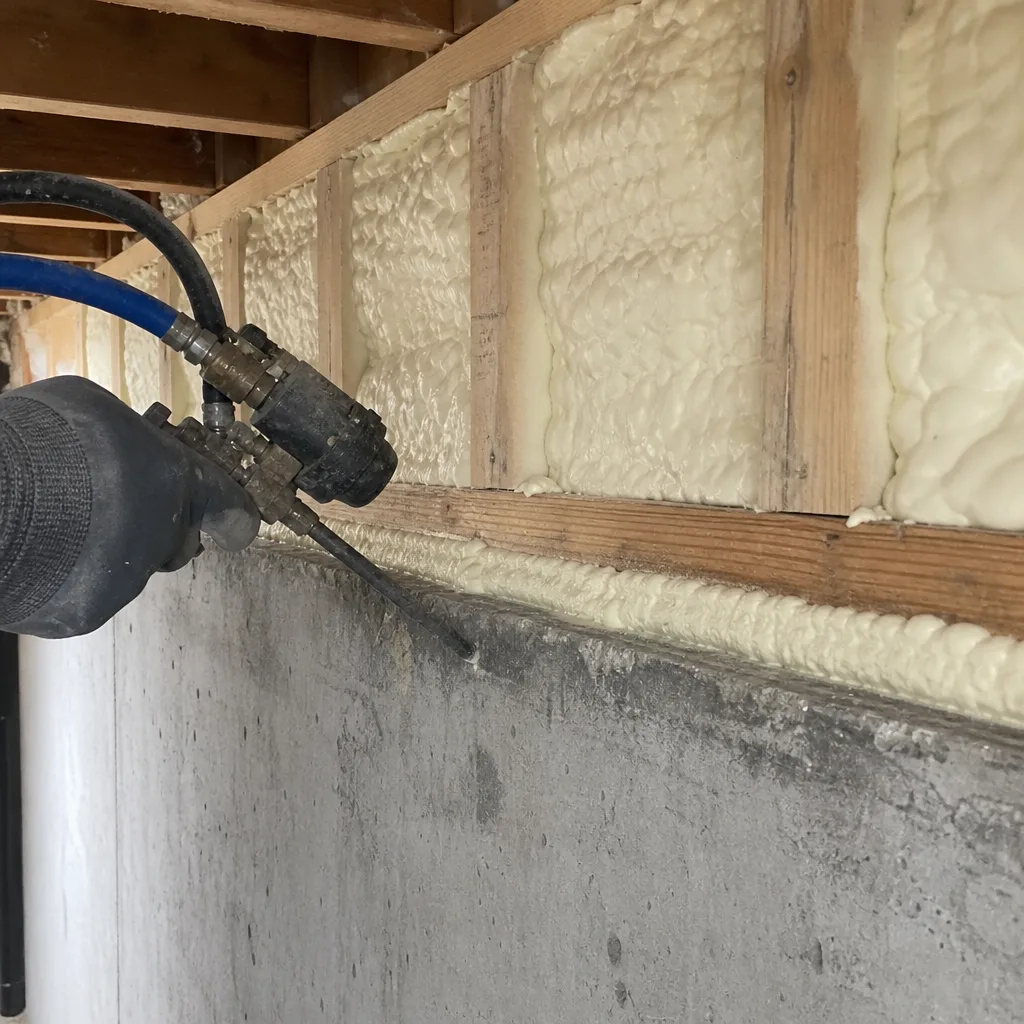
Rim joist spray foam in Lawndale addresses one of the most frequently overlooked air leaks in the city’s slab-foundation tract homes: the band board where the first-floor framing meets the foundation. In Lawndale’s 1950s and 1960s houses, that rim joist area is often nothing more than bare wood with gaps at the sill plate. Nightly marine-layer humidity moves straight through those gaps into the conditioned space, which is why so many Lawndale homeowners notice a persistent musty smell in ground-floor closets next to exterior walls. A typical Lawndale rim joist sealing job runs $800 to $2,200 depending on perimeter length and access clearance.
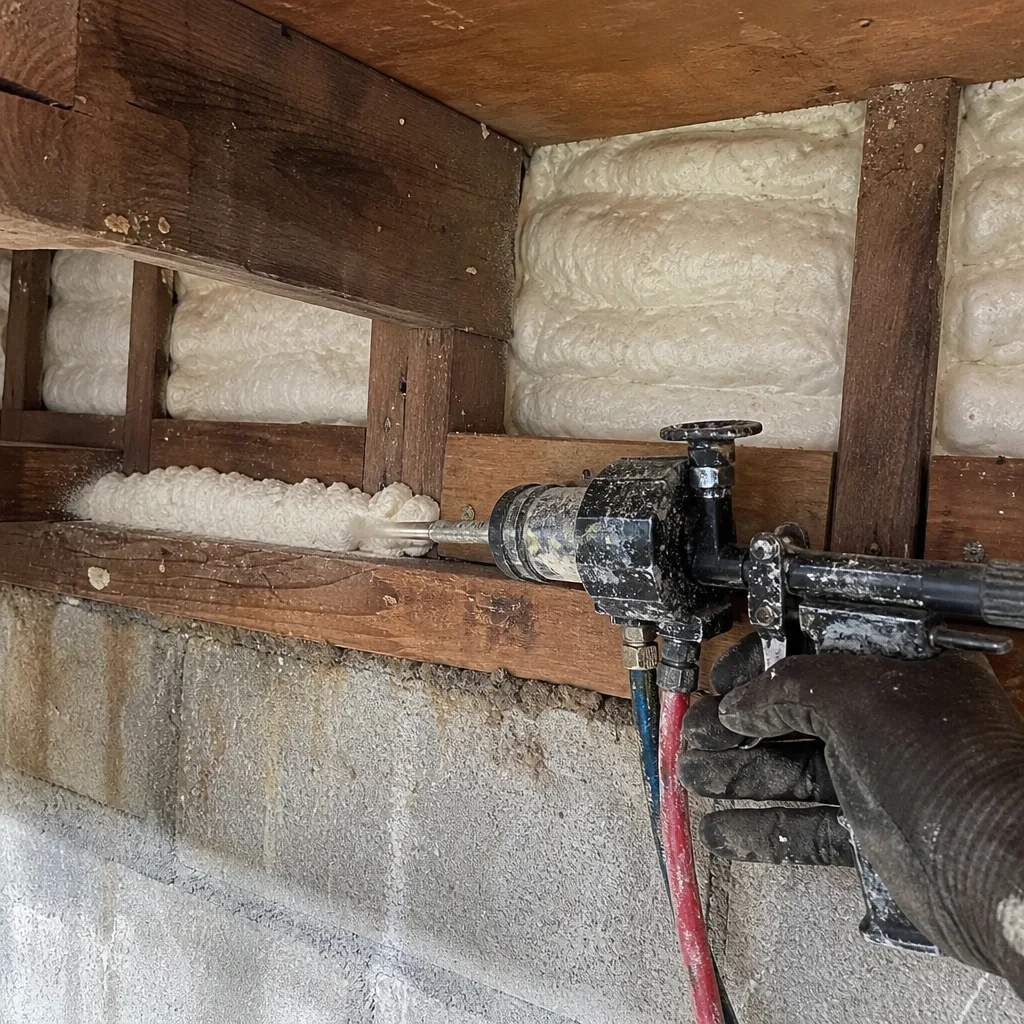
We spray closed-cell foam along the entire rim joist band, which seals the air leaks and insulates the wood at the same time. On a slab foundation, this is the single highest-impact air sealing improvement you can make, because there’s no crawlspace to buffer the humidity before it hits your floors and walls.
Marine-Layer Moisture Control at the Sill Plate
An important detail in Lawndale that we account for on every rim joist job: the sill plate sits directly on concrete, and concrete wicks moisture. When we spray the rim joist, we carry the foam down over that sill plate junction so condensation can’t form on the wood. That’s a standard practice for us here, because the marine layer keeps ground-level humidity high even in summer.
Sealing Before Storm Season
Lawndale doesn’t get hard freezes, but the winter months bring weeks of damp, overcast conditions that push moisture against foundation walls. Sealing rim joists before late fall means that through the wettest part of the year, your baseboards and lower wall cavities stay dry. We schedule rim joist work in Lawndale year-round, but if you’re thinking about it, early autumn is a good target.
Trusted Brands We Service in Lawndale
Every spray foam job we install in Lawndale comes from a brand we trust to perform in coastal humidity and unconditioned attics. We install Icynene open-cell for interior walls and ceiling cavities where moisture diffusion needs to keep working in both directions. We install Demilec closed-cell on rim joists, roof decks, and anywhere moisture resistance is non-negotiable. Because we maintain local stock and a direct relationship with both manufacturers, we don’t face the supply delays that tie up single-brand companies. If a Lawndale project calls for a fiberglass or mineral wool component alongside the foam, we draw from Owens Corning, Johns Manville, Knauf, Rockwool, CertainTeed, and GreenFiber. That’s eight brands, three installation methods, and one focused trade.
Common Spray Foam Insulation Problems We See in Lawndale Homes
- Foam sprayed directly on an unvented low-slope roof deck. This is the most common mistake we correct in Lawndale. The foam seals the deck so tightly that moist marine-layer air condenses against the sheathing from the inside, and within a few years the roof sheathing rots without any visible leak.
- Old ductwork buried under fresh foam. In the shallow attics around William Green Park, we regularly find 60-year-old ducts that leak air and condensation. Spraying foam over those ducts locks in the moisture problem and makes future duct replacement exponentially harder, so we always recommend addressing duct condition before foaming.
- Rim joist foam without sill plate treatment. Slab foundations in Lawndale wick moisture, and if the foam doesn’t extend over the sill plate junction, condensation forms on the wood and mold follows. We see this in homes where a previous contractor treated rim joists as a simple perimeter seal with no thought to ground moisture.
- Open-cell foam in locations that need a vapor barrier. Open-cell foam is vapor-open, which is fine in many Lawndale attics, but against a low-slope roof deck that gets cool from the marine layer every night, it can allow moisture to reach the sheathing. Choosing the wrong foam chemistry for the deck is a mistake we fix by removing the open-cell and replacing it with a properly ventilated closed-cell assembly.
Pricing for Spray Foam Insulation in Lawndale, CA
Here are the numbers we quote on Lawndale projects, based on typical tract home sizes in 90260 and 90261. Whole-attic open-cell spray foam in a 1,100 to 1,400 square foot Lawndale tract house runs $2,200 to $3,900. Rim joist sealing around a slab foundation home runs $800 to $2,200. Wall cavity insulation for a single south-facing wall runs $1,200 to $3,000. A full spray foam roof deck upgrade, including the ventilation corrections that Lawndale’s humid climate demands, runs $4,000 to $9,000 depending on deck area and access. The cost drivers are foam type, square footage, and how much prep work the attic needs first. We give a written quote before any work starts, and the estimate is free. Call (855) 773-6429 for an exact number on your home.
We Also Serve Cities Near Lawndale
Beyond our Lawndale work, our Spray Foam Insulation crews regularly serve Marina del Rey, Hawthorne, Del Aire, and Alondra Park. If you own a home or rental property in any of these nearby communities, you’re getting the same specialist team and the same eight-brand material library. Our Lawndale service area runs throughout the South Bay, and we schedule jobs across these neighboring cities every week.
Serving Lawndale, CA — Our Local Coverage Area
We’re based in the Lawndale area and know this community well. Use the map below to see our service coverage — if you’re nearby, we can almost certainly help.
FAQs About Spray Foam Insulation in Lawndale
Yes, but only if the foam is paired with a ventilation or dehumidification strategy specific to Lawndale’s marine-layer climate. In Lawndale’s low-slope, unvented roof decks, closed-cell spray foam can seal the deck so tightly that moisture condenses on the sheathing from the interior, which rots the wood within a few years. That’s why we don’t treat Lawndale attics like a dry-climate attic. On every Lawndale roof deck project we either add ridge venting and baffles to create airflow above the foam, or we install a dehumidification approach when ventilation isn’t structurally possible. The foam itself isn’t the problem; applying it without accounting for nightly condensation is. Call (855) 773-6429 and we’ll tell you which path fits your roof.
We work section by section, using low-profile spray rigs and installing from the attic access point rather than walking on joists that can’t support weight. The attics around William Green Park are often only 18 to 30 inches deep at the peak, with old duct runs crossing through the middle, so we inspect the ducts first and advise whether they should be replaced before foaming. On a 1950s tract house near William Green Park, we found original insulation full of rusted staples and water stains, clear signs of decades of condensation. After sealing the rim joists with Icynene spray foam, we installed a ridge vent and baffles to keep the deck dry, and the homeowner reported the afternoon sun no longer baked the south-facing wall. That’s the sequence that works in Lawndale’s shallow attics: assess, correct, then foam.
Most spray foam insulation work in Lawndale does not require a building permit when it’s limited to insulating existing cavities and rim joists, but any roof deck work that involves structural changes or ventilation modifications may trigger a permit review with the City of Lawndale’s building department. We handle all applicable permitting on Lawndale projects. Because we work in the city regularly, we’re familiar with the local inspection process and can tell you during the estimate whether your specific project will need one. Don’t guess on permit requirements; an unpermitted roof deck modification can come back to bite when you sell. We make the call for you.
The most effective sequence for a 1950s Lawndale stucco tract home is rim joist sealing first, then attic air sealing and insulation, then wall cavities if budget allows. Rim joist sealing with closed-cell Demilec foam stops the ground-level moisture intrusion that slab foundations wick up from the soil. Attic air sealing and open-cell Icynene foam cut the heat gain from the low-slope roof. Wall cavity injection into those empty stucco walls, when the budget permits, stops the afternoon sun from baking interior rooms. Each step addresses a different layer of a home that was built before insulation codes existed. A focused approach, done in the right order, has the biggest effect on comfort and energy spend.
When we insulate the garage ceiling or rim joists of a Lawndale townhome, we always work around the opener tracks, door sensors, and any security mounting points without disturbing them. The tighter clearances in Lawndale’s alley-load and attached townhome garages mean we plan the spray pattern before we start, masking off the opener motor and tracks so no foam overspray clogs sensor lenses. Because we insulate the garage ceiling rather than the door itself, your door’s function and security remain untouched. If you’re storing anything sensitive in the garage, we’ll flag any air leaks around the door perimeter that could let damp marine air in, and we’ll tell you whether a door sweep or seal replacement is worth doing alongside the insulation.
If your Lawndale home is fighting the marine layer, the afternoon sun, or a 70-year-old attic that never got insulated, call us at (855) 773-6429 for a free assessment. Alan Whitcomb and the Placentia Insulation team work in Lawndale every week, and we’ll give you a straight answer on what your house actually needs.
Written by Alan Whitcomb, Owner at Placentia Insulation, serving Lawndale and the South Bay with spray foam, attic, and blown-in insulation.