
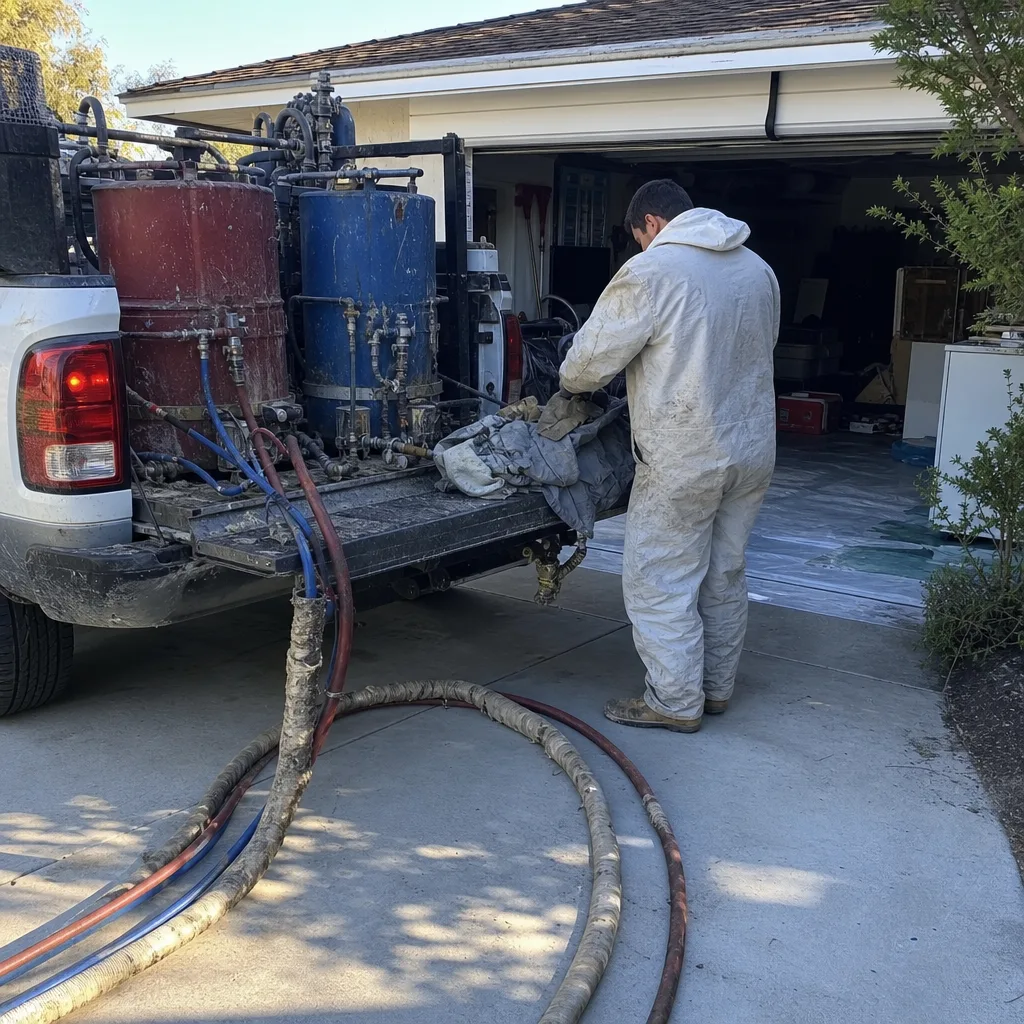
Fast, Reliable Spray Foam Insulation Across Mead Valley
Spray foam insulation in Mead Valley does two jobs at once: it seals the building envelope against the inland heat and adds R-value where older homes have almost none. Most Mead Valley houses were built between the 1970s and 1990s, long before California’s current Title 24 energy standards existed. That means thin, settled, or completely missing insulation in attics and walls – and utility bills that reflect it every July and August.
Our crews know the 92570 ZIP well. We respond to Mead Valley calls within one business day and stock the foam chemistries that perform in this specific climate. Call (855) 773-6429 for a free estimate and we’ll tell you exactly what your attic needs – and what it doesn’t.
Why Placentia Insulation Is Mead Valley’s Preferred Spray Foam Insulation Company
We work exclusively in insulation. It’s not a side service attached to a roofing or HVAC business. Every job our crews take in Mead Valley is an insulation job, and the scope includes three lines: attic insulation, Spray Foam Insulation, and blown-in. That narrow focus matters when a technician is standing in a 1980s attic trying to figure out why the foam won’t adhere or the decking reads 150°F at noon.
Our product library spans eight brands – Owens Corning, Johns Manville, Knauf, Rockwool, CertainTeed, Icynene, Demilec, and GreenFiber. Most insulation contractors carry one or two lines. We carry eight, and that’s why a Mead Valley homeowner gets the right foam chemistry for their specific wall assembly instead of whatever one brand rep happened to stock. Alan Whitcomb, who leads our team, has built the whole operation around matching material to method.
Mead Valley customers call us from rural lots, stucco homes, and owner-built properties that don’t share the same floor plan as anything else on the block. We know what that means for venting strategy and foam selection. That local familiarity shows up in our recommendations.
Closed Cell Spray Foam Insulation in Mead Valley
Closed Cell Spray Foam Insulation is our most common recommendation for Mead Valley homes with stucco exterior walls and unvented attics. Closed cell foam cures rigid, adds structural strength, and acts as a vapor barrier – which matters tremendously in a climate where hot, dry outdoor air meets cool interior surfaces. For a typical Mead Valley attic retrofit, closed cell runs roughly $2.10 to $3.40 per board foot installed, and a full 1,000-square-foot attic application usually lands between $4,200 and $8,900 depending on depth and substrate condition.
We match the foam to the assembly. On a stucco-clad wall with no interior vapor retarder, closed cell is the right call. On a vented attic floor where air sealing matters less than cost, we may steer you elsewhere. The chemistry has to fit the structure, not the reverse.
Rim Joist and Knee Wall Sealing
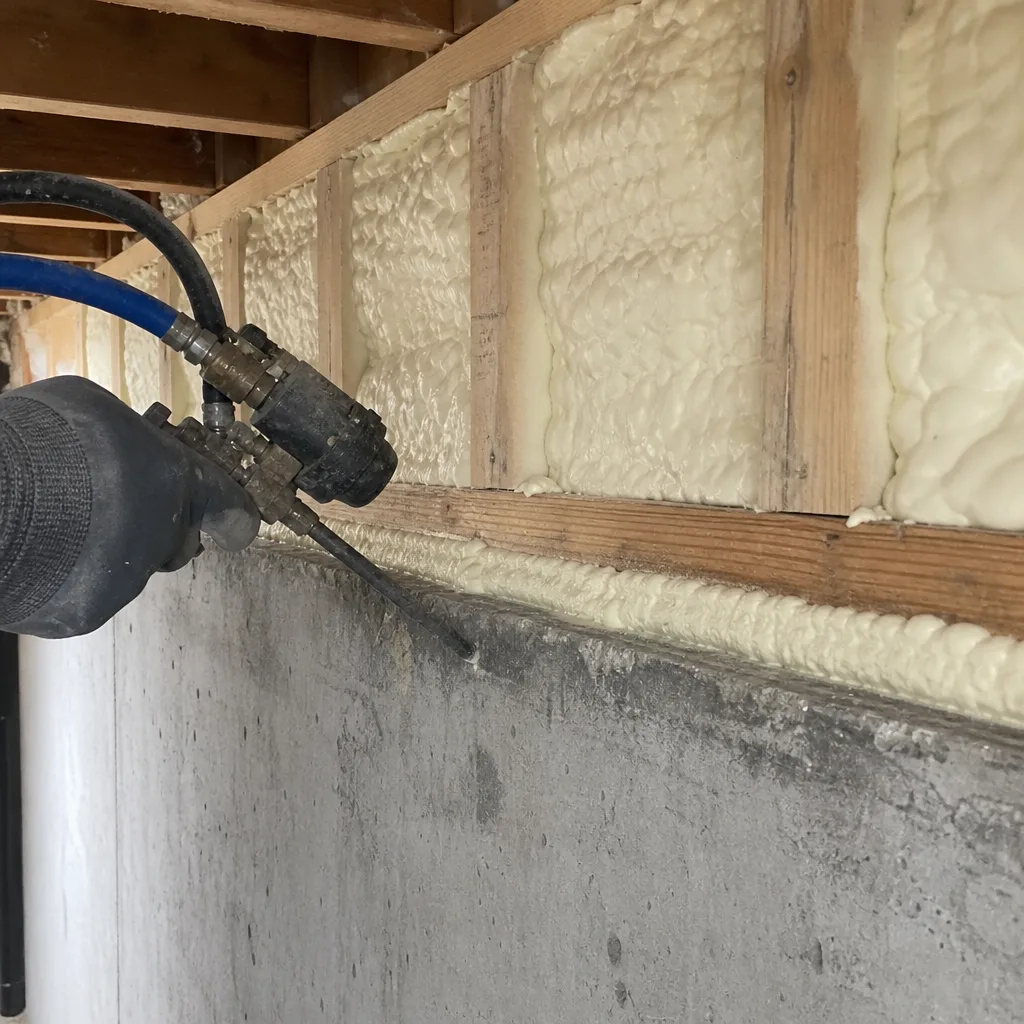
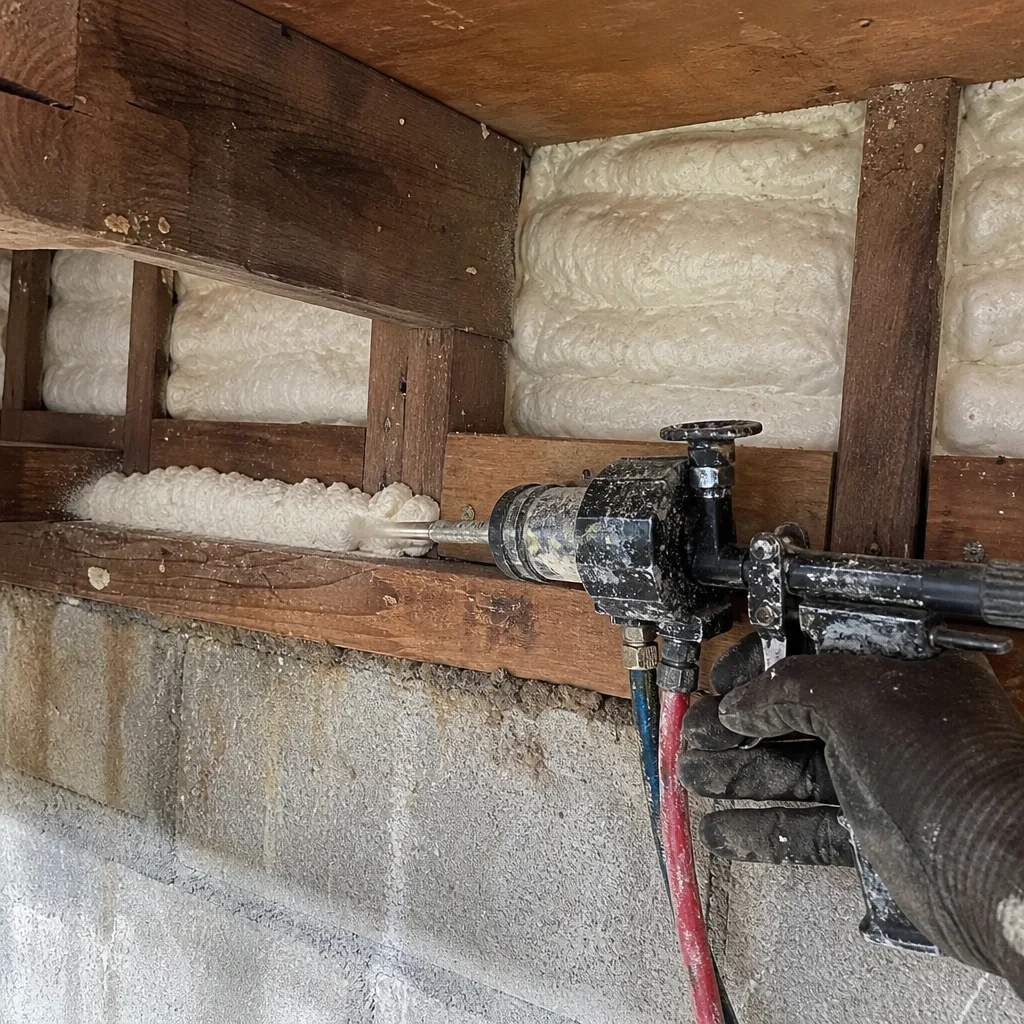
Mead Valley’s older wood-frame homes leak air at the rim joist – the band where the floor platform meets the foundation. Closed cell foam injected into rim joist bays stops that air movement and blocks the dust and heat that pushes through. We frequently pair rim joist work with attic work because the two leak points work together.
Vented Attic Roof Decks Before Foam
In Mead Valley, we won’t spray closed cell onto unvented roof decks that read 150°F or higher without first addressing ventilation. Foam applied over a superheated, unvented deck can off-gas and break down prematurely. We cut and screen new soffit and ridge vents, and often add a radiant barrier, before the foam goes in. That sequence prevents callbacks and wasted material.
Open Cell Spray Foam in Mead Valley
Open Cell Spray Foam is a lighter, more cost-effective option for interior partition walls, ceilings under conditioned space, and areas where vapor permeability is actually desirable. In Mead Valley, open cell typically runs $0.80 to $1.70 per board foot installed, with a standard attic lid costing between $3,100 and $5,900 for a 1,500-square-foot home. It expands aggressively, fills odd framing cavities well, and dampens sound between rooms.
But open cell is not a universal solution. On exterior stucco walls in the 92570 ZIP, open cell’s vapor permeability can allow moist interior air to reach the cool backside of the stucco and condense. That’s a failure mode we’ve corrected in Mead Valley homes where another contractor specified open cell as a cheap default.
Interior Wall and Floor Cavity Fills
For sound control between bedrooms, open cell is our go-to. It fills cavities completely and reduces noise transfer better than fiberglass batts in the same space. Many Mead Valley homeowners with a home office or guest room ask for this after living with paper-thin interior walls for years.
Garage Ceiling and Bonus Room Applications
Mead Valley’s large-lot homes often have attached garages or bonus rooms the builder never insulated. Open cell foam on the garage ceiling keeps heat from cooking the room above and reduces the temperature swing in the garage itself. It’s a fast one-day job in most cases.
Trusted Brands We Service in Mead Valley
We install Icynene and Demilec spray foam systems, and we stock the related components – sealants, substrate primers, and foam-specific fasteners – that Mead Valley jobs regularly require. Both manufacturers build open-cell and closed-cell products, and we carry both chemistries from each. That means when a Mead Valley roof deck calls for Demilec’s closed cell or an interior wall calls for Icynene’s open cell, the material is available immediately, without a special order. We also work with GreenFiber and Owens Corning for homeowners who want to compare foam against a high-performance blown-in or batt option before committing. The decision should be yours, based on what the house actually needs.
Common Spray Foam Insulation Problems We See in Mead Valley Homes
- Unvented attics with decking above 150°F. Much of Mead Valley’s 1970s-1990s housing was owner-built or early tract construction with no venting strategy at all. By July, the underside of the roof deck is hot enough to cook foam that gets sprayed directly onto it, which is why we fix ventilation first.
- Foam sprayed over settled blown-in insulation. We regularly find attics where someone sprayed foam directly over old, settled cellulose or fiberglass without removing or leveling it first. That traps moisture, hides poor adhesion, and creates a false sense of a sealed attic.
- Open-cell foam on stucco exterior walls. In Mead Valley’s specific heat and humidity profile, open cell on an exterior stucco assembly can allow condensation inside the wall cavity. Closed cell is the correct chemistry for that application, and we see the opposite mistake too often.
- Foam applied in attics with no radiant barrier. On large rural lots, attic square footage is substantial and the sun load is relentless. Foam alone helps, but without a radiant barrier under the deck, the foam takes the full brunt of the radiant heat. We address both to get the comfort result homeowners actually paid for.
Pricing for Spray Foam Insulation in Mead Valley, CA
Here are the numbers we quote most often in the 92570 ZIP. Closed cell spray foam runs $2.10 to $3.40 per board foot installed; open cell runs $0.80 to $1.70 per board foot. A typical Mead Valley attic retrofit with closed cell lands between $4,200 and $8,900. Garage ceilings usually run $1,400 to $3,200. Rim joist sealing in an average single-family home runs $900 to $2,200. Larger rural homes on half-acre or acre lots push toward the top of these ranges because the square footage is just bigger. Venting and radiant barrier work, where needed, adds $1,500 to $4,000 depending on attic size and complexity. Call (855) 773-6429 and we’ll quote your exact scope with a free on-site assessment.
We Also Serve Cities Near Mead Valley
Our crews cover Mead Valley and the surrounding communities. You’ll find us working regularly in Perris, Good Hope, Canyon Lake, and Meadowbrook. If you’re just outside the 92570 ZIP, call us – chances are we’re already in your area most weeks.
Serving Mead Valley, CA — Our Local Coverage Area
We’re based in the Mead Valley area and know this community well. Use the map below to see our service coverage — if you’re nearby, we can almost certainly help.
FAQs About Spray Foam Insulation in Mead Valley
Yes. We first cut and screen soffit and ridge vents to establish airflow, and we typically install a radiant barrier on the roof deck, then spray the foam. This sequence is standard for Mead Valley’s unvented older attics. Call (855) 773-6429 and we’ll inspect what your attic currently has.
Closed cell is almost always the correct choice for stucco exterior walls in Mead Valley. It acts as a vapor barrier and adds structural rigidity, both of which matter in this climate and this wall assembly. Open cell on stucco can trap condensation. We’ll confirm which chemistry fits your specific walls during the estimate.
Yes, but only if we remove or level the settled material first. Spraying foam directly over degraded blown-in hides moisture and adhesion problems. We clear or condition the existing insulation, then apply foam to a clean substrate. This gives you the sealed, high-R attic you’re paying for.
Heat doesn’t change the brand – it changes the chemistry and the install sequence. Both Icynene and Demilec make closed and open cell products that perform in 95-100°F inland summers. The difference maker is applying closed cell where vapor control is needed and fixing venting before any foam touches a superheated deck.
Yes, this is a significant portion of our Mead Valley work. Owner-built homes from the 1970s-1990s often have nonstandard framing, uneven cavities, and no original venting. We’re used to adapting foam depth and application method to those specific conditions rather than assuming a production-tract layout.
Written by Alan Whitcomb, Owner at Placentia Insulation, serving Mead Valley and the surrounding Inland Empire.