
Fast, Reliable Spray Foam Insulation Across Running Springs
Spray foam insulation in Running Springs runs $2.40 – $5.10 per board foot installed depending on foam type, access, and whether venting corrections are needed first. Most attic and wall jobs on mountain cabins here land between $4,800 and $14,500. If you’re dealing with ice damming, condensation on exposed beams, or rooms that never hold heat through a February freeze, call Placentia Insulation at (855) 773-6429. Alan Whitcomb and our crew know Running Springs homes because we’ve crawled through enough A-frame attics off Rim of the World Drive to know exactly what freeze-thaw cycles do to them.
Why Placentia Insulation Is Running Springs’s Preferred Spray Foam Insulation Company
Most insulation contractors carry one or two product lines. We carry eight, and that matters more in Running Springs than almost anywhere else in Southern California. Your cabin at 5,200 feet has different insulation needs than a stucco tract home in Highland. We match the material to the job, not the job to whatever we have on the truck.
We’re an insulation-only contractor. Every crew member, every tool, every conversation is about one trade. Alan Whitcomb built the company around that focus. When we show up in Running Springs, we’re not dividing attention between plumbing, roofing, and insulation. We’re looking at your roof deck, your cathedral ceiling, your rim joists, and your venting as a single thermal and moisture system.
Running Springs homeowners tell us the same things: uneven temperatures between the main floor and the loft, frost on window frames, snow melting in odd patterns on the roof, and utility bills that spike from November through March. We see those symptoms for what they are. Usually it’s air leakage and missing or settled insulation at the roofline. Sometimes it’s ice-dam damage from a winter the cabin sat empty. Our Spray Foam Insulation team fixes the root cause, not just the visible symptom.
Spray Foam Attic Insulation in Running Springs
Spray Foam Attic Insulation in Running Springs means working with roof assemblies that see heavy snow load, hard freezes, and spring thaw cycles. The job usually involves sealing the attic floor or the underside of the roof deck with open-cell or closed-cell foam, after we’ve checked the venting. In Running Springs, that sequencing is non-negotiable. Spray foam over an unvented roof deck without correcting the ridge and soffit vents first is exactly how ice dams get worse, not better. Typical attic jobs here run $3,900 – $9,800.
Closed-Cell for Roof Decks
For most Running Springs attics with cathedral ceilings or vaulted A-frame roof lines, we recommend closed-cell Demilec or Icynene foam applied directly to the underside of the roof deck. Two inches is usually enough to bring the assembly to code and create an air and vapor barrier in one pass.
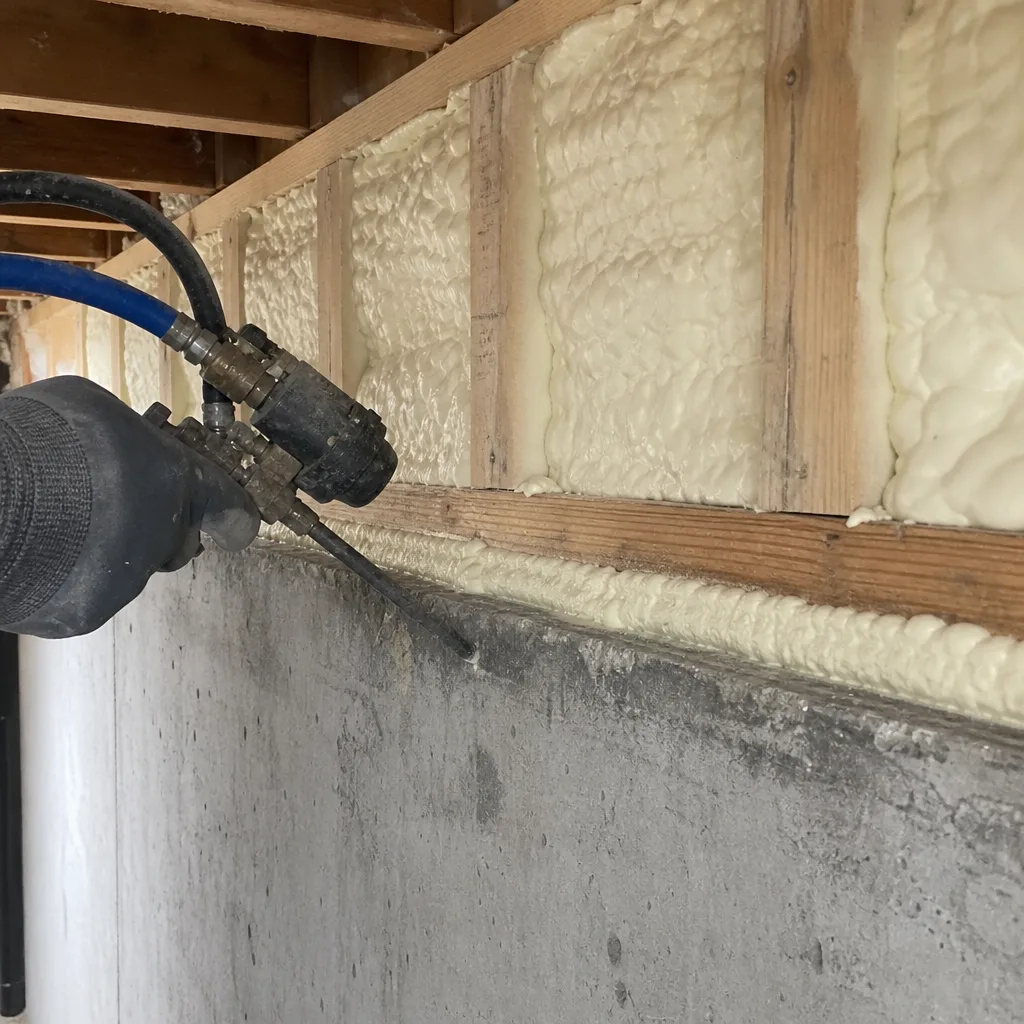
On a 1960s A-frame off Rim of the World Drive, we found the original cathedral ceiling packed with settled fiberglass and clear ice-dam staining on the north roof deck. After correcting the ridge and soffit venting, our crew applied 2 inches of closed-cell Demilec spray foam to the roof deck and gabled walls, sealing the assembly against freeze-thaw condensation and stopping the active leak at the beam pocket.
Sealing Dormers and Knee Walls
Cabins with dormer windows and half-story knee walls leak air at the transitions. We foam those intersections with open-cell Icynene where flexibility matters, and closed-cell where we need structural rigidity. Those smaller targeted jobs start around $1,800.
Spray Foam Wall Insulation in Running Springs
Spray Foam Wall Insulation in Running Springs addresses what fiberglass batts never could in older mountain framing: the actual air movement through wall cavities. Whether we’re working on a 1970s second home with 2×4 framing or a newer full-time residence, wall foam jobs here run $3,200 – $8,400 depending on the square footage and whether we’re doing a full gut, a drill-and-fill from the exterior, or new construction.
Drill-and-Fill for Existing Cabins
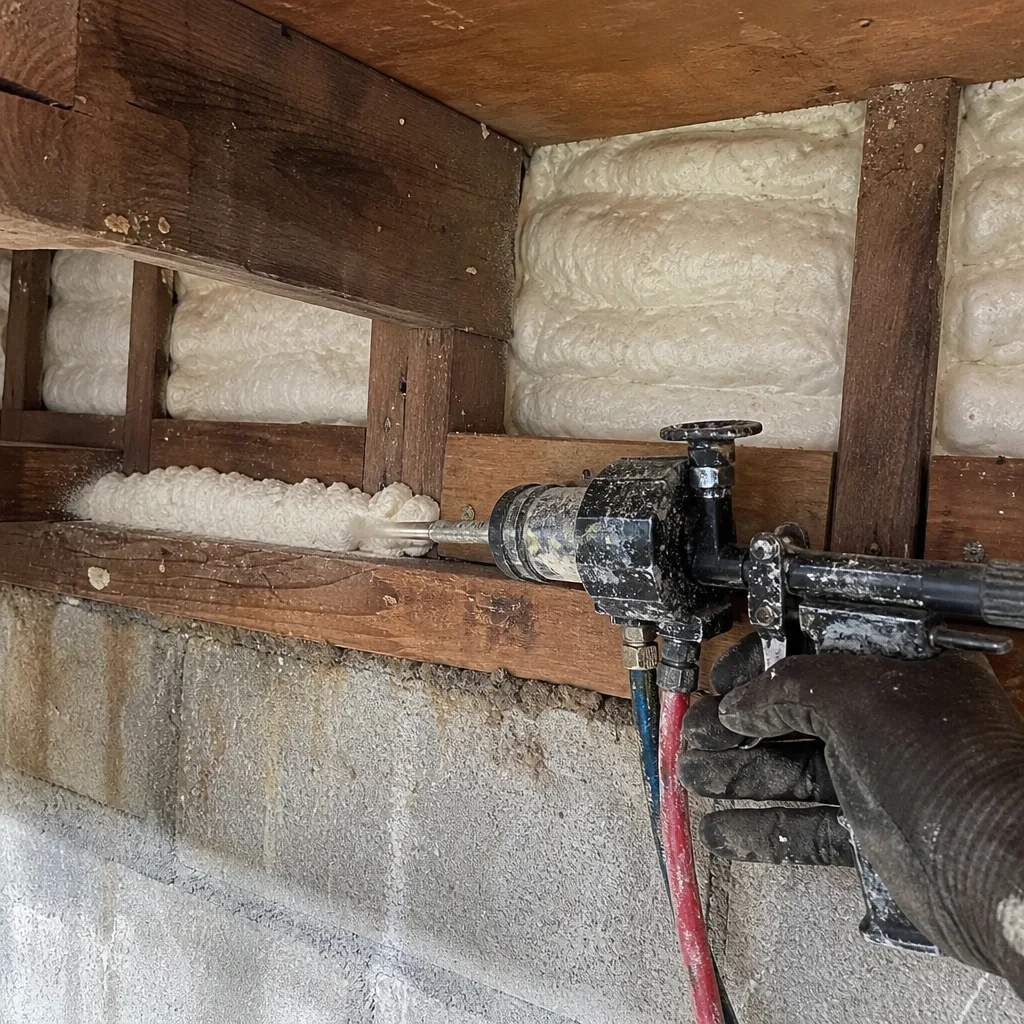
If your Running Springs cabin has drywall or wood paneling you’d rather not tear down, we can inject closed-cell foam behind the existing wall finish. We access the stud bays from exterior sheathing or interior drywall using small openings, then fill each cavity. It works well for retrofit scenarios on mid-century second homes where original insulation is thin or gone.
Whole-Wall Spray for Renovations
When a Running Springs homeowner is already renovating, we install open-cell foam across the entire wall plane before drywall. That gives you R-3.7 per inch and air sealing in one step, and it handles the sound dampening that matters up here where houses sit close to each other on steep lots. You’ll hear less of your neighbor’s generator, too.
Trusted Brands We Service in Running Springs
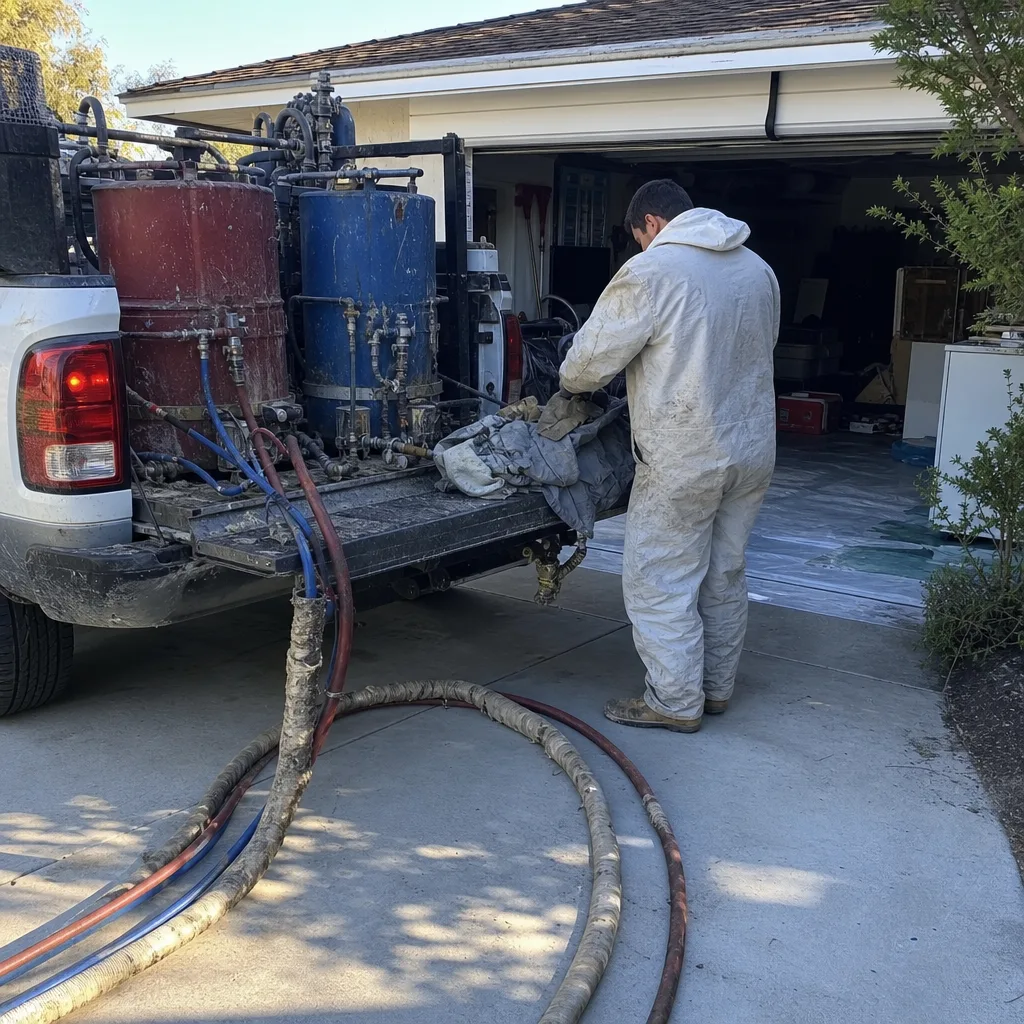
We install both closed-cell and open-cell spray foam from Icynene and Demilec, and we stock enough material in our trailer to avoid rescheduling Running Springs jobs for parts runs down the hill. Some Running Springs customers ask us about CertainTeed or GreenFiber because they’ve researched insulation online. We carry those brands too, but spray foam on mountain rooflines usually comes down to Icynene open-cell for tight, irregular cathedral spaces or Demilec closed-cell for the airtight, vapor-retarding seal that freeze-thaw conditions demand. Eight brands. Three methods. One specialty.
Common Spray Foam Insulation Problems We See in Running Springs Homes
- Ice damming at the eave. Closed-cell foam sprayed over an unvented roof deck without first correcting venting traps heat that melts roof snow, which refreezes at the cold eave and backs water under shingles. Running Springs cabins that sat vacant through winter squalls show this damage on the north and east roof planes first.
- Condensation and frost on exposed-beam framing. When open-cell foam is applied to the underside of a roof deck that sees hard freezes, moisture can migrate through the foam and condense on the cold beam pockets. We’ve found frost actively forming on ridge beams in cabins where open-cell was installed without a vapor-retarder strategy.
- Adhesion failure and cracking on older wood substrates. Mid-century second homes in Running Springs often have dusty, decades-old framing that seasonal movement has flexed repeatedly. Spray foam applied to poorly prepped surfaces loses its bond, creating air gaps and sometimes pulling away from the substrate entirely.
- Legacy insulation hidden behind walls and ceilings. Many 1950s-to-1970s Running Springs cabins still have rock wool, settled fiberglass, or absolutely nothing in the exterior wall cavities. We find the remnants of original kraft-faced batts compressed to half their labeled R-value behind plywood paneling.
Pricing for Spray Foam Insulation in Running Springs, CA
Open-cell spray foam in Running Springs typically runs $1.95 – $3.20 per board foot installed. Closed-cell, which most of our mountain roof-deck and rim-joist work uses, runs $2.85 – $5.10 per board foot. A 1,200-square-foot cabin attic fully sealed with closed-cell usually lands between $6,800 and $11,900, depending on rafter depth, access, and whether we’re re-venting the ridge and soffits first. Rim joist jobs in basements and crawl spaces run $900 – $2,600. Wall spray foam on a standard 800-square-foot mountain cabin runs $3,200 – $6,800. The biggest cost variable in Running Springs is venting correction. If we find blocked soffit vents or a ridge that never ventilated properly, we address that before any foam goes in. Call (855) 773-6429 for an exact quote on your cabin. Estimates are free.
We Also Serve Cities Near Running Springs
Placentia Insulation serves the whole Rim of the World corridor and the foothill communities below. That includes Spray Foam Insulation in Running Springs, Lake Arrowhead, Highland, Mentone, and Crestline. We’re familiar with the different climate bands across those elevations, from the hard-freeze zone up here to the hotter, drier conditions at lower elevations.
Serving Running Springs, CA — Our Local Coverage Area
We’re based in the Running Springs area and know this community well. Use the map below to see our service coverage — if you’re nearby, we can almost certainly help.
FAQs About Spray Foam Insulation in Running Springs
Yes, but only if the venting is corrected first. Ice damming happens when heat escapes through the roof and melts snow, which refreezes at the cold eave. Closed-cell spray foam air-seals the roof plane so heat stays in the living space, but if the ridge and soffit vents aren’t functioning, the foam can lock in the very moisture it should be stopping. We inspect venting before any foam goes in. Call (855) 773-6429 for a roof-deck assessment.
Closed-cell is almost always the right choice for A-frame roof decks in Running Springs. It adds structural rigidity, creates a vapor barrier, and doesn’t absorb the condensation that freeze-thaw swings produce. Open-cell works better for interior sound walls and irregular cavities, but on a roof deck that sees hard freezes, it can trap moisture. We’ll tell you which we’d use and why.
No. Moisture inspection comes first. Vacant Running Springs cabins frequently show ice-dam staining, condensation, and frost damage that isn’t visible from the living room. Spraying foam over active moisture seals the problem inside the assembly and makes it worse. We do the inspection, fix what needs fixing, then insulate. Call (855) 773-6429 and we’ll start there.
Spray foam handles them dramatically better. Fiberglass loses effective R-value once air moves through it, and freeze-thaw cycles pull moist air through batt insulation all winter. Closed-cell foam stops air movement cold and doesn’t absorb the condensation that fiberglass soaks up. In a place where the temperature swings from single digits to the 50s in one week, that air-sealing difference is the whole game.
We do, and it’s actually most of our Running Springs work. Older cabins with original rock wool or settled fiberglass, blocked soffit vents, and cathedral ceilings with no defined attic space are exactly what we’re built to handle. We correct the venting, remove or bypass the failed insulation, and install open-cell or closed-cell foam in the right places. Alan Whitcomb and our crew have done this on enough Rim of the World Drive cabins to know what we’re going to find before we open the first access panel.
If your Running Springs cabin or mountain home is losing heat through the roofline, showing moisture stains at the eaves, or just never feels warm in winter, call Placentia Insulation at (855) 773-6429 for a free estimate. We’ll inspect the venting, check for moisture damage, and give you an honest recommendation on the right spray foam for your house.
Written by Alan Whitcomb, Owner at Placentia Insulation, serving Running Springs and the San Bernardino Mountains.