
Fast, Reliable Spray Foam Insulation Across Santa Fe Springs
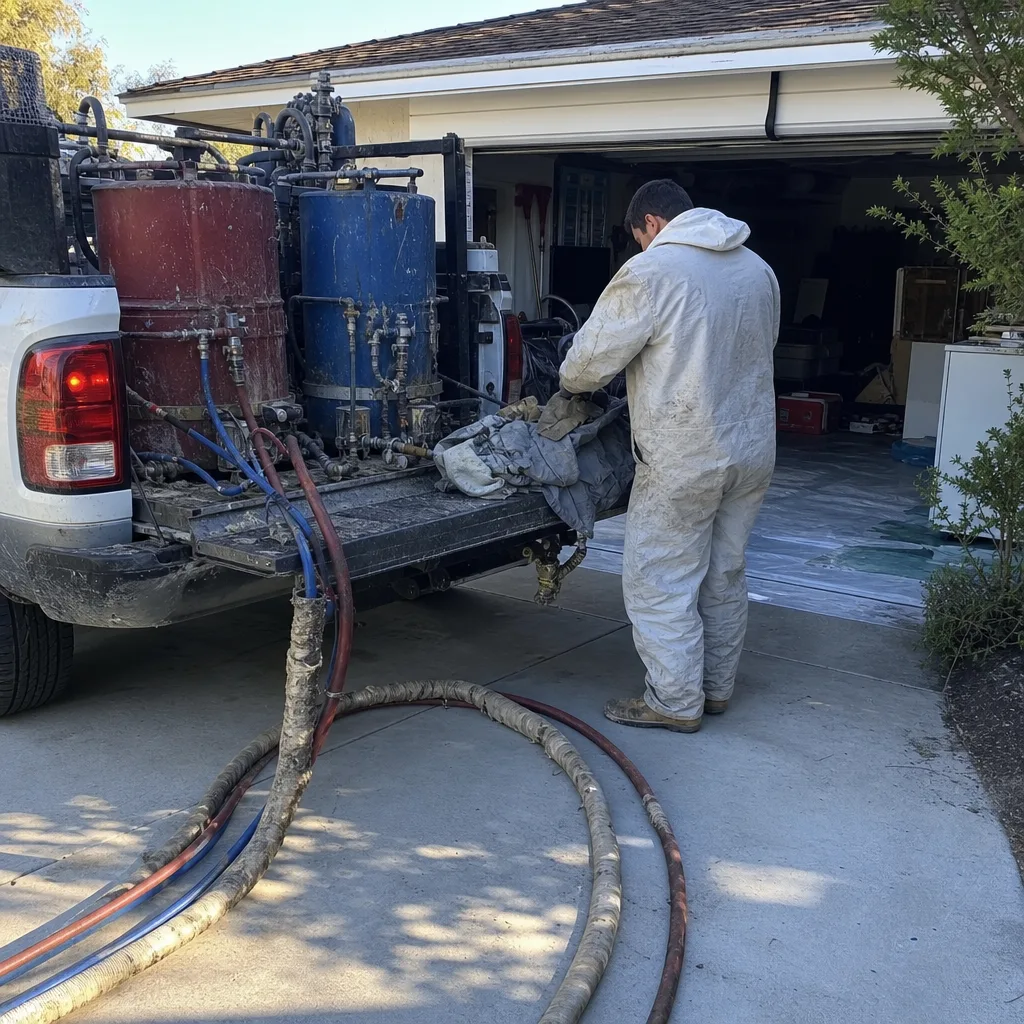
Spray foam insulation in Santa Fe Springs typically costs $3,200 – $9,800 depending on whether we’re treating a 1,100-square-foot postwar tract home off Los Nietos or a 15,000-square-foot warehouse roof deck along Telegraph Road. Most residential jobs are done in one to two days, and we stock enough Icynene and Demilec material locally to start most Santa Fe Springs projects within the same week. If your walls read hot by midafternoon and your AC runs nonstop from June through October, you’re dealing with the exact heat-gain problem we solve most often in this city. Call (855) 773-6429 for a free estimate, and we’ll tell you honestly whether spray foam is the right fix or whether something simpler gets you there.
Why Placentia Insulation Is Santa Fe Springs’s Preferred Spray Foam Insulation Company
We work in Santa Fe Springs every week, and the commercial-over-residential mix here shapes how we approach every job. A crew might spend the morning pulling closed-cell foam across a concrete-tilt-up warehouse roof off the 5, then drive six blocks to a 1950s house on Pioneer where the walls have zero cavity insulation. That’s not a scheduling quirk; it’s the daily reality of this city, and it means our technicians understand both ends of the spray foam spectrum without switching subcontractors or learning on your dime.
Alan Whitcomb, who runs our Spray Foam Insulation operation, has built the company around the idea that insulation is a materials decision before it’s a labor decision. Most contractors carry one or two product lines. We carry eight. For Santa Fe Springs specifically, that matters because a warehouse roof deck wants a different foam chemistry than a 1950s wall cavity, and we’re not forced to make one product do both jobs.
Our Santa Fe Springs customers tend to find us after a general contractor gave them a vague answer about insulation or quoted them a product their shop happened to stock. We show up, we measure, we tell you what’s actually going on behind the drywall, and we quote the material that fits the condition – not the one sitting on our truck.
We’re licensed and insured, and quotes are always free. The phone number for a Santa Fe Springs estimate is (855) 773-6429.
Spray Foam Wall Insulation in Santa Fe Springs
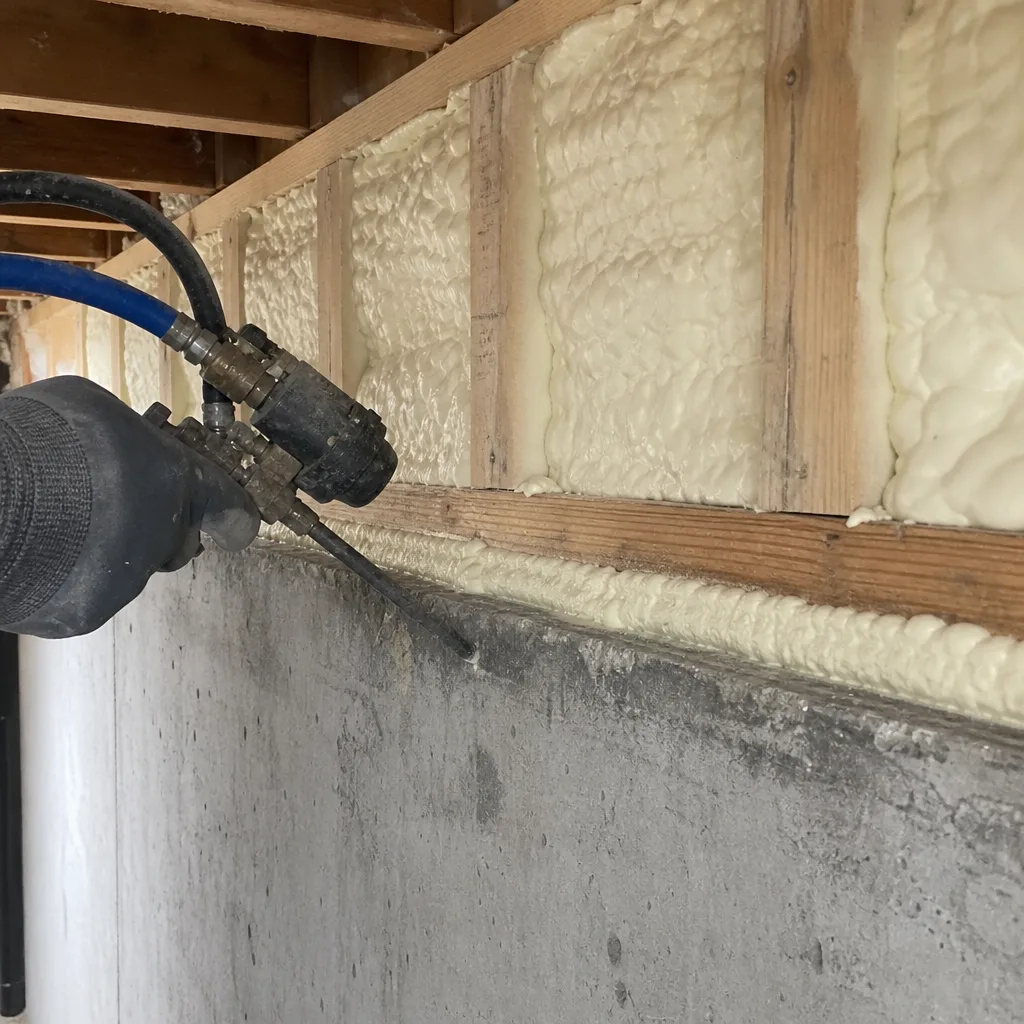
Spray Foam Wall Insulation is the fix we most often recommend for the uninsulated 1940s-to-1960s tract houses scattered through Santa Fe Springs residential pockets off Los Nietos, Pioneer, and the Heritage Park area. These homes were built when energy was cheap and wall insulation wasn’t code, so the stud bays are often empty shells. Our approach is to run open-cell Icynene or Demilec foam into the cavities so the wall becomes an air barrier as well as a thermal barrier. The job usually runs $2,800 – $6,500 for a typical single-story home, depending on square footage and how much old framing needs sealing first.
Open-cell retrofits for 1950s wall cavities
Older Santa Fe Springs homes have 2×4 stud bays, and open-cell foam is the material we favor there. It expands gently enough not to bow old drywall, it fills odd-shaped cavities around legacy framing, and it seals the air gaps that let smoggy inland-basin heat work its way through the wall in the first place. The material itself is what makes this possible; the technique is knowing where to drill and how to verify complete fill.
Closed-cell for exterior walls and termite-prone areas
When an older home near the industrial corridors shows signs of moisture wicking through the stucco or the exterior sheathing, we switch to closed-cell Demilec. It acts as a vapor barrier and adds structural rigidity, which helps on houses whose framing has settled over seventy years. It’s more expensive per board foot, but sometimes the condition of the house doesn’t leave you a cheaper option that actually works.
Rim Joist Spray Foam in Santa Fe Springs
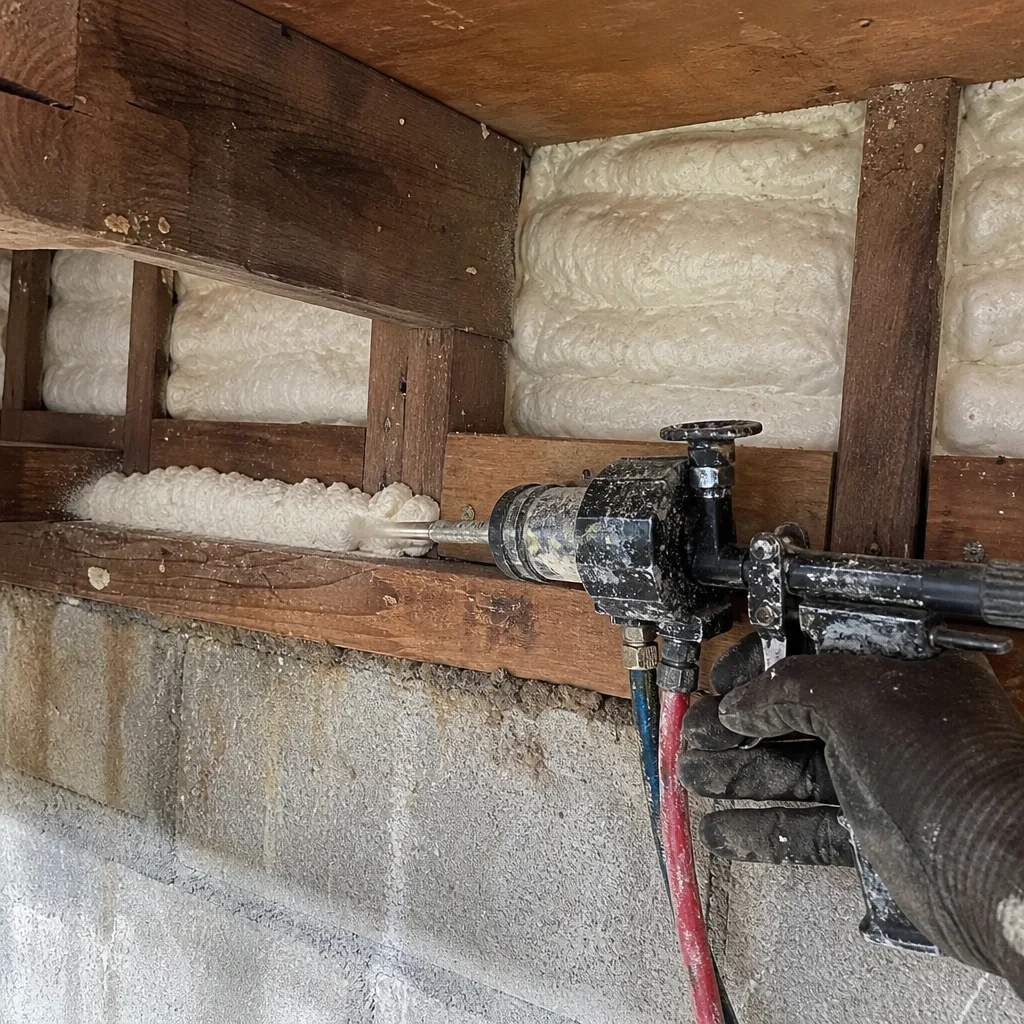
Rim Joist Spray Foam is the single highest-return insulation job we do in Santa Fe Springs homes, because the rim joist is where hot outside air sneaks into the crawl space or basement and then works upward through the floor plan. Older homes off Pioneer and Telegraph have rim joists with no insulation at all, just exposed framing around the perimeter. We seal and insulate the rim with closed-cell foam to stop air movement, and a typical single-story home runs $1,500 – $3,200 for the full perimeter. It’s usually a one-day job, and you feel the difference in the room directly above the crawl space.
Sealing the existing envelope before adding foam
Foam in a rim joist does nothing if the old penetrations around plumbing and wiring are still open. We see rim joist foam installed without sealing the legacy framing in Santa Fe Springs more often than we’d like, and the result is hot air bypassing the foam entirely. Our crews seal every penetration before the foam goes in.
Closed-cell for moisture resistance near the ground
In a city where summer heat pushes moisture up from the soil and industrial properties share property lines with homes, closed-cell foam on the rim joist makes more sense than open-cell. It won’t absorb ground moisture, and it adds a layer of protection for the sill plate. For homes within sight of the 5/605 interchange, it’s what we specify.
Trusted Brands We Service in Santa Fe Springs
We stock and install Icynene and Demilec spray foam across Santa Fe Springs, and that’s a deliberate choice. Icynene open-cell is our standard for interior retrofits where the wall needs to breathe and fill tightly around old framing. Demilec closed-cell is the workhorse for warehouse roof decks, rim joists, and anywhere moisture or structural rigidity is part of the equation. For customers who want blown-in instead of foam, we carry GreenFiber cellulose, which uses recycled content and packs well in attic spaces. If you’re in the 90670 or 90671 ZIP codes, we typically have material on hand without waiting on a distributor shipment. Call (855) 773-6429 and we’ll match the brand to the job, not the other way around.
Common Spray Foam Insulation Problems We See in Santa Fe Springs Homes
- Uninsulated 1950s wall cavities. Interior walls read hot by early afternoon and the thermostat battles the radiant load all day. Open-cell retrofits solve this, but only if the rim joist gets sealed at the same time.
- Rim joists left open in older tract homes. Hot air bypasses the wall insulation entirely and makes the floor above feel warm in summer. Closed-cell foam around the perimeter stops the air movement at the source.
- Warehouse roof decks with no radiant barrier or foam. Concrete-tilt-up and metal buildings along Telegraph heat up like ovens by 3 p.m. Closed-cell foam on the roof deck cuts the surface temperature dramatically and pays back fastest on those big flat roofs.
- Closed-cell foam failing on metal buildings. The thermal movement on metal exterior walls along the 5/605 corridor is real. If the foam isn’t specified for that movement, it delaminates. Matching the material to the building is the difference between a job that lasts and one that peels.
Pricing for Spray Foam Insulation in Santa Fe Springs, CA
Residential spray foam wall insulation in Santa Fe Springs runs $2,800 – $6,500 for a typical postwar single-story home, while rim joist sealing runs $1,500 – $3,200. Garage ceiling spray foam comes in at $1,800 – $4,000, and a full spray foam roof deck for a smaller commercial building typically lands between $6,000 and $18,000 depending on square footage and access. The factors that move the number: how much old material has to come out, whether the framing needs sealing before foam goes in, and how far the crew has to haul equipment from the truck to the work area. Every quote we give in Santa Fe Springs is free and itemized, so you can see exactly where the dollars go. Call (855) 773-6429 for a number on your specific house or building.
We Also Serve Cities Near Santa Fe Springs
Our technicians regularly work in West Whittier-Los Nietos, Downey, Pico Rivera, and South Whittier, and we keep the same material stock and response times for those areas as we do in Santa Fe Springs. If you’re a homeowner or property owner just outside the city line, you’re still in our regular service range. The same crews that work the Spray Foam Insulation in Santa Fe Springs jobs handle the surrounding cities, so the local knowledge carries over.
Serving Santa Fe Springs, CA — Our Local Coverage Area
We’re based in the Santa Fe Springs area and know this community well. Use the map below to see our service coverage — if you’re nearby, we can almost certainly help.
FAQs About Spray Foam Insulation in Santa Fe Springs
Yes, and the industrial surroundings make it more worthwhile, not less. The warehouses nearby reflect heat and the lack of tree canopy means your walls bake all afternoon. Foam can drop a room’s temperature noticeably, but the roof deck is where the biggest heat gain happens, so a full assessment should look at both before you decide. Call (855) 773-6429 and we’ll walk you through the tradeoff at no charge.
Yes. We do both types of work in the same week, and that’s exactly the mix Santa Fe Springs demands. The roof deck crew understands closed-cell application on big flat surfaces; the residential crew handles the interior retrofit work. It’s the same company, same materials, same standards. We’ve worked both sides of this city enough to know the difference between a tilt-up warehouse and a 1950s tract house, and we don’t treat them the same way.
It does. Older framing shrinks, settles, and leaves gaps that new construction doesn’t have, so we spend more time sealing before the foam goes in. The foam itself expands to fill those irregular cavities, which is one reason it works well in older homes. But if the rim joist isn’t sealed and the old penetrations aren’t addressed, the foam won’t fix the air movement on its own. We price for that prep work so the number you get is the number you pay.
For the concrete-tilt-up and metal warehouses along the 5/605 corridors, closed-cell spray foam on the roof deck does more than a Reflectix repair in Santa Fe Springs because it seals the surface and adds R-value in one pass. Radiant barrier reflects heat but doesn’t stop it from conducting through the deck. On those buildings, foam pays back fast because the afternoon surface temperatures are brutal and the buildings are running mechanical cooling all day. If the roof is still in good shape, foam is usually the better spend.
The existing envelope in most of these 1940s-to-1960s houses is a single layer of stucco over sheathing with empty stud bays. Repairing that means you still have no thermal barrier. Retrofitting with spray foam adds an air barrier and an R-value that didn’t exist before, so the difference isn’t small; it’s the difference between a house that keeps heat out and one that lets it pour through. The retrofit costs real money, but in this climate it’s the only fix that addresses the actual problem. We’ll quote both honestly and let you choose. Call (855) 773-6429 for a free look at your house.
Written by Alan Whitcomb, Owner at Placentia Insulation, serving Santa Fe Springs since the company’s earliest days in the trade.