
Fast, Reliable Spray Foam Insulation Across Walnut Park
Spray foam insulation in Walnut Park typically runs $2.50 – $6.50 per square foot installed, with rim joist sealing jobs landing between $900 and $1,800 and full crawl space encapsulation starting around $2,200 for these small-lot homes. Our crews know Walnut Park’s 90255 blocks well, from the bungalow rows off Seville Avenue to the duplexes near Walnut Park Elementary. We can usually reach your home same-week, and often next-day for rim joist or crawl space work. If you’re tired of rooms that never cool down in August, call (855) 773-6429 for a free estimate.
Why Placentia Insulation Is Walnut Park’s Preferred Spray Foam Insulation Company
Most insulation contractors carry one or two product lines. We carry eight, including Icynene and Demilec spray foam, so your home gets what it actually needs, not whatever’s on the truck. Walnut Park’s housing stock is specific: post-WWII stucco bungalows with original 2×4 walls, tight attics, and narrow alleys that make equipment placement tricky. We’ve worked enough of these blocks to know where to park a rig without blocking a neighbor’s driveway and how to drill interior walls when the exterior stucco can’t be disturbed. Alan Whitcomb built Placentia Insulation around a single trade: insulation. Every crew member, every tool, every conversation is about that one job. We match the material to the house, not the house to whatever we happen to stock.
Walnut Park homeowners tell us the same things: upstairs or south-facing rooms that bake in summer, cooling bills that spike from June through October, and walls that radiate heat well after sunset. The dense packing of homes on narrow lots means less tree shade and more shared wall surface absorbing sun. Spray foam, properly applied, changes that dynamic. But the install matters as much as the product, and this is where local knowledge pays off. A crew that doesn’t know Walnut Park’s homes might seal a rim joist but overlook the inadequate attic venting that traps heat above the living space. We don’t.
Rim Joist Spray Foam in Walnut Park
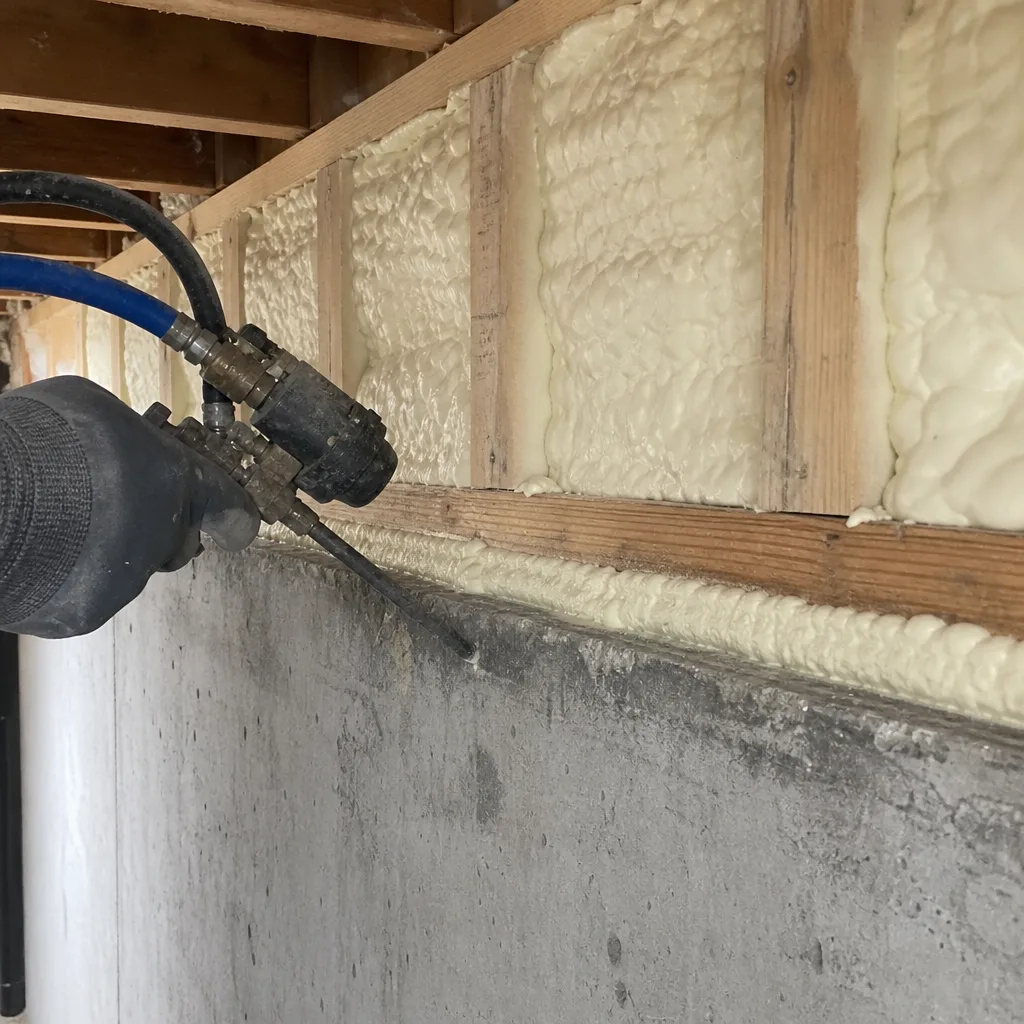
Rim joist spray foam in Walnut Park addresses the single biggest air leak in most of these 1940s – 1960s homes: the band board where the floor framing meets the foundation. On a typical Walnut Park bungalow, that rim runs the full perimeter of the crawl space or basement, and in the original construction it was rarely sealed. Once foam fills those cavities, outside air stops pulling through, dust and alley odors drop, and the floor above feels noticeably warmer in winter and cooler in summer. A typical rim joist job in Walnut Park runs $900 – $1,800 depending on crawl space access and linear footage.
Sealing the Foundation-to-Framing Gap
The rim joist is where conditioned indoor air escapes and unconditioned outside air sneaks in. In Walnut Park’s tight crawl spaces, this gap also lets moisture migrate upward into floor framing. Closed-cell foam creates an air and vapor barrier in one pass.
Alley-Access Crawl Spaces
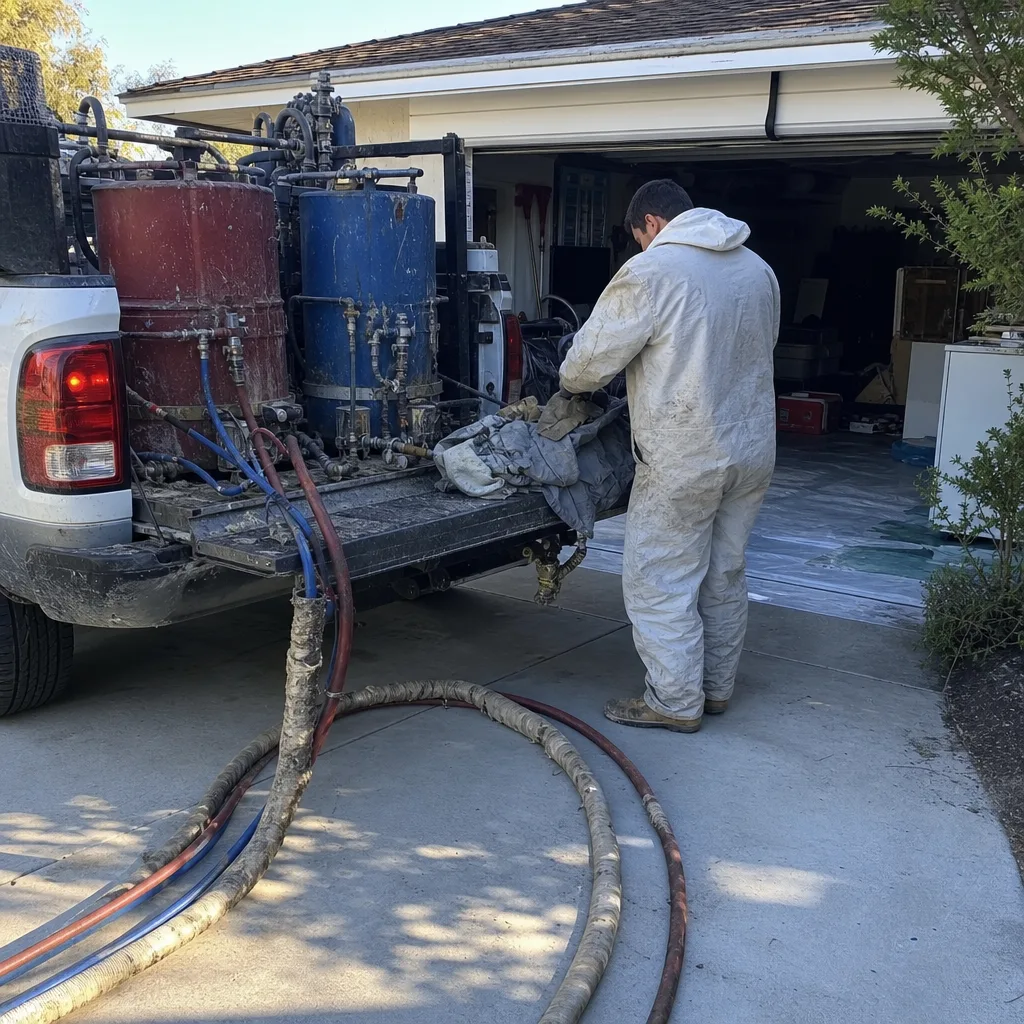
Many Walnut Park homes have crawl space access points located in rear alleys rather than through the house. Our crews bring portable spray rigs through those alleys without blocking them, which matters on blocks where parking is already scarce. If we can’t get a rig close enough, we use longer hoses and stage equipment on the street side.
Crawl Space Spray Foam Insulation in Walnut Park
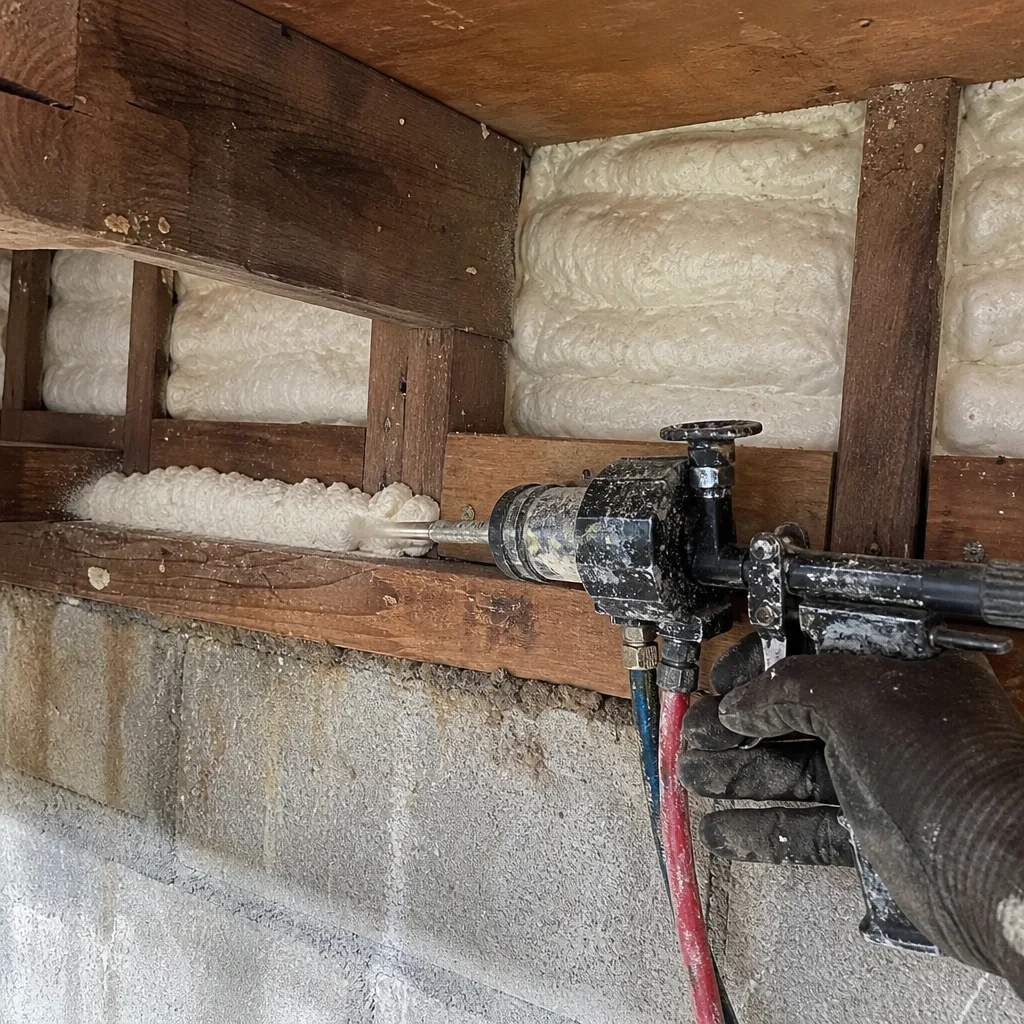
Crawl space spray foam insulation in Walnut Park is often the most effective single upgrade for these small-lot homes, especially where original uninsulated floors sit above dusty, vented crawl spaces. Sealing the crawl space with closed-cell foam on the perimeter walls and rim band stops the stack effect that pulls hot, dry outside air through the house in summer. The cost for a standard Walnut Park bungalow crawl space runs $2,200 – $4,500, with larger or more obstructed spaces falling above that range.
Vented Crawl Spaces and Hot Air Intrusion
Most Walnut Park crawls were built with perimeter vents, which does nothing good in a Mediterranean climate. The vents let hot summer air pour in, and that air rises through floorboards into the living space. Encapsulating with spray foam turns that crawl into a dead air space that no longer fights your air conditioner.
Moisture Management in Tight Quarters
Walnut Park’s narrow lots mean many crawl spaces are shallow and irregular. Spray foam conforms to that geometry better than batts, and closed-cell foam blocks vapor migration from damp soil. That protects floor joists and keeps indoor humidity lower in months when nearby concrete and stucco hold heat.
Trusted Brands We Service in Walnut Park
We stock and install Icynene and Demilec spray foam, both open-cell and closed-cell, and we keep inventory staged so Walnut Park jobs don’t wait on a distributor. For homeowners who want material options beyond foam, we also carry Rockwool mineral wool, which is useful when fire resistance and sound dampening matter alongside thermal performance. Most insulation contractors in the area carry one or two product lines. We carry eight, which means the recommendation you get is driven by your house, not our supply chain. Alan Whitcomb’s team will tell you when foam is the right call and when it isn’t, because selling you the wrong material doesn’t do anyone any favors.
Common Spray Foam Insulation Problems We See in Walnut Park Homes
- Heat-trapping foam without adequate attic ventilation. Walnut Park’s low-pitch roofs and tight attic spaces hold heat aggressively. If spray foam is applied to the roofline without addressing ventilation, that trapped heat cooks the home and strains the AC.
- Unsealed rim joists undermining the thermal barrier. On blocks where alleys restrict equipment access, some crews skip rim joist work. But an unsealed rim means outside air still flows around the foam, and the insulation upgrade underdelivers.
- Mismatched stucco patches after wall drilling. The original stucco on many Walnut Park blocks has never been patched. A careless drill-and-fill job leaves visible scars. We use color-matched patches and intentional drilling patterns so the façade stays uniform.
- Interior-only retrofits that ignore crawl space leaks. Foaming walls while ignoring the crawl space leaves a stack-effect highway for air movement. The result is uneven temperatures and dust from the crawl migrating upstairs.
Pricing for Spray Foam Insulation in Walnut Park, CA
Spray foam in Walnut Park runs on a few clear variables. Open-cell foam typically costs $2.50 – $4.00 per square foot installed. Closed-cell runs $4.00 – $6.50 per square foot because of the higher material cost and greater R-value per inch. Rim joist sealing jobs run $900 – $1,800 on most of these bungalows. Crawl space encapsulation starts around $2,200 and rises with square footage and access difficulty. Attic roofline applications range $2,800 – $6,500 depending on roof pitch and height. Every estimate is free and line-itemed, so you know exactly what you’re paying for before any work starts. Call (855) 773-6429 and we’ll schedule a walkthrough within a few days.
We Also Serve Cities Near Walnut Park
Placentia Insulation provides Spray Foam Insulation throughout southeastern Los Angeles County. Beyond Walnut Park, our crews work regularly in Huntington Park, Bell, Cudahy, and Maywood. If you’re in one of those neighboring cities and dealing with the same post-war housing stock and heat, we can help.
Serving Walnut Park, CA — Our Local Coverage Area
We’re based in the Walnut Park area and know this community well. Use the map below to see our service coverage — if you’re nearby, we can almost certainly help.
FAQs About Spray Foam Insulation in Walnut Park
Yes, and this is one of the main reasons we drill from the interior side of exterior walls on Walnut Park homes where the original stucco has never been patched. We cut precise holes in interior drywall, inject foam into the wall cavity, then repair the drywall. Where exterior access is unavoidable, we use color-matched stucco patches and carry a range of pigments to blend with the existing façade. Call (855) 773-6429 to have us assess your specific walls.
Spray foam blocks the two main heat-entry paths in Walnut Park homes: radiated heat through uninsulated walls and attic transfer, and convective heat from air moving through rim joist gaps and crawl spaces. Closed-cell foam’s air-sealing properties stop that convection. The result is a house that stays cooler longer into the evening, reducing runtime on your AC. The effect is most noticeable in south-facing rooms on these small-lot bungalows.
Expect to talk with us about staging. Many Walnut Park crawl space and rim joist jobs are accessed from rear alleys, and some are tight enough that spray rigs sit on the street while we run extended hoses to the work area. We’re used to working with less than three feet of side clearance. On a block of narrow-lot 1950s bungalows near Walnut Park Elementary, we worked entirely from the alley to keep the street clear, sealing rim joists and crawl spaces in a duplex without blocking a single driveway.
Yes, with a caveat. Spray foam works well on low-pitch roofs where access is so tight that batts or loose-fill can’t be installed correctly. But the attic ventilation has to be addressed first or heat builds up above the foam line. On Walnut Park homes with original soffit vents and no ridge vents, we evaluate the attic’s airflow before recommending a roofline application. Sometimes the right answer is floor-level attic foam plus ventilation. Sometimes it’s roofline foam. We’ll tell you which applies to your house.
Yes, crawl space work is one of our most common sprays in Walnut Park. These bungalows were built before thermal envelope standards existed, and many have never had the crawl space touched. A standard 700 – 900 square foot crawl in 90255 runs $2,200 – $4,500 for full encapsulation with closed-cell foam. The work includes rim joist sealing, perimeter wall foam, and vapor barrier coordination. Call (855) 773-6429 for a free crawl space assessment.
Written by Alan Whitcomb, Owner at Placentia Insulation, serving Walnut Park and surrounding Los Angeles County communities.