
Fast, Reliable Spray Foam Insulation Across Whittier
Spray foam insulation in Whittier runs $2,100 to $6,800 for a typical attic or exterior wall project, depending on whether we’re using open-cell or closed-cell chemistry and how much of the house we’re sealing. Most Whittier homeowners call us because their second-story rooms bake in the afternoon or because they’ve noticed condensation and musty smells around the rim joist. We know Whittier’s housing stock well – the 1920s bungalows near Uptown, the 1950s-60s ranches east of Colima, and the hillside builds off Mar Vista. Call (855) 773-6429 if you want someone who can look at what’s in your attic before recommending what goes in it.
Why Placentia Insulation Is Whittier’s Preferred Spray Foam Insulation Company
We’re an insulation-only contractor, and that focus matters more in Whittier than in most cities. The homes here span 100 years of construction methods, and the right insulation for a 1926 Spanish bungalow on Greenleaf is not the right insulation for a 1962 ranch in the 90603 ZIP. Alan Whitcomb built Placentia Insulation around a simple idea: match the material to the job, not the job to whatever’s on the truck. Our crews stock both Icynene and Demilec foam systems, so we’re not a one-chemistry shop trying to make every house fit one product.
Whittier homeowners who’ve worked with us tend to mention two things: we show up when we say we will, and we explain what we’re doing without drowning you in jargon. We serve the 90601, 90603, 90604, 90605, and 90606 ZIP codes regularly. The drive from our Placentia shop is short, which means we can be on-site in Whittier within about 30 to 45 minutes for inspections and estimates, and we keep enough material in inventory to schedule most spray foam jobs within a few days.
We’ve also learned Whittier’s quirks the hard way, by opening attics and finding what’s actually there. That local knowledge changes what we recommend.
Spray Foam Wall Insulation in Whittier
Spray Foam Wall Insulation in Whittier usually means addressing either exterior walls during a remodel or kneewalls in older hillside and Craftsman-era homes. We see a lot of College Hills and Uptown properties where the original wall cavities are empty or hold deteriorated 1950s batts that have settled into uselessness. Closed-cell foam is often the right call here because it adds structural rigidity and acts as its own vapor barrier, which matters in Whittier’s semi-arid climate where summer attic humidity condenses on cooler surfaces. A typical kneewall project in the College Hills area runs $1,800 to $3,400, while full exterior wall retrofits in a 1,500-square-foot home can land between $5,500 and $8,000.
Closed-Cell on Damp-Facing Walls
If your kneewall faces an unconditioned attic that gets hot and humid in August, closed-cell foam stops condensation before it starts. Open-cell will soak up that moisture and sag within a few seasons. We learned this pattern from failed open-cell jobs in this exact housing stock.
When the Sill Plate Is Already Damp
Uptown bungalows frequently have original sill plates sitting directly on masonry with no capillary break. The wood stays damp year-round. Spraying closed-cell over that top plate without first addressing the moisture source seals the problem in. We inspect and, where needed, specify a foam plan that accounts for the existing condition rather than burying it.
Rim Joist Spray Foam in Whittier
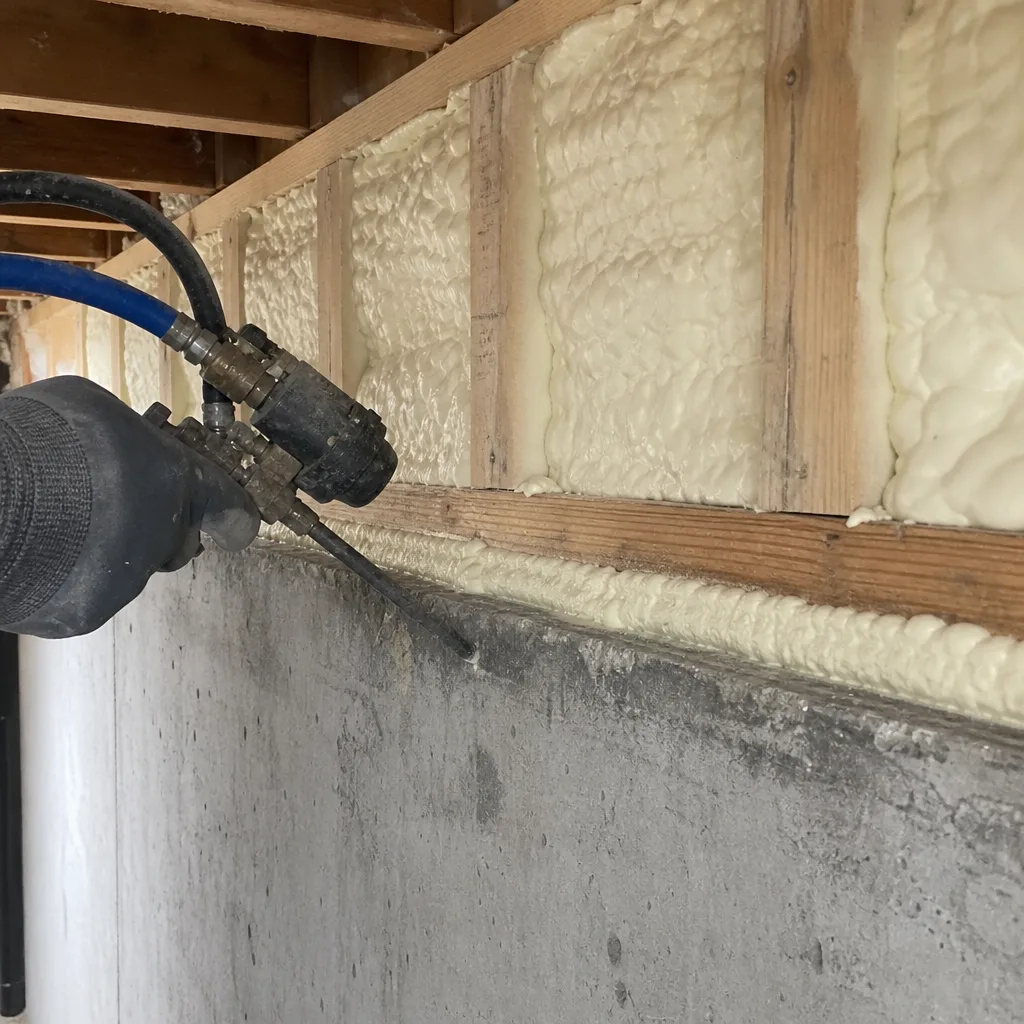
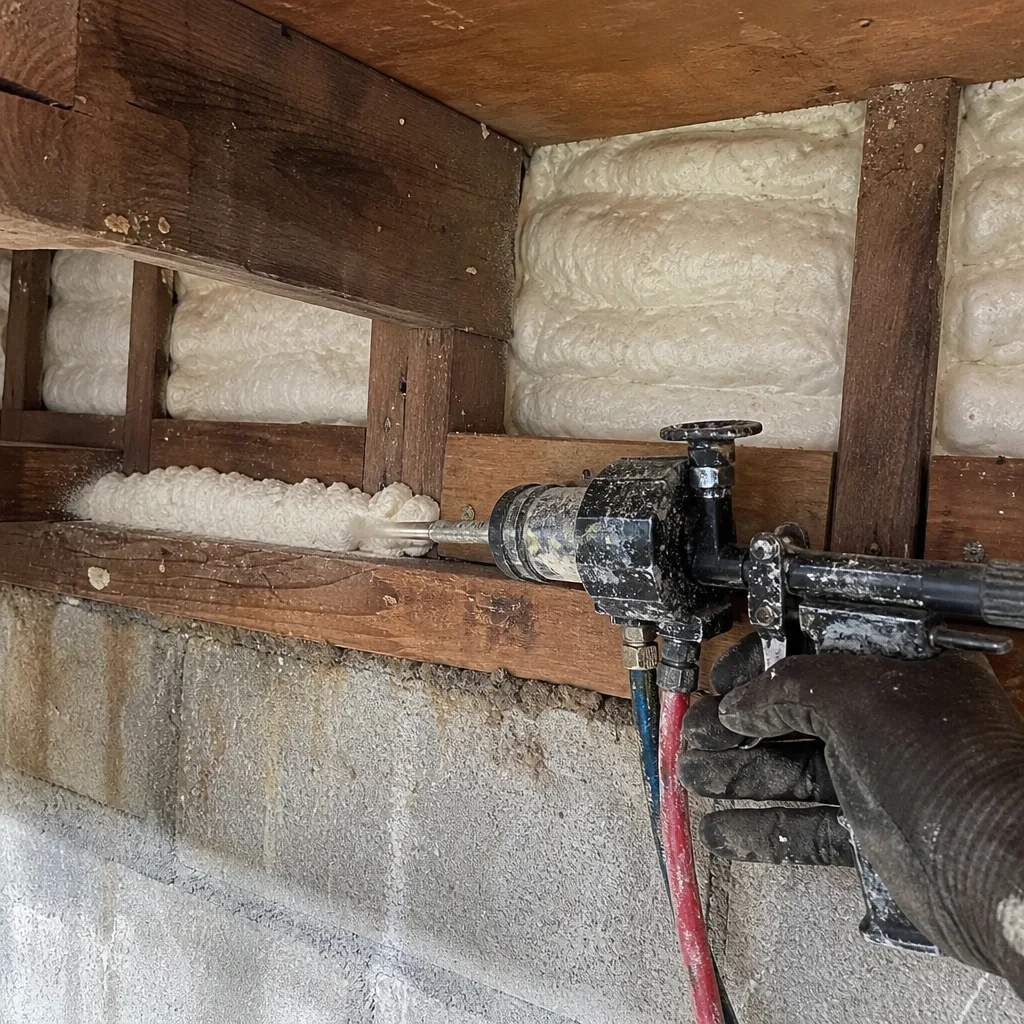
Rim Joist Spray Foam in Whittier targets the junction where your floor framing meets the foundation – a spot that leaks air and collects condensation in both the 1920s Uptown bungalows and the 1950s-60s tract homes east of Painter Avenue. In older homes, the original sill often has no capillary break, so the rim joist stays damp and the old fiberglass batts stuffed in there are usually moldy. Closed-cell foam, typically Icynene or Demilec, air-seals and insulates in one pass. For a standard Whittier ranch with a 1,200 to 1,800 square-foot footprint, rim joist spray foam runs $900 to $2,200 complete.
Rim Joists That Weep
East Whittier ranches built in the 1950s and 1960s frequently show condensation on rim joists during summer months when warm outdoor air hits cooler foundation walls. The batts installed by original builders were never an air barrier. Closed-cell foam stops that cold surface condensation.
Open-Cell Delamination Check
We also see open-cell foam that a previous contractor sprayed on damp rim joists, and it’s pulling away from the wood. That’s a chemistry mismatch, not a foam failure. Once we confirm the moisture source is manageable, we remove and re-spray with the right product.
Trusted Brands We Service in Whittier
We install and service both Icynene and Demilec spray foam lines, and we carry material for open-cell and closed-cell applications. That’s different from a shop that only stocks one foam brand and installs it everywhere. If you own a Whittier home and we’ve installed foam before, we can return and inspect, touch up, or remediate without having to source unfamiliar chemistry. We also stock GreenFiber cellulose and Owens Corning fiberglass for the blown-in and batt work we do alongside foam, which helps when a Whittier retrofit calls for a hybrid approach: closed-cell foam on the rim joist, blown-in on the flat attic floor, and foam on the kneewalls.
Common Spray Foam Insulation Problems We See in Whittier Homes
- Painted-shut soffit vents. East-side 1950s-60s ranches often have under-eave vents that decades of exterior repainting sealed completely. Foaming the attic without reopening those vents turns the attic into a heat box, and the upstairs rooms get hotter than before.
- Foam over damp sill plates in Uptown bungalows. The 1920s-40s construction here often has no capillary break under the original sill. Closed-cell sprayed over that damp wood traps moisture and accelerates rot, which is why we inspect before we spray.
- Sagging open-cell on College Hills kneewalls. Wall cavities without a vapor path let summer attic humidity condense on the cooler foam face. Open-cell absorbs it, weighs down, and pulls away. Closed-cell is the right chemistry for these spaces.
- Half-completed rim joist jobs. We find homes where a previous contractor foamed only the accessible rim joist bays and left the hidden ones under the addition or behind the garage. The air leaks just move. A rim joist job is only finished when every accessible bay is sealed.
Pricing for Spray Foam Insulation in Whittier, CA
For a Whittier home, here are realistic hardware costs based on recent work in the area: rim joist spray foam runs $900 to $2,200 for a typical crawlspace or basement perimeter. Kneewall spray foam in hillside homes runs $1,800 to $3,400 per wall section. A full attic lid with open-cell foam in a 1,200 square-foot ranch runs $2,100 to $3,600. Closed-cell applications cost about 40 to 50 percent more than open-cell because the product delivers roughly double the R-value per inch. What changes your price: access (crawlspaces in Uptown bungalows are tight), whether old insulation has to be removed first, and whether your soffit vents need to be opened and baffled before we foam. We give you a written, line-itemed quote before any work begins. Call (855) 773-6429 for a free estimate and we’ll walk your attic with you.
We Also Serve Cities Near Whittier
Our insulation crews regularly work in South Whittier, West Whittier-Los Nietos, East La Mirada, and Santa Fe Springs, so most of our Whittier customers get their estimate and installation scheduled within the same week. If you’re in one of these neighboring communities, we already know the local housing stock and the drive is short.
Serving Whittier, CA — Our Local Coverage Area
We’re based in the Whittier area and know this community well. Use the map below to see our service coverage — if you’re nearby, we can almost certainly help.
FAQs About Spray Foam Insulation in Whittier
Spray foam alone won’t fix a hot east Whittier attic if your soffit vents are painted shut, because the attic needs intake airflow to vent the radiant heat that gets through the roof deck no matter how well you insulate. We open and baffle the soffits before foaming, or we don’t foam at all. Call (855) 773-6429 and we’ll check your vents before quoting.
Closed-cell is usually the right answer for Uptown bungalows because the older framing, damp sill plates, and tight wall cavities need a foam that doesn’t absorb moisture and doubles as a vapor control layer. Open-cell can work in dry, interior-open spaces, but the bungalow conditions point to closed-cell chemistry. We’ll give you a straight answer after inspecting.
Spray foam helps more than blown-in when the problem is airflow through a leaky rim joist, kneewall, or open-stud wall, because foam is an air seal and blown-in is not. For a straight attic floor in good shape, blown-in cellulose often delivers better thermal value per dollar. We install all three methods and will tell you which one your house actually needs. Reach us at (855) 773-6429.
The rim joist in a 1950s Whittier tract home is usually the single biggest air leak between the crawlspace and the living space, and closed-cell foam seals it plus insulates it in one pass. On a standard ranch, count on $900 to $2,200 depending on how many accessible bays there are and whether old batts need removal.
We check for painted-shut soffit vents, existing moisture on the roof deck, active roof leaks, recessed can lights that aren’t IC-rated, and any knob-and-tube wiring that’s still live, because foaming over live knob-and-tube is a fire hazard. If any of those conditions show up, we fix or plan around them before foam touches the deck. Free inspections are part of the estimate process; call (855) 773-6429.
Written by Alan Whitcomb, Owner at Placentia Insulation, serving Whittier since day one.