
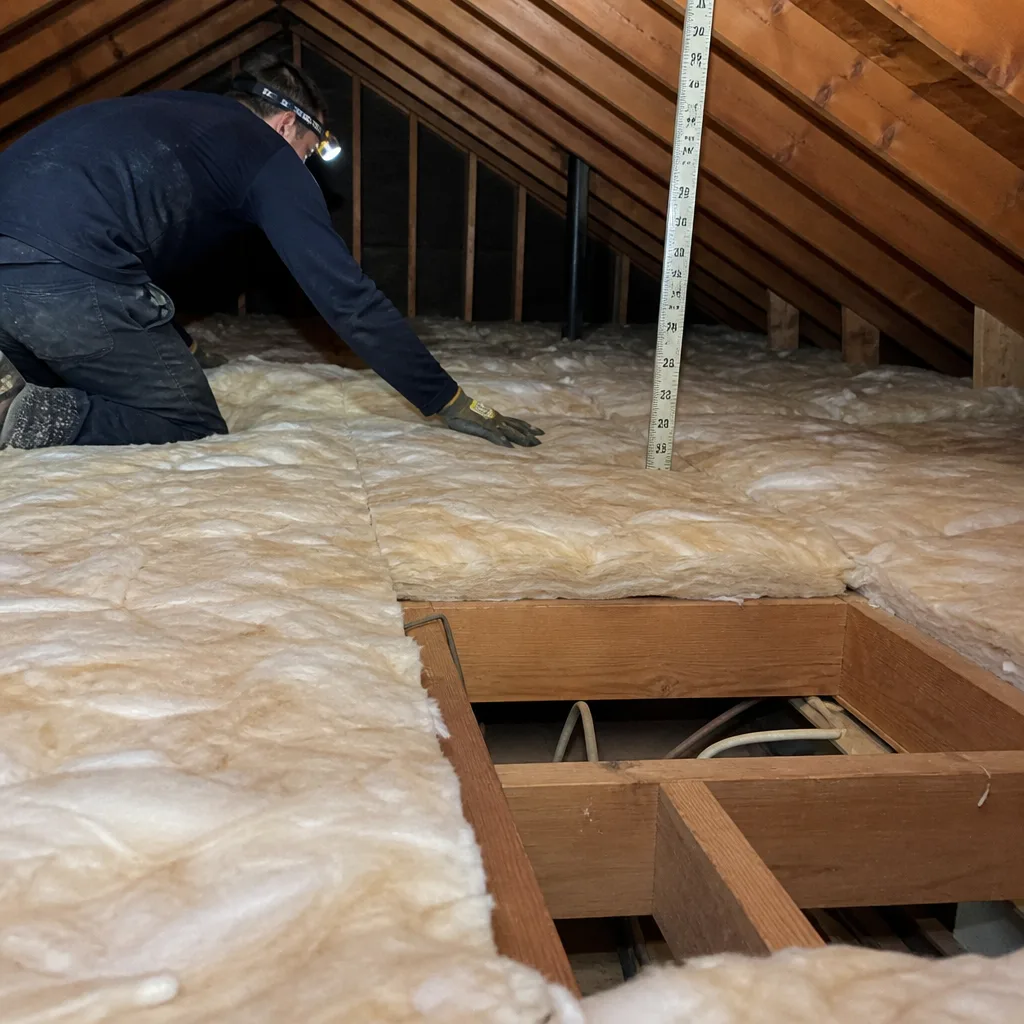
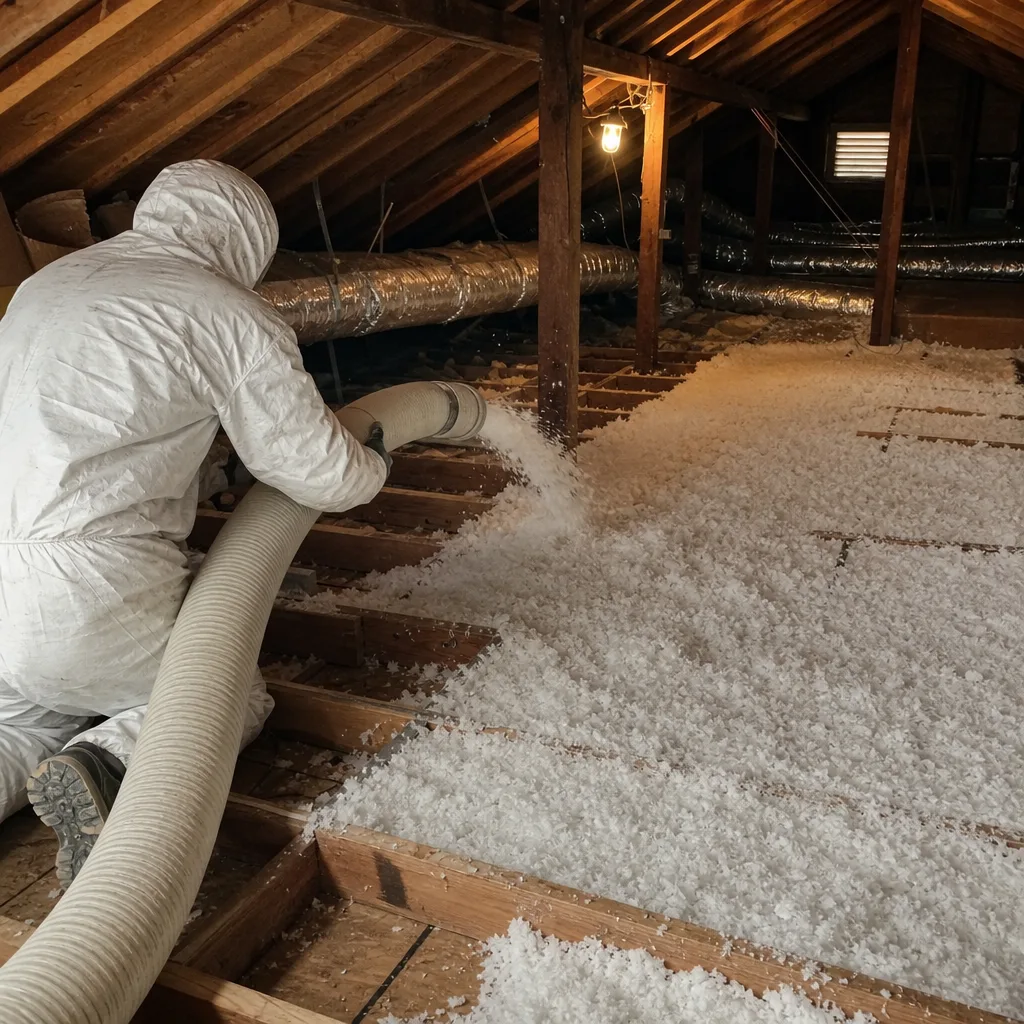
Fast, Reliable Attic Insulation Across Apple Valley
Attic insulation in Apple Valley typically costs $1,800 – $4,600 for a full re-insulation of a single-story tract home, with radiant barrier replacement adding $900 – $1,500. Most jobs we handle in the 92307 and 92308 ZIP codes are completed in one day. If your attic is hitting 150°F in July and your cooling bill is climbing past $400, the fix is usually straightforward: remove what’s failed and install insulation that actually holds up under High Desert conditions. Call (855) 773-6429 and we’ll schedule a free attic assessment.
Why Placentia Insulation Is Apple Valley’s Preferred Attic Insulation Company
We’re a pure insulation contractor, not a handyman service that happens to install batts between plumbing calls. Every crew member on our Apple Valley jobs works with insulation daily, and that focus shows up in the details: we check baffle placement before adding material, we verify duct insulation condition, and we know what happens to R-11 batts after 25 years in a vented attic with a torn radiant barrier.
Our Attic Insulation team has worked extensively in the Desert Knolls, Jess Ranch, and Sycamore Rocks neighborhoods. We know the stucco-on-wood-frame construction of Apple Valley’s 1980s – 2000s tract homes well enough to predict what we’ll find before we open the attic hatch. Homeowners here don’t need a generalist. They need someone who’s seen a hundred Apple Valley attics and knows exactly what’s failing in each one.
Alan Whitcomb, our owner, has built the company around one principle: match the material to the job, not the job to whatever’s on the truck. That’s why we carry eight insulation brands instead of one or two. When we assess an Apple Valley home, we’re choosing from Owens Corning, Knauf, Rockwool, GreenFiber, Icynene, and Demilec, among others. Most insulation contractors carry one or two product lines. We carry eight, so your home gets what it actually needs for this climate, this roof, and this duct layout.
Attic Mold Removal in Apple Valley
Attic Mold Removal in Apple Valley homes typically costs $1,200 – $3,200 depending on the affected square footage and whether the mold has spread into the roof sheathing itself. In this climate, attic mold most often develops when bathroom exhaust fans vent directly into the attic instead of through the roof, trapping humid air that condenses on the underside of cold roof decking during freezing winter nights. The result is surface mold on plywood and truss members that keeps spreading until someone addresses both the mold and the ventilation problem.
What We Actually Do
We start by identifying and correcting the moisture source. That usually means rerouting bathroom and kitchen exhaust fans through proper roof penetrations, confirming soffit vents aren’t blocked by improperly placed batts, and ensuring baffles are functioning. Once ventilation is corrected, we treat affected wood surfaces with appropriate antimicrobial products and remove any insulation that has absorbed moisture or lost its integrity. Removing moldy insulation matters as much as treating the mold itself, because damp batts against roof sheathing will feed the problem even after surface treatment.
Pricing Breakdown
For a typical single-story Apple Valley home with mold confined to a 200 – 400 square foot area around exhaust fan ducting, expect $1,200 – $1,800. Full attic mold remediation with insulation removal and replacement across a 1,500 – 2,000 square foot attic typically lands between $2,400 and $3,200. Call (855) 773-6429 for an assessment, and we’ll tell you honestly whether you need full remediation or just a ventilation fix and surface treatment.
Attic Insulation Removal in Apple Valley
Attic Insulation Removal in Apple Valley homes usually runs $1,500 – $2,800 for a typical single-story tract home, though the price shifts depending on access, the type of existing material, and whether vermiculite or other specialized handling is required. In Apple Valley’s 1980s – 2000s housing stock, we’re almost always removing the original compressed R-11 fiberglass batts that have sagged to a fraction of their rated value, often along with a failed radiant barrier that’s tearing and shedding foil fragments across the attic floor, which is why some homeowners also need Reflectix repair in Apple Valley.
Signs You Need Removal Before Re-Insulation
If a home inspector or a pest inspection has noted rodent activity, droppings, or nesting in the attic, removal and sanitation should precede any new insulation. Same story with water damage from roof leaks or condensation, which compresses batts and creates conditions where new insulation would be compromised from day one. In Apple Valley, we also see dust-choked attics where decades of high-desert wind have blown fine silt through vented eaves, coating old batts and reducing their effectiveness further. When the existing material is this compromised, topping it up doesn’t fix the underlying problem. It buries it.
How the Process Works
We use high-powered vacuum collection to extract the old material cleanly, then seal any access points, confirm baffle integrity, and prep the attic floor for new installation. For Apple Valley homes with truss-framed roofs and blown-in insulation, the extraction process is straightforward. For tight, low-clearance attics common in some custom builds near Apple Valley Road, removal takes longer and requires care around ductwork and recessed light housings. After extraction, we install the correct R-value for this climate zone and, where needed, replace the radiant barrier.
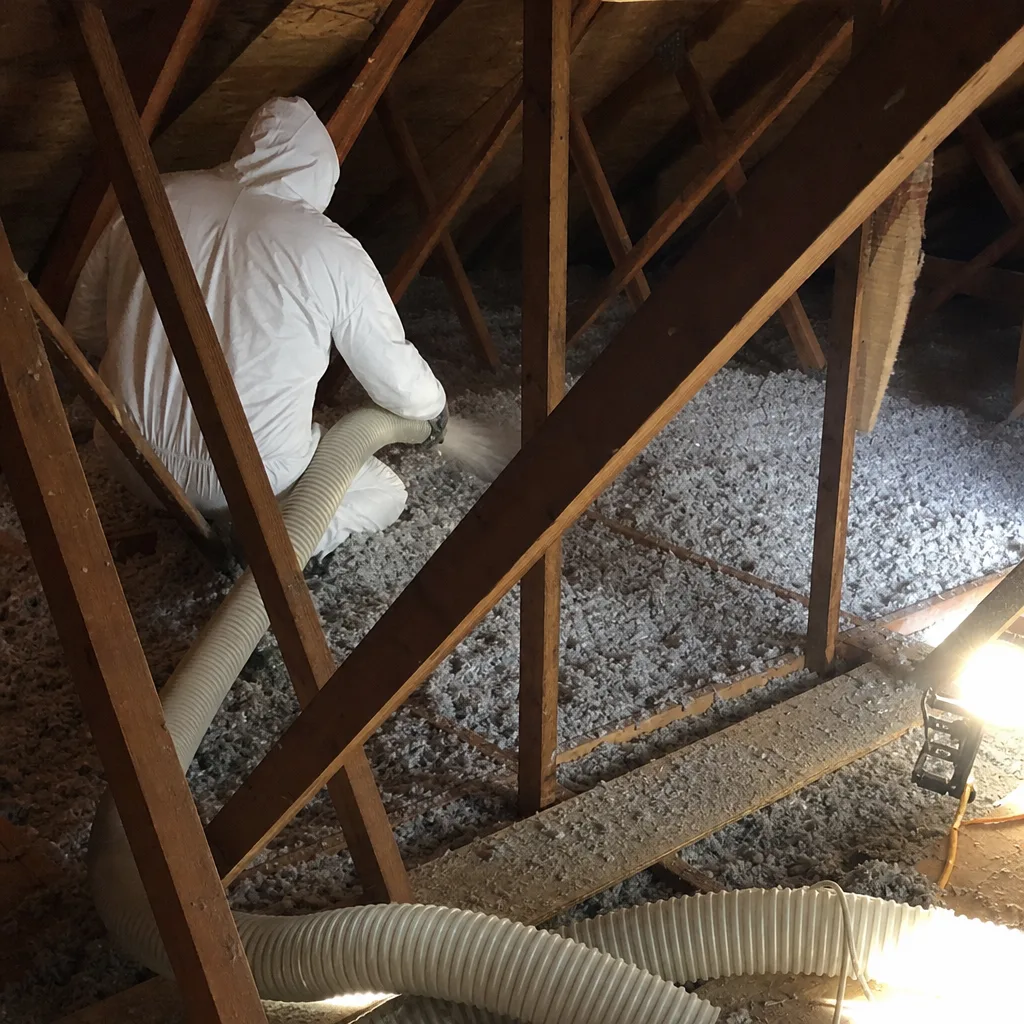
Trusted Brands We Service in Apple Valley
We stock and install materials from eight industry-leading manufacturers, which means your Apple Valley home gets the right product rather than whatever a single-brand shop happens to push. For attic re-insulation in this climate, we lean heavily on Owens Corning fiberglass for its dependable R-value retention and availability, GreenFiber cellulose for blown-in applications where coverage around trusses and ductwork matters, and Rockwool mineral wool when fire resistance, sound dampening, or moisture resilience are priorities. We also install Icynene and Demilec spray foam for Apple Valley homeowners who want air sealing combined with insulation. Having all of these product lines in active inventory means faster turnaround for 92307 and 92308 customers, because we don’t wait on supplier deliveries or substitute what’s convenient.
Common Attic Insulation Problems We See in Apple Valley Homes
- Failed foil radiant barriers. The original reflective foil stapled under the roof deck in 1990s and 2000s Apple Valley tract homes has often torn, dusted over, or lost its emissivity after 20+ years of desert sun. Once it fails, attic temperatures climb past 150°F in July and the insulation below it can’t keep up, no matter what its rated R-value is.
- Compressed R-11 batts that are doing almost nothing. In the single-story stucco homes built throughout Apple Valley from the 1980s onward, original fiberglass batts have settled, compressed, and degraded over decades. We routinely pull R-11 material that’s testing closer to R-4 or R-5, which means the attic is functionally uninsulated even though insulation is present.
- Under-insulated ductwork in vented attics. In Apple Valley’s high-desert climate with 100°F+ summers and freezing winter nights, uninsulated or R-4-wrapped duct runs lose enormous amounts of energy as conditioned air travels through a superheated attic. We check duct insulation on every attic job because it’s often the single biggest energy loss point in a High Desert home.
- Dust and wind-driven contamination from High Desert conditions. Apple Valley’s frequent wind events blow fine silt through soffit and eave vents, coating attic insulation with a layer of dust that gradually degrades its performance. Combined with low humidity and intense UV exposure, the attic environment here ages materials faster than in coastal or valley climates.
Pricing for Attic Insulation in Apple Valley, CA
A typical full Apple Valley attic re-insulation with removal of old batts and installation of new R-38 material runs $2,500 – $4,600 for a 1,200 – 2,000 square foot home. Adding a new radiant barrier to the underside of the roof deck adds $900 – $1,500. For homes that just need a top-up of blown-in insulation over existing material, expect $1,200 – $2,000 depending on depth and square footage. Attic insulation replacement that requires extensive baffle repair, duct wrap, or mold remediation pushes the job beyond these ranges. The biggest cost variable is what we find when we open the hatch: a failed radiant barrier, a rodent problem, or mold all change the scope. That’s why we recommend a free attic assessment before committing to any number. Call (855) 773-6429 and we’ll provide an exact quote based on your attic’s actual condition, not a guess.
We Also Serve Cities Near Apple Valley
Placentia Insulation serves the entire High Desert region, including Attic Insulation in Apple Valley and the surrounding communities of Mountain View Acres, Spring Valley Lake, Victorville, and Hesperia. Whether you’re off Bear Valley Road or near the Victor Valley College area, our crews are familiar with the housing stock and attic conditions that dominate this part of San Bernardino County. One contractor, three methods, eight brands, and the same attention to detail on every job.
Serving Apple Valley, CA — Our Local Coverage Area
We’re based in the Apple Valley area and know this community well. Use the map below to see our service coverage — if you’re nearby, we can almost certainly help.
FAQs About Attic Insulation in Apple Valley
Apple Valley sits at roughly 3,000 feet in the High Desert, where summer daytime temperatures regularly exceed 100°F and the sun beats directly on tile and composition roofs for 12+ hours. The problem is usually not that insulation is missing, but that it has failed: original R-11 batts compressed over decades and radiant barriers that have lost emissivity, torn, or dusted over. When those two things happen together, attic temperatures climb past 150°F because the reflective foil that should reject solar heat is no longer functioning and the batts below aren’t thick enough to stop the conducted heat from radiating into the home. The fix is re-insulation with a proper R-38 batt or blown-in product plus a new radiant barrier. Call (855) 773-6429 for an attic assessment and we’ll tell you exactly what condition your current setup is in.
If your attic is over 140°F on a 100°F day, your radiant barrier has almost certainly failed or was never installed correctly. Signs to look for include visible tearing or sagging of the foil, a layer of dust covering the reflective surface (dust reduces emissivity dramatically), or foil that has turned dull and gray instead of shiny. In Apple Valley’s 1990s and 2000s tract homes, we routinely find radiant barriers that have been up for 20+ years and are functionally dead. A simple test is to stand in the attic on a hot afternoon and see if you can feel radiant heat from the underside of the roof deck. If it’s noticeably hot even with the attic venting working, the barrier isn’t doing its job.
For the High Desert climate zone that includes Apple Valley, the Department of Energy recommends R-38 to R-49 in vented attics, which translates to roughly 12 – 16 inches of blown-in fiberglass or cellulose, or a combination of batts and blown-in material. Most Apple Valley homes built in the 1980s through 2000s were insulated to R-11 or R-13 originally, and after decades of compression and settling, they’re performing at a fraction of that. Upgrading to R-38 or higher is the most cost-effective energy improvement for a single-story stucco home in this climate. The exact R-value our team recommends depends on your roof type, attic access, and whether you’re also replacing a radiant barrier.
Yes, and in Apple Valley homes built before 2005, it’s usually the right call. The original fiberglass batts in these homes have compressed, collected decades of High Desert dust, and often contain rodent droppings or other contamination. Installing new insulation over degraded material wastes the performance of the new material and buries problems that will need to be addressed eventually anyway. The process is called Attic Insulation Removal, and we use high-powered vacuum collection to extract the old material cleanly before installing new R-38 or R-49 insulation. For Apple Valley homeowners who want this done properly the first time, removal and replacement is the approach we recommend more often than not.
The most common sign is dark staining on the underside of the roof sheathing or on trusses, often appearing as black or green speckling concentrated near bathroom exhaust fan ducts. In Apple Valley’s cold winter nights, humid air from improperly vented bathrooms condenses on the cold roof deck and creates ideal conditions for surface mold. Other signs include a musty smell that intensifies in summer, peeling paint on ceilings below the attic, or visible mold growth on insulation batts. If you see any of these, call (855) 773-6429 for an assessment. The fix usually involves correcting ventilation, treating affected wood, and removing moisture-compromised insulation.
We recently completed an attic insulation job on a 1990s stucco home in the Desert Knolls area of Apple Valley. Our crew found the original R-11 batts compressed to about R-4 and a foil radiant barrier that had torn and dusted over, causing attic temperatures to hit 155°F. We removed the old batts, installed R-38 Owens Corning fiberglass, and replaced the radiant barrier with a new reflective foil, dropping the attic temp by 30°F and cutting the homeowner’s summer cooling costs by roughly 20%. That’s what we mean when we say we match the material to the job. Eight brands. Three methods. One specialty.
For a free attic insulation estimate in Apple Valley, call (855) 773-6429 today. Alan and our team serve all of 92307 and 92308, and we’ll come out, inspect your attic, and give you an honest recommendation based on what’s actually happening up there.
Written by Alan Whitcomb, Owner at Placentia Insulation, serving Apple Valley and the High Desert since day one.