
Fast, Reliable Attic Insulation Across Bellflower
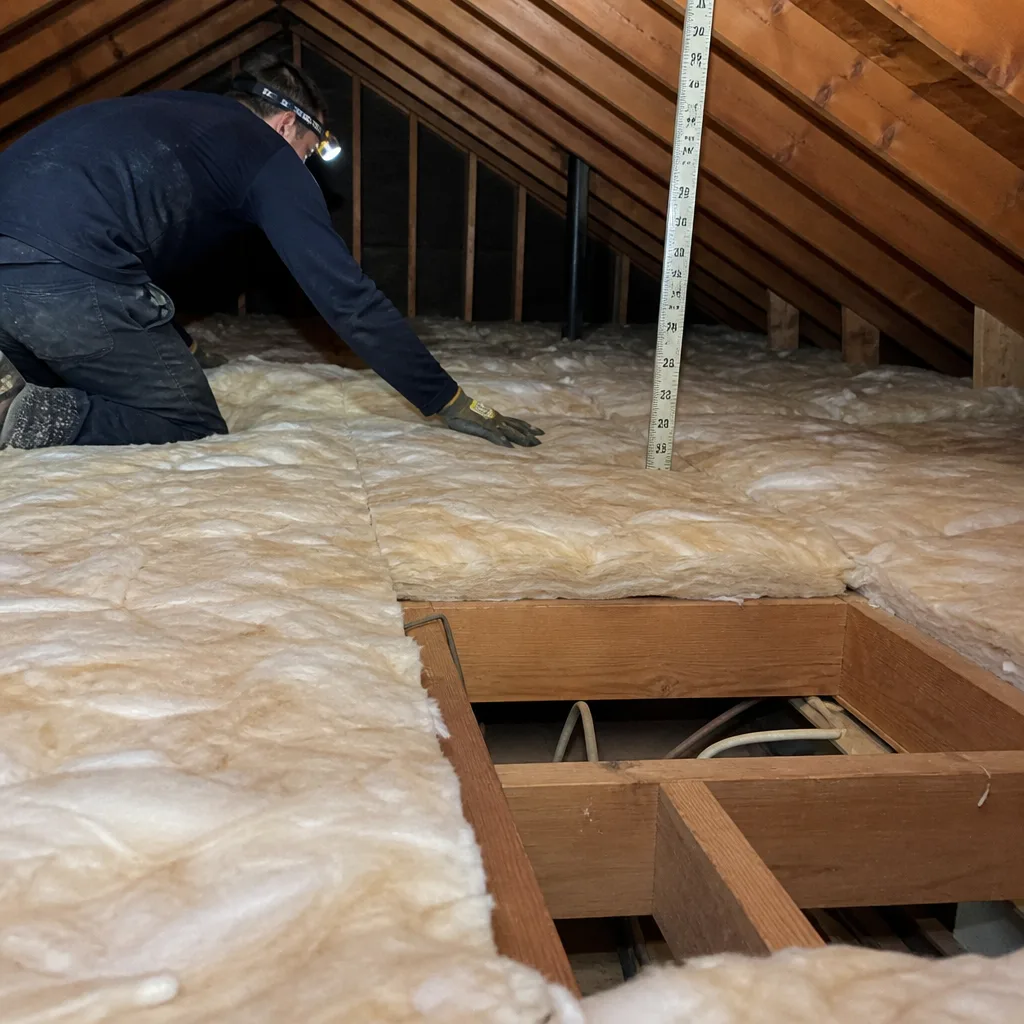
Attic insulation in Bellflower costs between $1,800 and $4,600 for a full retrofit on a typical 1,100 to 1,700 square foot single-story home, depending on current attic condition, access, and the material you choose. Most jobs are completed in one day. That’s the direct answer. Now here’s why Bellflower homes specifically make insulation work urgent: the tract houses built through the 1950s and 1960s, especially the neighborhoods off Bellflower Boulevard and along the 91 Freeway corridor, were framed years before California’s Title 24 energy standards demanded real attic insulation. Many of those attics still hold a thin, compressed layer of original fiberglass or even disintegrated newspaper-based material that does almost nothing to stop heat transfer. We know this because we see it every week. If your AC runs nonstop every August and your bedroom still won’t cool below 80, the problem is probably above your ceiling. Call us at (855) 773-6429 and we’ll come look.
Why Placentia Insulation Is Bellflower’s Preferred Attic Insulation Company
Insulation is all we do. That sentence matters more than it sounds. Most general contractors in Bellflower carry one insulation product line because that’s what their supplier stocks, and they treat the attic as a side job between kitchen remodels. We don’t. Our crews work exclusively on Attic Insulation, spray foam, and blown-in projects, and we match material to the house rather than forcing the house to fit whatever’s on the truck.
For Bellflower’s mid-century housing stock, that means we’re not guessing. We know what a 1957 stucco tract home needs differently than a 1980s addition on the same lot. Alan Whitcomb built our operation around carrying eight brands, Owens Corning, Johns Manville, Knauf, Rockwool, CertainTeed, Icynene, Demilec, and GreenFiber, so when a Bellflower homeowner needs fire-resistance in a shared wall or blown-in cellulose for a low attic, the right product is already in our inventory. Not something we order in three weeks later.
We serve both Bellflower ZIP codes, 90706 and 90707, and our crews know the streets from the 91 Freeway down to Artesia Boulevard. Estimates are free. The advice is honest, even when the honest answer is that your existing insulation is fine and you don’t need us yet.
Attic Ventilation in Bellflower
Attic ventilation in Bellflower is the quiet foundation of any effective insulation job, and in this climate it’s the difference between an attic that stays at 110°F and one that hits 145°F by 2 p.m. Here’s the direct answer: a typical eave-to-ridge ventilation job in Bellflower runs $400 to $1,200, including new baffles, vent covers, and sealing prep, and it’s usually done in half a day.
Why does it matter so much here? Bellflower sits in the LA Basin with hot, dry summers and minimal coastal breeze. When attic air can’t move, heat builds against the underside of the roof deck and radiates straight down through your ceiling insulation into the living space. Your AC fights it, your ductwork cooks in the heat, and your energy bill climbs every month. Proper ventilation gives that heat somewhere to go.
What Bellflower Homeowners Should Expect From This Job
We start with eave vents and confirm they’re not blocked by old insulation. On 1950s Bellflower homes, we almost always find the original vents painted over or packed full of debris. Then we install baffles to keep the soffit channels open before any new blown-in material goes down.
In hotter pockets closer to the 91 Freeway, we often recommend pairing ventilation with a radiant barrier. That combination cuts attic temperatures more than either treatment alone, and the cost difference is usually recoverable within two summers of reduced AC load.
When Bellflower Homes Need Ventilation First
Call us before you add insulation if you’ve noticed condensation on the underside of your roof sheathing in winter, or if your attic smells musty. Those are signs of trapped moisture, and adding insulation over a ventilation problem just makes the moisture worse. Alan Whitcomb’s crews air-seal and baffle first, then insulate. The order matters.
Radiant Barrier in Bellflower
Radiant barrier in Bellflower is one of the most cost-effective upgrades for the specific geometry of the city’s older homes: a low-slope or gable roof over a single-story frame, with direct sun exposure all afternoon. Here’s the direct answer: radiant barrier installation in Bellflower runs $1,200 to $2,800 for a typical single-story attic, and ours is stapled to the underside of the roof rafters, not laid over the insulation, because the air gap is what makes it work.
Radiant barrier reflects radiant heat before it can enter the attic. In Bellflower, where August attic temperatures near the 91 Freeway regularly push past 140°F, that single layer of reflective foil can drop your attic by 20 to 30°F. That’s not a small improvement; it’s the difference between ductwork sitting in a sauna and ductwork cooling the air it carries.
How Radiant Barrier Works in Bellflower’s Climate
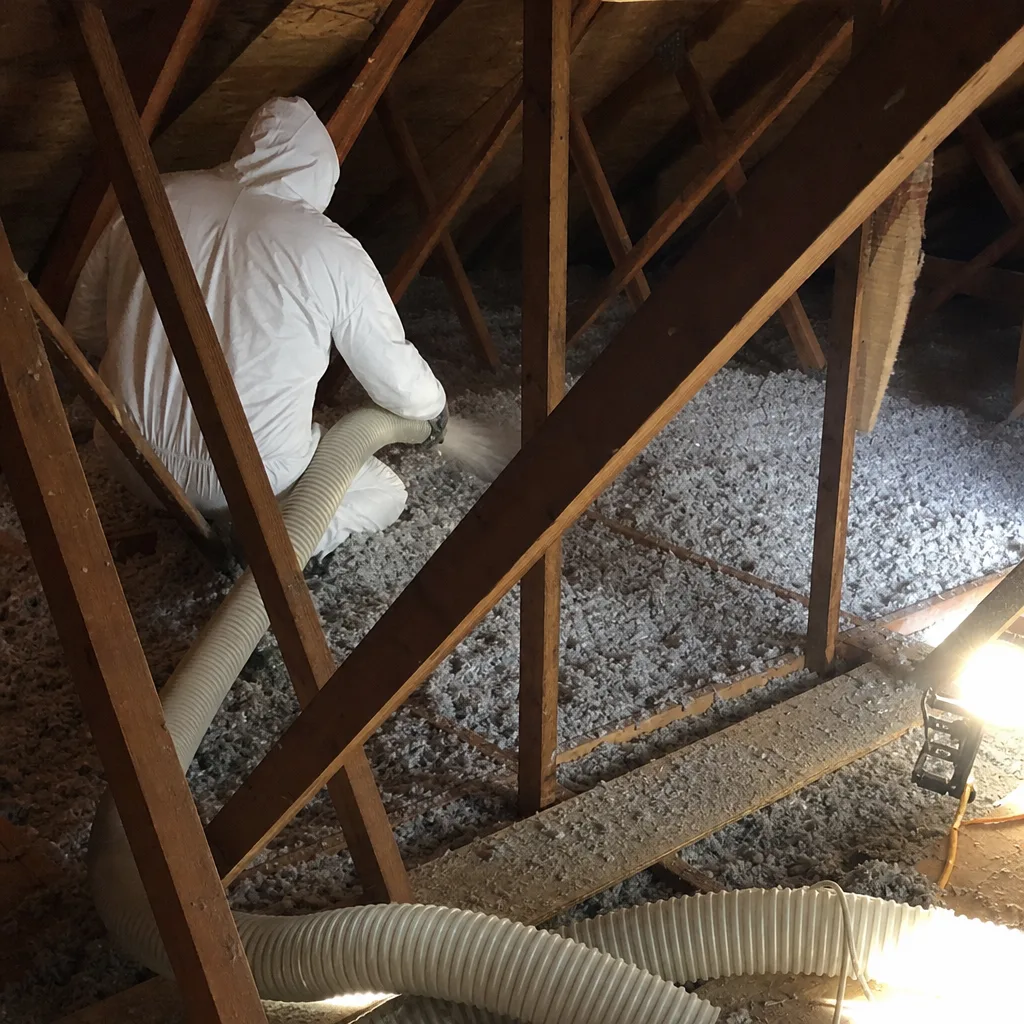
Think of it as sun protection for your house. The barrier blocks the sun’s radiant energy from heating the roof deck and radiating downward. Combined with blown-in insulation on the attic floor, you get two separate defenses: one stops heat from entering; the other slows whatever heat does get through from reaching your ceilings.
For homes along the 91 Freeway corridor, where heat bounces off asphalt and radiates against the roof, this genuinely changes how the house feels in July. Homeowners report the AC cycling off more often and bedrooms staying comfortable past noon.
What to Check Before Adding Radiant Barrier
We’ll verify your roof deck is dry and not already delaminating. Radiant barrier lasts decades, but it should never trap moisture against a damaged roof. If your roof has active leaks, fix those first. Our crews in Bellflower will tell you that straight, not sell you a barrier that hides a problem.
Trusted Brands We Service in Bellflower
When you call Placentia Insulation for Attic Insulation in Bellflower, you’re not limited to whatever one supplier happens to have in stock that week. We run our jobs with Owens Corning, Johns Manville, Knauf, Rockwool, CertainTeed, Icynene, Demilec, and GreenFiber, and we keep the materials Bellflower homes actually need on hand. That means Owens Corning blown-in fiberglass for deep attic top-ups, Demilec closed-cell for rim joists and tight cavities, GreenFiber cellulose for homeowners who want recycled content, and Icynene open-cell for the sound control and air-seal performance that matters when you live close to the 91 Freeway’s constant background noise.
Most insulation contractors in the area carry one or two lines. We carry eight, so the recommendation you get reflects your house, not our inventory shortage.
Common Attic Insulation Problems We See in Bellflower Homes
- Compressed original fiberglass batts. In 1950s bellflower tract homes, fiberglass that was once R-11 or R-13 is often flattened to an inch or less by decades of foot traffic, rodent activity, and settling. At an inch thick, it’s performing at maybe R-3. We find this in attics near the 91 Freeway all the time, and the fix is removal followed by air-sealing and new blown-in coverage.
- Newspaper-based and old cellulose that’s settled and dried out. Some Bellflower homes from the 1950s and 1960s have wall or attic insulation that began as recycled newspaper. It decomposes, compacts, and leaves top plates and bypasses unsealed, so hot attic air pulls straight down into the house.
- Blown-in material stacked below the top of ceiling joists. Bellflower homes built before Title 24 typically have 2×6 ceiling joists, so the attic floor only holds five and a half inches of material. Even if it’s decent fiberglass, that’s R-19 at best where today’s recommendations call for R-38. Most attics here need a top-up of at least eight more inches.
- Rodent damage and unsealed penetrations. Roof rats and mice are common in the older Bellflower tracts, and they tunnel through insulation, chew open can-light housings, and leave gaps around plumbing stacks and wires. The result is insulation that looks fine from the attic hatch but performs like a cracked window left open.
Pricing for Attic Insulation in Bellflower, CA
Here are real numbers for Bellflower’s market. A full attic insulation removal and replacement on a 1,200 square foot single-story home runs $2,200 to $3,800. An attic insulation top-up, where we air-seal and blow new material over existing insulation to reach R-38, runs $1,400 to $2,400. Adding a radiant barrier typically costs another $1,200 to $2,800 depending on roof geometry and access. Attic ventilation work, including baffles and eave vent repair, runs $400 to $1,200. Combined packages for Bellflower homes that need ventilation, radiant barrier, and blown-in insulation usually land between $3,500 and $6,500.
What changes the price: attic access difficulty, how much old material must be removed, whether rodent remediation is needed first, and whether can lights need sealing. We give fixed quotes, not ballparks. Call (855) 773-6429 and we’ll come measure your attic, run the numbers, and hand you a written estimate. No obligation, no pressure.
We Also Serve Cities Near Bellflower
Placentia Insulation covers Bellflower and the surrounding communities including Paramount, Norwalk, Artesia, and Cerritos. If you own a rental property in Bellflower or a home in one of those neighboring cities, the same crews that handle Bellflower’s mid-century tract attics are available for your job. Give us a call and we’ll set a time to look.
Serving Bellflower, CA — Our Local Coverage Area
We’re based in the Bellflower area and know this community well. Use the map below to see our service coverage — if you’re nearby, we can almost certainly help.
FAQs About Attic Insulation in Bellflower
In most Bellflower homes from that era, no. The original fiberglass batts have usually compressed from 6 inches to under 2, which cuts their R-value by 70 percent or more, and they’re often riddled with rodent tunnels and dust that make them ineffective. We typically recommend removal, air-sealing, and fresh blown-in insulation. Call (855) 773-6429 and we’ll inspect yours and tell you honestly whether it’s worth keeping anything.
If your roof gets full afternoon sun and your attic is hitting 130°F or higher in summer, a radiant barrier will make a real difference. It’s especially effective for Bellflower homes near the 91 Freeway, where reflected heat off the freeway surface adds to the load. The job usually runs $1,200 to $2,800, and it stacks well with blown-in insulation.
Look for evidence of moisture, musty smells in the attic, or visible condensation on the roof sheathing in winter. Those are signs of poor ventilation, and adding insulation without fixing it will trap moisture. In Bellflower, a proper ventilation setup usually includes clear eave vents, baffles, and at least a few roof or gable vents. We’ll check all of it before we sell you insulation.
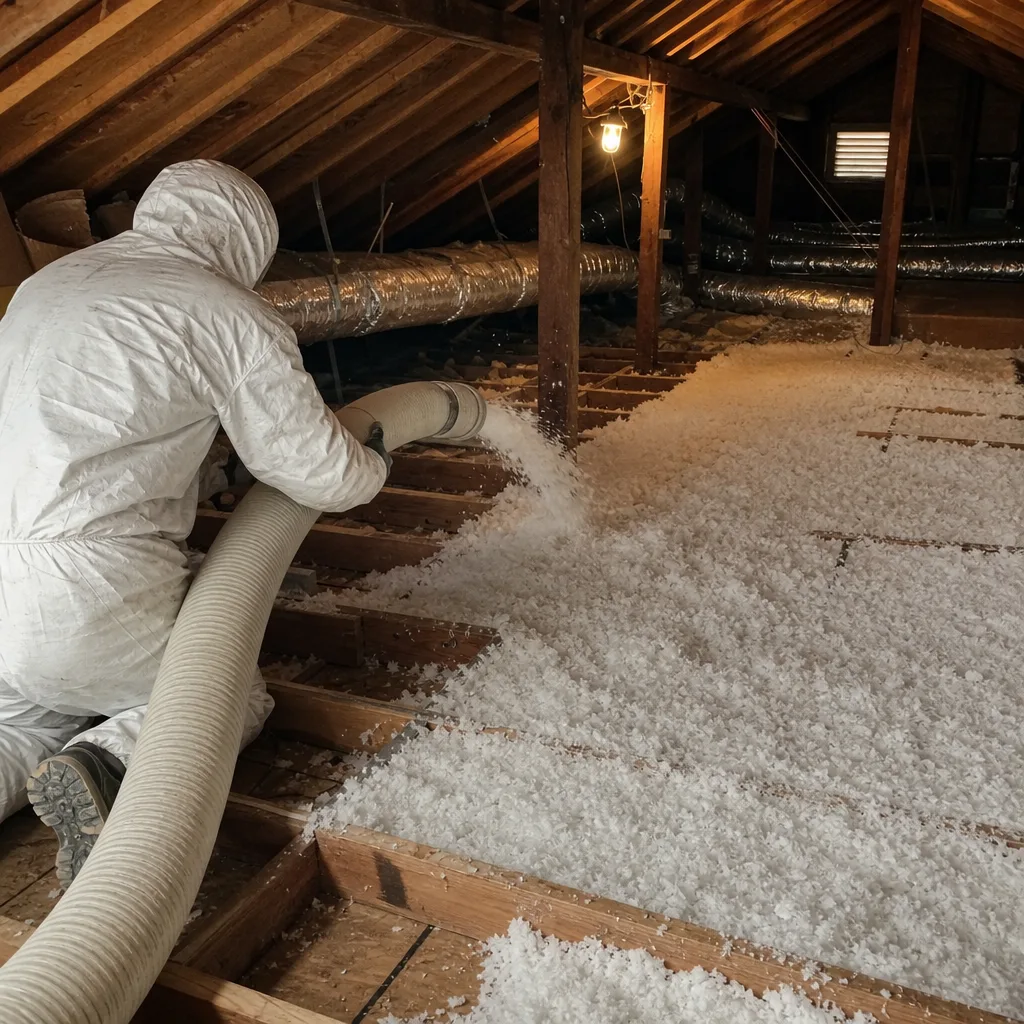
Blown-in fiberglass goes on the attic floor and works with your existing ceiling structure to slow heat transfer. It’s the right choice for most Bellflower attics because it’s cost-effective and easy to top up later. Spray foam, especially closed-cell like Demilec, is for sealing and insulating the roofline or specific problem areas where air leaks are the real issue. For most 1950s tract homes, blown-in fiberglass plus air-sealing and radiant barrier solves the problem for less money. We’ll show you both options and explain which fits your house.
Yes. In fact, that’s how we recommend doing it for Bellflower homes. Our crew can air-seal, blow in new insulation, and install radiant barrier in a single day on most single-story homes. One visit means one mobilization fee, one day of disruption, and a finished attic that handles Bellflower’s summer heat properly. Call (855) 773-6429 for a free estimate.
If your Bellflower home’s attic is still running on 60-year-old insulation, you don’t need to live with a hot house and a high AC bill. We’ll inspect it, show you what’s up there, and give you a fixed price for the right fix. Call (855) 773-6429 today and talk to a real insulation specialist, not a general handyman.
Written by Alan Whitcomb, Owner at Placentia Insulation, serving Bellflower and the surrounding San Gabriel Valley communities.