
Fast, Reliable Attic Insulation Across Chino
Attic insulation in Chino costs between $1,450 and $3,800 for a typical single-family home, depending on attic size, existing insulation condition, and the material you choose. We’re out in Chino weekly, working in neighborhoods from the 91710 corridor south of the 60 to the newer developments up in 91708. When your attic hits 150°F in July, the last thing you need is a contractor who doesn’t understand what that heat does to insulation. Call us at (855) 773-6429 and we’ll schedule a free attic assessment, usually within a few days.
Why Placentia Insulation Is Chino’s Preferred Attic Insulation Company
We’re an insulation-only contractor, which means every truck, every tool, and every crew member is focused on one trade. That’s rare in Chino, where most companies offering insulation work are general contractors squeezing it between bathroom remodels. Alan Whitcomb, who leads our team, built Placentia Insulation around a simple idea: match the material to the job, not the job to whatever’s on the truck. When we inspect an attic near Chino Airport, we’re looking for dust infiltration and heat-degraded fiberglass. On newer construction off Pine Avenue, we’re checking whether the builder-grade batts actually meet Title 24. That’s the difference a specialist brings.
Chino homeowners call us because we carry eight material brands: Owens Corning, Johns Manville, Knauf, Rockwool, CertainTeed, Icynene, Demilec, and GreenFiber. Most insulation contractors carry one or two product lines. We carry eight, so your attic gets what it actually needs. A 1960s tract home near the airport has different problems than a 2015 build in the Preserve. We see both every month.
We also respond fast. Chino is a 30 to 40 minute drive from our Placentia yard, which means we can often assess an attic within three business days of your call. If you’ve got a ceiling that’s sweating, insulation that smells musty, or a top floor that won’t cool below 82°F in August, we’ll get out there.
Attic Mold Removal in Chino
Attic mold removal is a job we handle frequently in Chino homes. It starts with identifying where moisture is coming from: bathroom exhaust fans venting into the attic, inadequate soffit ventilation, or a roof leak. Once we stop the moisture source, we remove the contaminated insulation, treat the affected framing, and prep the space for new material. In Chino’s semi-arid climate, standing attic moisture happens less from ambient humidity and more from specific failures like disconnected dryer vents or bathroom fans blowing into the attic. We’ve found that in dozens of attics south of Chino High School.
Signs Your Chino Attic Has Mold
Dark staining on the underside of roof sheathing, a persistent musty odor in the upstairs hallway, and insulation that looks matted and discolored are the three most common indicators. If you’ve had a roof leak you thought was “minor,” mold often follows within months. Chino’s long dry season masks moisture, but it doesn’t eliminate it.
What the Removal Process Involves
We remove all affected material down to the attic floor or drywall, treat framing with an antimicrobial agent, and identify the ventilation fix that prevents recurrence. A typical mold remediation plus insulation replacement in a Chino attic runs $2,800 to $5,500. Smaller spot treatments start around $900. The cost depends on how far the contamination has spread and whether we’re replacing the insulation entirely.
Attic Insulation Removal in Chino
Attic insulation removal in Chino is often the starting point for energy-efficiency upgrades in older homes. We remove insulation when it’s compressed, rodent-damaged, water-damaged, or so old it’s no longer performing. In Chino, we also remove it when dust from the 60 freeway and Chino Airport has worked its way through the material. That dust doesn’t just look bad; it compresses fiberglass and cellulose, reducing the air pockets that do the insulating work.
When Chino Homeowners Need Old Insulation Removed
Homes built in the 1950s through 1970s across central Chino often still have original R-11 or R-19 fiberglass batts. Those weren’t enough even when they were installed. Forty years of settling, dust, and heat cycles later, many are performing at a fraction of their rated value. Removal is also necessary after animal activity. Rats and squirrels love attics, especially in older neighborhoods with mature trees. Their droppings and urine ruin insulation permanently.
What Removal Costs in Chino
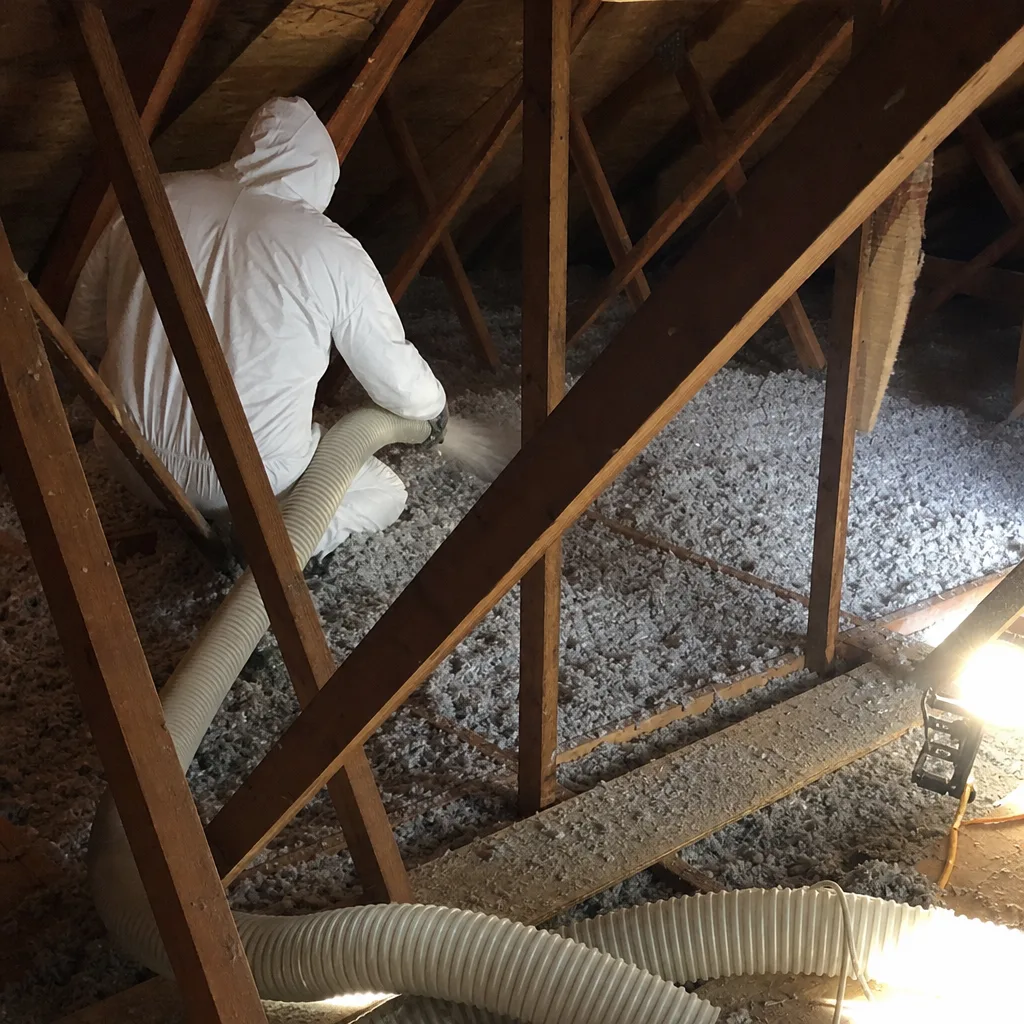
Attic insulation removal alone typically runs $1,200 to $2,600 for a 1,200 to 1,800 square foot attic. If we’re pairing removal with new blown-in installation as part of a full upgrade, the combined job usually lands between $2,800 and $4,600. We use HEPA-filtered vacuums and bag everything for disposal rather than blowing debris out a vent into your yard.
Trusted Brands We Service in Chino
When you need attic work in Chino, the material matters. We stock and install Rockwool mineral wool for homeowners who want fire resistance and sound dampening alongside thermal performance. We offer CertainTeed fiberglass systems when a straightforward R-38 to R-49 upgrade fits the budget. For attics with tight access, irregular framing, or challenging rooflines, Icynene and Demilec spray foam give us options a single-brand shop can’t offer. We keep inventory at our Placentia yard, so most Chino jobs don’t wait on material lead times.
Common Attic Insulation Problems We See in Chino Homes
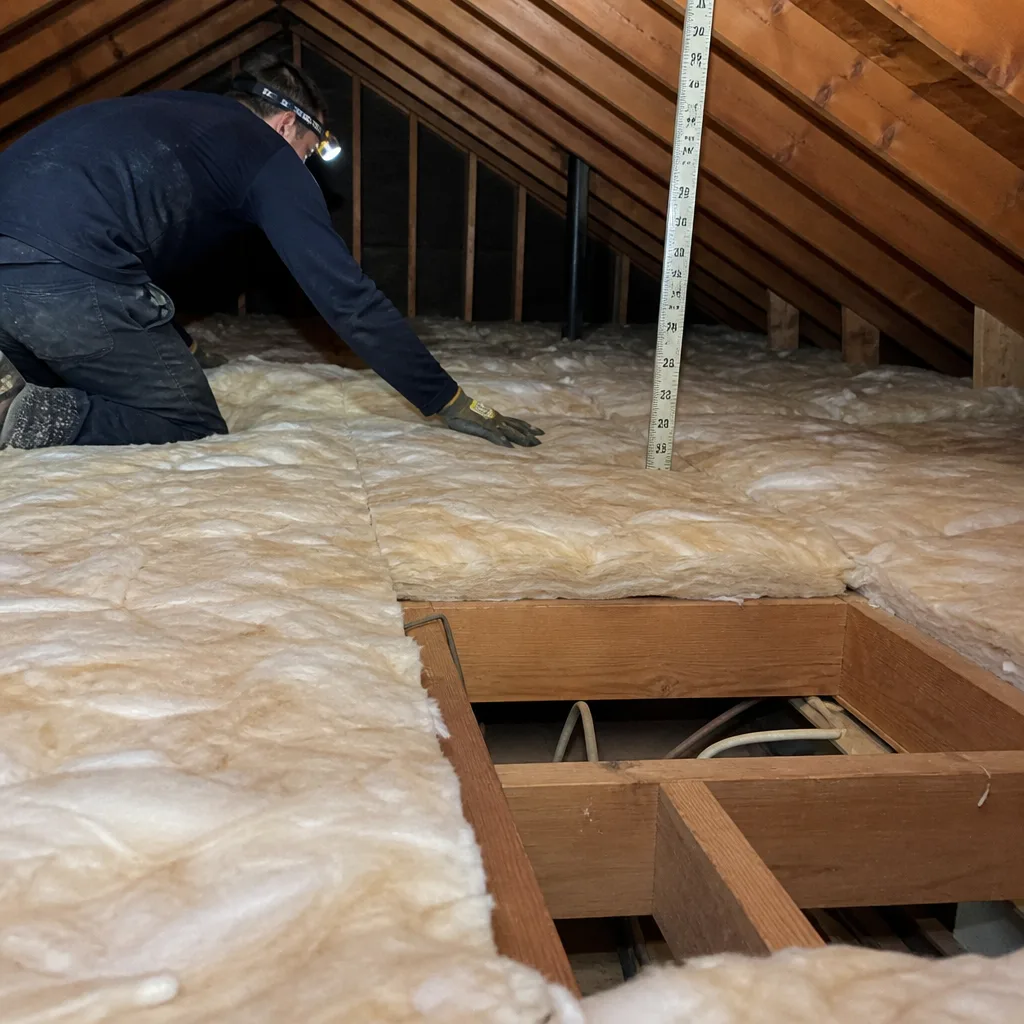
- Sagging fiberglass batts from extreme heat. Chino attics routinely hit 150°F to 160°F in July and August. Sustained heat breaks down the binding agents in fiberglass batts, causing them to sag away from roof decking and lose contact with the attic floor. We frequently see batts that have dropped several inches from their original installation point.
- Dust compression near the 60 and Chino Airport. Homes along Pipeline Avenue, Euclid Avenue, and anywhere within a mile of the airport collect more attic dust than Chino’s southern neighborhoods. That dust settles into insulation, fills the air pockets that provide R-value, and steadily degrades performance.
- Under-insulated attics in 1950s to 1970s tract homes. Original R-11 and R-19 insulation is common in the homes between Central Avenue and the 71. Current Title 24 requirements call for R-38 or higher in this climate zone. Many Chino homeowners are losing serious energy dollars through attics that were under-insulated the day they were built.
- Bathroom exhaust fans venting into the attic. It’s one of the most common findings in Chino homes of every age. Instead of routing moist air outside, builders cut corners and dumped it into the attic. Over time, that moisture condenses on sheathing and insulation, triggering mold growth that then requires removal and replacement.
Pricing for Attic Insulation in Chino, CA
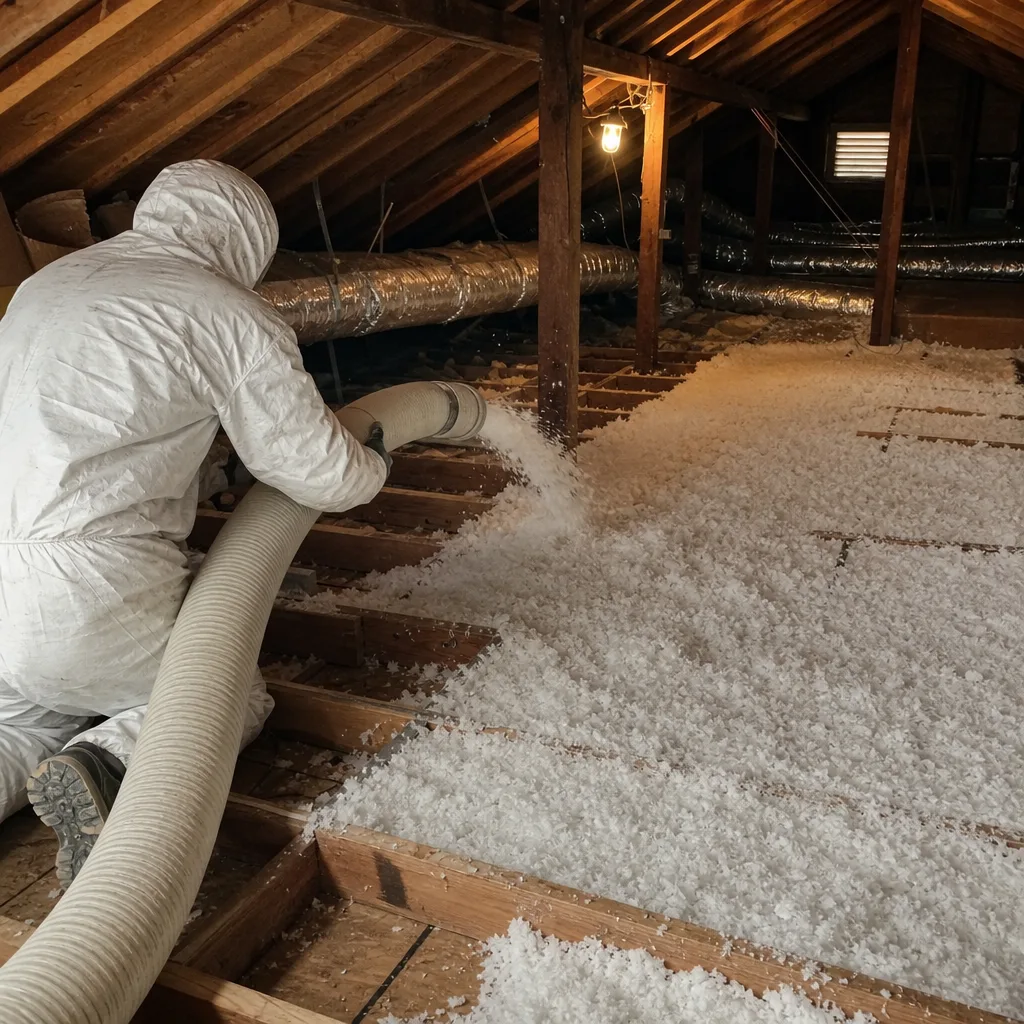
Here’s what Chino homeowners can expect to pay. Attic insulation top-up, adding 6 to 10 inches of blown-in fiberglass over existing insulation, runs $950 to $1,900. Full attic insulation replacement with R-38 blown-in fiberglass or cellulose in a standard Chino attic is $2,400 to $4,200. Attic batt insulation runs $1,800 to $3,600 depending on R-value and access difficulty. Spray foam in a Chino attic is $3,500 to $7,000 for open-cell. Attic baffles and ventilation prep, which we recommend before any insulation installation, adds $300 to $900. Every quote is free, written, and itemized. Call (855) 773-6429 and we’ll walk your attic and give you a real number.
We Also Serve Cities Near Chino
Our crew regularly works the whole Chino Valley and surrounding area. From our Placentia yard, we serve neighborhoods across Los Serranos, Ontario, Montclair, and Eastvale. If you’re in one of those communities and dealing with attic heat, dust, or old insulation, Chino is just one of the communities where our Attic Insulation specialists work every week.
Serving Chino, CA — Our Local Coverage Area
We’re based in the Chino area and know this community well. Use the map below to see our service coverage — if you’re nearby, we can almost certainly help.
FAQs About Attic Insulation in Chino
Chino’s summer heat degrades fiberglass insulation faster than nearly any other factor. Attic temperatures exceed 150°F on hot days, which breaks down the formaldehyde-free binders in fiberglass batts and causes them to sag and lose R-value. Over multiple seasons, insulation that was rated R-19 can perform like R-11 or worse. This is why we recommend blown-in fiberglass or cellulose for Chino attics in many cases: loose-fill material doesn’t sag the way batts do. Call (855) 773-6429 for an attic assessment.
Attic insulation removal is necessary in older Chino homes because the original material is frequently under-insulated, compressed, contaminated, or all three. Homes built between the 1950s and 1970s typically have R-11 or R-19 batts that fail current Title 24 requirements. Decades of Chino dust, rodent activity, and thermal cycling mean that old insulation can’t simply be topped off; it has to come out first. We’ll tell you honestly whether removal is needed or whether a top-up will do.
Dust from Chino Airport and the 60 freeway settles into attic insulation and compresses it, reducing the trapped air pockets that create thermal resistance. Over years, that means your attic insulation is effectively performing below its rated R-value even if it hasn’t sagged. Homes within a mile of the airport and freeway corridor are the most affected. If you live off Ramona Avenue or around the 60 and Central Avenue interchange, ask us about adding a dust inspection to your attic assessment. Estimates are free.
R-38 is the minimum recommended attic insulation level for Chino under current Title 24 energy standards, with R-49 preferred for homes that run air conditioning heavily through summer. Most older Chino homes sit at R-11 to R-19, which means they’re losing significant energy. Upgrading from R-19 to R-38 typically cuts summer ceiling heat gain by roughly 50%. Call (855) 773-6429 and we’ll measure exactly what’s in your attic.
Yes, attic mold removal and insulation replacement are almost always done together in Chino homes. The mold remediation process requires removing contaminated insulation, so it makes sense to install fresh material immediately after treatment. We handle both steps as one continuous job: stop the moisture source, remove affected material, treat surfaces, prep ventilation, and install new insulation at the R-value your home needs.
Written by Alan Whitcomb, Owner at Placentia Insulation, serving Chino and surrounding communities.