
Fast, Reliable Attic Insulation Across Compton
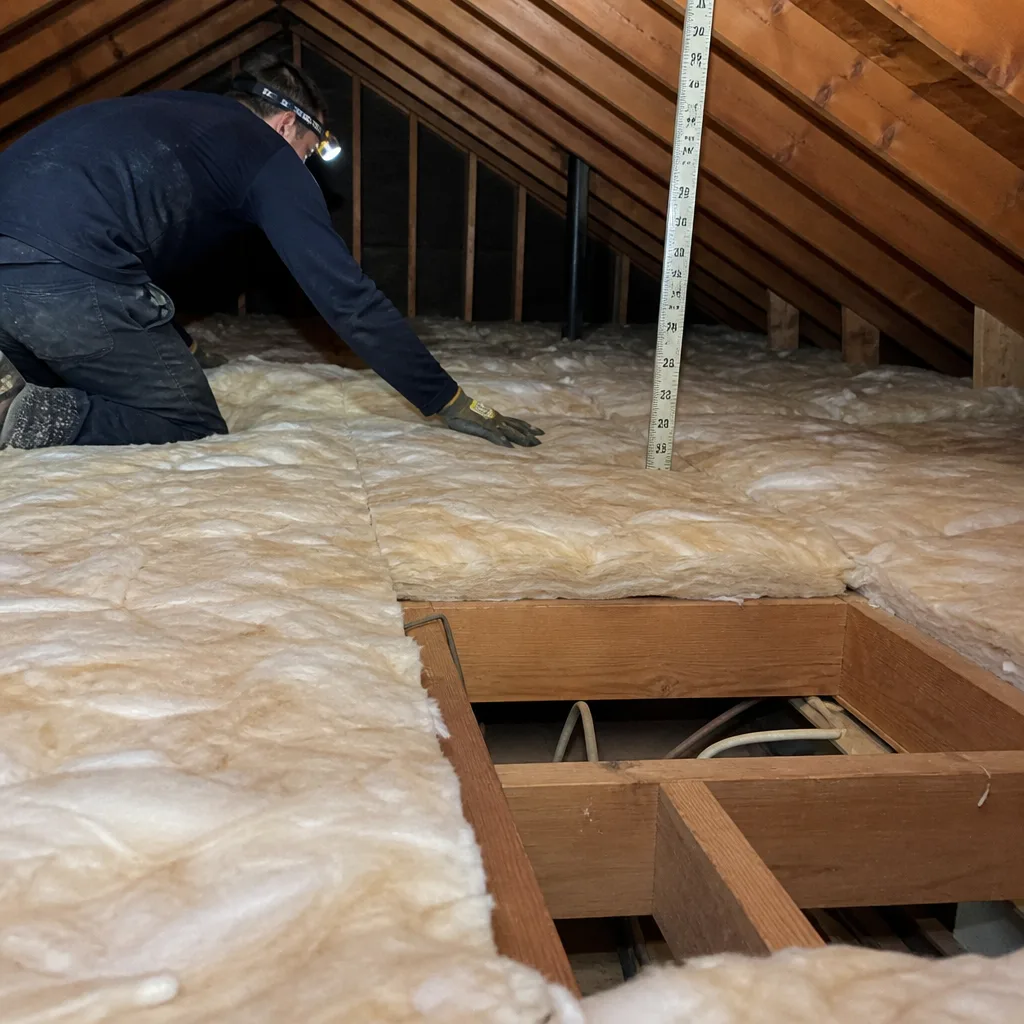
Attic insulation in Compton is a retrofit job first, a new-construction job almost never. Most homes here were built between the 1920s and 1960s, and their attics are either uninsulated, under-insulated, or packed with original fiberglass that’s been compressed flat by sixty years of heat. We work those homes every week: flat roofs, tight scuttle access, stucco exteriors. Placentia Insulation is a dedicated insulation contractor, not a generalist, and we match the material to the job rather than whatever happens to be on the truck. You can reach us at (855) 773-6429 for a free estimate any day.
Why Placentia Insulation Is Compton’s Preferred Attic Insulation Company
Most insulation contractors carry one or two product lines. We carry eight. Owens Corning, Johns Manville, Knauf, Rockwool, CertainTeed, Icynene, Demilec, and GreenFiber are all in active inventory, which means a Compton homeowner with a flat-roof 1950s stucco house gets a real recommendation, not a default. Our crews know Compton’s housing stock because we’re inside it constantly – the low-pitch roofs near Compton College, the duplexes off Rosecrans, the block after block of mid-century ramblers through the 90221 and 90223 ZIP codes. That local familiarity changes how we spec a job. We know which attics have no walkable space. We know which ones bake past 140°F in August. And we know that a one-size-fits-all quote from a company two counties over is not going to hold up when a scuttle hatch is too small for a standard batt.
Alan Whitcomb leads our team, and he’s built the company around a single trade. Insulation. Not roofing. Not HVAC. Every crew member, every tool, every conversation we have in Compton is about insulation. That focus shows up in the details: we stock the right sealants for old plaster-to-stucco transitions, we carry baffle options for tight eave spaces, and we know the local code nuances for retrofit R-value compliance under Title 24. Homeowners don’t need a contractor who does insulation on Tuesdays. They need someone who thinks about it every day.
Attic Ventilation in Compton
Attic Ventilation in Compton is not a nice-to-have. It’s the difference between an attic that releases heat and one that slow-cooks your insulation, your roof decking, and your air conditioning budget. Compton sits inland from the coast, well east of the marine layer’s steady cooling, which means summer afternoons push attic temperatures far beyond what a properly vented attic in Torrance or Redondo Beach would ever see. Add Compton’s flat or nearly flat roof shapes, and you get almost no natural stack effect. Heat just sits up there. When ventilation fails on these homes, the symptoms are consistent: upstairs rooms that never cool down, shingles curling prematurely, and moisture condensing on the underside of roof sheathing during Compton’s damp winter nights.
A typical attic ventilation correction in Compton runs $450 to $1,100 depending on the number of soffit vents, ridge or eyebrow vents, and whether we’re adding baffles to clear airflow paths. Older homes with enclosed eaves often need additional venting cut in, which pushes toward the higher end. This is not a standalone fix; we always coordinate ventilation with insulation replacement so the two systems work together.
Signs Your Attic Isn’t Breathing
You walk upstairs at 8 p.m. and the hallway is still ten degrees warmer than the living room. You notice paint bubbling on ceiling drywall near the attic hatch. You smell a faint mustiness in closets that back onto the roofline. These are all ventilation failures showing up in living space. In Compton’s older frame-and-stucco houses, we see these exact symptoms in homes where attic access hasn’t been opened in years and soffit vents were painted over during an exterior repaint.
Baffles and Airflow Correction
In homes where blown-in insulation has drifted toward the eaves, airflow gets blocked. We install baffles to keep insulation from choking the soffit intake, then verify that air actually moves from intake to exhaust. On Compton’s low-pitch roofs, this often means running baffles in spaces where eave height is barely six inches. It’s fussy work, and it’s exactly the kind of thing a generalist contractor misses.
Radiant Barrier in Compton
Radiant Barrier in Compton makes a measurable difference because heat gain through the roof deck is the single biggest driver of attic temperature in this part of the LA Basin. A radiant barrier reflects radiant heat before it enters the attic cavity, rather than trying to manage it after the fact with ventilation alone. Compton’s inland heat load – coupled with flat and low-pitch roofs that expose large surface areas to direct sun – means a properly installed radiant barrier can cut attic temperatures by 20 to 30°F. That’s not a marketing number; that’s a measured result we see on mid-century homes across the 90224 and 90221 ZIP codes.
Radiant barrier installation in Compton typically runs $0.90 to $1.75 per square foot of attic floor area, with most whole-attic jobs landing between $1,400 and $2,600. The range depends on roof pitch, access difficulty, and whether we’re stapling a foil-faced product to the rafters or laying a radiant-barrier sheet over the attic floor insulation. Homes with no walkable attic – common in Compton because of the flat roofs – require more labor and land at the higher end of that range.
Roof-Deck vs. Floor-Mounted Radiant Barrier
Roof-deck application is the better choice in Compton because it reflects heat before it enters the attic structure itself. Floor-mounted radiant barrier works in homes with substantial vertical attic space, but dust accumulation on the foil surface diminishes performance over time. For Compton’s flat and low-pitch roof stock, we recommend roof-deck application whenever access allows, even if that means working through exterior openings rather than from inside the attic.
Pairing Radiant Barrier with Air Sealing
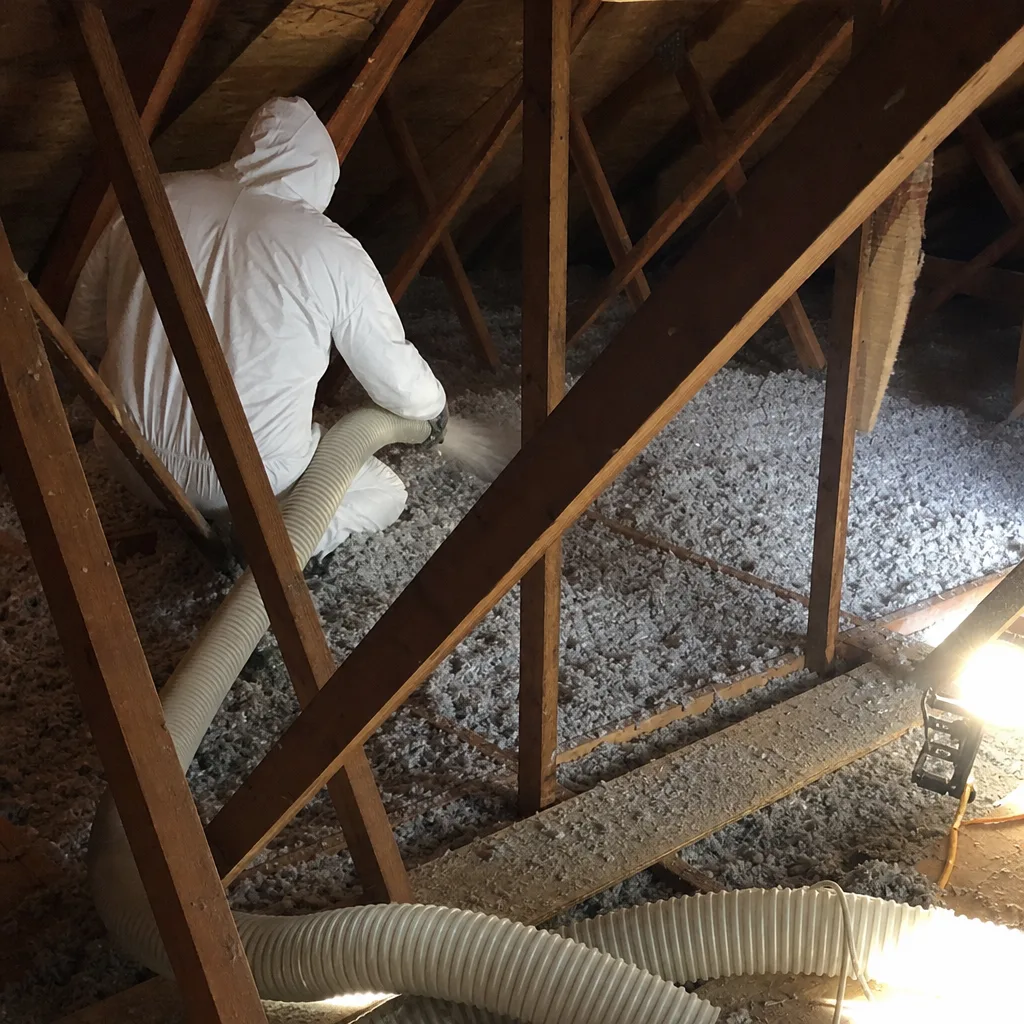
Radiant barrier performs poorly if the attic is leaking. Recessed lights, scuttle hatches, and ceiling penetrations all let hot, smoggy air pull into the living space, undermining everything the barrier does. We seal those gaps with spray foam – typically Icynene open-cell for smaller cavities – before installing the radiant barrier. A sealed attic in a Compton home holds whatever temperature it holds, rather than exchanging air with a 140-degree roof cavity all day.
Trusted Brands We Service in Compton
We stock more material lines than any insulation contractor we know of in the South LA area. For Compton jobs, that means Owens Corning fiberglass batts for standard attic top-ups, GreenFiber blown-in cellulose for homes where existing insulation is patchy and irregular, and Icynene or Demilec spray foam for air sealing and tight-cavity work. We do not push a single brand because a distributor gives us good terms. We choose the product that solves the specific failure mode. For a flat-roofed Compton stucco home with no walkable attic, we’re likely recommending Owens Corning R-30 or R-38 batts with a radiant barrier. For a vented attic with good access and existing compressed fiberglass, blown-in GreenFiber makes more sense. The portfolio exists so the recommendation is based on your house, not our truck.
Common Attic Insulation Problems We See in Compton Homes
We get calls from Compton homeowners about the same failure modes week after week. It’s almost never a mystery. It’s old insulation, hot attics, and access problems that kept previous contractors from doing the job properly. Here’s what we actually find:
- Compressed and degraded original fiberglass. Homes built in the 1950s and 1960s near Compton College and across the 90221 ZIP code often still have their original fiberglass batts. Six decades of summer heat have flattened them to half their rated R-value or less. The insulation is technically present. It’s just not insulating.
- Trapped moisture from flat-roof condensation. Compton’s damp, mild winters create condensation conditions on the underside of unventilated roof sheathing. Without adequate ventilation, that moisture soaks into insulation and degrades its performance permanently. Homeowners discover it as a musty smell, visible water staining, or elevated cooling bills with no other explanation.
- Unsealed scuttle hatches and recessed lights. We see this constantly in the 90223 ZIP code: attic hatches that sit unsealed, allowing hot, smog-laden air to pour into hallways and bedrooms all summer. Recessed can lights from the 1970s and 1980s are even worse. They act as air chimneys between the attic and the living space.
- Attic insulation installed without baffles, blocking ventilation. In homes where blown-in insulation was added years ago without baffles, the material drifts into the eave space and chokes off all airflow. The insulation is doing its thermal job but sabotaging the ventilation that protects the roof structure from heat and moisture buildup.
Pricing for Attic Insulation in Compton, CA
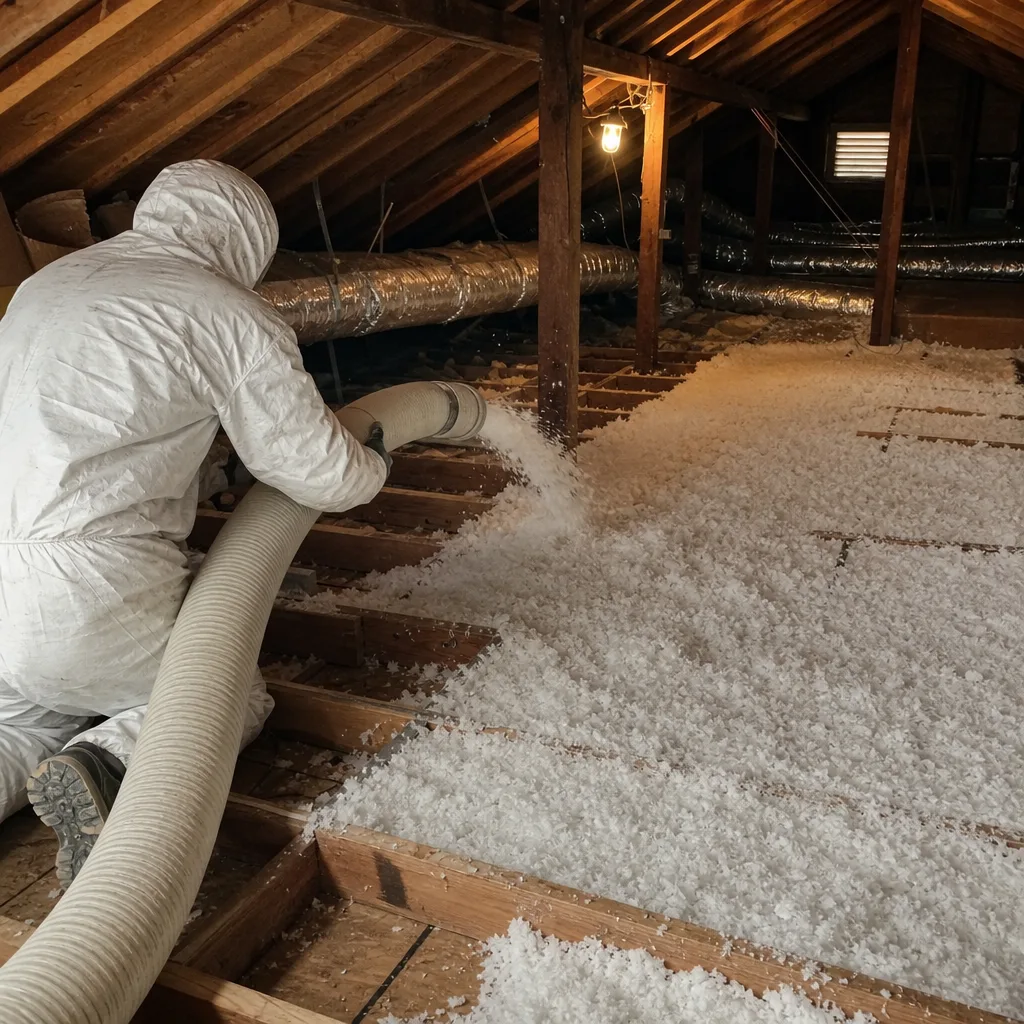
Attic insulation work in Compton carries a different labor profile than in neighboring cities with walkable attics, and that shows up in pricing. A straightforward attic top-up with blown-in GreenFiber cellulose on a standard 1,200-square-foot home runs $1,400 to $1,900. Full attic insulation replacement with Owens Corning fiberglass batts plus air sealing typically lands between $2,200 and $3,500, depending on existing insulation removal and attic access conditions. Adding a radiant barrier on a flat-roof home with scuttle-only access runs another $1,400 to $2,600. Adding ventilation correction – baffles, vent installation, or attic fan work – ranges from $450 to $1,100. The variables are real: roof pitch, scuttle size, existing moisture damage, and whether we’re working from the interior or exterior. What you won’t get is a vague hand-wave. Call us at (855) 773-6429 and we’ll walk the attic, assess the access path, and give you a written line-item estimate before any work is scheduled.
We Also Serve Cities Near Compton
Our crews run insulation jobs throughout the South LA and Gateway Cities region, so if you own property in East Rancho Dominguez, West Rancho Dominguez, Carson, or Gardena, you’re in our regular service area. For homeowners looking for Attic Insulation help in those communities, we bring the same product portfolio and single-trade focus we bring to Compton every week.
Serving Compton, CA — Our Local Coverage Area
We’re based in the Compton area and know this community well. Use the map below to see our service coverage — if you’re nearby, we can almost certainly help.
FAQs About Attic Insulation in Compton
Compton sits inland from the coast in the LA Basin, so it runs noticeably hotter than beach-adjacent cities like Redondo Beach or Manhattan Beach throughout the summer. Insulation in a Compton attic is managing a much larger heat load than insulation in a coastal attic. That means cooling-load performance matters more here, and radiant barrier or ventilation upgrades that are optional in the beach cities become near-essential in Compton’s inland climate. Call us at (855) 773-6429 and we’ll explain what that means for your specific roof and attic configuration.
Yes. This is one of the most common situations we handle in Compton. Flat and low-pitch roofs on mid-century stucco homes often leave no interior attic space to work from, but insulation can be installed through tight scuttle access with blown-in material, or from the exterior for jobs requiring batts or radiant barrier. Our crews are experienced working through cramped hatches and exterior openings without compromising the installation quality. The labor cost runs higher than a walkable attic job, but the work is absolutely doable.
The clearest signs are upstairs rooms that never cool down evenly, cooling bills that climb year over year, and visible moisture or mustiness near the attic hatch or ceiling penetrations. You may also notice the attic itself feels oppressively hot at night, which indicates poor ventilation and inadequate insulation working together. In Compton’s older housing stock, we frequently find original fiberglass compressed to a fraction of its rated R-value, which means even a home that “has insulation” is effectively under-insulated. The best move is an inspection. Estimates are free.
Yes, and we recommend it on most flat-roof and low-pitch Compton homes where roof-deck heat gain is the dominant problem. A properly installed radiant barrier reflects heat before it enters the attic cavity, which matters more in Compton’s inland heat than in nearby beach communities. Typical installation ranges from $1,400 to $2,600 for a whole attic, with roof-deck application being our standard recommendation for this climate. We cover all Compton ZIP codes: 90223, 90224, 90220, and 90221.
Yes, and in most Compton homes you should. Ventilation and insulation are not separate systems; they’re two halves of a healthy attic. We routinely add soffit baffles, clear blocked airflow paths, and install additional venting while we’re in the attic for insulation work. Ventilation correction on its own typically runs $450 to $1,100. Doing the two jobs together costs less than scheduling them separately because we’re already positioned in the attic. Call (855) 773-6429 and we’ll assess both systems during your free estimate.
Written by Alan Whitcomb, Owner at Placentia Insulation, serving Compton and the South LA region since day one.