
Fast, Reliable Attic Insulation Across El Monte
Attic insulation in El Monte is rarely a one-size-fits-all job. Homes here, especially the mid-century tract houses and post-war bungalows built between the 1950s and 1970s, were not designed for the kind of heat the San Gabriel Valley now delivers every summer. We work in El Monte regularly, from neighborhoods near the 10 freeway to the quieter streets around Mountain View High School, and the pattern is consistent: under-insulated attics, degraded cellulose, and bedrooms that turn hot by mid-morning. Our team at Placentia Insulation, led by Alan Whitcomb, specializes in retrofitting these older homes with materials matched to the specific problem, not whatever is on the truck. Call (855) 773-6429 for a free estimate and we’ll assess what your attic actually needs.
Why Placentia Insulation Is El Monte’s Preferred Attic Insulation Company
Most insulation contractors carry one or two product lines. We carry eight: Owens Corning, Johns Manville, Knauf, Rockwool, CertainTeed, Icynene, Demilec, and GreenFiber. That breadth matters in a city like El Monte, where housing stock varies block by block. A 1950s bungalow near Zamora Park needs a different approach than a 1970s split-level off Garvey Avenue. Single-brand shops have to force every job into whatever their supplier stocks. We don’t. We match the material to the job, not the job to whatever we have on the truck.
Our crews are insulation specialists, not general contractors squeezing insulation between other trades. Every job we take is an Attic Insulation project, nothing else. That focus shows in how we handle the specifics El Monte throws at us: low-pitch attics with limited access, original cellulose that has settled to R-5 or less, and stucco exteriors that bake in the summer sun. Alan Whitcomb has built the company around doing one trade properly, and El Monte homeowners feel the difference when we walk their attic and explain what we’re seeing.
Response time matters when your second bedroom is hitting 85°F before noon. We schedule El Monte jobs with that urgency in mind. If you’re calling from 91731, 91732, 91734, or 91735, we know the streets, the housing types, and the problems that repeat year after year.
Attic Ventilation in El Monte
Attic Ventilation in El Monte is the difference between an attic that holds heat and one that releases it. The low-pitch attics common in El Monte’s post-war bungalows restrict airflow naturally, trapping hot air that then radiates down into living spaces and cooks your insulation from above. When we assess a home near Rosemead Boulevard or north of the 10, we’re looking at whether the existing soffit vents, ridge vents, or gable vents are actually doing their job, and whether baffles are needed to keep insulation from blocking airflow at the eaves.
When Ventilation Falls Short
An El Monte homeowner typically needs a ventilation correction when the attic temperature climbs far above outdoor ambient, when they see moisture staining on the underside of roof sheathing, or when rooms directly beneath the attic stay hot long after sunset. Homes from the 1960s and 1970s often have one undersized gable vent and nothing else. That’s not ventilation; that’s a heat trap.
Baffle and Vent Prep Work
Before we blow in any insulation, we address airflow. Installing attic baffles at the eaves keeps new insulation from blocking soffit vents, and adding or upgrading roof vents gives hot air an exit. For a standard El Monte bungalow, baffle installation and vent prep typically runs $450 to $900 depending on attic size and accessibility. It’s not glamorous work, but skipping it means your new insulation performs at half its rated value.
Radiant Barrier in El Monte
Radiant Barrier in El Monte addresses a problem insulation alone can’t solve: direct radiant heat transfer from a 140°F roof deck into your attic space. In El Monte’s 1950s-70s stucco tract homes, attics often have no radiant barrier at all, so the roof radiates heat straight down into whatever insulation exists, and from there into your ceiling. A radiant barrier stapled to the underside of roof rafters reflects that heat back out, reducing attic temperatures by 20°F to 30°F in peak summer and taking measurable load off your cooling system.
Signs Your Attic Needs a Radiant Barrier
The telltale sign in El Monte is a second or third bedroom that overheats by mid-morning even with the AC running. That’s heat radiating through the ceiling, not poor AC performance. We recently completed an attic insulation job in the Lambert neighborhood near the 10 freeway, where the homeowner complained of a second bedroom that hit 85°F by 10 a.m. Our crew found only a thin layer of degraded cellulose, R-5 at best, and no radiant barrier. We removed the old material, air-sealed the attic floor, installed a radiant barrier, and blew in Owens Corning Fiberglas to R-38, dropping that bedroom’s morning temperature by 8°F within a week.
What It Costs Here
Radiant barrier installation for a typical El Monte single-story home, roughly 1,200 to 1,800 square feet, runs $1,200 to $2,600 depending on rafter spacing, attic access, and whether we’re doing it standalone or alongside an insulation top-up. Combining the two is almost always the better value, since the radiant barrier makes every inch of insulation work harder.
Trusted Brands We Service in El Monte
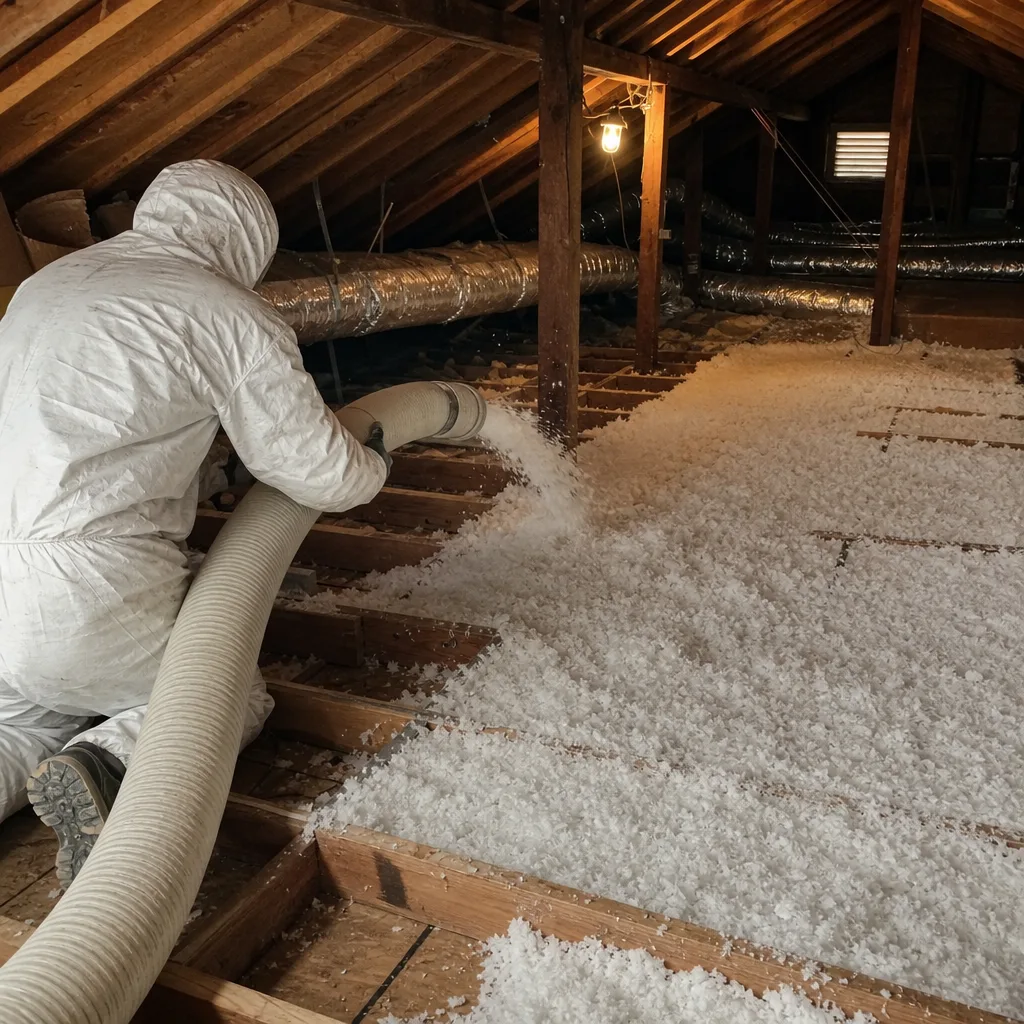
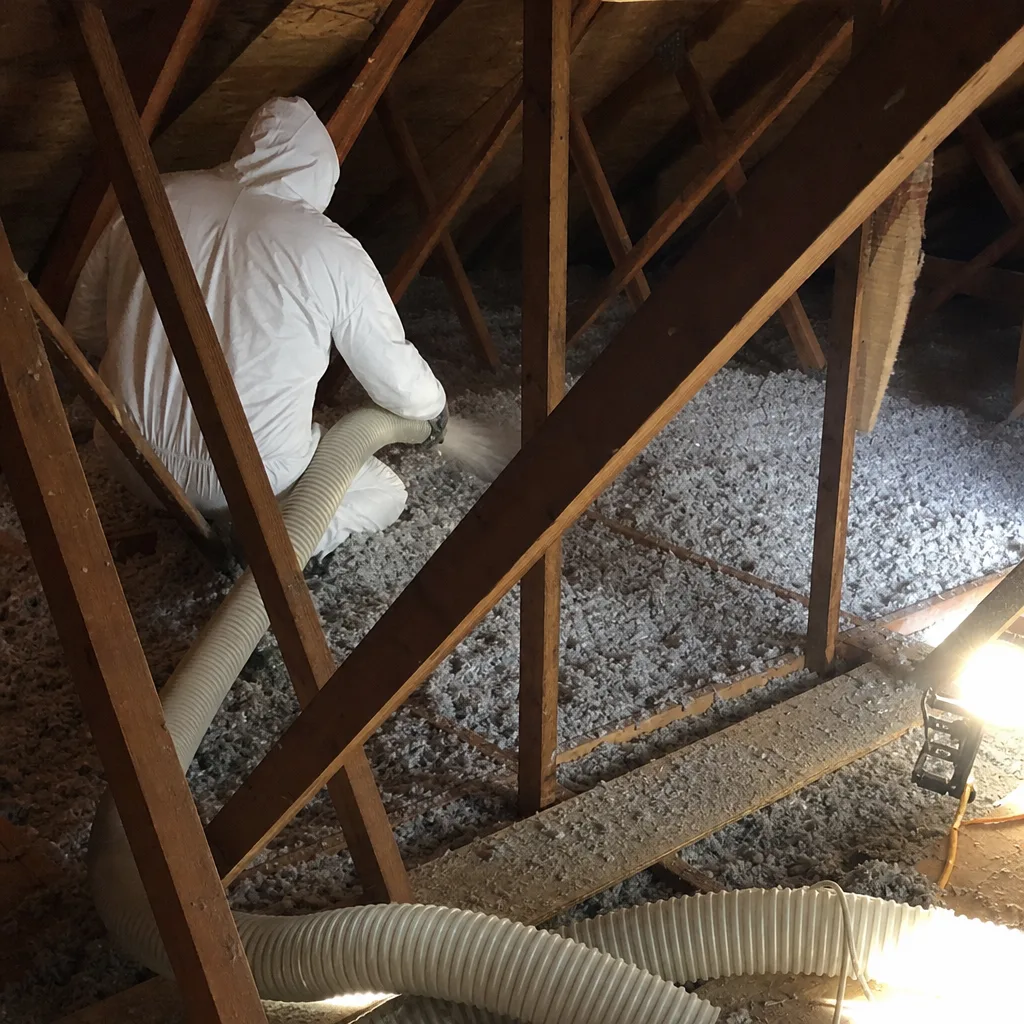
When we install in El Monte, we’re pulling from an eight-brand material library that includes Owens Corning, Icynene, Demilec, and GreenFiber, among others. That means we stock local material for fast turnaround on El Monte jobs and don’t have to special-order basic supplies. For blown-in attic top-ups, GreenFiber cellulose gives us a recycled-content option with excellent thermal density. For homes where fire resistance or sound dampening matters, Rockwool mineral wool is on our menu. For spray foam applications like sealing attic bypasses or rim joists in slab-on-grade foundations, we use Icynene open-cell or Demilec closed-cell based on what the application actually calls for. Most insulation contractors carry one or two product lines. We carry eight, so your home gets what it actually needs.
Common Attic Insulation Problems We See in El Monte Homes
- Degraded original cellulose in 1950s-70s homes. Houses built in El Monte’s mid-century boom often still have their original cellulose, which has settled over 50 to 70 years to R-5 or less. That’s functionally no insulation in an attic that hits 130°F every July.
- Second bedrooms overheating by mid-morning. In older tracts near the 10 freeway, the pattern repeats: east-facing bedrooms absorb morning sun and original attic insulation can’t stop the heat transfer. This is the single most common complaint we hear from El Monte homeowners.
- Builder-grade attic hatches leaking conditioned air. Newer El Monte tract homes often have uninsulated attic access hatches or pull-down stairs that let cooled air escape and hot air seep in, creating hot spots near the access point and wasting energy year-round.
- Low-pitch attic ventilation failures. Post-war bungalows in El Monte were built with low roof slopes, which limit natural attic ventilation. Without proper baffles and upgraded vents, trapped heat accelerates insulation breakdown and pushes cooling costs higher every summer.
Pricing for Attic Insulation in El Monte, CA
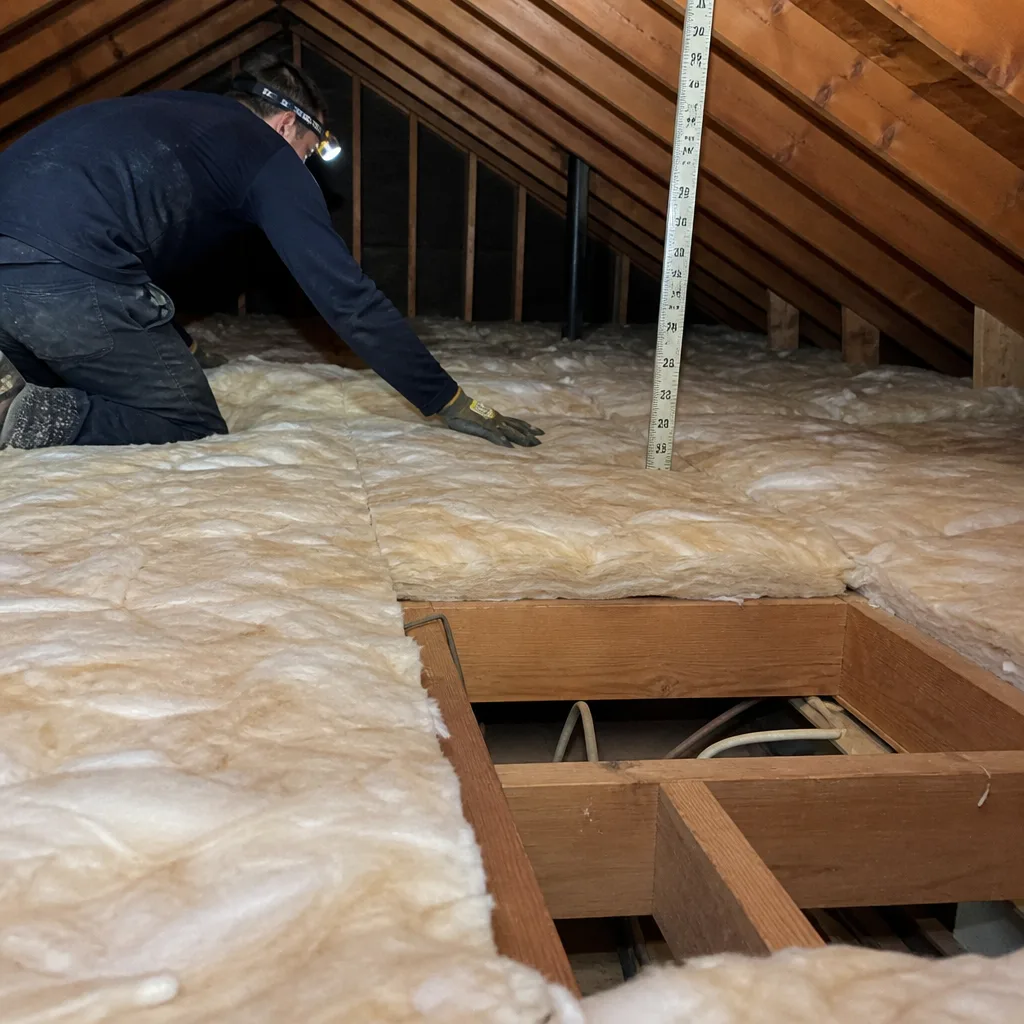
Here’s what you can expect to pay for reliable attic insulation services in El Monte’s current market. A blown-in attic top-up with GreenFiber cellulose or Owens Corning Fiberglas for a standard 1,200-square-foot home runs $1,100 to $2,300. Full attic insulation replacement, including old material removal, air sealing, and blowing in fresh insulation to R-38, typically runs $2,400 to $4,800. Attic batt insulation for accessible attics with standard framing runs $1,300 to $2,700. Combining insulation with a radiant barrier adds $1,200 to $2,600. Attic baffle and ventilation prep alone runs $450 to $900. Total costs vary based on attic access, existing material condition, and whether we’re addressing multiple failure points at once. Call (855) 773-6429 for a free estimate and we’ll give you a firm line-item quote before any work starts.
We Also Serve Cities Near El Monte
If you’re in South El Monte, North El Monte, Temple City, or Rosemead, we work those neighborhoods regularly too. Our crew knows the housing types, the heat patterns, and the insulation failures common across this part of the San Gabriel Valley. El Monte is our focus, but the know-how extends to every bordering city.
Serving El Monte, CA — Our Local Coverage Area
We’re based in the El Monte area and know this community well. Use the map below to see our service coverage — if you’re nearby, we can almost certainly help.
FAQs About Attic Insulation in El Monte
It’s almost always inadequate attic insulation combined with no radiant barrier. In El Monte’s 1950s-70s tract homes, original insulation has typically settled to R-5 or less, and the roof radiates heat straight through the ceiling into east-facing bedrooms. The fix is removing degraded material, air-sealing the attic floor, installing a radiant barrier, and blowing in fresh insulation to R-38. We’ve seen this exact scenario in the Lambert neighborhood drop bedroom temperatures by 8°F within a week. Call (855) 773-6429 to schedule an attic assessment.
For El Monte’s climate and housing stock, we recommend R-38 as the practical target for attic insulation. Most 1960s homes in El Monte currently sit between R-0 and R-11, so a full top-up or replacement is usually needed. R-38 is the sweet spot where you stop paying for heat you’re not keeping out, without over-investing in diminishing returns.
A radiant barrier is worth it in El Monte because of how hot roofs get here. Insulation slows conductive heat transfer, but it does nothing to stop radiant heat from a 140°F roof deck from blasting into your attic space. A radiant barrier reflects that heat out before it reaches your insulation. In El Monte’s climate, the two together work measurably better than insulation alone, especially in low-pitch attics where trapped heat builds all afternoon.
Go outside on a hot afternoon and check if your second bedroom feels noticeably warmer than the rest of the house. Other signs: high summer cooling bills, heat radiating through the ceiling late into the evening, and visible degradation when you peek into the attic. If your home in El Monte was built before 1980, assume the original insulation has settled and lost most of its R-value. We’ll confirm it with a free attic inspection.
For low-pitch attics common in El Monte’s post-war bungalows, the answer is usually baffles plus upgraded roof or ridge vents. Baffles keep insulation from blocking airflow at the eaves, and additional venting gives hot air a way out. Without both, your attic becomes a stagnant heat cavity. The exact setup depends on your roofline and existing vents, and we’ll design it specifically for your home rather than applying a generic template.
Ready to Fix Your El Monte Attic?
If your El Monte home is fighting the San Gabriel Valley heat with insulation from the Eisenhower administration, let’s talk. Alan Whitcomb and the team at Placentia Insulation will assess your attic, explain what we’re seeing in plain terms, and quote you a specific plan using the right material for your home. We serve all of El Monte, including 91731, 91732, 91734, and 91735. Free estimates, straight answers, no pressure. Call (855) 773-6429 now and get your attic sorted before the next heat wave.
Written by Alan Whitcomb, Owner at Placentia Insulation, serving El Monte and the San Gabriel Valley.