
Fast, Reliable Attic Insulation Across Glendale
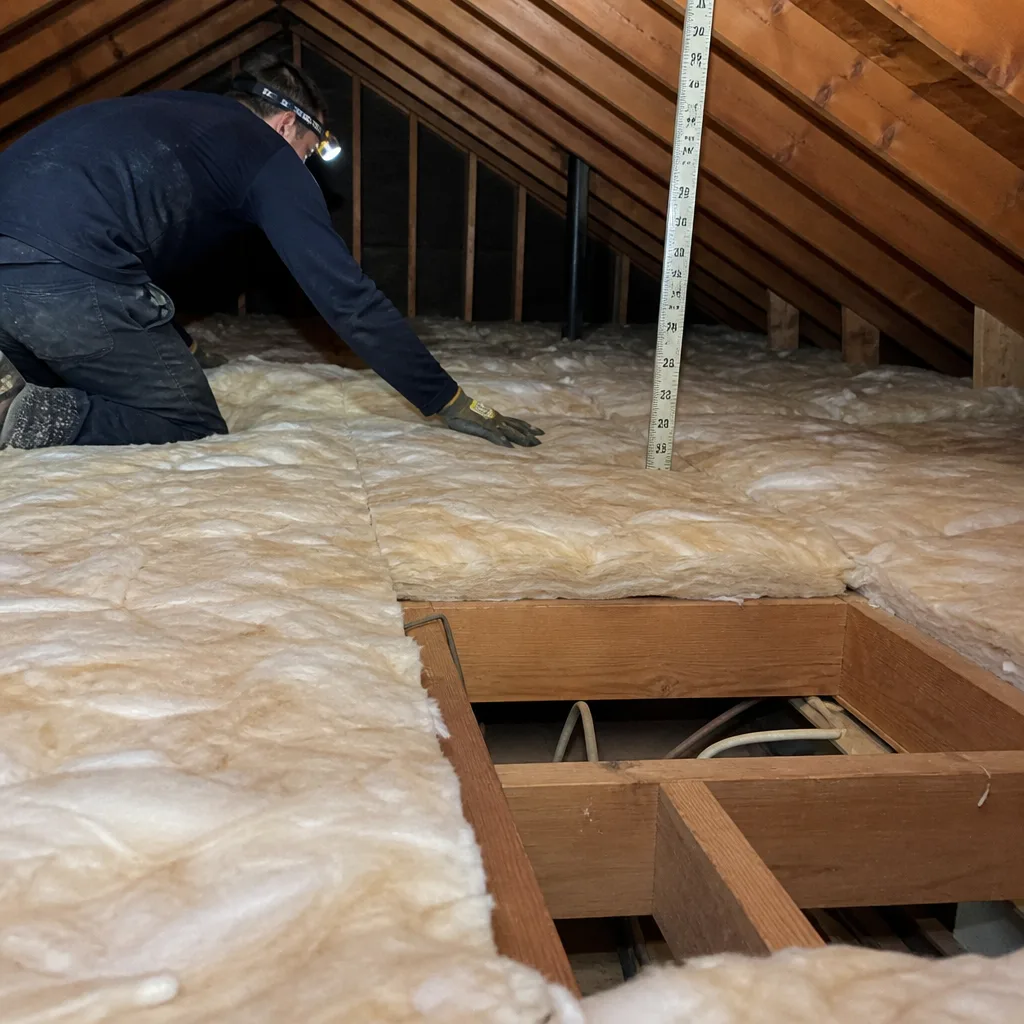
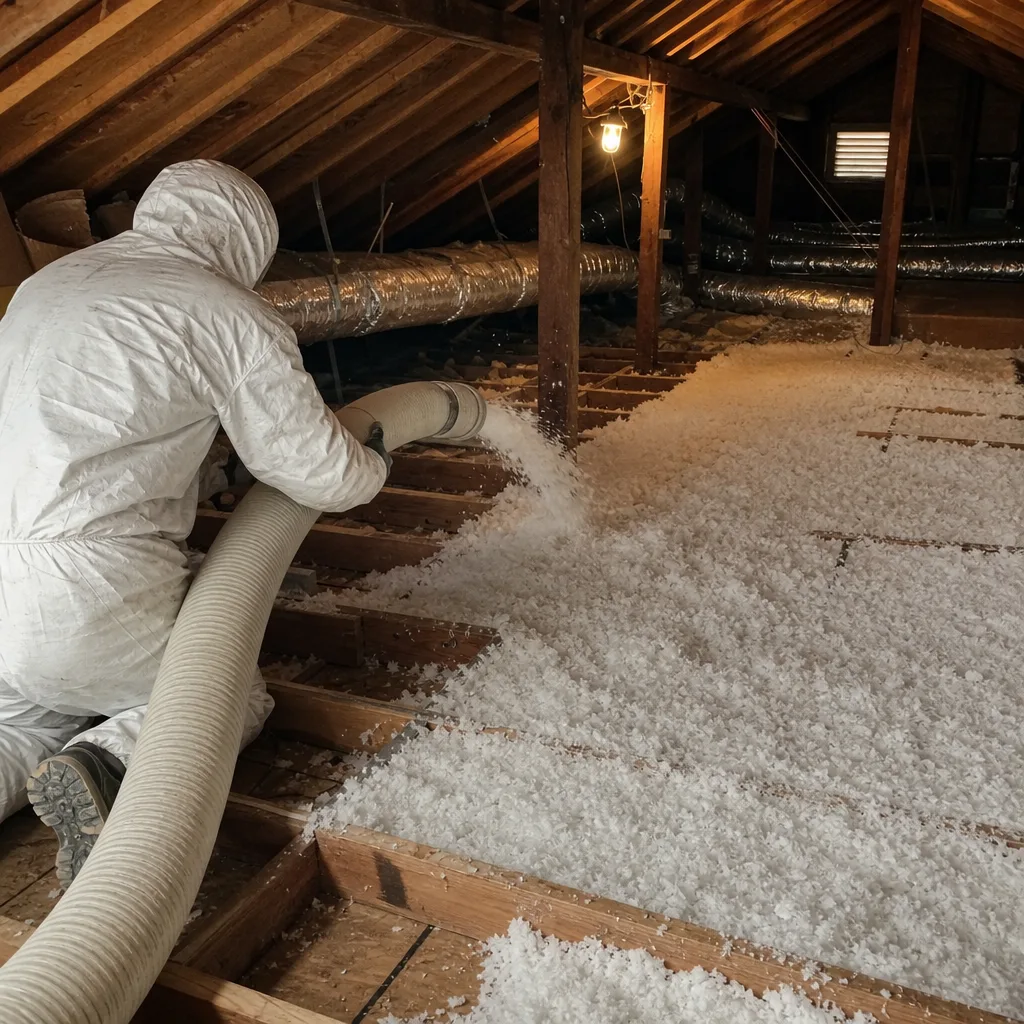
Attic insulation in Glendale typically costs $1,800 to $4,200 for a full retrofit of an older bungalow, with blown-in cellulose or fiberglass running $1.50 to $3.50 per square foot depending on depth, access, and whether knob-and-tube wiring needs isolation first. Most Glendale jobs are completed in one day, and we schedule within the same week more often than not. If your attic still has original 1930s newspaper or a thin layer of settled fiberglass, the payback on a proper insulation upgrade here lands fast – Glendale’s summer heat makes attics the single biggest source of heat gain in most homes. Call (855) 773-6429 for a free attic assessment.
We work in Glendale every week. The housing stock here is its own animal – 1920s Spanish bungalows in the flats, 1960s ranch tracts above the 134, hillside customs with vaulted ceilings in 91208. Each one needs a different approach to insulation, and we’ve seen enough Glendale attics to know what works before we open the hatch. Alan Whitcomb, our owner, has built Placentia Insulation around one trade and one trade only: insulation. That focus means we bring the right material, the right equipment, and the right prep methods to every Glendale job instead of treating your attic as a side errand.
Why Placentia Insulation Is Glendale’s Preferred Attic Insulation Company
Most insulation contractors carry one or two product lines. We carry eight: Owens Corning, Johns Manville, Knauf, Rockwool, CertainTeed, Icynene, Demilec, and GreenFiber. That breadth matters in Glendale because the right material for a 1923 bungalow off Brand Boulevard is not the same as the right material for a 1970s ranch in 91208 with a vaulted ceiling and slope-side venting. A single-brand shop has to force-fit whatever they stock. We match the material to the job, not the job to whatever we have on the truck.
Glendale homeowners tell us the same thing after we finish: the attic finally feels like it’s doing its job. We don’t chase review counts or flashy guarantees. We show up, assess the actual condition of your attic framing, wiring, and venting, then install the correct solution. That consistency is why property owners in the flats and the hills both call us back for their rental units and second projects.
Response time to Glendale from our Placentia base runs under an hour in light traffic off the 5 or the 134. We know the difference between a 91206 street with narrow side yards and a 91207 hillside lot with a steep driveway – that local knowledge means we bring the right ladder, the right hose length, and the right access plan on the first trip.
Attic Ventilation in Glendale
Attic ventilation in Glendale is the difference between an insulation job that performs and one that quietly fails within two summers. In this climate, a sealed-up attic can hit 140°F by early afternoon in July and August. That heat radiates down into your living space, forces your AC to run longer, and bakes the underside of your roofing materials. Proper ventilation – balanced intake at the eaves and exhaust at or near the ridge – lets that superheated air escape. In Glendale’s hillside zones like 91207 and 91208, slope-side venting is often blocked by stucco, retrofitted decking, or poorly placed insulation. We fix that.
Eave and Ridge Airflow Correction
We install and reposition attic baffles to keep blown-in insulation from choking off soffit vents, then confirm that ridge or gable exhaust is actually moving air. On Glendale’s older bungalows, original gable vents are frequently painted shut or buried under decades of added framing. Correcting airflow on a typical 1,200-square-foot attic runs $600 to $1,400 depending on how much baffle work and vent retrofitting the space needs.
Slope-Side Venting for Hillside Homes
Homes built into the Verdugo-adjacent slopes often have one side of the roof buried against the hillside, which limits cross-ventilation. These houses need different baffling and sometimes a powered vent to move air through a shorter vent path. If you live above the 134 in 91206 or 91207 and notice condensation on attic surfaces in winter or relentless heat in summer, the problem is usually ventilation, not insulation depth. We assess the whole assembly before adding anything.
Radiant Barrier in Glendale
Radiant barrier in Glendale is one of the highest-return upgrades for homes in the hot flats, where summer roof deck temperatures routinely exceed 160°F. A radiant barrier is a reflective foil installed on the underside of the roof rafters. It reflects radiant heat back toward the roof deck instead of letting it radiate into the attic air and then down through your ceiling. In Glendale’s 91201 through 91205 neighborhoods, where homes are tightly packed and afternoon sun pounds flat roofs and low-pitch gables, a radiant barrier can cut attic temperatures by 20 to 30 degrees on peak days. That directly reduces the run time on your AC.
Foil Deck Application for Low-Pitch Bungalows
Most Glendale bungalows have low-pitch roofs with limited attic headroom. We install foil radiant barrier directly to the rafter undersides, using spacing that maintains the air gap required for it to work. A typical 1,000 to 1,400 square foot attic in a Spanish bungalow runs $900 to $1,800 for radiant barrier installation, often done in the same visit as blown-in insulation.
Combining Radiant Barrier with Insulation
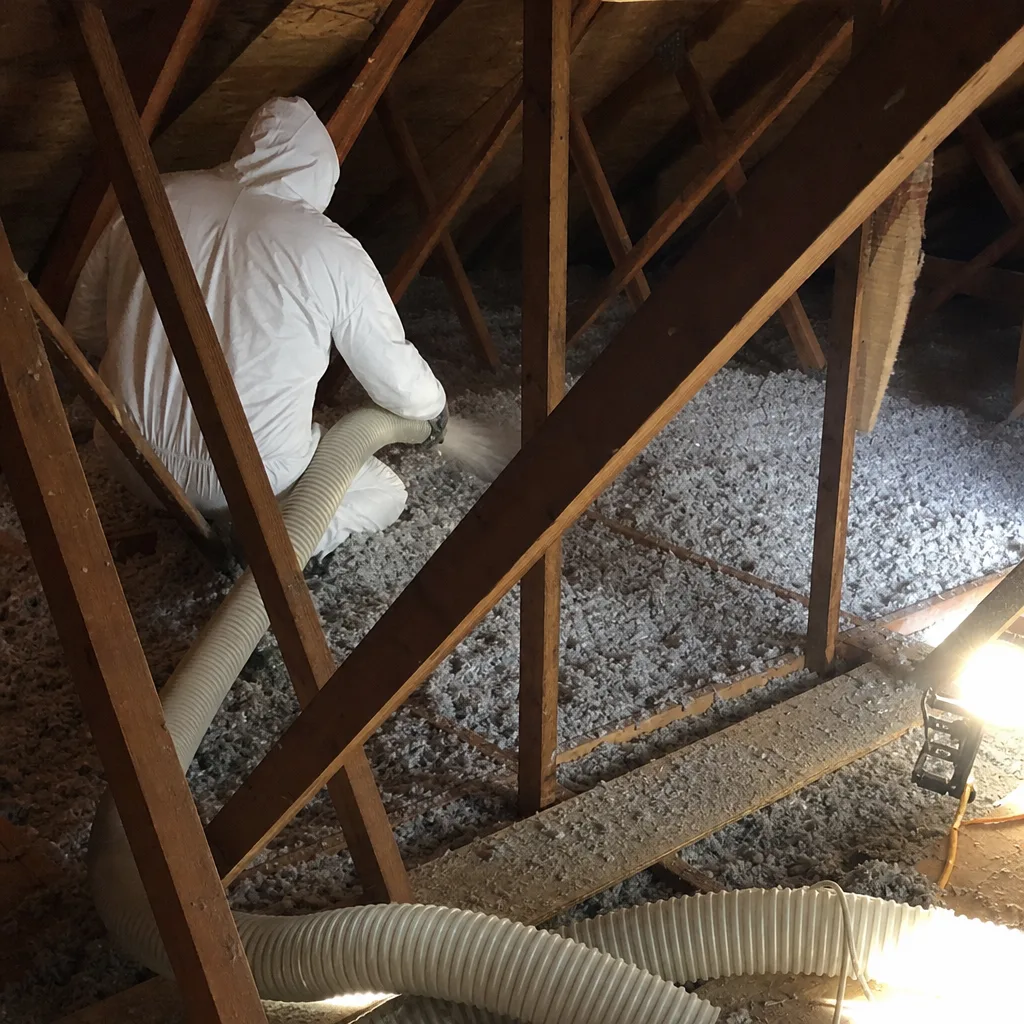
The two systems do different jobs: insulation slows conductive heat transfer; radiant barrier reflects radiative heat. In Glendale’s climate, the combination delivers more comfort per dollar than adding more insulation alone. Homes in the hills with vaulted ceilings benefit less from radiant barrier under the roof deck and more from insulation depth. We’ll tell you which applies to your house before recommending anything.
Trusted Brands We Service in Glendale
Placentia Insulation installs and services materials from the manufacturers Glendale homeowners actually ask about by name. We stock GreenFiber cellulose for dense-pack and blown-in applications in older Glendale attics, Owens Corning fiberglass batts for accessible attic floors and hatch upgrades, and Icynene and Demilec spray foam when air-sealing is the top priority – open-cell for tight, irregular cavities and closed-cell for areas with moisture exposure or structural condensation risk. We don’t push a house brand. We carry all of them so your attic gets the material that fits its framing, wiring, and venting, not whatever one supplier happened to have on the truck that week. Parts and materials for Glendale jobs are on our trucks the day we schedule, so most projects finish without a second trip.
Common Attic Insulation Problems We See in Glendale Homes
- Original newspaper and sawdust insulation in pre-1950 flats homes. In 91201, 91202, and 91204 especially, we regularly find attics insulated with 1930s-era newspaper, crumbled sawdust, or nothing at all. These materials have essentially no R-value left and must be removed or brought up to code with a proper retrofit.
- Knob-and-tube wiring running through the attic floor. Older Glendale bungalows across the flats often still have active knob-and-tube circuits. Blowing insulation directly over this wiring without isolating it creates a fire hazard and violates code. We identify and address it before any material goes in.
- Unsealed builder-grade attic hatches in 1960s-70s ranch tracts. Homes in 91206 through 91208 built during the ranch boom frequently have a thin plywood hatch with no weatherstripping and no insulation. That single opening leaks conditioned air year-round and undermines the R-value of the rest of the attic. We upgrade the hatch as part of the job.
- Blocked or missing attic baffles in hillside homes. Slope-side homes above the 134 often have soffit vents buried under old insulation or entirely absent. When air can’t move through the attic, insulation stops performing. We correct baffling before adding new material.
Pricing for Attic Insulation in Glendale, CA
Blown-in cellulose or fiberglass for a typical Glendale bungalow attic (900 to 1,400 square feet) runs $1,500 to $3,400, including air-sealing of top plates and any hatch upgrades. Attic batt insulation in Glendale runs $1,200 to $2,800 depending on R-value and access. An attic insulation top-up – adding material over an existing layer that’s settled or thin – runs $800 to $1,600. Full attic insulation replacement, including removal of old newspaper, vermiculite, or rodent-compromised material, runs $2,500 to $4,800 for most Glendale homes. Radiant barrier adds $900 to $1,800. Ventilation correction adds $600 to $1,400. These are real Glendale market ranges, not national averages. Every estimate is free, and we give you the numbers before any work begins. Call (855) 773-6429 to schedule an attic assessment.
We Also Serve Cities Near Glendale
Our crews work throughout the Verdugo foothills and the eastern San Fernando Valley. Along with Glendale, we regularly serve Burbank, La Cañada Flintridge, Echo Park, and Silver Lake. If you own a rental property in one of these areas and need Attic Insulation work coordinated with your Glendale projects, we’ll schedule both in the same week.
Serving Glendale, CA — Our Local Coverage Area
We’re based in the Glendale area and know this community well. Use the map below to see our service coverage — if you’re nearby, we can almost certainly help.
FAQs About Attic Insulation in Glendale
No, and any contractor who says otherwise is cutting corners. Old newspaper insulation in Glendale’s pre-1950 homes is typically compressed, contaminated with rodent droppings or dust, and carries little to no R-value. In some cases it can be left in place and built over, but only after we confirm there’s no knob-and-tube wiring beneath it and no moisture or pest damage. In most Glendale bungalows we recommend removal and a fresh blown-in cellulose or fiberglass install to R-38 or R-49. Call (855) 773-6429 and we’ll assess your specific attic for free.
Sometimes, yes. Glendale’s bungalow lots are narrow – often 40 to 50 feet wide with side yards of three to five feet. If your attic access is on the second story or at the back of the house and our hose can’t reach from your driveway, we may need brief access through a neighbor’s side yard or driveway. We handle that conversation, we carry the ladders and hose lengths for tight access, and we’ll let you know at the estimate stage if it’s a possibility. It’s a routine part of working in the older Glendale flats, and we’ve done it hundreds of times.
In the flats – 91201 through 91205 – we recommend R-38 to R-49 for attic floors, with a radiant barrier on the rafters if the roof gets full afternoon sun. The heat gain there is relentless from June through September. In the hillside neighborhoods like 91207 and 91208, where nights are cooler and winter frost is more common, R-38 is usually sufficient, but ventilation and moisture control matter more than insulation depth. We’ll look at your roofline, your venting, and your elevation before recommending a target R-value.
Yes. The attic hatch is the most common air leak in Glendale ranch homes from the 1960s and 70s, especially in 91206 and 91207. We insulate the hatch panel, install weatherstripping around the frame, and add a proper seal so conditioned air stops escaping into the attic. This is standard with every full attic insulation job we do in Glendale – not an add-on. If your hatch is in a hallway or closet, we’ll also check that the pull-down ladder or access panel seats correctly after the upgrade.
Yes, and this is non-negotiable in Glendale’s older housing stock. We inspect for active knob-and-tube wiring in every pre-1950 attic before any insulation goes in. If we find it, we flag it to you, advise on isolation or removal, and we will not bury live wiring under new insulation. On some Glendale bungalow jobs we work alongside a licensed electrician to disconnect or replace circuits before we insulate. Safety comes first – no R-value is worth a fire hazard. Call (855) 773-6429 if you know or suspect your attic has old wiring.
Written by Alan Whitcomb, Owner at Placentia Insulation, serving Glendale, CA since our founding as a dedicated insulation contractor.