
Attic Insulation in Highland: Wind-Driven Problems Need Wind-Smart Fixes
Attic insulation in Highland typically costs between $1,800 and $4,600 depending on attic size, existing insulation condition, and material choice. Most projects we complete in Highland take one to two days. The single biggest factor in this city isn’t square footage – it’s the Cajon Pass wind corridor, which scours insulation on mountain-facing slopes in ways you won’t see in Redlands or Loma Linda. Call (855) 773-6429 for a free estimate based on your attic’s actual condition.
How Highland’s Cajon Pass Winds Attack Attic Insulation
Highland sits directly below the San Bernardino Mountains at the mouth of the Cajon Pass. That’s not just a geographic detail – it’s the defining condition for attic work here. Desert heat pushes attic temperatures past 150°F in summer, while Santa Ana and canyon winds drive air through soffit vents, gable vents, and any gap in the attic envelope. The combination means insulation in Highland fails differently than in sheltered Inland Empire cities.
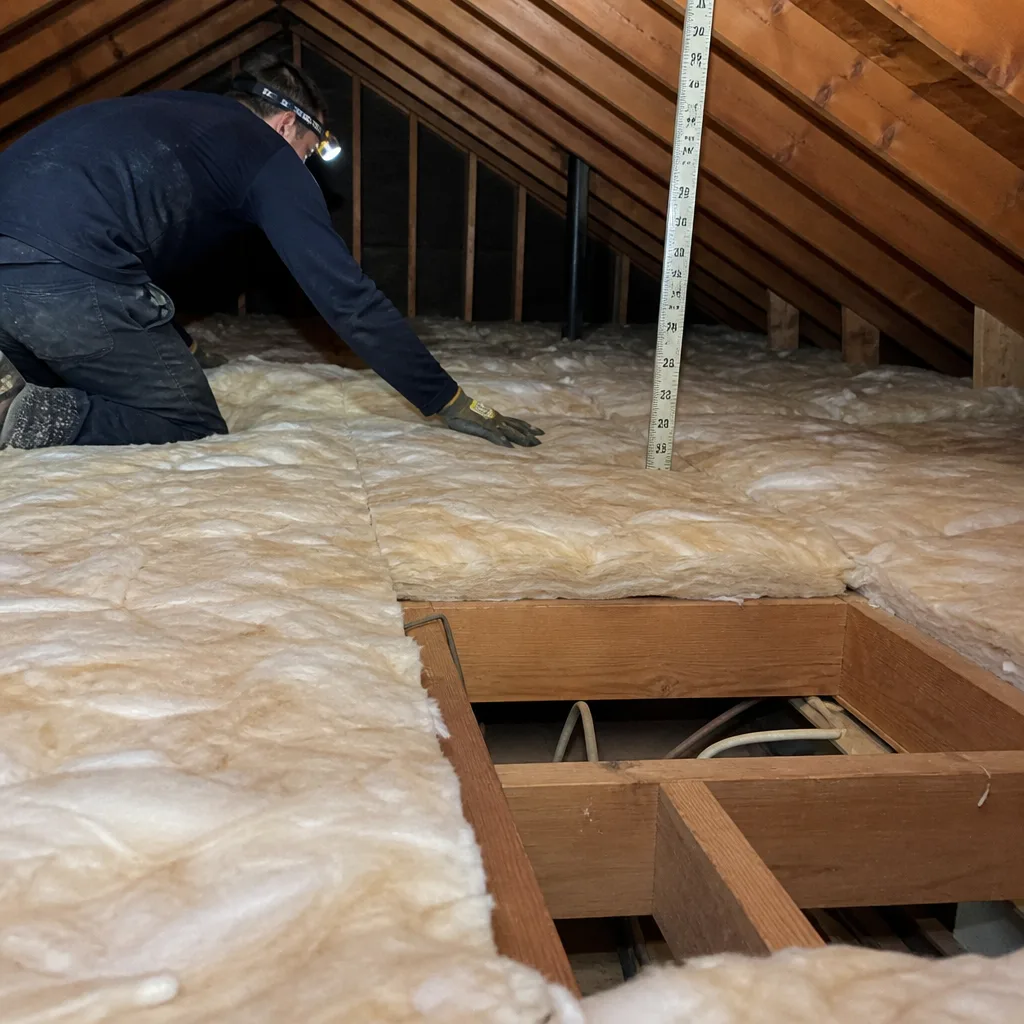
Here’s the pattern we see constantly across Highland’s 92346 zip code: on the mountain-facing side of homes, wind enters through soffit and gable vents with enough force to physically push fiberglass batts back, compress them against rafters, and leave bare patches of drywall with zero thermal barrier. Debris – dust, leaves, pine needles, twigs – gets driven through those same vents and settles into the insulation, clogging airflow and creating hot spots. The north-facing slope of the attic is almost always worse than the south-facing side, which is a telltale sign of wind-driven damage rather than simple settling.
On a 1960s ranch home in the Highland Hills neighborhood, we found the original fiberglass batts on the north-facing slope pushed back and compressed by years of that wind, with bare spots and debris-clogged soffit vents. After air-sealing the top plates and wind-washed gaps with closed-cell foam, we installed Owens Corning R-38 batts with a wind-resistant backing and re-supported the sagging duct runs. That’s the difference between insulating a Highland attic and insulating an attic somewhere the wind doesn’t reach.
Why Placentia Insulation Is Highland’s Preferred Attic Insulation Company
Placentia Insulation does one thing: insulation. Not plumbing on Tuesday and attic work on Thursday. Every crew member who drives up to Highland from our Placentia shop spends their whole week working in attics, which means they know what wind-scoured batts look like, how to spot debris-clogged vents, and which materials actually hold up in a wind corridor. Alan Whitcomb built the company around that focus, and it’s why Highland homeowners who’ve had us out for one project tend to call again when another attic issue shows up.
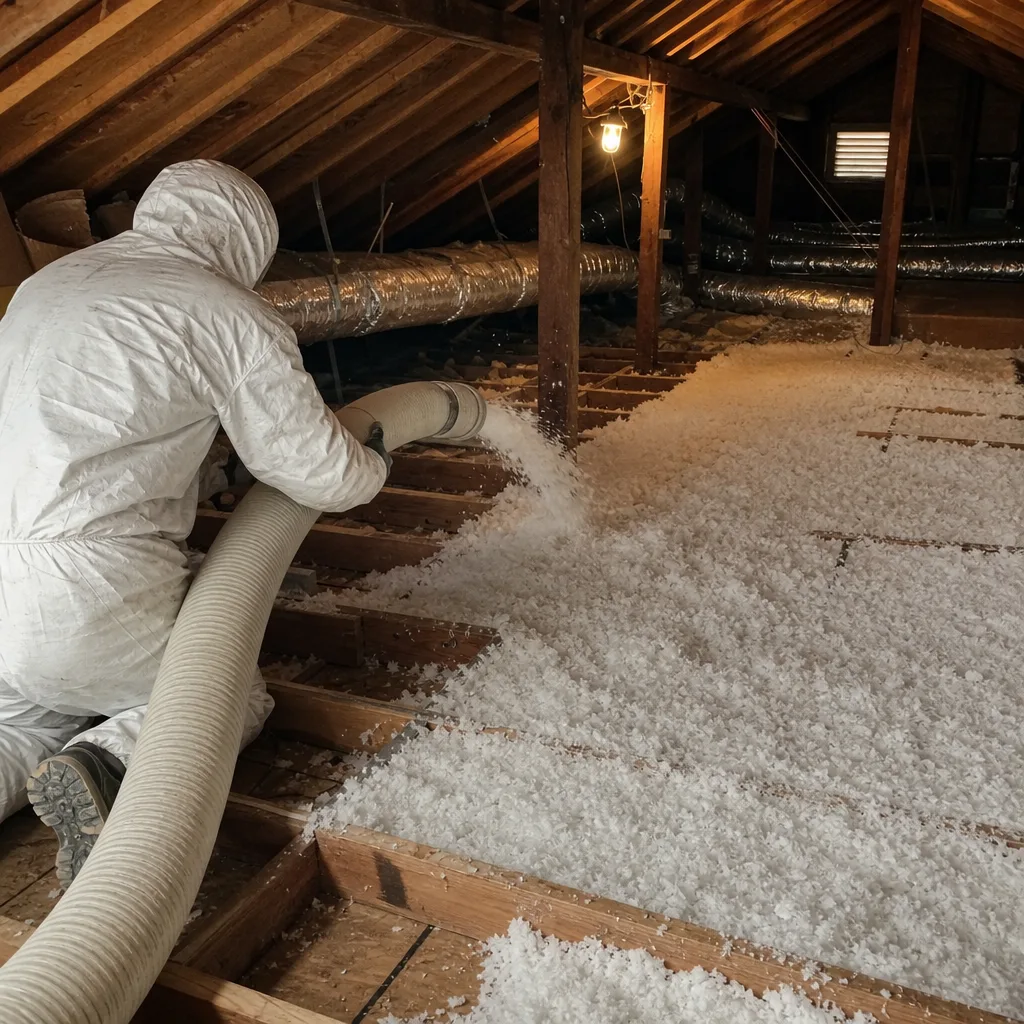
We carry eight insulation brands – Owens Corning, Johns Manville, Knauf, Rockwool, CertainTeed, Icynene, Demilec, and GreenFiber – so we’re never forcing one product into a job it doesn’t fit. Most insulation contractors stock one or two lines. We carry eight, because a Highland attic with wind-driven air infiltration needs different materials than a sheltered Redlands home with simple heat gain. That portfolio means options: open-cell foam for tight, irregular attic floors, closed-cell Demilec for wind-washed areas that need air sealing and insulation in one pass, Rockwool for fire resistance, and GreenFiber cellulose for blown-in coverage.
We respond to Highland service calls typically within 24 to 48 hours, and we schedule free estimates around your day, not ours. Call (855) 773-6429 and you’ll talk to someone who can actually discuss R-value, baffle placement, and vent sizing – not a dispatcher reading from a script.
Key Takeaways for Highland Homeowners
- Wind-driven insulation displacement is the most common attic failure in Highland, especially on mountain-facing slopes.
- Air sealing matters here as much as R-value – wind finds every gap in the attic envelope.
- Eight insulation brands means you get the material matched to your attic’s actual condition, not whatever’s on the truck.
- Free estimates in Highland, typically completed within one to two business days.
Insulation Contractors in Highland
Insulation Contractors in Highland need to understand something most generalists miss: this city’s attics fail from wind pressure as much as heat. When you hire us, you’re hiring a crew that has spent years studying how the Cajon Pass affects attic performance in the 92346 zip code. The work involves a full attic assessment – checking existing insulation depth, looking for displacement on the mountain-facing slopes, inspecting soffit and gable vents for debris blockage, and testing for air leaks around top plates, plumbing penetrations, and can lights. That assessment is free, and it’s the only way to give an honest recommendation.
Attic Assessment and Air Sealing
Before we add insulation, we find where the attic is losing conditioned air. In Highland, that usually means the perimeter wall top plates and any penetration through the ceiling plane. We seal those with closed-cell foam before adding new insulation. The air sealing step is what separates a job that lowers your bills from a job that just adds material.
Insulation Installation and Top-Up
For attics with existing insulation that’s still performing, we offer a top-up that brings total depth to R-38 or R-49. For Highland homes with wind-scoured or compressed batts, replacement is typically the better route. A standard blown-in top-up in Highland runs $800 to $1,600 for a typical 1,200 to 1,800 square foot attic. Full replacement with batt insulation runs $2,200 to $4,200 depending on access and attic height.
Attic Ventilation in Highland
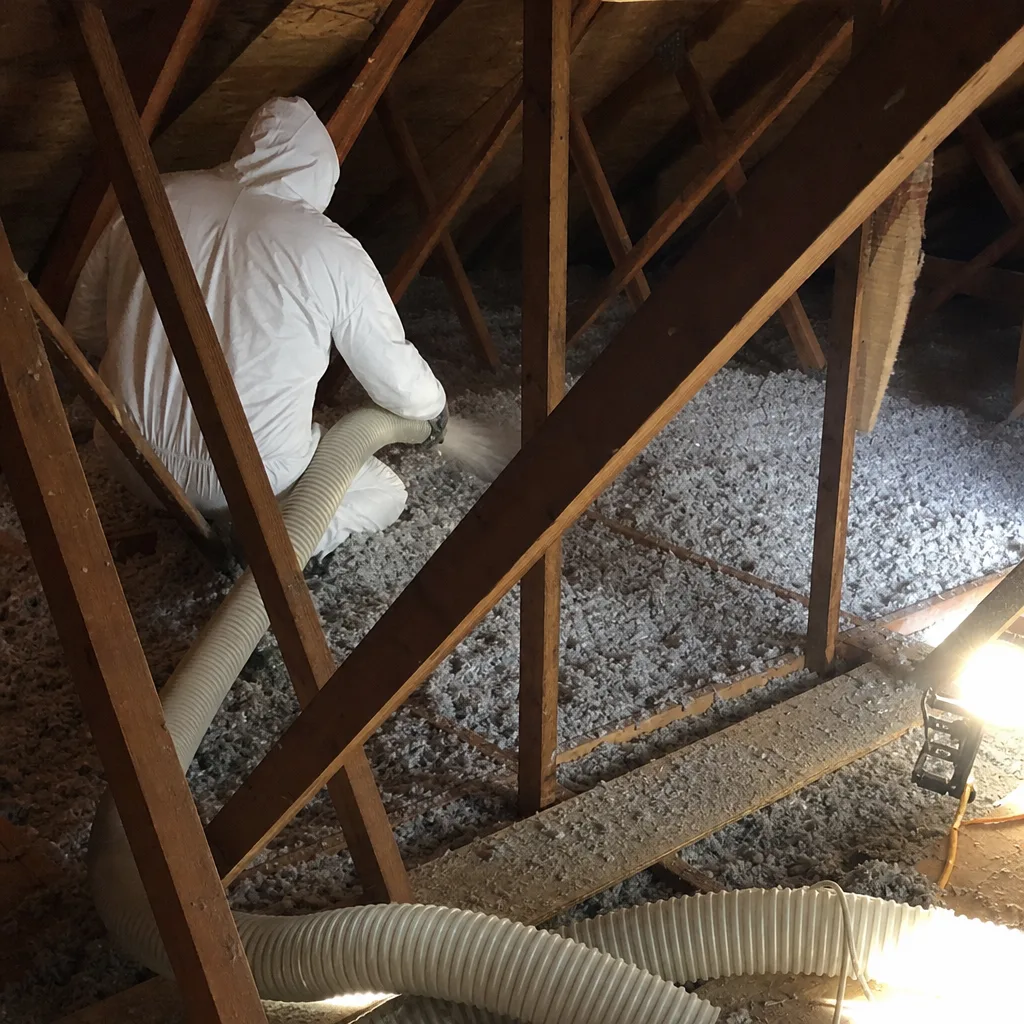
Attic Ventilation in Highland isn’t the same job it is in Fontana or Ontario. Here, vents work against you if they’re not sized, screened, and positioned correctly. Highland’s afternoon mountain winds push air in through soffit vents with enough force to disturb insulation and carry debris deep into the attic. That means ventilation strategy has to balance two competing needs: removing summer heat so the attic doesn’t cook, and limiting wind-driven air movement so insulation stays in place. The fix usually involves wind-baffle installation behind soffit vents, rodent-proof mesh screening, and checking that gable vents aren’t acting as wind scoops.
Soffit Baffle Installation
Baffles – the plastic or foam channels that keep insulation from blocking soffit vents – are non-negotiable in Highland. Wind pressure makes loose insulation drift toward the eaves, and without baffles, it blocks the very vents meant to cool the attic. We install baffles in every bay on the windward side of Highland homes, then blow or lay insulation up to the correct depth without obstructing airflow. The cost for baffle installation in Highland runs $300 to $800 depending on attic size and access.
Wind-Resistant Vent Screening
For homes on exposed lots – East Highlands Ranch, the areas near Baseline and Boulder Avenue, or any neighborhood where you can feel the afternoon wind pick up – we recommend adding fine-mesh screening over gable and eave vents. It keeps pine needles, leaves, and dust out of the attic space while still allowing proper air exchange. This is a small job, typically $150 to $400, that pays off by keeping new insulation clean and effective.
Trusted Brands We Service in Highland
Placentia Insulation stocks and installs eight industry-leading brands, and three deserve special mention for Highland’s conditions. Icynene open-cell spray foam fills odd-shaped attic floors and air-seals in one pass, which matters in older Highland homes with irregular framing. Demilec closed-cell foam adds structural rigidity and a true air barrier for wind-exposed attic slopes. GreenFiber blown-in cellulose gives solid thermal coverage at a lower cost for attics that don’t face the wind directly. We keep these materials available for Highland jobs specifically, so you’re not waiting on a special order. Fast turnaround, local stock, and a real recommendation based on your attic’s exposure – call (855) 773-6429 to talk through options.
Common Attic Insulation Problems We See in Highland Homes
- Wind-scoured batts on mountain-facing slopes. Years of Cajon Pass winds push fiberglass back from soffit vents, leaving the bottom two to three feet of the attic floor bare. This reduces effective R-value far more than homeowners realize.
- Debris-clogged soffit and gable vents. Dust, leaves, and pine needles driven through vents block airflow, trapping heat in summer and creating the exact conditions no insulation alone can fix.
- Thin or settled insulation in mid-century tract homes. Highland’s 1950s-1980s housing stock often still has the original three to four inches of fiberglass, which settles to R-11 or less. That’s well below the R-38 the Department of Energy recommends for this climate zone.
- Air leaks around top plates and can lights. Wind-driven air finds every penetration. These leaks create convective loops that make rooms feel drafty in winter and dump heat into living spaces in summer.
Pricing for Attic Insulation in Highland, CA
Here’s what Highland homeowners can expect for attic insulation work. A blown-in insulation top-up on a typical 1,200 to 1,800 square foot attic runs $800 to $1,600. Full attic insulation replacement with fiberglass batts runs $2,200 to $4,200. Air sealing as a standalone service runs $500 to $1,200 depending on how many penetrations need sealing and attic access difficulty. Spray foam on wind-exposed attic slopes – where you need air sealing and insulation together – runs $3,500 to $6,000 for a typical Highland attic. These are real ranges for this market; your exact number depends on attic size, current insulation condition, and how much wind damage we find. Estimates are free, and we’ll walk you through exactly what you’re paying for. Call (855) 773-6429 to schedule.
We Also Serve Cities Near Highland
Our Attic Insulation team works throughout the San Bernardino Valley. We serve Highland, San Bernardino, Muscoy, Redlands, and Loma Linda from our Placentia shop. If you’re in Highland or any neighboring city, you’re getting the same specialist crew and the same eight-brand material library. No subcontractors, no generalists – just insulation, done right for the local conditions.
Serving Highland, CA — Our Local Coverage Area
We’re based in the Highland area and know this community well. Use the map below to see our service coverage — if you’re nearby, we can almost certainly help.
FAQs About Attic Insulation in Highland
The mountain-facing side – typically the north or northeast slope – takes the brunt of Cajon Pass winds. Those winds enter through soffit and gable vents with enough force to physically push batts back from the eaves, compress them, and leave bare patches. It’s not a material failure; it’s wind pressure. This is why we install wind baffles and sometimes switch to closed-cell foam on exposed slopes. For an assessment of your attic’s windward side, call (855) 773-6429.
Look for uneven room temperatures – a bedroom on the north side that’s always colder in winter or hotter in summer than the rest of the house. Check for dust or debris around ceiling vents and can lights. If you can safely access the attic, look for bare drywall near the soffit vents on the mountain-facing side and debris accumulated on top of the insulation. We offer free attic assessments in Highland; call (855) 773-6429 to schedule.
Yes. Highland’s wind pressure means standard vent sizing isn’t enough. We add baffles behind every soffit vent on the windward side, screen gable and eave openings to keep debris out, and in some Highland homes – especially those in exposed areas like the north end of town near Baseline and Boulder – we reduce gable vent openings to prevent wind-scooping. The goal is airflow without wind force. An assessment with us determines what your specific attic needs.
For wind-exposed attic slopes, Demilec closed-cell spray foam is the strongest performer because it air-seals and insulates in one application and won’t shift under wind pressure. Icynene open-cell works well for tight, irregular attic floors that need air sealing. Owens Corning R-38 batts with wind-resistant backing – installed over sealed top plates – handle the heat side well for attics that aren’t directly wind-scoured. GreenFiber cellulose is a solid blown-in option for sheltered interior attics. We stock all of them and match the material to your attic’s actual exposure, not the other way around.
Every two to three years is a reasonable interval in Highland, and after any major Santa Ana wind event, it’s worth a look. Wind damage here isn’t gradual – a strong season can displace insulation that’s been fine for a decade. We offer free attic assessments in the 92346 zip code, and if you haven’t had insulation checked in a few years, call (855) 773-6429. The estimate is free, and you’ll know exactly where your attic stands.
Written by Alan Whitcomb, Owner at Placentia Insulation, serving Highland, CA and the San Bernardino Valley with specialist attic insulation since day one.