
Fast, Reliable Attic Insulation Across Pico Rivera
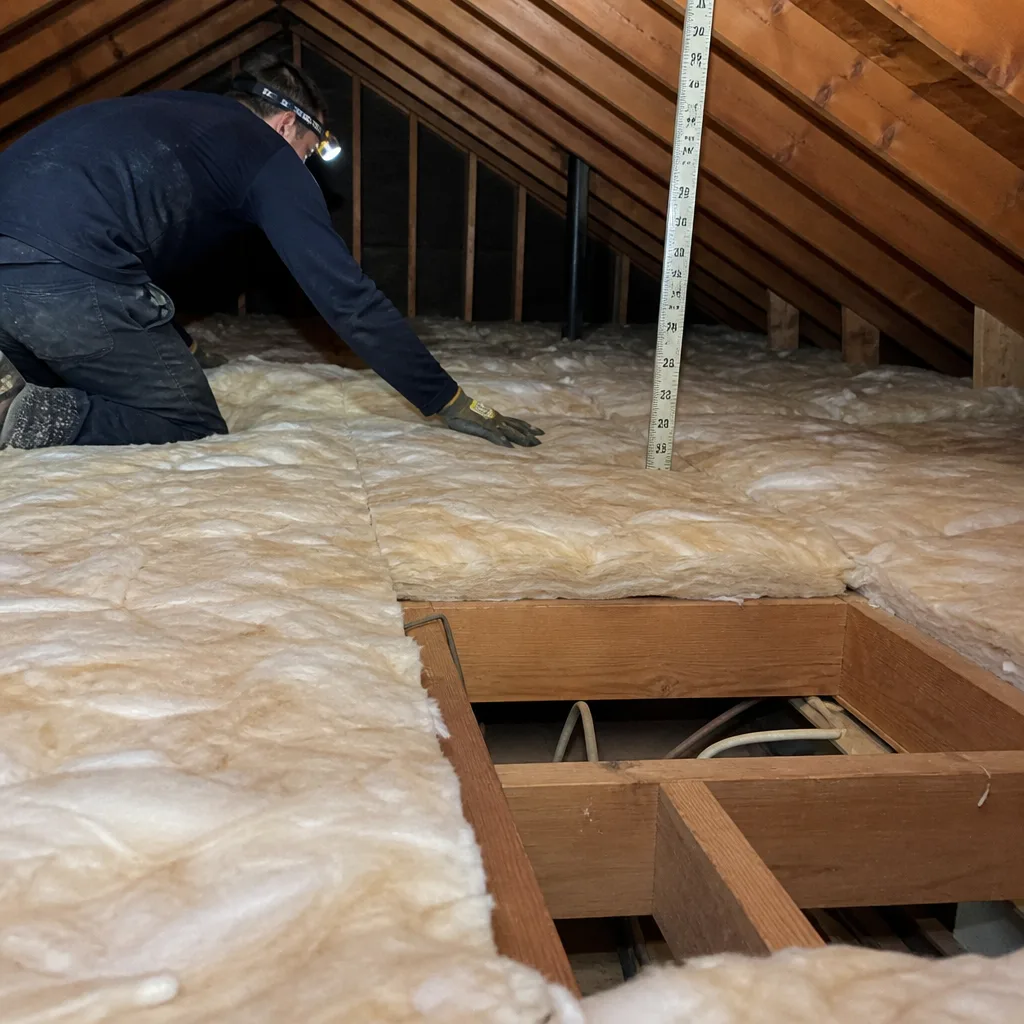
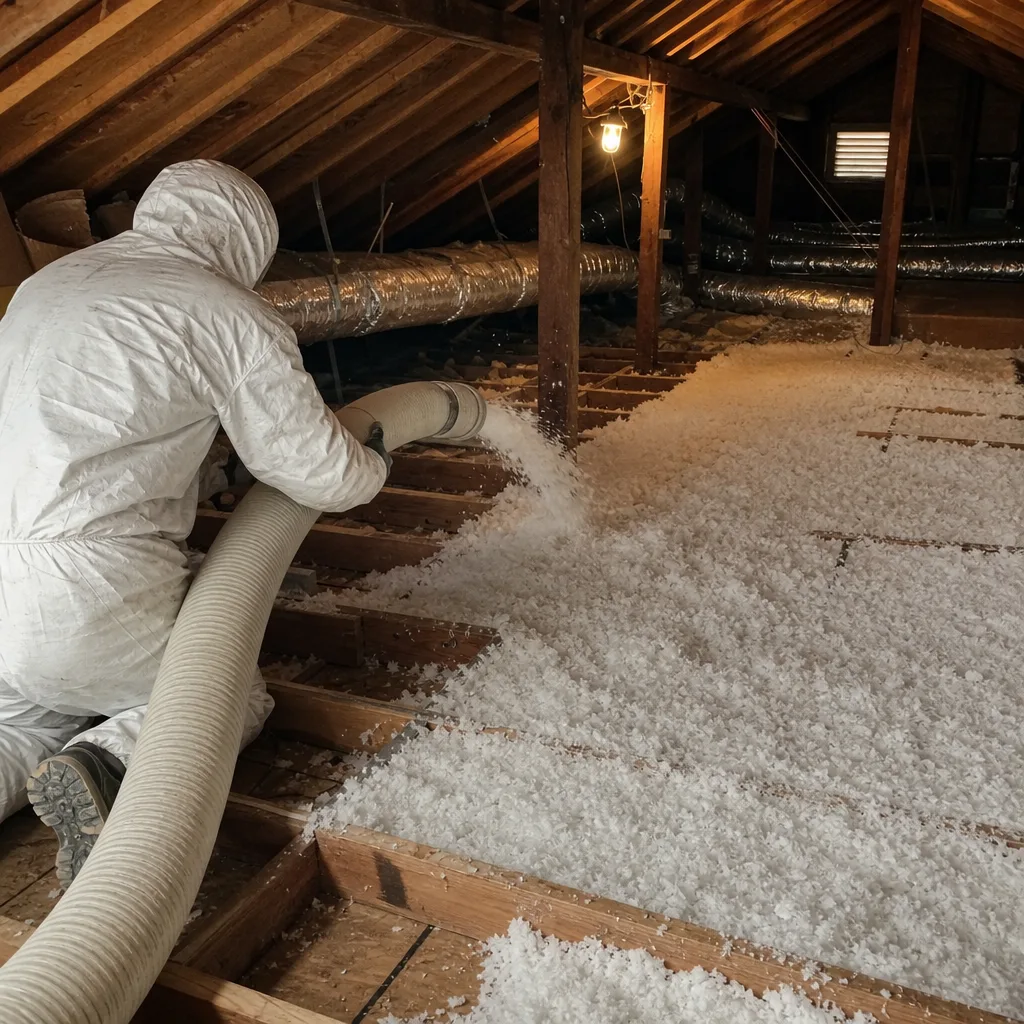
Attic insulation in Pico Rivera is almost always a retrofit job, not new construction, because the city is built out with 1940s and 1950s tract homes that have shallow attics and decades-old material. Most of those attics hold compacted rock wool or even vermiculite, which means the work often starts with careful removal and air-sealing before any new insulation goes in. We work throughout 90660, 90661, and 90662, and we’ve been in enough Pico Rivera attics to know what’s up there before we even open the hatch. Call (855) 773-6429 for a free estimate, and we’ll tell you exactly what your attic needs and what it will cost.
Why Placentia Insulation Is Pico Rivera’s Preferred Attic Insulation Company
Placentia Insulation is a dedicated insulation contractor, not a generalist. Every crew member, every tool, and every conversation we have is about insulation, which means when we’re in your Pico Rivera attic we’re not also thinking about a plumbing job across town. Alan Whitcomb, who leads our team, has built the company around a simple principle: match the material to the job, not the job to whatever we happen to have on the truck. That’s why we stock eight industry brands, including Rockwool, CertainTeed, Icynene, and Demilec, so a 1952 stucco home off Rosemead Boulevard gets a different solution than a larger 1960s ranch near the Pico Rivera Golf Club.
We know Pico Rivera’s housing stock intimately. The post-WWII tract homes between Whittier Boulevard and Slauson Avenue, the slightly newer pockets north of Washington Boulevard, and the split-levels near Rivera Park all have their own attic problems. Our response time to Pico Rivera is typically same-day or next-day for estimates, and we’re used to working around the tight lot access and attached garages that define the city’s streets. Reviews from Pico Rivera customers consistently mention that we left the attic cleaner than we found it and explained the work in plain language, with no pressure to upsell.
Attic Ventilation in Pico Rivera
Attic ventilation in Pico Rivera matters more than it does in coastal cities because the San Gabriel Valley heat builds up fast in a shallow 1950s attic with little air movement, turning the space above your ceiling into an oven that radiates heat into the house all evening. The job involves assessing your existing intake and exhaust, adding soffit or eave vents where needed, ensuring ridge or roof vents can actually move air, and checking that original attic fan cutouts aren’t creating pressure problems. A typical attic ventilation package in Pico Rivera runs $450 – $1,100 depending on how many vents are needed and whether your roof pitch complicates the work.
Where Attic Fans Go Wrong
Many Pico Rivera homes had whole-house fans or attic fans installed in the 1960s and 1970s, and the cutouts for those fans were rarely sealed properly. We see gaps that pull conditioned air out of the living space while pulling dusty 140-degree attic air into wall cavities. Sealing those cutouts and replacing inadequate venting with properly sized intake often drops attic temperature by 15°F before we’ve added a single bag of insulation.
Ventilation Before Insulation
Blowing new insulation into a Pico Rivera attic without first fixing ventilation is a waste of material. A shallow 2×4 roof deck with one gable vent and no soffit intake can’t shed heat, no matter how much fiberglass you pile on. We correct airflow first, then insulate, because doing it in reverse means paying twice.
Radiant Barrier in Pico Rivera
Radiant barrier in Pico Rivera is the single most effective upgrade for these low, shallow-roofed homes because it attacks the problem at the source: the underside of the roof deck that absorbs San Gabriel Valley sun all afternoon and re-radiates heat into the attic. A radiant barrier installation involves stapling or laying a reflective material to the roof rafters or roof deck, which blocks a large portion of that radiant heat before it can warm the attic air or the insulation below. For a typical 1,000-square-foot Pico Rivera attic, expect to pay $1,400 – $2,800 depending on roof accessibility and whether we’re also air-sealing the top plates at the same time, which we strongly recommend.
Why R-Value Alone Is Not Enough
A 1950s Pico Rivera attic with R-38 fiberglass still gets hot, because fiberglass slows conductive heat but does almost nothing against radiant heat. The roof deck absorbs the sun, gets up to 150°F or higher, and that heat spans the air gap. Adding a radiant barrier cuts the attic deck temperature significantly, and on one 1952 stucco home off Rosemead Boulevard our crew measured a 20°F drop at the roof deck after stapling barrier to the rafters. The homeowner said the back bedroom, which used to bake by mid-afternoon, finally held temperature.
Working Around Wiring and Ductwork
Older Pico Rivera homes often have original cloth-covered wiring running through the attic, plus HVAC ducts that have been patched and rerouted over decades. A radiant barrier has to be cut and fitted around these obstructions, which takes patience and a crew that has done it hundreds of times. That’s the difference between a barrier that actually reflects heat and one that looks good in a photo but has a dozen gaps.
Trusted Brands We Service in Pico Rivera
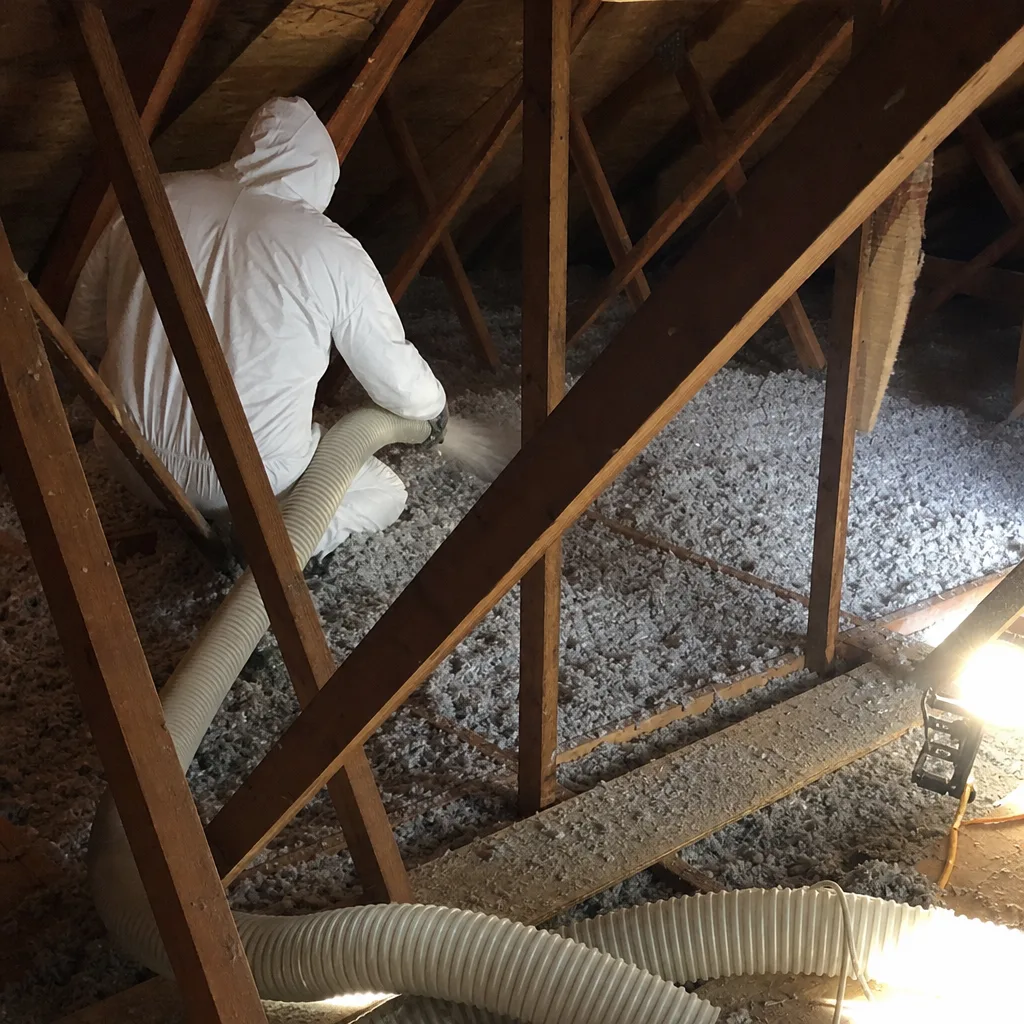
Most insulation contractors carry one or two product lines. We carry eight, so a Pico Rivera homeowner gets what the attic actually needs instead of whatever the installer defaults to. For Pico Rivera’s fire-conscious homeowners, we stock Rockwool mineral wool, which resists fire and dampens sound better than fiberglass. For those who want a premium fiberglass batt with consistent R-value, CertainTeed is a regular choice. And when a Pico Rivera attic calls for spray foam, we install both Icynene open-cell for air-sealing tight spaces and Demilec closed-cell where moisture resistance matters. Because we keep these materials in active inventory, turnaround for Pico Rivera jobs is fast: estimate today, install within the week in most cases.
Common Attic Insulation Problems We See in Pico Rivera Homes
- Compacted original rock wool or vermiculite. Many 1940s and 1950s tract homes still have their original rock wool, now compressed to a fraction of its original depth and doing almost nothing. Vermiculite, which sometimes appears in these attics, must be tested and handled carefully before any new material goes in.
- Unsealed attic access panels and pull-down stairs. The builder-grade hatch in the hallway ceiling has no weatherstripping, no insulation cap, and leaks 140°F attic air into the living space all summer. We see this on nearly every original Pico Rivera home.
- Disturbed insulation from decades of re-roofs and fan installs. Each time a roofer replaced shingles or an electrician added an attic fan, they moved insulation aside and rarely put it back. The result is uneven R-value with bare spots you can’t see from the hatch.
- Shallow 2×4 roof framing that limits insulation depth. Pico Rivera’s original attics were framed for a different era. Blowing standard fiberglass to code depth without addressing air leaks and radiant heat still leaves rooms hot by 4 p.m.
Pricing for Attic Insulation in Pico Rivera, CA
For a typical 1,000-square-foot Pico Rivera attic, a full insulation replacement with air-sealing runs $2,200 – $4,800, depending on the condition of the existing material and what has to be removed first. A top-up over existing insulation, where that’s appropriate, runs $900 – $1,600. If vermiculite is present, removal and proper disposal adds $600 – $1,400 to the job, because it has to be handled by a certified crew. Radiant barrier installation is a separate line item at $1,400 – $2,800, and attic ventilation work typically lands between $450 and $1,100. Every estimate is free, and we give you the full breakdown before you commit to anything. Call (855) 773-6429 and we’ll come out, get in the attic, and put real numbers on paper.
We Also Serve Cities Near Pico Rivera
Placentia Insulation’s Attic Insulation team covers the surrounding communities as well, including West Whittier-Los Nietos, Montebello, Santa Fe Springs, and Bell Gardens. If you’re just outside Pico Rivera, the same crew, the same eight-brand material library, and the same free-estimate process apply. Read more about our work in the area on our Attic Insulation in Pico Rivera page or call us directly.
Serving Pico Rivera, CA — Our Local Coverage Area
We’re based in the Pico Rivera area and know this community well. Use the map below to see our service coverage — if you’re nearby, we can almost certainly help.
FAQs About Attic Insulation in Pico Rivera
No, not if vermiculite is present. Vermiculite from this era may contain asbestos, and burying it under new insulation creates a hazard and a liability. We remove it properly first, then air-seal the top plates, then blow in new material. If it’s only old rock wool, the answer depends on its condition: if it’s compacted to a dense mat it should be removed, because leaving it traps heat and moisture against the ceiling drywall.
In most cases, yes. Summer afternoons in the 90s put enormous radiant heat into the shallow attics of these 1940s and 1950s homes, and fiberglass alone cannot block that. A radiant barrier attacks the actual problem, which is the sun heating the roof deck. We often recommend a radiant barrier plus R-38 insulation rather than maxing out R-value alone, because the combination works better and costs less than trying to solve radiant heat with fiberglass. Call (855) 773-6429 for an exact recommendation after we inspect your attic.
We seal them. Those old cutouts, usually a louvered opening in the ceiling with a belt-driven fan above it, leak conditioned air out of the house and pull hot attic air into the wall cavities. We remove the old fan unit, seal the opening with rigid material, and insulate over it, or we install a properly sealed modern access panel if you want to keep the opening.
R-38 is our standard recommendation for these shallow attics, which typically means 12 to 14 inches of blown fiberglass or cellulose. Because the 2×4 rafters leave limited depth at the eaves, we also install attic baffles to keep the insulation from blocking soffit vents, and we check that the depth at the outer edges meets code. Air-sealing comes first; without it, R-38 performs like R-19.
Yes, and we recommend it. The uninsulated plywood hatch and pull-down stair assembly is one of the biggest leaks in a Pico Rivera attic. We install a sealed, insulated access cover over the hatch and weatherstrip the stair frame so it closes tight against a gasket. It’s a small part of the total job, usually $250 – $500, but it makes a noticeable difference in hallway temperature.
Call (855) 773-6429 today. Alan Whitcomb and the Placentia Insulation crew will inspect your Pico Rivera attic, explain exactly what’s up there, and give you a free, itemized estimate. No pressure, just clear answers from a specialist who spends every working day in attics like yours.
Written by Alan Whitcomb, Owner at Placentia Insulation, serving Pico Rivera and surrounding Los Angeles County communities.