
Fast, Reliable Attic Insulation Across San Joaquin Hills
Attic insulation in San Joaquin Hills is less about adding batts to old walls and more about fixing what builder-grade construction left behind. Homes in the 92657 zip code, especially those along the canyon edges near Crystal Cove, were built to code-minimum R-values that simply don’t hold up against steady onshore marine wind and afternoon canyon sun. We’re Placentia Insulation, and we’ve spent years working inside the complex attic envelopes of these master-planned hillside homes. If your vaulted great room overheats by 3 p.m. or your upstairs never quite cools, the problem likely starts above your ceiling. Call (855) 773-6429 for a free attic assessment in San Joaquin Hills.
Why Placentia Insulation Is San Joaquin Hills’s Preferred Attic Insulation Company
Most insulation contractors carry one or two product lines. We carry eight, because San Joaquin Hills attics are not all the same problem. A canyon-edge two-story with cantilevered decks needs a different air-sealing approach than an interior-lot home with a simple flat attic. Our Attic Insulation team arrives with Owens Corning, Icynene, Demilec, Rockwool, and GreenFiber on the truck, so the recommendation comes from what the house actually needs, not what happens to be in stock.
We know the 92657 housing stock. These are predominantly 1990s to 2010s Mediterranean and Santa Barbara-style custom homes with stucco exteriors, tile roofs, and high vaulted ceilings. Homeowners here tell us the same things repeatedly: upstairs rooms that won’t hold temperature, wind whistling through soffits, and attic spaces that feel like ovens by early afternoon. We’ve worked behind those finishes, and we know how to upgrade the thermal envelope without disturbing the architectural details.
Alan Whitcomb built this company around one trade only. Insulation. Our crews are not splitting their week between drywall and HVAC. Every tool, every conversation, every day is about thermal performance, air sealing, and ventilation. That focus matters when you’re working in a home with floor-to-ceiling glass and a cantilevered deck over a canyon slope, where a generalist’s mistake shows up as a draft you’ll feel every windy afternoon. Homeowners in San Joaquin Hills call us because they want an insulation specialist, not a handyman with a bundle of batts.
Insulation Contractors in San Joaquin Hills
Insulation contractors working in San Joaquin Hills face a specific set of challenges that flat-land neighborhoods never see. The homes here might be newer, but the conditioned envelopes are complex: vaulted great rooms, cantilevered decks, cathedralized attic spaces, and glazed walls that transfer solar heat directly into living areas. A standard retrofit starts with a full attic assessment: we map the thermal boundaries, identify air pathways, measure existing R-values, and check how the ventilation is performing under actual canyon wind conditions.
Blown-In and Batt Upgrades
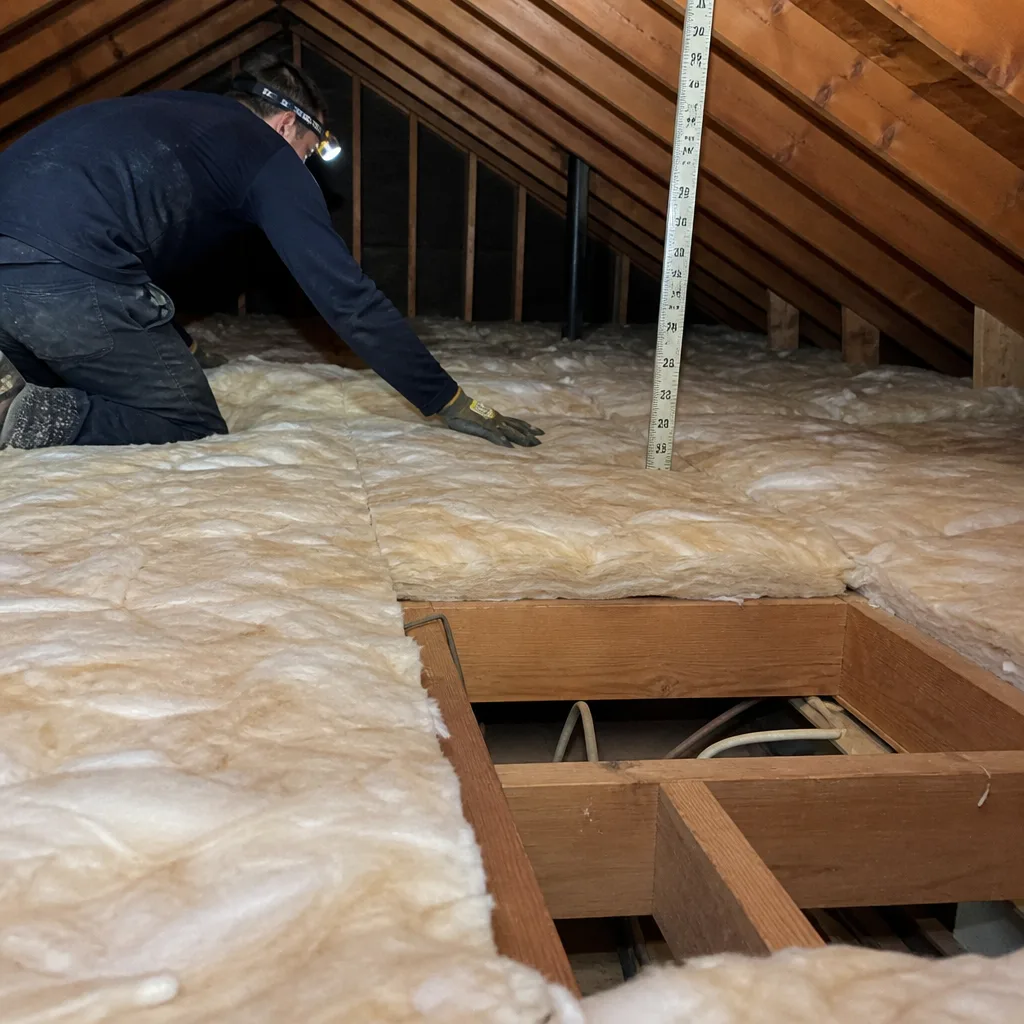
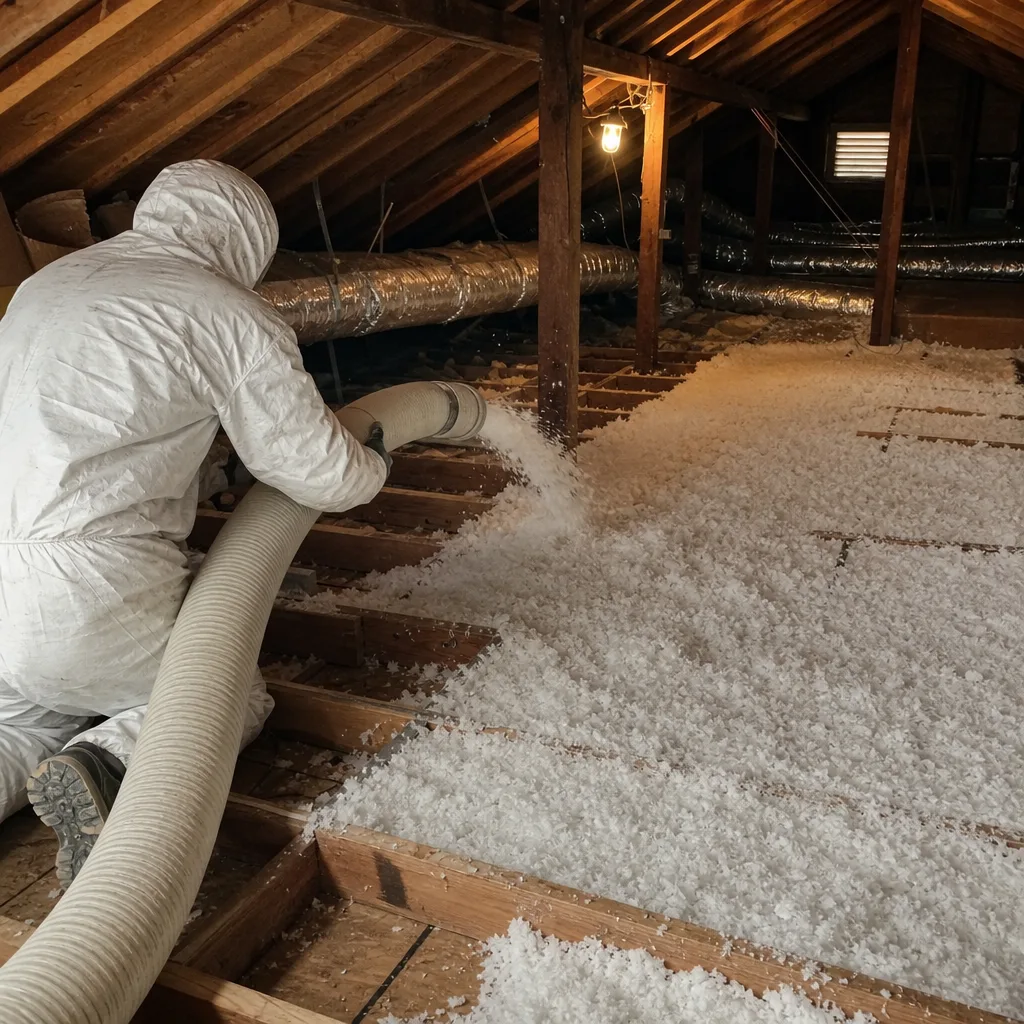
When builder-grade R-19 batts sag or settle, we commonly blow in cellulose through GreenFiber or upgrade to higher-density fiberglass. In cathedralized ceilings, we often switch to a higher-R-value batt system that holds its position better than what the builder installed.
Air Sealing First
No amount of insulation fixes a leaky soffit-to-wall junction. In San Joaquin Hills, we seal those gaps before we add thermal material, because marine wind will find every unsealed seam and undercut the entire attic assembly.
Attic Ventilation in San Joaquin Hills
Attic ventilation in San Joaquin Hills is the difference between an attic that works and one that cooks the rooms below it. Tile roofs look beautiful and last for decades, but they often hide undersized soffit venting that the original builder accepted as good enough. Under strong south and west sun exposure on canyon-facing lots, cathedralized attics above great rooms trap radiant heat with no exhaust path. We correct this with properly sized ridge and soffit ventilation, and where the design allows, we add radiant barrier under the roof deck.
Ridge and Soffit Systems
We calculate intake and exhaust ratios based on the attic’s actual geometry, not a generic square-footage table. Canyon-edge homes with steep rooflines need more air movement than a same-age flat-ceiling home two streets over.
Radiant Barrier Under Tile
For south and west-facing roof planes that take direct afternoon sun, a radiant barrier can drop attic temperatures by 15 to 25 degrees. We install it flush under the roof deck, positioned to reflect heat away from the living space below.
Trusted Brands We Service in San Joaquin Hills
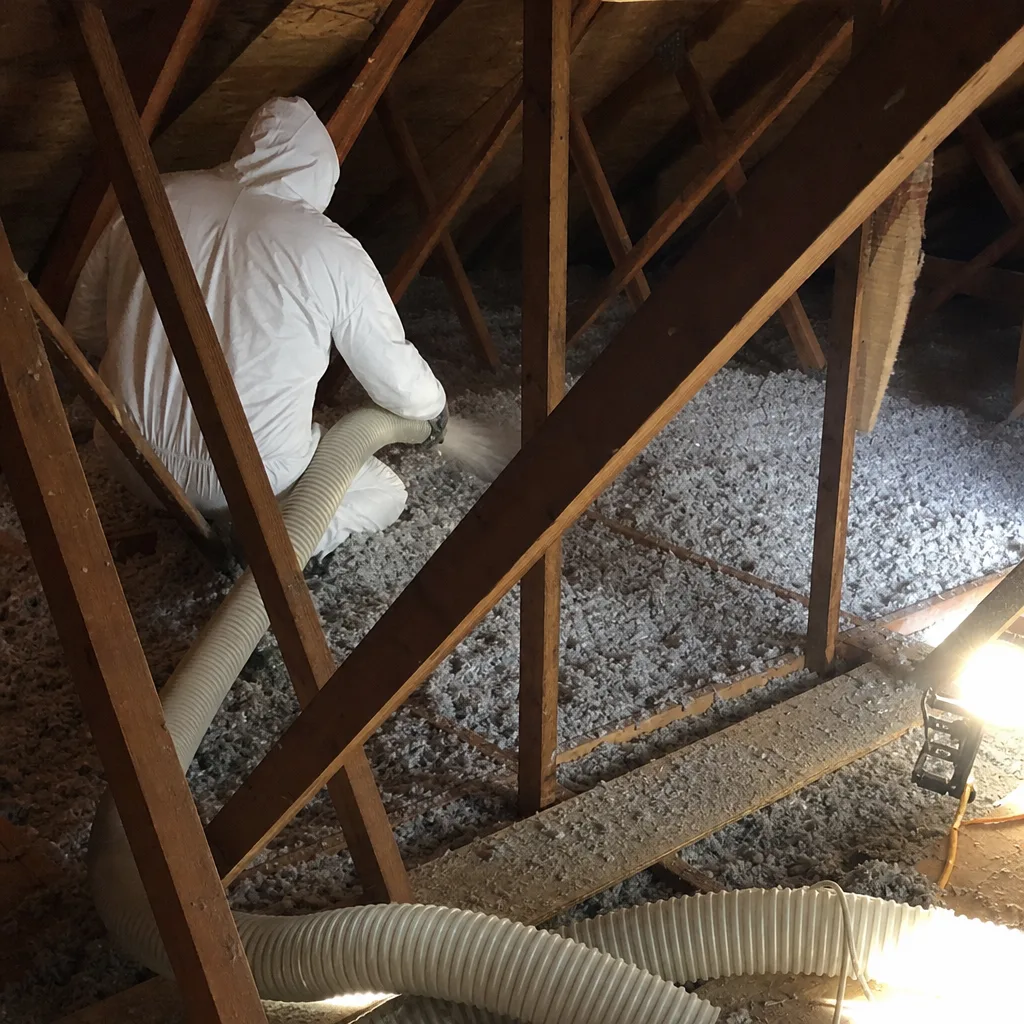
We stock and install from eight industry-leading manufacturers, so a San Joaquin Hills homeowner never gets forced into a product just because it’s what the shop carries. For attic upgrades here, we commonly reach for Owens Corning batts for vaulted ceiling work, GreenFiber cellulose for blown-in coverage over irregular framing, and Icynene or Demilec spray foam for air-sealing canyon-facing cantilevered floors. Our trucks carry local inventory for the 92657 area, which means same-week installation is usually on the table, not a six-week wait. The material gets matched to the job, not the job to the material.
Common Attic Insulation Problems We See in San Joaquin Hills Homes
- Builder-grade batts sagging in vaulted ceilings. R-19 batts lose loft over time and pull away from the ceiling plane, especially in cathedralized great rooms. Once they sag, the afternoon sun drives heat straight through.
- Wind-driven air infiltration at canyon-facing soffits. Steady onshore marine wind pushes through unsealed soffit-to-wall junctions and cantilevered floor systems. The attic never holds temperature because air is always moving through it.
- Overheated cathedralized attics above great rooms. High vaulted ceilings leave little attic depth, and without proper ridge venting, that shallow space becomes a radiant heat trap every sunny afternoon.
- Undersized soffit venting hidden by tile roofs. The roof looks fine from the curb, but underneath there’s not enough intake air to feed the ridge vent. The result is a stagnant, hot attic that works against the HVAC system.
Pricing for Attic Insulation in San Joaquin Hills, CA
Expect real numbers when you call us. A blown-in attic top-up in San Joaquin Hills typically runs $1,200 to $2,800 depending on square footage and target R-value. Attic batt replacement, common in cathedralized great rooms, usually lands between $2,500 and $5,500. Full attic air sealing plus new insulation on a large two-story canyon-edge home can reach $7,000 to $12,000. Radiant barrier installation adds roughly $1.50 to $2.50 per square foot of roof deck. These are honest ranges for this market, not teaser numbers. Call (855) 773-6429 and Alan or a team member will walk your specific attic and give you a written estimate before any work begins.
We Also Serve Cities Near San Joaquin Hills
Our crews work throughout the coastal canyon corridor. In addition to San Joaquin Hills, we regularly take on attic insulation projects in Newport Beach, Aliso Viejo, Laguna Beach, and Irvine. Same response times and the same eight-brand material library apply across the area.
Serving San Joaquin Hills, CA — Our Local Coverage Area
We’re based in the San Joaquin Hills area and know this community well. Use the map below to see our service coverage — if you’re nearby, we can almost certainly help.
FAQs About Attic Insulation in San Joaquin Hills
Because the original build was done to code minimums, not performance standards. Builders used R-19 batts in vaulted ceilings, skipped air sealing at critical soffit junctions, and often installed the minimum soffit venting the plans allowed. Fifteen years of canyon wind and afternoon sun later, the attic underperforms. Upgrading R-value and sealing air pathways is the fix. Call (855) 773-6429 for a free assessment.
Steady onshore marine wind pushes through every unsealed seam at the soffit line and around cantilevered floor systems. Your attic insulation might be perfectly installed, but if air is moving through it, it can’t do its job. Air sealing has to come first, before any R-value upgrade means anything. We address this on nearly every canyon-edge job in San Joaquin Hills.
Usually, yes. We were called to a two-story Mediterranean on a canyon-edge street in the Crystal Cove area where the upstairs great room hit 84°F by mid-afternoon despite the AC running flat out. Our tech found builder-grade R-19 batts sagging away from the cathedralized ceiling, wide gaps at the soffit-to-wall junction leaking marine wind, and no radiant barrier under the tile roof. We air-sealed the envelope, brought the vaulted ceiling up in R-value with Owens Corning, and added ridge-and-soffit ventilation to bleed the trapped heat. The room now holds temperature within a degree or two of the rest of the house.
In most cases, yes. Vaulted ceilings and cathedralized attics can typically be insulated from the attic side or through strategic access points without touching interior drywall, paint, or trim. We work inside the attic cavity and at the soffit line, not through the living space. For homes with no accessible attic above a vaulted section, we’ll explain your options honestly before any cutting begins.
We install from eight manufacturers: Owens Corning, Johns Manville, Knauf, Rockwool, CertainTeed, Icynene, Demilec, and GreenFiber. For San Joaquin Hills attics specifically, we most often reach for Owens Corning batts for vaulted work, GreenFiber cellulose for blown-in coverage, and Icynene or Demilec spray foam for air-sealing canyon-facing floor systems. The right material depends on the attic, not on what a single-brand shop happens to stock.
Get Your San Joaquin Hills Attic Fixed Right
If your upstairs rooms won’t hold temperature, your energy bills climb every summer, or you can feel drafts on windy afternoons, the attic is usually the place to look. We’ll assess it properly, tell you what’s actually wrong, and give you a written estimate for the fix. Call Placentia Insulation at (855) 773-6429 for a free attic evaluation in San Joaquin Hills. No pressure, no generic pitch, just a specialist who knows these canyon homes and what they need.
Written by Alan Whitcomb, Owner at Placentia Insulation, serving San Joaquin Hills and the surrounding coastal canyon communities.