
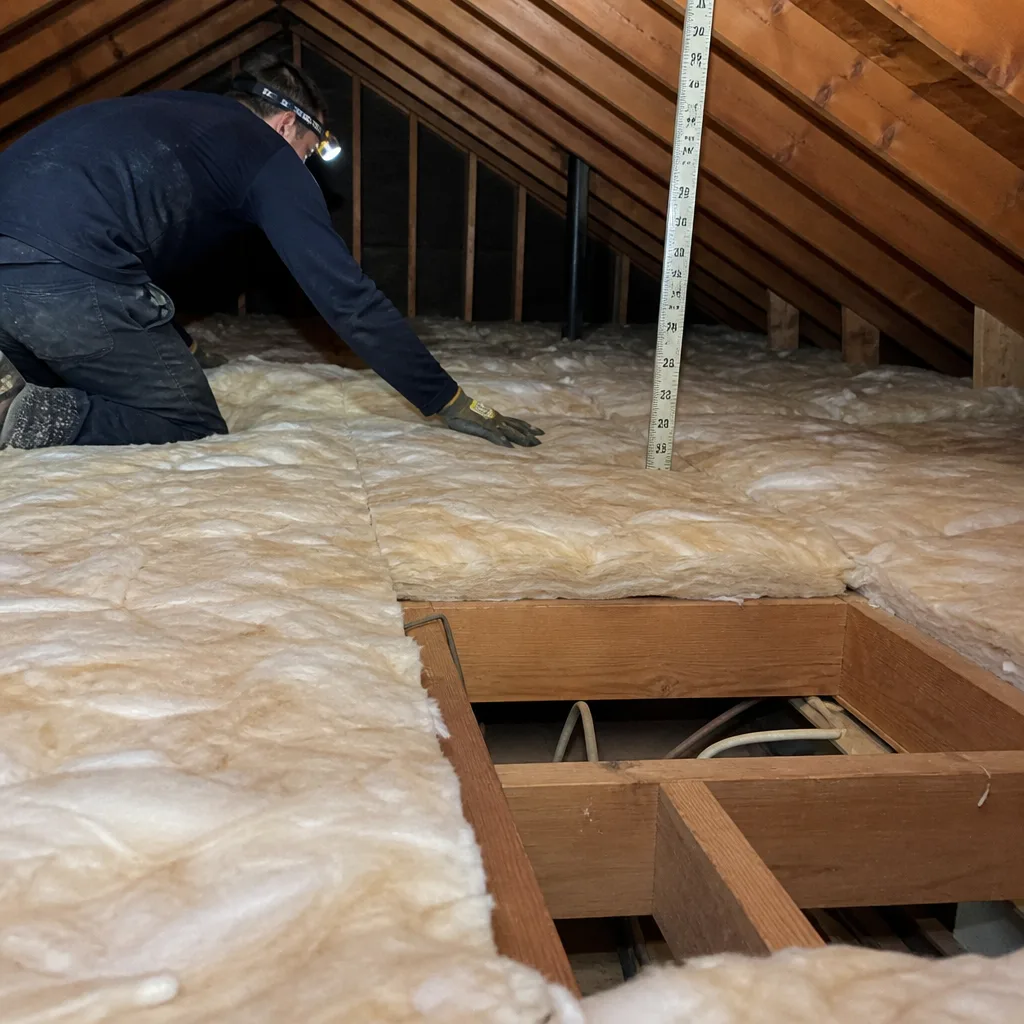
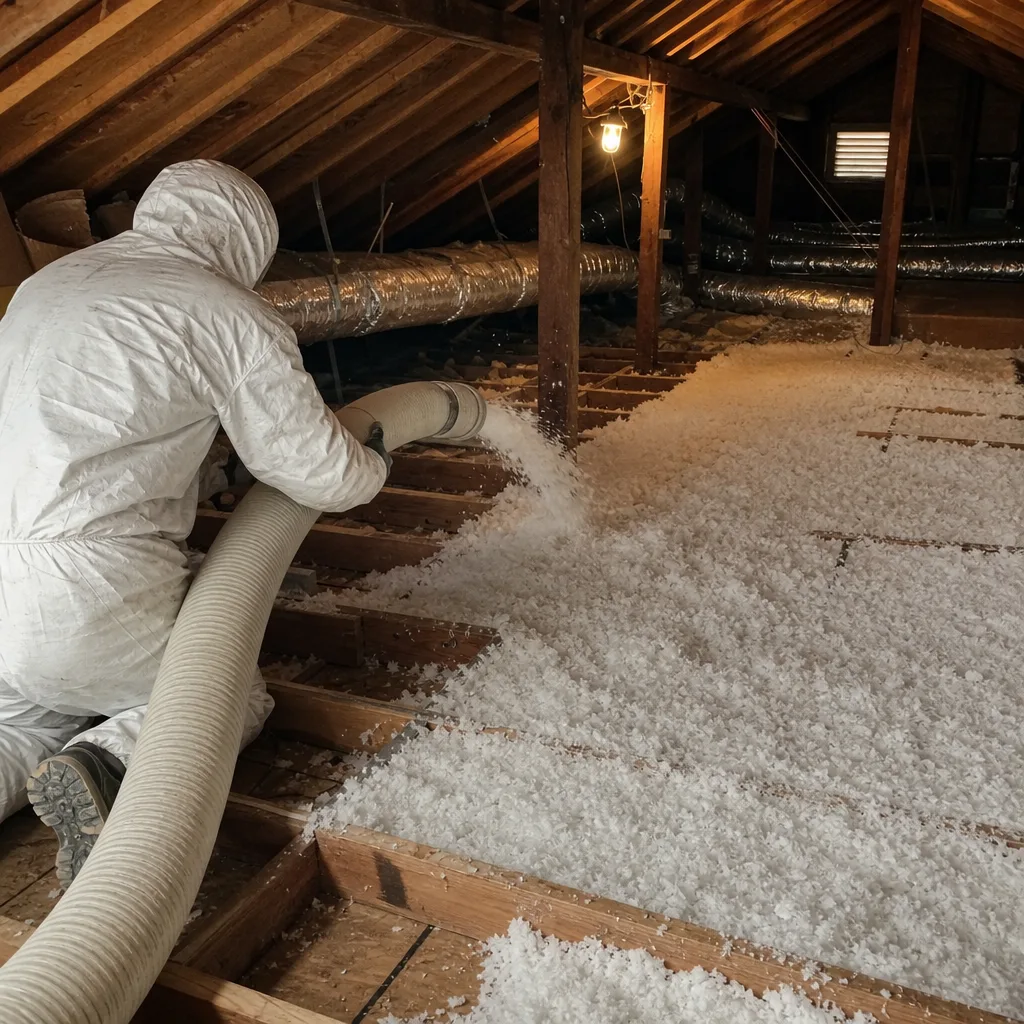
Fast, Reliable Attic Insulation Across Signal Hill
Attic insulation in Signal Hill costs between $1.80 and $4.50 per square foot for batt installation and $2.50 to $6.00 per square foot for spray foam. Most attic insulation jobs on Signal Hill homes run $1,400 to $3,800 depending on square footage, access difficulty, and whether oil-field odor sealing is needed. We serve all of Signal Hill’s 90755 zip code with same-week scheduling and free attic assessments. Call (855) 773-6429 to talk through what your attic actually needs.
Signal Hill isn’t a typical LA suburb, and your attic isn’t a typical attic. The city sits directly on active and capped oil fields, the marine layer rolls in most mornings, and much of the housing stock dates back to the post-war building boom. That combination means insulation decisions here have to account for things most contractors never think about: hydrocarbon odor intrusion through wall cavities, salt-air corrosion on attic ventilation components, and older framing that was never designed for modern insulation. We’ve spent enough time in Signal Hill attics to know exactly what those conditions demand.
Key takeaways for Signal Hill homeowners:
- Your attic may be pulling oil-field odors into the house through unsealed wall cavities and top plates.
- Standard fiberglass batts often absorb those odors, so sealed assemblies often outperform traditional vented setups.
- Salt air degrades ridge vents, soffit screens, and fasteners faster than inland communities.
- We recommend a free attic inspection before any insulation decision for homes built before 1970.
Why Placentia Insulation Is Signal Hill’s Preferred Attic Insulation Company
Homeowners in Signal Hill keep calling us because we speak the language of this specific housing stock. Post-war stucco-over-wood-frame construction, original knob-and-tube-era wiring in wall cavities, irregular attic access from decades of additions, and that distinct Signal Hill challenge where oil-field odors find their way up through wall cavities and into living spaces. We see these patterns week after week, and we’ve developed protocols to address them properly rather than just blowing in cellulose and driving away.
Our Attic Insulation team has worked on homes near Temple Avenue and 21st Street, around the Cherry Avenue corridor, and in the quiet residential streets north of Willow Street. Signal Hill customers tell us the same thing: other contractors gave them a generic quote without ever going into the attic. We go in. We look at what’s there, what’s failed, what the venting is doing, and whether odor sealing is going to matter. Then we match the material to the actual conditions of the house.
“Alan Whitcomb and his crew know Signal Hill attics,” one homeowner near Junipero Avenue told us. That’s the reputation we’ve built here. Not by advertising, but by crawling through enough Signal Hill attics to know what waits up there. Call (855) 773-6429 to schedule a free assessment with someone who’s actually been in attics like yours.
Insulation Contractors in Signal Hill
Insulation Contractors in Signal Hill need to understand odor sealing, not just R-value. Any crew can staple up fiberglass. The right contractor for this city has to know when batt insulation will trap hydrocarbon odors that drift up from capped wells and how to build sealed, low-permeability assemblies that stop that intrusion at the source. We regularly pair closed-cell spray foam air sealing at top plates and wall cavity junctions with Rockwool batts to create both a thermal barrier and an odor barrier.
A typical insulation contractor visit in Signal Hill runs $150 to $350 for the assessment, which we credit toward the full installation if you move forward. Full attic air sealing and insulation for a 1,200-square-foot home typically lands between $2,400 and $4,600, depending on access difficulty and how much old material needs removal first.
Air Sealing Before Insulation
In Signal Hill attics, air sealing isn’t a nice-to-have. It’s the step that prevents oil-field gas intrusion from traveling through wire penetrations, plumbing chases, and top plate gaps into your living space. We seal those pathways with closed-cell foam from Demilec before adding anything else. Skip this step and even the best insulation can’t fix what’s coming up through your walls.
Odor-Resistant Assembly Design
When a Signal Hill home sits near an active well site or a capped well pad, we design the attic assembly around vapor control. That means a sealed vapor barrier where appropriate, closed-cell foam at critical junctions, or a full spray foam application when the homeowner wants maximum odor blocking plus thermal performance. This isn’t a standard batt job, and it shouldn’t be approached like one.
Attic Ventilation in Signal Hill
Attic Ventilation in Signal Hill fights two simultaneous enemies: marine-layer moisture and salt-air corrosion. Ridge vents and soffit screens that would last 20 years in Riverside might fail in a decade here because the salt-laden morning air accelerates rust on metal components. We inspect ventilation as part of every attic assessment, and we routinely find ridge vents that have corroded shut or soffit screens that have disintegrated, leaving the attic air-starved.
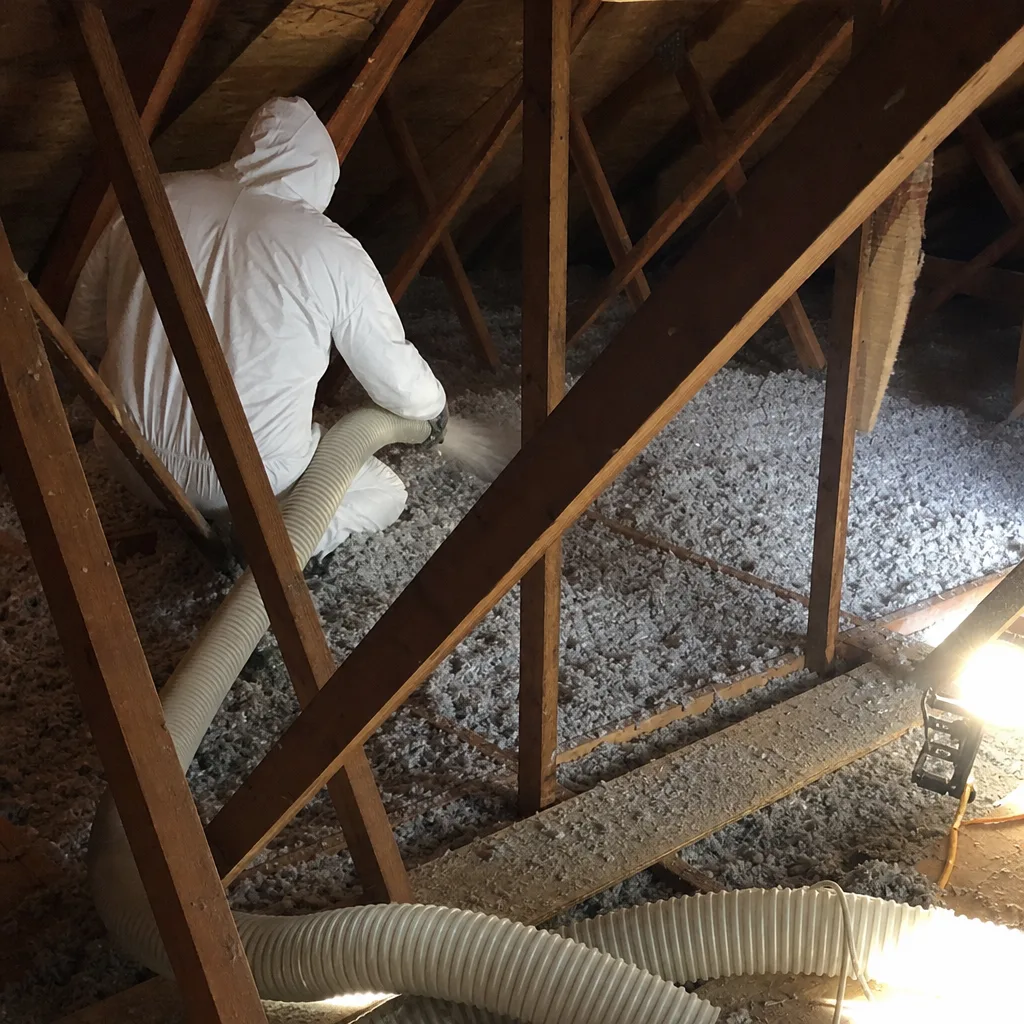
Replacing soffit vents and ridge vents on a typical Signal Hill home runs $450 to $900. Adding a solar-powered attic fan for the summer heat and coastal moisture costs $800 to $1,400 installed. These fixes matter because a poorly ventilated attic here holds moisture against the roof decking, which is already stressed by the coastal environment.
Corrosion-Resistant Vent Hardware
We specify aluminum or powder-coated steel for vent components in Signal Hill. Galvanized hardware is the minimum standard, but the salt air here will eventually win that battle, so we lean toward hardware that’s built for coastal conditions. It costs a bit more upfront and saves money in replacement cycles.
When Ventilation Precedes Insulation
There’s no point pumping R-38 into an attic that can’t breathe. If your ridge and soffit vents are degraded, we fix that first. In some Signal Hill attics, we add baffles along the eaves to maintain airflow even under deep insulation. That simple step prevents the roof deck from cooking in the summer sun and holding moisture during the marine-layer season.
Trusted Brands We Service in Signal Hill
We carry Icynene and Demilec spray foam inventory for Signal Hill homes, plus Rockwool mineral wool and CertainTeed fiberglass. Different attics need different materials. A home near the oil fields might need Rockwool for fire resistance and odor control. A refitted 1950s dwelling with irregular cavities might need Icynene open-cell foam to fill odd spaces properly. We don’t force one brand into every situation. We stock what Signal Hill’s housing stock actually demands, so the turnaround is faster and the solution is tailored, not defaulted.
Common Attic Insulation Problems We See in Signal Hill Homes
- Oil-field odor absorption: Standard fiberglass batts in vented attics near capped wells absorb and trap hydrocarbon smells, so the odor lingers long after the source is addressed. We remove the saturated material and replace it with sealed or mineral wool assemblies that don’t hold those compounds.
- Knob-and-tube wiring fire risk: Much of Signal Hill’s original 1940s-1960s housing has knob-and-tube wiring still running through wall cavities. Insulating over it without fire-rated separation is a genuine fire hazard, so we make sure the electrical risk is addressed before material goes in.
- Salt-air corroded ventilation: Ridge vents, soffit screens, and fasteners show rust and structural failure years earlier than inland. This reduces airflow and traps moisture against the roof deck, accelerating rot.
- Collapsed original insulation: Many post-war Signal Hill homes have original insulation that’s 70 years old or more and has compressed to a fraction of its original R-value. In homes near Temple Avenue and 21st Street, we regularly find batting that’s collapsed to less than R-6 from its original R-19.
Pricing for Attic Insulation in Signal Hill, CA
| Service | Signal Hill Price Range |
|---|---|
| Attic batt insulation (R-38) | $1.80 – $2.80 per sq ft |
| Blown-in cellulose (GreenFiber) | $1.60 – $2.40 per sq ft |
| Open-cell spray foam (Icynene) | $2.50 – $4.00 per sq ft |
| Closed-cell spray foam (Demilec) | $4.00 – $6.00 per sq ft |
| Attic top-up (add R-19 over existing) | $1.10 – $1.60 per sq ft |
| Attic insulation replacement with odor sealing | $2,400 – $4,800 for a typical 1,200 sq ft home |
What changes the price in Signal Hill matters more than the base rate. Homes near active well sites often need additional air sealing and closed-cell foam at critical junctions, adding $500 to $1,200 versus a standard batt job. Attics with original knob-and-tube wiring require fire-rated separation or electrical upgrades before insulation goes in. And if old material has absorbed oil odors, removal and disposal adds $400 to $800. Call (855) 773-6429 for a free estimate on your specific attic. We measure, inspect, and give you a straight number.
We Also Serve Cities Near Signal Hill
Our insulation crews regularly work in Signal Hill and the surrounding communities. We handle attic insulation projects in Long Beach, Lakewood, Carson, and Hawaiian Gardens with the same attention to local housing conditions and climate demands. If you’re in one of those cities and your attic needs work, the same team that knows Signal Hill attics will handle it.
Serving Signal Hill, CA — Our Local Coverage Area
We’re based in the Signal Hill area and know this community well. Use the map below to see our service coverage — if you’re nearby, we can almost certainly help.
FAQs About Attic Insulation in Signal Hill
That smell comes from hydrocarbon vapors rising from the active and capped oil wells beneath and around Signal Hill, entering your attic through unsealed wall cavities, top plates, and plumbing chases. Your current insulation may have absorbed these compounds, and the odor may be worse on warm days when heat drives vapors upward. We fix this by removing saturated material, air-sealing pathways with closed-cell spray foam, and installing sealed assemblies that block odor intrusion. Call (855) 773-6429 and we’ll trace the odor source in your attic.
In many Signal Hill homes, yes. Because oil-field odors migrate through wall cavities and crawlspaces into attic assemblies, a sealed vapor barrier or low-permeability foam often does double duty: controlling moisture and blocking hydrocarbon gas intrusion. Not every home needs it. A home on the south slope away from well sites might be fine with standard ventilation. Our free attic assessment tells you which situation you’re in; call us today for it.
No, you should not insulate directly over live knob-and-tube wiring. The issue is heat dissipation. Knob-and-tube was designed to run in open air, and burying it under insulation can cause heat buildup that becomes a fire risk. Before adding insulation, the wiring needs to be evaluated: either decommissioned and replaced with modern wiring, or protected with fire-rated separation. Our assessment includes identifying this risk and recommending the right next step in Signal Hill homes of that era.
For Signal Hill’s marine-layer climate, balanced intake and exhaust ventilation matters most: continuous soffit vents paired with a ridge vent or properly spaced box vents. The system needs to move moist, salt-laden air out of the attic during morning marine-layer hours and move heat out during summer afternoons. We also recommend corrosion-resistant materials for any vent component because the salt air accelerates metal degradation. Call (855) 773-6429 for a ventilation check before you insulate.
Attic insulation, especially mineral wool like Rockwool, noticeably reduces aircraft noise from Long Beach Airport, traffic rumble from the 405 and 710 freeways, and helicopter activity from nearby medical and aviation corridors. Because Signal Hill is small and densely packed, sound travels between houses and down into living spaces from above. Sealing attic penetrations and adding dense, acoustically capable insulation can drop perceived noise by several decibels. We can explain your options in a free attic walkthrough; call us today.
Written by Alan Whitcomb, owner at Placentia Insulation, serving Signal Hill and surrounding communities.