
Fast, Reliable Attic Insulation Across Torrance
Attic insulation in Torrance is a different job than it is ten miles inland. The nightly marine layer off the Pacific pushes damp air against roof decks and into wall cavities, which means most older South Bay homes have a moisture problem hiding underneath whatever insulation was installed decades ago. If your rooms feel clammy, your energy bills climb every summer, or you’ve caught a whiff of mildew near the ceiling, the fix usually starts with an honest assessment of what’s already up there – not just adding more. Our crews know the 90501 through 90503 zip codes well, and we can usually reach most Torrance neighborhoods within 60 to 90 minutes of your call. Call (855) 773-6429 to schedule an inspection.
Why Placentia Insulation Is Torrance’s Preferred Attic Insulation Company
Most insulation contractors carry one or two product lines. We carry eight – Owens Corning, Johns Manville, Knauf, Rockwool, CertainTeed, Icynene, Demilec, and GreenFiber – because a 1955 tract house near Hickory Avenue needs a different material than a 1970s split-level in South Torrance. That’s the core of how we work in Torrance: we match the material to the job, not the job to whatever happens to be on the truck.
Alan Whitcomb built Placentia Insulation as an insulation-only shop, which matters more than most homeowners realize. Every crew member who shows up at a Torrance home spends their entire week doing one trade. They know what condensation staining looks like on a 2×4 roof deck with no soffit venting. They know what compressed fiberglass batts feel like after forty years of absorbing coastal humidity. They don’t do plumbing today and insulation tomorrow. That single-trade focus is why Torrance property owners call us back when the next rental unit needs an attic top-up or full removal.
Three installation methods – attic insulation, spray foam, and blown-in – all handled by one dedicated contractor, so a whole-home retrofit in Torrance doesn’t require juggling separate vendors. And because we stock local parts and materials for South Bay jobs, turnaround stays tight even during peak season. Estimates are free and the phone is (855) 773-6429.
Attic Insulation Removal in Torrance
Attic Insulation Removal in Torrance is the step most homeowners skip – and it’s the step that determines whether your next insulation job actually works. In the 1940s through 1960s tracts that dominate much of central and north Torrance, the original insulation has typically spent five or six decades absorbing moisture from the marine layer. It’s compressed, its R-value has collapsed, and in plenty of cases it’s actively holding damp against the roof sheathing. You can’t fix that by blowing new material over the top. The old layer has to come out first.
A full attic insulation removal in Torrance typically runs $1,200 to $2,800 depending on attic size, access, and what we find once we get up there. That includes bagging, removal, disposal, and a basic cleaning of the deck before anything new goes in. Most jobs finish in a single day.
When removal beats a top-up
If your attic smells musty in the morning or you can see dark staining on the underside of the roof sheathing, removal isn’t an upgrade – it’s a prerequisite. Adding new insulation over damp old material just traps the moisture deeper. In Torrance’s coastal air, that’s a mold problem waiting six months to surface.
What the removal process looks like
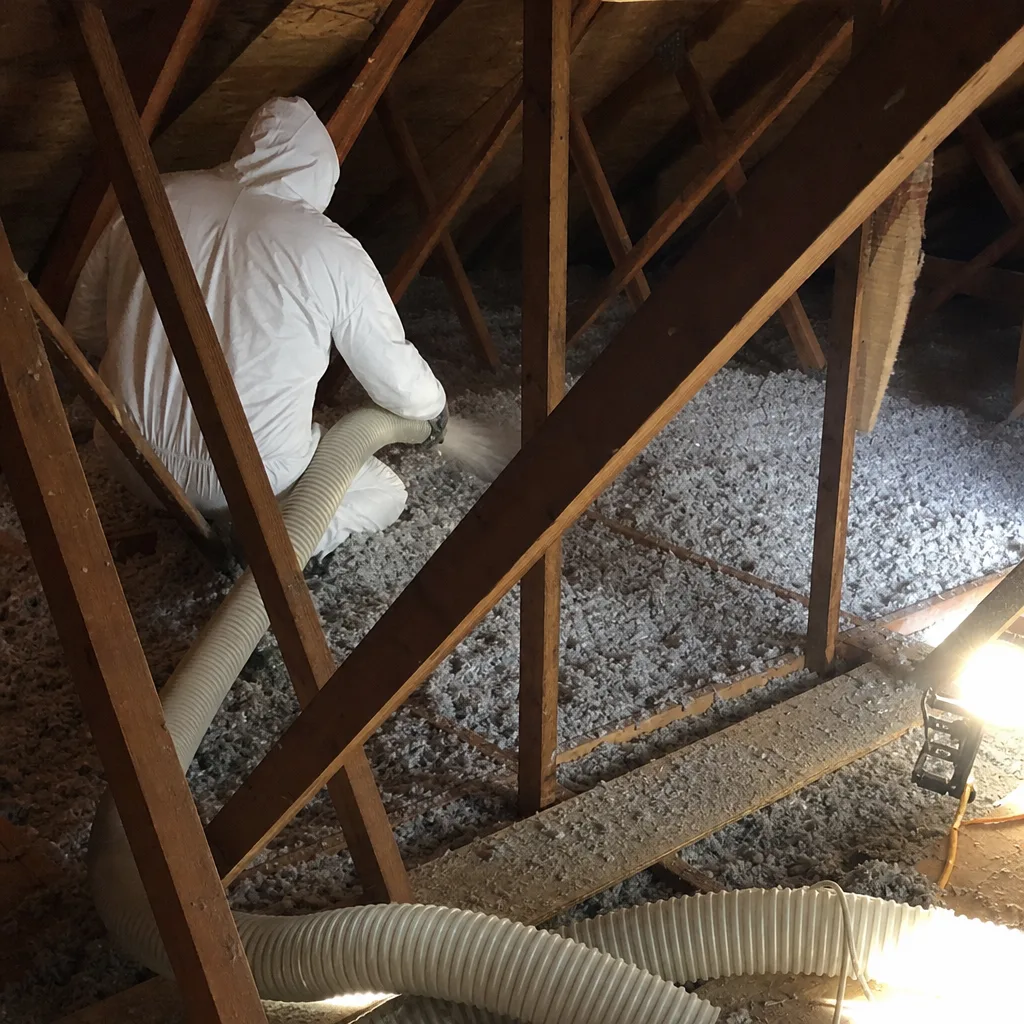
We typically set up a portable vacuum system that extracts the old material directly into sealed bags, keeping dust out of the living space. Then we inspect the deck for staining and surface mold before mapping out the venting. Only after the attic is dry and moving air do we talk about what goes back in.
Insulation Contractors in Torrance
Insulation Contractors in Torrance face a problem that inland contractors never see: the job is as much about vapor and ventilation as it is about R-value. The original shallow roof decks on 1940s and 1950s South Bay homes were often framed with little or no soffit venting, and the gable vents – if they exist at all – are usually undersized. That means warm, moist air from the house and attached garage rises into the attic, meets the cool underside of the deck, and condenses. The best insulation in the world won’t perform if it’s installed over a deck that sweats every night.
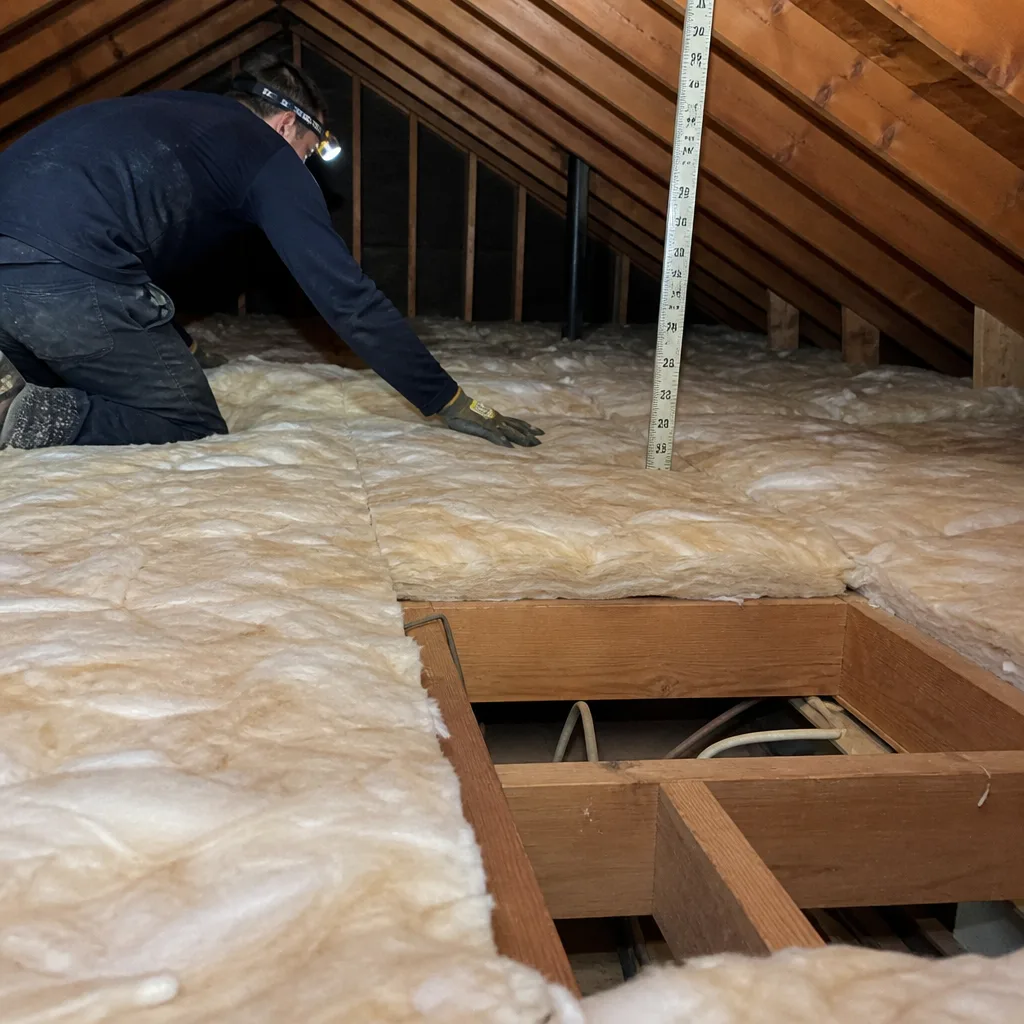
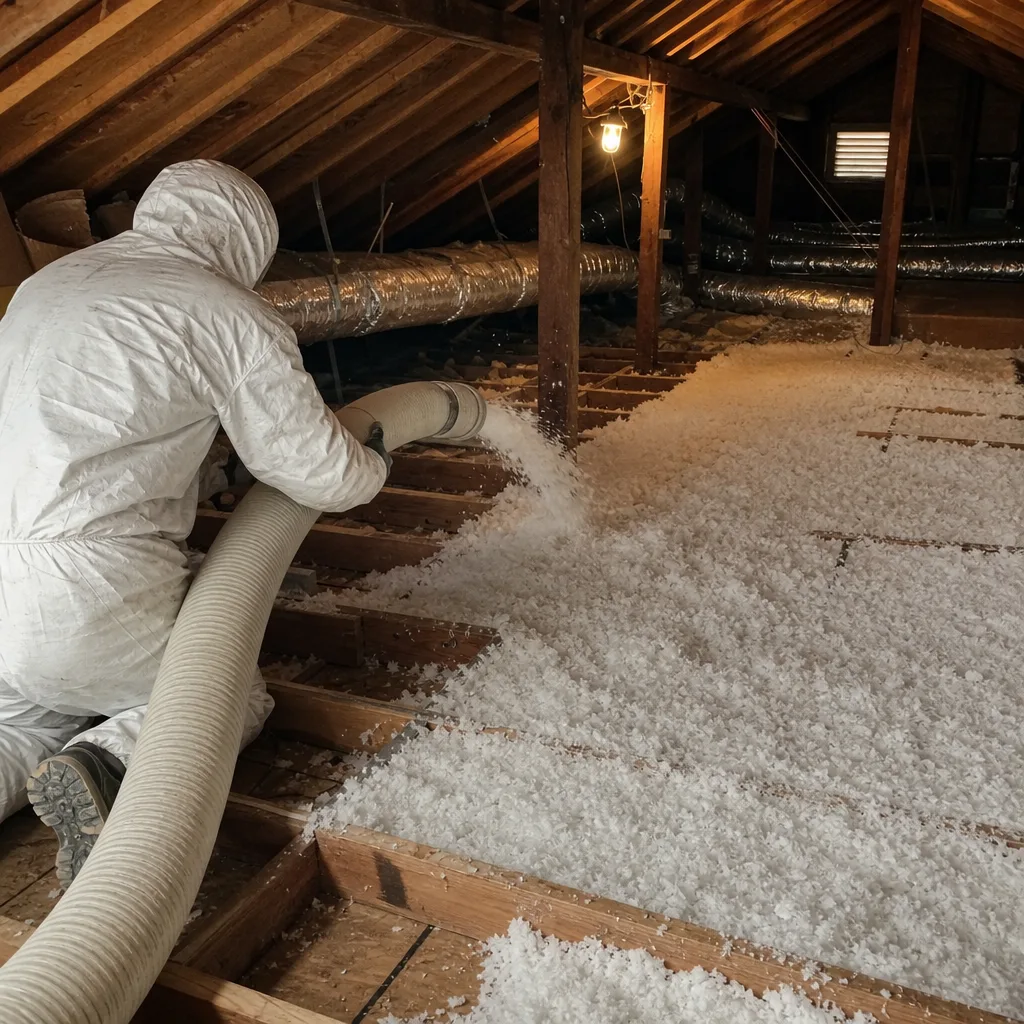
Working with a contractor who understands this is the difference between an upgrade that lasts fifteen years and one that fails in two. Our crews inspect the full attic system before recommending anything: the deck, the venting, the wall-cavity transitions, the attached garage interface. Then we choose the material that fits the conditions. Open-cell spray foam like Icynene works well in tight Torrance attics where air sealing matters most. GreenFiber blown-in cellulose is a practical choice for deep attics that need solid coverage over a properly vented deck. Close-cell Demilec is available when we need high R-value per inch without bulking up the roofline.
Credentials and coverage
Placentia Insulation is state-licensed and insured, and we carry materials from eight industry-leading brands in active inventory: Owens Corning, Johns Manville, Knauf, Rockwool, CertainTeed, Icynene, Demilec, and GreenFiber. We cover every Torrance zip code – 90510, 90501, 90502, 90503 – and typically arrive for an inspection within 60 to 90 minutes of a call.
What we check before recommending anything
Every Torrance attic inspection starts with the deck. We look for condensation staining, surface mold, and soft spots. Then we map the existing venting. Only after we know the attic moves air do we talk R-value, material choice, and budget.
Trusted Brands We Service in Torrance
Torrance homeowners often ask what brands we install, which is the right question to ask. Our answer is different from most insulation shops. Instead of recommending a single product line because that’s all we carry, we stock and install from eight manufacturers, including CertainTeed fiberglass, Icynene open-cell spray foam, Demilec closed-cell foam, and GreenFiber blown-in cellulose. A 1950s shallow attic in 90504 that needs vapor management might get open-cell Icynene for the air-sealing benefits. A 1970s tract home in 90503 with a deep attic might get GreenFiber blown over a properly vented deck. That’s the benefit of carrying multiple brands: your Torrance home gets what the attic conditions call for, not what one supplier happens to have on the shelf.
Common Attic Insulation Problems We See in Torrance Homes
- Damp, compressed legacy insulation. The marine layer off the Pacific rolls in most nights of the year and keeps attic air humid. Original fiberglass or mineral wool from the post-war boom absorbs that moisture over decades, loses its loft, and holds wetness against the roof deck. The insulation looks thick but performs like a wet blanket.
- Underside condensation and sheathing mold. Older Torrance roofs were built shallow, with minimal or no soffit venting. Warm, moist air rises from living spaces and hits the cold underside of the deck. Result: dark staining, surface mold, and – eventually – rot. This is the most common problem we uncover in 1940s and 1950s tracts around central Torrance.
- Unsealed attic-to-garage transitions. Attached garages are everywhere in Torrance’s housing stock, and the wall or ceiling between garage and attic is rarely air-sealed in older homes. Garage humidity migrates into the attic every time a car comes home wet from the coastal mist, feeding the same condensation cycle against the deck.
- Closed soffits starving the attic of airflow. Many post-war Torrance homes were built with very small or entirely closed soffit vents, which means the attic can never dry out after the overnight marine layer moves through. Insulation installed over a stagnant, damp attic is insulation that’s already failing on day one.
Pricing for Attic Insulation in Torrance, CA
Pricing in Torrance tracks with the size of the attic and the amount of prep work, but here are honest ranges for the South Bay market. A blown-in attic insulation top-up on a standard 1,200-square-foot attic typically runs $1,500 to $2,400. Full attic insulation removal and replacement runs $2,800 to $5,500 when the old material has to come out, deck issues are addressed, and new material is blown in. Attic batt insulation installation runs $2,000 to $3,800 depending on material choice – fiberglass batts cost less, Rockwool costs more but adds fire resistance and sound dampening. Open-cell spray foam runs $1.80 to $2.75 per board foot; close-cell Demilec runs $3.75 to $5.25 per board foot. Attic baffles and venting prep adds $400 to $900 on a typical Torrance home. Call (855) 773-6429 for a free estimate – we quote after looking at the attic, not over the phone from a spreadsheet.
We Also Serve Cities Near Torrance
Placentia Insulation works throughout the South Bay and the surrounding area. Beyond Torrance, we regularly handle Attic Insulation projects in Lomita, West Carson, Rolling Hills Estates, and Manhattan Beach. Same crews, same eight-brand material library, same single-trade focus. If you’re nearby, we’ll schedule you just as quickly.
Serving Torrance, CA — Our Local Coverage Area
We’re based in the Torrance area and know this community well. Use the map below to see our service coverage — if you’re nearby, we can almost certainly help.
FAQs About Attic Insulation in Torrance
Because Torrance sits in the coastal marine layer zone of the South Bay. Overnight, moisture-laden air off the Pacific pushes dew points up against your roof deck. Without proper venting, that moisture condenses and settles into the insulation. It’s not heat that’s aging your insulation – it’s humidity. Give us a call at (855) 773-6429 and we’ll take a look.
Most of the time, yes. In a 1950s tract home, the original insulation has typically absorbed decades of marine-layer moisture and compressed to a fraction of its original loft. Blowing new material over it locks the damp in place. Removal is the honest first step, and we’ll tell you if it’s needed after one look at the deck.
Yes, if the venting problem isn’t fixed first. Adding insulation to a stagnant, damp attic traps moisture and accelerates condensation on the sheathing. That’s why we map venting and add attic baffles or gable venting as part of the job when needed. The airflow has to be there before the R-value means anything.
It depends on the attic, not on what one manufacturer sells. Open-cell Icynene spray foam air-seals and controls vapor in tight Torrance attics. GreenFiber blown-in cellulose works well in deeper attics over a properly vented deck. If you want fire resistance and sound dampening alongside thermal performance, Rockwool mineral wool is the choice. That’s why we carry all of them.
We see the most removal-required attics in the 1940s through 1960s tracts across central and north Torrance – the neighborhoods around 90504 and 90501, where homes were built with shallow roofs, minimal venting, and original insulation that’s now saturated. South Torrance homes from the 1970s tend to have deeper attics, but many have the same closed-soffit airflow problem.
Written by Alan Whitcomb, Owner at Placentia Insulation, serving Torrance and the South Bay.