
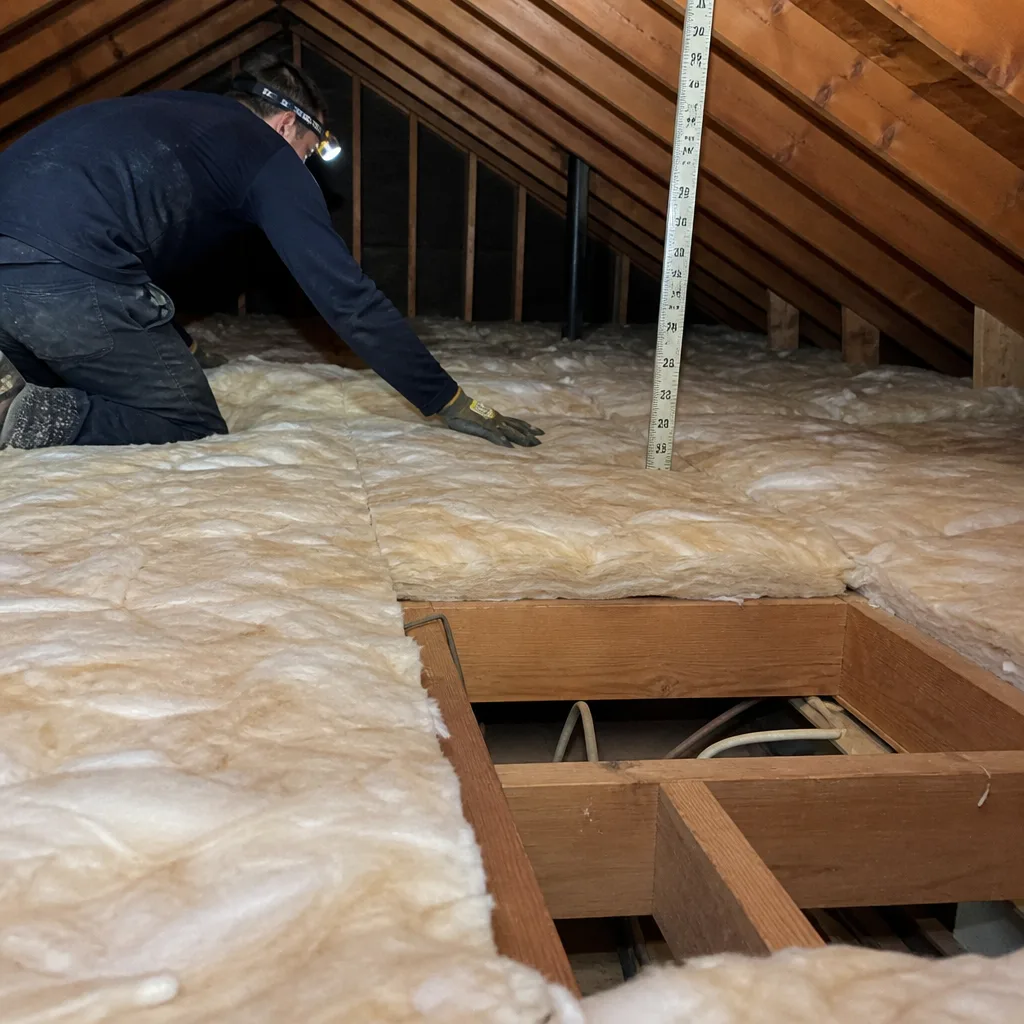
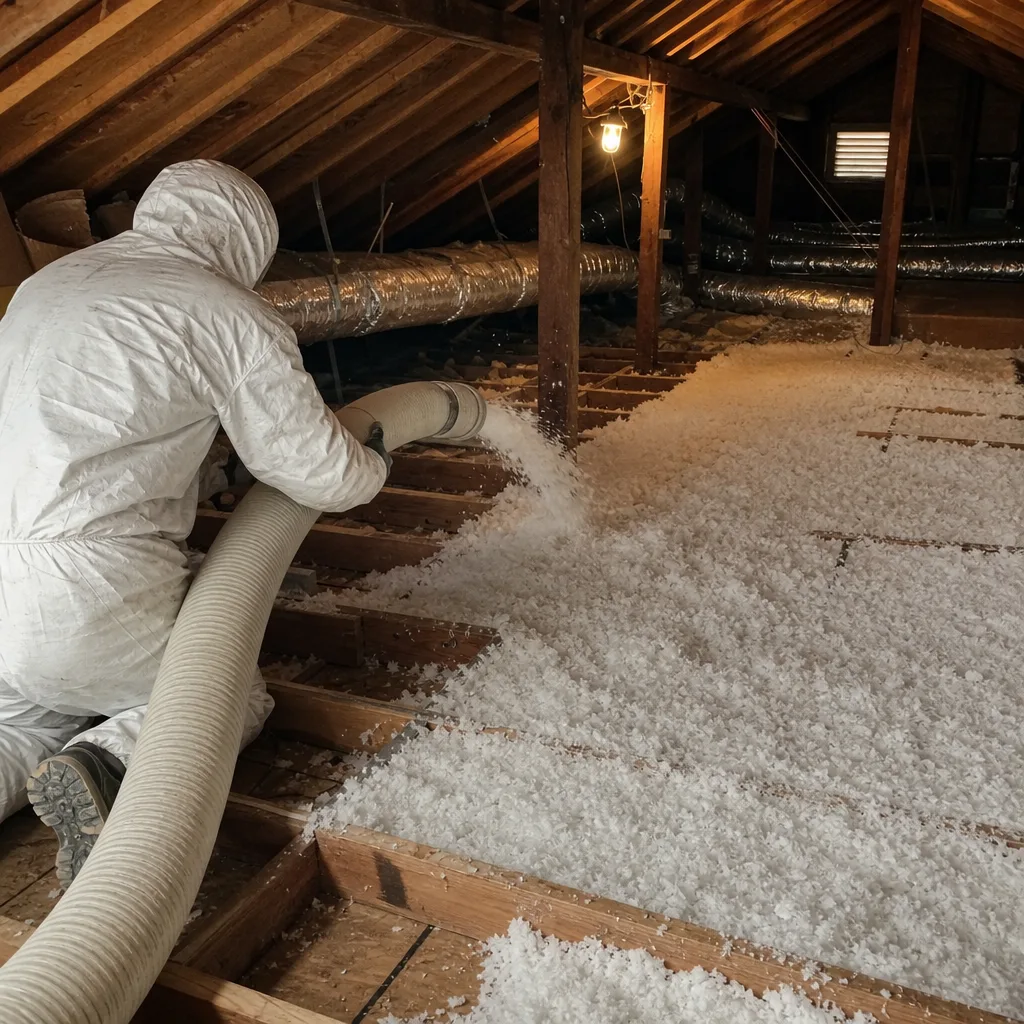
Fast, Reliable Attic Insulation Across Wildomar
Most Wildomar attics we test are running at R-11 to R-13 when they should be at R-38 to R-49. That gap is why your upstairs hits 85°F at 3 p.m. while the thermostat downstairs reads 74. We’re Placentia Insulation, and we fix this specific problem in Wildomar every week – removal, air-sealing, and refill with the right material for the inland valley’s heat. Call (855) 773-6429 and we’ll give you a straight answer about what’s actually happening above your ceiling.
Why Placentia Insulation Is Wildomar’s Preferred Attic Insulation Company
This is a specialist trade, and Wildomar homeowners notice the difference. We don’t send a general contractor who does insulation on Tuesdays. Every crew member who steps into a Wildomar attic does nothing but insulation work – removal, air-sealing, spray foam, blown-in, batts – day in and day out. That focus is why we can diagnose a settled R-13 attic off Clinton Keith Road in the first ten minutes of an inspection, and why we carry eight brands instead of whatever one supplier had on sale that month.
Wildomar’s housing stock is mostly 1980s through 2000s stucco tract homes with concrete tile roofs. We know those attics. We know how the original builder-grade blown-in fiberglass compacts under decades of heat cycling beneath dark tile. We know where the rodent runs show up near the I-15 corridor and the open-space edges. That local pattern recognition means you’re not paying us to learn on your house.
Alan Whitcomb, who leads Placentia Insulation, built the company around a simple idea: match the material to the job, not the job to whatever’s on the truck. Most insulation contractors carry one or two product lines. We stock eight – Owens Corning, Johns Manville, Knauf, Rockwool, CertainTeed, Icynene, Demilec, and GreenFiber. That means a Wildomar home battling attic heat gets what it actually needs, whether that’s closed-cell spray foam against the roofline or air-sealed blown-in fiberglass to R-49. Call (855) 773-6429 and we’ll schedule the inspection.
Attic Mold Removal in Wildomar
Attic Mold Removal in Wildomar means pulling out contaminated insulation, treating the affected framing, and correcting the moisture source before anything new goes back in. We see this most often in Wildomar homes where bathroom fans vent into the attic instead of through the roof – a common shortcut in 1980s and 1990s tract builds in the 92595 ZIP – or where the dark tile roof traps humidity that never fully dries out. A typical mold remediation on a Wildomar attic runs $2,200 to $4,800 depending on square footage and how far the contamination spread, which factors in removal, treatment, and disposal. Covering moldy insulation with a fresh layer of blown-in doesn’t fix anything; it just hides the problem and traps moisture where you can’t see it until the drywall stains.
When Removal Beats Treatment
If the mold is on the insulation itself, the insulation comes out. Fiberglass and cellulose both hold spores, and no treatment product reaches through a 12-inch layer of settled material. We pull it, bag it, and get it out of the house before treating the framing and sheathing.
The Air-Sealing Step Most Wildomar Attics Skip
Mold returns when the moisture source stays. That’s why every mold removal we do in Wildomar includes checking baffles, bathroom vent terminations, and the attic floor’s air leakage points. We re-seal top plates, can lights, and any chase openings before blowing in new insulation.
Attic Insulation Removal in Wildomar
Attic Insulation Removal in Wildomar is the step most homeowners skip – and the one that actually fixes the problem. When attic insulation has been compacted by 25 years of inland heat, chewed into bare lanes by rodents near the I-15 corridor, or soaked by a roof leak above the master bedroom, blowing more insulation on top just recreates the thin spots. A full removal on a typical Wildomar single-story attic costs between $1,600 and $3,200 depending on access, contamination level, and depth. Then we re-insulate from a clean, air-sealed deck. You get exactly the R-value you paid for, with no legacy compaction undermining it from below.
Signs You Need Full Removal, Not a Top-Off
Rat droppings in the insulation. Visible mold on the fiberglass. Attic insulation that’s visibly settled to the top of the ceiling joists. A history of roof leaks. Any one of these means removal is the correct call. Topping off over contaminated or compacted material is wasted money.
What Removal Actually Involves
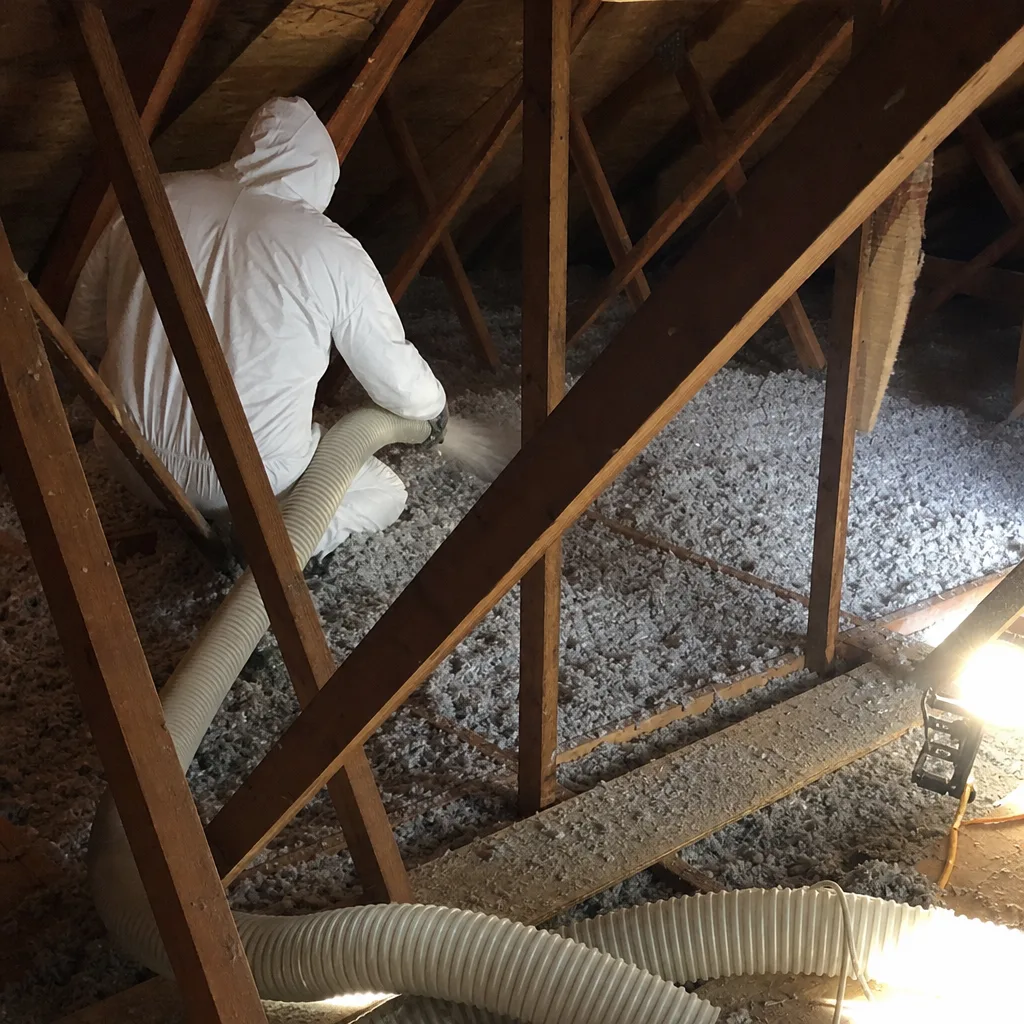
We bring commercial HEPA-filtered vacuums, remove every bit of old material down to the drywall, and haul it off for proper disposal. Then we inspect the attic floor for air leaks, seal every top plate and penetration, and only then do we install new insulation matched to Wildomar’s Title 24-aligned R-38 to R-49 targets.
Trusted Brands We Service in Wildomar
Our Wildomar crews install and service all eight brands in our portfolio – Owens Corning, Johns Manville, Knauf, Rockwool, CertainTeed, Icynene, Demilec, and GreenFiber. When a Wildomar homeowner wants Rockwool for fire resistance near the hillside, we stock it. When the application calls for Demilec closed-cell against the roofline, that’s on the truck. We don’t push one manufacturer because we carry all of them, and that means your recommendation comes from what your attic needs – not from a supply agreement. For Wildomar customers, that brand depth translates to faster turnarounds and the right product on the first visit, not a compromise on the second.
Common Attic Insulation Problems We See in Wildomar Homes
- Settled builder-grade blown-in fiberglass. Homes built in the 1980s through 2000s in the 92595 ZIP often started with R-13 or less in the attic. After 20 to 30 years of inland-valley heat cycling under dark concrete tile roofs, that material compacts to an effective R-8 or worse, which is why your upstairs bedrooms bake in July.
- Rodent-tunneled insulation near the I-15 corridor and open-space edges. Wildomar homes backing up to open space regularly show rat and mouse runs carved through the blown-in. The tunneling creates bare lanes where thermal performance collapses in strips, so the attic reads R-13 overall but behaves like R-9 in the spots that matter.
- Mold and moisture from improper bath venting. Many 1980s and 1990s Wildomar tract homes vent bathroom fans directly into the attic, pumping humid air into the insulation every shower. Over years, that trapped moisture breeds mold on the fiberglass and the underside of the roof sheathing.
- Air leakage through unsealed top plates and can lights. The original builder-grade insulation in Wildomar’s tract homes was installed before air-sealing was standard practice. Hot attic air pushes down through top plates and around recessed can lights into your living space, making the AC work harder than it should in a valley that already hits 100°F+.
Pricing for Attic Insulation in Wildomar, CA
Here are real numbers for Wildomar’s market. A standard attic top-off over existing insulation runs $1,100 to $2,400 for a 1,200 to 1,800 square foot single-story home, depending on depth needed to reach R-38. Full removal with air-sealing and blown-in fiberglass to R-49 typically lands between $3,200 and $5,600. Attic mold removal, including treatment and disposal, runs $2,200 to $4,800. Batting and spray foam jobs are quoted by project since access, roofline geometry, and material choice swing the number significantly. Every estimate is free, and we’ll tell you honestly whether a top-off will actually fix your problem or whether removal is the only path that makes sense. Call (855) 773-6429 for a Wildomar-specific quote.
We Also Serve Cities Near Wildomar
Our crews cover the surrounding Southwest Riverside County communities: Wildomar itself, plus Murrieta, Murrieta Hot Springs, Sedco Hills, and Lakeland Village. If you’re in any of those areas and dealing with attic heat, mold, or rodent damage, the same team that handles Wildomar attics can help. Find more details on our Attic Insulation services or call us directly.
Serving Wildomar, CA — Our Local Coverage Area
We’re based in the Wildomar area and know this community well. Use the map below to see our service coverage — if you’re nearby, we can almost certainly help.
FAQs About Attic Insulation in Wildomar
You can, but in a Wildomar tract home it rarely fixes the problem. R-11 means the original material has already settled, likely been tunneled, and may be holding moisture. Blowing fresh insulation over that just buries the problem and leaves the thin spots thin. We recommend removal of the old material, air-sealing, then a clean fill to R-49. Call (855) 773-6429 and we’ll assess whether a top-off is genuinely viable in your attic or whether removal is the honest fix.
Because your attic has become a heat reservoir radiating down through the ceiling. Wildomar summers push attic temperatures past 140°F under dark concrete tile, and if your insulation is compacted to an effective R-8 or R-13, that heat transfers straight into the upstairs rooms every afternoon. In homes near the I-15 and open-space edges, rodent tunneling often makes it worse by stripping coverage in long lanes. The fix is removal, air-sealing, and refill to current code levels.
Yes, consistently. Wildomar homes backing up to open space or sitting within a few hundred yards of the I-15 corridor see more rodent activity than interior lots, and rodents tunnel through blown-in insulation relentlessly. We routinely find bare lanes carved through attics in the 92595 ZIP that read R-13 overall but perform at R-9 or worse. In those homes, removal and air-sealing is almost always the correct call before any new insulation goes down.
We install Owens Corning, Johns Manville, Knauf, Rockwool, CertainTeed, Icynene, Demilec, and GreenFiber. That’s fiberglass, mineral wool, spray foam (open-cell and closed-cell), and cellulose. The material we recommend for your Wildomar attic depends on your home’s construction, your moisture profile, and whether you’re targeting fire resistance, sound deadening, or pure thermal performance. Most Wildomar homes get air-sealed blown-in fiberglass or GreenFiber cellulose to R-49, but some benefit from Rockwool near the hillside or closed-cell spray foam against the roofline.
If the insulation is dry, clean, and just a bit thin, a top-off might work. If there’s rodent damage, mold, moisture, or visible settling below the joist tops, full removal and replacement is the only fix that will actually perform. The Wildomar tract homes we see from the 1980s through 2000s almost always fall into the replacement category. Get an inspection and we’ll show you what’s in your attic before recommending anything.
If you’re tired of upstairs bedrooms that won’t hold temperature, rising energy bills through Wildomar’s hundred-degree summers, or an attic that smells like rodent activity, call us. We’ll give you a straight diagnosis and a real quote. (855) 773-6429.
Written by Alan Whitcomb, Owner at Placentia Insulation, serving Wildomar homeowners with specialty attic insulation, removal, and air-sealing since the company’s founding.