
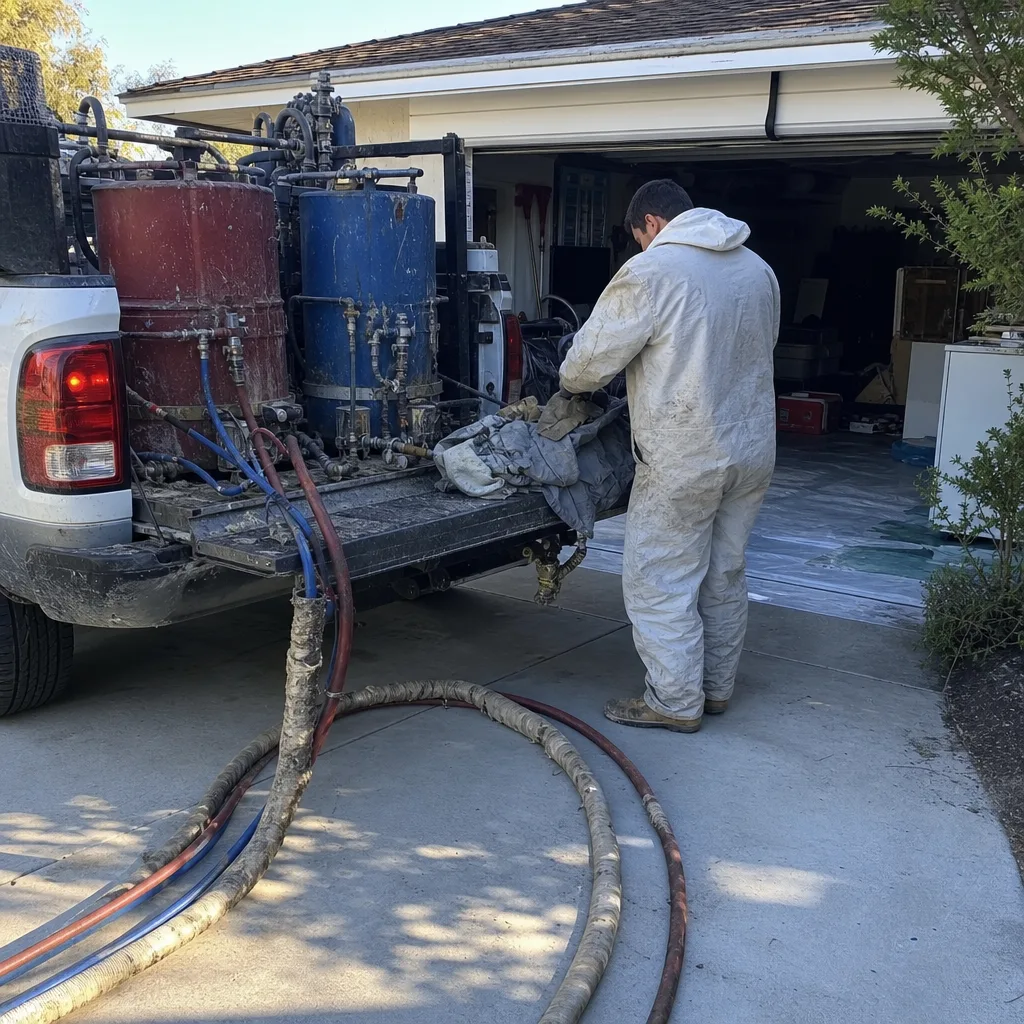
Fast, Reliable Spray Foam Insulation Across Azusa
Spray foam insulation in Azusa runs $2.50 to $6.50 per board foot installed, with most attic jobs landing between $3,500 and $9,000 depending on foam type, square footage, and how tight the access is. We’re Placentia Insulation, and we work in Azusa weekly. If you’re dealing with a 1950s tract home off Foothill Boulevard where the upstairs won’t hold temperature past noon, we know exactly what’s going on in that attic. Call (855) 773-6429 for a free estimate.
Why Placentia Insulation Is Azusa’s Preferred Spray Foam Insulation Company
Most insulation crews treat Azusa like just another stop on the 210 corridor. We don’t. The housing here is specific: wartime and postwar stucco tracts with low-pitch roofs, small attics, and original wiring that needs to be worked around, not buried blindly. Alan Whitcomb built our crews around insulation only. No plumbing side jobs, no roofing add-ons. Every technician on an Azusa job understands that a 1952 attic with 24-inch clearance is a different animal than a 2010 attic with trusses you can stand in. That’s the difference between a foam job that seals tight and one that cracks your ceiling drywall.
The Azusa homeowners we serve keep calling us back because we apply foam the way these low-clearance spaces demand: thin passes, patience, and respect for what’s already in the cavity. Our crews know the tracts off Azusa Avenue, the foothill edge homes near Sierra Madre Avenue, and the infill builds around Citrus College. We respond to Azusa calls same-day when the schedule allows, and most estimates happen within 48 hours of your call.
Closed Cell Spray Foam Insulation in Azusa
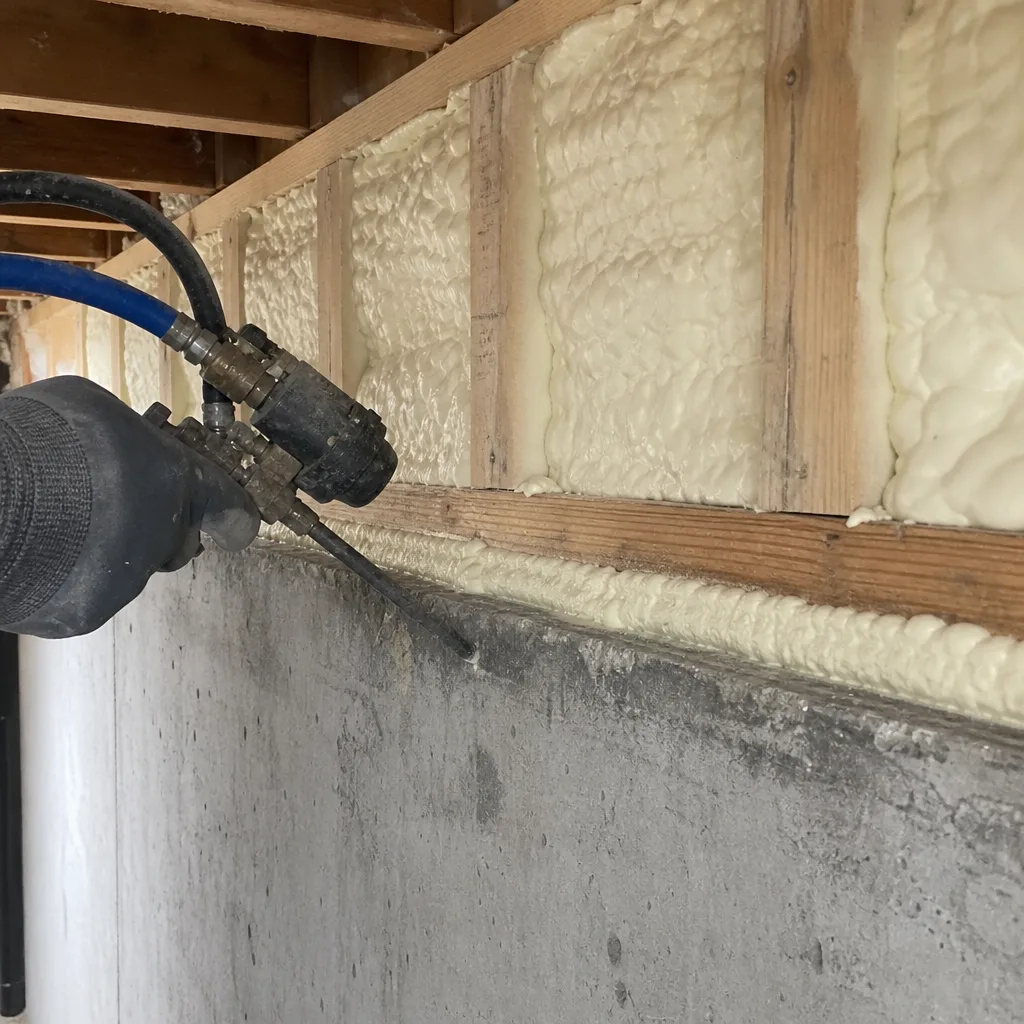
Closed cell spray foam insulation in Azusa is the right call when you need maximum R-value per inch plus a vapor barrier in one pass. In Azusa’s 1940s-60s tract homes where attic clearances run 18 to 24 inches, closed cell gets you R-6.5 to R-7 per inch where fiberglass batts would barely manage R-3.5 after settling. The dense cell structure also stiffens the roof deck, which matters when Santa Ana winds hit the foothills hard. Typical closed cell attic jobs in Azusa run $4.50 to $6.50 per board foot installed, with most homes between 1,000 and 1,800 square feet of roof deck falling in the $6,000 to $11,000 range.
Roof Deck and Rim Joist Applications
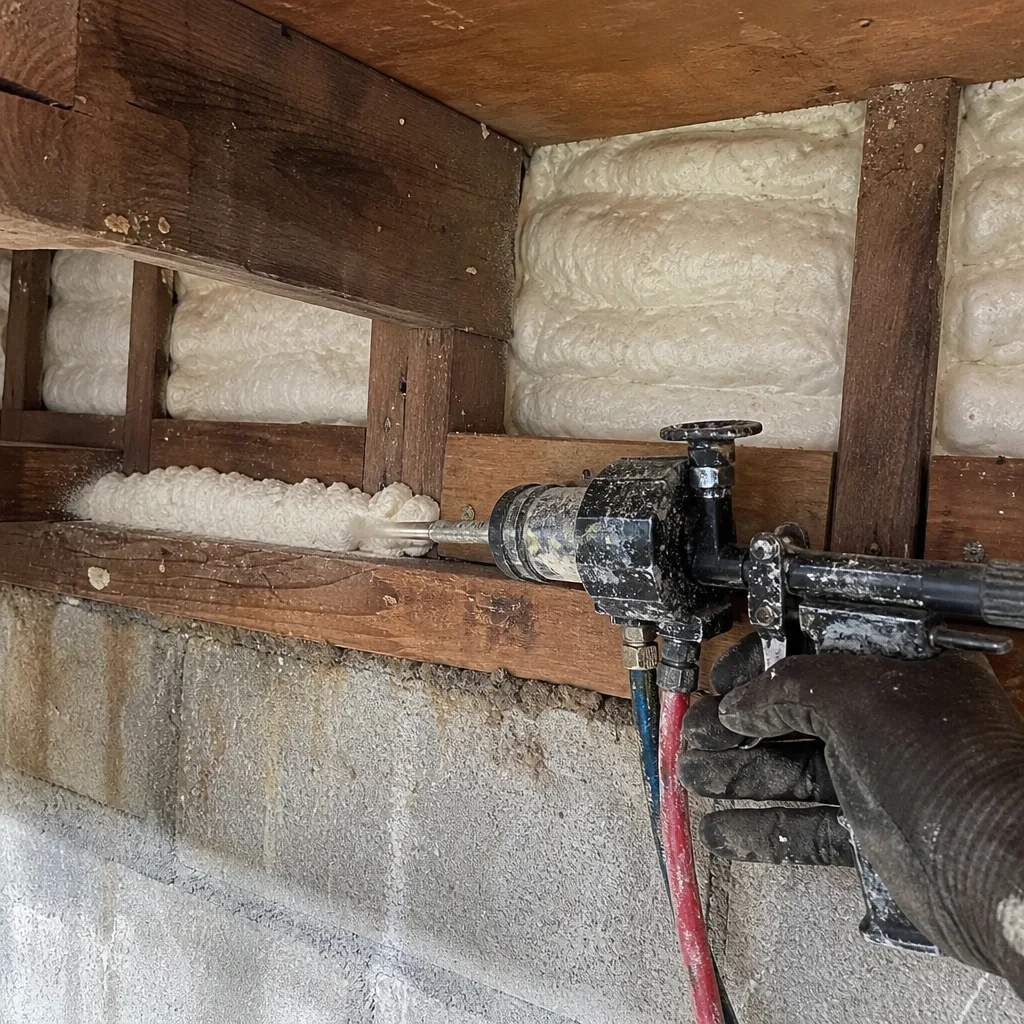
When we foam the underside of a roof deck in Azusa, we’re creating a conditioned attic: the ductwork and air handler stop cooking in 150°F air, and cooling load drops measurably. Rim joist work is smaller but critical in older homes. Those band boards around the perimeter of a crawlspace or basement are where hot, dust-laden air pushes in during Santa Ana events. Closed cell seals them tight and adds structural rigidity to the frame.
When Closed Cell Beats Open Cell Here
If your Azusa home has an unvented attic with the HVAC equipment up there, closed cell is usually the answer. It stops moisture from condensing on the underside of the roof deck during winter nights, and it won’t soak up water if a roof leak ever develops. For homes near the wash areas where storm runoff raises ambient humidity, that moisture resistance matters.
Open Cell Spray Foam in Azusa
Open cell spray foam is the workhorse for Azusa homes where budget matters and the attic doesn’t carry mechanical equipment. At roughly R-3.5 to R-3.8 per inch and $2.50 to $4.00 per board foot installed, it air-seals beautifully and costs meaningfully less than closed cell. In Azusa’s hot, dry climate, open cell’s vapor permeability isn’t a liability in most vented attics; the real win is stopping convection and air leaks through top plates, can lights, and old vent penetrations. A typical 1,200-square-foot attic in Azusa runs $3,500 to $6,500 for open cell.
Interior Wall and Sound Control Benefits
For Azusa homeowners on busy streets like Foothill Boulevard or near the 210, open cell in interior walls cuts road noise noticeably. The foam expands to fill the cavity completely, sealing gaps where sound travels. It’s also the right product when you want to insulate walls without the vapor barrier that could trap moisture in an older stucco assembly.
Tight Cavity Work
Open cell expands gently, which makes it the safer choice in Azusa’s aging wall cavities where drywall is 70 years old and brittle. Closed cell’s expansion pressure can bow or crack old plaster. In cramped attics and odd-shaped bays, open cell’s softer pass is easier to control and less likely to push things apart.
Trusted Brands We Service in Azusa
We install both Spray Foam Insulation chemistries from Icynene and Demilec, two manufacturers that have built their reputations on predictable expansion and long-term performance. For Azusa customers who want mineral wool or blown-in options instead of or alongside spray foam, we also carry Rockwool and CertainTeed product lines. Having eight brands in active inventory means we recommend the material that fits your attic, your walls, and your wiring, not whichever pallet is already on the truck. When you call about a specific manufacturer, we can tell you in plain terms whether it’s right for a low-slope Azusa attic.
Common Spray Foam Insulation Problems We See in Azusa Homes
- Over-expansion cracking ceiling drywall. In Azusa’s tight, low-slope attics, foam applied too thickly in one pass expands with enough force to lift and crack the drywall below. We apply closed cell in two 1-inch passes when clearance is under 24 inches, letting each pass set before the next goes on.
- Santa Ana dust contamination. Wind-driven dust pushes through unsealed soffits and gable vents before and during installation. If that dust settles on the substrate before foam hits it, adhesion fails. We seal and clean first, then foam.
- Knob-and-tube wiring buried in foam. Many Azusa homes built before 1950 still have active knob-and-tube circuits. Foam encasing those wires can trap heat and create a fire hazard. We identify and isolate or re-route those conductors before spraying.
- Compressed original insulation left in place. Original kraft-faced batts or settled rock wool in Azusa attics often sit at R-7 or lower. Spraying foam over it doesn’t fix the problem. We remove or consolidate the old material, air-seal, then spray.
Pricing for Spray Foam Insulation in Azusa, CA
Open cell spray foam in Azusa runs $2.50 to $4.00 per board foot installed. Closed cell runs $4.50 to $6.50. For a typical 1,200 to 1,500 square foot attic, that’s $3,500 to $9,000, with rim joist work usually adding $800 to $1,800 depending on linear footage. What moves the number: attic height and access difficulty, whether old insulation needs removal, whether knob-and-tube wiring needs isolation, and how much prep work the substrate requires. We quote every Azusa job in writing before any work starts. Call (855) 773-6429 and we’ll walk your attic with you, or at least crawl it.
We Also Serve Cities Near Azusa
While this page is built for Azusa homeowners, our crews regularly run jobs in Spray Foam Insulation in Azusa‘s neighboring foothill communities. If you’re in Citrus, Irwindale, Covina, or Glendora, the same crew and pricing structure applies. Most of those cities share Azusa’s postwar housing stock and low-clearance attic conditions, so the approach doesn’t change, just the drive time.
Serving Azusa, CA — Our Local Coverage Area
We’re based in the Azusa area and know this community well. Use the map below to see our service coverage — if you’re nearby, we can almost certainly help.
FAQs About Spray Foam Insulation in Azusa
Yes, but it has to be applied differently than it would be in a modern attic. The low-slope roofs over Azusa’s original tract homes leave clearances so tight that technicians work belly-down on a plywood creeper. Closed cell foam in those conditions gets applied in two thin passes, not one thick one, because over-expansion against old drywall will crack the ceiling below. Call (855) 773-6429 and we’ll tell you whether your specific attic has the clearance for a clean spray job.
Spray foam air-seals the attic, which means it stops the wind-driven dust that pushes through soffits, gable vents, and top plates during Santa Ana events. The key is prep: the substrate has to be clean before foam adheres, so we seal and clear dust first. In Azusa homes with original loose rock wool still in place, we remove or consolidate it before spraying so the dust and old fibers don’t compromise adhesion.
Knob-and-tube wiring cannot be safely buried in spray foam. The foam traps heat around conductors that were designed to cool in open air, and the result is a fire hazard. In Azusa’s pre-1950 homes, we identify those circuits before spraying, isolate them from the foam, and recommend an electrician where replacement is needed. This is not a corner you can cut.
Yes, and it’s the primary reason Azusa homeowners call us. Attic temperatures here climb past 140°F in summer, and an unsealed, under-insulated attic forces your AC to fight a losing battle. Spray foam seals the air leaks and insulates the plane, which cuts cooling load measurably. Most customers report the upstairs rooms finally hold temperature on 100°F-plus days. Call (855) 773-6429 for a free estimate on your specific attic.
Yes. We recently foamed the attic of a 1952 stucco tract home off North Azusa Avenue where the original kraft-faced batts had compressed to R-7. Our tech had to belly-crawl the low-pitch space and apply closed-cell foam in two 1-inch passes to avoid over-expansion, sealing the knob-and-tube wiring penetrations and top plates along the way. The homeowner later reported the upstairs bedroom finally held temperature during a 105°F afternoon. Tight access slows the job down, but it doesn’t stop the job. Call (855) 773-6429 and we’ll assess your attic’s access before quoting anything.
Written by Alan Whitcomb, Owner at Placentia Insulation, serving Azusa with spray foam, attic, and blown-in insulation expertise.