
Fast, Reliable Spray Foam Insulation Across Desert Edge
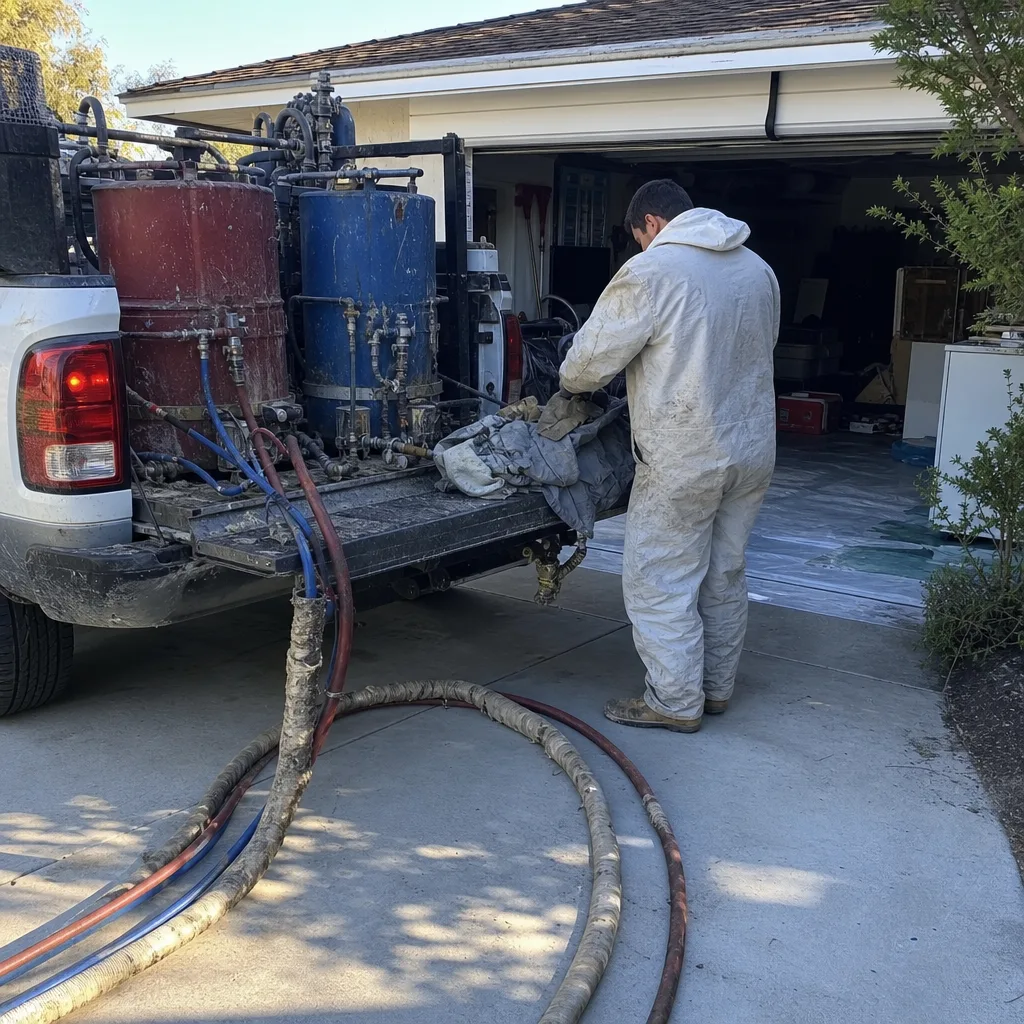
Spray foam insulation in Desert Edge is as much about keeping sand out as heat. Homes along Dillon Road and around Desert Edge Park sit directly in the Coachella Valley’s wind-and-heat corridor, where 115°F summers and blowing sand attack insulation from both outside and in. Our crews run this area weekly, and we typically reach most Desert Edge homes same-day when you call early. Whether you’re off 18th Avenue or tucked north of the railroad tracks near 20th, the same Spray Foam Insulation team that handles the rest of the valley is the one that shows up. If you need a free estimate or have sand blowing through your vents, call (855) 773-6429.
Why Placentia Insulation Is Desert Edge’s Preferred Spray Foam Insulation Company
We’ve spent enough time in Desert Edge attics to know what the wind does to them. After a blow, we find fine sand packed around gable and soffit vents, settled into old fiberglass batts, and coating the underside of roof sheathing. That’s a local condition, not a generic insulation problem, and it changes the order of operations on every job we do here.
What Desert Edge homeowners tell us they value most is that we air-seal before we spray. It’s the step that prevents dust from getting trapped under new foam. It’s also the step that single-brand shops and generalists routinely skip because they’re not looking for it. We are. Our crews know the housing stock here: mostly older single-story stucco built in the 60s and 70s with original batts that have sagged and lost loft, plus newer tile-roofed stucco builds that look sealed but are still under-insulated at the attic deck.
When a homeowner near the 92240 side of Desert Edge calls us, we send an insulation crew, not a handyman who does plumbing on Tuesdays and insulation on Thursdays. Alan Whitcomb built Placentia Insulation to be pure-play for that reason. Every van, every tool, every conversation is about insulation. That’s why we can tell you what’s happening in your attic over the phone before we’ve even seen it.
Closed Cell Spray Foam Insulation in Desert Edge
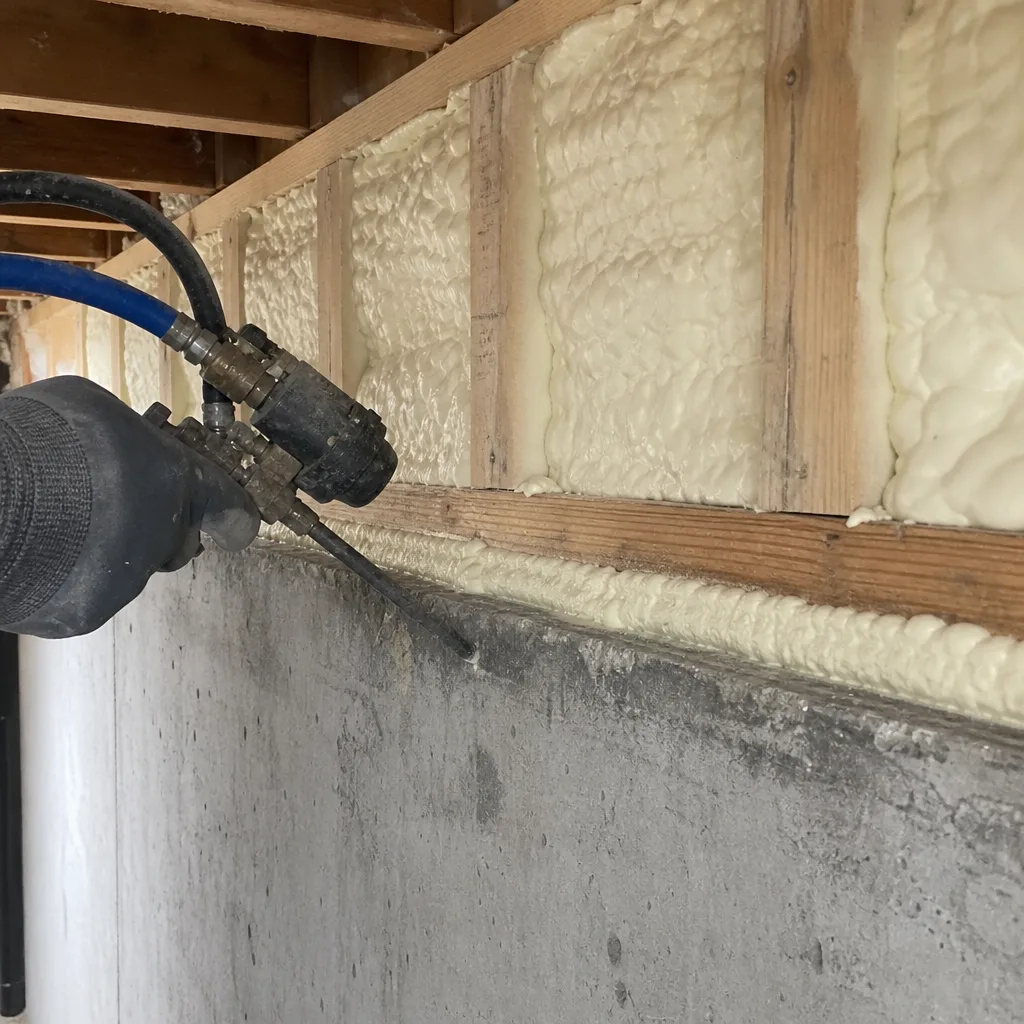
Closed Cell Spray Foam Insulation is the workhorse for Desert Edge because it does two jobs at once: it blocks radiant heat and it blocks wind-driven dust. In this climate, a sun-baked roof deck can hit 140°F, and closed-cell foam applied at the attic deck creates a continuous barrier that stops that heat before it radiates into the living space below. Closed-cell foam in Desert Edge typically runs $2.85 to $4.25 per board foot installed, with a standard attic deck project landing between $4,800 and $9,600 depending on square footage and access.
Radiant Barrier at the Roof Deck
In Desert Edge, the roof is the primary heat source. Closed-cell Icynene or Demilec sprayed directly to the underside of the roof deck turns the attic into conditioned space and cuts radiant gain dramatically. For tile-roofed stucco homes that bake all afternoon, this is the single highest-impact change you can make.
We also see older Desert Edge homes where the attic is vented but the soffits leak sand. Foam at the deck combined with sealing at the soffit line stops both problems at once.
Rim Joist and Band Board Sealing
Desert Edge’s wind doesn’t just hit the attic. It pushes dust through rim joist gaps along the foundation line, especially on older slab-on-grade stucco construction. Closed-cell foam at the rim joist seals those penetrations and adds structural rigidity. Most rim joist jobs in Desert Edge run $1,200 to $2,800 for a standard single-story footprint.
Open Cell Spray Foam in Desert Edge
Open Cell Spray Foam has a different role in Desert Edge homes, and it’s the right choice when you need air sealing and sound control more than a vapor barrier. It expands more than closed-cell, so it fills odd cavities and tight framing bays that closed-cell can’t reach efficiently. Open-cell foam in Desert Edge typically costs $1.80 to $2.95 per board foot installed, with most attic projects landing between $3,200 and $6,800.
Attic Rafter Bays and Band Joists
For vented attics where the priority is slowing air movement, open-cell Demilec or Icynene works well in rafter bays and wall cavities. But in Desert Edge, we’re careful with open-cell in vented attics. Wind-blown sand can clog the open surface if the attic isn’t properly sealed at soffits and gable vents first. We check those seals before every open-cell application here.
Interior Wall Cavities for Sound and Temperature
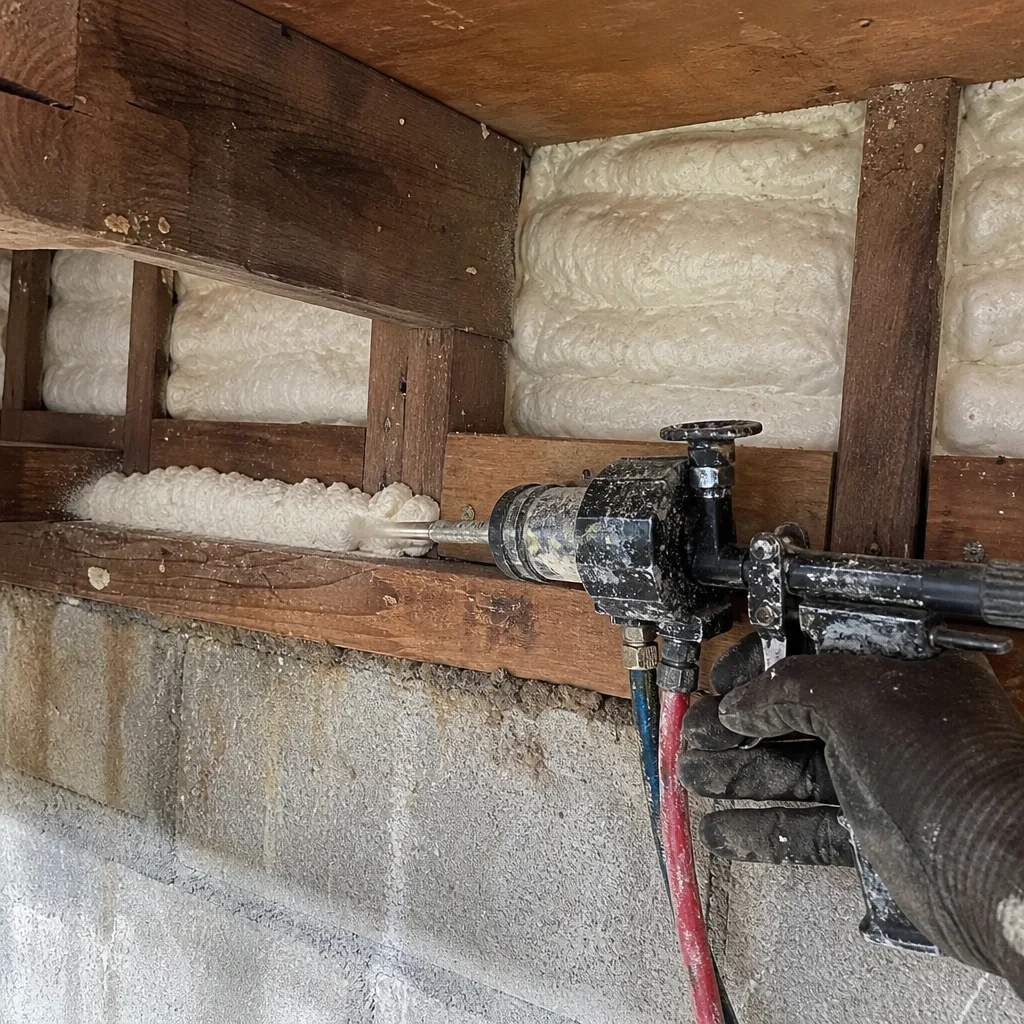
Open-cell foam is also our go-to for interior walls when a Desert Edge homeowner wants to cut noise between rooms or stabilize temperatures in a west-facing bedroom. It fills the bay completely and stays flexible as the building moves through the valley’s extreme thermal cycles.
Trusted Brands We Service in Desert Edge
We carry eight insulation brands in active inventory, which means a Desert Edge job gets the material that fits the problem, not whatever is on the truck. For spray foam specifically, we install both open-cell and closed-cell from Icynene and Demilec. We also stock CertainTeed fiberglass and GreenFiber cellulose for homes where foam isn’t the right call. When you’re off 18th Avenue and need a fast turnaround, having material in stock means we don’t wait on a supplier. Most Desert Edge jobs start within a few days of the estimate, and same-day starts are often available in the off-season.
Common Spray Foam Insulation Problems We See in Desert Edge Homes
- Foam sprayed over sand-fouled sheathing. After a wind event, fine desert sand coats the underside of roof sheathing near gable and soffit vents. Foam sprayed over that dust doesn’t bond properly, and it delaminates within months. We pre-clean and air-seal before we spray.
- Closed-cell applied too thin on sun-baked roof decks. Some installers spray half an inch and call it done. In Desert Edge’s 115°F summers, that thin layer thermally cracks and loses its radiant barrier. We spray to manufacturer spec minimums, typically 2 inches at the attic deck.
- Open-cell foam in vented attics without ignition barriers. Open-cell in a vented attic exposed to exterior air needs proper sealing at soffits, or wind-driven sand fills the foam’s open surface and renders it useless. We verify every vent seal before open-cell goes in.
- Old fiberglass batts that have lost their loft. Desert Edge’s thermal cycling bakes the resins out of fiberglass over decades. Batts sag, compress, and stop insulating. Homeowners near Desert Edge Park often find their attic batts are doing almost nothing. Removing and replacing them with spray foam is a common fix.
Pricing for Spray Foam Insulation in Desert Edge, CA
Spray foam pricing in Desert Edge follows a clear range based on the job type. Closed-cell runs $2.85 to $4.25 per board foot installed; open-cell runs $1.80 to $2.95 per board foot. A typical single-story Desert Edge attic deck sprayed with 2 inches of closed-cell runs $4,800 to $9,600. Rim joist sealing runs $1,200 to $2,800. Garage ceiling spray foam typically runs $1,800 to $3,400. What changes the price is square footage, ceiling height, access, and whether we need to remove old deteriorated batts first. Estimates are free, and we give you a line-item number before any work starts. Call (855) 773-6429 to schedule a walkthrough.
We Also Serve Cities Near Desert Edge
Placentia Insulation covers the full Coachella Valley corridor. If you’re in Desert Edge or nearby Garnet, Desert Hot Springs, Morongo Valley, or Palm Springs, we can reach you quickly. Same routing, same crews, same focus on spray foam done right in a wind-and-heat climate.
Serving Desert Edge, CA — Our Local Coverage Area
We’re based in the Desert Edge area and know this community well. Use the map below to see our service coverage — if you’re nearby, we can almost certainly help.
FAQs About Spray Foam Insulation in Desert Edge
Call within the first week. Sand packs into vent channels and settles into existing insulation quickly, and the longer it sits, the more pre-cleaning your attic needs before foam can bond correctly. In Desert Edge, we often schedule wind-event assessments same-day or next-day. Call (855) 773-6429 and we’ll get eyes on it fast.
Yes, but only if vent seals are checked and fixed before the foam goes in. Spray foam itself creates an air barrier, but if gable and soffit vents are leaking, sand keeps coming through around the foam. Our crews pressure-check every vent penetration before spraying, which is the step that makes the difference. That’s specific to Desert Edge’s wind corridor.
Closed-cell is the better choice for most Desert Edge attics because it doubles as a radiant heat barrier at the roof deck and blocks wind-driven dust. Open-cell has its place in interior walls and certain vented attics, but it needs careful sealing to survive the sand. We’d walk your attic and give you a straight recommendation, not a default answer.
Yes. If foam delaminated because it was sprayed over dust or the installer skipped air-sealing, we cut out the failed sections, clean the substrate, re-seal the vent penetrations, and re-spray to spec. We’ve done this on homes near the 92240 corridor where wind events expose install mistakes fast.
Yes, same-day estimates are available for most Desert Edge addresses, especially if you call before 10 a.m. We route from Placentia but keep a regular schedule through the Coachella Valley. Call (855) 773-6429 and we’ll get you on the calendar.
If you’re tired of dust in the attic and heat that won’t quit, we’re the crew that fixes it. Call (855) 773-6429 for a free estimate, and Alan Whitcomb or one of our insulation techs will walk you through exactly what your Desert Edge home needs.
Written by Alan Whitcomb, Owner at Placentia Insulation, serving Desert Edge and the surrounding Coachella Valley.