
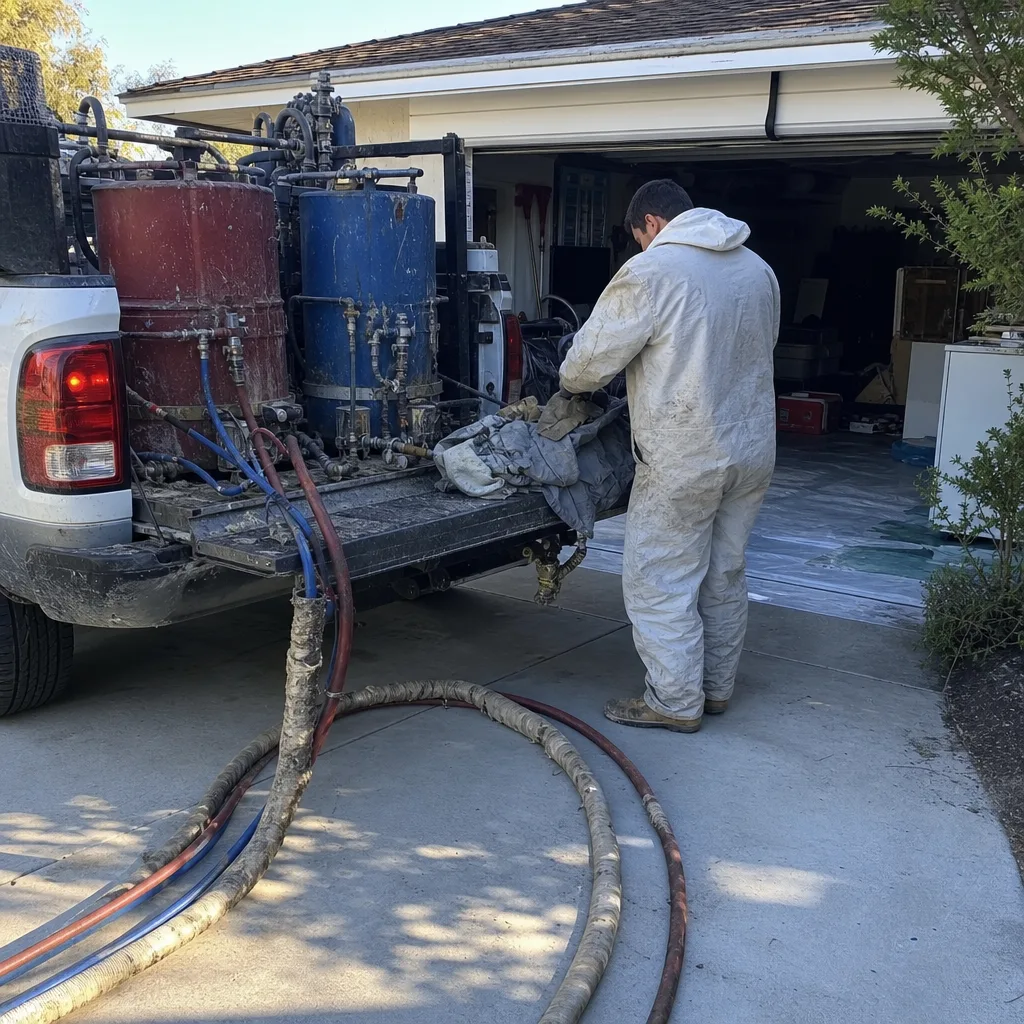
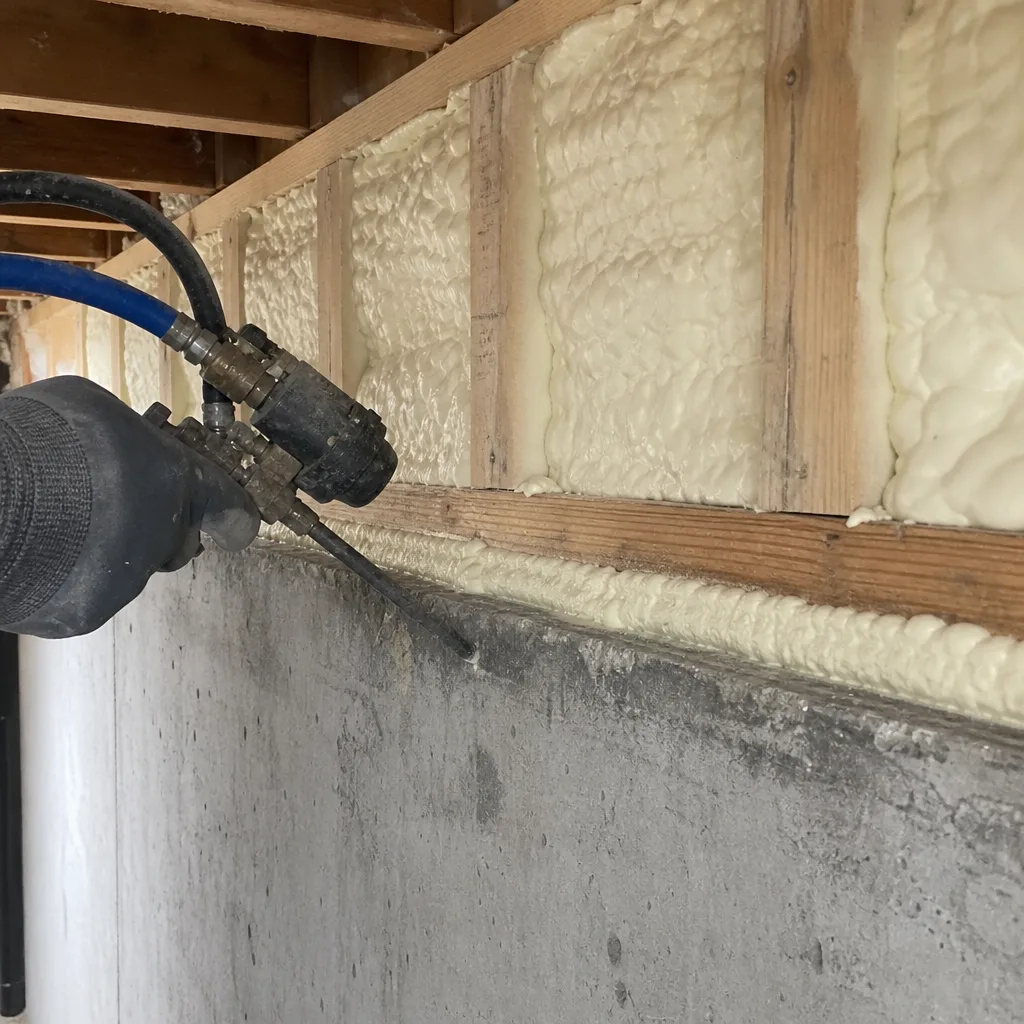
Fast, Reliable Spray Foam Insulation Across Foothill Ranch
Spray foam insulation in Foothill Ranch typically runs $2.50 to $6.50 per square foot installed, with attic roof deck jobs on the 1990s tract homes we see throughout ZIP code 92610 usually landing between $4,000 and $9,500. We’re in Foothill Ranch most weeks, and our crews know the tract layouts off Alton Parkway, Towne Centre Drive, and Portola Parkway well enough to quote accurately without wasting your afternoon. The single biggest factor in Foothill Ranch isn’t the foam chemistry itself, it’s what your builder left in the attic back in the 90s and how the Santa Ana wind corridor off Santiago Canyon has been treating it since. Call (855) 773-6429 and we’ll walk the attic with you, show you exactly what’s happening up there, and give you a number you can plan around.
Key Takeaways
- Foothill Ranch’s 1990s tract build-out means whole neighborhoods hit insulation failure at the same time, and we see the same batt sag and duct collapse house after house.
- Open-cell and closed-cell foam are both on the truck, Icynene and Demilec, so the right chemistry gets matched to your attic geometry and moisture exposure.
- The Santiago Canyon wind corridor pushes hot, dry Santa Ana air and fine dust into unsealed attics, which is an argument for sealing the roof deck assembly, not just adding more batts.
- Free estimates, straightforward square-footage pricing, and no pressure to buy what you don’t need.
Why Placentia Insulation Is Foothill Ranch’s Preferred Spray Foam Insulation Company
Placentia Insulation is an insulation-only contractor, which sounds obvious until you realize most companies sending a truck to Foothill Ranch also do HVAC, roofing, or general contracting. Every crew member we send into Lake Forest and Foothill Ranch attics spends all day, every day, thinking about one trade. That matters when the question is whether your open-cell foam should be 5.5 inches or 7 inches, whether the rim joist cavities need closed-cell instead, or whether the builder’s radiant-barrier sheathing is actually still doing anything. Alan Whitcomb, who runs our crews, can walk a Foothill Ranch attic and tell you within ten minutes what the builder installed, what’s failed, and what it’ll take to fix it right.
What we hear from Foothill Ranch customers after a job, repeatedly, is that the second floor finally holds temperature during the inland summer spike. That’s the real test here, not a spec sheet. Mission Viejo and the coastal towns get an ocean breeze by 4 p.m.; Foothill Ranch doesn’t. It sits at the base of the Santa Ana Mountains and bakes. We’ve foamed enough attic roof decks in this ZIP to know exactly where the heat loads concentrate and where air sealing makes the biggest difference. If you want a crew that knows the difference between a Lake Forest tract attic and a Foothill Ranch tract attic, we’re your shop. Estimates are free, and we answer the phone.
Open Cell Spray Foam in Foothill Ranch
Open cell spray foam is the workhorse retrofit for Foothill Ranch’s 1990s tract attics, and it’s what we recommend for most attic roof deck applications in this ZIP because it seals air movement while allowing the roof assembly to breathe. In Foothill Ranch, where original R-13 and R-19 fiberglass batts have sagged off the ceiling deck and the Santa Ana winds off Santiago Canyon drive dust and ember intrusion into unsealed attic spaces, an open-cell roof deck application locks the assembly up and stops the convective air paths that make upstairs rooms feel like ovens by 3 p.m. Typical open-cell attic roof deck work in Foothill Ranch runs $2.50 to $4.50 per square foot installed, depending on depth and whether we’re also addressing ducting and air sealing.
We spray Icynene open-cell foam for most Foothill Ranch attic jobs because its expansion characteristics suit the wood-frame, stucco, tile-roof tract geometry we see throughout 92610. The foam fills irregular cavities that fiberglass batts never touched, especially around recessed can lights, plumbing penetrations, and the top plates where walls meet the ceiling. Once the roof deck is foamed, the attic becomes conditioned space, which means your HVAC ducts are no longer sitting in a 130-degree oven trying to deliver 55-degree air through collapsed insulation.
Why Builder-Grade Batts Fail in Foothill Ranch Attics
The 1990s tract homes here were built fast, by the Mission Viejo Company, with R-13 batts in walls and R-19 in ceiling cavities. Two decades of gravity, heat cycling, and attic access traffic leave those batts sagging off the ceiling deck, creating air gaps exactly where conditioned air wants to escape. In Foothill Ranch, the problem compounds because the inland foothill microclimate drives attic temperatures 8 to 12 degrees hotter than coastal Orange County, which accelerates batt degradation and makes the convective air movement worse.
We don’t just spray over failed batts. The right sequence is to remove the dead fiberglass, air seal the ceiling plane, then spray the roof deck. That’s the difference between a retrofit that works and one that just buries the problem.
When Closed-Cell Foam Makes More Sense
Closed-cell foam, which we spray through Demilec, runs $4.00 to $6.50 per square foot installed in Foothill Ranch and is the right call for rim joist cavities, garage ceilings under living space, and any area where the Santa Ana wind-driven dust and moisture exposure are aggressive. Closed-cell is denser, acts as a vapor barrier, and adds structural rigidity. In Foothill Ranch’s stucco-on-wood-frame tract homes, rim joist bays are a primary dust and air intrusion point, and closed-cell stops that cold.
Spray Foam Insulation Contractors in Foothill Ranch
Spray foam insulation contractors in Foothill Ranch aren’t all the same, and the difference shows up in whether they ask you about your builder’s duct runs before they quote, or just spray whatever they loaded on the truck. We’re the former. The tract homes along the Portola Parkway and Alton Parkway corridors were all framed within a few years of each other by the same developer, which means we already know your attic geometry, your batt R-value, and where your original duct work has likely separated before we even open the hatch. That lets us quote accurately and install without surprises. Typical full-attic spray foam retrofits in Foothill Ranch, including roof deck, gable ends, and air sealing, run $4,000 to $9,500 depending on square footage and whether it’s open-cell or a hybrid with closed-cell at the rim joists.
One thing Foothill Ranch homeowners should ask any spray foam contractor about is the ductwork. In a 1990s tract build, the supply ducts run through the attic and were insulated with R-4.2 flex or less. After 25-plus years, the outer jacket splits, the inner liner collapses, and that conditioned air leaks out at the trunk and takeoff connections. Foaming the roof deck without addressing the ducts means you’re heating and cooling the dead air above your ceiling. We pull and replace collapsed runs, seal takeoffs with mastic, and then foam the assembly so the ducts are inside conditioned space.
Garage Ceiling Foam for Bonus Room Comfort
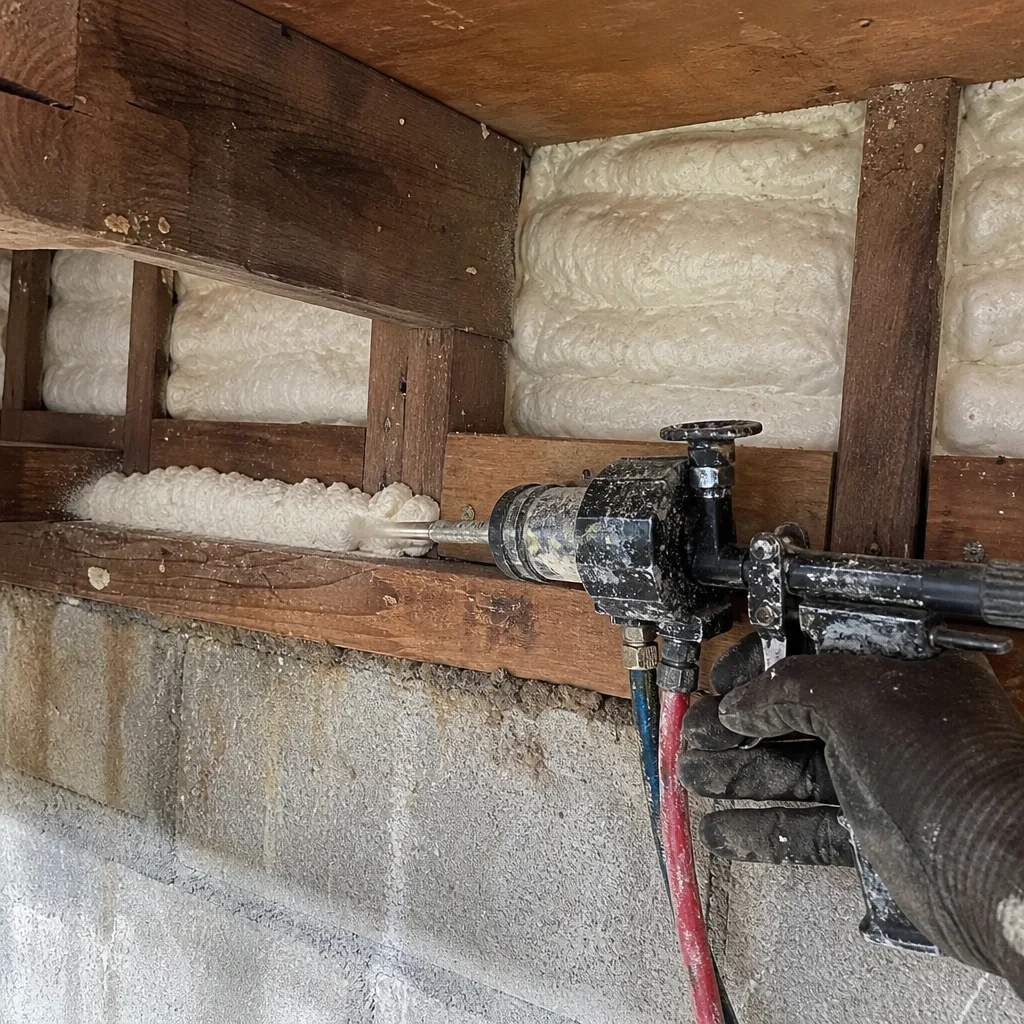
Foothill Ranch townhomes and smaller tract plans often have a bedroom or bonus room above the garage, and that garage ceiling cavity was rarely insulated to any meaningful R-value at original construction. In July, that floor radiates heat upward all day; in January, it leaches heat out. We spray closed-cell foam to the garage ceiling deck, which also quiets the garage door opener noise, a small but real benefit when your home office shares a wall with the garage.
Rim Joist Sealing and Air Barrier Work
Rim joist cavities in Foothill Ranch homes are the single most overlooked air leak. The original construction left fiberglass stuffed or sometimes nothing at all in the rim bays above the foundation walls. We spray closed-cell, typically two inches, into each bay, which stops dust, insects, and outdoor air from entering at the floor level of every room. In the Santa Ana wind corridor off Santiago Canyon, this isn’t a nice-to-have, it’s where a lot of the dust on your baseboards comes from.
Trusted Brands We Service in Foothill Ranch
Our Spray Foam Insulation crews spray Icynene open-cell and Demilec closed-cell, two of the most recognized names in foam chemistry. We stock both product lines for Foothill Ranch jobs, which means no waiting on a distributor run from Anaheim when the project’s already underway and the final foam set is short. For Foothill Ranch homeowners who want to compare spray foam against mineral wool or cellulose for specific applications, we also carry Rockwool and CertainTeed, so the material recommendation is based on what your attic actually needs, not what we’re trying to move off the shelf this month. Most insulation contractors carry one or two product lines. We carry eight, so your Foothill Ranch home gets what the job calls for.
Common Spray Foam Insulation Problems We See in Foothill Ranch Homes
- Sagging builder-grade batts on the attic ceiling deck. The original R-13 and R-19 fiberglass in 1990s tract attics has lost its loft and pulled away from the drywall, leaving convective gaps. The inland heat and Santa Ana wind pressure make these gaps work against you all summer.
- Collapsed or separated attic duct runs. The flex ducts installed by the original builder were undersized and under-insulated. After 25 years, the jacket splits and the inner liner collapses, so conditioned air dumps into a 130-degree attic instead of your bedrooms.
- Dust and ember intrusion through unsealed penetrations. The Santiago Canyon wind corridor carries fine dust and, during wind events, ember potential that finds every unsealed can light, top plate, and rim joist cavity. Spray foam is the only air seal material that fills those irregular gaps completely.
- Radiant-barrier sheathing that loses effectiveness. The 1990s foil-faced sheathing installed on some Foothill Ranch tracts has degraded, torn at fasteners, or been rendered ineffective by dust accumulation. Sealing the roof deck from the interior side with foam gives you the thermal break the original radiant barrier was supposed to provide.
Pricing for Spray Foam Insulation in Foothill Ranch, CA
Here’s what we tell Foothill Ranch homeowners straight up: open-cell attic roof deck applications run $2.50 to $4.50 per square foot installed; closed-cell runs $4.00 to $6.50 per square foot. A typical 1,200-square-foot attic in a 1990s tract home off Alton Parkway comes in between $4,500 and $7,800 for open-cell on the roof deck, including air sealing and baffles where needed. Closed-cell rim joist work on the same house adds $1,200 to $2,000 depending on perimeter length. A garage ceiling under living space is usually $1,800 to $3,400. The spread comes from access, existing insulation removal, and whether we’re pulling and replacing collapsed duct runs at the same time, which most Foothill Ranch homes need. We quote free, the number’s the number, and we walk you through every line item before any foam is sprayed.
We Also Serve Cities Near Foothill Ranch
We run crews into Foothill Ranch from our Placentia base most days of the week, and we cover the surrounding foothill and canyon communities the same way. That includes Foothill Ranch neighborhoods along Portola Parkway and Glenn Ranch Road, plus Portola Hills, Lake Forest, Mission Viejo, and Trabuco Canyon. If you’re up Santiago Canyon or off El Toro Road and you’re tired of baking upstairs, call (855) 773-6429 and we’ll schedule a walkthrough.
Serving Foothill Ranch, CA — Our Local Coverage Area
We’re based in the Foothill Ranch area and know this community well. Use the map below to see our service coverage — if you’re nearby, we can almost certainly help.
FAQs About Spray Foam Insulation in Foothill Ranch
Because Foothill Ranch is a master-planned community built out almost entirely in the 1990s by the Mission Viejo Company, every home in ZIP code 92610 got the same builder-grade R-13 and R-19 fiberglass batts, the same undersized flex ducting, and the same stucco-on-wood-frame assembly. Those materials all hit their serviceable end around the same 25-to-30-year mark. We see the same batt sag, duct collapse, and unsealed top plates house after house on the same streets. It’s not that your specific house is unlucky; the whole tract is aging on the same schedule. Call (855) 773-6429 and we’ll confirm what’s happening in your attic.
Yes, and it changes both the application and the priority. Foothill Ranch summer highs run 8 to 12 degrees hotter than coastal Orange County, and the Santa Ana wind events push hot, dry air down Santiago Canyon directly into this ZIP. That means attic temperatures spike harder and wind-driven dust penetrates unsealed cavities more aggressively. We adjust by ensuring the roof deck assembly is fully sealed, typically with open-cell foam at full depth, and we pay extra attention to rim joists and any penetration that faces the canyon side. Coastal installers who don’t work this microclimate sometimes under-spec the air sealing, and the homeowner feels it by August. Call us for a quote that accounts for where your house actually sits.
Spray foam doesn’t repair collapsed duct runs, but it works with repaired ducting to make the system perform. The right sequence in a Foothill Ranch tract home is to pull the failed flex duct, replace collapsed trunk sections, seal takeoffs with mastic, then spray the attic roof deck so the ducts live inside conditioned space rather than a 130-degree attic. That’s the only way you’re getting the full benefit from your AC. We handle the duct replacement and the foam, so there’s no handoff between contractors. Call (855) 773-6429 for a walkthrough and line-by-line estimate.
The batts need to come out, at least from the ceiling deck, before open-cell foam goes on the roof deck. Leaving failed fiberglass in place doesn’t buy you anything, and it can trap moisture and dust against the drywall. In Foothill Ranch’s 1990s tract attics, the original batts are almost always sagging, compacted, or animal-soiled anyway. We remove them, air seal the ceiling plane penetrations, and then spray the roof deck. The attic becomes conditioned space and the old batts are gone. It’s a cleaner assembly and it performs like a different house.
If your Foothill Ranch home is within any builder structural warranty window, the builder isn’t going to flag insulation failure for you. The R-13 and R-19 batts the Mission Viejo Company installed were code minimum at the time, and they were never designed to handle the inland foothill heat load this microclimate actually delivers. Waiting until the warranty expires doesn’t protect you from anything, because insulation performance was never covered meaningfully in the first place. The smart move is to have us inspect the attic now, see where the air and heat losses are, and decide if a spray foam retrofit is worth the investment while you can still plan around it. Estimates are free and the inspection takes an hour.
Written by Alan Whitcomb, owner at Placentia Insulation, serving Foothill Ranch and the surrounding foothill communities.