
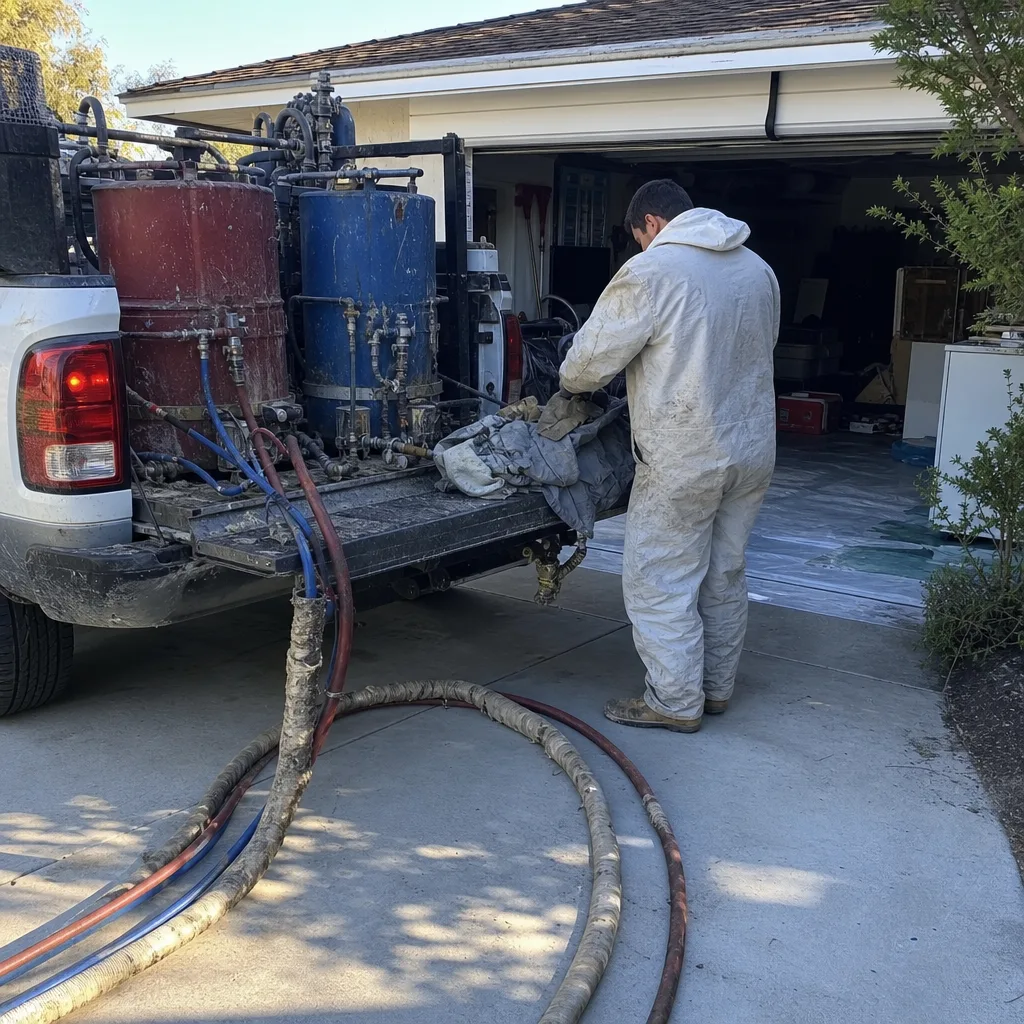
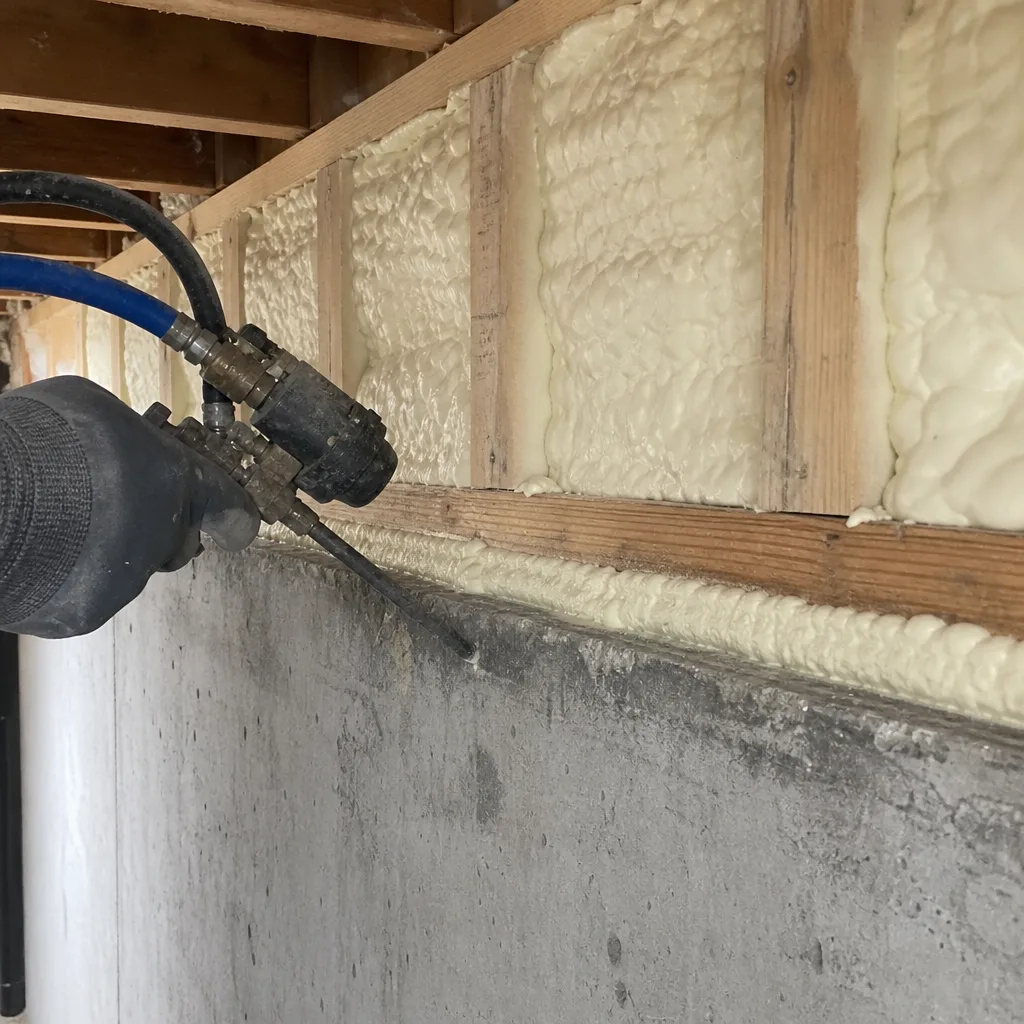
Fast, Reliable Spray Foam Insulation Across Grand Terrace
Spray foam insulation in Grand Terrace typically runs $3.50 – $7.50 per square foot depending on whether you need open-cell or closed-cell, and most attic or garage jobs are completed in a single day. We work throughout the 92313 zip code, from the hillside streets off Blue Mountain Drive to the cul-de-sac neighborhoods near the 215 corridor. Our crew knows this city’s particular pain: shallow attics, west-facing walls that soak up afternoon sun, and attic temperatures that regularly climb past 140°F in July and August. Call Placentia Insulation at (855) 773-6429 for a free estimate, and we’ll send an insulation specialist who actually understands Grand Terrace’s specific conditions.
Why Placentia Insulation Is Grand Terrace’s Preferred Spray Foam Insulation Company
Most insulation contractors in the Inland Empire carry one or two product lines and apply them to every job. We carry eight brands, including Icynene and Demilec spray foam, so your Grand Terrace home gets the right foam chemistry for its specific problem, not whatever happens to be on the truck that week. Alan Whitcomb built Placentia Insulation around a simple principle: match the material to the job. For Grand Terrace’s steep hillside lots and mid-century homes, that means closed-cell foam where moisture and structural strength matter, open-cell where sound dampening and cost-effectiveness are priorities, and air sealing work that addresses the real culprit behind most high energy bills.
Our crews are insulation specialists, full stop. We’re not roofing contractors who dabble in foam on the side, and we’re not generalists squeezing insulation between two other trades. Every tool, every training session, and every conversation we have is about one trade. That focus shows in the results: a properly sealed attic along the Blue Mountain slopes will perform decades beyond a quick foam job from a multi-trade crew. Grand Terrace homeowners call us because they’ve already tried the generalist route and still feel the heat radiating through their ceilings at 6 p.m.
We know this city block by block. We’ve worked the steep lots off Blue Mountain Drive, the mid-century ranch homes near the 215, and the newer townhome developments closer to Colton’s edge. Our response time to Grand Terrace is typically same-week, and same-day for emergency situations where foam failure left a home exposed to extreme heat gain. Call (855) 773-6429 and you’ll reach someone who knows exactly where Grand Terrace is, what its homes are built like, and what they need.
Crawl Space Spray Foam Insulation in Grand Terrace
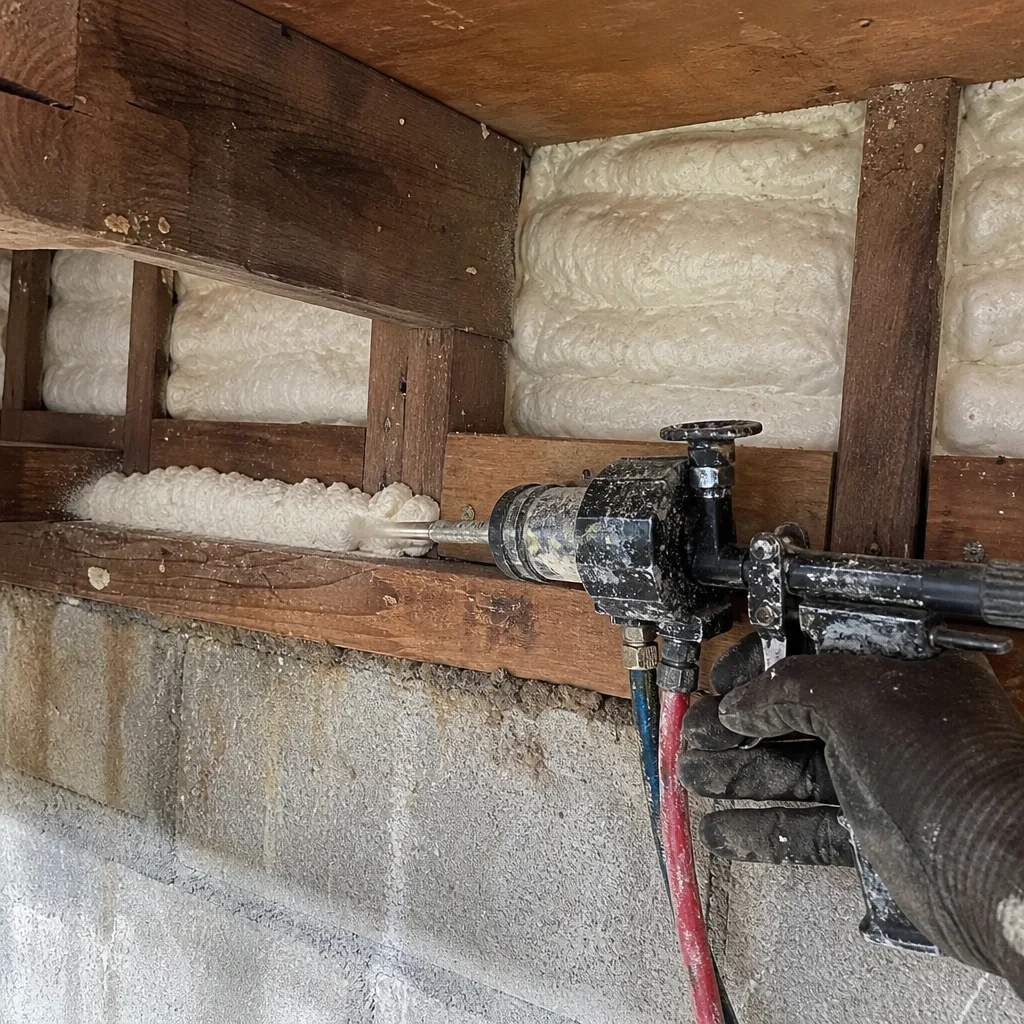
Crawl Space Spray Foam Insulation in Grand Terrace homes usually involves sealing the floor deck from below with closed-cell or open-cell foam, and in this city’s slab-foundation housing stock, the work often shifts to perimeter sealing and ventilation reassessment rather than traditional under-floor spraying. The semi-arid climate keeps crawl spaces drier than coastal cities by comparison, but cool winter nights still create condensation against uninsulated floor decks, and that moisture travels upward into living spaces. A typical crawl space sealing project in Grand Terrace runs $2,800 – $6,500 depending on square footage and access.
Slab Foundation Perimeter Sealing
Homes on slab foundations, which make up much of Grand Terrace’s mid-century and 1980s housing stock, don’t have crawl spaces in the traditional sense. What they do have is the gap where the slab meets the exterior wall, and that gap is a highway for air infiltration. We seal those perimeter joints with closed-cell spray foam, cutting drafts and preventing the summer heat from sliding straight through the building envelope. On hillside lots where the slab steps down with the grade, this work is essential.
Elevated Decks on Hillside Lots
Some Grand Terrace homes built into the hillside do have raised floor decks on one side. These get the full crawl space treatment: closed-cell foam sprayed to the underside of the subfloor, sealing all penetrations, and creating a thermal break between the ground and the living space. The steep grade means access is often through a narrow side hatch, which is exactly the kind of tight space our crews handle regularly in this city.
Garage Spray Foam Insulation in Grand Terrace
Garage Spray Foam Insulation in Grand Terrace addresses a specific local problem: garages facing west or built into the hillside absorb intense afternoon heat, and with attic temperatures above 140°F in summer, the garage ceiling becomes a radiant heat panel that bakes everything beneath it. We spray the garage ceiling and shared wall with the home using open-cell Icynene or closed-cell Demilec foam, sealing the gap between the garage and the conditioned house. A typical attached two-car garage in Grand Terrace runs $1,800 – $3,400 for ceiling and shared wall spray foam.
Shared Wall and Ceiling Thermal Break
The shared wall between your garage and living room is often the leakiest boundary in a Grand Terrace home. Builders in the 1960s through 1980s rarely insulated this wall well, and the result is a garage that functions as a heat reservoir pushing warmth into your living space all evening. Spray foam on that shared wall, combined with the garage ceiling, drops adjacent room temperatures noticeably. We recommend open-cell foam here for sound dampening alongside thermal performance.
Heat Gain Reduction for West-Facing Garages
Garages on the west side of a Grand Terrace lot catch the full force of the afternoon sun, especially in July and August when outdoor temperatures sit at 95 – 105°F. Without insulation, the garage ceiling radiates heat downward for hours after sunset. Closed-cell foam on the ceiling and the inside of the west-facing wall creates a thermal barrier that keeps stored items cooler and stops heat migration into the main house. We’ve measured interior garage temperature drops of 15 – 20°F after a single-day installation.
Trusted Brands We Service in Grand Terrace
We stock spray foam products from Icynene and Demilec specifically for Grand Terrace’s climate, because these two brands offer formulations designed to handle high-temperature applications without excessive off-gassing. Demilec’s closed-cell foam performs well in the 140°F+ attic conditions we see on the Blue Mountain slopes, while Icynene’s open-cell product handles tight spaces and sound dampening effectively. Alongside these spray foam lines, we carry CertainTeed and GreenFiber products for whole-home insulation work. Having this range in inventory means we don’t stretch one product into applications it wasn’t designed for, a problem we see often from single-brand shops working in Grand Terrace. If a home needs attic insulation plus spray foam plus blown-in work, we handle it all without swapping vendors.
Common Spray Foam Insulation Problems We See in Grand Terrace Homes
- Foam shrinkage and seam separation from extreme attic heat. In homes along the Blue Mountain and I-215 slopes, attic deck temperatures routinely exceed 140°F during summer, and standard foam formulations can shrink or pull away at the seams. We specify high-temperature-tolerant Demilec closed-cell foam for exactly this condition, because a seam gap of even a quarter inch is a thermal highway.
- Off-gassing and lingering odors in poor ventilation situations. Grand Terrace’s hot, dry summers accelerate the off-gassing phase of spray foam, and without proper ventilation during curing, low-quality foam can leave a chemical odor that persists for weeks. We use low-VOC products and ventilate the attic or garage properly during the cure window.
- Incomplete coverage in shallow attics with complex rooflines. Hillside homes in Grand Terrace often have tiny attic hatches and rooflines that break in multiple directions. Fast crews working a production schedule will skip the hard-to-reach corners, leaving unsealed gaps that leak heat through west-facing walls. Our team accounts for these access challenges from the start, not when the invoice is due.
- Collapsed existing insulation that defeats new foam. Fiberglass batts installed in the 1970s and 1980s have often compressed and collapsed under decades of Grand Terrace heat, and spraying foam over them without addressing the existing material simply buries the problem. We remove or properly address the failed insulation first, as we did on a steep lot off Blue Mountain Drive where old batts had collapsed under years of 140°F+ heat.
Pricing for Spray Foam Insulation in Grand Terrace, CA
Spray foam insulation pricing in Grand Terrace breaks down by application type. Open-cell Icynene foam runs $3.50 – $5.00 per square foot. Closed-cell Demilec foam runs $5.50 – $7.50 per square foot. A full attic coverage on a 1,500 square foot home typically lands between $5,200 and $9,800. Garage ceiling and shared wall work on an attached two-car garage runs $1,800 – $3,400. Crawl space perimeter sealing starts around $2,800. Several factors shift these numbers: attic access (tiny closet hatches on hillside lots slow us down), existing insulation that needs removal, and roofline complexity. Every estimate is free, and we provide a written line-item quote before any work starts. Call (855) 773-6429 for an exact price on your Grand Terrace home.
We Also Serve Cities Near Grand Terrace
Beyond our Grand Terrace work, Placentia Insulation regularly serves homeowners in Highgrove, Colton, Loma Linda, and Rubidoux. The same crews, the same brand portfolio, and the same insulation-only focus apply across the Inland Empire. If you’re in a neighboring city and want to know more about our Spray Foam Insulation services, call (855) 773-6429 and we’ll schedule a time to walk your property.
Serving Grand Terrace, CA — Our Local Coverage Area
We’re based in the Grand Terrace area and know this community well. Use the map below to see our service coverage — if you’re nearby, we can almost certainly help.
FAQs About Spray Foam Insulation in Grand Terrace
Yes, spray foam insulation works exceptionally well in Grand Terrace’s extreme summer heat, provided the right formulation is selected. Closed-cell Demilec foam handles attic temperatures above 140°F without shrinking or delaminating at the seams, which is critical on the Blue Mountain and I-215 slopes where solar loading is intense. Standard low-cost foam formulations can fail in these conditions, so we specify high-temperature-tolerant products for every Grand Terrace job. Call (855) 773-6429 to discuss the right foam chemistry for your specific roofline and sun exposure.
Grand Terrace sits far enough inland that direct salt air isn’t the primary concern for garage foam, but the city’s semi-arid climate and extreme temperature swings do create condensation cycles that punish cheap spray foam applications on garage ceilings and shared walls. Poorly installed or low-quality foam absorbs moisture during cool winter nights, degrades under summer heat, and can fail at the seams within a few years. We use closed-cell foam on garage surfaces where moisture resistance and structural integrity matter, and we check the condition of garage hardware like springs and tracks during installation, since we’ve seen condensation from unsealed attics rust those components in this climate.
Yes, spray foam can be applied in shallow attics, and it’s actually the preferred method for Grand Terrace hillside homes where rooflines are complex and access hatches are often tiny closet doors. Foam application through small hatches requires specialized equipment and patience, but we’ve done it many times in this city. On a steep lot off Blue Mountain Drive, we sprayed Icynene foam into a shallow attic accessed through a tiny closet hatch, but first had to address the existing fiberglass batts that had collapsed under years of 140°F+ heat. Using Demilec spray foam, we sealed the complex roofline and west-facing wall, lowering attic temps by over 30°F and stopping the condensation that had been rusting the garage door springs. This is what proper insulation work looks like in Grand Terrace.
For Grand Terrace’s slab-foundation homes, closed-cell Demilec foam is the best option for perimeter sealing and any elevated deck applications, because it provides both air sealing and a vapor barrier in a single pass. For the limited number of hillside homes with traditional or partial crawl spaces, closed-cell foam on the underside of the subfloor provides the thermal break and moisture resistance this climate demands. Open-cell foam in a crawl space application is generally a mistake here, since it can absorb moisture under the right conditions.
You can typically re-enter and use your garage 2 – 4 hours after spray foam application in Grand Terrace, though we recommend a full 24-hour cure window before storing heat-sensitive items or spending extended time in the space. Summer temperatures in this city actually accelerate the cure process, so jobs during June through September cure faster than winter work. We’ll give you a specific re-entry timeline at the time of installation based on the foam type and ventilation conditions in your specific garage.
If your Grand Terrace home is fighting the heat, losing cool air, or dealing with a garage that stays unreasonably warm, call Placentia Insulation at (855) 773-6429. We’ll send a specialist who knows this city, understands its housing stock, and will recommend the right insulation solution for your specific home, not just the product that’s easiest to install.
Written by Alan Whitcomb, Owner at Placentia Insulation, serving Grand Terrace and the Inland Empire with eight brands and three insulation methods.