
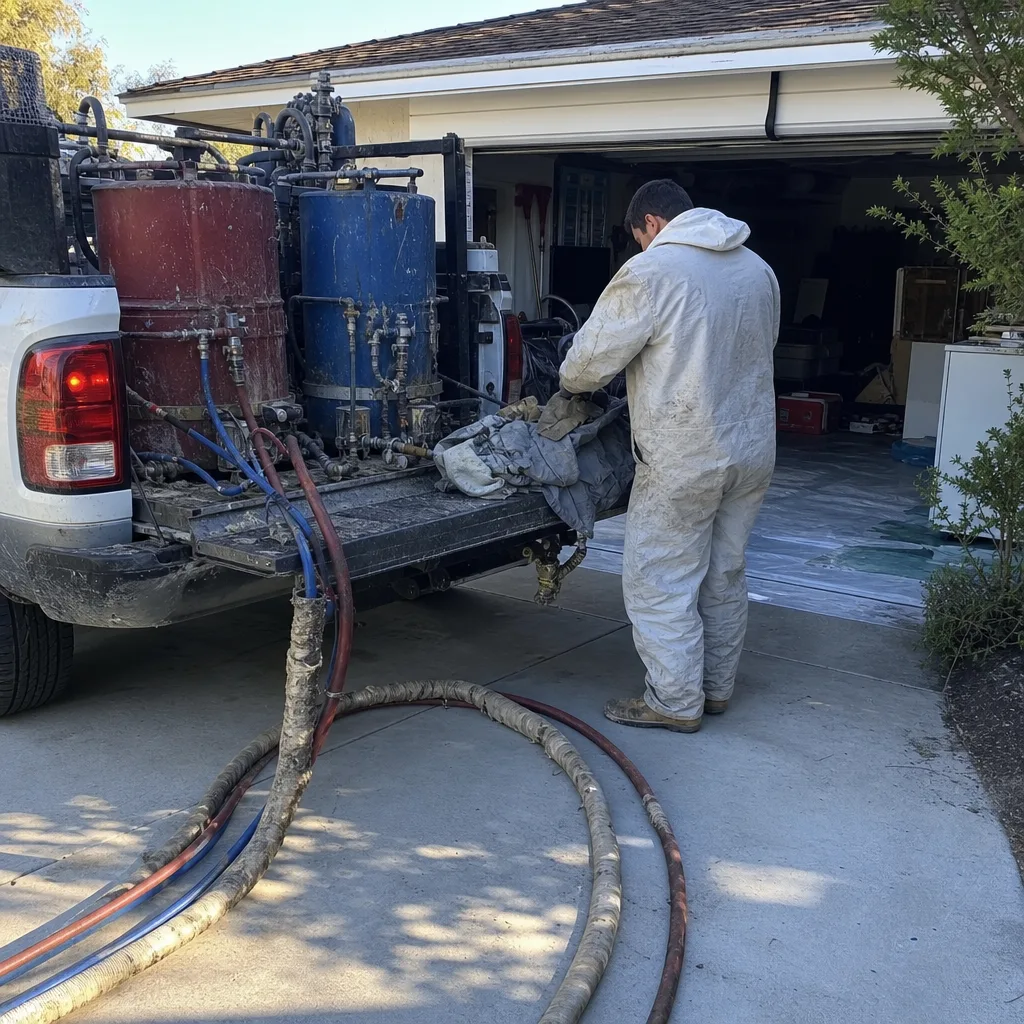
Fast, Reliable Spray Foam Insulation Across Lakeland Village
Spray foam insulation in Lakeland Village typically runs $2.50 to $6.50 per square foot installed, with rim joist work on a lake cottage usually landing between $1,200 and $2,800 total. Most jobs in the 92530 ZIP take one to two days once we’re on site, and we schedule Lakeland Village calls within a few business days year-round. If you’re dealing with a damp crawl space off the lake edge or a sun-baked west-facing attic up in the foothills, we can assess it, quote it, and get it sealed. Call (855) 773-6429 and we’ll line up a free estimate.
Lakeland Village is not Lake Elsinore proper. It’s Riverside County unincorporated land strung along the west shore, and that changes how insulation gets done. Permits route through the county. Housing stock runs from 1950s lake cottages to manufactured homes to owner-built hillside custom houses. There is no master-planned tract here, which means no two spray foam jobs look the same. We know that going in.
Why Placentia Insulation Is Lakeland Village’s Preferred Spray Foam Insulation Company
We’re a dedicated insulation contractor, not a generalist. Alan Whitcomb built Placentia Insulation around a single trade: insulation, done correctly, in whatever structure the homeowner actually has. That matters in Lakeland Village, where the house on the next street over might be a 1960s cottage with a crawl space while yours is a hillside custom with an unpermitted addition. Most insulation companies carry one or two product lines and make your house fit their inventory. We carry eight brands – including Icynene, Demilec, and Rockwool – so the material gets matched to the job, not the other way around.
Our crews have worked lake-edge streets, hillside lots above Grand Avenue, and manufactured home parks throughout 92530. We understand what Riverside County wants on a permit application for spray foam, and we know which foam chemistry belongs in a damp rim joist versus a hot attic. Homeowners here don’t call us because the quote was cheapest. They call because the first company quoted batt insulation where foam was clearly the answer, or because a handyman “sealed” an addition and the room still sweats. We fix that.
Our Spray Foam Insulation team works exclusively in this trade. Every crew member, every tool on the truck, every conversation with our office: it’s all insulation. That focus is the only reason we can stock open-cell and closed-cell foam from two different manufacturers and switch between them based on what the substrate needs.
Spray Foam Wall Insulation in Lakeland Village
Spray Foam Wall Insulation in Lakeland Village means something different than it does in a newer housing tract. The walls here weren’t built to modern cavity standards. A 1960s lake cottage off the west shore might have 2×4 framing with no sheathing and a half-inch of fiberglass that’s been matted flat for 40 years. An owner-built addition on a hillside home might have irregular stud spacing, no top plate sealing, and gaps where the framing meets the roofline. Foam has to account for those quirks. It’s not a spray-and-go job. It’s a prep-the-cavity, seal-the-bypasses, then-apply job.
Wall foam in Lakeland Village generally runs $3.00 to $6.50 per square foot depending on open-cell versus closed-cell and whether we’re working an accessible stud bay or a finished wall that needs injection. Open-cell Icynene makes sense for interior wall cavities where you want air sealing and sound dampening without the rigidity. Closed-cell Demilec belongs on exterior wall assemblies and anywhere moisture intrusion is a real concern, which describes a lot of lake-edge construction.
Open-cell for interior walls and sound
Lakeland Village sits close enough to the lake that road noise from Grand Avenue and boat traffic carries. Open-cell spray foam fills the cavity fully, cutting air movement and dropping sound transmission noticeably. We’ve had customers on the lower lake-edge streets tell us the difference is audible the first night after install. For bedroom walls, media rooms, or shared walls in duplexes, it’s the right call.
Closed-cell where moisture is present
Any wall that has seen lakeside humidity, past flooding, or condensation needs closed-cell. It acts as a vapor barrier and adds structural rigidity, which matters on older framing. If you have a west-facing wall that bakes every afternoon and a crawl space that never fully dries, closed-cell Demilec on that wall assembly is the only product we’d spec.
Rim Joist Spray Foam in Lakeland Village
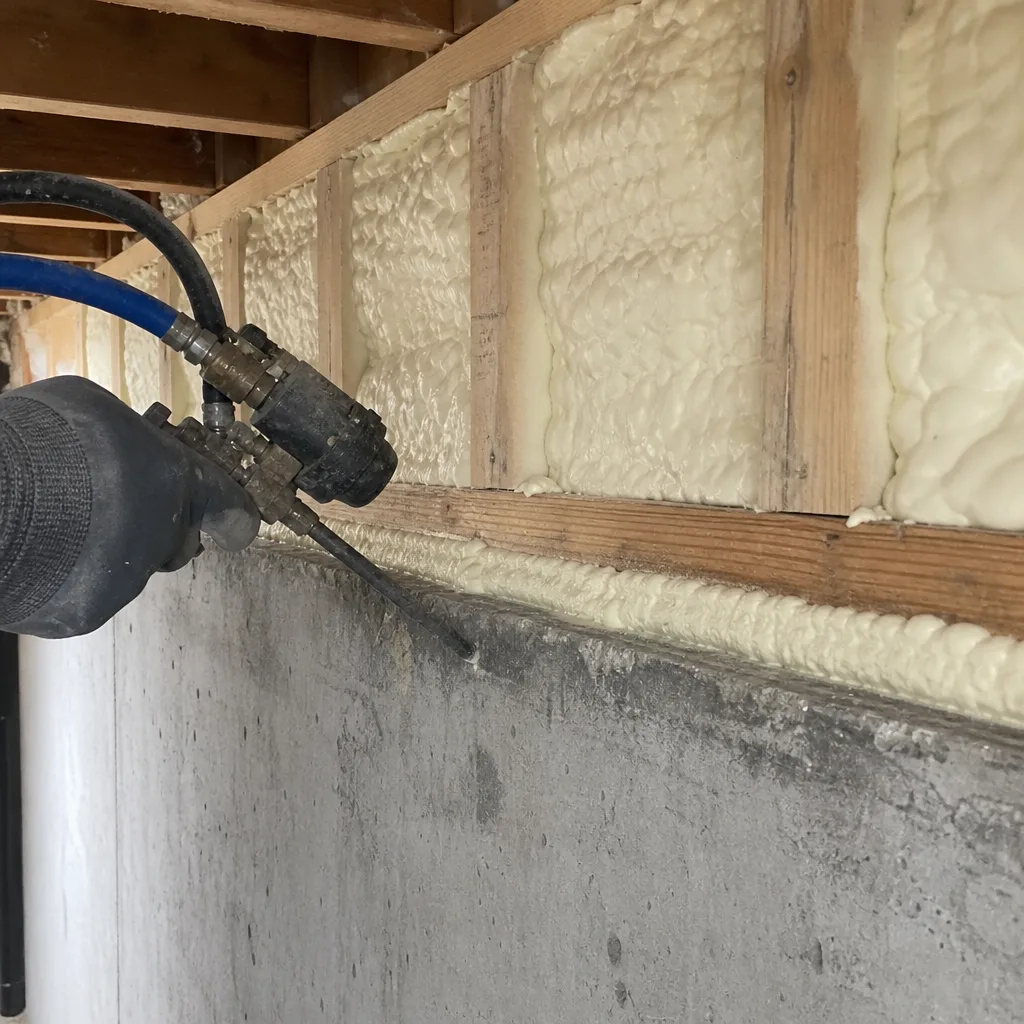
Rim Joist Spray Foam in Lakeland Village is the highest-value air sealing upgrade for older lake cottages and manufactured homes. The rim joist is where your floor framing meets the foundation, and on a 1950s or 60s build it’s typically a bare band of wood with fiberglass stuffed in, if anything at all. Lake air moves through that gap. In the summer, hot outside air pushes in. In the winter, heated air leaks out. Crawl space humidity follows, and so do the musty smells that rise into the living space.
Rim joist work in 92530 usually runs $1,200 to $2,800 for a typical cottage footprint, with larger hillside homes running higher based on linear footage. We use closed-cell Icynene or Demilec for this application. Open-cell doesn’t belong at the rim joist; it’s too permeable for a damp lake-edge environment. The foam has to go on a dry, clean substrate, so if your crawl space has standing water or rotten band boards, that gets addressed first.
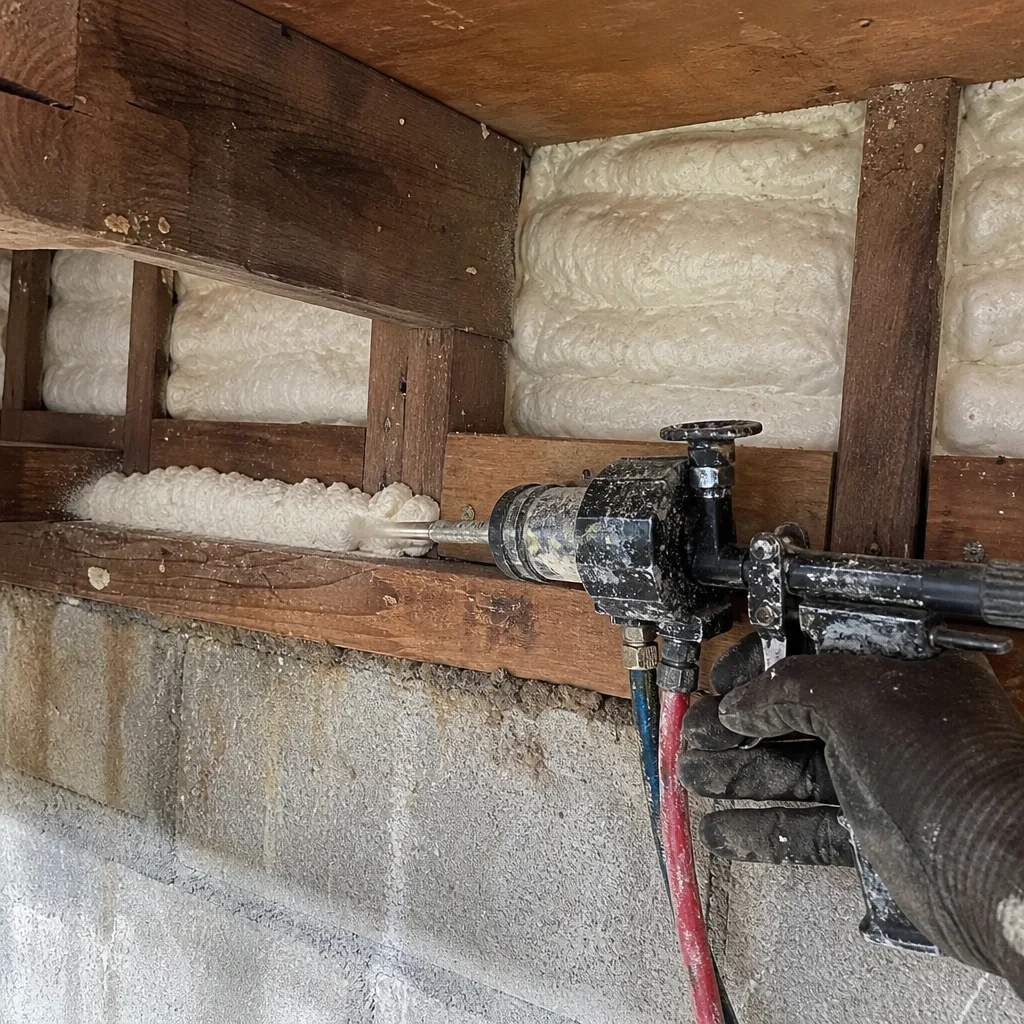
Lake-edge crawl space conditions
We have pulled saturated fiberglass out of rim joists along the low streets near the water. The material was installed decades ago, it’s been wicking lake humidity since, and it was doing nothing but holding moisture against the framing. Spray foam here isn’t a retrofit luxury; it’s replacing a failure. Once the rim joist is foamed and sealed, the underfloor stops breathing lake air into the house.
Manufactured home rim joists
Mobile and manufactured homes in Lakeland Village have their own rim joist quirks. Skirting, belly board condition, and access all affect how we work. The air sealing benefit is the same, but the prep differs. If the belly board is intact, we can typically foam the perimeter and dramatically cut through-floor drafts.
Trusted Brands We Service in Lakeland Village
We’re not tied to one manufacturer, and in Lakeland Village that matters more than in a tract. A damp rim joist off the lake wants closed-cell Demilec. A hillside west wall that bakes all afternoon wants the same. An interior wall where you want sound control wants open-cell Icynene. We stock both, so the chemistry gets chosen for the application. Rockwool comes into play when a homeowner wants fire-resistance or sound dampening in a retrofit where spray foam isn’t the right fit. Every job gets the material that matches the structure, not whatever brand we happen to have the most of on the truck.
Common Spray Foam Insulation Problems We See in Lakeland Village Homes
- Damp rim joists off the lake edge. Crawl spaces along the low streets rarely dry fully, and any insulation that has been there since the 50s or 60s is usually sagging, matted, or actively molding. Foam applied over that without remediation seals moisture against the framing rather than sealing it out.
- Sun-baked west-facing attics on hillside builds. Homes climbing the Santa Ana foothills take direct afternoon sun well over 100°F in the summer. Legacy insulation up there degrades faster, and exposed foam from a bad install can chalk and lose performance.
- Unpermitted additions with wide-open framing. Owner-builder work in 92530 often skipped sheathing, top plate sealing, and consistent cavity sizing. If foam is sprayed into those bays without prep, it bridges gaps instead of sealing them, and you get air movement around the foam.
- Manufactured home belly board failures. Once the belly board tears, the rim joist area pulls in outside air constantly. We see this in the parks throughout 92530, and it’s often misdiagnosed as a flooring or HVAC problem. It’s an air sealing problem.
Pricing for Spray Foam Insulation in Lakeland Village, CA
Wall spray foam in Lakeland Village runs $3.00 to $6.50 per square foot. Rim joist work on a typical lake cottage lands between $1,200 and $2,800. A small garage ceiling or bonus room might run $900 to $1,800 all-in. The spread comes down to foam type, access, and how much prep the cavity needs before we spray. A clean, dry, open stud bay costs less than a crawl space with rotten band boards and standing water. We give free estimates, we quote the prep separately when it’s needed, and we don’t pad the job with materials you don’t need. Call (855) 773-6429 for a number on your specific home.
We Also Serve Cities Near Lakeland Village
Our crews cover the whole west shore of Lake Elsinore and the surrounding foothills. That includes Sedco Hills and Meadowbrook for hillside builds, Canyon Lake for gated-community homes with similar lake-edge conditions, and Wildomar for manufactured homes and older single-family stock. If you’re in any of those areas, call us. Or learn more about what we do across Lakeland Village and the surrounding ZIP codes.
Serving Lakeland Village, CA — Our Local Coverage Area
We’re based in the Lakeland Village area and know this community well. Use the map below to see our service coverage — if you’re nearby, we can almost certainly help.
FAQs About Spray Foam Insulation in Lakeland Village
Yes, but only if the substrate is dry when the foam goes on. Closed-cell spray foam is the right product for damp lake-edge conditions because it acts as a vapor barrier, but it can’t be applied over standing water or visibly rotten framing. We remediate the rim joist area first, then foam it. Call (855) 773-6429 if your crawl space smells musty or your floors stay cold.
Hillside homes in the Santa Ana foothills take direct western sun exposure that pushes attic and wall cavity temperatures far above what a valley tract house sees. Add in owner-built additions with irregular framing and you get air leaks that standard batts can’t address. Spray foam seals the entire assembly and stops the thermal cycling that degrades other insulation.
Yes. Lakeland Village is unincorporated Riverside County, not Lake Elsinore city jurisdiction, so spray foam insulation work routes through county permitting. We handle the paperwork for the jobs we take on. A homeowner doing it themselves still needs the same permits, and county inspectors do check unincorporated areas.
Spray foam can fix the air sealing and thermal performance of an owner-built addition, but it won’t legalize the structure. What it does is close the gaps that those additions typically have: missing top plate seals, irregular stud bays, no sheathing continuity. If you’re trying to make an addition livable year-round, foam is the first step. Legalizing the addition is a separate process with the county.
We use Icynene and Demilec, and we specify them differently. Icynene open-cell goes into interior walls where air sealing and sound control are the goal. Demilec closed-cell goes into rim joists, exterior walls, and anywhere moisture resistance or structural reinforcement matters. For older Lakeland Village homes, the moisture profile of the area determines which one we recommend.
Call Placentia Insulation for Spray Foam in Lakeland Village
If your lake cottage has drafty floors, a damp crawl space, or attic heat bleeding into the living room, we can tell you what’s actually going on and what it takes to fix it. The estimate is free. The assessment is honest. Call (855) 773-6429 and ask for a spray foam evaluation in Lakeland Village.
Written by Alan Whitcomb, Owner at Placentia Insulation, serving Lakeland Village and the Lake Elsinore west shore.