
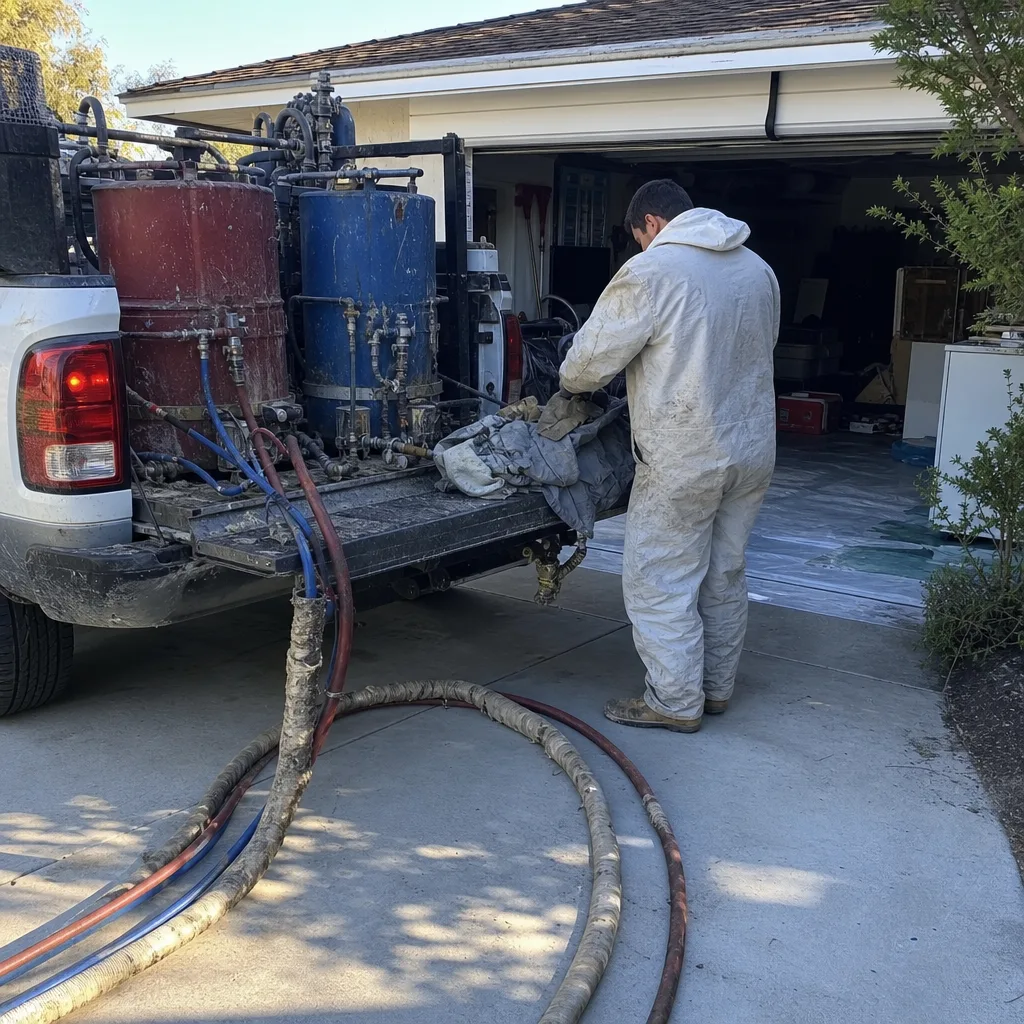
Spray Foam Insulation in March Air Force Base: The Right Fix for Older Homes
Spray foam insulation in March Air Force Base typically costs $1,800 – $4,600 for a rim joist and crawl space package in older homes, with attic upgrades running $3,200 – $7,500 depending on square footage and foam type. Most jobs take one to two days once our crew is on site. We’re Placentia Insulation, and Alan Whitcomb leads our team. Call (855) 773-6429 for a free estimate specific to your home.
March Air Force Base isn’t like other Inland Empire communities. The housing here splits between legacy on-base family housing from the 1950s – 70s and nearby tract homes from the 1980s – 2000s. Both deal with the same punishing inland heat, the same wind-driven dust, and the same unsealed rim joists that let conditioned air escape straight into the attic. That’s what we fix.
Why March Air Force Base Homeowners Call Placentia Insulation
We’re an insulation contractor, period. No plumbing, no roofing side work, no general contracting. Every crew member on our team spends their week thinking about thermal envelopes, air barriers, and foam chemistry. That single-trade focus matters when you’re dealing with 70-year-old military housing that was never built for today’s Title 24 standards.
Our approach to Spray Foam Insulation starts with diagnosis, not a quote. In the older on-base housing off Graeber Street and the surrounding streets, we routinely find the same pattern: settled blown-in fiberglass compressed to two or three inches, rim joists open to outside air, and attic vents choked with decades of Santa Ana dust. A generic contractor might just blow more fiberglass on top and call it done. That doesn’t fix the air leaks.
Alan and the crew know the March Air Force Base housing stock because we’ve worked in it. We know which sections of the 92551 ZIP have pier-and-beam foundations and which have slab. We know what a mid-century on-base attic looks like at 2 p.m. in July. That local knowledge changes the recommendation.
Rim Joist Spray Foam in March Air Force Base
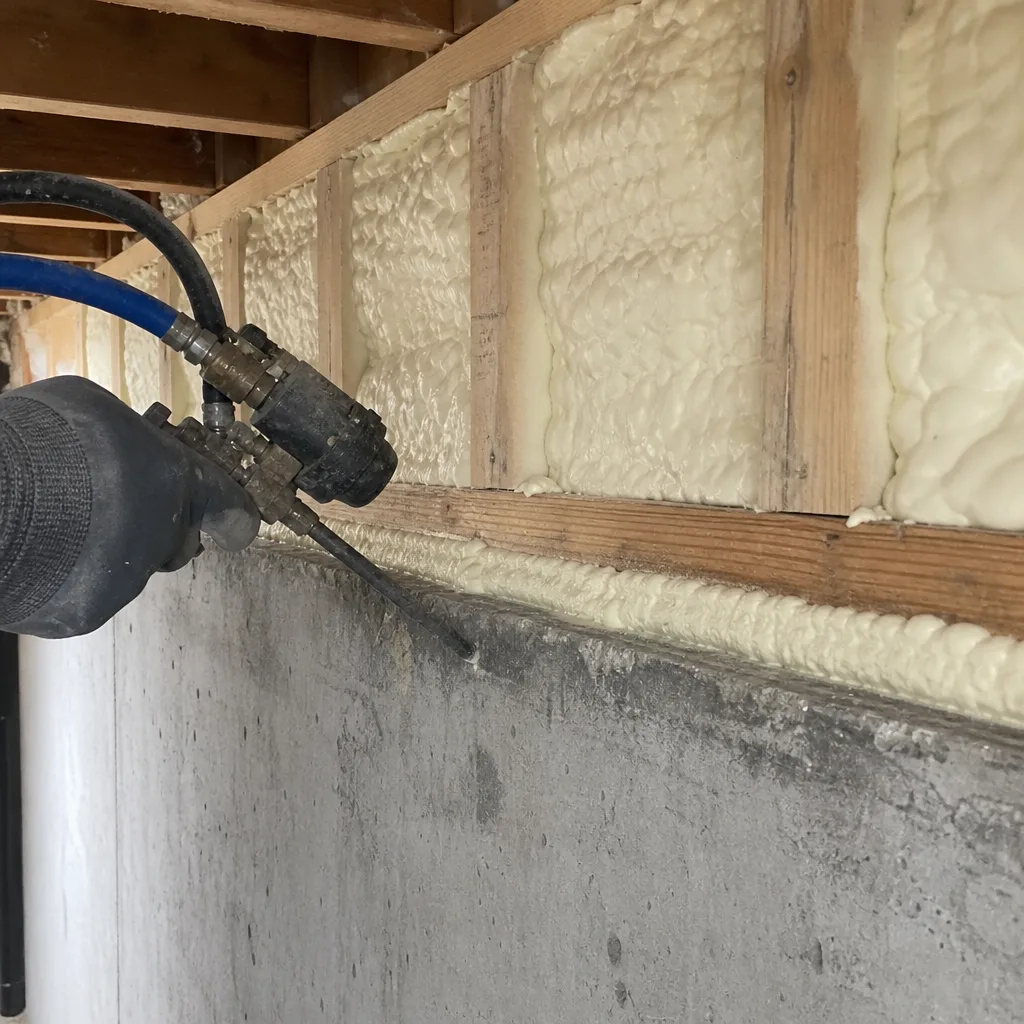
Rim joist spray foam is the highest-impact air-sealing job we do in March Air Force Base, especially in the 1950s – 70s on-base housing and early 1990s tract homes. The rim joist, also called the band joist, is the wood framing that sits on top of the foundation wall where floor joists meet the exterior. In most mid-century homes here, it was never sealed. The cavity is open to whatever blows in from outside, and in this part of Riverside County, that means hot air in summer, cold air in winter, and dust all year. A typical rim joist spray foam job in March Air Force Base runs $1,200 – $2,600 for a full perimeter seal using 2-inch closed-cell foam. Smaller jobs, like just the garage band area, often fall in the $600 – $1,100 range.
Closed-cell foam on the band joist
We use Demilec closed-cell spray foam on rim joists in March Air Force Base homes because it creates an air barrier and a vapor barrier in one pass. In the 92551 ZIP, where overnight temperatures can drop close to freezing in winter, that vapor control matters. Closed-cell also adds structural rigidity to older framing, which is a real benefit in mid-century on-base housing where wood has dried out over decades.
Garage rim joist in hot afternoons
Garage ceilings and rim joists are where we see the most heat bleed into living space. In tract homes built in the 1980s and 1990s, the garage band area is often fully unsealed, and the master bedroom sits right above it. Sealing that perimeter with spray foam drops bedroom temperatures fast, sometimes within the same week.
Crawl Space Spray Foam Insulation in March Air Force Base
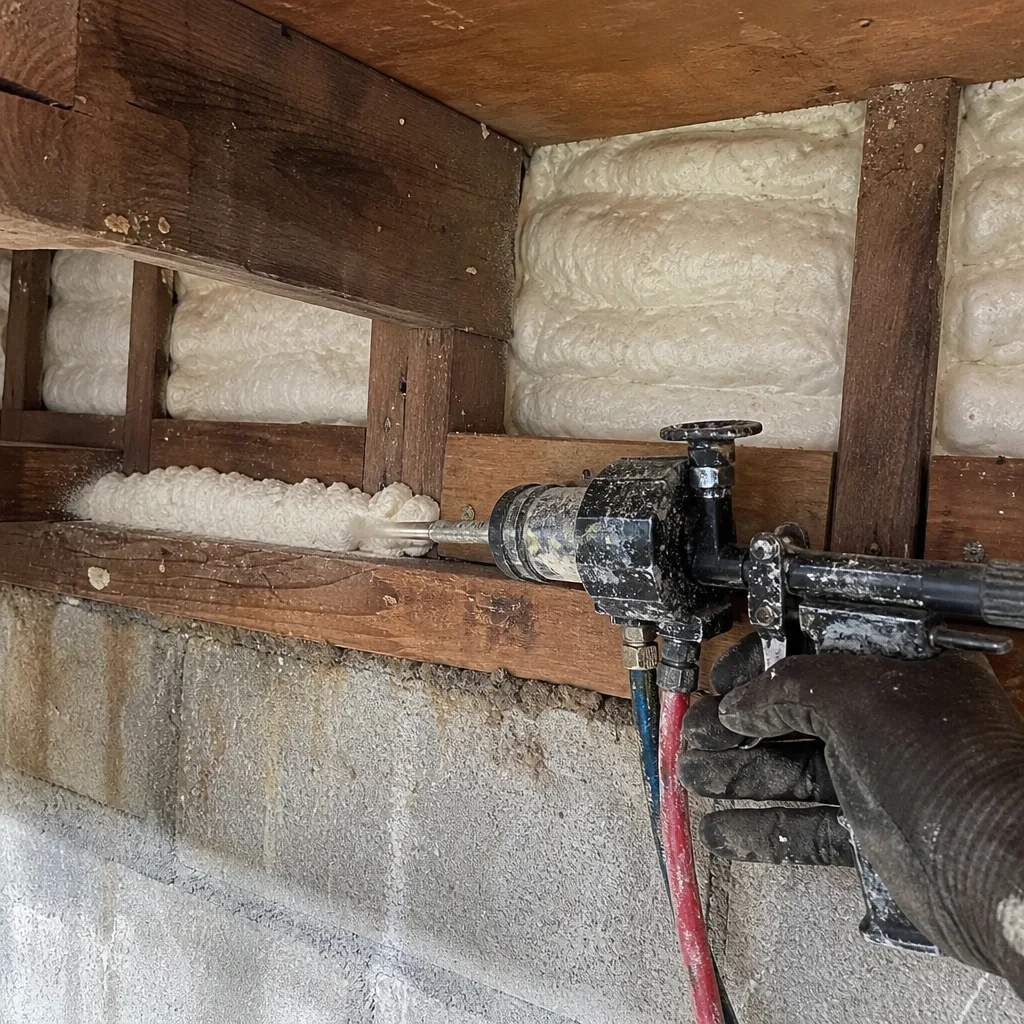
Crawl space spray foam insulation in March Air Force Base matters most in the older pier-and-beam homes on base and in the surrounding 92551 neighborhoods. If your floor feels warm in summer and cold in winter, and your energy bills climb every July, an uninsulated crawl space is usually part of the story. We typically recommend closed-cell spray foam directly onto the subfloor or the crawl space walls, depending on how the space is vented. A full crawl space encapsulation with spray foam in this area runs $3,800 – $8,000 for average homes. Subfloor-only spray foam lands closer to $2,200 – $4,000. Every quote includes a dust condition assessment, because what has blown into the crawl space over the decades changes how we prep.
Closed-cell on the subfloor
For most March Air Force Base crawl spaces, we spray 2 to 3 inches of Demilec closed-cell foam directly to the underside of the floor deck. This stops radiant heat transfer from the ground, blocks air movement through cracks in the subfloor, and helps with dust intrusion. In homes with existing fiberglass batts between the floor joists, we remove the degraded material first, because batted fiberglass in a crawl space absorbs dust and moisture and stops performing within a few years here.
Wall encapsulation for dusty vented crawls
Some on-base homes have vented crawl spaces that pull in desert dust every time the wind shifts. In those cases, we spray the foundation walls rather than the subfloor, sealing the vents and creating a conditioned space below the house. It costs more upfront but solves the dust problem permanently, which matters in a climate where Santa Ana events happen several times a year.
Trusted Brands We Service in March Air Force Base
We stock and install Icynene open-cell and Demilec closed-cell spray foam, and we carry GreenFiber blown-in cellulose for attic applications where spray foam isn’t the right fit. Most insulation companies carry one or two product lines. We carry eight brands across fiberglass, mineral wool, spray foam, and cellulose, because the right material for a 1960s on-base duplex isn’t necessarily the right one for a 2005 tract home off Van Buren Boulevard. For March Air Force Base customers, that means we’re not forcing a single foam chemistry onto every job. We match the material to the job, not the job to whatever we have on the truck.
Common Spray Foam Insulation Problems We See in March Air Force Base Homes
- Settled legacy attic insulation. In the 1950s – 70s on-base housing, original blown-in fiberglass has compressed under decades of 100°F+ attic heat. We regularly find it down to two inches over the ceiling joists, which does almost nothing against the inland summer. Spray foam applied over that settled layer without addressing air leaks is money wasted.
- Dust-clogged attic and wall vents. Santa Ana winds push desert dust into attic spaces and sidewall cavities throughout the 92551 ZIP. It cakes onto vent screens and fills wall cavities tighter than the settled fiberglass itself. Any spray foam specification here has to account for clearing those passages first, or the foam can’t expand and seal properly.
- Unsealed rim joists on mid-century wood frame. On-base housing and 1980s tract homes share this issue: the band area around the foundation perimeter was never air-sealed. Hot outside air moves straight into the floor system, and spray foam is the only practical way to close that gap in a finished home. Skip it and heat bleeds into living space no matter how much attic insulation you add.
- Open-cell foam applied without dust remediation. Open-cell spray foam is a great product for attic rooflines, but it needs clean surfaces to adhere and expand correctly. When a previous contractor sprayed over dust-packed cavities without clearing them, the foam delaminates in sheets and stops acting as an air barrier. We see this often enough that our prep process includes a dust assessment before any open-cell application.
Pricing for Spray Foam Insulation in March Air Force Base, CA
Rim joist sealing in March Air Force Base runs $1,200 – $2,600 for a full perimeter. Crawl space spray foam lands between $2,200 and $8,000 depending on whether you’re doing subfloor only or a full wall encapsulation. Attic spray foam projects, either open-cell on the roofline or closed-cell on the attic floor, typically run $3,200 – $7,500 for homes in the 92551 ZIP. Square footage, access difficulty in older on-base units, and how much dust remediation is needed all move the final number. We give a fixed written quote before any work starts, and estimates are free. Call (855) 773-6429 to schedule an assessment.
We Also Serve Cities Near March Air Force Base
Our crews regularly work in Moreno Valley, Woodcrest, Perris, and Good Hope, so if you own a rental property in one of those areas or have family nearby, we can handle it. For anything in the March Air Force Base area, we’re here.
Serving March Air Force Base, CA — Our Local Coverage Area
We’re based in the March Air Force Base area and know this community well. Use the map below to see our service coverage — if you’re nearby, we can almost certainly help.
FAQs About Spray Foam Insulation in March Air Force Base
Spray foam makes more sense because the problem in those homes isn’t just thin insulation, it’s air movement. A blown-in top-up adds R-value but does nothing for the open rim joists, the dust-clogged vents, and the sidewall cavities that have been packed with decades of Santa Ana dust. Closed-cell spray foam seals those leaks while adding insulation value, so it solves two problems at once. If you’re in the legacy on-base housing and your back rooms still hit 95°F even with the AC running, call (855) 773-6429 and we’ll take a look.
Yes, it almost certainly does. Homes built in the 1980s and 2000s around the base were constructed before air-sealing was standard practice, and the rim joist area is typically completely open. Sealing it with two inches of closed-cell foam typically drops interior temperatures within a week, especially in bedrooms located above the garage. This is a sub-$2,000 job for most tract homes in the 92551 ZIP.
Yes, clearing vents is a required step in this area. Dust from Santa Ana wind events coats attic vents and wall cavities throughout March Air Force Base, and spray foam needs a relatively clean surface to bond and expand properly. We include vent clearing and dust assessment in the prep quote, so it’s not a surprise add-on.
We use Demilec closed-cell spray foam on rim joists and crawl spaces in March Air Force Base. Demilec’s closed-cell chemistry provides both an air barrier and a moisture barrier in a single application, which matters for the freeze-thaw cycles we get in winter and the dust-laden air that moves through crawl spaces during Santa Ana events. For attic roofline applications, we typically recommend Icynene open-cell foam.
It’s one of the highest-value upgrades you can make in those homes. Pier-and-beam foundations from the 1950s and 1960s were never sealed, so the crawl space acts as an unconditioned air plenum under the house. Spray foam on the subfloor or foundation walls stops dust intrusion and heat transfer at the source. Most homeowners notice a difference in floor temperature within days, and energy use drops measurably during the first full summer.
If you’re in March Air Force Base and tired of rooms that won’t stay cool or energy bills that climb every summer, call Alan and the team at Placentia Insulation for a free estimate. We know the housing stock here because we work in it every week. Call (855) 773-6429 and we’ll schedule an assessment at your convenience.
Written by Alan Whitcomb, Owner at Placentia Insulation, serving March Air Force Base and the surrounding Inland Empire.