
Fast, Reliable Spray Foam Insulation Across Moreno Valley
Spray foam insulation in Moreno Valley typically runs $2.50 – $6.50 per board foot installed, with most whole-attic jobs landing between $4,800 and $11,000 depending on foam type, square footage, and whether we’re air-sealing first. We’re in Moreno Valley weekly, and we know exactly how these 1980s – 2000s tract homes behave when attic temperatures start climbing past 140°F. If your upstairs rooms won’t hold temperature or your AC never shuts off in July, call (855) 773-6429 for a free estimate. Alan Whitcomb leads our team, and he’ll tell you straight whether spray foam is even the right material for your situation or whether blown-in cellulose would serve you better.
Why Placentia Insulation Is Moreno Valley’s Preferred Spray Foam Insulation Company
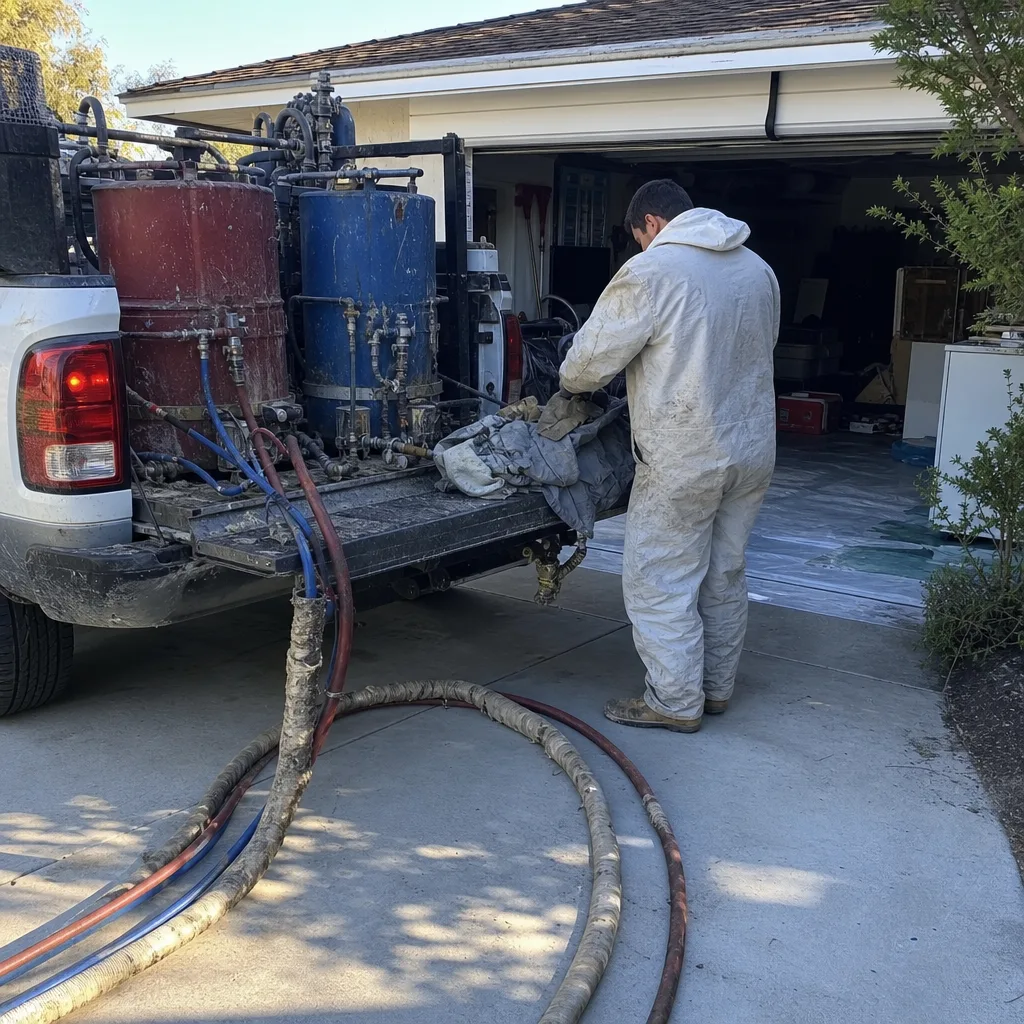
Most insulation contractors carry one or two product lines. We carry eight: Owens Corning, Johns Manville, Knauf, Rockwool, CertainTeed, Icynene, Demilec, and GreenFiber. For Spray Foam Insulation, that means we’re not locked into whichever foam chemistry one supplier happens to stock. We match the material to the job, not the job to whatever we have on the truck.
Moreno Valley homeowners call us because we understand the specific failure mode here: attic heat gain, not winter heat loss. Our Moreno Valley customers in ZIPs 92551, 92552, 92553, and 92554 repeatedly tell us the same story: upstairs bedrooms hitting 85°F or higher, AC units running nonstop, and utility bills that jumped $150+ in summer months. That’s an insulation problem, and it’s one we solve with the right foam chemistry for each application.
We work in Moreno Valley year-round, and our scheduling reflects local conditions, including early starts for Reflectix repair in Moreno Valley when needed. During June through September, we start early, often by 6:30 AM, because the tile roofs on these tract homes turn attics into ovens by mid-morning. That kind of local knowledge only comes from doing the work here, not from a contractor driving in from the coast.
Insulation is all we do. Every crew member, every tool, every conversation is about one trade. No plumbing today and insulation tomorrow.
Open Cell Spray Foam in Moreno Valley
Open Cell Spray Foam is the workhorse for Moreno Valley attics because it air-seals as it expands, filling the gaps around recessed can lights, plumbing penetrations, and top plates that let hot attic air press into living spaces. In Moreno Valley’s 1980s – 2000s production-built homes, we typically apply 4 – 6 inches of open cell to the underside of the roof deck, converting a vented attic into a conditioned, semi-conditioned, or unvented assembly depending on your HVAC setup and Title 24 requirements. A typical 1,200 – 1,800 sq ft attic runs $4,200 – $7,800 including air-sealing prep work.
What Open Cell Does That Fiberglass Can’t
Fiberglass batts filter air; they don’t stop it. Open cell foam expands into every cavity and seals the boundary between your living space and a 140°F attic. That’s the difference between an insulating material and an air barrier, and in Moreno Valley’s climate, air sealing matters more than R-value per inch.
Why We Use Icynene Open Cell in Tight Attics
Many Moreno Valley attics have shallow roof pitches and cramped corners where closed cell would be overkill. Icynene open cell gives us a lower-density, more forgiving application that conforms to irregular framing, and its expansion characteristics make it ideal for retrofitting existing homes without tearing out drywall. We don’t push closed cell where open cell does the job better.
Spray Foam Insulation Contractors in Moreno Valley
Spray Foam Insulation Contractors in Moreno Valley should be able to explain the difference between open cell and closed cell, then recommend one based on your attic configuration, not their inventory. We carry both Icynene and Demilec foam lines, so you get the right chemistry for the application. A closed cell rim joist job in a Moreno Valley crawlspace runs $1,200 – $2,400, while a garage ceiling with closed cell typically runs $2,800 – $5,500 depending on square footage and access.
Rim Joist and Band Board Sealing
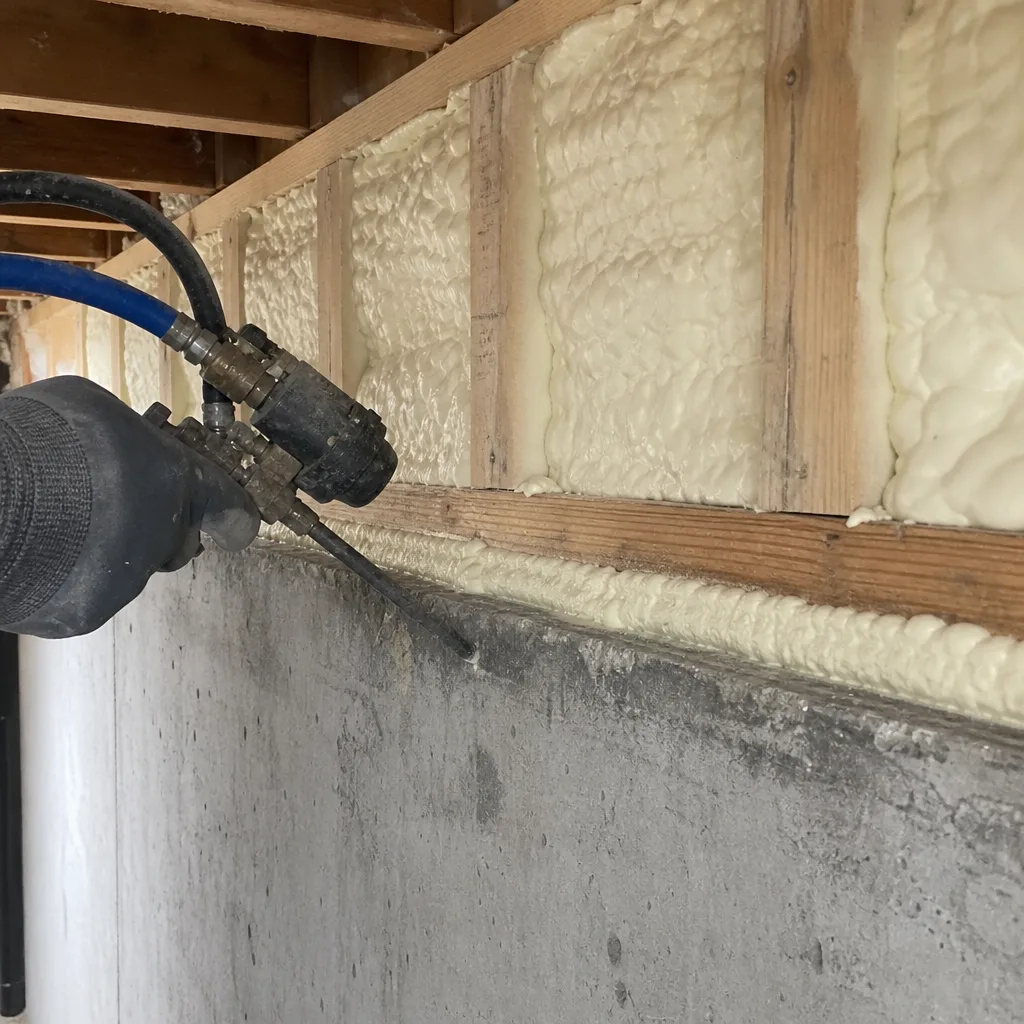
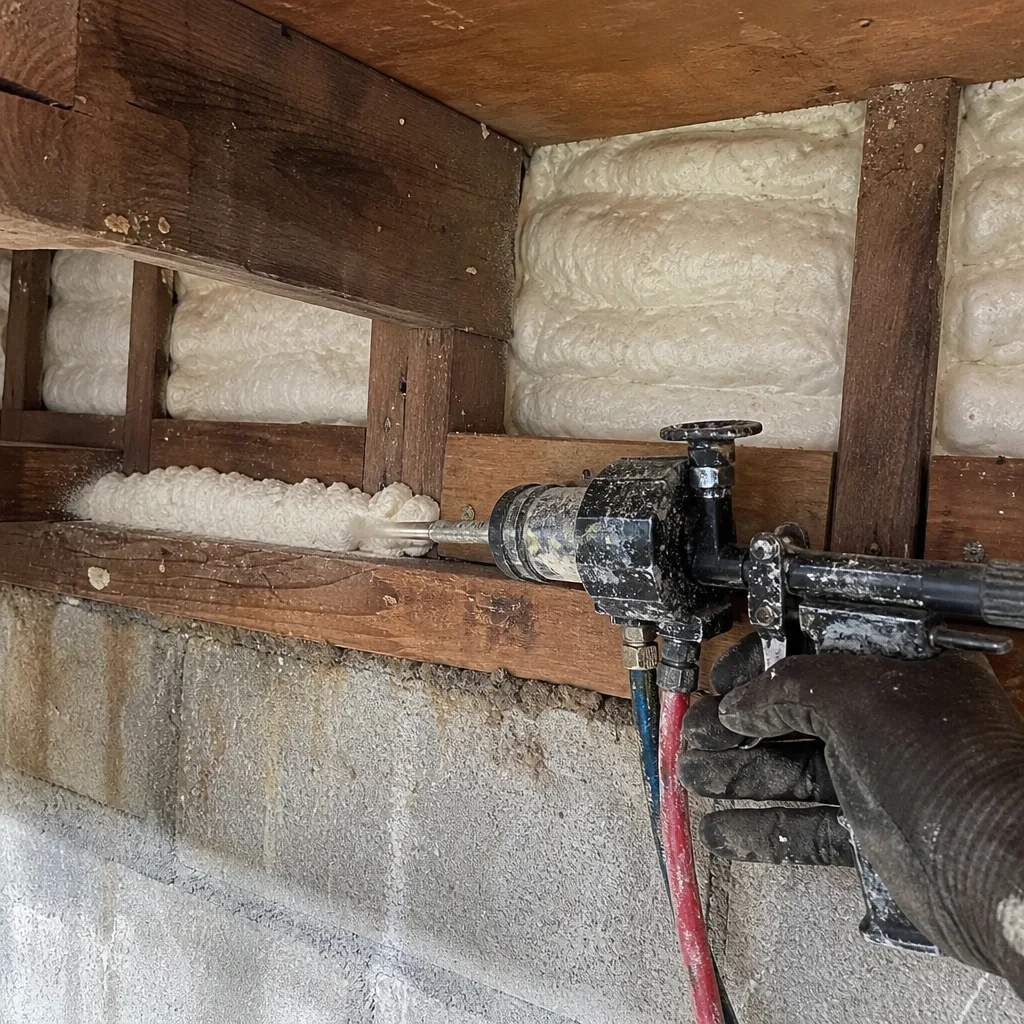
Slab-on-grade tract homes in Moreno Valley don’t have the basement rim joists you see back east, but many have raised-floor sections or cantilevered bump-outs where rim joist spray foam stops hot exterior air from flowing into floor cavities. We apply 2 inches of closed cell at the band board, which also cuts dust and pest entry points.
Roof Deck Applications for Hot Attics
When we spray the underside of the roof deck, we’re turning the attic into a conditioned buffer zone. Ductwork that used to bake in 140°F air now sits in an attic that might top out at 110°F or less. For homes with AC units and duct runs in the attic, this is often the single highest-impact upgrade we do in Moreno Valley.
Trusted Brands We Service in Moreno Valley
We stock and apply Icynene and Demilec spray foam for Moreno Valley jobs, which gives us flexibility most single-brand shops can’t offer. Icynene open cell is our go-to for attic roof decks and wall cavities. Demilec closed cell handles rim joists, garage ceilings, and anywhere moisture resistance matters. For Moreno Valley homeowners who need attic upgrades but want to keep costs predictable, we also offer GreenFiber blown-in cellulose as a complementary material when a hybrid approach makes sense. Parts and material lead times are short because we maintain active inventory, not special-order pricing.
Common Spray Foam Insulation Problems We See in Moreno Valley Homes
- Foam applied without ignition barriers in unvented attics. Building code and manufacturer specs require an intumescent coating or thermal barrier over foam in some Moreno Valley attic configurations. We see unpermitted work where this was skipped, and in a high-heat environment that’s a fire hazard, not a paperwork issue.
- Summer afternoon application failures. When attic temperatures exceed 140°F, foam can off-gas too quickly and lose adhesion, creating bubbles and delamination. We schedule Moreno Valley roof deck work for early morning, and we won’t spray into a superheated attic and pretend it’s fine.
- Foam over settled fiberglass without air-sealing first. Spraying directly over old batts without sealing the gaps around can lights, top plates, and ducts traps hot attic air below the foam layer. That leads to condensation on ductwork and a home that still won’t cool properly.
- Wrong foam chemistry for the application. Closed cell in a vented attic is a waste of money for most Moreno Valley homes. Open cell on a below-grade or moisture-prone surface is a moisture trap. The material choice matters, and it’s exactly where a generalist contractor gets it wrong.
Pricing for Spray Foam Insulation in Moreno Valley, CA
Open cell attic roof deck work across Moreno Valley ZIP codes 92551 through 92554 runs $2.50 – $4.00 per board foot installed, while closed cell runs $4.50 – $6.50 per board foot. A typical 1990s tract home attic of 1,400 sq ft with open cell lands between $4,800 and $7,200. Air-sealing prep, which is non-negotiable for performance, adds $400 – $900 depending on how many recessed lights and penetrations we’re sealing around. The cheapest quote in town is usually the one that skips that step. Call (855) 773-6429 for a written estimate with a board-foot breakdown, free of charge.
We Also Serve Cities Near Moreno Valley
Our team covers Spray Foam Insulation in Moreno Valley and the surrounding communities, including March Air Force Base, Woodcrest, Colton, and Loma Linda. If you’re right outside city limits, the same scheduling and pricing logic applies. Call us and we’ll confirm coverage by ZIP before we commit to anything.
Serving Moreno Valley, CA — Our Local Coverage Area
We’re based in the Moreno Valley area and know this community well. Use the map below to see our service coverage — if you’re nearby, we can almost certainly help.
FAQs About Spray Foam Insulation in Moreno Valley
Because Moreno Valley’s problem is heat gain, not heat retention. Fiberglass batts, especially the builder-grade R-13 to R-19 material in most 1980s – 2000s tract homes, allow hot attic air to pass through gaps and bypasses. Spray foam air-seals as it insulates, which is the single biggest performance difference in a climate where attic temperatures hit 140°F. Call (855) 773-6429 and we’ll tell you if your attic is a good candidate.
Yes, but we schedule roof deck work for early morning. Attic temperatures in these tile-roof tract homes routinely climb past 140°F by early afternoon, and spraying into that heat causes adhesion failures, bubbling, and off-gassing. We start at 6:30 AM during summer months and finish the spray application before the attic gets too hot to work in safely.
Spray foam on the roof deck brings your ducts into a cooler, conditioned space, which reduces the temperature differential your cooled air has to fight. We do not spray directly onto ductwork, but sealing the attic boundary means duct runs that used to sit in 140°F air now sit closer to 110°F or less. For Moreno Valley homes with AC units and ductwork in the attic, this is typically the highest-value insulation upgrade available.
Most spray foam retrofit work in Moreno Valley requires a permit when it changes the attic’s ventilation classification, such as converting from vented to unvented. We handle the permit paperwork and compliance check as part of the job. The bigger issue is Title 24 and fire barrier requirements, which are specific to the foam type and application. We’ll walk you through exactly what applies to your house before we start.
For most 1990s tract homes in Moreno Valley’s 92553, 92555, and 92557 ZIPs, open cell Icynene on the roof deck is the right call: it air-seals the attic, handles the heat gain problem, and costs less than closed cell. Closed cell earns its price premium in rim joists, garage ceilings, or anywhere moisture resistance matters. We’ll recommend based on your specific attic, not on what we happen to have on the truck.
Written by Alan Whitcomb, Owner at Placentia Insulation, serving Moreno Valley with spray foam, attic, and blown-in insulation expertise.