
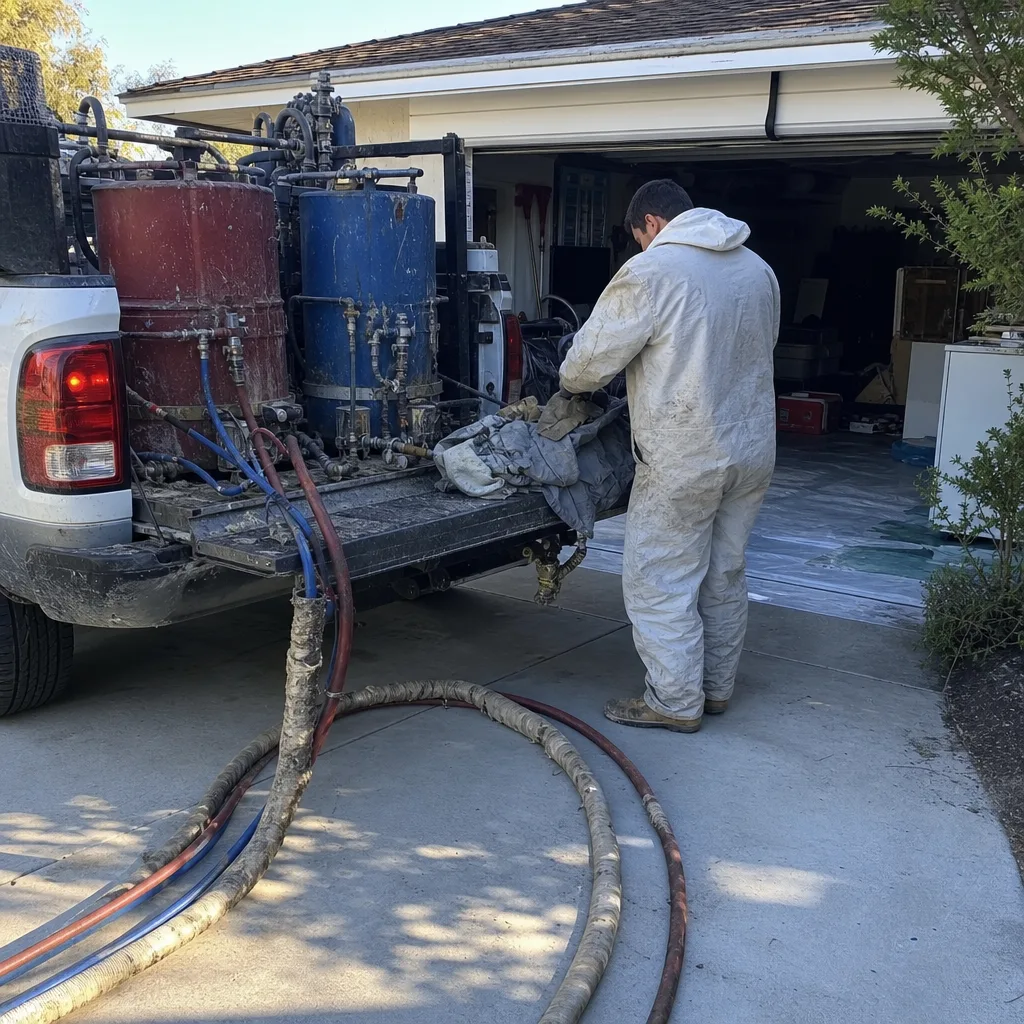
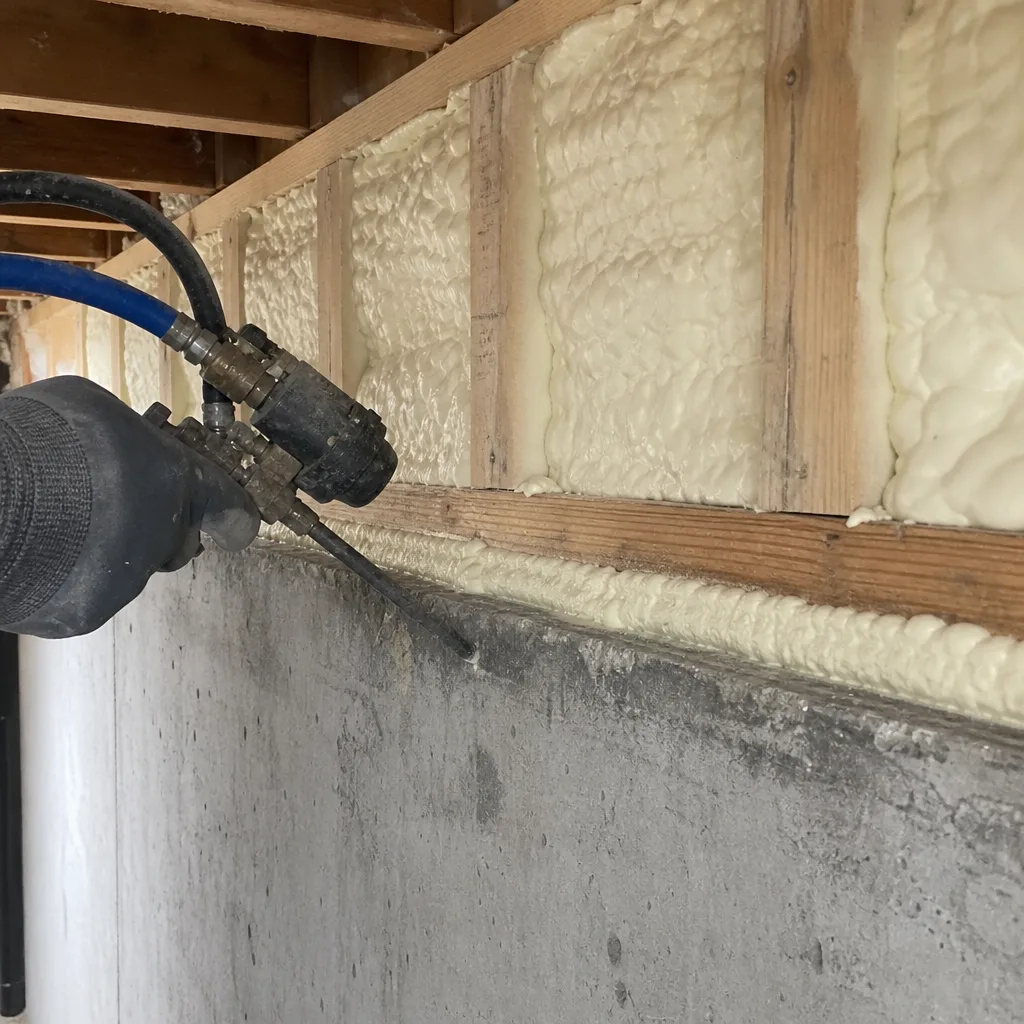
Fast, Reliable Spray Foam Insulation Across Redlands
Spray foam insulation in Redlands isn’t about winterizing. It’s about keeping the sun’s heat from turning your attic into an oven that pushes 140°F air down into your living space every afternoon from June through September. We work throughout 92373, 92374, and 92375, with crews that know the difference between a 1920s Craftsman near Sylvan Park and a 1978 tract home out past Redlands Boulevard. If your upstairs rooms bake in summer while your AC runs nonstop, that’s a radiant-heat problem spray foam can fix. Call (855) 773-6429 and Alan Whitcomb’s team will assess it.
Why Placentia Insulation Is Redlands’s Preferred Spray Foam Insulation Company
We’re in Redlands weekly. Not because it’s on a route list, but because the housing stock here demands a specific kind of attention. The historic core around Olive Avenue and the areas off Brookside Avenue are full of homes where attics were framed in an era before insulation was even a consideration. Placentia Insulation specializes in one trade: insulation. That focus means when we show up in Redlands, we aren’t a general contractor squeezing a foam job between a bathroom remodel and a roof patch. Every tool in the truck, every crew member on site, and every conversation we have is about insulation.
Our local customers deal with genuine heat-load problems, and they’ve told us over the years that what they value most is getting a straight answer about what their attic will tolerate. In Redlands’s older homes, that answer sometimes surprises people. Foam chemistry matters less than clearance and access. We know that before we open the hatch.
Open Cell Spray Foam in Redlands
Open cell spray foam in Redlands is the right material for most of the shallow, low-clearance attics we work in, especially in the historic neighborhoods around downtown. Open cell expands dramatically, fills irregular framing cavities, and air-seals better than batts ever will. The first sentence matters here: for a Redlands attic with 24 inches of headroom and original 2×4 rafters, open cell is often the only foam that can be installed correctly in the space available. Closed cell needs a clean, open bay to build thickness; open cell can be coaxed into the awkward geometry of a 1908 Craftsman roof deck.
In Redlands, open cell runs roughly $1.60 to $2.75 per board foot installed, depending on depth and access. In the shallowest historic-core attics where we’re spraying the underside of the roof deck, the cost lands on the higher end because the work is slow and physically demanding. Every pass is made in cramped positions, often lying across framing members with less than two feet of clearance. That labor reality is why the cheapest bid on a downtown Redlands attic is usually the one that skips the hard-to-reach bays.
Dense-Packing Tight Bays
Older Redlands homes often have rafter bays that were never designed for insulation, and many still carry the original knob-and-tube-era wiring paths through the attic. Open cell foam can be installed around those constraints when the right preparation is done. What we won’t do is spray over dusty, unsupported old fiberglass or leave gaps at the roof deck. In Redlands’s low-pitch attics, a skipped gap becomes a heat channel that makes the whole job pointless.
Vented Attic Heat Control
Most Redlands attics, including the 1970s and 1980s tract homes toward the eastern side of 92374, use vented attic design. In vented attics, open cell foam is typically applied to the floor under the existing ventilation rather than the roof deck. That approach cuts the radiant transfer from the roof into the living space below while leaving the attic ventilation path intact. The payoff shows up on the first 100°F day when the upstairs rooms stay within a few degrees of the downstairs instead of ten degrees hotter.
Spray Foam Insulation Contractors in Redlands
Spray foam insulation contractors in Redlands are not all the same, and the difference shows up most clearly in the old downtown neighborhoods. A contractor who treats every attic as an open-bay spray-out is going to underperform in a historic Redlands home where the framing is tight and the access is through a 22-inch scuttle hole in a hallway ceiling. We’ve foamed low-pitch roof decks in Redlands where the clearance between the decking and the ceiling joists was under 30 inches, and where the only way to reach the far side of the attic was lying flat on a plank laid across the joists. That’s not a foam job. It’s an access job that happens to involve foam.
Hiring a dedicated insulation contractor for a Redlands spray foam project means getting someone whose entire crew does this specific work every week. We carry two spray foam systems: Icynene and Demilec. Both are category leaders. The choice between them on any given Redlands job comes down to the substrate, the depth, the attic geometry, and the homeowner’s goals, not to whichever manufacturer we have an exclusive deal with.
Material Selection for Redlands Attics
We match the material to the job, not the job to whatever we have on the truck. In a shallow Redlands attic with limited venting, open cell makes sense because it air-seals effectively and won’t trap vapor in a structure that breathes unevenly. In a conditioned attic or a rim joist application in a newer east-side Redlands build, closed cell through Demilec delivers higher R-value per inch and structural rigidity. We make the call based on what the attic actually needs.
Prep and Cure on Hot Days
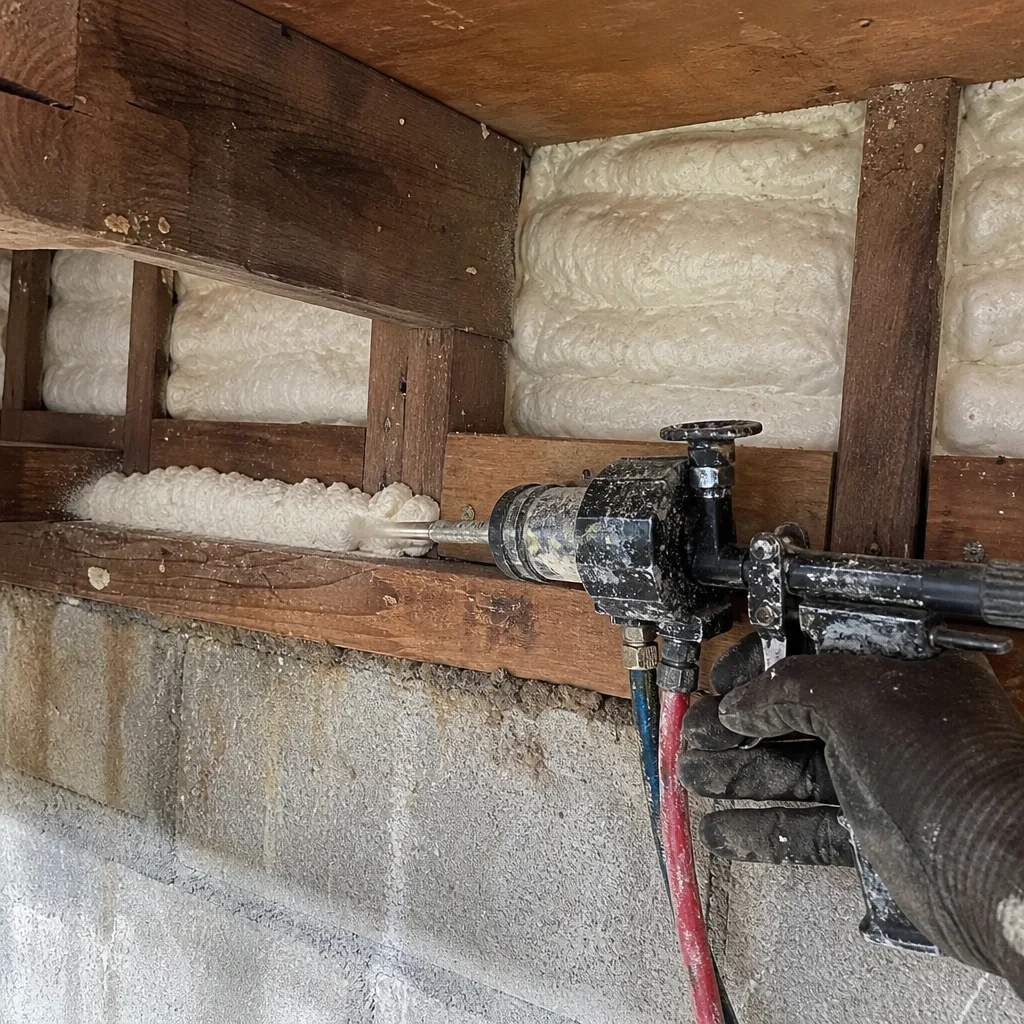
Spray foam cures differently at 95°F than it does at 65°F, and Redlands gives us plenty of hot-day installs. On a 100°F afternoon, closed cell applied too heavily in a confined attic can off-gas more noticeably and build thickness unevenly. We sequence work in Redlands so that the heaviest applications happen earlier in the day, and we monitor cure times so the foam skins over properly before additional passes. That’s not something a homeowner should have to think about. It’s our job to manage it.
Trusted Brands We Service in Redlands
Every spray foam job we run in Redlands uses Icynene or Demilec foam. We stock both open-cell and closed-cell systems, and we service what we install for the life of the product. Both manufacturers back their foam with long-term material warranties, and because we use their systems as designed, the warranty stays intact. For Redlands homeowners who want a different kind of performance, we also offer CertainTeed fiberglass and GreenFiber cellulose through our attic and blown-in services. The point is this: you shouldn’t have to accept one product because your insulation contractor only carries one product. Most insulation contractors stock one or two product lines. We carry eight, so your Redlands home gets what its attic and framing actually call for.
Common Spray Foam Insulation Problems We See in Redlands Homes
- Shallow historic-core attics getting under-sprayed. In the Craftsman and Spanish Colonial Revival homes around downtown Redlands, rafters are often 4 inches deep with 24-inch on-center spacing. An installer rushing a job leaves voids at the roof deck, and those voids let 140°F attic air bleed straight into the upstairs rooms. We see this on homes where someone got a “good deal” a few years ago and the upstairs is still unbearable in August.
- Foam applied over old fiberglass batts without prep. In east Redlands tract homes from the 60s and 70s, attics often still have the original fiberglass batts, now matted, dusty, and worthless. Spraying foam over the top of that, especially in a low-clearance attic, creates a sandwich that traps heat and compromises adhesion. The old material has to come out, the framing has to be clean, and only then does the foam go in.
- Closed cell used in the wrong application. Closed cell is a great product, but it’s not the right answer for every Redlands attic. In a shallow, poorly vented space, heavy closed cell can hold moisture against old framing and make off-gassing more pronounced on hot days. We choose open cell for most shallow attic roof-deck applications and closed cell for rim joists, conditioned attics, and garage ceilings where the geometry is cleaner.
- Access problems on tight Redlands streets. Homes near the downtown core and around Redlands High School often have narrow driveways, alley access, and minimal street parking. A contractor who shows up with a trailer rig and no plan for staging can’t do good work in those conditions. We plan Redlands jobs around the access we’ll actually have, which means sending the right equipment and scheduling the work when parking is manageable.
Pricing for Spray Foam Insulation in Redlands, CA
Spray foam pricing in Redlands lands between $1.60 and $3.10 per board foot for open cell, and $2.40 to $4.50 per board foot for closed cell, depending on the application and depth. A full attic roof-deck spray in a 1,200-square-foot Redlands home runs $5,500 to $9,800. A rim joist project in a basement or crawlspace runs $900 to $2,600. Garage ceiling foam jobs run $1,800 to $4,200. What moves the number in Redlands specifically is the attic geometry: a tight, low-clearance historic-core attic takes more labor hours than an open-bay tract home attic, and labor is the real cost driver. We give free estimates, and the number we quote is the number on the invoice. Call (855) 773-6429 for a Redlands-specific quote.
We Also Serve Cities Near Redlands
Our crews cover the foothill communities around Redlands every week. We work in Mentone along Highway 38, in Loma Linda near the medical center, in Highland east of the 210, and in Colton along the I-10 corridor. Each of those areas has its own housing patterns and attic quirks, and we approach each one the way we approach Redlands: with the right material for the actual conditions. If you’re in a neighboring city and want a specialist’s eye on your attic, the same Spray Foam Insulation team handles the whole area.
Serving Redlands, CA — Our Local Coverage Area
We’re based in the Redlands area and know this community well. Use the map below to see our service coverage — if you’re nearby, we can almost certainly help.
FAQs About Spray Foam Insulation in Redlands
Spray foam makes sense in Redlands because it controls cooling load, not heating load. The problem in Redlands is the sun: summer attic temperatures routinely exceed 140°F, and that heat radiates down into the living space all afternoon and evening. Open-cell foam air-seals the attic floor or roof deck, stopping heat transfer before it starts. A Redlands homeowner saves more by cutting AC run time in July and September than by any winter heating reduction, because the heating season here is short and mild.
Yes. We spray foam shallow attics in Redlands’s historic core regularly. The work is slow because the clearance often tops out under three feet, and installers work lying down across joists. But it’s entirely doable with the right approach. In these attics we typically spray open-cell Icynene directly to the underside of the roof deck, which air-seals the space and cuts the radiant heat that has been baking the upstairs bedrooms. Call (855) 773-6429 and we’ll tell you if your attic geometry will support the application before we quote it.
Yes, spray foam will seal out the heat in a 1970s tract home in east Redlands, but the application is different from a historic-core home. In these vented attics, the foam typically goes on the attic floor over the living space, not on the roof deck. That seals the conditioned envelope and stops the heat above from forcing its way down through recessed lights, partition walls, and ceiling penetrations. The old fiberglass batts in those homes are often compressed and dirty, and removing them before spraying is part of the job.
We use both Icynene and Demilec systems on Redlands jobs. Icynene open cell is our standard for shallow attic roof decks and areas where the framing needs a forgiving, air-sealing foam. Demilec closed cell is our choice for rim joists, conditioned attics, and garage ceilings where higher R-value per inch and moisture resistance matter. The material decision is made per application, not per company policy. Alan Whitcomb assigns the system based on what the Redlands attic actually needs.
We plan Redlands access before we arrive. On tight streets near downtown, where parking is scarce and driveways are narrow, our crews stage equipment close to the access point and run hoses to the attic from a compact rig. We schedule work to avoid school pickup hours near Redlands High School and other congested blocks when possible. Access has never stopped us from completing a Redlands spray foam job, but it does shape how we sequence the work.
Call Placentia Insulation for Spray Foam in Redlands
If your Redlands attic is turning your upstairs into an August oven, the fix is air-sealing and insulation, not a bigger AC unit. We’ve foamed the underside of low-pitch attic roof decks on 1920s Craftsman homes near downtown Redlands where the original knob-and-tube-era framing left barely enough clearance to move. Closing those bays with open-cell Icynene cut the radiant heat that had been baking the upstairs rooms every summer. Downstairs stayed comfortable through a run of 100°F days, and the vented-attic heat gain disappeared. That’s the result a Redlands attic job should deliver. Call (855) 773-6429 for a free estimate, and Alan Whitcomb’s team will tell you exactly what your attic needs.
Written by Alan Whitcomb, Owner at Placentia Insulation, serving Redlands spray foam insulation needs since founding the company.