
Fast, Reliable Spray Foam Insulation Across Rolling Hills Estates
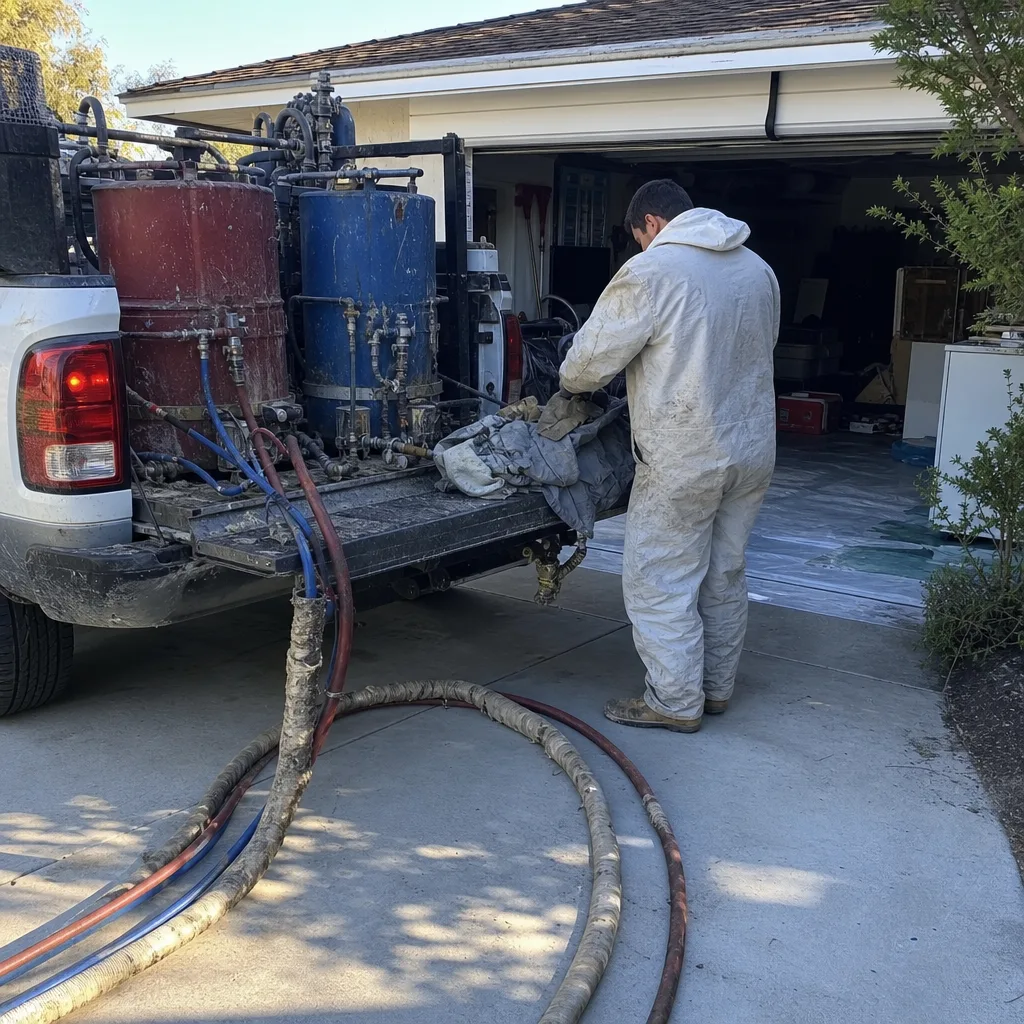
Spray foam insulation in Rolling Hills Estates means dealing with a split-personality climate: marine fog soaking the west and north slopes while canyon-facing south walls bake dry. That’s why a one-foam-fits-all approach fails here. Placentia Insulation runs crews familiar with every winding street off Palos Verdes Drive East and Palos Verdes Drive North, and we typically reach Rolling Hills Estates homes within 24 to 48 hours of your call. Alan Whitcomb has built our team around one trade: matching the right foam chemistry to the exact exposure your home sits on. Call (855) 773-6429 for a free estimate and we’ll walk your roofline with you, side by side.
Why Placentia Insulation Is Rolling Hills Estates’s Preferred Spray Foam Insulation Company
Most insulation contractors carry one or two product lines. We carry eight, so your home gets what it actually needs rather than whatever is on the truck. On the Palos Verdes Peninsula, that distinction matters more than almost anywhere in Los Angeles County. A fog-facing attic bay on a 1960s ranch off Crest Road needs a different foam than the sun-baked south slope of the same roof. Homeowners in Rolling Hills Estates call us because we talk in those specifics, not generic R-value pitches.
We’re an insulation-only contractor. No plumbing tomorrow, no roofing side jobs. Every tool in our trucks, every training session, every conversation is about one thing: sealing and insulating homes correctly. That focus shows up in our work on mid-century ranches, hillside custom builds, and everything in between across the 90505 zip code. When you call for Spray Foam Insulation, the person who answers knows the difference between Icynene open-cell and Demilec closed-cell and can explain why one belongs on your fog wall and the other on your sunny slope.
Closed Cell Spray Foam Insulation in Rolling Hills Estates
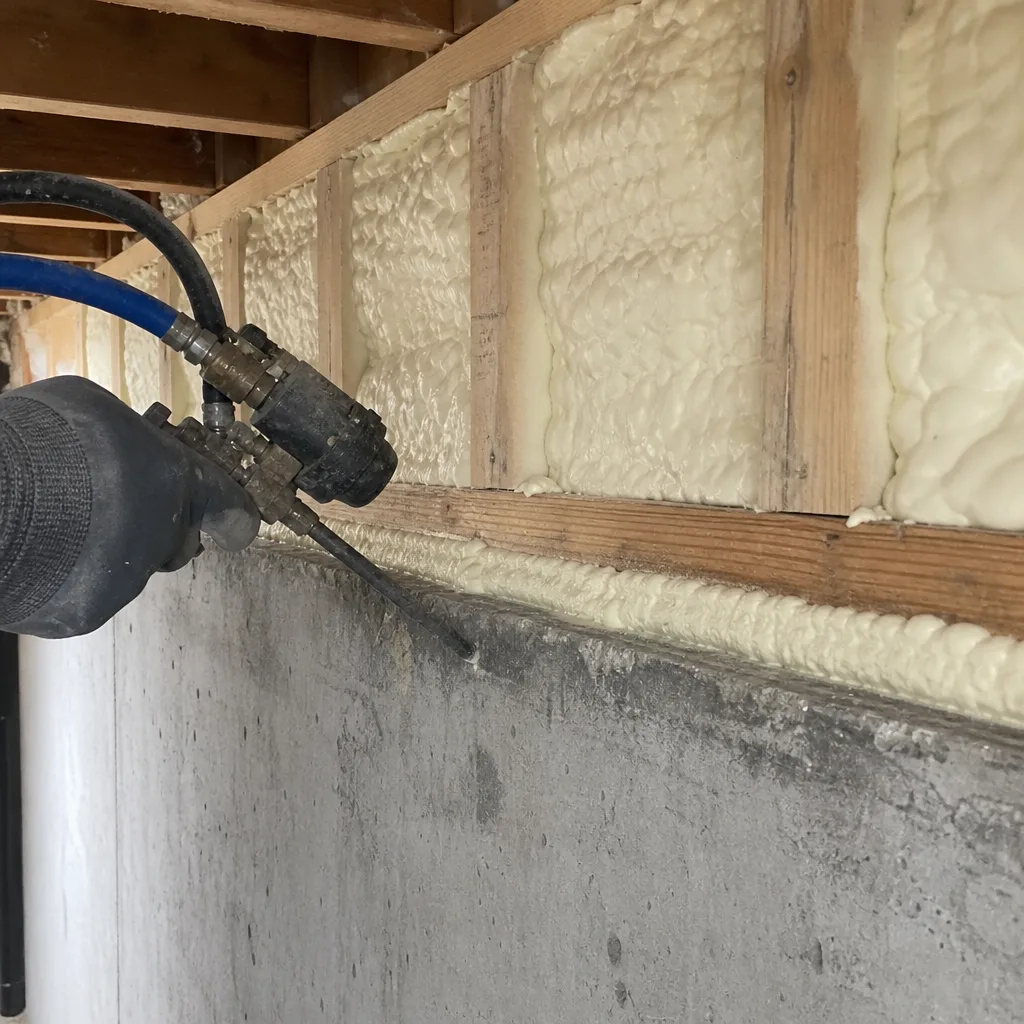
Closed Cell Spray Foam Insulation is the workhorse for the damp, fog-facing sides of Rolling Hills Estates homes. It cures into a rigid, water-resistant barrier with an R-value around R-6.5 to R-7 per inch, which means it seals against moisture intrusion while adding structural strength to the roof deck. Because marine-layer fog pushes salt-laden air against north and west exposures for hours each morning, closed cell is usually the correct call for those deck bays. A typical closed cell job in Rolling Hills Estates runs $3.50 to $5.50 per board foot installed, depending on cavity depth and access.
Fog-Facing Deck Bays and Rim Joists
On Peninsula homes, the rim joist and the north-facing roof deck are where we see the most moisture damage. Closed cell foam applied here seals the gap between framing and sheathing, blocking the damp air that otherwise condenses inside the attic. For crawlspace homes on canyon-cut lots, we also spec closed cell on the underside of floor joists where ground moisture wicks upward.
Vaulted Ceilings with Exposed Beams
Many mid-century ranches in Rolling Hills Estates have vaulted ceilings with exposed beams. These irregular cavities are hard to insulate with batts, but closed cell spray foam expands to fill odd shapes and stays put. It also adds rigidity to older framing that has settled over 50 or 60 years of coastal weather.
Open Cell Spray Foam in Rolling Hills Estates
Open Cell Spray Foam is the right foam for the sun-baked, canyon-facing sides of Rolling Hills Estates roofs. It’s softer, more porous, and allows some vapor movement, which helps a dry assembly breathe rather than trap heat. On south slopes that see direct afternoon sun, open cell’s R-value of about R-3.5 to R-4 per inch handles the thermal load while letting the roof deck release any incidental moisture. Open cell jobs in Rolling Hills Estates typically run $1.75 to $3.00 per board foot installed.
Sun-Exposed Attic Bays That Need Ventilation
When one side of your attic stays dry and hot while the other side stays damp, open cell on the dry side makes sense. It insulates without creating a vapor trap, so the roof deck can still dry outward. We see this split on nearly every hillside home where the canyon-facing slope gets six or seven hours of afternoon sun.
Sound Dampening for Interior Walls
Open cell foam is dense enough to cut noise transfer between rooms, which matters on custom builds where a home office sits next to a media room. It’s also lighter than closed cell, so it’s easier to apply in tight attic spaces with limited access.
Trusted Brands We Service in Rolling Hills Estates
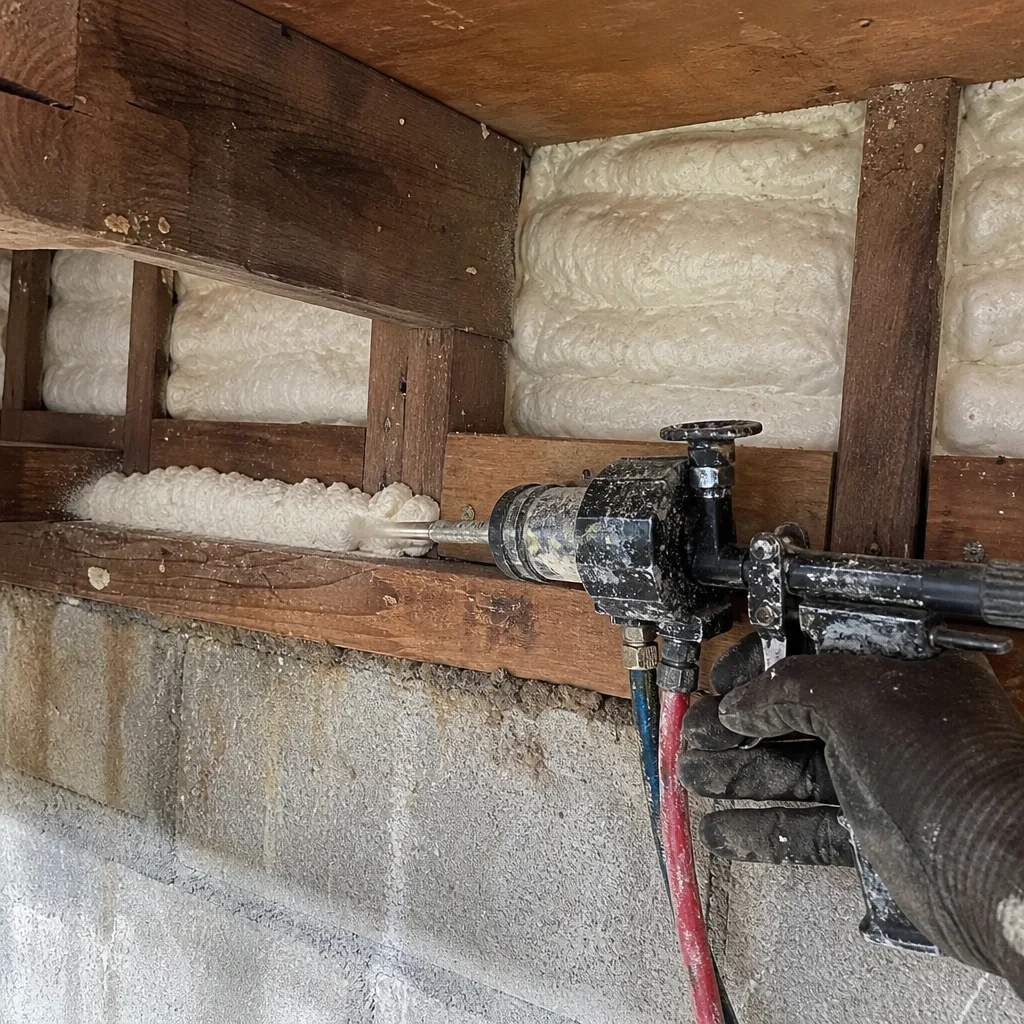
We install spray foam from Icynene and Demilec, two of the most recognized names in the category, and we keep both open-cell and closed-cell chemistries in active inventory for Rolling Hills Estates jobs. For homeowners who need an alternative to spray foam, we also carry Owens Corning fiberglass and GreenFiber blown-in cellulose. Eight brands total across our warehouse, covering fiberglass, mineral wool, spray foam, and cellulose. That means when a fog-side deck bay calls for closed cell and a sun-side wall calls for mineral wool, you don’t need two contractors. One call covers it.
Common Spray Foam Insulation Problems We See in Rolling Hills Estates Homes
- Fog-facing north and west deck bays trapping moisture under poorly applied foam. We routinely find insulation that was sprayed over damp sheathing, sealing the moisture in instead of out. Mold and rot follow within a few seasons.
- Mid-century vaulted ceilings with settled or missing insulation. Homes built before the 1980s on the Peninsula often have thin batts that have compressed over decades of marine-layer humidity, leaving the attic effectively uninsulated in spots.
- Ground moisture wicking up into crawlspace foam on canyon lots. Slab-on-grade and short crawlspaces on the steeper streets in Rolling Hills Estates pull moisture upward, and foam spec’d only for thermal R-value absorbs it and degrades.
- Overspray that pulls away from irregular cavities as it cures. Exposed beam ceilings and odd corner framing in hillside builds create cavities where open cell foam can shrink back if applied too quickly or at the wrong temperature.
Pricing for Spray Foam Insulation in Rolling Hills Estates, CA
Closed cell spray foam in Rolling Hills Estates runs $3.50 to $5.50 per board foot installed. Open cell runs $1.75 to $3.00 per board foot. For a typical 1,500-square-foot attic, that puts most whole-attic spray foam projects in the $6,000 to $14,000 range, depending on foam type, cavity depth, and whether we’re removing old saturated batts first. Rim joist jobs on a standard two-story home usually land between $1,800 and $3,200. Garage ceiling spray foam runs $900 to $2,100. The biggest variable on the Peninsula is whether you need side-specific foam work: a fog-side closed cell application plus a sun-side open cell application costs more than a whole-attic single-foam job, but it’s what these homes actually need. Call (855) 773-6429 for a free, itemized estimate.
We Also Serve Cities Near Rolling Hills Estates
Our crews cover the entire South Bay and Palos Verdes Peninsula. In addition to Spray Foam Insulation in Rolling Hills Estates, we work regularly in Manhattan Beach, Torrance, Lomita, and Palos Verdes Estates. Same crews, same eight-brand inventory, same side-specific approach to coastal spray foam.
Serving Rolling Hills Estates, CA — Our Local Coverage Area
We’re based in the Rolling Hills Estates area and know this community well. Use the map below to see our service coverage — if you’re nearby, we can almost certainly help.
FAQs About Spray Foam Insulation in Rolling Hills Estates
The fog-facing side of your attic needs closed cell foam because it blocks moisture and seals against damp air, while the sunny side can use open cell foam to let the roof deck breathe and vent. On a single Rolling Hills Estates roof, the north and west slopes get hours of marine-layer fog each morning, which condenses inside the attic, while the south slope bakes dry. Spraying the same foam on both sides either traps moisture on the damp side or under-insulates the hot side. Call (855) 773-6429 and we’ll assess both sides of your roof separately.
No. Spray foam should never go over saturated or compressed batts, because the old material keeps holding moisture and the foam seals that moisture against your sheathing. On mid-century ranches in Rolling Hills Estates, we remove the wet batts first, inspect the deck for rot, and only then apply closed cell foam to the cleaned, dried cavity. Skipping removal is the fastest way to turn a damp attic into a mold problem. We’ll quote removal and replacement as one line item so there’s no surprise.
Salt air mostly affects metal hardware like fasteners, roof nails, and any exposed ductwork, while cured spray foam itself resists salt degradation well. The bigger issue in Rolling Hills Estates is the moisture that salt-laden air carries, which condenses on cool surfaces and gets trapped if the wrong foam is used. That’s why we pick foam chemistry based on exposure, not just R-value. A fog-side closed cell application seals out the damp air before it can condense.
Yes, and closed cell spray foam is actually one of the best options for vaulted ceilings with exposed beams in Rolling Hills Estates. The foam expands to fill the irregular cavities around beams and purlins that batts can’t cover properly, and it adds rigidity to older framing. We’ve done this on dozens of mid-century ranches across the Peninsula. The key is applying it in lifts so it cures evenly without pulling away from the wood.
Yes, closed cell spray foam on your fog-facing deck bays stops winter condensation dripping by sealing the warm, moist interior air away from the cold roof sheathing. On hillside homes in Rolling Hills Estates, we see this every winter on north and west exposures. Once the deck is sealed with closed cell, the dew point moves out of the attic assembly and the dripping stops. Call (855) 773-6429 and we’ll tell you which side of your roof is the condensation culprit.
Call Placentia Insulation for Spray Foam in Rolling Hills Estates
If your attic has a damp side and a dry side, you already know why generic insulation bids don’t hold up on the Peninsula. We’ll walk your roofline, point out exactly which bays need closed cell and which need open cell, and give you an itemized quote before any work starts. Alan Whitcomb and the team at Placentia Insulation serve Rolling Hills Estates from our Placentia base, and estimates are always free. Call (855) 773-6429 to schedule yours.
Written by Alan Whitcomb, Owner at Placentia Insulation, serving Rolling Hills Estates and the Palos Verdes Peninsula with spray foam, attic, and blown-in insulation.