
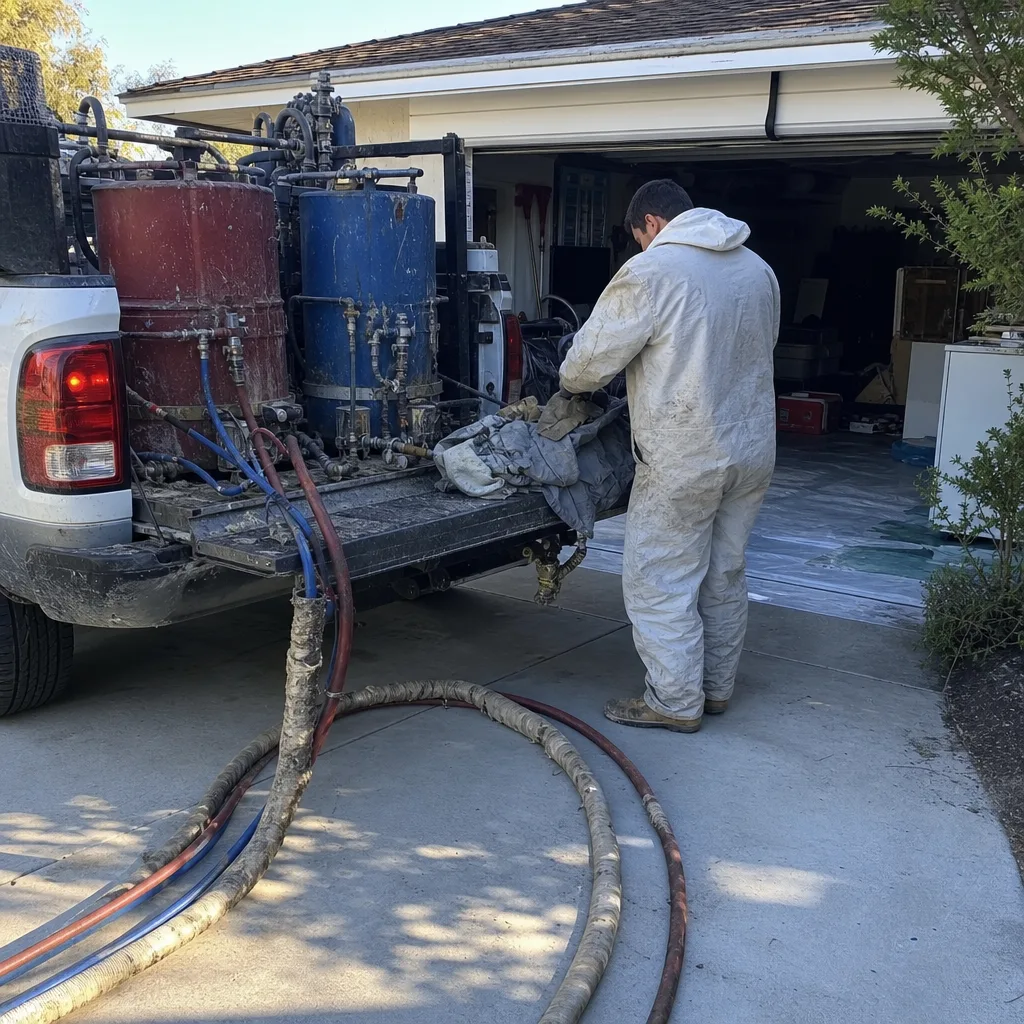
Fast, Reliable Spray Foam Insulation Across San Antonio Heights
Spray foam insulation in San Antonio Heights typically runs $2.50 to $6.50 per board foot installed, with most full attic projects landing between $4,800 and $14,000 depending on foam type, depth, and whether we’re treating the attic floor or the roof deck. We reach San Antonio Heights homes within 1 – 2 business days for estimates, and our crews know the foothill housing stock here, from the 1950s ranchers off Euclid Avenue to the custom builds winding up toward the San Gabriel Mountains. When you call (855) 773-6429, you’re talking to an insulation specialist who understands what happens when attic temperatures hit 150°F at altitude and humidity swings between canyon mornings and Santa Ana afternoons.
Why Placentia Insulation Is San Antonio Heights’s Preferred Spray Foam Insulation Company
San Antonio Heights homeowners don’t call us for a sales pitch. They call because someone on their street, or their neighbor two canyons over, watched us pull settled rock-wool out of a 1960s attic and replace it with a closed-cell system that finally stopped the upstairs bedrooms from roasting in July.
Our reputation in San Antonio Heights is built on showing up ready. When a homeowner on Beryl Avenue has an attic that reads 152°F on a July afternoon and wants to know why their air conditioner never catches up, we bring a thermal camera and an honest answer, not a generic proposal. Alan Whitcomb, who leads our team, has spent years matching foam chemistry to specific failure points. Open-cell foam isn’t the right call for a windy rim joist. Closed-cell isn’t the automatic choice for every vaulted ceiling. Getting that call right matters more than closing a sale.
We carry eight insulation brands, which means we’re never forcing a single product line onto a San Antonio Heights home because it’s what we happen to have in the truck. Icynene open-cell, Demilec closed-cell, GreenFiber blown-in for the right retrofit, and mineral wool where fire resistance and sound control matter. And because we’re insulation-only, our crew isn’t splitting attention between a roofing call in Upland and a foam job in San Antonio Heights.
Spray Foam Insulation Contractors in San Antonio Heights
Spray Foam Insulation Contractors working in San Antonio Heights need to understand what 1,500 to 2,000+ feet of elevation does to a building envelope, because the physics here are not the same as in Rancho Cucamonga or Montclair down below. We’re applying closed-cell or open-cell polyurethane foam directly onto wood-frame assemblies that have been cycling through 40-degree diurnal temperature swings for five to seven decades. The foam has to bond, expand, and cure correctly the first time. There’s no good redo on a botched spray foam job.
Closed-Cell for Rim Joists and Roof Decks
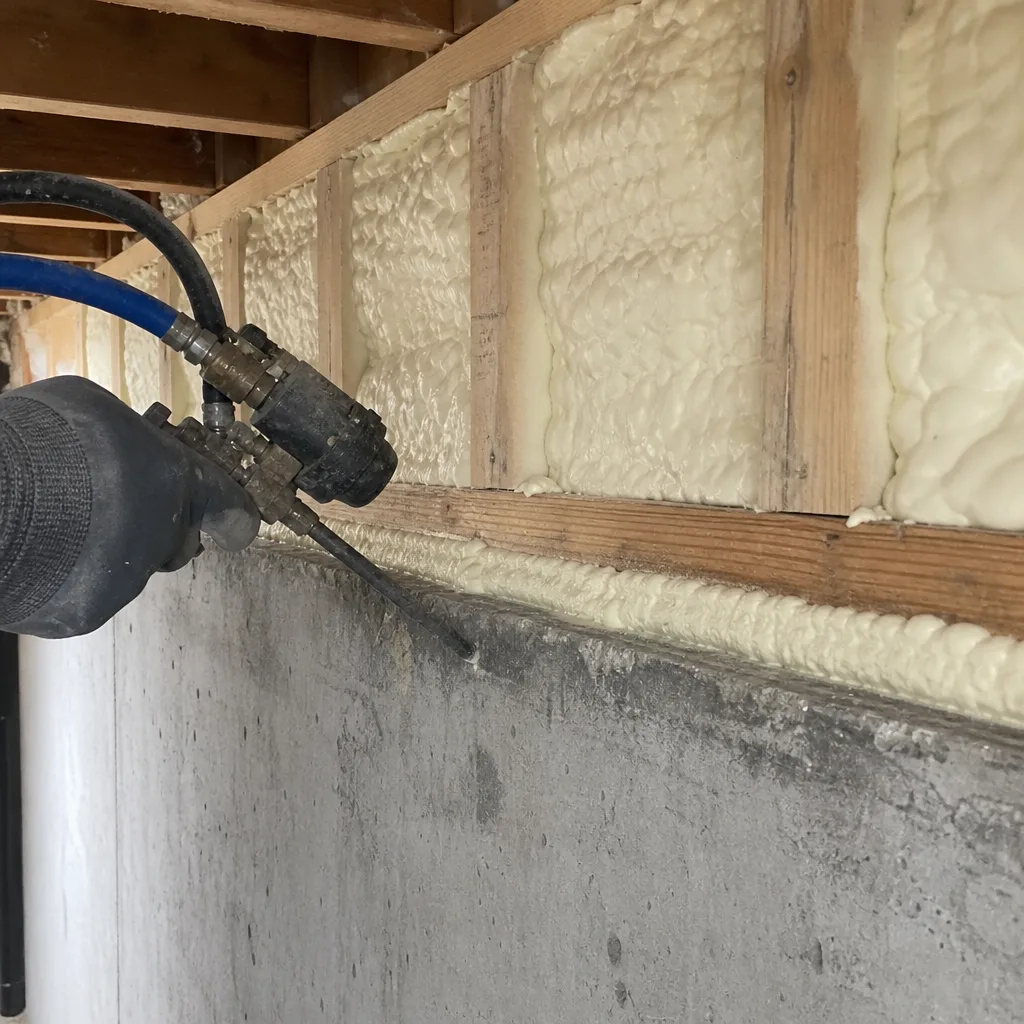
In older San Antonio Heights homes, rim joists are a major air and moisture penetration point. Canyon winds find their way in through the rim board, and the result is cold floors in winter and dust infiltration during Santa Ana events. Two inches of closed-cell spray foam at the rim joist seals the assembly, stops air movement, and adds structural rigidity while serving as a vapor barrier. On roof decks, closed-cell handles the thermal cycling from 150°F daytime heat to 40°F nights without the settling and R-value loss we see in blown-in products.
Open-Cell for Interior Walls and Tight Cavities
For interior wall cavities and areas where a vapor-permeable foam is the right call, we use open-cell formulations. It expands more aggressively than closed-cell, filling irregular cavities left by decades of settling and old wiring chases. In San Antonio Heights custom homes with odd framing, open-cell gets into the places fiberglass batts never could. It’s also a better acoustic performer, which matters when your neighbor’s property line is close enough to hear a conversation.
Spray Foam Attic Insulation in San Antonio Heights
Spray Foam Attic Insulation in San Antonio Heights is a different animal than attic work in the flatlands, because these attics bake. Under dark composition shingles at 1,800 feet, attic temperatures routinely exceed 150°F from June through September, cooking whatever insulation is installed and stressing the HVAC system below it. When we spray foam an attic in San Antonio Heights, we’re typically moving the thermal boundary from the attic floor to the roofline itself.
Unvented Attic Conversions for Foothill Homes
The standard San Antonio Heights attic we see is vented, dusty, and full of either degraded fiberglass batts or settled cellulose. Converting to an unvented, conditioned attic with closed-cell foam on the roof deck changes how the whole upper floor performs. Ductwork, often original to mid-century builds and leaky at every seam, now lives inside the conditioned envelope. The temperature swings stop. The wind-driven dust and occasional rain that sneaks through ridge vents in foothill storms stops too.
Air Sealing at the Roof-Wall Junction
Before foam goes into a San Antonio Heights attic, we inspect the roof-wall junction carefully. Wind-driven rain and canyon gusts push moisture behind unsealed fascia and soffit lines, and if that moisture gets trapped behind poorly applied foam, you get delamination and hidden rot. Proper air sealing at the junction, then a continuous foam layer, means the assembly sheds wind instead of absorbing it.
Trusted Brands We Service in San Antonio Heights
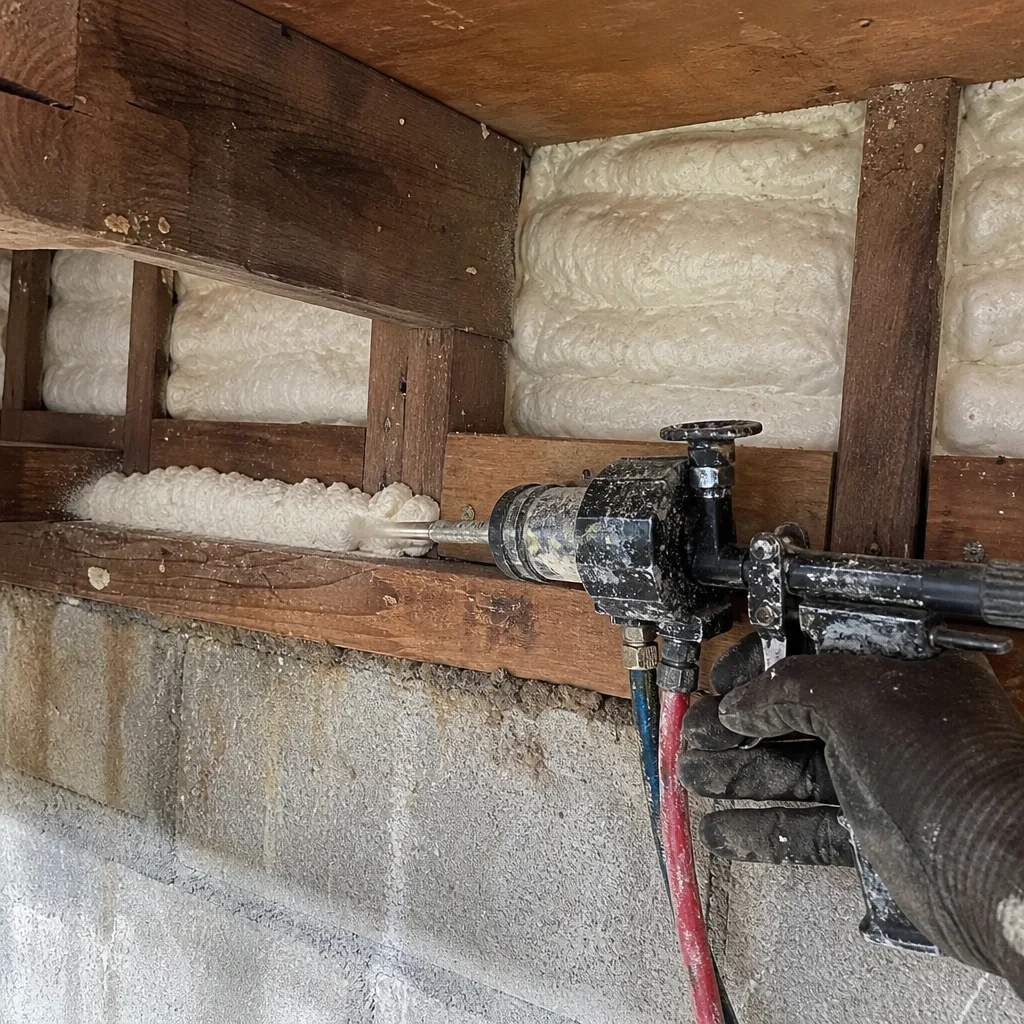
Our San Antonio Heights customers have access to a material library most insulation contractors can’t match. For spray foam specifically, we install Icynene and Demilec products, two of the most recognized names in the category. Icynene open-cell is our go-to for interior walls and tight cavities. Demilec closed-cell is what we reach for on roof decks, rim joists, and anywhere moisture is a concern. Alongside the foam lines, we stock GreenFiber cellulose for homes where a blown-in approach makes more sense, and Owens Corning fiberglass for targeted repairs. The point isn’t brand loyalty. The point is the right material for the specific San Antonio Heights failure mode you’re dealing with. When you call us, you get a recommendation based on what your house needs, not what our warehouse happens to have the most of.
Common Spray Foam Insulation Problems We See in San Antonio Heights Homes
- Foam applied over legacy rock-wool or vermiculite without testing. Original rock-wool insulation in 1950s and 1960s San Antonio Heights homes often contains asbestos or vermiculite that needs testing before removal. Spraying closed-cell foam directly over compromised material traps moisture and creates a hidden mold environment in the wood-frame assembly.
- Too-thin foam on vaulted ceilings cracking at thermal stress points. Many mid-century custom homes in San Antonio Heights have vaulted ceilings that experience extreme thermal cycling. Foam installed at less than recommended thickness fails to bridge the expansion and contraction cycle, leading to cracks and lost air seal.
- Unsealed roof-wall junctions letting wind-driven rain behind the foam. Foothill geography means wind-driven rain falls harder here than in Upland or Claremont below. When the roof-wall junction isn’t properly sealed before foam goes on, moisture gets driven behind the insulation layer, causing delamination, mold, and R-value loss.
- Pest pressure compromising insulation integrity in older wood-frame construction. Rodents and insects find foothill homes attractive, especially when aging insulation offers easy tunneling paths. Spray foam’s dense structure resists pest intrusion far better than fiberglass or cellulose, but only when applied as a continuous, properly adhered layer.
Pricing for Spray Foam Insulation in San Antonio Heights, CA
Open-cell spray foam in San Antonio Heights typically runs $2.50 to $4.00 per board foot. Closed-cell runs $4.00 to $6.50 per board foot because of its higher density, greater R-value per inch, and water-resistant properties. A rim joist job on an average 1,800-square-foot foothill home lands around $1,800 to $3,200. A full roof deck conversion on a 2,200-square-foot mid-century home runs $9,000 to $14,000, while a smaller vaulted ceiling treatment might be $4,500 to $7,000. The biggest cost variables are foam depth, square footage, accessibility of the attic assembly, and whether legacy insulation needs testing and removal first. Call (855) 773-6429 for a free, specific estimate. We’ll measure, inspect, and give you a number that won’t shift at the end of the job.
We Also Serve Cities Near San Antonio Heights
Placentia Insulation regularly works in San Antonio Heights and the surrounding foothill and valley communities. If you’re in Upland, Claremont, Rancho Cucamonga, or Montclair and need a Spray Foam Insulation specialist who knows the local building stock, we’re a phone call away. The climate varies block by block out here, and our material recommendations follow that geography.
Serving San Antonio Heights, CA — Our Local Coverage Area
We’re based in the San Antonio Heights area and know this community well. Use the map below to see our service coverage — if you’re nearby, we can almost certainly help.
FAQs About Spray Foam Insulation in San Antonio Heights
Spray foam works better in San Antonio Heights attics because closed-cell foam doesn’t settle or lose R-value under the extreme thermal cycling that 150°F+ attic temperatures cause. Blown-in cellulose and fiberglass settle over time, especially when heated repeatedly, losing loft and leaving gaps. Closed-cell foam, applied to the roof deck, creates a continuous air and thermal barrier that holds its R-value decade after decade and stops the attic bake before it starts. Call (855) 773-6429 for an attic assessment and a straight answer about what your home needs.
Test it before anything else. Original rock-wool and vermiculite in San Antonio Heights homes built before 1990 may contain asbestos, and the testing costs a few hundred dollars against the risk of spraying foam directly over a contaminated or compromised material. Our process on these homes is always the same: test, remove if needed, air-seal, then apply closed-cell foam to a clean substrate. We don’t skip this step, and you shouldn’t let any contractor convince you to.
Closed-cell spray foam provides an air and moisture barrier in one monolithic layer, which matters in San Antonio Heights because wind-driven rain and canyon gusts push water into places it doesn’t belong. The foam seals cracks, gaps, and junctions that wind exploits, and unlike batts or loose-fill, it doesn’t shift or leave gaps when wind pressure changes. The result is an assembly that sheds water instead of absorbing it, even during the worst foothill storms.
Yes, spray foam significantly reduces pest pathways in older wood-frame San Antonio Heights homes because its dense, continuous structure offers no tunneling medium the way fiberglass batts and cellulose do. Rodents and insects that worked their way through original insulation find closed-cell foam effectively impassable. It’s not a replacement for pest control, but it removes the comfortable bedding material that attracts them and seals the entry gaps they use.
Spray foam is not just suitable for vaulted ceilings in San Antonio Heights, it’s often the best option, but it has to be applied at the right thickness with proper air sealing at every junction. Vaulted ceilings in mid-century custom homes present limited cavity space, and spray foam’s high R-value per inch means you get real thermal performance in a shallower assembly than fiberglass would ever allow. The key is closed-cell foam, applied continuously to the roof deck, not piecemeal in the cavities. Call (855) 773-6429 and Alan or a member of our team will walk that specific ceiling with you.
On a 1962 custom home in San Antonio Heights, we found original rock-wool insulation in the vaulted ceiling that had settled to R-7 and showed signs of rodent tunneling. After testing for asbestos and vermiculite, we removed the old material, air-sealed the attic floor, and applied 2 inches of closed-cell spray foam to the underside of the roof deck, bringing the assembly to R-13 and eliminating the 150°F attic bake that had been stressing the HVAC. The homeowner reported a 20°F reduction in upstairs summer temperatures. That’s the difference between a foam job and a foam job done to the standard these foothill homes actually demand.
When you’re ready to solve the attic problem for good, call Placentia Insulation at (855) 773-6429. We serve all of San Antonio Heights, from the foothill properties off Mountain Avenue to the neighborhoods near Beryl Park and along Euclid Avenue. Free estimates, honest recommendations, and the right material for the job. Alan Whitcomb and the whole team answer the phone ready to talk about your house, not a script.
Written by Alan Whitcomb, Owner at Placentia Insulation, serving San Antonio Heights and the surrounding foothill communities with dedicated spray foam, attic, and blown-in insulation expertise.