
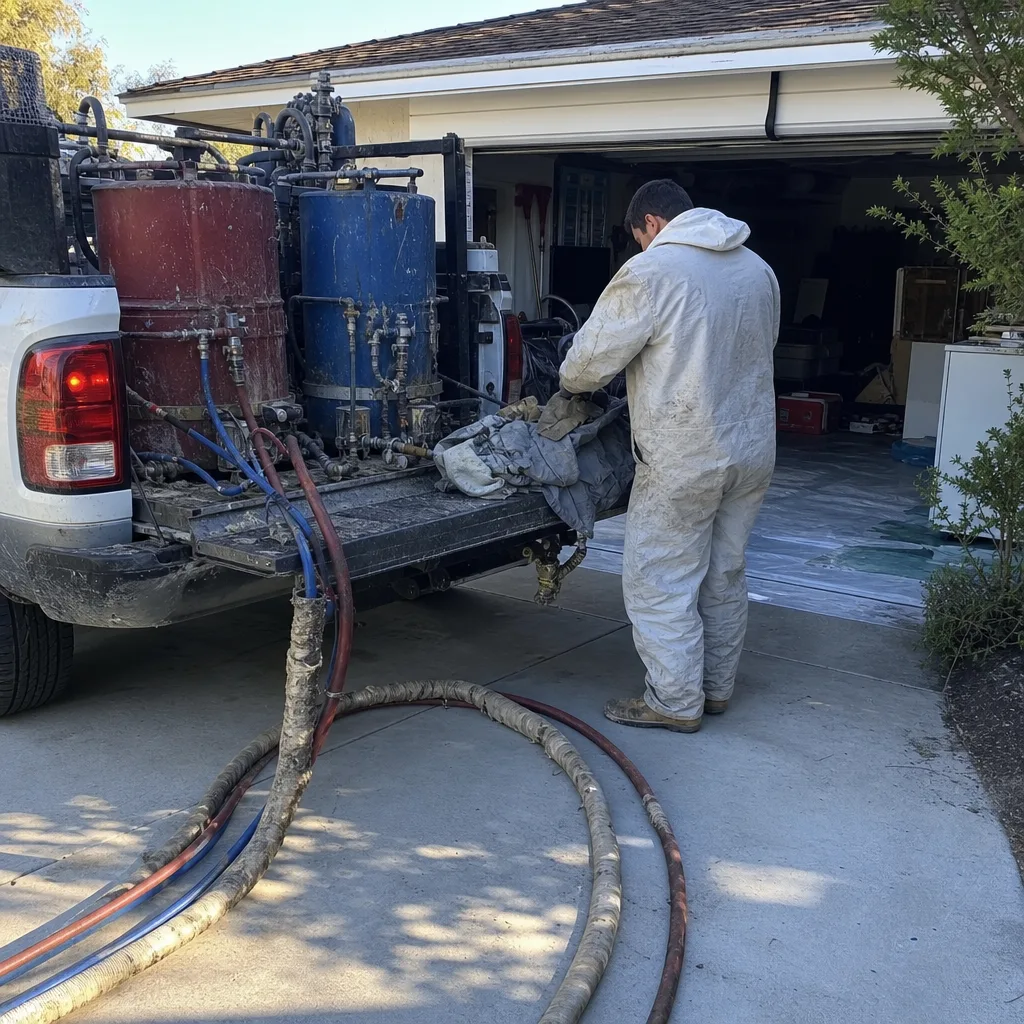
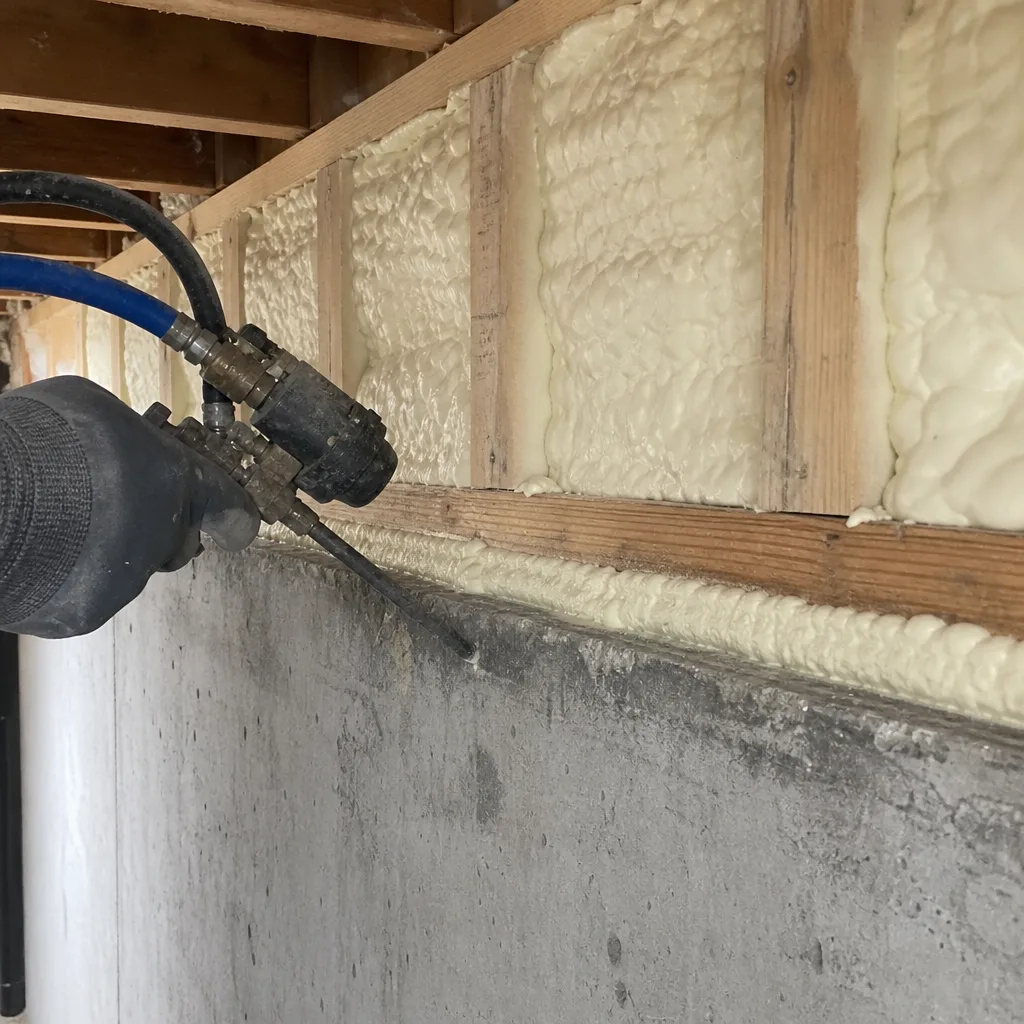
Fast, Reliable Spray Foam Insulation Across San Joaquin Hills
Spray foam insulation in San Joaquin Hills is rarely just about adding R-value. The homes here, built into canyon rims above Crystal Cove and along the 92657 corridor, take a steady beating from onshore marine wind and afternoon sun. We approach most jobs as air-sealing work first. That means closed-cell foam on windward rim joists, open-cell foam in overheated cathedralized attics, and enough product knowledge to spec the right foam chemistry for each condition. Placentia Insulation has been serving San Joaquin Hills homeowners who want performance upgrades without disturbing high-end architectural finishes. If you’re fighting drafty cantilevered floors or a great room that cooks by 3 p.m., call (855) 773-6429 and we’ll walk the envelope with you.
Why Placentia Insulation Is San Joaquin Hills’s Preferred Spray Foam Insulation Company
Most insulation contractors carry one or two product lines. We carry eight: Owens Corning, Johns Manville, Knauf, Rockwool, CertainTeed, Icynene, Demilec, and GreenFiber. That matters in San Joaquin Hills because no two canyon homes fail the same way. A ridge-top home with south-facing glass needs a different foam strategy than a shaded hillside property that never dries out on the windward side. We match the material to the job, not the job to whatever we have on the truck.
Our Spray Foam Insulation crews work on one trade and one trade only. No plumbing calls in the morning and insulation in the afternoon. That focus shows up in how we handle complex envelopes: vaulted great rooms, cantilevered decks over slopes, and glazed walls that create irregular joint lines most generalists miss.
Alan Whitcomb built Placentia Insulation around a single idea: insulation is a system decision, not a commodity purchase. His crews know open-cell from closed-cell, Icynene from Demilec, and when Rockwool’s fire rating beats a foam product outright. That’s the kind of product fluency San Joaquin Hills homeowners tell us they couldn’t find with single-brand shops.
Open Cell Spray Foam in San Joaquin Hills
Open Cell Spray Foam is what we typically spec for cathedralized attics above vaulted great rooms in San Joaquin Hills, where the afternoon sun on a tile roof superheats the airspace and radiates down through the ceiling. Open-cell foam, particularly Icynene’s low-density formula, expands into irregular rafter bays and air-seals the underside of the roof deck without adding the structural weight of a closed-cell product. A typical cathedralized attic above a vaulted ceiling in San Joaquin Hills runs $4,800 – $8,500 for open-cell application, depending on slope complexity and access.
Homeowners with south or west-facing canyon walls get hit hardest. The solar gain through floor-to-ceiling glass warms the great room, and the unsealed attic above acts like a convection oven, keeping that heat pressed against the ceiling. Open-cell foam breaks that cycle by sealing the roof deck. The result is measurable: bedroom and living spaces hold temperature longer, and the AC doesn’t cycle as aggressively on hot afternoons.
Canyon-Facing Vaulted Ceilings
Vaulted ceilings over canyon slopes are rarely insulated well from original construction. Builders relied on narrow rafter bays and thin batts that settle and bypass. Open-cell foam fills those bays completely and adheres to the deck. The foam’s air-sealing properties matter more than its R-value in this application, because the leaks are what drive the comfort complaints.
Windward Wall Cavity Sealing
On windward canyon walls, we often pair open-cell foam in the ceiling with targeted closed-cell at the rim. The open-cell handles the overhead heat and acoustic dampening. The closed-cell handles the air pressure differential where marine wind pushes against the wall and floor junction. Two products, two jobs, one envelope.
Spray Foam Insulation Contractors in San Joaquin Hills
Spray Foam Insulation Contractors in San Joaquin Hills need to understand coastal canyon failure patterns, not just foam chemistry. The homes here are not simple rectangles. They’re multi-story, Mediterranean-style structures with stucco exteriors, tile roofs, and floor-to-ceiling glass. That means the envelope has dozens of irregular joints: header intersections, cantilevered deck penetrations, recessed lighting in vaulted ceilings, and wall-to-roof transitions. A competent contractor finds those joints and seals them before thinking about R-value. A typical whole-envelope spray foam package in San Joaquin Hills runs $7,200 – $14,000 depending on square footage and the number of rim joist and cathedralized attic surfaces.
We spec Demilec closed-cell foam for rim joists, cantilevered floor cavities, and any surface exposed to marine air infiltration. Closed-cell foam cures into a rigid air barrier that doesn’t get blown back or bypassed the way fiberglass batts do under steady onshore wind. For cathedralized attics, we lean on Icynene open-cell to seal the roof deck without locking moisture into the assembly. The distinction matters here, and it’s the kind of material decision single-brand contractors simply can’t make.
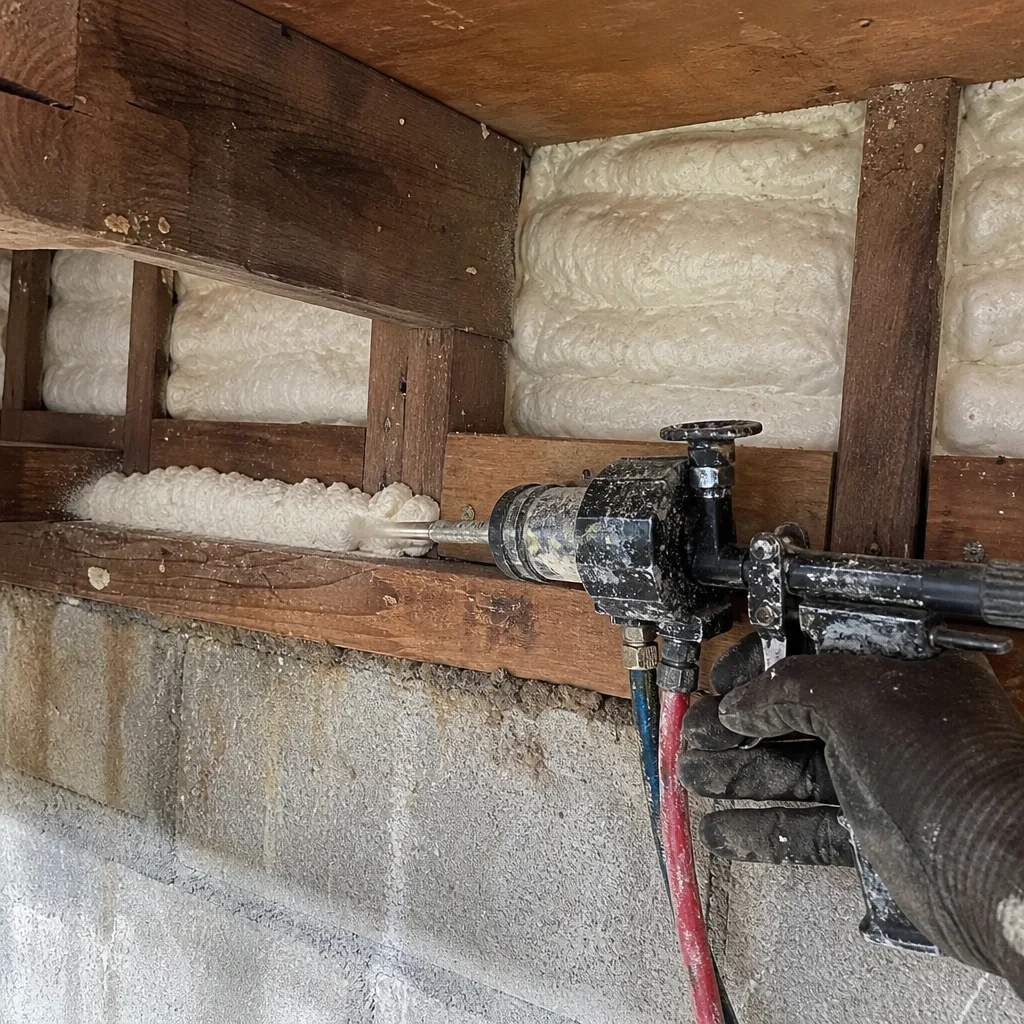
Closed-Cell at the Rim and Cantilever
Rim joists and cantilevered floor cavities are the first casualties in a wind-driven canyon climate. Closed-cell foam at two inches or more creates a continuous air and moisture barrier at the exact plane where marine air pushes hardest. This stops the draft at the source instead of burying it under more batts.
Open-Cell at the Roof Deck
Above vaulted great rooms, open-cell foam seals the roof deck and cuts radiant heat transfer from tile roofs that sit in direct afternoon sun. It also damps noise from wind and the distant hum of Laguna Canyon Road traffic. For a second-story bedroom over a great room, that acoustic benefit is immediate.
Trusted Brands We Service in San Joaquin Hills
We stock and apply spray foam from Icynene and Demilec, two of the most established names in foam chemistry. We also carry CertainTeed and GreenFiber products for homes where a hybrid approach makes more sense. Having four brands of insulation material on the truck for a San Joaquin Hills job means we don’t have to force a product into an application it wasn’t designed for. If a homeowner prioritizes fire resistance, Rockwool mineral wool sits alongside the foam options. If recycled content matters, GreenFiber blown-in cellulose covers it. Eight brands. Three methods. One specialty.
Common Spray Foam Insulation Problems We See in San Joaquin Hills Homes
- Wind-blown rim joist batts. Steady afternoon marine wind pushes fiberglass batts back from the rim joist on canyon-facing walls. The cavity looks insulated until you pull the trim and see daylight. Closed-cell foam cures this permanently.
- Overheated cathedralized attics. South and west-facing tile roofs absorb sun all afternoon. The unsealed attic above a vaulted great room radiates that heat down into the living space. Open-cell foam at the roof deck stops the convection loop.
- Drafty cantilevered floor systems. Cantilevered decks over canyon slopes create floor cavities that act as wind scoops. Air enters at the rim and travels through the floor system into the home. Foam the rim and the floor plane tightens up.
- Unsealed glazing header joints. Floor-to-ceiling glass on multi-story homes creates long, irregular header joints where drywall meets framing. These joints leak air and are easy to miss during a visual inspection. A spray foam contractor who knows the local architecture flags them immediately.
Pricing for Spray Foam Insulation in San Joaquin Hills, CA
In San Joaquin Hills, a rim joist and cantilever sealing package typically runs $2,200 – $4,800 for most two-story homes. For a full cathedralized attic above a vaulted great room, expect $4,800 – $8,500 for open-cell application with Demilec or Icynene. Whole-envelope packages that combine rim, cantilever, and attic surfaces land between $7,200 and $14,000. Access conditions change pricing: a steep canyon lot with tight clearance or a three-story scaffold setup adds to the job. We provide itemized estimates so you see the cost per surface, not a single lump number. Call (855) 773-6429 for a free estimate in San Joaquin Hills. Estimates are free, and we don’t charge for the conversation.
We Also Serve Cities Near San Joaquin Hills
Beyond San Joaquin Hills, Placentia Insulation regularly serves Spray Foam Insulation in San Joaquin Hills and neighboring communities including Aliso Viejo, Newport Beach, Laguna Beach, and Irvine. The coastal canyon conditions in those areas mirror what we see here, so the same product knowledge and failure-pattern experience transfers directly. If you’re in one of those cities and facing similar issues, call us.
Serving San Joaquin Hills, CA — Our Local Coverage Area
We’re based in the San Joaquin Hills area and provide Reflectix service in San Joaquin Hills, and we know this community well. Use the map below to see our service coverage — if you’re nearby, we can almost certainly help.
FAQs About Spray Foam Insulation in San Joaquin Hills
Because the failure mode here is wind-driven air infiltration, not missing insulation or mold, the steady onshore marine wind pushes against canyon-facing walls and blows batt insulation back from rim joists and cantilevered floor cavities. Spray foam seals those cavities with a rigid air barrier that wind can’t bypass. Inland homes don’t face the same pressure differential, so their insulation problems are usually simpler. Call (855) 773-6429 and we’ll inspect your rim joists and attic before recommending anything.
Yes. We access the cathedralized attic from the interior, not through the roof assembly, so the tile roof and Santa Barbara-style stucco exterior stay untouched. Open-cell foam is applied directly to the underside of the roof deck from the attic cavity. The work happens inside the envelope, so your architectural finishes are preserved. This is standard practice for us on San Joaquin Hills homes with vaulted ceilings. Call (855) 773-6429 for a site walk and a specific plan.
The rim joist and the batts sitting against it. Marine wind gets under the cantilever and pushes the insulation inward, leaving a gap where air rushes through the floor. You feel it as cold drafts through floor registers or along baseboard trim. We fix it with closed-cell foam at the rim, which creates a permanent air and moisture seal. A typical cantilevered floor sealing job in San Joaquin Hills runs $2,200 – $4,800. Call (855) 773-6429 and we’ll inspect the rim from below.
Usually both. The glazed walls create big header joints and window-to-wall transitions that leak air. Closed-cell foam seals those joints and the rim joists with a dense air barrier. The cathedralized attic above the great room, heated by sun through the glass, gets open-cell foam to break the convection loop. So the answer for most glass-heavy homes is closed-cell at the rim, open-cell at the deck. We spec Demilec for the closed-cell and Icynene for the open-cell in most of these applications. Call (855) 773-6429 for a free estimate.
Yes. The wind pressure on canyon-facing rims requires a closed-cell product with high compressive strength and reliable adhesion, which is why we typically spec Demilec. The solar gain in cathedralized attics above vaulted great rooms calls for an open-cell product that air-seals the deck without trapping moisture, which is why we lean on Icynene. The local climate dictates the chemistry, and because we carry both brands, we don’t have to force one product into the wrong application. Call (855) 773-6429 and we’ll explain the difference on your specific home.
Written by Alan Whitcomb, Owner at Placentia Insulation, serving San Joaquin Hills and surrounding coastal canyon communities since the company’s founding.