
Spray Foam Insulation in South Gate: Costs, Options, and What Actually Works in 90280 Homes
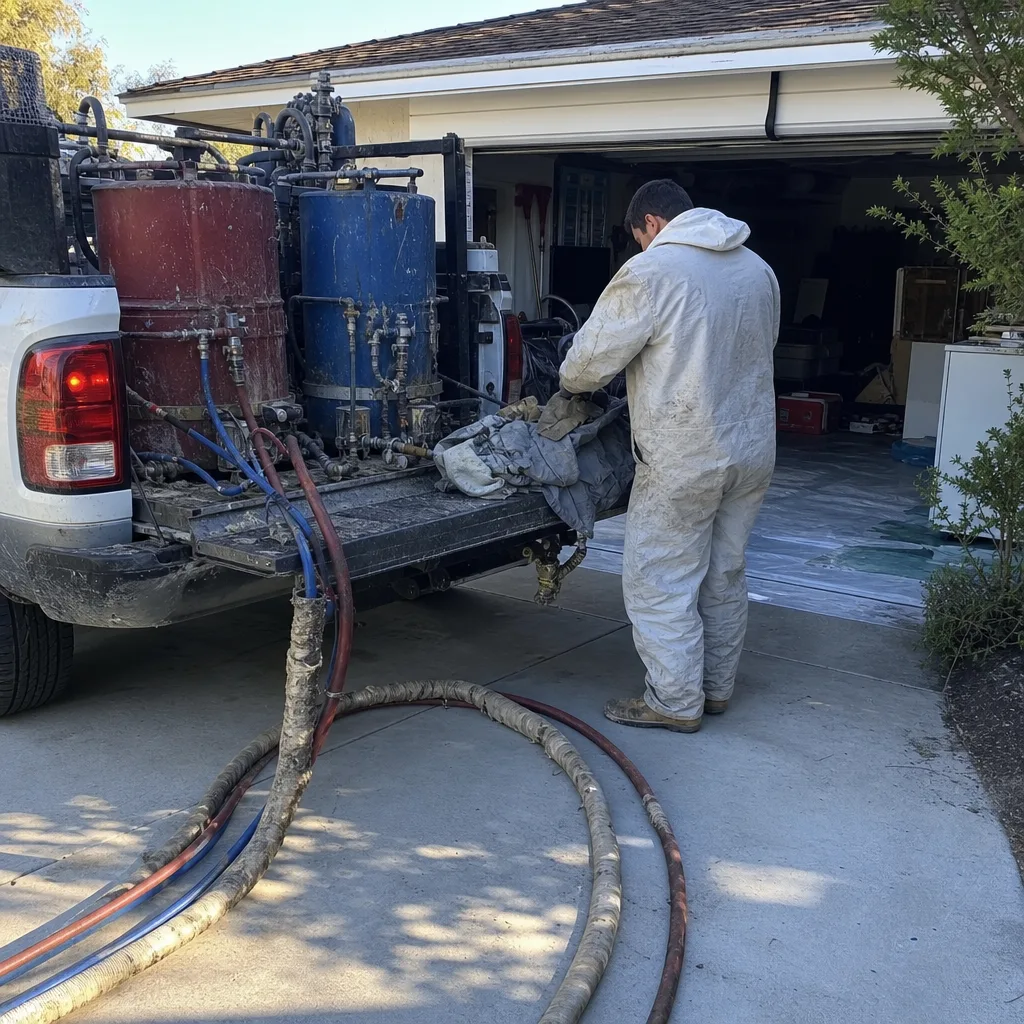
Spray foam insulation in South Gate typically costs $2.50 to $7.00 per board foot installed, with most whole-attic retrofits on the 1940s-1970s stucco tract homes that dominate 90280 landing between $4,500 and $11,000 depending on foam chemistry and square footage. Open-cell runs lower, closed-cell higher. The reason foam matters more here than in newer LA suburbs is simple: most South Gate houses were built with zero attic insulation, and that uninsulated attic acts like a heat battery from noon to sunset. Call (855) 773-6429 and we can tell you within fifteen minutes whether your house is a candidate and roughly what it’ll cost.
Why Placentia Insulation Handles Spray Foam Differently in South Gate
We’re an insulation-only contractor, which means every crew member who shows up in South Gate spends their entire week thinking about thermal envelopes, air sealing, and moisture movement, not rotating between plumbing and drywall jobs. Most insulation companies carry one or two product lines. We carry eight: Owens Corning, Johns Manville, Knauf, Rockwool, CertainTeed, Icynene, Demilec, and GreenFiber. That breadth matters here because South Gate’s housing stock isn’t uniform. A 1948 bungalow off Firestone Boulevard needs a different material strategy than a 1972 ranch near South Gate Park, and we match the material to the job, not the job to whatever we have on the truck.
Our work in South Gate has taught us the area’s specific failure points. Alan Whitcomb, who leads our team, has walked enough South Gate attics to know that original low-clearance framing from the Eisenhower era changes how foam gets applied. The Spray Foam Insulation work we do here skews heavily toward retrofit air sealing on homes that never had insulation in the first place, which is a different discipline than spraying new construction. We’re not a generalist contractor adding foam as a side service. We’re specialists who know 90280’s housing stock, its heat-island attic problem, and which foam chemistry solves it without creating new issues.
Closed Cell Spray Foam Insulation in South Gate
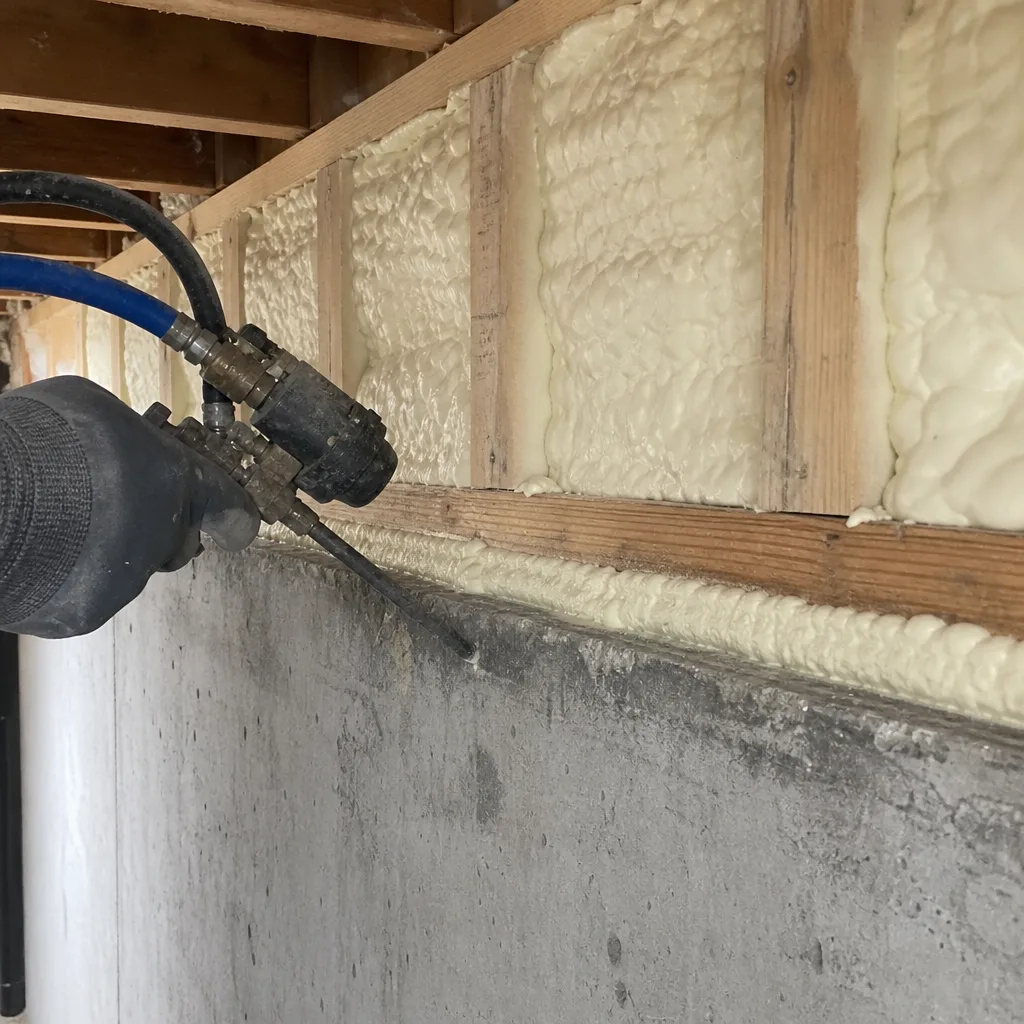
Closed Cell Spray Foam Insulation is the right call for many South Gate homes because it delivers the highest R-value per inch of any insulation we install, roughly R-6.5 to R-7 per inch, and it acts as a structural stiffener and vapor barrier at the same time. South Gate homes with low-pitch or flat roofs and tight attic clearances often can’t physically hold enough fiberglass batt to hit a useful R-value. Closed-cell foam solves that by packing maximum thermal resistance into minimal depth.
Roof Deck Application for South Gate’s Low-Pitch Homes
On a 1950s bungalow off Alexander Avenue, our crew found an attic with zero insulation and low-clearance original framing that made blown-in fiberglass impractical. We applied closed-cell spray foam from Icynene to the roof deck, sealing the hot west-facing slope that had been baking the bedrooms by 2 p.m. The homeowner reported the back rooms finally holding temperature through the afternoon. That’s the application most South Gate homeowners need because their attic geometry doesn’t leave room for traditional insulation paths.
When Closed-Cell Beats Blown-In
If your South Gate attic has less than about four feet of clearance at the ridge, blowing in loose-fill often leaves the exterior walls and soffit areas under-insulated. Closed-cell foam gets sprayed directly onto the roof deck, turning the attic into conditioned space and stopping heat gain before it enters. For homes near the 710 corridor or around Hollydale, where the urban heat-island effect pushes attic temperatures past 130°F on summer afternoons, that’s the difference between an AC that cycles off and one that runs from noon to midnight.
Expect to pay $5.50 to $7.00 per board foot for closed-cell in South Gate. A typical 1,000-square-foot attic at three-inch depth runs $6,500 to $9,000.
Open Cell Spray Foam in South Gate
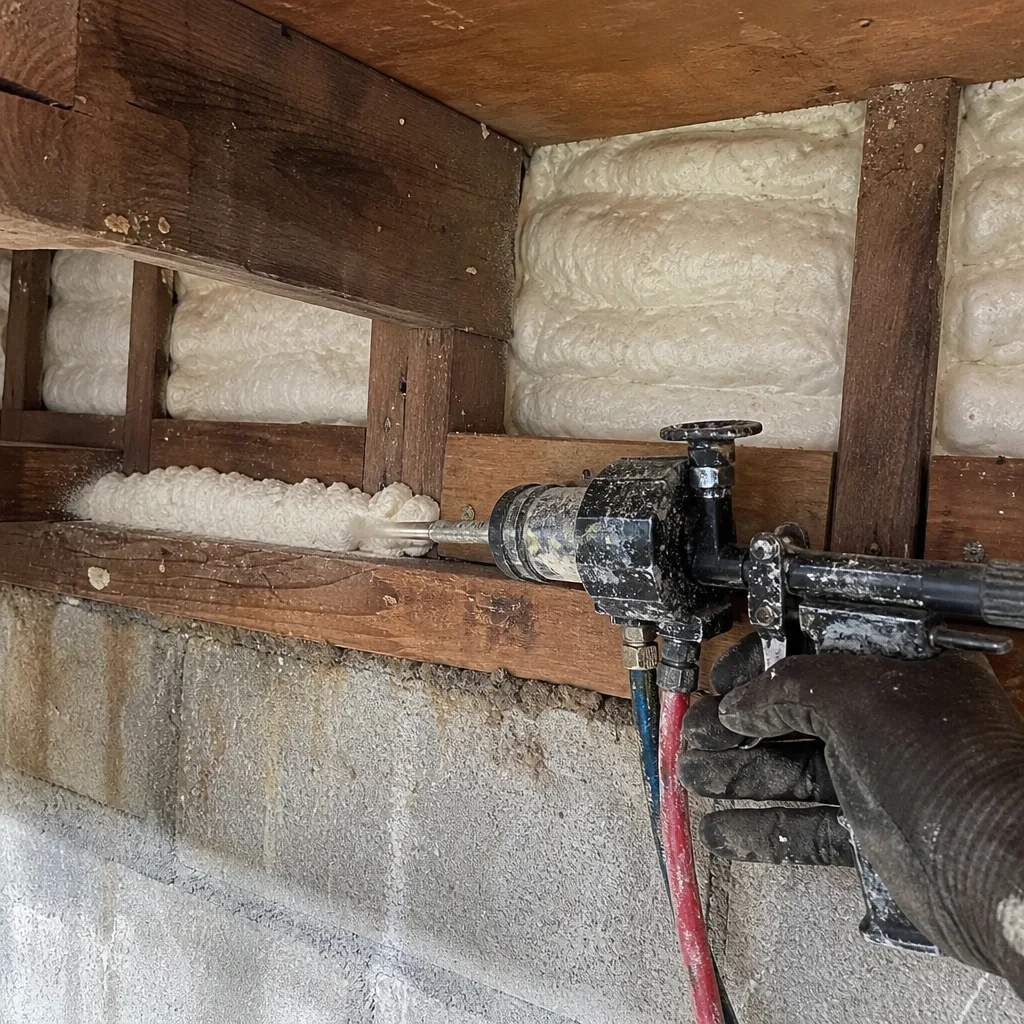
Open Cell Spray Foam is the better value for South Gate homeowners who care more about air sealing than maximum R-value per inch. It runs about R-3.5 per inch, costs less, and expands aggressively to fill odd framing gaps in old tract homes. In a dense grid like South Gate, where attics from the 1940s through 1960s have irregular joist spacing and original framing that moved over decades, open-cell’s expansion fills those voids in a way rigid boards or batts can’t.
Attic Floor Air Sealing Before Blown-In
On a 1960s tract house near South Gate High School, we used open-cell foam to air-seal the attic floor before blowing in loose-fill, cutting the cooling load in a home that had never had insulation. This combination strategy works well in South Gate because it gets open-cell’s air sealing benefit where air leaks live, then adds thermal mass from cellulose on top, all at a price point about 30% lower than full closed-cell roof deck work.
Low-Clearance Attics Without Roof Deck Conversion
When the ridge is tight but the homeowner doesn’t want to convert the attic to conditioned space, open-cell on the attic floor makes sense. It’s also the right answer for South Gate homeowners who plan to sell within a few years and don’t want to over-invest. Expect $2.50 to $4.00 per board foot, with common South Gate jobs running $3,500 to $6,000.
Trusted Brands We Stock for South Gate Work
We stock Icynene and Demilec spray foam products so South Gate customers aren’t waiting on a distributor order. Icynene’s open-cell and closed-cell lines cover most South Gate retrofit scenarios, and Demilec gives us a second chemistry option when a specific substrate or code condition calls for it. Both manufacturers have decades of field data in hot-climate applications, which matters in 90280’s inland-basin heat. We also carry Rockwool mineral wool and GreenFiber blown-in for hybrid systems where foam handles the air sealing and those products handle the thermal or acoustic layer.
Common Spray Foam Insulation Problems We See in South Gate Homes
- Foam sprayed over existing roof leaks. South Gate’s flat and low-pitch roofs on 1950s tract houses often have hidden flashing failures. Spraying closed-cell on the underside of that roof deck without first checking for active leaks traps moisture in original wood framing and accelerates rot. We inspect before we spray.
- Missing thermal or ignition barriers. Open-cell foam in a hot, unvented South Gate attic without a barrier is a code violation and a fire risk in tight, low-clearance spaces. We’ve corrected several such installations for homeowners who hired less careful contractors.
- Foam encasing aging wiring. South Gate’s 1940s-60s attics sometimes still contain original knob-and-tube or deteriorated wiring. Foam sprayed directly over that wire without an electrician’s inspection creates a heat-trapping situation. We flag it and coordinate before proceeding.
- Incomplete coverage at soffit and eave lines. Dense lot coverage and tight eaves make South Gate attics hard to reach. We see incomplete spray jobs where installers skipped hard-to-reach corners. Those gaps become heat channels that undermine the whole system.
Pricing for Spray Foam Insulation in South Gate, CA
A typical open-cell attic floor job in South Gate runs $3,500 to $6,000. Closed-cell roof deck work on the same footprint lands between $6,500 and $9,000. Rim joist spray foam, common in the raised-foundation homes near Lynwood’s border, usually runs $900 to $1,800 for a standard 1,200-square-foot home. Garage ceiling spray foam runs $1,200 to $2,400. What drives the number: foam chemistry, square footage, depth required, and whether your attic has existing insulation to remove first. Call (855) 773-6429 for a free estimate with exact numbers, not ranges.
We Also Serve Cities Near South Gate
Beyond South Gate, our crews regularly work in South Gate and the surrounding southeast LA area including Lynwood, Huntington Park, Walnut Park, and Bell. Same response windows and same material access apply.
Serving South Gate, CA — Our Local Coverage Area
We’re based in the South Gate area and know this community well. Use the map below to see our service coverage — if you’re nearby, we can almost certainly help.
FAQs About Spray Foam Insulation in South Gate
No, and for many South Gate homes foam is actually the more practical choice. A 1955 attic with severely constrained headroom can’t hold enough blown fiberglass to reach a meaningful R-value, and fiberglass does nothing for air sealing. Closed-cell foam on the roof deck gives you both insulation and air sealing in a few inches of depth. If budget is the concern, open-cell plus blown-in is a solid middle path. Call (855) 773-6429 and we’ll tell you which route fits your attic geometry.
Yes. That’s actually one of the most common scenarios we handle in South Gate’s 1940s and 50s houses. Technicians work from the top down with specialized spray equipment designed for low-clearance work. The tighter the space, the more closed-cell foam makes sense because it maximizes R-value per inch. We’ve done many attics where the ridge clearance prevented any other insulation approach.
South Gate’s climate is cooling-load dominant, so we target R-20 to R-30 for roof deck applications, which closed-cell achieves at 3 to 4 inches. For attic floor applications where you’re air sealing and adding blown-in on top, open-cell at 5 to 6 inches plus R-30 cellulose works well. The dense urban heat-island effect across 90280 means the attic, not the walls, is where you lose most of your cooling dollar.
It should not, provided the installation is done to code with proper thermal or ignition barriers where required. We have not had a South Gate customer report an insurance issue on a properly permitted and installed foam job. The bigger insurance risk is the homeowner who self-sprays without an electrician’s check on wiring or without fixing known roof leaks first. Call (855) 773-6429 if you want us to assess your specific home before you commit.
Closed-cell foam is typically re-entry safe within 30 to 60 minutes of spraying, even at South Gate’s summer attic temperatures. Open-cell needs closer to 24 hours to fully cure. Summer heat actually helps the process because the exothermic curing reaction stays efficient in warm, dry conditions, which South Gate’s basin climate delivers consistently from June through October.
Phone: (855) 773-6429. We answer, we show up, and we tell you honestly whether spray foam is the right fix for your South Gate home, or whether a different material does the job better. You’ll never get a default recommendation from us.
Written by Alan Whitcomb, Owner at Placentia Insulation, serving South Gate and surrounding southeast LA since our first retrofit in the area.