
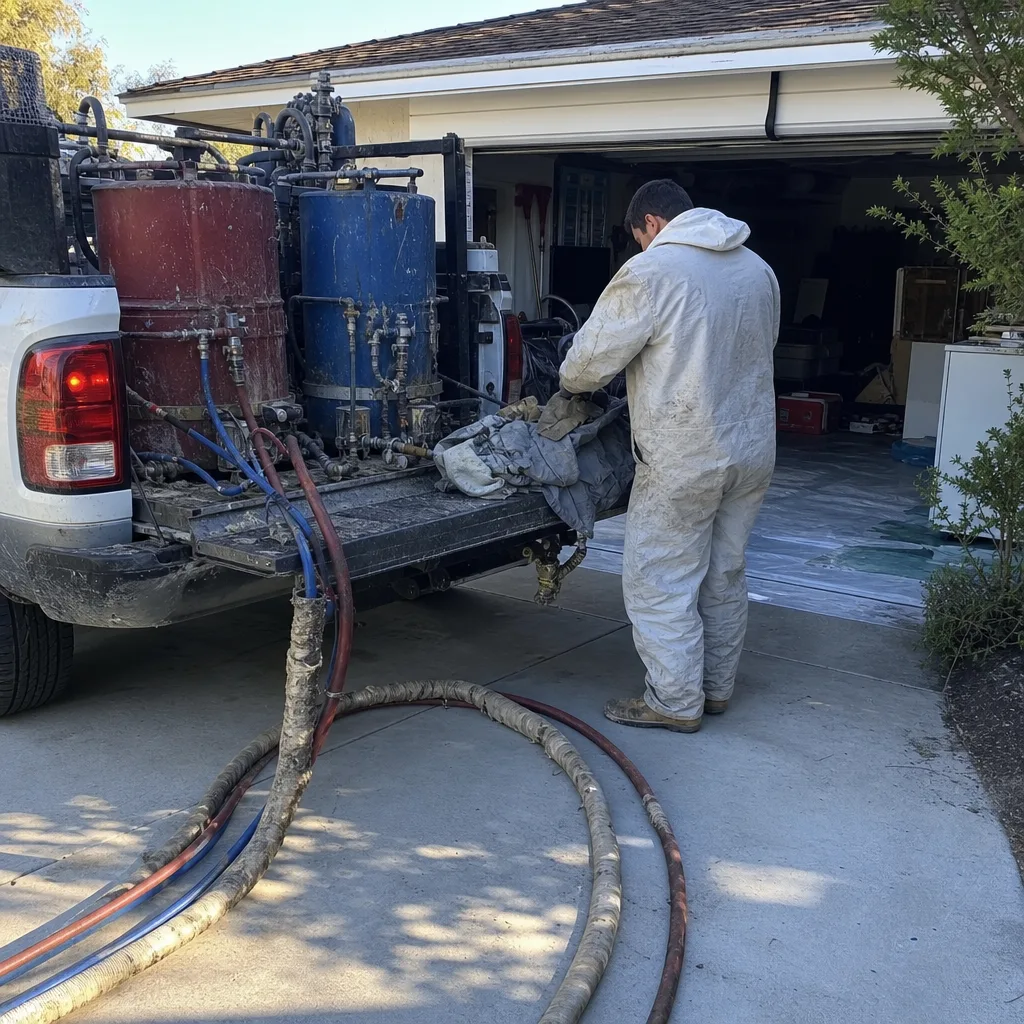
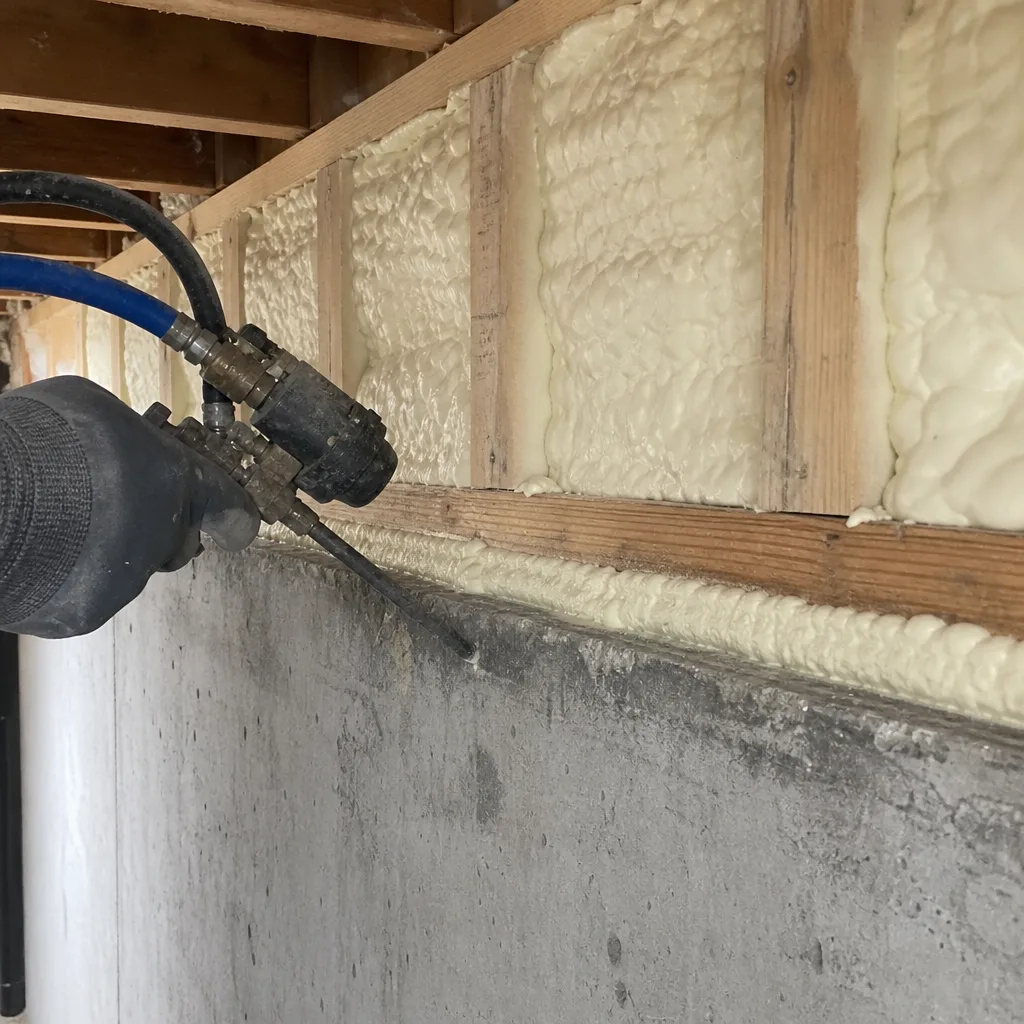
Fast, Reliable Spray Foam Insulation Across Spring Valley Lake
Spray foam insulation in Spring Valley Lake typically costs $2.80 to $6.50 per board foot installed, depending on whether your home needs open-cell or closed-cell foam. Most attic roof deck applications in the community run between $3,800 and $7,200. We respond to Spring Valley Lake service calls within one business day, and our crews know the HOA rules, the older wood-frame construction, and the lake humidity conditions that shape every foam job here. For a straight answer on your home, call (855) 773-6429.
Why Placentia Insulation Is Spring Valley Lake’s Preferred Spray Foam Insulation Company
Spring Valley Lake isn’t a town where you can send a crew that learned insulation yesterday. The housing stock here is specific: wood-frame homes built between 1963 and 1995, many with vaulted ceilings, shake or tile roofs, and original attic insulation that’s been settling for four decades. Alan Whitcomb, who leads our team, has walked enough of these attics to know what lurks under the fiberglass. Our crews understand that a 1970s lake-side home needs a different prep sequence than a 1990s house up against the foothills.
Homeowners here call us because we carry both Icynene and Demilec spray foam lines, which means we can pick the right chemistry for the application instead of forcing whatever product happens to be on the truck. That matters when you’re sealing a roof deck against 90-degree desert heat while HOA rules demand zero exterior changes. We quote a fixed number, we show up when we say we will, and we leave the attic access looking like we were never there. That’s the reputation that keeps our name circulating through Spring Valley Lake’s HOA meetings and block parties.
Call (855) 773-6429 to schedule a walkthrough. We serve the entire 92395 ZIP, from the lake-side streets to the outer rim roads.
Open Cell Spray Foam in Spring Valley Lake
Open Cell Spray Foam is the workhorse application for Spring Valley Lake attics, especially in homes where the roof deck needs an air seal and the budget warrants a foam that performs well without the premium cost of closed-cell. In this community, open-cell foam from Icynene is our standard recommendation for attic roof decks in homes with existing vented attics that need conversion to a conditioned space, or where vaulted ceilings have made traditional insulation nearly useless. Expect to pay $2.80 to $4.20 per board foot installed for open-cell in Spring Valley Lake. A typical 1,800-square-foot ranch with direct attic access will land between $4,200 and $5,900.
Open-cell foam is not for every situation. It absorbs water, which means a roof leak from old shake shingles will soak it just like the fiberglass it replaced. That’s why our pre-install walkthrough in Spring Valley Lake always includes a roof-deck inspection. If we see signs of past leaks, we tell you before we spray a single board foot.
Attic Roof Deck Sealing
The most common open-cell application we handle in Spring Valley Lake is sealing and insulating the attic roof deck to bring the attic inside the home’s conditioned envelope. This solves the single biggest problem in this community: attics that hit 130 degrees in July and bake the ceiling drywall below.
Once the roof deck is foamed, the HVAC ductwork circulating through the attic stops losing conditioned air into a superheated space. Homeowners consistently report cooling bills dropping 25 to 40 percent after a proper roof deck conversion.
Vaulted Ceiling Retrofit
Spring Valley Lake has a high concentration of vaulted ceilings, usually with no attic access at all. The original builders stuffed R-11 or R-19 batts into a shallow rafter cavity and called it done. Fifty years later, that fiberglass is flat, dirty, and doing almost nothing.
Open-cell foam is the retrofit that works here because it expands to fill the entire rafter cavity and adheres to the deck. We install it from below by removing a strip of drywall or working through existing can-light openings, then patch and texture to match. HOA visibility rules make this approach especially relevant: everything happens inside the home envelope, not on the exterior.
Spray Foam Insulation Contractors in Spring Valley Lake
Spray Foam Insulation Contractors in Spring Valley Lake are not all the same, and the difference shows up fast on these older high-desert homes. We are a dedicated insulation contractor. We don’t do HVAC. We don’t patch roofs. Foam is what we do every single day, and in Spring Valley Lake that means we know how to plan a job around HOA visibility restrictions, lake-humidity venting requirements, and the quirks of 1960s-to-1990s wood framing. A closed-cell rim joist package in Spring Valley Lake typically runs $1,100 to $2,400, depending on access and linear footage.
When you hire us, you get Alan Whitcomb’s team from the estimate through the final walkthrough. We match the material to the job, not the job to whatever we have on the truck. That’s the whole reason we stock both Icynene open-cell and Demilec closed-cell foam, and why we don’t have to pretend one product solves every problem.
Closed-Cell Rim Joist Sealing
Rim joists are the single leakiest point on a Spring Valley Lake home’s thermal envelope. Cold winter air finds its way through the band board, and in this climate, a 25-degree January night will push that cold straight into the floor cavities.
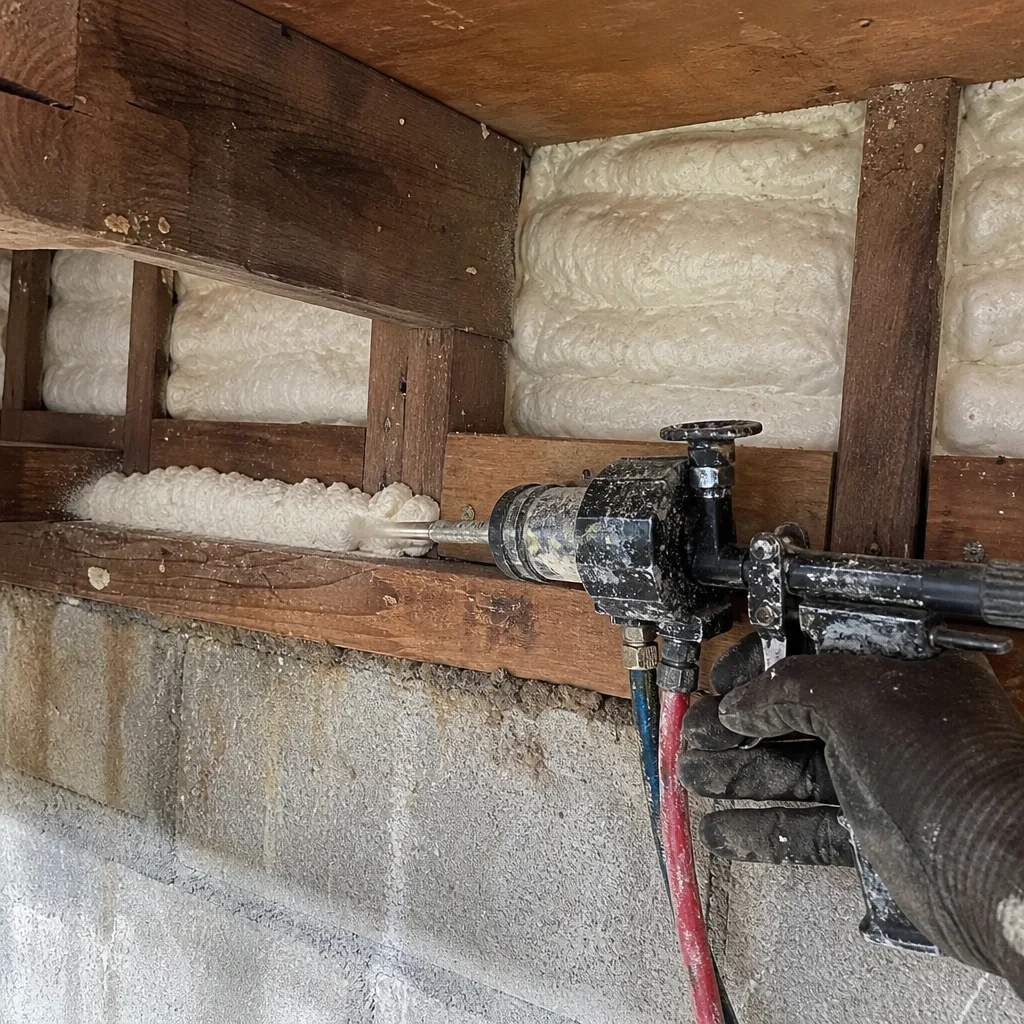
Closed-cell foam seals and insulates the rim in one pass. At roughly 2 inches thick, it stops air movement and adds R-13-plus to a surface that currently has zero insulation on most of these older homes. It also adds structural rigidity to a sill plate area that has dried out after 50 years of desert air.
Garage Ceiling Foam
Attached garages in Spring Valley Lake soak up heat all afternoon, and uninsulated garage ceilings push that heat into bedrooms above. We regularly foam garage ceiling cavities with open-cell material to cut the heat transfer without adding load to older ceiling joists.
This is a same-day job on most single and two-car garages, and it doesn’t require any exterior changes, which keeps HOA compliance simple. Homeowners with bonus rooms above garages notice the difference the first evening after installation.
Trusted Brands We Service in Spring Valley Lake
We stock and install spray foam from two manufacturers with real track records in this climate: Icynene and Demilec. That gives Spring Valley Lake homeowners a choice between open-cell and closed-cell chemistries without our crew having to improvise with products we don’t know. Most insulation contractors carry one or two product lines total. We carry eight across the full insulation trade, including CertainTeed and GreenFiber for jobs where foam isn’t the right tool. For a Spring Valley Lake attic with compacted fiberglass and shake-roof moisture history, we can switch between material families and tell you honestly which one solves the problem. Parts and material lead times for Spring Valley Lake jobs are short because we maintain active inventory, not drop-shipped orders that stall a project for two weeks.
Common Spray Foam Insulation Problems We See in Spring Valley Lake Homes
Some patterns repeat themselves in this community. Here’s what we find when homeowners call us after a previous foam job went sideways:
- Foam sprayed over compacted, moisture-laden fiberglass: Homes on the lake side of Spring Valley Lake have dealt with shake shingle roof leaks for years. The original blown-in fiberglass soaks it up and compacts. If a contractor sprays foam directly over that wet mess, the moisture gets trapped against the deck and the foam eventually delaminates. We remove the old material first, every time.
- Inadequate attic venting planning: Lake-humid mornings create condensation risks that don’t exist in Victorville or Apple Valley. If the venting isn’t planned correctly before foam goes in, you get moisture accumulation on the underside of the deck and eventually rot. We plan the venting first, then the foam.
- HOA visibility violations: Spring Valley Lake’s architectural rules prohibit insulation-related exterior changes. Crews that punch new soffit vents or exterior access points get the homeowner a violation notice and a rework bill. We route everything through existing attic access and interior chases.
- Wrong foam chemistry for the application: Open-cell foam on a rim joist subject to ground moisture, or closed-cell on a rafter cavity that needed thickness but got a thin pass. Both mistakes come from crews that only carry one product. We don’t have that limitation.
Pricing for Spray Foam Insulation in Spring Valley Lake, CA
Spray foam pricing in Spring Valley Lake lands in a predictable band once you know what the job involves. Open-cell attic roof deck work runs $2.80 to $4.20 per board foot installed. Closed-cell applications, such as rim joists and crawlspace walls, run $3.80 to $6.50 per board foot. A full attic roof deck on a 1960s ranch with vaulted ceilings typical of this community falls between $4,200 and $7,200. A rim joist package alone is usually $1,100 to $2,400. What moves the number is access: homes on the lake side with tight attic entries and HOA restrictions on exterior work take longer to prep. We give a fixed written quote after inspecting your home, not a vague range that inflates later. Estimates are free. Call (855) 773-6429 to set one up.
We Also Serve Cities Near Spring Valley Lake
Our crews cover Spring Valley Lake and the surrounding high-desert communities, including Mountain View Acres, Victorville, Apple Valley, and Hesperia. If you’re in Spring Valley Lake or any neighboring town, the same spray foam insulation expertise and brand selection applies. We run multiple crews through the Victor Valley each week, so scheduling doesn’t stretch out. For more on our work in this specific community, see Spray Foam Insulation in Spring Valley Lake. Call (855) 773-6429 to confirm a visit window.
Serving Spring Valley Lake, CA — Our Local Coverage Area
We’re based in the Spring Valley Lake area and know this community well. Use the map below to see our service coverage — if you’re nearby, we can almost certainly help.
FAQs About Spray Foam Insulation in Spring Valley Lake
Yes. Every spray foam job we complete in Spring Valley Lake is planned to stay invisible from the street. That means routing supply lines through interior chases or existing attic access rather than adding exterior penetrations, and avoiding any changes to soffits, vents, or rooflines that the architectural committee would flag. We know the rules because we’ve worked with this HOA’s requirements on dozens of homes, and we plan the job around compliance from the first walkthrough. Call (855) 773-6429 if you have a specific HOA question before scheduling.
Spring Valley Lake’s lake humidity creates condensation risk that doesn’t exist in drier high-desert towns. On humid mornings, warm air hits a cold attic deck and condenses. If venting isn’t planned correctly before foam is installed, that moisture gets trapped and degrades both the foam and the framing over time. We plan venting first and select foam chemistry accordingly. On a lake-side street in Spring Valley Lake, our crew tackled a 1978 wood-frame home with vaulted ceilings and original R-11 fiberglass that had compacted from years of shake-shingle roof leaks. We removed the soggy fiberglass, applied Icynene open-cell spray foam to the attic deck and rafters, and sealed all venting internally to meet HOA visibility rules. The homeowner reported summer power bills dropping from the $400s to under $250, and no more condensation issues on humid lake mornings.
Open-cell foam is suitable for most Spring Valley Lake wood-frame homes built between 1963 and 1995, provided the roof deck is sound and dry. It expands to fill the rafter cavities in vaulted ceilings that never had adequate insulation, and it air-seals a drafty attic deck without adding the weight or rigidity of closed-cell foam. The one caveat is water: open-cell foam absorbs moisture, so if your roof has an active leak from old shake shingles, that needs to be addressed before we spray. We inspect the deck during the estimate and tell you straight if open-cell is the right call or if closed-cell makes more sense. For an exact recommendation, call (855) 773-6429.
We install Icynene and Demilec spray foam products in Spring Valley Lake. Icynene open-cell is our standard for attic roof decks and vaulted ceiling retrofits. Demilec closed-cell is the go-to for rim joists, crawlspace walls, and any application that needs a moisture or vapor barrier. Having both lines in active inventory means we’re never forcing a product into a job it wasn’t designed for. That’s the difference between a specialist and a contractor who carries one foam brand and hopes it works everywhere.
Spray foam helps by stopping the two biggest heat-transfer paths in a Spring Valley Lake summer: radiant heat beating down on the roof deck, and conditioned air escaping through attic and rim joist leaks. In this community, the difference between a sealed attic and an unsealed one can be $200 to $500 in summer power bills alone. The lake’s humidity combined with 90-plus-degree days makes an air-sealed attic the single most effective upgrade for cutting cooling costs. When the attic is foamed, the HVAC system no longer has to fight a 130-degree oven above the ceiling. The result shows up on the first full billing cycle after installation. Call (855) 773-6429 for a free estimate and we’ll walk your attic and show you exactly where the heat is getting in.
Written by Alan Whitcomb, Owner at Placentia Insulation, serving Spring Valley Lake and the wider Victor Valley.