
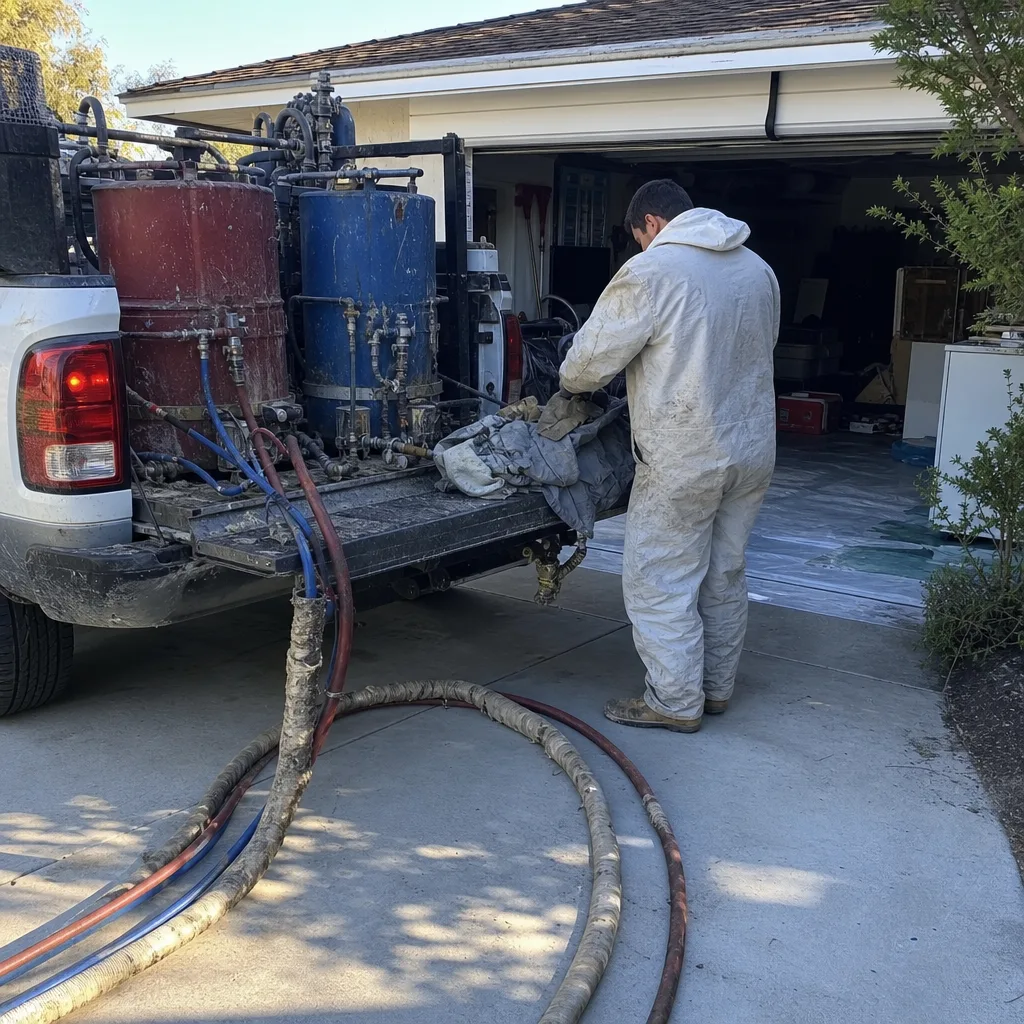
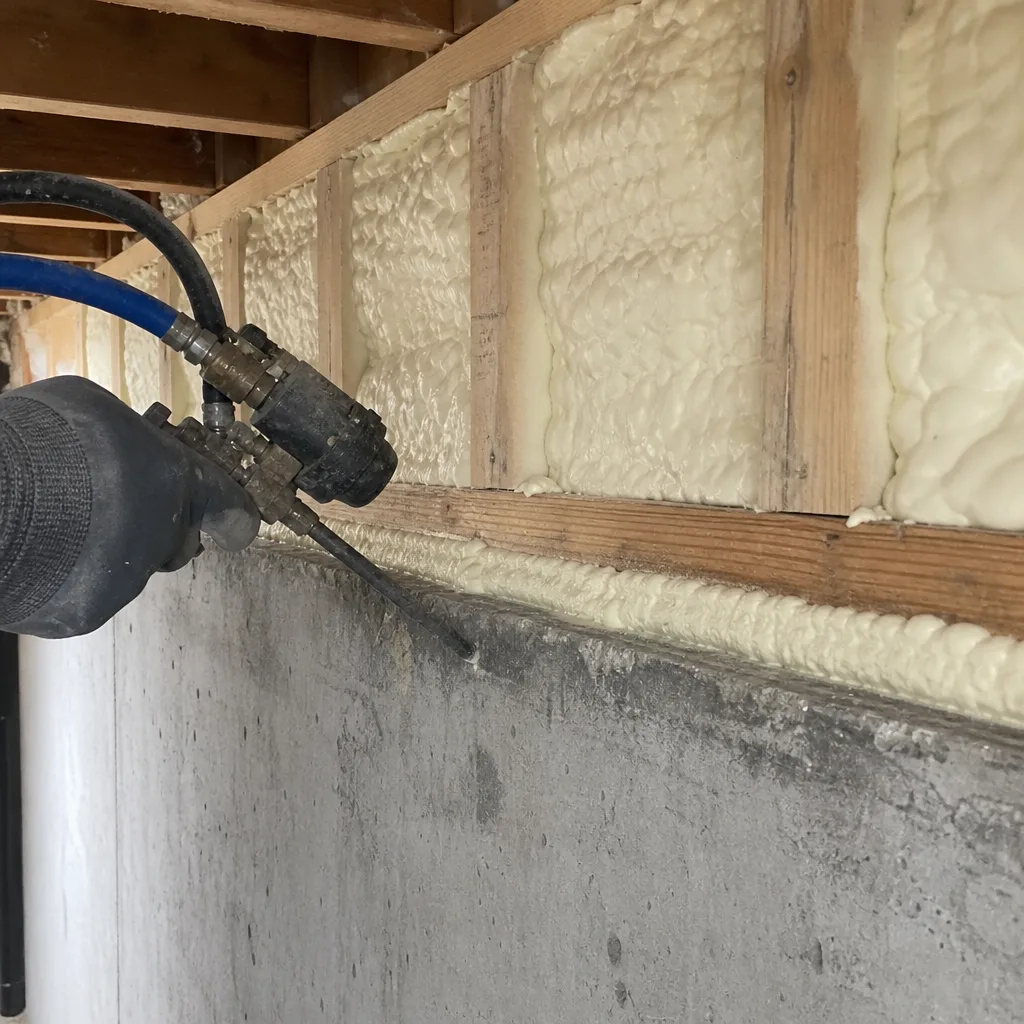
Fast, Reliable Spray Foam Insulation Across Stanton
Spray foam insulation in Stanton, CA typically costs $1,800 to $4,600 for a garage ceiling and knee-wall retrofit on a mid-century tract home, and most jobs are completed in a single day. The majority of our Stanton work is not whole-house new construction – it’s surgical sealing of the thin ceiling plane and knee wall above attached garages where decades of roof heat pours into living space. We know the bungalows off Beach Boulevard and the small stucco houses near Garden Grove Boulevard. We know their shallow attics, their settling fiberglass, and their hot back bedrooms. If you’re in the 90680 and need a specialist who speaks materials and methods, call us at (855) 773-6429.
Why Placentia Insulation Is Stanton’s Preferred Spray Foam Insulation Company
We are an insulation-only contractor. Every crew member, every tool, every conversation is about one trade. That matters in Stanton, where the wrong recommendation – a full attic blow-in when the real problem is the garage ceiling plane – wastes money and leaves rooms hot. Homeowners here tell us they called two or three generalist contractors before finding us, and the difference showed up in the questions we asked. Where’s the hot room? What’s above the garage? Has the duct wrap disintegrated?
Alan Whitcomb has built Placentia Insulation around the idea that matching the material to the job beats defaulting to whatever’s on the truck. Most insulation outfits carry one or two product lines. We carry eight: Owens Corning, Johns Manville, Knauf, Rockwool, CertainTeed, Icynene, Demilec, and GreenFiber. For Stanton’s specific housing stock, that breadth translates to real options – open-cell Icynene where you need air sealing with some give, closed-cell Demilec where you need thermal punch and a vapor barrier in a shallow cavity.
Spray Foam Attic Insulation in Stanton
Spray foam attic insulation in Stanton is, for the homes we see, a targeted retrofit rather than a standard roofline application. The houses here were built from the 1950s through the 1970s on small lots. The attic over the living space is usually shallow, the roof pitch is low, and the attached garage is what bakes the adjacent room. When a homeowner calls us about a hot back bedroom, the first place we look is the band of attic space directly over the garage or the knee wall where the garage roof meets the house. That thin ceiling plane often has a settled layer of old fiberglass that has pulled away from the knee wall, leaving a bare heat path. In Stanton’s inland Orange County climate, that’s a summer-long problem: the sun beats on the garage roof, the air in that shallow attic hits 140 degrees, and heat conducts straight through to the room on the other side.
A typical Spray Foam Insulation job of this type – sealing the garage ceiling plane and the knee-wall band with closed-cell foam, then topping the living-space attic with blow-in – runs $2,200 to $4,600 depending on square footage and access. It’s usually a one-day job. We use Icynene closed-cell for the garage ceiling because it gives us high R-value per inch in a cavity with almost no headroom, and because it acts as its own air barrier. For attics with truly limited clearance, where a foam rig simply cannot reach every bay, our crews over-spray the accessible band and hand-fill the tight ends – we don’t just spray one bay and call it done.
Garage Ceiling and Knee Wall Sealing
The single highest-value spray foam application in Stanton is the garage ceiling and the short knee wall above it. We see this on nearly every mid-century tract house where the garage shares a ceiling plane or wall with living space. Closed-cell foam here stops the direct radiant heat path and also kills the air path that pulls hot garage air into the wall cavity.
Attic Duct Sealing
Foam alone does not fix ducts. In Stanton homes of this vintage, the duct runs over the garage are usually wrapped in a failing, disintegrated wrap. If we foam the ceiling plane without sealing those ducts, we’re just trapping heat around them. We check the ducts on every garage-ceiling job and seal them where they’re leaking before the final blow-in goes down.
Spray Foam Wall Insulation in Stanton
Spray foam wall insulation in Stanton is most often a retrofit solution for the small wall cavities created by attached garages and for the short knee walls that transition between the garage and the living space. Most of the stucco bungalows and tract homes here were built with empty or nearly empty wall cavities adjacent to attached garages. That’s a thermal hole that nobody sees from the outside. On a 1962 stucco bungalow near Dale Avenue and Katella, our crew found the rear bedroom running 8 to 10 degrees hotter than the rest of the house because the shallow attic over the attached garage had nothing but a thin layer of blown fiberglass that had settled and pulled away at the knee wall. We sealed the garage ceiling plane and knee-wall band with closed-cell spray foam, capped it with Johns Manville blow-in over the living-space attic, and the room finally tracked with the rest of the house. That’s the kind of result that only comes from knowing where to look in Stanton’s specific house types.
Wall cavity work in Stanton generally costs $800 to $2,200 for a knee wall or a shared garage wall, depending on how much drilling is needed and what the stud bay density looks like. It’s a smaller job than a full attic, but it can be the single fix that ends a hot room. We use Demilec closed-cell for garage-adjacent walls because of its air-sealing properties and the way it locks into place in a cavity that gets thermal movement between the hot garage side and the conditioned room side.
Shared Wall Retrofit
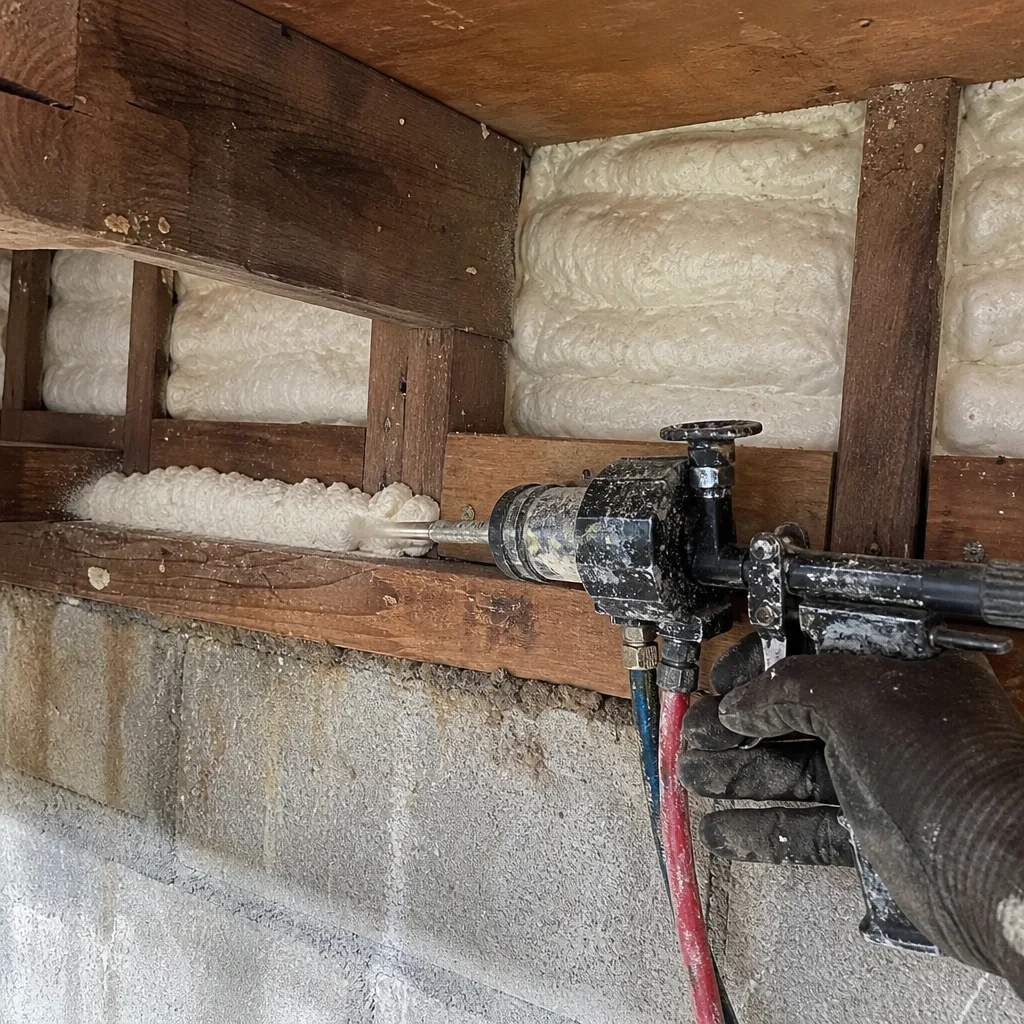
When a garage shares a wall with a bedroom or hallway, that wall is almost never insulated in Stanton’s older stock. Foam injection into the stud bays of that wall is a tidy, effective retrofit. It’s quieter and it changes the temperature profile of the room almost immediately.
Shallow Cavity Injection
Some Stanton homes have stucco on exterior walls with irregular framing or shallow cavities. Closed-cell foam is a good fit there too. It conforms to the bay without leaving the voids that batt insulation would in an irregular space. We recommend it when the cavity is too shallow for mineral wool or when air sealing is the bigger issue than thermal mass.
Trusted Brands We Service in Stanton
We stock and install two of the most recognized spray foam brands in the trade: Icynene and Demilec. Icynene open-cell is our go-to for areas where we need flexibility and air sealing with some permeability. Demilec closed-cell is for shallow cavities where the client needs maximum R-value per inch and a built-in vapor barrier. That also means we keep the supporting materials on the truck for Stanton jobs – the right ventilation baffles, the right sealant for duct penetrations, and the right blow-in products like Johns Manville and GreenFiber for the ceilings that follow a foam retrofit. Some companies default to one foam chemistry because that’s what their supplier stocks. We choose between open-cell and closed-cell based on what the application actually needs.
Common Spray Foam Insulation Problems We See in Stanton Homes
- Settled fiberglass that has pulled away from the knee wall. In shallow attics over attached garages, old blow-in or batt insulation settles, compresses, and leaves the knee-wall band bare. The result is a hot back bedroom that no amount of added attic insulation fixes until that band is sealed with foam.
- Low-clearance attic framing that limits foam reach. Many Stanton homes have such shallow attic space over the garage that a standard foam rig can’t get to every bay. Inexperienced crews over-spray one accessible section and miss the band where the heat load actually is. We plan the job around those tight spots and hand-fill the ends.
- Failing duct wrap over garage attic spaces. If the duct wrap has disintegrated, the ducts are leaking conditioned air into a 140-degree space. Foaming the ceiling without sealing the ducts just traps heat around them. We inspect and seal ducts as part of every garage-ceiling foam job.
- One-piece or early sectional garage doors that warp and conduct heat. Older garage doors in Stanton’s tract homes have no insulation. Even after the ceiling plane is foamed, a thin metal door radiates heat into the garage and reduces the benefit. We can advise on which door retrofits pair well with ceiling foam.
Pricing for Spray Foam Insulation in Stanton, CA
Here’s what we quote in Stanton, and it’s honest, specific money:
- Garage ceiling and knee-wall spray foam (closed-cell Icynene): $2,200 to $4,600
- Knee wall or shared garage wall foam injection: $800 to $2,200
- Attic duct sealing as part of a foam job: $400 to $900
- Spray foam roof deck (where accessible in shallow attics): $3,200 to $5,800
What drives the range is ceiling square footage, cavity depth, and how much of the existing insulation has to be removed or worked around. Homes on the edges of Stanton, especially the smaller lots along Katella and the streets running off Beach Boulevard, tend toward the lower end because the garage ceilings are modest and the attics are compact. Property owners with oversized attached garages or poorly accessible framing land higher. Estimates are free and we encourage you to call (855) 773-6429 for an exact quote on your specific house.
We Also Serve Cities Near Stanton
Placentia Insulation serves Spray Foam Insulation in Stanton and the surrounding communities including Garden Grove, Cypress, Westminster, and Midway City. If you’re on the border with any of these, the same crew, the same brand library, and the same retrofit approach applies. We schedule Stanton work most weekdays and can often be out within 48 hours.
Serving Stanton, CA — Our Local Coverage Area
We’re based in the Stanton area and offer Reflectix service in Stanton, and we know this community well. Use the map below to see our service coverage — if you’re nearby, we can almost certainly help.
FAQs About Spray Foam Insulation in Stanton
Spray foam on the garage ceiling plane and knee wall, followed by blow-in over the living-space attic, is the right call for a hot back bedroom in Stanton’s 1960s tract stock. Blown-in alone fixes nothing if the garage ceiling is still radiating heat into the room on the other side. We seal with closed-cell foam first, then top with blow-in. Call (855) 773-6429 and we’ll tell you what’s actually needed after looking at the framing.
Yes, but it’s done as a targeted application, not a standard roofline foam job. We spray the accessible garage ceiling band and knee-wall area with closed-cell, hand-filling the tight ends where a rig can’t reach. A full roofline application is only possible where Stanton’s low-pitch roofs leave enough clearance, which some but not all houses have.
Yes, when the old insulation has settled or pulled away from the knee wall, foam is the only fix that seals that heat path permanently. In Stanton’s inland heat, a bare knee-wall band over a garage defeats even fresh blow-in because the garage ceiling keeps radiating. We see settled 1960s fiberglass on nearly every house where the back bedroom runs hot. Foam stops the problem at the source.
Because most Stanton homes were built between the 1950s and 1970s with the attached garage sharing a wall or ceiling plane with living space, and those garage ceilings were built with almost no insulation and no air barrier. The result is that the garage attic turns into a heat battery all summer. Sealing the ceiling plane and knee wall is the single highest-value retrofit in the city.
Yes. Duct sealing is a standard part of our garage-ceiling foam jobs because the ducts over Stanton garages are almost always leaking and losing conditioned air into a hot space. Foaming without sealing the ducts traps heat around them and wastes the job. We inspect and seal ducts before the final insulation goes in. Estimates are free, so call (855) 773-6429 to get your ducts and ceiling plane assessed together.
Written by Alan Whitcomb, Owner at Placentia Insulation, serving Stanton since the company’s founding in Placentia.