
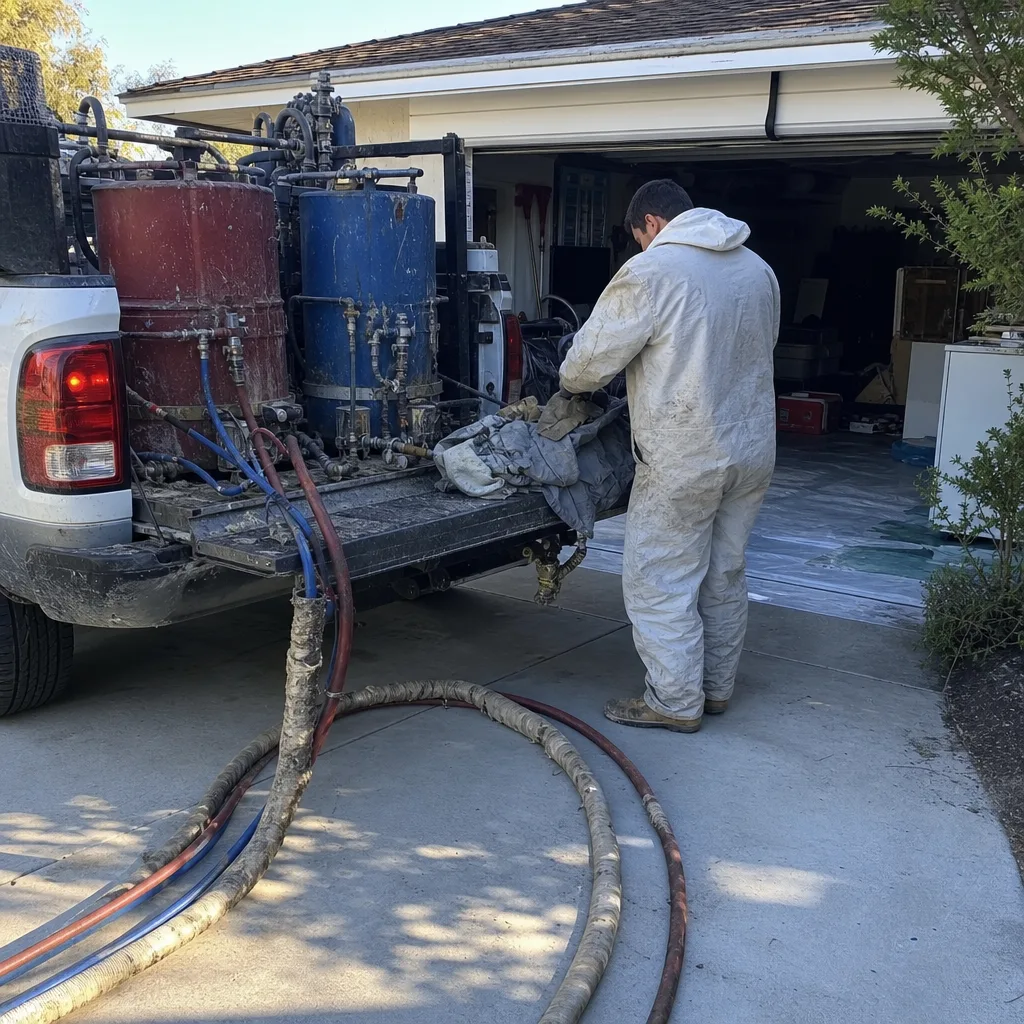
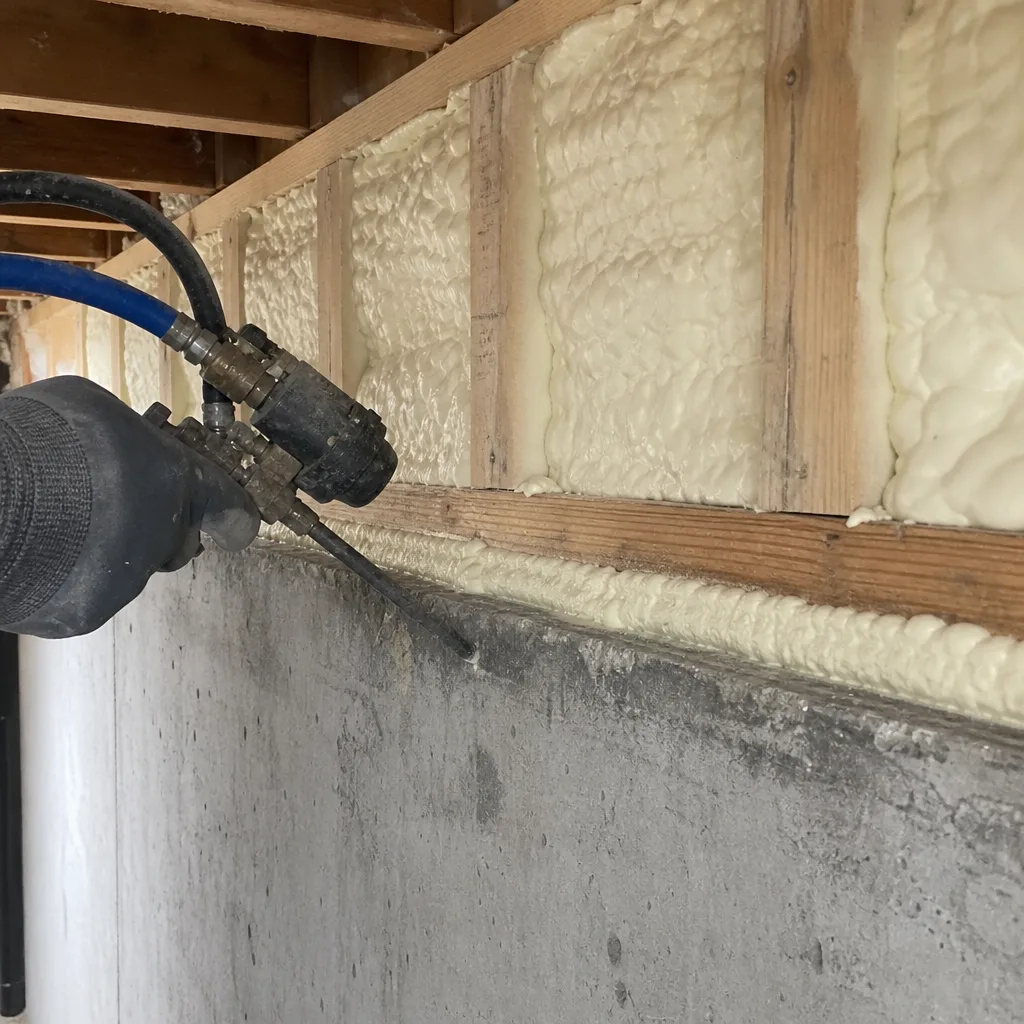
Fast, Reliable Spray Foam Insulation Across Venice
Spray foam insulation in Venice typically runs $2.50 to $6.50 per square foot installed, with most whole-wall or crawlspace projects landing between $1,800 and $7,200 depending on foam chemistry and cavity depth. We work across 90291 and 90294, from the walk streets to the canals to Oxford Triangle, usually within a few days of your call. If you’re opening up 1920s stucco or a 1950s bungalow during a remodel, call (855) 773-6429 for a free estimate from Alan Whitcomb and the Spray Foam Insulation team at Placentia Insulation.
Why Placentia Insulation Is Venice’s Preferred Spray Foam Insulation Company
Venice homes aren’t like inland houses. The marine layer rolls in most mornings, salt fog works its way into wall cavities and crawlspaces, and the housing stock runs heavily toward 1920s-1950s wood-frame and stucco bungalows with balloon framing that was never insulated. We’ve opened enough of those walls to know exactly what’s behind the lath and plaster: corroded fasteners, rusted strapping, and cavities that have been breathing ocean air for seventy years. That’s why we don’t default to whatever foam is on the truck. We match the material to the job, not the job to whatever we have on hand.
Our spray foam work in Venice uses both open-cell and closed-cell chemistry from Icynene and Demilec, because coastal vapor behavior determines which one belongs where. Homeowners tell us the same things after we’re done: rooms hold temperature evenly, the musty crawlspace smell is gone, and the stucco stops blistering. Alan Whitcomb leads every project assessment personally, so you’re getting a specialist’s read on your walls, not a sales pitch.
Crawl Space Spray Foam Insulation in Venice
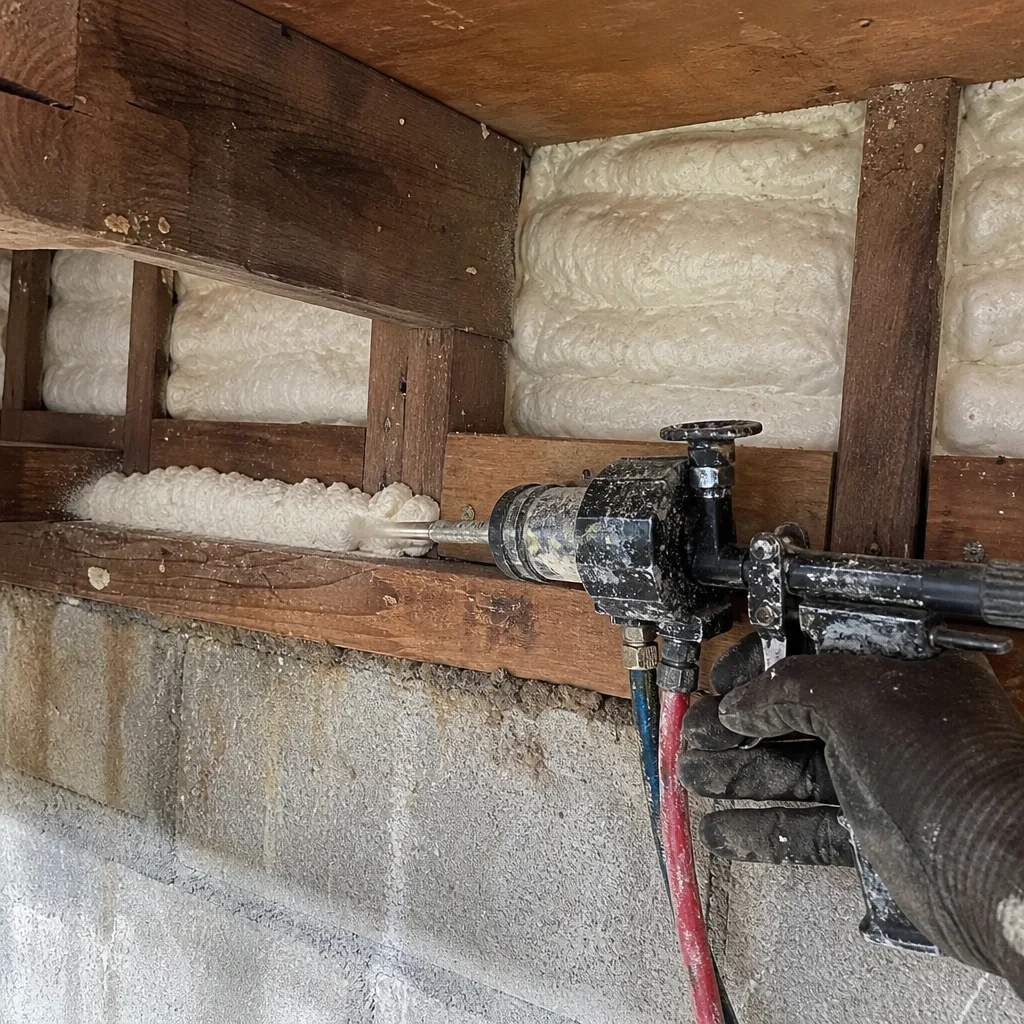
Crawl Space Spray Foam Insulation in Venice is where we see the most preventable damage, because most of these bungalows sit over vented crawlspaces that have been pulling in marine-layer moisture since the day they were built. The job involves sealing the rim joist band, treating the subfloor from below, and air-sealing the perimeter with a foam chemistry that lets the assembly dry outward instead of trapping salt-laden dampness against the joists. A Venice homeowner needs this when rooms above the crawlspace feel cold in the morning, when floors smell musty after June gloom stretches into July, or when a remodel exposes rusted nails and strapping below the subfloor. Crawlspace spray foam in Venice typically runs $2,200 to $5,500 for an average bungalow footprint.
Vapor-Open Sealing for Salt-Air Crawlspaces
The mistake we see most often is closed-cell foam sprayed directly against framing that’s been absorbing marine moisture for decades. That traps water in the wood and rusts the strapping within a season or two. We use open-cell Icynene in most Venice crawlspaces for exactly this reason: it air-seals while remaining vapor-open, so the assembly can dry.
Air-Sealing the Rim Joist
The rim joist is the single biggest air leak in a vented crawlspace. In Venice, it’s also the first place salt air condenses on cool wood in the morning. We seal the entire rim band with spray foam and stainless fasteners where reattachment is needed, then verify the crawlspace is moving air the way it should.
Garage Spray Foam Insulation in Venice
Garage Spray Foam Insulation in Venice matters differently here than it does ten miles inland, because the salt air attacks garage-door hardware and framing fasteners at an accelerated rate. The job involves insulating the ceiling below living space above, sealing the walls if the garage is attached or being converted, and addressing the corrosion points that would otherwise undermine the air seal within a few years. You need this when the garage stays damp, when the room above it is never comfortable, or when you’re converting the garage into an ADU or studio. Garage spray foam in Venice typically runs $1,400 to $3,800 depending on wall coverage and whether we’re treating the ceiling deck or the walls.
Corrosion-Resistant Detailing
Before we spray a single square foot in a Venice garage, we look at the hinges, tracks, springs, and fasteners. If those are corroded, the best foam job in the world won’t hold a seal. We specify galvanized or coated hardware, nylon rollers where appropriate, and stainless fasteners at any connection point we touch, so the air seal and the hardware age at the same rate.
Garage Conversions and ADUs
Garage conversions are everywhere in Venice, and most of them miss the insulation detail entirely. A back-lot garage converted to a rental unit needs air-sealed walls and a conditioned envelope or it becomes a damp box by August. We treat these as whole-envelope jobs: walls, ceiling, rim joist, and the boundary between old framing and new.
Trusted Brands We Service in Venice
Most insulation contractors carry one or two product lines. We carry eight: Owens Corning, Johns Manville, Knauf, Rockwool, CertainTeed, Icynene, Demilec, and GreenFiber. For Venice’s coastal conditions, we most often reach for Icynene open-cell in crawlspaces and Demilec closed-cell where we need structural rigidity or moisture resistance at the roofline. Having both chemistries in active inventory means we don’t talk you into the wrong one because it’s the only one we stock. If your project calls for mineral wool’s fire resistance or sound dampening, Rockwool is on the shelf too. That breadth matters in Venice, where every block has a different mix of original bungalows, second-story additions, and garage conversions with irregular framing cavities.
Common Spray Foam Insulation Problems We See in Venice Homes
- Closed-cell applied to salt-dampened balloon-frame cavities. We see this on homes where a previous contractor treated Venice like an inland job. The foam traps moisture that’s been cycling through the wall for seventy years, and within one season the strapping rusts and stucco starts peeling.
- Vented crawlspaces sealed without vapor-open detailing. When the marine layer rolls in during June gloom, condensation forms on the joists, and the musty odor returns within weeks. The crawlspace was never the problem; the detailing was.
- Garage spray foam that ignores corroded hardware. If the hinges and tracks are rusting, the air seal fails at the weakest point regardless of how well the foam was installed. We address the metal before the foam.
- Irregular framing cavities in ADUs and rear additions. Venice’s garage conversions and back-lot units create odd stud spacing, angled walls, and mixed materials. Spray foam is usually the right answer, but only if the installer adapts the lift thickness to the cavity rather than spraying a uniform coat.
Pricing for Spray Foam Insulation in Venice, CA
Open-cell spray foam in Venice runs $2.50 to $4.50 per square foot. Closed-cell runs $4.00 to $6.50 per square foot. A crawlspace job on a standard Venice bungalow lands between $2,200 and $5,500. A garage, including ceiling and walls, runs $1,400 to $3,800. What moves the number is foam chemistry, cavity depth, and how much prep work the framing needs before we spray. Venice homes with seventy-year-old rusted strapping or failing stucco anchors add prep hours. We give you an exact quote before any work begins, and it’s free. Call (855) 773-6429 to schedule an assessment with Alan Whitcomb.
We Also Serve Cities Near Venice
Our crews work throughout Venice and the surrounding coastal corridor, including Santa Monica, Culver City, Ladera Heights, and Century City. If you’re a few blocks over the city line, the same vapor-open coastal detailing applies, and we handle it the same way. The marine layer doesn’t respect municipal boundaries, and neither do our material choices for coastal homes.
Serving Venice, CA — Our Local Coverage Area
We’re based in the Venice area and know this community well. Use the map below to see our service coverage — if you’re nearby, we can almost certainly help.
FAQs About Spray Foam Insulation in Venice
Venice’s balloon-framed walls and vented crawlspaces have been absorbing marine-layer moisture for decades, and a closed vapor barrier traps that dampness inside the wood, rusting strapping and peeling stucco within a season. Open-cell foam air-seals while letting the assembly dry outward. Call (855) 773-6429 and we’ll assess your walls before recommending a chemistry.
Salt air accelerates corrosion on hinges, tracks, springs, and fasteners, which weakens the air seal from the outside in. We inspect and address the hardware before spraying, using galvanized or coated components and stainless fasteners so the seal holds. For an exact quote on your garage, call (855) 773-6429.
Yes, but only with vapor-open foam and proper rim joist air-sealing. The musty odor comes from condensation forming on cold joists when moist air hits them. Correct detailing stops that from happening. We’ve done it on dozens of crawlspaces across 90291 and 90294.
We install Icynene and Demilec spray foam, choosing the chemistry based on the application. Icynene open-cell handles crawlspaces and wall cavities that need to dry outward; Demilec closed-cell handles rooflines and areas requiring moisture resistance or structural rigidity. Call (855) 773-6429 for a recommendation specific to your home.
Yes, most Venice ADUs and garage conversions have irregular framing cavities that fiberglass can’t fill cleanly, and the envelope has to be air-sealed or the space becomes damp and mold-prone. Spray foam is usually the correct material for these projects. Estimates are free, so call (855) 773-6429 before you frame.
Written by Alan Whitcomb, Owner at Placentia Insulation, serving Venice since day one with eight brands, three methods, and one specialty: insulation done correctly.