
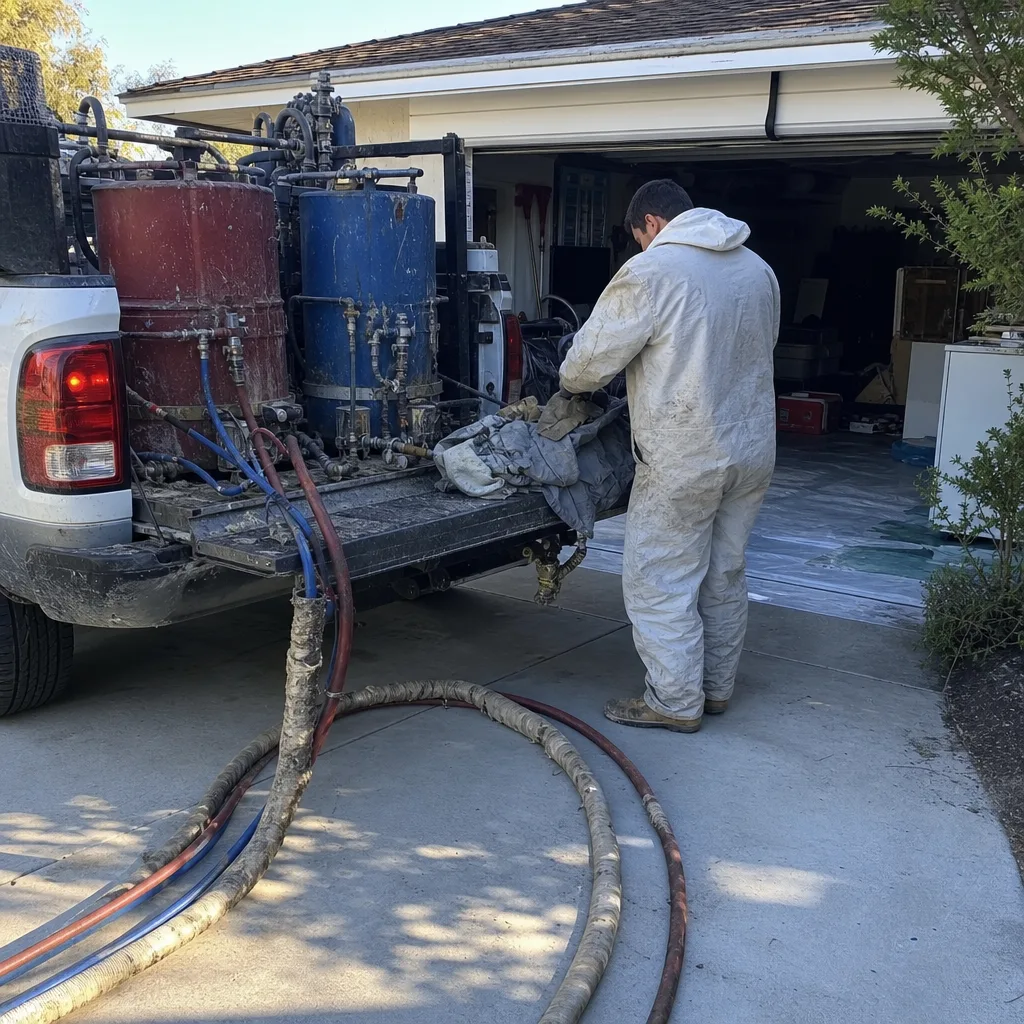
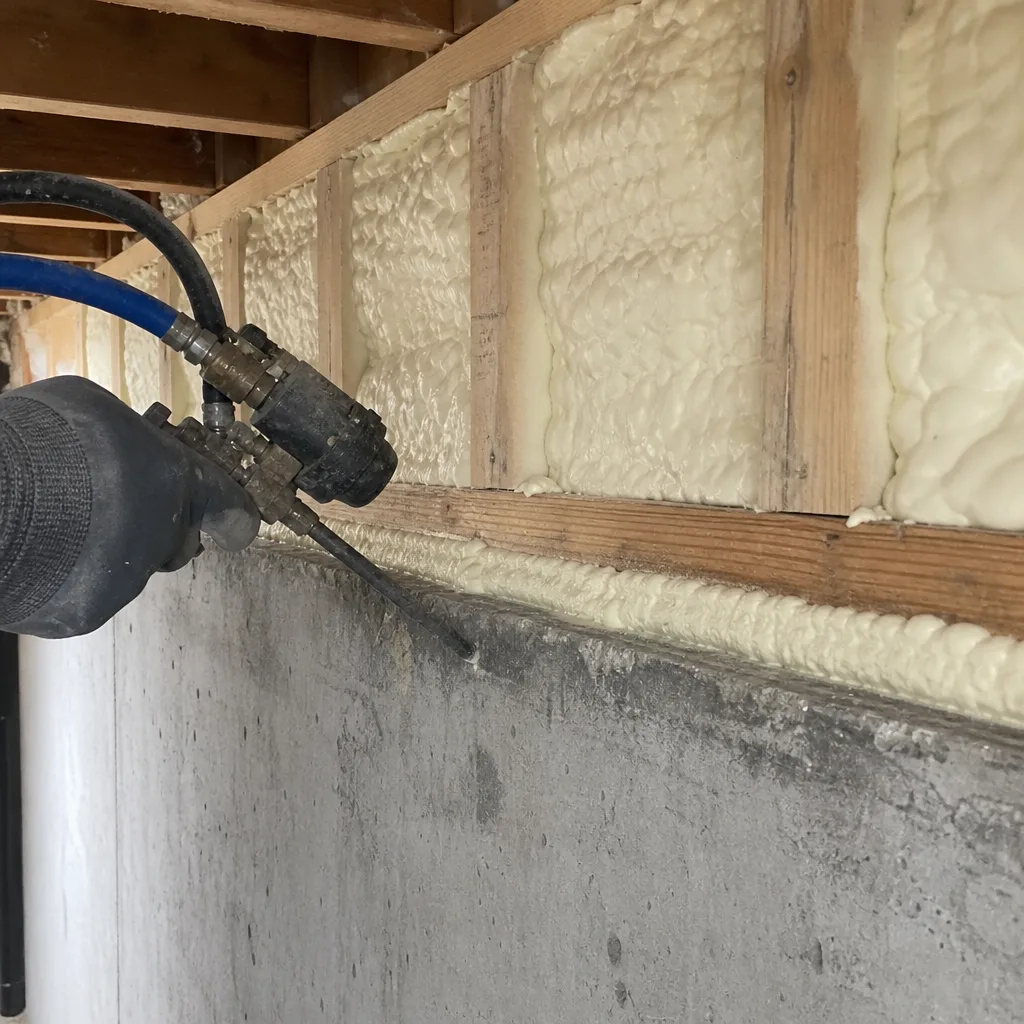
Fast, Reliable Spray Foam Insulation Across Villa Park
Spray foam insulation in Villa Park typically runs $3.50 to $7.50 per board foot installed, with most full attic roof-deck applications on the city’s larger custom homes landing between $6,500 and $18,000 depending on square footage and foam type. We get to Villa Park fast – usually within 24 to 48 hours for an estimate, with installation scheduling that respects the fact that you live on a quiet, half-acre lot, not a construction zone. Our crews know Villa Park’s streets, its older custom builds, and the specific roof and attic conditions that come with Spanish tile and vaulted ceilings. Call (855) 773-6429 for a free estimate from a crew that actually knows this city’s housing stock.
If you’re reading this because a bedroom or bonus room upstairs won’t hold temperature on a July afternoon, you’re not alone. Villa Park’s homes were built for a different era of energy expectations, and the fix usually starts in the attic.
Why Placentia Insulation Is Villa Park’s Preferred Spray Foam Insulation Company
Villa Park homeowners call us because we don’t treat their house like a tract home. We know the difference between a 1970s custom build off Santiago Boulevard and a 1980s two-story near the Villa Park Town Centre. That matters when you’re deciding whether to spray the roof deck, seal the eave returns, or address a vaulted ceiling that’s been leaking conditioned air for forty years.
Alan Whitcomb has built our crew around one idea: insulation is a specialty, not a side job. Every technician we send to Villa Park works on insulation full time. They’re not splitting their week between plumbing calls and attic work. When they walk your roof line and inspect your rafter bays, they’re looking at air sealing, thermal bridging, and ventilation as one connected system – because in Villa Park’s larger homes, those three things cannot be separated.
We carry both open-cell and closed-cell foam, backed by Icynene and Demilec. That means when we tell you a closed-cell application on your roof deck is the right call, it’s because the chemistry supports it for your specific build – not because it’s the only product on our truck. Most insulation contractors carry one or two product lines. We carry eight brands across fiberglass, mineral wool, spray foam, and cellulose, so your home gets what it actually needs.
Spray Foam Insulation Contractors in Villa Park
Spray Foam Insulation Contractors working in Villa Park have to understand something that most Orange County insulation crews never learn: this city’s homes are not built like the surrounding tract developments. A Villa Park spray foam job usually means working around deep eaves, multi-level roof transitions, and vaulted ceilings that expose the underside of the roof deck. We match the material to the job – not the job to whatever we have on the truck.
What does the work involve here? First, we inspect the attic volume, rafter bays, and any existing insulation. In Villa Park, that often means finding original fiberglass batts from the 1960s or 70s that have sagged, compressed, or been wind-washed near the ridge. Then we determine whether open-cell or closed-cell foam is appropriate. Closed-cell is common on tile roof decks where we need both air sealing and structural rigidity. Open-cell works well in tight rafter bays and interior wall cavities.
Cost for a contractor-led spray foam application in Villa Park runs $3.50 to $7.50 per board foot. A typical 2,500 sq ft home with a pitched concrete tile roof needing full roof-deck coverage lands between $8,000 and $16,000. Rim joist work in a crawlspace or basement runs $1,800 to $3,200. Smaller garage ceiling applications run $2,200 to $4,500.
Closed-Cell Roof Deck Application
When Villa Park homeowners ask us to fix an upstairs room that won’t cool, the answer is often closed-cell foam on the underside of the roof deck. This seals the attic, stops radiant heat from the tile roof from driving into the living space, and adds structural strength to older framing. In homes with vaulted ceilings, closed-cell is frequently the only practical option because the rafter bays are the insulation cavity – there’s no attic floor to lay batts across.
Rim Joist and Garage Ceiling Work
Many Villa Park homes have attached garages with uninsulated ceilings or rim joists where conditioned air escapes. We regularly seal these areas on homes near Villa Park Road and along the citrus belt streets. Garage ceiling spray foam typically pays for itself in the first two summers through reduced heat gain into adjacent living areas.
Spray Foam Attic Insulation in Villa Park
Spray Foam Attic Insulation in Villa Park means something different than it does in Anaheim or Orange. Here, the dominant problem is radiant heat gain through concrete tile roofs and the large attic volumes those roofs create. In a 3,000+ sq ft Villa Park home with a pitched tile roof, the attic can reach 140°F on a summer afternoon. That heat doesn’t stay in the attic. It radiates down through the ceiling, pushes into vaulted rafter bays, and forces your AC to fight a battle it was never designed to win.
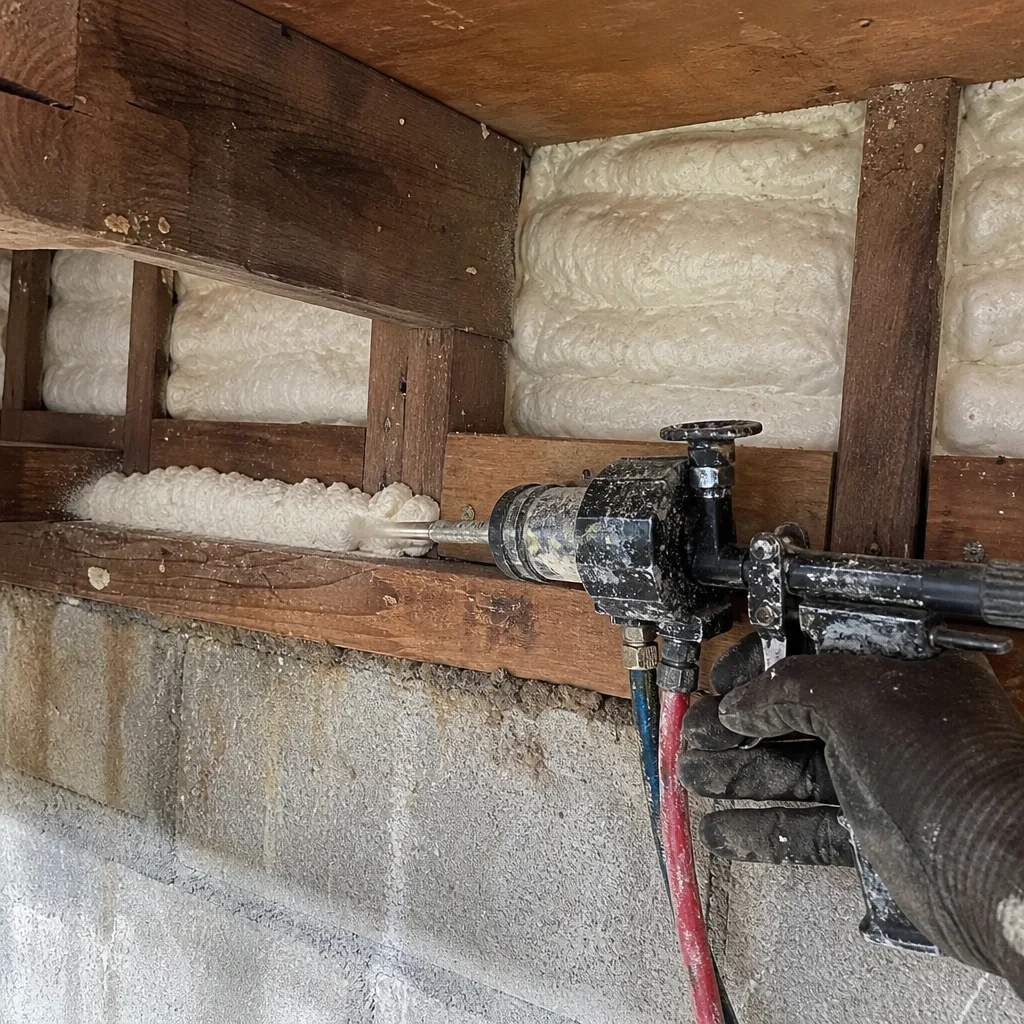
Attic spray foam on the roof deck changes the entire thermal envelope. Instead of insulating the attic floor and leaving the attic as a semi-conditioned oven, we seal and insulate the roofline itself. For Villa Park’s homes, this is often the single highest-impact energy upgrade available. The cost range for attic roof-deck spray foam in Villa Park is $6,500 to $18,000 depending on home size and foam depth.
Vaulted Ceiling Insulation Without Tearing Out Drywall
Villa Park’s 1960s-80s custom homes are full of vaulted ceilings that were never insulated properly. The original builders often stuffed fiberglass batts into rafter bays and called it done. Forty years later, those batts have sagged, the air-sealing was never there, and the ceiling radiates heat. We can inject or spray foam into those rafter bays from the attic side in most cases, avoiding drywall demolition entirely. This is one of the most common jobs we do in Villa Park, and it transforms upstairs comfort.
Deep Eave and Multi-Level Roof Transitions
Villa Park’s custom home roofs have deep eaves and complex transitions between different roof planes. These aren’t just architectural details – they’re air-sealing nightmares. The gap where a main roof meets a lower gable or where deep eaves return into the attic is frequently unsealed from the original build. We foam those transitions as part of every attic application. Leaving them open means your expensive spray foam job is undermined by convection loops pulling hot air down into the house.
Trusted Brands We Service in Villa Park
We install Icynene and Demilec spray foam because they’re the two manufacturers we trust for consistent chemistry, reliable expansion rates, and long-term performance in Southern California’s heat. For Villa Park homeowners who want mineral wool instead – some prefer Rockwool for fire resistance or sound dampening between rooms in larger custom homes – we carry that too. And for homes where blown-in cellulose makes more sense in the attic floor rather than the roof deck, we source GreenFiber, one of North America’s leading recycled-content insulation brands. Eight brands. Three methods. One specialty. That’s the difference between a generalist contractor and the crew you want in your Villa Park attic.
Common Spray Foam Insulation Problems We See in Villa Park Homes
- Foam over old fiberglass in vaulted rafter bays. We see this constantly in Villa Park homes where a previous contractor sprayed foam directly over dust-filled, sagging fiberglass batts. The foam can’t bond to the wood, adhesion fails, and hidden condensation forms against the tile roof deck. We remove the old material before spraying – always.
- Unventilated deep eaves cooking the foam. Villa Park’s deep eaves and multi-level roof transitions trap radiant heat if they’re not properly ventilated or sealed. We address ventilation and air flow before we apply foam, not after the job fails.
- Foam sprayed too thin on cathedral ceilings. A thin coat of foam on a vaulted ceiling without a proper thermal barrier does almost nothing for summer radiant heat and fails code. In Villa Park’s large attic volumes, depth matters. We spray to spec, not to a price point.
- Ignoring the ridge and gable transitions. The junctions where roof planes meet are where Villa Park homes lose the most conditioned air. Skipping those transitions is the difference between a foam job that works and one that just looks done.
Pricing for Spray Foam Insulation in Villa Park, CA
Here’s what Villa Park homeowners should expect to pay. Open-cell spray foam runs $3.50 to $5.00 per board foot installed. Closed-cell runs $5.50 to $7.50 per board foot. A full attic roof-deck application on a typical 3,000 sq ft Villa Park home with pitched concrete tile runs $8,500 to $16,500. Vaulted ceiling rafter bay injection on a single upstairs room runs $2,800 to $6,000. Rim joist sealing runs $1,800 to $3,200. Garage ceiling foam runs $2,200 to $4,500. The biggest cost drivers are roof complexity, eave depth, and whether old insulation needs removal first. Call (855) 773-6429 for a free estimate – we’ll walk your roofline with you and give you a real number, not a guess.
Key Takeaways for Villa Park Homeowners
- Spray foam in Villa Park is driven by vaulted ceilings and tile-roof heat gain, not wall-cavity retrofits.
- Closed-cell foam on the roof deck is often the highest-impact energy upgrade for these 1960s-80s custom homes.
- Deep eaves and multi-level roof transitions must be sealed or the foam job won’t perform.
- Old fiberglass in rafter bays must come out before new foam goes in.
- Cost ranges from $3,500 for a single garage ceiling to $18,000 for a full custom-home attic.
We Also Serve Cities Near Villa Park
Our crews work throughout Villa Park and the surrounding Orange County areas, including Orange, North Tustin, Placentia, and Anaheim. If you’re in a neighboring city with a similar older custom home, the same Spray Foam Insulation expertise applies. Villa Park’s specific housing stock is unique, but our approach to insulating it correctly translates directly to nearby communities.
Serving Villa Park, CA — Our Local Coverage Area
We’re based in the Villa Park area and know this community well. Use the map below to see our service coverage — if you’re nearby, we can almost certainly help.
FAQs About Spray Foam Insulation in Villa Park
Yes, in most Villa Park homes we can access the rafter bays from the attic side and spray or inject foam without touching the drywall. The exception is when the rafter bays are blocked by original construction debris or when the vaulted ceiling has no accessible attic space above it. On a 1978 Spanish-tile-roof home off Santiago Boulevard, our crew found the original fiberglass batts sagging and wind-washed near the ridge, with the vaulted ceiling’s open rafter bays pulling hot attic air down into the living space. We removed the failed batts, applied closed-cell spray foam to the roof deck and gable transitions, and sealed the deep eave returns that had never been blocked. The homeowner reported the upstairs bonus room finally held temperature on 95°F afternoons. Call (855) 773-6429 to find out what’s accessible in your ceiling.
For most Villa Park homes, spray foam on the roof deck makes more sense than adding more attic floor insulation because the problem is radiant heat gain through the tile roof, not just conductive heat loss through the ceiling. Spanish tile holds heat and radiates it into the attic. More batts on the attic floor don’t stop that heat from entering the attic and driving down through vaulted ceiling bays. Closed-cell foam on the roof deck stops the heat at the source. In Villa Park’s larger custom homes, this is almost always the correct approach.
The biggest mistake we see is foam sprayed directly over old, dust-filled fiberglass in vaulted rafter bays, which causes adhesion failure and hidden condensation on the tile roof deck above. The foam looks fine from the living space, but it’s not bonded to the wood and moisture is accumulating against the roof sheathing. This is a Villa Park-specific problem because so many homes here have vaulted ceilings with original fiberglass still in the bays. Always remove the old material before spraying new foam.
We treat ventilation as part of the spray foam job, not an afterthought. Villa Park’s deep eaves and multi-level roof transitions trap heat if they’re not properly sealed or vented. Before we spray, we assess the eave returns, ridge vents, and gable transitions. In most cases, we seal the eaves and convert the attic to a conditioned space, which means the roof deck no longer needs traditional venting. The key is that the sealing must be complete – a partial seal with deep eaves creates more problems than it solves.
No. A 3,000+ sq ft Villa Park home with a pitched concrete tile roof is actually a prime candidate for spray foam because the large attic volume and tile heat gain create the exact conditions foam is designed to solve. These attics can reach 140°F in summer, and that heat drives into vaulted ceilings and upstairs rooms. Spray foam on the roof deck addresses the problem at the source. If you’re spending $400 a month on summer cooling, the foam pays for itself faster than almost any other upgrade. Call (855) 773-6429 and we’ll walk your roof with you.
Written by Alan Whitcomb, Owner at Placentia Insulation, serving Villa Park and Orange County.