
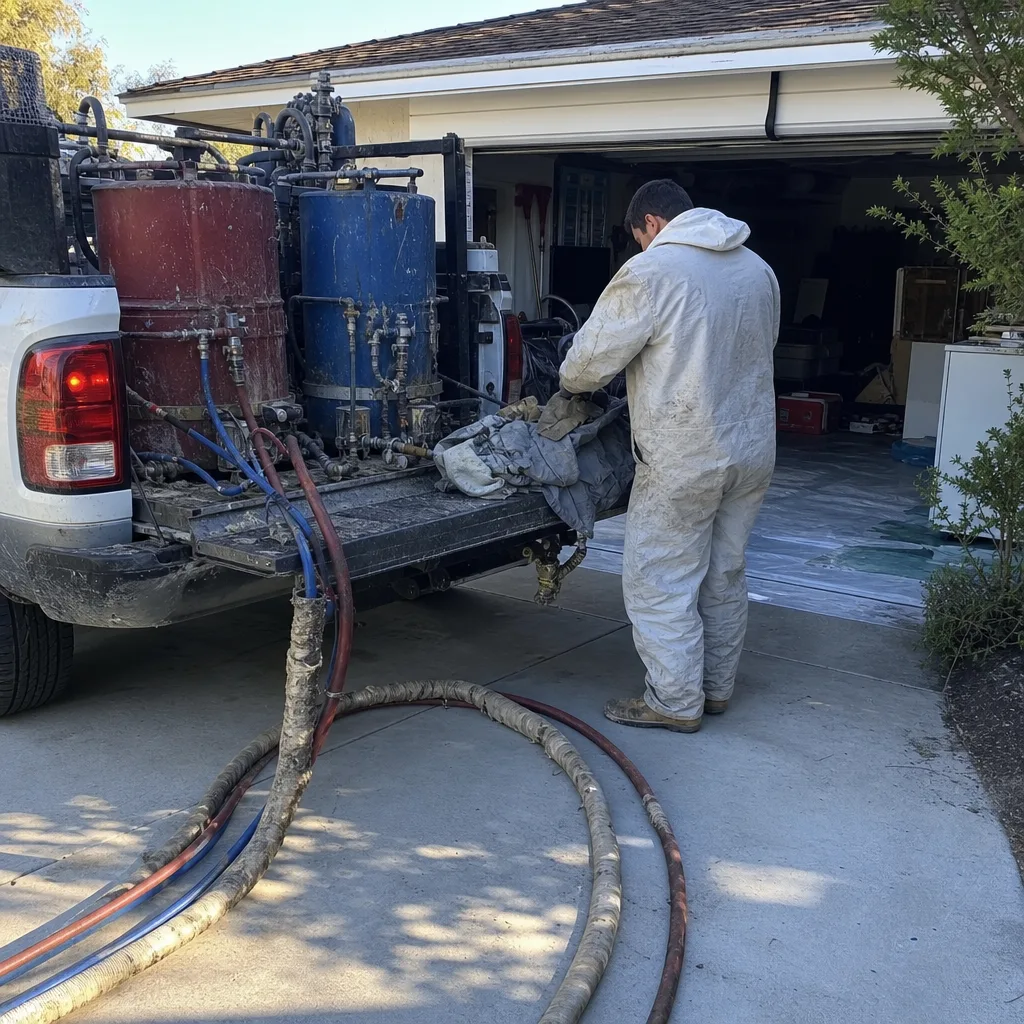
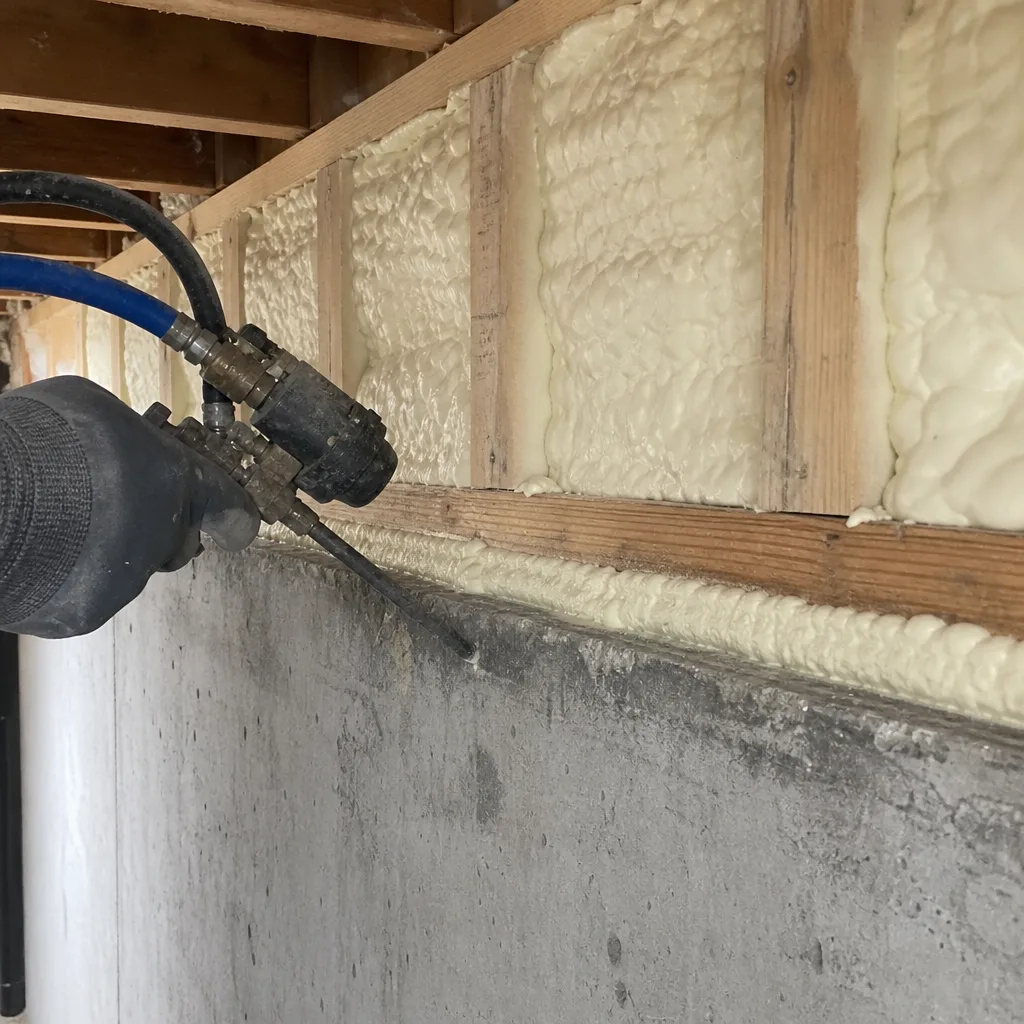
Fast, Reliable Spray Foam Insulation Across Walnut
Spray foam insulation in Walnut is the most effective way to cut cooling costs in a city where summer attic temperatures routinely climb past 140°F under clay tile roofs. Most Walnut homes were built between the 1970s and 1990s with insulation that barely meets today’s standards, if it hasn’t settled or degraded entirely. We’re a dedicated insulation contractor, not a generalist, and we work in Walnut weekly. Call (855) 773-6429 for a free estimate. We know the hillside tracts, the raked-ceiling homes off Lemon Avenue, and the two-story stucco builds near Mt. San Antonio College, and we match the material to the job, not the job to whatever happens to be on the truck.
Why Placentia Insulation Is Walnut’s Preferred Spray Foam Insulation Company
Placentia Insulation is led by Alan Whitcomb, and our crews specialize in one trade: insulation. That focus matters in Walnut, where the housing stock demands real problem-solving. Many homes in the 91789 and 91788 zip codes have vaulted ceilings with shallow attic cavities that standard insulation crews won’t touch because the access is too tight and the tile roofs can’t be walked. We work those jobs regularly and know how to get foam into the rafter bays from the eave side.
Walnut homeowners call us because the second-story bedrooms never cool down in August, or because the garage turns into an oven by noon, or because the original 1980s fiberglass finally gave up. We’ve solved those problems on streets from Lemon Avenue to the hillside tracts above Grand. We don’t carry one brand and hope it works. As a specialist, we stock multiple material lines so the recommendation fits your house, not our inventory. That’s the difference between a contractor who does insulation sometimes and a company that does insulation every single day.
Garage Spray Foam Insulation in Walnut
Garage Spray Foam Insulation in Walnut typically runs $1,800 to $3,600 for a standard two-car detached garage, and it’s one of the most requested services we handle in this city’s hillside neighborhoods, where detached garages bake in full sun all afternoon. We apply the foam to the ceiling and the shared wall between the garage and living space, sealing the gaps that let superheated air and freeway noise from the 60 and 57 corridors push into the house.
Detached Garage Ceiling Application
Many Walnut homes have detached garages with open rafter ceilings and zero insulation. We spray closed-cell foam directly onto the roof deck from the inside, which turns a 120°F garage into a space that stays within a few degrees of the outside air temperature without any active cooling. For garages with finished ceilings, we dense-pack or spray into the cavity from below.
Noise and Smoke Sealing
Walnut sits close enough to the 60 Freeway that road noise carries up the hillsides, especially at night. Closed-cell foam on the garage wall facing the street cuts that transmission measurably. The same air-sealing slows wildfire smoke intrusion during Santa Ana events, which has become a genuine consideration for homeowners in the 91795 area.
Closed Cell Spray Foam Insulation in Walnut
Closed Cell Spray Foam Insulation in Walnut costs between $2.50 and $4.00 per board foot installed, depending on cavity depth and access. It’s the product we recommend most often for raked-ceiling homes and any space that touches the roofline, because it adds structural rigidity, blocks moisture, and delivers roughly R-7 per inch, the highest R-value of any spray foam on the market today.
Raked Ceiling and Kneewall Applications
Homes in the foothill tracts above Walnut often have vaulted ceilings with only 18 to 24 inches of clearance at the ridge. Those cavities can’t be walked, and they can’t be insulated effectively with batts. We spray closed-cell foam from the eave side, working the rafter bays and kneewall top plates without ever stepping on the tile roof. This is the single most common reason Walnut homeowners come to us after another contractor said the job couldn’t be done.
Roof Deck and Bonus Room Sealing
Bonus rooms above garages are common in Walnut’s 1970s and 1980s builds, and they’re almost always under-insulated. Homeowners tell us those rooms are unusable from June through September. We apply closed-cell foam to the roofline, converting the space into a conditioned area that actually holds temperature. Alan Whitcomb has overseen dozens of these retrofit projects across Walnut, and the before-and-after difference is immediate.
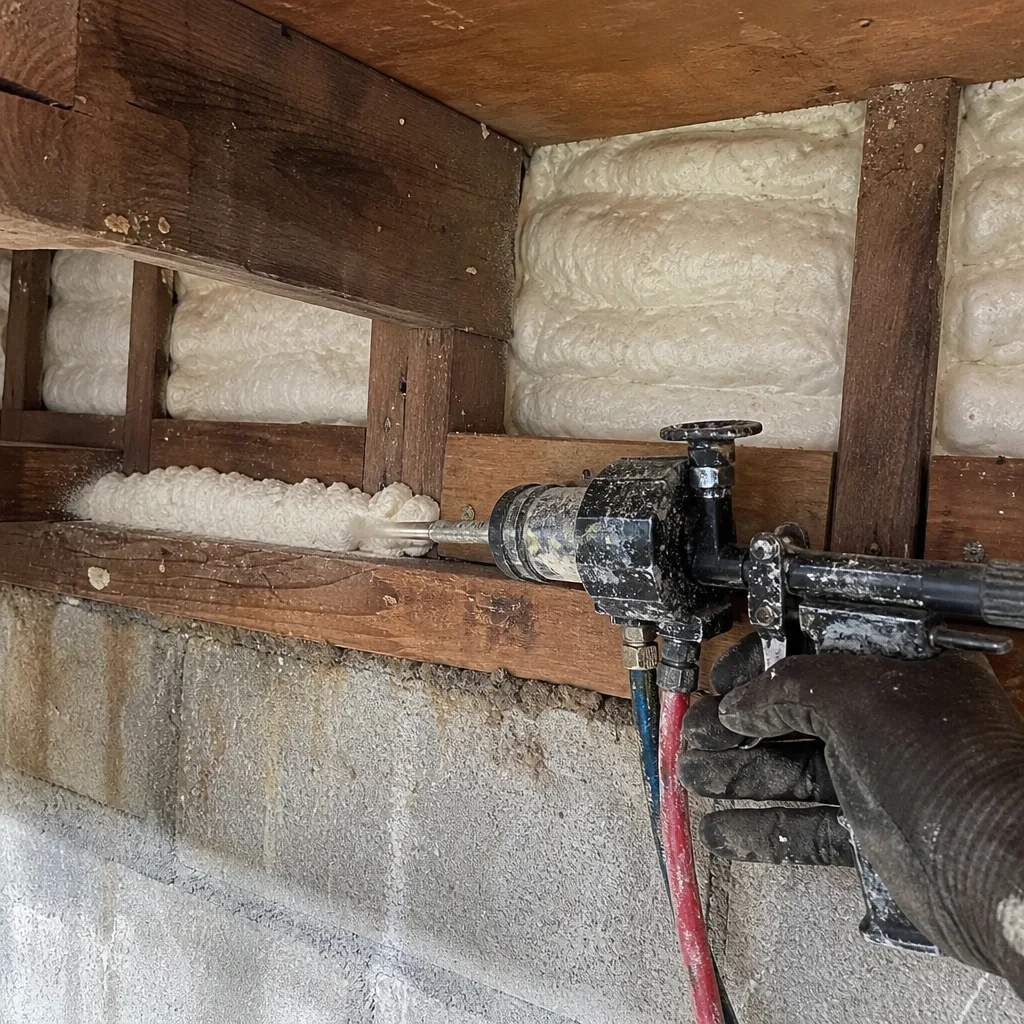
Trusted Brands We Service in Walnut
We don’t push one manufacturer’s product onto every Walnut home. Our Spray Foam Insulation crews install Icynene open-cell for interior wall and ceiling cavities where air-sealing matters more than R-value, and Demilec closed-cell for rooflines, garages, and hillside jobs that need structural reinforcement and moisture control. For clients who want mineral wool alongside spray foam, we stock Rockwool and can combine it with foam in hybrid assemblies. Having eight brands in active inventory means the right chemistry gets chosen for the application. Most insulation contractors carry one or two product lines. We carry eight, so your Walnut home gets what it actually needs. Parts and materials for Walnut jobs are stocked locally, so we don’t lose days waiting on supply deliveries from out of state.
Common Spray Foam Insulation Problems We See in Walnut Homes
- Thin foam passes over settled fiberglass in shallow raked cavities. When attic temperatures hit 140°F under clay tile, foam applied too thin over dusty old fiberglass blisters and delaminates. We remove the failed material and reapply at the correct lift thickness, working from the eave side when the cavity can’t be walked.
- Incomplete air-sealing at kneewall top plates. Hillside homes with irregular knee-wall framing and raked ceilings leak conditioned air at the top plate junction. Hot San Gabriel Valley air bypasses the foam entirely, and the homeowner sees no energy savings despite having paid for a spray foam job. We seal every top plate before foam goes in.
- Moisture-absorbed open-cell foam from old roof leaks. Walnut’s 1970s and 1980s homes were built with tile roofs that eventually crack or shift. When open-cell foam gets wet, it wicks moisture, loses R-value, and hides the leak until cooling bills spike. We identify the source, dry or remove the affected foam, and replace it with closed-cell where appropriate.
- Contractors who won’t touch raked ceilings at all. A lot of insulation companies look at a vaulted ceiling with 18 inches of clearance and walk away. We’ve developed access techniques specifically for Walnut’s hillside geometry, which is why so many of our Walnut calls come from homeowners who were turned down elsewhere.
Pricing for Spray Foam Insulation in Walnut, CA
Closed-cell spray foam in Walnut runs $2.50 to $4.00 per board foot. For a typical 1,200-square-foot attic with standard 2×6 rafter bays, that’s $4,500 to $7,200. Rim joist sealing in a crawlspace or basement runs $800 to $1,500, and an average two-car garage ceiling lands between $1,800 and $3,600. What moves the needle: cavity depth, access difficulty, whether old insulation must be removed first, and whether the job involves raked ceilings that require eave-side application. We give exact written quotes before work starts, and estimates are free. Call (855) 773-6429 and we’ll walk the property in Walnut, take measurements, and give you a number you can plan around.
We Also Serve Cities Near Walnut
Placentia Insulation serves the entire eastern San Gabriel Valley corridor. In addition to our Spray Foam Insulation in Walnut work, we regularly handle jobs in South San Jose Hills, Rowland Heights, West Covina, and Pomona. If you’re on the border of Walnut and any of those cities, call us and we’ll confirm coverage. The same crews that work Walnut’s hillsides serve the entire region.
Serving Walnut, CA — Our Local Coverage Area
We’re based in the Walnut area and know this community well. Use the map below to see our service coverage — if you’re nearby, we can almost certainly help.
FAQs About Spray Foam Insulation in Walnut
Yes. We apply foam from the eave side or from inside the attic cavity itself, never by walking on the tile roof. Walnut’s clay tile roofs are fragile and repair costs are high, so our access methods are designed to keep us off the roof entirely. Call (855) 773-6429 for an assessment of your specific roofline.
No. Closed-cell foam is often the most cost-effective upgrade for 1980s Walnut construction, because the original insulation is typically settled fiberglass at R-8 to R-11 and the attic runs hot under tile. Closed-cell fills the rafter bays, air-seals, and adds structural rigidity in one pass. The upgrade can pay for itself in cooling savings within a few years, and the comfort change is immediate.
Spray foam creates a continuous air barrier that blocks the small gaps and cracks where smoke and noise enter. In Walnut, homes near the 60 and 57 freeways see a noticeable drop in interior noise after a closed-cell garage wall or exterior wall application. During wildfire season, the same air barrier reduces smoke intrusion, especially in hillside homes where air moves quickly through the building envelope. Give us a call at (855) 773-6429 for specifics on your exposure.
Closed-cell foam, typically Demilec, is denser, adds structural strength, blocks moisture, and delivers R-7 per inch. It’s the right choice for garage ceilings and exterior walls. Open-cell foam, such as Icynene, is lighter and less expensive per board foot, making it a solid option for interior wall cavities where sound absorption matters and moisture isn’t a concern. We’ll recommend the right one based on how you use the garage and whether it shares a wall with living space.
Yes, in most cases. Spray foam bonds to clean, solid surfaces. If you spray over dusty, settled fiberglass, the foam can delaminate, especially in Walnut attics that hit 140°F in summer and cool rapidly at night. We remove the old material, inspect the sheathing for leaks or rodent damage, and then apply foam to a clean substrate. This is part of every quote we provide, so there are no surprises mid-job.
Written by Alan Whitcomb, Owner at Placentia Insulation, serving Walnut and surrounding San Gabriel Valley communities.