
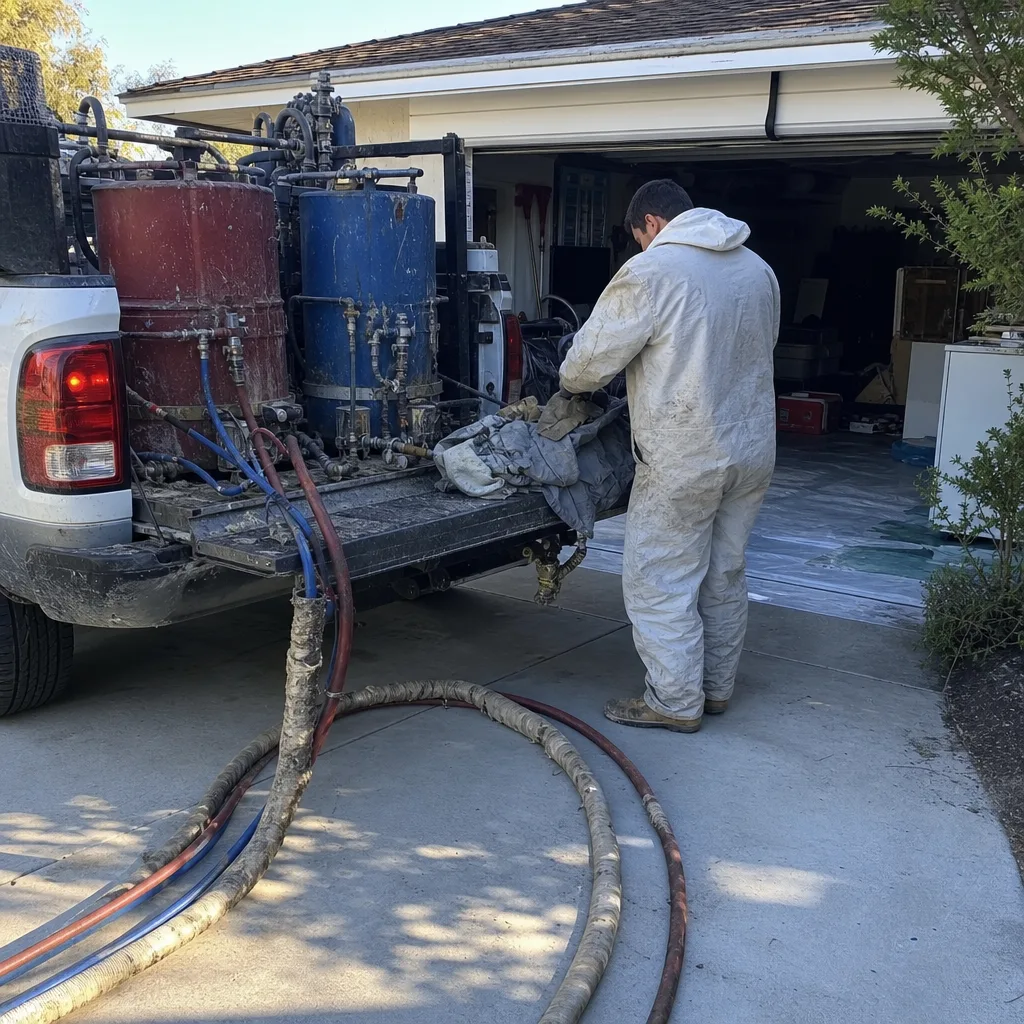
Fast, Reliable Spray Foam Insulation Across West Hollywood
Spray foam insulation in West Hollywood runs roughly $2,900 to $7,800 for a typical single-family home project, with smaller jobs like garage ceilings and rim joists starting around $900. We’re Placentia Insulation, and we work the 90069 hills, the Norma Triangle, and the flats south of Santa Monica Boulevard every week. West Hollywood’s mix of 1920s stucco bungalows, hillside lots, and dense dingbat apartments means spray foam decisions here aren’t the same as they are in Van Nuys or Torrance. Call (855) 773-6429 and we’ll talk through what your building actually needs.
Why Placentia Insulation Is West Hollywood’s Preferred Spray Foam Insulation Company
Most insulation contractors carry one or two product lines. We carry eight. That matters in West Hollywood because the right foam chemistry for a 1929 Spanish Colonial in the hills is not the right chemistry for a 1960s dingbat off Fountain Avenue. We match the material to the job, not the job to whatever we have on the truck.
Our crews know West Hollywood’s building stock. We’ve worked on bungalows off Harper Avenue where the attic access is a scuttle in a bedroom closet. We’ve insulated dingbat units where the party wall runs straight up through the garage and the shallow attic barely fits a person. Homeowners here tell us the same things: upstairs rooms bake in September, you can hear the neighbor’s television, and the energy bill climbs every August. We address all three with the correct foam system, not a default product.
Alan Whitcomb leads our team. He’s built Placentia Insulation around the idea that insulation is a specialty trade, not a side service. Every crew member, every tool, every conversation we have is about insulation. You won’t get a generalist who does drywall on Tuesday and foam on Thursday. You’ll get people who can explain the difference between open-cell and closed-cell and why it matters for your wall assembly.
Closed Cell Spray Foam Insulation in West Hollywood
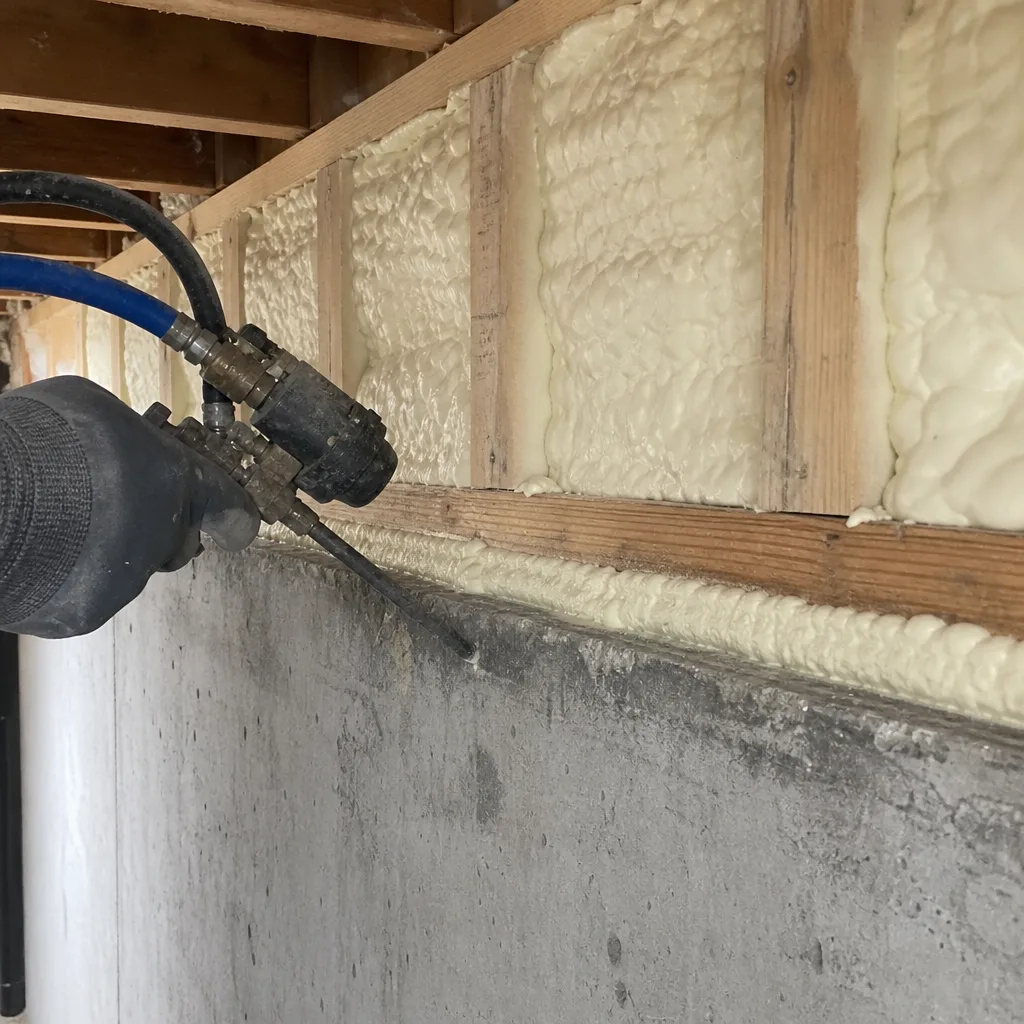
Closed Cell Spray Foam Insulation in West Hollywood is the moisture-blocking workhorse we recommend for garage ceilings, rim joists, roof decks, and any surface facing the marine layer. It cures rigid at about 2 pounds per cubic foot, adds structural strength, and acts as a vapor retarder at roughly 2 inches of thickness. In the 90069 hills north of Sunset, where salt fog rolls in most summer mornings, closed-cell is often the difference between a garage that stays dry and one that smells like rust.
A closed-cell project in West Hollywood typically runs $3,400 to $7,800 depending on square footage and access. Tight hillside lots and scuttle-only attic entries push labor time up, which pushes cost up. But the material pays for itself in a climate where moisture intrusion through unsealed rim joists and garage ceilings is a year-round problem.
Garage Ceilings and Roof Decks
West Hollywood garages are almost always under living space or attached to a shared wall. Uninsulated garage ceilings let heat radiate up into bedrooms in the afternoon and let moisture from parked cars and coastal air seep into framing. Closed-cell foam on the garage ceiling seals both problems at once. We spray directly onto the underside of the garage ceiling framing, and for cathedral or low-slope roofs we apply closed-cell to the roof deck to keep the attic or cavity within the conditioned envelope.
Rim Joist Sealing in Pre-War Framing
Pre-war bungalows in West Hollywood have rim joists with gaps wide enough to slide a hand through. Air moves through those gaps all year: salty marine air in, conditioned air out. Closed-cell foam expands into the rim joist cavity and seals it permanently. This is one of the highest-return spray jobs we do in the city. It typically runs $900 to $2,500 and makes an immediate difference in how stable ground-floor temperatures feel.
Open Cell Spray Foam in West Hollywood
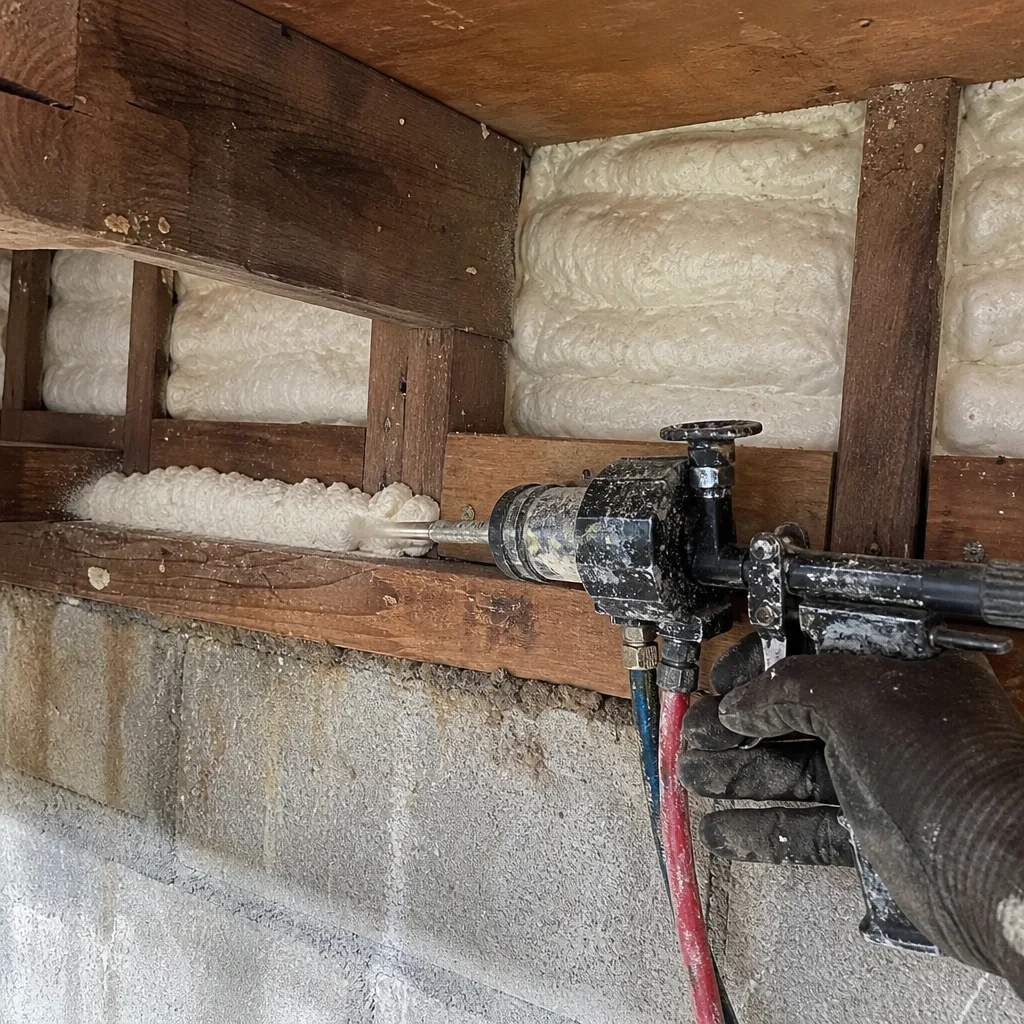
Open Cell Spray Foam in West Hollywood is for interior walls, soundproofing, and attic applications where vapor permeability is actually an advantage. Open-cell expands to roughly 100 times its liquid volume, fills odd cavities completely, and cures soft and flexible. It’s about half the cost of closed-cell per board foot and it does not trap moisture the way closed-cell can in the wrong assembly.
For West Hollywood’s dingbat apartments and pre-war stucco walls with no vapor barrier, open-cell is frequently the correct call. It lets the wall assembly dry to the interior, which prevents the paint-peeling and wood-rot failures we see when closed-cell is misapplied to old stucco-frame walls. Open-cell projects in West Hollywood typically run $2,900 to $6,200 depending on cavity depth and access.
Party Wall Soundproofing for Dingbat Apartments
The standard West Hollywood dingbat is a three-story wood frame box on carports. Shared walls between units are often single 2×4 frames with drywall on both sides and zero insulation. Sound transmits through those walls like they aren’t there. Open-cell foam injected or sprayed into the party wall cavity absorbs a dramatic amount of airborne sound. It’s the most common dingbat request we get from property owners dealing with RSO compliance complaints about neighbor noise.
Attic and Ceiling Cavity Fill
Hillside-era attics in West Hollywood are shallow, hot, and hard to reach. Open-cell foam sprayed directly to the underside of the roof deck keeps attic temperatures within 10 to 15 degrees of the living space, which matters intensely during Santa Ana events when afternoon sun bakes unvented attics into ovens. We’ve measured attic temperatures over 140°F on Melrose-adjacent roofs during September heat waves. Post-foam, those attics stay in the 80s.
Trusted Brands We Service in West Hollywood
We carry Icynene and Demilec spray foam systems, and we stock the parts and accessories West Hollywood jobs require: galvanized and stainless fasteners, coated springs, corrosion-resistant hangers, and nylon rollers. Icynene open-cell goes into party walls and interior cavities, Demilec closed-cell goes onto garage ceilings, rim joists, and roof decks exposed to salt air. Because we’re not tied to a single manufacturer, the foam your building receives is chosen for your conditions, not for our inventory. For blown-in cellulose work, we install GreenFiber, one of North America’s leading recycled-content brands. Owens Corning fiberglass rounds out what we offer for homes where spray foam isn’t the right tool.
Common Spray Foam Insulation Problems We See in West Hollywood Homes
- Salt-air corrosion on garage-door hardware and fasteners. The marine layer that rolls up La Cienega and Doheny most mornings carries chlorides that eat exposed steel. Springs, hinges, tracks, and opener chains in West Hollywood garages corrode years faster than the same hardware in Glendale or Burbank. When we foam a garage ceiling or rim joist here, we replace corroded springs with galvanized ones and use stainless fasteners throughout.
- Closed-cell foam misapplied to pre-war stucco walls without vapor barriers. A 1920s Spanish Colonial in the 90069 hills has true stucco-and-lath exterior walls and zero vapor management. If closed-cell foam is sprayed into those cavities, moisture from showers, cooking, and breathing gets trapped in the wall. The stucco doesn’t let it out, and the foam doesn’t let it in. We see the result as bubbling paint and rotted framing. We use open-cell or unfaced alternatives in these assemblies, and we can tell you exactly why.
- Uneven attic coverage in dingbat shallow attics. Dingbat attics are cramped, low-clearance spaces above three-story boxes. An inexperienced crew will spray what they can reach and leave the far edges of the roof deck bare, which becomes a thermal bypass. We send smaller-framed crew members into those spaces with proper respirators and lighting, and we verify coverage at every roof plane before we leave.
- Sound transmission through uninsulated party walls. RSO-era dingbat construction used minimal framing and zero acoustic separation. Tenants in unit B hear every drawer closing in unit A. The fix is open-cell foam in the party wall cavity, which breaks the air path and absorbs sound. We’ve done this in buildings off Fountain, Romaine, and Willoughby Avenues where property owners were losing tenants over noise complaints.
Pricing for Spray Foam Insulation in West Hollywood, CA
Spray foam pricing in West Hollywood tracks with access difficulty and cavity type more than square footage alone. A typical garage ceiling closed-cell foam job runs $1,600 to $4,200. Rim joist sealing runs $900 to $2,500. Party wall soundproofing in a dingbat unit runs $2,800 to $5,500 depending on cavity count and floor height. Full attic or roof-deck closed-cell foam starts around $4,500 and goes up from there on hillside lots with scuttle-only access. Open-cell work runs 40 to 50 percent less per board foot than closed-cell, but requires deeper cavities for the same R-value. We quote every West Hollywood job in person and in writing. Call (855) 773-6429 for a free estimate, and we’ll measure actual cavities, confirm access paths, and price the work to your building, not to a formula.
We also provide Spray Foam Insulation guidance for homeowners who want to understand material options before committing to a specific system.
We Also Serve Cities Near West Hollywood
Our crews regularly work the neighborhoods and cities that border West Hollywood, including Beverly Hills, Century City, Hollywood, and Universal City. If you own a pre-war bungalow or a mid-century apartment building in any of these areas, the same moisture and sound concerns apply. We schedule jobs across this corridor every week, and quote turnaround is usually within two business days.
Serving West Hollywood, CA — Our Local Coverage Area
We’re based in the West Hollywood area and know this community well. Use the map below to see our service coverage — if you’re nearby, we can almost certainly help.
FAQs About Spray Foam Insulation in West Hollywood
Salt air from the Pacific corrodes exposed metal fasteners, garage-door hardware, and any steel components near the coast several years faster than inland. This means we use galvanized springs, stainless steel fasteners, and corrosion-resistant hangers on every West Hollywood spray foam job. It also means closed-cell foam on rim joists and garage ceilings works harder here because it blocks salty, humid air from entering the framing. Without that air seal, chlorides get into the wood and accelerate fastener decay. Call (855) 773-6429 if your garage hardware shows rust and you suspect air leakage is adding to the problem.
Yes, but you need to choose the right foam. A pre-war stucco bungalow with no vapor barrier should get open-cell foam in wall cavities or unfaced fiberglass, not closed-cell. Closed-cell is a vapor retarder and would trap moisture in the cavity, leading to paint peeling and wood rot. We’ve corrected this exact mistake in the 90069 hills north of Sunset, where a prior contractor sprayed closed-cell into stucco walls and the owner noticed bubbling paint within two years. On a 1920s Spanish Colonial bungalow in the 90069 hills, we found corroded garage-door springs and hinges from years of salt-air exposure, and an attic scuttle so tight it doubled as a closet ceiling. We installed Demilec closed-cell on the garage ceiling and walls, replaced the springs with galvanized ones, used stainless fasteners throughout, and verified attic ventilation before finishing. Open-cell stays vapor-permeable and lets the wall dry to the interior.
Open-cell spray foam is the best material for dingbat party walls. It fills the cavity completely, absorbs airborne sound, and allows the wall assembly to dry to the interior. Closed-cell is too rigid and too vapor-tight for this application, and blown-in cellulose settles over time in vertical cavities. We’ve used Icynene open-cell in dingbat buildings off Fountain and Romaine Avenues where tenant noise complaints were driving vacancies. It doesn’t make party walls silent, but it cuts airborne sound transfer dramatically, which is often the difference between a rentable unit and a vacancy.
Hillside homes in the 90069 area often have attic access through a scuttle in a closet ceiling, sometimes not much wider than a standard HVAC register. Our crew uses smaller-framed techs, low-profile spray guns, and lighting rigs designed for confined spaces. We drape and mask the closet opening before any spraying begins, and we run ventilation lines from the attic to the exterior to manage overspray. The work takes longer on these homes, but it’s the only way to get full roof-deck coverage without cutting new access holes through original plaster.
Yes, spray foam helps because it stops heat from radiating downward into living spaces from a superheated attic. During Santa Ana events, unvented attics in West Hollywood can exceed 140°F, and that heat pushes through ceiling framing into upstairs bedrooms all night. Closed-cell foam on the roof deck or open-cell foam under the roof sheathing keeps attic temperatures within 10 to 15 degrees of the living space. We’ve measured the before and after in hillside homes where second-floor bedrooms used to be unusable after 4 p.m. in September. The fix is foam plus proper attic ventilation, not one or the other.
Call (855) 773-6429 for a free estimate on any spray foam project in West Hollywood. We’ll inspect your building, identify the moisture and sound issues specific to your structure, and recommend the right foam chemistry, not just the product we stock.
Written by Alan Whitcomb, Owner at Placentia Insulation, serving West Hollywood since our first hillside bungalow retrofit.