
Insulation Company in Highland, CA
Blown in insulation solves a problem we see constantly in Highland: attics in the city’s 1950s through 1980s tract homes rarely have enough of it. Original fiberglass batts settle, compress, and thin out over decades, leaving gaps that let triple-digit summer heat pour down from attic spaces that regularly hit 150°F and canyon winds off the Cajon Pass strip away whatever warmth the house holds in winter. We’re Placentia Insulation, a dedicated insulation contractor, and we match the material to the job, not the job to whatever we have on the truck. For a free estimate, call (855) 773-6429.
Why Highland Homes Are Different
Highland sits directly below the San Bernardino Mountains at the mouth of the Cajon Pass. That geography makes it one of the windiest, sun-hammered cities in the Inland Empire, and the insulation work reflects it. Summer heat radiates through roof decks into low-pitch attics, while afternoon mountain winds scour loose insulation across attic floors and drive debris into the mountain-facing side of the house. We see wind-displaced batts and bare spots above ceiling drywall on the north and east sides of older Highland homes far more often than in sheltered valley cities nearby.
The housing stock compounds the issue. Much of Highland is mid-century and later single-family tract homes built from the 1950s through the 1980s. These attics are shallow, often vented with undersized gable or static vents, and original insulation, where present, was typically R-11 or R-19 fiberglass, well below what the high-desert climate demands. Newer subdivisions on the east side have more volume in the attic but still contend with thermal bridging through conventional framing and duct runs buried in loose fill. In both cases, air sealing matters as much as R-value: a ten-degree temperature difference between rooms is rarely an insulation shortage alone. It’s a leakage problem at top plates, can lights, and attic hatches, all of which wind and stack effect make worse.
Our Main Highland Services
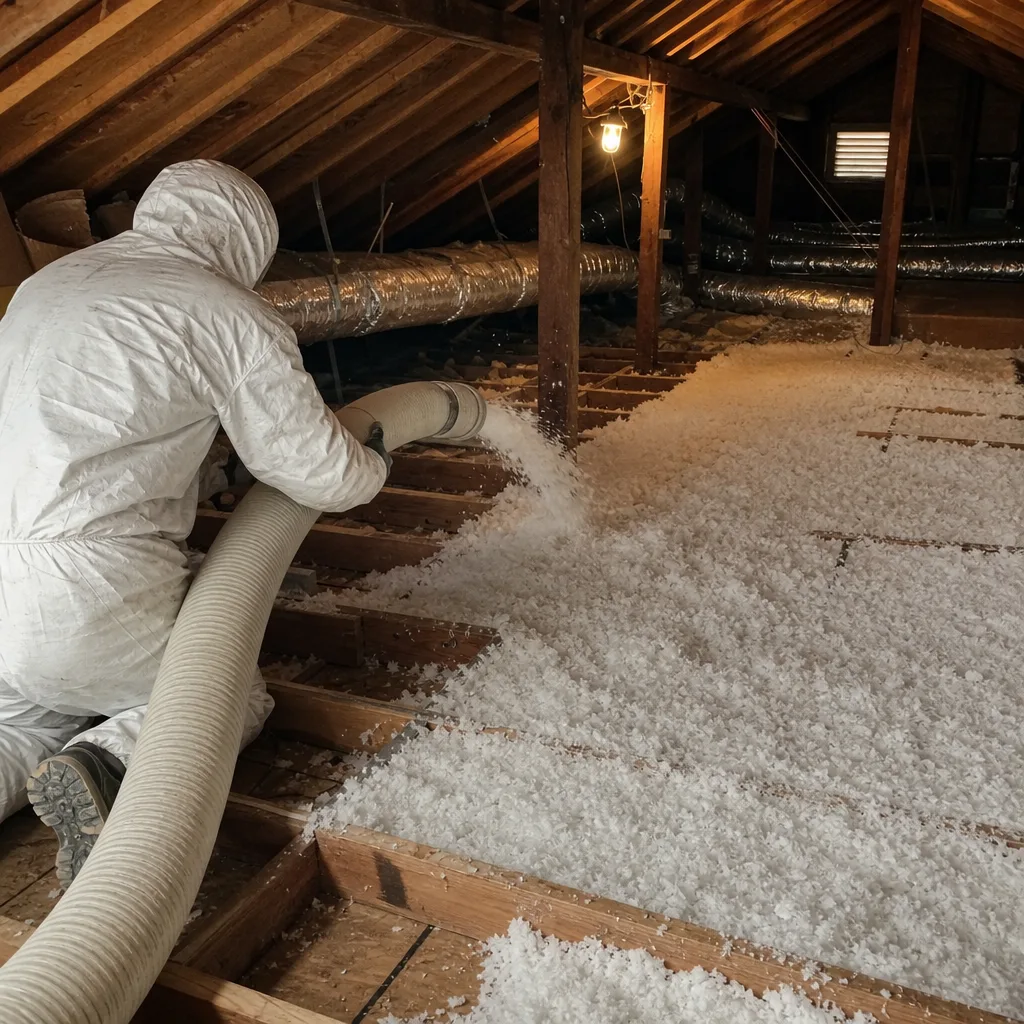
Blown in insulation handles most of what Highland’s housing stock requires, and it’s the service we recommend first for attics with settled batts or thin coverage. Two other services account for the rest of the calls we get from Highland homeowners.
Attic Insulation in Highland
Older Highland homes often have original fiberglass that’s settled to less than half its installed R-value, and hot ceilings in summer are the tell. We remove or top-dress what’s there, air-seal penetrations, and install the right material depth for the high-desert heat. The full breakdown lives on the Attic Insulation in Highland page.
Spray Foam Insulation in Highland
Cajon Pass wind infiltration is the problem spray foam solves better than anything else we install. Open-cell Icynene fills shallow attic cavities, while closed-cell Demilec adds structural rigidity and vapor control, which matters in a climate with cold winter nights and strong solar gain. See the specifics on the Spray Foam Insulation in Highland page.
What happens when you call
- 1
A real person answersNo phone trees — you reach a local pro.
- 2
You get an upfront price rangeHonest numbers before anyone is dispatched.
- 3
A background-checked tech heads outLicensed & insured, dispatched right away.
- 4
You approve before work beginsNothing starts until you say go.
Blown In Insulation in Highland
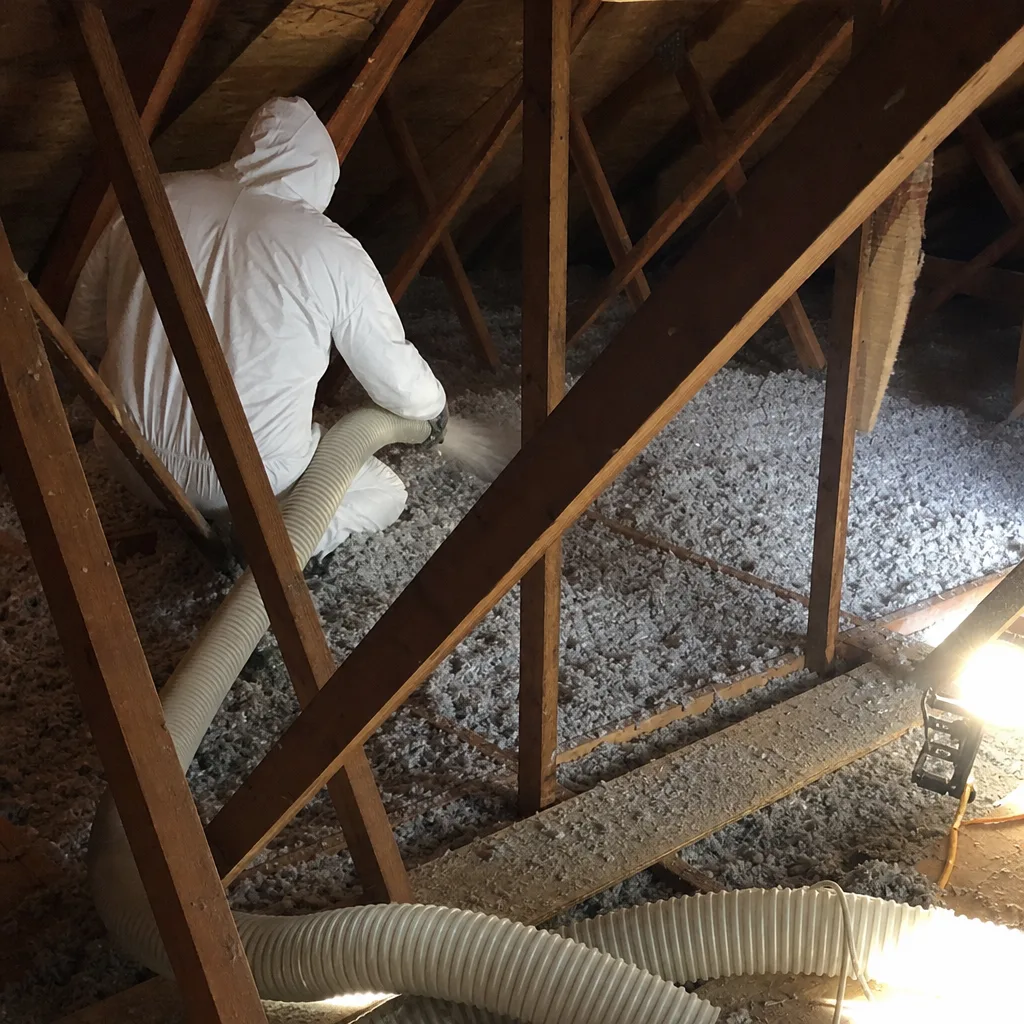
Blown in insulation in Highland is the fastest, most effective way to bring an under-insulated attic up to current performance without tearing out ceilings or rebuilding the roof assembly. In a city where attic temperatures swing from 150°F in August to near freezing on January nights and Cajon Pass winds constantly work their way through the framing, loose-fill coverage that blankets the entire attic floor, including the edges and odd angles that batts leave bare, makes a measurable difference in both summer comfort and winter heating demand. We also carry GreenFiber cellulose, a recycled-content option that packs tighter and slows air movement better than loose fiberglass in windy locations. For Highland specifically, we recommend a depth and material that accounts for wind scour, not just temperature. That’s the difference between an insulation job that lasts and one that’s blown into the neighbor’s yard by October. Learn more about the broader service on our Blown In Insulation page.
Cellulose Insulation
Signs you need it
Rooms are hotter than the hallway in summer or noticeably colder on the north side in winter, and a look in the attic shows thin, settled, or missing coverage.
What it costs in Highland
Cellulose insulation in a typical 1,200 – 1,500-square-foot Highland attic runs $1,200 – $2,200 for full new coverage, depending on depth and existing material removal.
How we do it
We air-seal the attic floor first, then blow GreenFiber cellulose to a consistent, posted depth across the entire attic, including edges, soffits, and around old duct runs.
Loose Fill Insulation
Signs you need it
Energy bills climb every summer while the air conditioner runs longer than it should, and existing attic insulation stops short of the top plates or looks wind-scoured on one side.
What it costs in Highland
Loose fill insulation top-dress over existing material in Highland typically falls between $900 and $1,800, with full removal and new coverage running higher.
How we do it
We add loose fill to the depth specified for the climate zone, correcting uncovered corners, low spots, and wind-displaced areas so the coverage is uniform, not wavy.
What Blown In Insulation Costs in Highland
| Item | Typical range in Highland |
|---|---|
| Top-dress over existing insulation | $900 – $1,800 |
| Full cellulose coverage, 1,200 – 1,500 sq ft attic | $1,200 – $2,200 |
| Full fiberglass loose fill, same size home | $1,000 – $2,000 |
Two things push cost up in Highland: removing old, compacted, or possibly contaminated material before blowing new, and air-sealing work around the many older can lights, top plates, and duct penetrations common in 1960s and 1970s framing.
Can you blow insulation over old insulation in Highland?
Yes, in most Highland attics we can top-dress new cellulose or fiberglass over existing material if it’s dry and not severely compressed. We check depth, moisture, and condition first, then blow to the final R-value rather than guessing. Call (855) 773-6429 for a free attic check.
Is blown in insulation better than batts for a windy Highland attic?
Generally yes. Loose fill blankets the whole attic floor without seams, so wind-driven air has fewer channels to travel through the way it can at batt joints and ends. Cellulose in particular interrupts airflow better than faced fiberglass in windy locations.
Brands We Service in Highland
We stock and install from an eight-brand material library, and Highland jobs typically draw on Icynene, Demilec, GreenFiber, and Owens Corning. Common parts and materials are stocked for same-week scheduling rather than special-order delays. See the full portfolio on our brands page.
Pricing for Insulation Company in Highland, CA
| Service | Typical range in Highland |
|---|---|
| Blown in cellulose top-dress | $900 – $1,800 |
| Full blown in cellulose coverage | $1,200 – $2,200 |
| Full blown in fiberglass coverage | $1,000 – $2,000 |
| Attic air sealing and insulation combined | $1,500 – $3,000 |
| Spray foam rim joist sealing | $40 – $80 per linear foot |
| Closed-cell spray foam attic, small | $3,000 – $5,500 |
| Open-cell spray foam attic, small | $2,500 – $4,500 |
| Mineral wool batt replacement, small attic | $1,500 – $2,800 |
Highland jobs run higher than coastal cities when we’re correcting wind-scoured coverage, adding radiant barrier in shallow attics, or removing old material that’s been compressed for decades. Every quote is a fixed, upfront price with no surprise line items.
Neighborhoods We Serve in Highland
We work throughout the 92346 ZIP code, from older single-story tracts near Baseline and Victoria to the newer subdivisions east of Webster Street. Highland’s neighborhoods share the same three problems, varying mostly by house age and attic depth.
- East Highlands Ranch
- La Praix
- Golden Estates
- North Highland
- Historic downtown area off Base Line
Response time in Highland runs about one to two days for an estimate, with installation typically schedulable within the same week for blown-in jobs.
Service Area – Cities Near Highland
Placentia Insulation has served Highland since 2018, and we regularly schedule work in the surrounding cities. A Highland project often starts with a call from a neighbor, which is how we stay busy across the corridor. We also cover San Bernardino, CA, Muscoy, CA, Redlands, CA, and Loma Linda, CA.
Serving Highland, CA — Our Local Coverage Area
We’re based in the Highland area and know this community well. Use the map below to see our service coverage — if you’re nearby, we can almost certainly help.
FAQs About Insulation Company in Highland
Most attic insulation and air-sealing work in Highland does not require a city permit when it’s not part of a larger remodel. We confirm requirements on a per-project basis and handle any paperwork if a permit becomes necessary for attached work.
We can usually have a technician at a Highland home within one to two days of your call for an estimate, and blown-in installation often fits the same week. Call (855) 773-6429 to get on the schedule.
Yes. Attic insulation, air sealing, and blown-in work happen entirely inside the attic and don’t alter exterior appearance, so HOA review in Highland communities like East Highlands Ranch is rarely triggered. We keep a low profile while on site.
What happens when you call
- 1A real person answersNo phone trees — talk to a local insulation pro.
- 2You get an upfront price rangeHonest numbers before anyone is dispatched. No surprises.
- 3A background-checked tech heads outLicensed & insured, typically within 30–60 min.
- 4You approve before work beginsNothing starts until you say go.
What Highland Customers Say
"Attic was at maybe R-11 from the 1970s and blown in over the top would have just buried the problem. They removed the old material, air sealed the top plates and penetrations first, then blew in to R-49. The upstairs is a completely different house in August."
— Veronica Guzman"He did a blower door test before and after and gave me the numbers. I like being able to see the difference rather than being told about it."
— Rachel Sullivan"Told me the crawlspace didn't need doing and only the attic did. Half the job, half the money."
— Adriana Rodriguez