
Attic Insulation in Covina, CA: What It Costs and Why Air Sealing Comes First
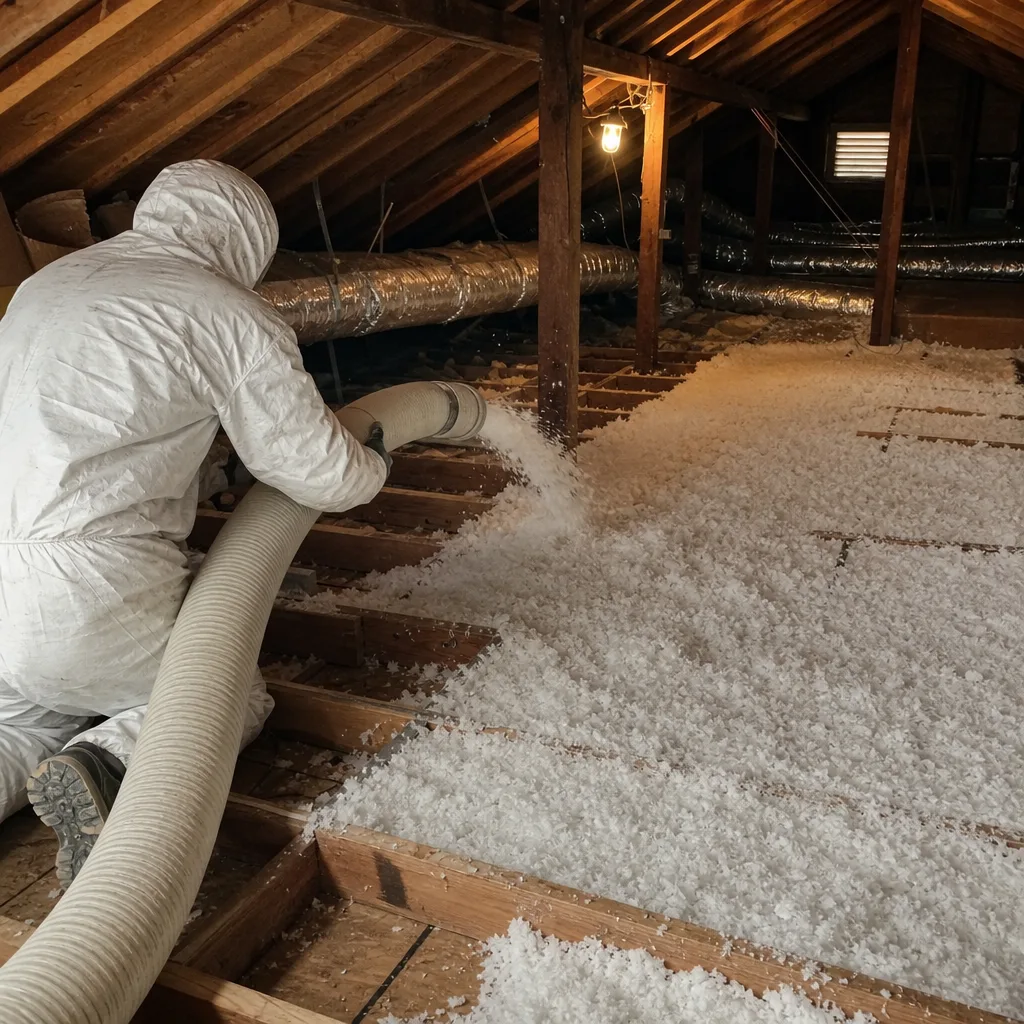
Attic insulation in Covina typically runs $1,850 to $4,600 for a standard single-story home, depending on attic size, access, and whether air sealing and radiant barrier are included. The job usually takes one day. What surprises most Covina homeowners is that the insulation itself is only half the fix: in the older tracts near the 91722/91723 boundary, unsealed duct runs and unrated recessed lights bleed conditioned air into the attic, so a blow-in upgrade that skips sealing just buries the problem under fresh cellulose. Call us at (855) 773-6429 and we’ll scope the attic before quoting anything.
We’re Placentia Insulation, a dedicated Attic Insulation contractor led by Alan Whitcomb. Our crews work in Covina every week, mostly in the mid-century tracts where attics have been cooking at 140°F for fifty summers. We know which houses along Badillo Street and Citrus Avenue still have original R-8 batts, which additions in 91724 were framed with undersized rafter bays, and why the south-facing roof decks near the foothills need a different approach than anything in coastal LA.
Fast, Reliable Attic Insulation Across Covina
When your upstairs bedrooms hit 85 degrees at midnight in August, the attic is usually the culprit. We respond to Covina service calls within one business day in most cases, and we cover every ZIP: 91722, 91723, and 91724. Whether you’re near Covina High School, up by Charter Oak Park, or in the newer builds east of Grand Avenue, we know the housing stock and what’s been done to it over the decades. That local familiarity saves you money on diagnostics.
We don’t send a generalist. Alan Whitcomb runs a pure-play insulation operation, so the crew that shows up at your Covina home spends every working day in attics, not juggling plumbing calls. If you want an honest read on whether your insulation has failed or your ductwork is the real problem, call (855) 773-6429.
Why Placentia Insulation Is Covina’s Preferred Attic Insulation Company
Covina homeowners call us because we match the material to the job, not the job to whatever we have on the truck. Most insulation contractors carry one or two product lines. We carry eight: Owens Corning, Johns Manville, Knauf, Rockwool, CertainTeed, Icynene, Demilec, and GreenFiber. That means a 1962 tract home in 91722 gets a different spec than a 1978 two-story in 91724, and we can actually deliver both.
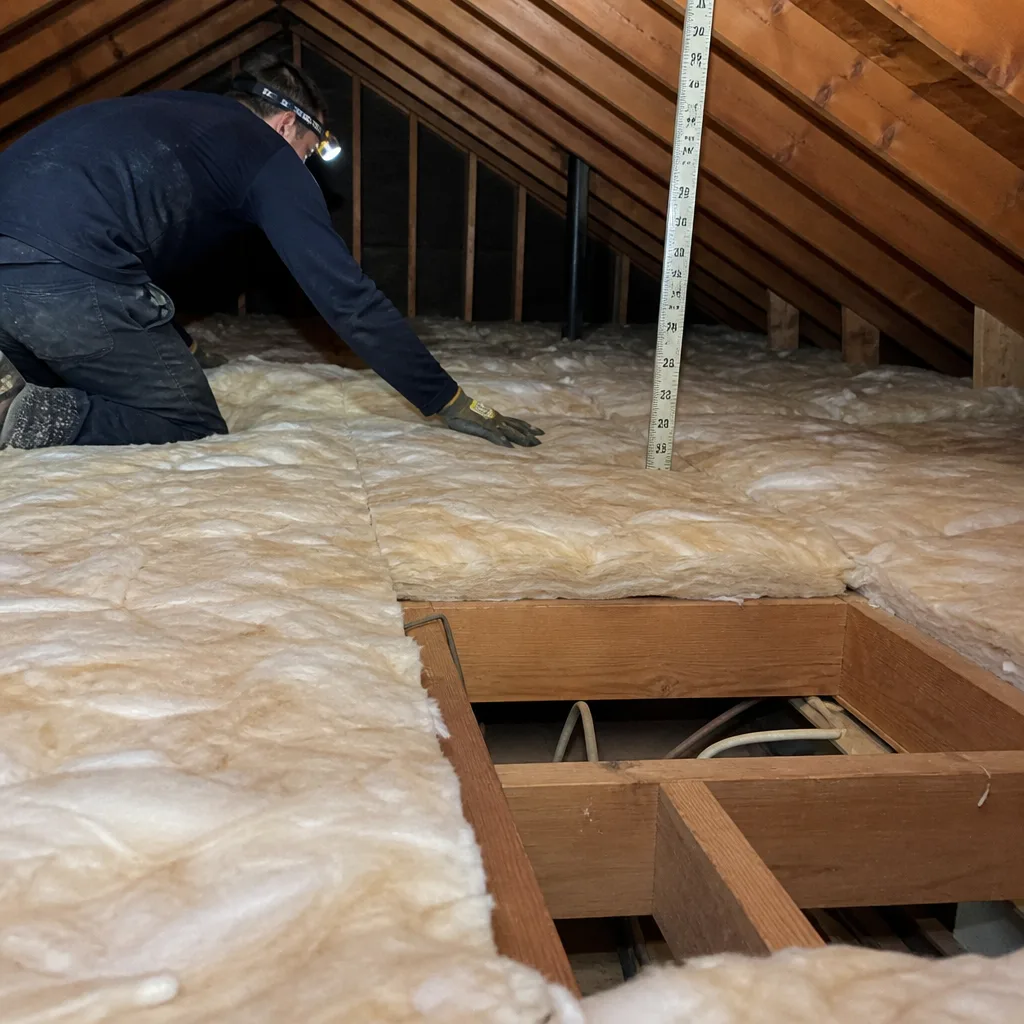
Our Covina customers keep us around because we don’t bury problems. On a recent job near the 91722/91723 line, our crew found original R-8 batts flattened to under two inches and old overhead ducts with disconnected joints buried under loose fill. We scoped the duct runs, sealed and capped the gaps around six unrated recessed lights, then blew in GreenFiber cellulose to R-38 and added a radiant barrier on the south-facing roof deck. The homeowner reported the upstairs rooms finally holding temperature during a 104°F August afternoon. That’s the standard we work to in Covina.
We’re licensed and insured, and every estimate is free. Alan Whitcomb oversees each Covina job, and you’ll get a straight answer on cost before anything gets scheduled.
Attic Ventilation in Covina
Attic Ventilation in Covina is the difference between an attic that stays at 125°F and one that hits 155°F by 2 p.m. in July. Covina sits at the base of the San Gabriel foothills, so attic heat is relentless from June through October. Proper ventilation moves that superheated air out before it radiates into your living space, and it also protects the insulation itself from heat degradation that compresses batts years before their rated lifespan.
Passive Venting Upgrades
Most of the mid-century homes in 91722 and 91723 were built with minimal ridge or gable vents. We add soffit-to-ridge airflow paths, install baffles to keep blown-in insulation from blocking the soffit intakes, and balance the system so air actually moves. In Covina’s flat-roof ranch sections near the 10 Freeway, we often pair vents with the existing roof design rather than cutting new penetrations that could leak.
Attic Baffles and Airflow Prep
Before any blow-in job in Covina, we check that the soffit vents aren’t blocked by decades of dust and old batts. Then we staple in baffles to maintain a clear channel from soffit to ridge. It’s a small step that prevents the new insulation from choking the attic and turning it into a heat trap.
Radiant Barrier in Covina
Radiant Barrier in Covina is the single highest-impact upgrade for sun-baked south and west roof decks. When the summer sun pounds your roof at 100°F plus, the shingles transfer radiant heat into the attic, where it radiates down through the ceiling. A radiant barrier reflects that heat back before it ever reaches your insulation, which matters more in Covina’s foothill climate than anywhere along the coast.
Foil-Faced Deck Application
We staple or drape foil-faced radiant barrier along the underside of the roof deck, focusing on the south and west exposures where Covina homes absorb the most direct sun. On a 1960s tract home off San Bernardino Road, that single step can drop attic temps 20 to 30 degrees on a hot afternoon.
Pairing with Blown-In Insulation
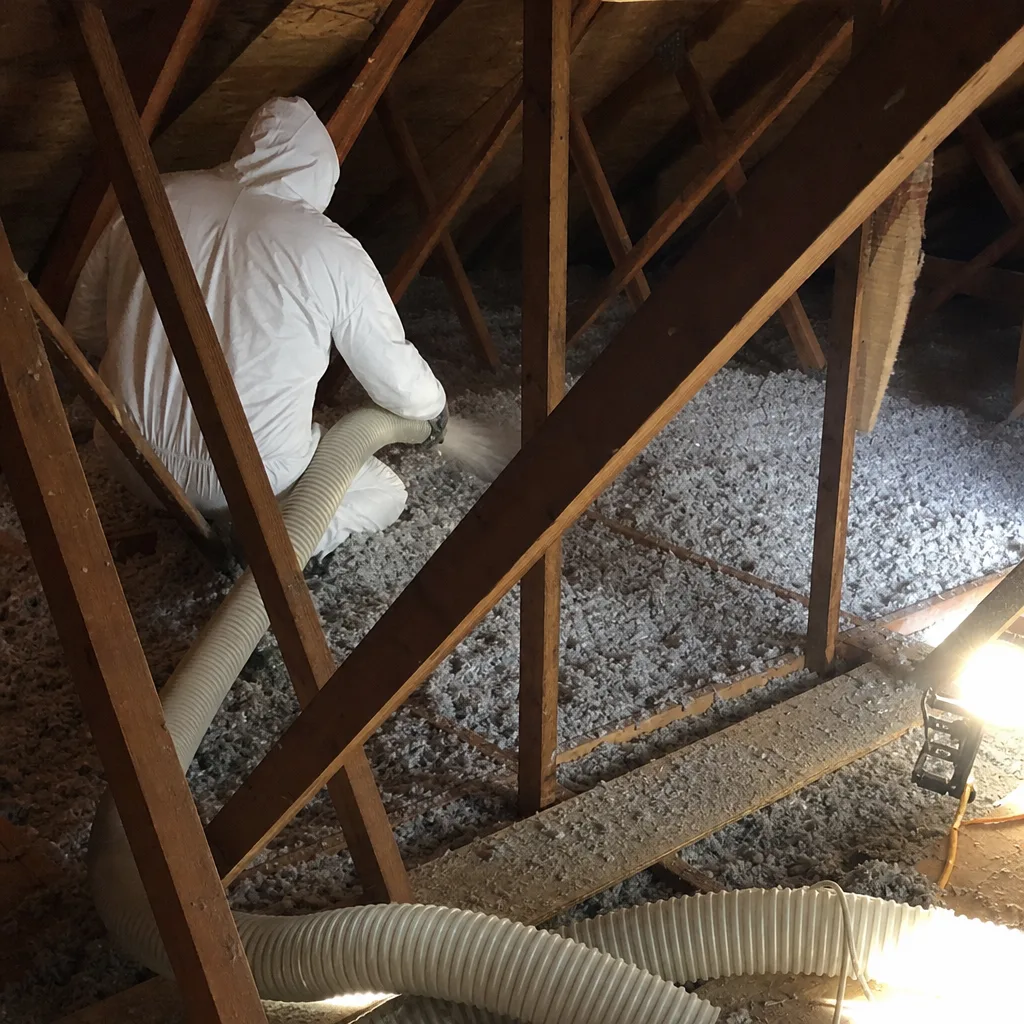
Radiant barrier alone won’t fix a home with R-8 batts. But paired with blown-in cellulose or fiberglass at R-38 or higher, it changes the thermal performance of the whole attic. We recommend this combination for Covina homeowners who’ve already upgraded their HVAC and still see upstairs bedrooms running 8 to 10 degrees hotter than the main floor.
What R-Value Should Covina Homes Aim For?
In Covina’s hot foothill climate, we recommend R-38 to R-49 in the attic, higher than what coastal LA homes typically need because the radiant load is so much greater here. The mid-century tract homes in 91722 and 91723 were built with R-8 to R-11 batts that have settled and degraded to R-5 or less in many cases. Bringing those attics up to R-38 with blown-in cellulose or fiberglass is the most cost-effective insulation upgrade most Covina homeowners will ever make.
Common Attic Insulation Problems We See in Covina Homes
- Settled 1970s-era batts compressed to R-8 or less. The fiberglass batts installed when these Covina tracts were built have been baking under 140°F attic heat for decades. They flatten, lose loft, and stop insulating. The top floor starts radiating heat into living space every evening after the sun goes down.
- Blow-in installed over unsealed overhead ducts and unrated recessed lights. In homes near the 91722/91723 boundary, we regularly find ventilation holes and old can lights leaking conditioned air straight into the attic. When a previous contractor blew insulation over those gaps, the leaks continued underneath, buried and hidden.
- Missing or degraded radiant barrier on south and west roof decks. Many Covina homes never had a radiant barrier, and the ones that did often have torn or sagging foil. By mid-afternoon, radiant heat gain overwhelms even fresh insulation because the roof itself is radiating like a broiler.
- Blocked soffit vents starving attic ventilation. Fifty years of dust, cobwebs, and over-eager insulation work can plug the soffit intakes in Covina’s older homes. Without intake airflow, the ridge vents can’t pull hot air out, and the attic becomes a stagnant heat box that cooks the insulation from above and below.
Why does air sealing come before insulation in Covina? Because in these older tracts, the leaks are almost always in the attic floor: duct joints, recessed light cans, top plates, and plumbing penetrations. Blow insulation over them and you’ve locked in the problem under a foot of cellulose. We scope and cap those penetrations first, then insulate. That’s the information gain most generic attic pages skip.
Pricing for Attic Insulation in Covina, CA
A typical blown-in attic insulation job in Covina runs $1,850 to $3,200 for a 1,200 to 1,800 square foot ranch. Adding full air sealing typically runs $650 to $1,100 depending on how many recessed lights, duct joints, and penetrations need capping. Radiant barrier on the south and west roof decks adds $1,200 to $2,400 based on attic square footage and complexity. Batting replacement with R-38 fiberglass or Rockwool runs $2,200 to $4,000 for standard Covina attics, more if old insulation removal is needed. Attic ventilation upgrades including baffles run $450 to $1,000 alongside an insulation job. Every estimate is free, and we itemize the quote so you see exactly what each step costs. Call (855) 773-6429 to get a number for your specific attic.
Trusted Brands We Service in Covina
We install and service insulation from eight brands: Owens Corning, Johns Manville, Knauf, Rockwool, CertainTeed, Icynene, Demilec, and GreenFiber. For Covina’s hot attic conditions, we spec Rockwool mineral wool where fire resistance or sound dampening matters, GreenFiber cellulose for dense-packed blow-in over older framing, and Icynene open-cell spray foam for the tight rafter bays common in 91724 additions. Because we stock materials for all eight brands, we’re not pushing you toward whatever one supplier had on sale last month. Your Covina attic gets what it actually needs.
Written by Alan Whitcomb, Owner at Placentia Insulation, serving Covina and the San Gabriel Valley foothill communities.
We Also Serve Cities Near Covina
Placentia Insulation serves Covina and the surrounding foothill communities, including Covina neighbors like Irwindale, Azusa, Citrus, and West Covina. If you’re in one of those cities and dealing with the same mid-century attic problems, call (855) 773-6429 for the same scoping-first approach we bring to every Covina job.
Serving Covina, CA — Our Local Coverage Area
We’re based in the Covina area and know this community well. Use the map below to see our service coverage — if you’re nearby, we can almost certainly help.
FAQs About Attic Insulation in Covina
Because in Covina’s older housing stock, especially along the 91722/91723 boundary, unsealed overhead duct joints and unrated recessed lights leak conditioned air into the attic. Blowing insulation over those gaps just buries them under fresh cellulose, so the leaks continue underneath and your energy bills barely move. We scope and cap those penetrations first, then insulate, and the result is a tight attic that actually holds temperature. Call (855) 773-6429 to have your attic scoped before you spend anything on insulation.
Aim for R-38 to R-49 in your Covina attic. The foothill summers push attic temps to 140°F and above, which is a much higher radiant load than coastal LA homes face. Most Covina tract homes currently sit at R-8 or less, so bringing the attic to R-38 with blown-in cellulose or fiberglass is the single most effective upgrade for upstairs comfort. We’ll recommend the exact target based on your roof design and whether a radiant barrier makes sense for your exposures.
If your upstairs rooms run 8 to 10 degrees hotter than the main floor on summer afternoons and stay hot well into the evening, your attic insulation has likely failed. In Covina’s mid-century homes, the original batts flatten out under years of 140°F attic heat and stop insulating. You can also check the attic yourself: if you can see the ceiling joists poking through the insulation, it’s underperforming. We’ll confirm with a free inspection and give you a straight answer.
In most Covina homes, yes. We can blow new cellulose or fiberglass directly over the existing batts as long as the old material isn’t water-damaged, moldy, or pest-infested. The new insulation fills the settled low spots and brings the whole attic up to R-38 or higher. If the old batts are degraded or contaminated, we’ll recommend removal first, and we’ll show you what we found before adding anything. Call (855) 773-6429 for a free attic assessment.
We install GreenFiber cellulose, Owens Corning and Johns Manville fiberglass, Rockwool mineral wool, CertainTeed batts, and Icynene or Demilec spray foam depending on the application. For most Covina blow-in jobs we spec GreenFiber cellulose because it dense-packs well over older framing and resists settling. Rockwool gets used where fire resistance or sound control is a priority, and spray foam handles tight rafter bays in 91724 additions. Your attic gets the right material, not whatever we have left on the truck.