Fast, Reliable Attic Insulation Across West Covina
Attic insulation in West Covina is a different job than it is almost anywhere else in the San Gabriel Valley. Most of the city’s housing stock went up between the 1950s and 1970s, which means the original fiberglass batts are now 50 to 70 years old, settled, compressed, and doing almost nothing under attics that routinely hit 140°F in July and August. We’re Placentia Insulation, led by Alan Whitcomb, and we work these exact tract homes week in and week out, from the 91790 streets near the civic center up through 91791 and out toward the 91792 and 91793 subdivisions. If your upstairs runs ten degrees hotter than your living room, or your AC never cycles off from June through September, call us at (855) 773-6429 and we’ll assess what’s actually happening in your attic.
Why Placentia Insulation Is West Covina’s Preferred Attic Insulation Company
Most insulation contractors carry one or two product lines and default to whatever’s on the truck. We carry eight brands across three installation methods, which matters a lot in West Covina specifically, because these older tract homes each have their own quirks. A 1962 single-story near Cortez Park needs a different material and approach than a 1978 two-story off Azusa Avenue.
Our crews know the 91790 and 91791 tracts block by block. We know which subdivisions have knob-and-tube-era wiring still buried in the original batts, which ones had patio enclosures added in the 1980s, and which streets show the same failure pattern, house after house, because every home was built on the same schedule by the same developer. As an insulation-only contractor, every tool on the truck and every conversation with our techs is about one trade. Alan Whitcomb built the company around that focus. West Covina homeowners get a specialist who’s seen their exact attic a hundred times, not a generalist fitting the job between plumbing calls.
Radiant Barrier in West Covina
A Radiant Barrier in West Covina usually means installing a reflective foil layer on the underside of the roof rafters to cut radiant heat transfer before it ever reaches your insulation. When attic temps sit at 140°F and your AC ducts run through that same space, a radiant barrier can lower attic temperatures by 20 to 30 degrees and take measurable load off the cooling system. In these inland SGV tract homes, it’s one of the highest-payoff upgrades you can make before adding more R-value.
What a radiant barrier install involves here
We staple or fasten reflective foil to the rafters, keeping the proper air gap so the foil actually works. In West Covina attics with low slopes and tight rafter bays, we often pair the barrier with new baffles so soffit airflow isn’t blocked. The job typically runs $1,800 to $4,200 depending on attic square footage and roofline complexity.
When a West Covina homeowner should consider one
If your second floor or bonus room over the garage bakes by 3 p.m. even with the AC running, a radiant barrier is likely a better first step than piling on more insulation. We see this constantly in 91791 and 91792 homes where dark asphalt shingles and shallow roof pitch make afternoon heat brutal. The barrier reflects the heat source; adding insulation alone just slows it down.
Attic Cleaning Services in West Covina
Attic Cleaning Services in West Covina aren’t a nice-to-have; they’re usually the prerequisite to making new insulation perform. Decades of settled dust, rodent droppings, and disintegrated batt fibers sit on top of your ceiling joists and inside your existing insulation. Before any top-up or replacement, that layer needs to come out so the new material doesn’t just blanket the old problems.
Removal of old, failed insulation
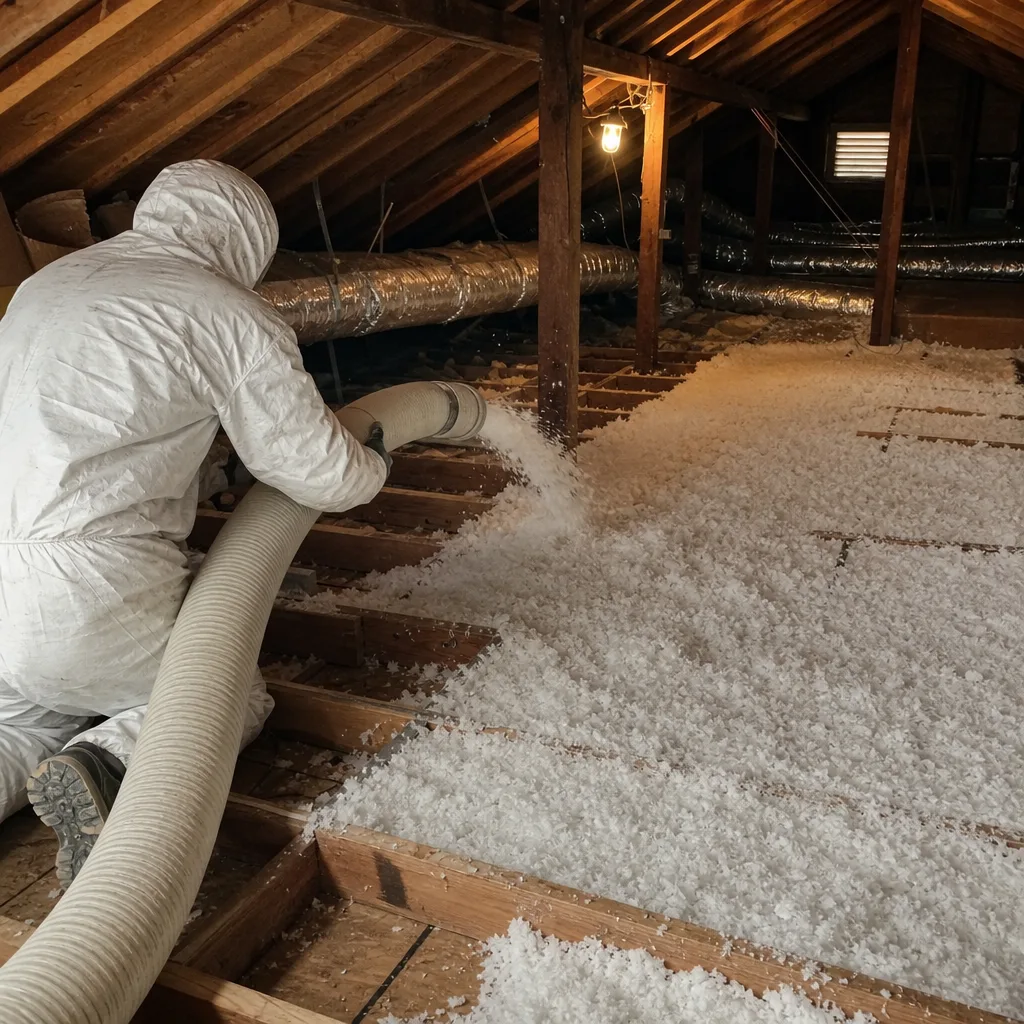
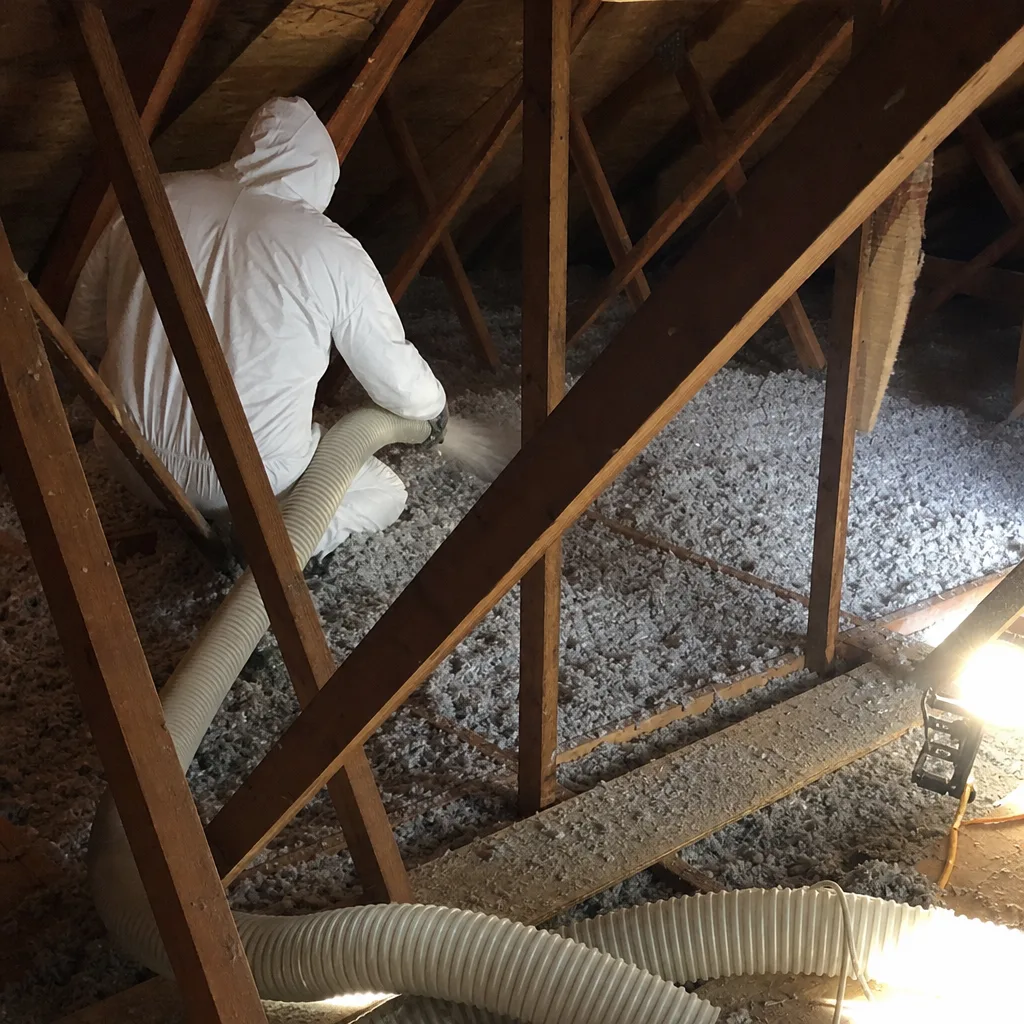
We vacuum out decayed fiberglass batts and blown-in material that’s compacted, infested, or contaminated. In West Covina tract homes, this exposes the wiring runs and top plates we need to inspect before anything new goes in. Attic cleaning alone typically runs $1,500 to $3,800 in this market, depending on attic size and contamination level.
Air sealing prep after the cleanout
Once the attic floor is clear, we can actually see the wire penetrations, recessed can lights, and top plates that have been leaking 140°F attic air into your living space for fifty years. Sealing those gaps before re-insulating is the difference between a job that works and a job that just looks better. We bundle cleaning with air sealing and re-insulation so you’re not paying for an empty attic you can’t use.
What happens when you call
- 1
A real person answersNo phone trees — you reach a local pro.
- 2
You get an upfront price rangeHonest numbers before anyone is dispatched.
- 3
A background-checked tech heads outLicensed & insured, dispatched right away.
- 4
You approve before work beginsNothing starts until you say go.
Trusted Brands We Service in West Covina
Your West Covina attic should get the material that matches its actual conditions, not whatever one supplier happens to stock. We install from an eight-brand library: Owens Corning and Johns Manville fiberglass for standard re-insulation, GreenFiber blown-in cellulose for the tight, irregular attics in these older tracts, Icynene and Demilec spray foam for bonus rooms and knee walls where air sealing matters most, plus Rockwool mineral wool for clients who want fire resistance and sound dampening. If you’ve got a dead-simple attic floor, we won’t upsell you foam. If you’ve got a converted patio enclosure leaking air at every seam, we won’t pretend batts will fix it. We match the material to the job, not the job to whatever we have on the truck.
Common Attic Insulation Problems We See in West Covina Homes
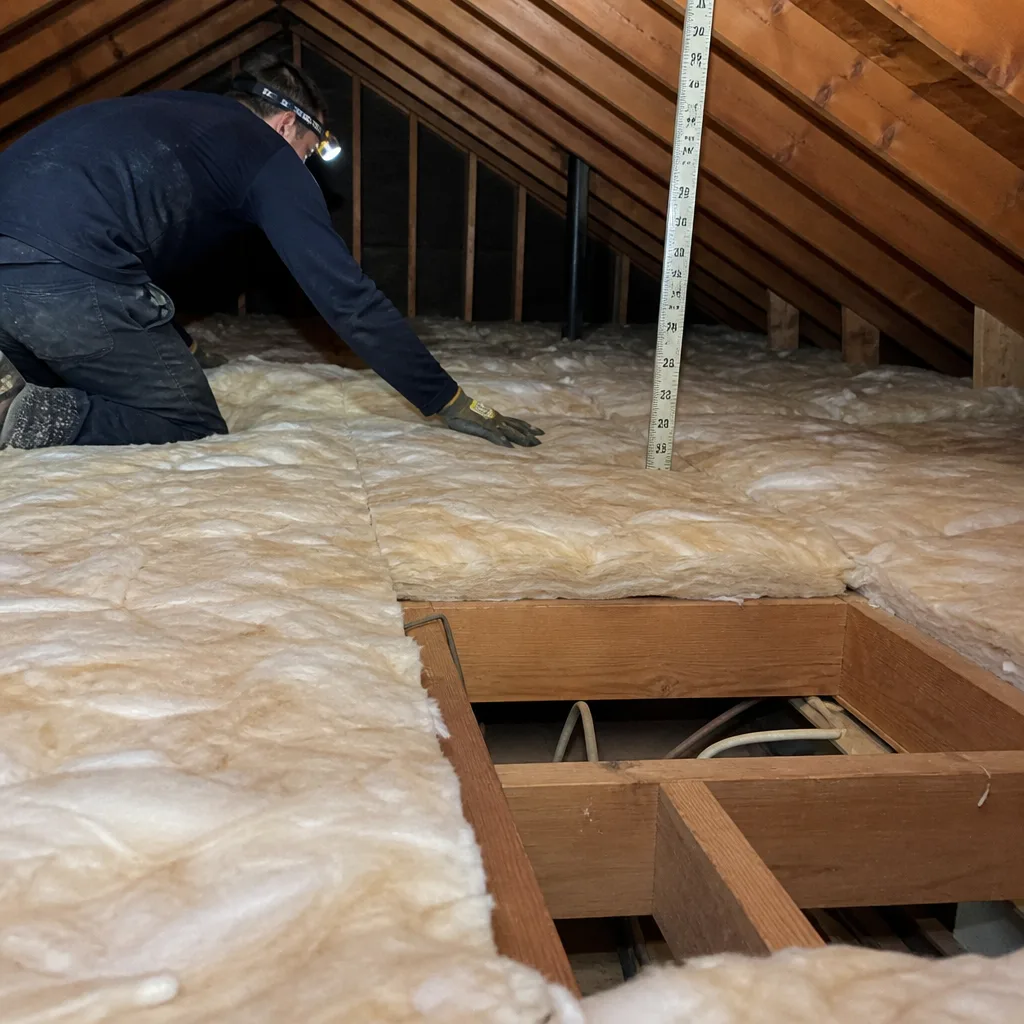
- Original fiberglass batts that have slipped off the joists. In the 1950s – 1970s tracts across 91790 and 91791, the original batts were friction-fit between joists and have since sagged, slipped, or compressed under decades of dust. The rated R-value collapses exactly where the summer attic heat is worst.
- Unsealed top plates and recessed cans bleeding attic air into living space. These homes were framed and drywalled before air sealing was standard practice. Every wire penetration and can light acts as a chimney pulling 140°F air down into the house, undercutting any new insulation you add.
- Bonus rooms and patio enclosures with zero insulation in the knee walls. Many West Covina homes had patio covers enclosed as bonus rooms in the 1980s and 1990s. The original insulation job rarely extended into these additions, leaving gaps behind knee walls and above ceiling drywall that a standard top-up misses entirely.
- Knob-and-tube-era wiring buried in old insulation. In the older 91790 and 91791 tracts, technicians routinely find legacy wiring running through or under failed batts. That wiring has to be mapped and worked around before any new blown-in material goes down, both for safety and for code compliance.
Pricing for Attic Insulation in West Covina, CA
In West Covina, a standard attic insulation top-up with blown-in GreenFiber cellulose over an existing layer runs $1,800 to $3,200 for a typical 1,200 to 1,600 square foot tract home. Full removal of failed batts, air sealing, and re-insulation to R-38 or R-44 usually lands between $3,500 and $6,500 depending on attic size, contamination, and whether bonus rooms or knee walls need attention. Radiant barrier installation runs $1,800 to $4,200 on top of insulation work, and attic cleaning as a standalone job typically costs $1,500 to $3,800. What changes the numbers: attic square footage, whether old material has to come out first, knob-and-tube wiring complications, and how much air sealing the house needs. Call (855) 773-6429 for a free estimate with exact numbers for your address.
We Also Serve Cities Near West Covina
Our crews work the whole central San Gabriel Valley, so if you’re in Valinda, South San Jose Hills, La Puente, or Irwindale, you’re still in our regular service area. The housing stock and attic failure patterns are nearly identical to what we see in West Covina, which means we already know your house before we step inside. Call us at (855) 773-6429 and tell us the year your home was built; that alone tells us most of what we need to know.
Serving West Covina, CA — Our Local Coverage Area
We’re based in the West Covina area and know this community well. Use the map below to see our service coverage — if you’re nearby, we can almost certainly help.
FAQs About Attic Insulation in West Covina
Yes, and this is the step most West Covina re-insulation jobs skip. Homes built in the 1950s – 1970s were framed without air sealing, so top plates, wire penetrations, and recessed cans are actively pulling hot attic air into your living space. Blowing new cellulose over those leaks is like adding a heavier blanket under a drafty window. We seal the gaps as part of the job, not as an add-on. Call (855) 773-6429 and we’ll tell you exactly where your home is leaking.
We locate and map it before any new material goes down. Knob-and-tube-era wiring, common in 91790 and 91791 homes from the 1950s and early 1960s, can’t be buried under insulation without creating a heat risk. Our techs mark the runs, keep new material clear of them, and let you know if further electrical work is warranted. This is one reason we clean the attic floor first; you can’t protect what you can’t see.
Because in West Covina’s inland SGV climate, the dominant load is cooling, not heating, and your attic is the hottest part of the house. Summer attic temps hit 140°F+ while the living space below is trying to hold at 75. That 65-degree gradient is the biggest driver of your summer energy bill, and walls simply don’t see that kind of temperature differential. Attic insulation and radiant barrier work attack the problem at its source. Call (855) 773-6429 and we’ll explain what your attic is currently costing you.
Yes, and this is one of the most common calls we get in the 91792 and 91793 tracts where 1980s patio enclosures left knee walls and ceiling cavities uninsulated. We treat these additions as their own insulated envelope, using spray foam where the framing is irregular and air sealing is critical. GreenFiber cellulose or fiberglass batts don’t fix a knee wall that was never insulated in the first place; the material choice depends on what’s actually behind the drywall.
Walk up to your attic access on a summer afternoon and feel the heat radiating from the hatch. If rooms below the attic run 8 – 10 degrees hotter than the rest of the house, or you can see daylight through the soffits from inside the attic, your original batts have likely slipped or compressed. In West Covina’s age bracket, we find failed original insulation in roughly three out of four homes we inspect. Call (855) 773-6429 and we’ll inspect it properly, explain what we find, and give you a straight recommendation, not a sales pitch.
Written by Alan Whitcomb, Owner at Placentia Insulation, serving West Covina and the central San Gabriel Valley.