
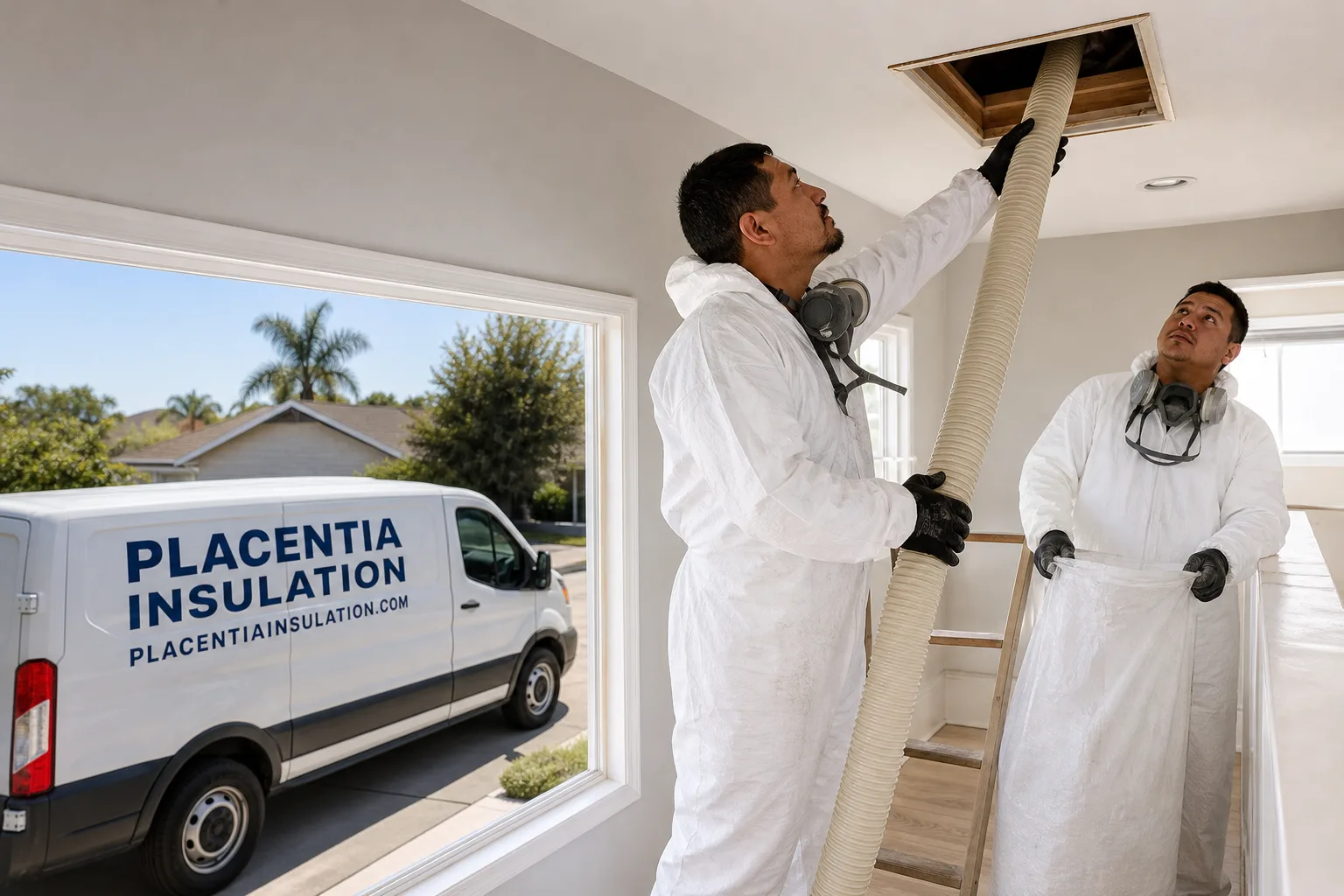
Trusted Attic Insulation for Placentia Homeowners
Attic insulation in Placentia is the single most effective upgrade for homes battling summer heat gain through the roof and winter heat loss through the ceiling. We approach every attic as its own project because two homes on the same street can need completely different materials. One might need Rockwool for fire resistance, another might benefit from CertainTeed fiberglass, and a third could need Icynene open-cell foam for tight, awkward cavities. Alan Whitcomb built Placentia Insulation around that exact principle: match the material to the job, not the job to whatever we have on the truck. Call (855) 773-6429 for a free attic assessment in Placentia.
Insulation Contractors
Insulation Contractors are the trade professionals who assess, recommend, and install the materials that control heat transfer, air leakage, and moisture movement in your home. In Placentia, where summer attic temperatures routinely exceed 140 degrees and winter nights drop into the low 40s, choosing the right contractor determines whether your energy bills actually drop or stay frustratingly flat. We operate as a single-trade specialist. Every crew member who enters your attic works on insulation full time. No plumbing side jobs, no HVAC cross-training, no general contracting drift. That focus means our recommendations come from material science and airflow behavior, not from whatever happens to be in stock. We carry eight brands including Owens Corning, CertainTeed, Rockwool, Icynene, and Demilec, so the conversation starts with your home’s needs, not our inventory limits. For a better sense of investment levels, see our guide to Attic Insulation pricing.
Full-Trade Assessment
A proper contractor evaluation covers more than measuring square footage. We inspect existing R-values, check for air bypasses around can lights and plumbing penetrations, and evaluate your attic’s current ventilation pattern. That gives us a real picture of what’s failing before we quote a single number.
Single-Vendor Accountability
When an insulation job fails, the finger-pointing starts fast. We handle the entire scope under one roof, which means one point of contact, one schedule, and one set of performance expectations from start to finish.
Attic Ventilation
Attic Ventilation is the controlled exchange of air between your attic space and the outdoors, typically through a combination of intake vents at the eaves and exhaust vents at or near the roof peak. Without it, Placentia attics become heat traps in summer and moisture traps in winter. We see this constantly in older Placentia neighborhoods where original soffit vents were painted over or never installed correctly in the first place. The fix depends on what your roof geometry allows. Some attics need ridge vents paired with continuous soffit intake. Others do better with passive gable vents or powered exhaust when roof lines create dead air zones. Ventilation and insulation work as a system; upgrading one while ignoring the other gives you half the result and none of the long-term savings.
Balanced Airflow Design
An attic pulls air in at the bottom and exhausts it at the top. When intake area is undersized relative to exhaust, you get negative pressure that can pull conditioned air out of your living space. We calculate net free vent area against your attic’s square footage before recommending any configuration.
Moisture Control Integration
Placentia’s cool winter nights cause condensation on the underside of roof decking when warm, moist air from the home leaks upward. Proper ventilation moves that moisture out before it soaks into insulation or feeds mold growth on framing.
Radiant Barrier
Radiant Barrier is a reflective material, typically aluminum foil bonded to a substrate, installed in the attic to reduce radiant heat transfer from a hot roof deck into the living space below. In Placentia’s inland climate, where we regularly see 90-plus degree days from June through September, a radiant barrier works differently than traditional insulation. Fiberglass and cellulose slow conductive heat. Radiant barrier reflects it. That matters because radiant heat is the dominant load on a Placentia attic in summer. Installed on the underside of roof rafters, a radiant barrier can reduce attic temperatures by 20 to 30 degrees on peak days. We recommend it most often for homes with dark asphalt shingle roofs, which absorb heat aggressively, and for homeowners who want to supplement, not replace, their existing attic insulation.
Shingle Color Sensitivity
Dark roof shingles in Placentia absorb more solar radiation than light ones, meaning the roof deck radiates more heat downward into the attic. Homes here with dark shingles benefit disproportionately from radiant barrier installation. We factor your roof color and orientation into the recommendation.
Installation Compatibility
Radiant barrier needs an air gap to function; the reflective surface performs best facing an open air space. We determine whether your attic layout supports proper installation, and we’ll tell you honestly if your roof configuration makes radiant barrier a weak investment compared to adding more insulation depth.
Attic Cleaning Services
Attic Cleaning Services involve removing accumulated debris, old dust, pest droppings, and deteriorated insulation from your attic space before new insulation goes in. In Placentia, where roof rats and squirrels are an established fact of life in older neighborhoods, attic contamination is common. Rodents nest in insulation, leaving behind droppings and urine that degrade both air quality and insulation performance. We approach cleaning as a controlled process. Debris is bagged and removed, contaminated material is isolated, and the attic is ready for its next step, whether that’s new insulation, air sealing, or both. You’d be surprised how often the problem isn’t a lack of insulation but the presence of compromised material that’s been packed down flat and no longer holds its R-value.
Pre-Insulation Preparation
New insulation over old contamination doesn’t solve anything. It traps the problem under a fresh layer. We clean the surface first so your new material starts with a clean envelope, which also lets us spot air leaks and moisture issues hiding underneath what was there before.
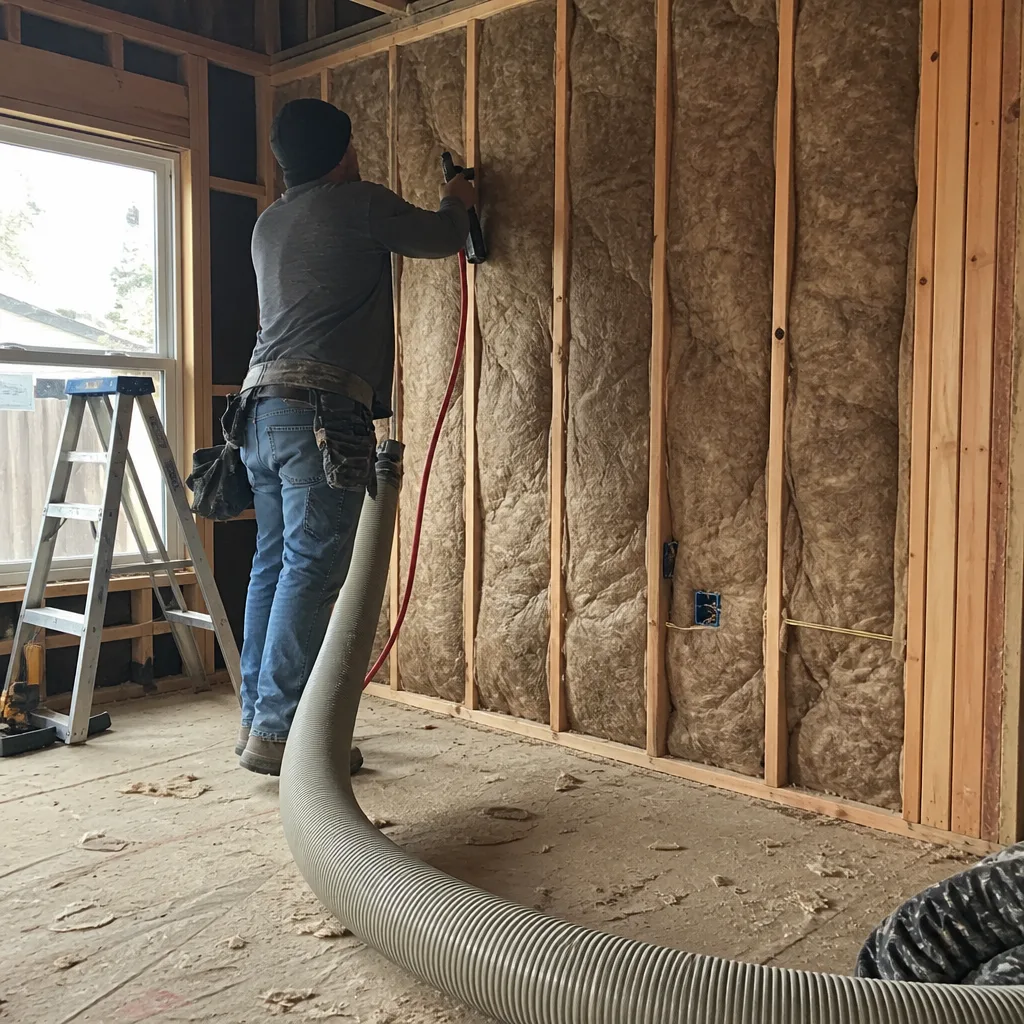
Pest Damage Assessment
Droppings and nesting material are clear signs, but we also check for chewed wiring, gnawed framing, and entry points around roof penetrations. While we don’t do pest exclusion work ourselves, we’ll tell you exactly what we found so you can address entry points with the right professional before we reinsulate.
What happens when you call
- 1
A real person answersNo phone trees — you reach a local pro.
- 2
You get an upfront price rangeHonest numbers before anyone is dispatched.
- 3
A background-checked tech heads outLicensed & insured, dispatched right away.
- 4
You approve before work beginsNothing starts until you say go.
Attic Mold Removal
Attic Mold Removal is the remediation of fungal growth from attic surfaces, driven most often in Placentia by condensation, roof leaks, or inadequate ventilation. Mold in a Placentia attic typically appears as dark staining on the underside of roof decking or on framing near bathroom exhaust vents. The root cause matters more than the mold itself. If moisture keeps entering, mold returns no matter how thoroughly you clean. We assess the ventilation system, check for exhaust fans venting into the attic instead of through the roof, and identify whether the mold is active or dormant before recommending treatment. If you’re troubleshooting other attic issues, our Attic Insulation Troubleshooting: Common Problems and How to Fix Them guide may help. Insulation that’s been saturated or heavily contaminated should be removed rather than treated, and that’s where our removal and replacement capability comes in.
Source Identification First
We don’t treat mold as a surface problem. Every Placentia mold case traces back to moisture entry, whether it’s a bathroom fan venting into the attic, a small roof leak, or soffit vents blocked by insulation. Finding and fixing the source is the difference between a one-time fix and a recurring headache.
Insulation Integration
Moldy insulation isn’t salvageable. We remove contaminated material, address the moisture source, and reinstall clean insulation rated for your attic’s needs. The sequence matters: remove, remediate, dry, then insulate. Skipping any step invites the problem back.
Attic Insulation Removal
Attic Insulation Removal is the process of extracting old, damaged, or underperforming insulation from your attic so the space can be properly air-sealed and reinsulated. In Placentia, we remove insulation most often for three reasons: rodent contamination, moisture saturation from leaks or condensation, and age-related degradation where old fiberglass or cellulose has compacted to a fraction of its original R-value. Removal is a full-vacuum operation. We use commercial extraction equipment that pulls material through hoses to a container outside your home, which keeps dust and debris from spreading through your living space. Once the attic is empty, we can actually see the condition of your ceiling framing, wiring, and any air bypasses. That visibility alone often changes the entire insulation plan.
Full Exposure Assessment
An empty attic reveals air leaks that were hidden under old insulation for decades: gaps around chimney chases, unsealed top plates, open wall cavities. We document and seal these before new material goes in. Insulation without air sealing is like wearing a wool coat in the wind; the gaps undo the work.
Contamination Protocols
Rodent-contaminated insulation contains pathogens you don’t want disturbed without proper containment. We seal off the attic access, run negative pressure where needed, and use full protective equipment during extraction. The goal is a clean, safe attic envelope before any new material touches the space.
Brands We Service
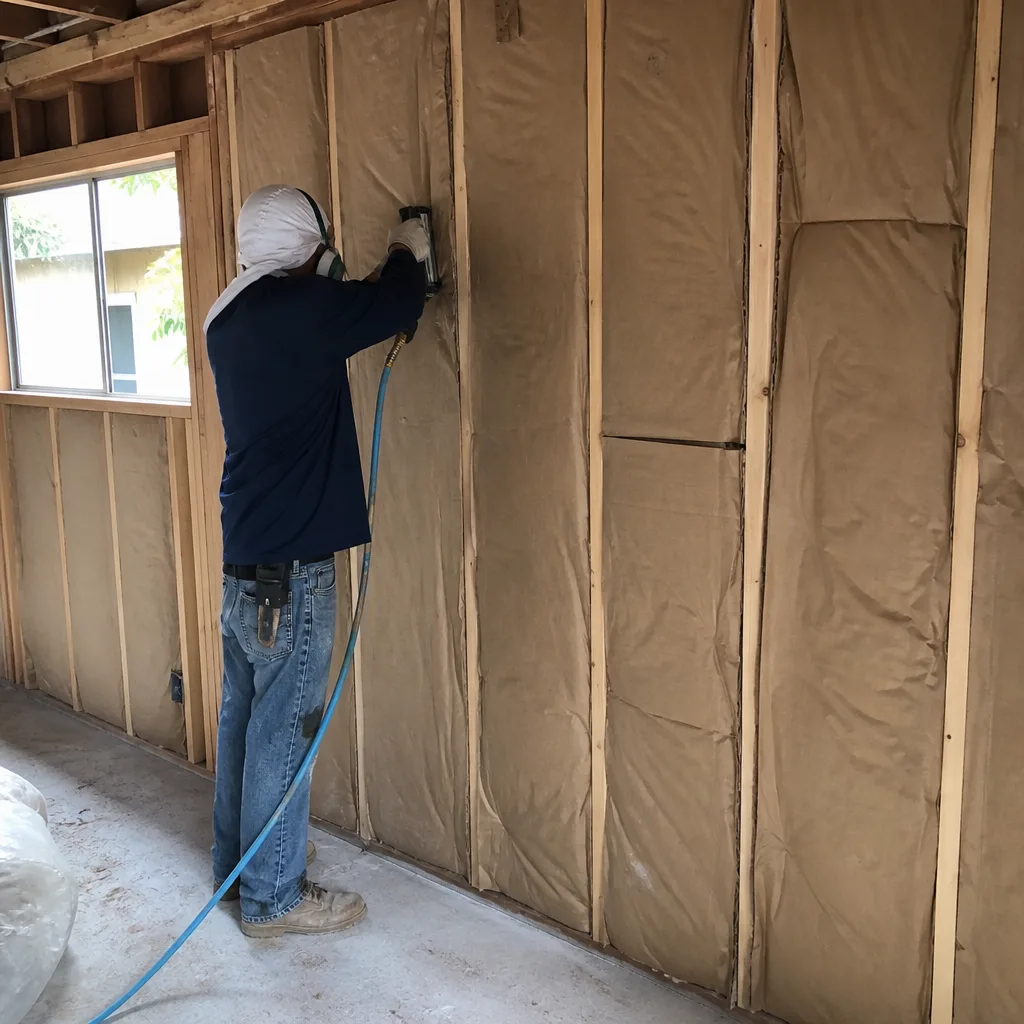
We stock and install Rockwool for Placentia homeowners who prioritize fire resistance and sound dampening alongside thermal performance. Rockwool’s mineral wool batts don’t burn, don’t hold moisture, and hold their shape in vertical applications where fiberglass eventually sags. It’s the right material for exterior walls, interior partition soundproofing, and attics where homeowners want maximum fire safety.
CertainTeed fiberglass appears in many Placentia attics, and we match it when homeowners are topping off or replacing an existing CertainTeed system. Their blown-in and batt products cover a wide R-value range, and we’re familiar with their specific installation requirements for warranty compliance. For foam applications, we install both Icynene and Demilec spray foam. Icynene open-cell works well for tight attic cavities and sound control, while Demilec closed-cell delivers higher R-value per inch and acts as its own air and vapor barrier. Whether you have Rockwool, CertainTeed, Icynene, Demilec, or any other make, we can help.
Signs You Need a Pro Right Now
- Rooms stay hot in summer despite running the AC. Your ceiling is the largest uninsulated surface between you and the attic. When attic temps hit 140 degrees and your insulation is thin or compressed, your AC works against a constant heat load that never lets up.
- Cold spots on ceilings or walls in winter. Heat rises, and it escapes through under-insulated attic spaces first. If you feel cold surfaces in specific rooms, you likely have uneven insulation depth or air bypasses channeling heat straight into the attic.
- Energy bills climbing season after season. Insulation degrades slowly, and utility rates climb steadily. The combination shows up as rising bills for the same comfort level. Compare your usage year-over-year, not just the bill amount.
- Damp spots or staining on ceiling drywall. Moisture in your attic condenses and drips down when ventilation fails. If you see tea-colored stains on ceilings, the problem is already active and insulation may be saturated.
- You hear scratching or scurrying overhead at night. Rodents in the attic means nesting, droppings, and insulation contamination. The sooner the material is assessed and likely removed, the less damage you’re dealing with.
Our Process, Step by Step
- 1
Attic Walkthrough and Measurement. We inspect the full attic space, including corners and eaves that most homeowners never see. We measure existing R-value, check ventilation configuration, and look for air bypasses, moisture staining, and pest activity.
- 2
Material Recommendation. Based on your home’s construction, roof color, existing insulation, and your comfort goals, we recommend a specific material from our eight-brand lineup. You’ll hear exactly why we chose it, not a generic pitch.
- 3
Scope and Estimate. We provide a written estimate with the work broken down clearly. No vague line items. You’ll know what’s being removed, what’s being installed, and what the finished R-value will be.
- 4
Removal, Sealing, and Installation. If old insulation needs to come out, we extract it first with containment protocols. Then we air-seal the attic floor before installing your new material at the specified depth and density.
- 5
Final Inspection With You. Before we finish, we walk the attic with you or show you photos so you can see the result. You’ll know what was installed, where, and why. No mystery work.
How Much Does Attic Insulation Cost in Placentia?
A typical Placentia Attic Insulation project runs $1,500 to $4,500 depending on attic size, material choice, and whether old insulation needs removal first. Blown-in fiberglass or cellulose for a standard 1,200-square-foot attic often lands in the $1,800 to $2,800 range. Spray foam runs higher, typically $3,500 to $7,000 for full roof deck application, because of material cost and installation complexity. Rockwool batts fall somewhere in between, usually $2,500 to $4,500 depending on depth and coverage area. Removal of contaminated insulation adds $1 to $2 per square foot on top of installation costs.
What drives the price: existing insulation condition, attic accessibility, air sealing scope, and material type. You avoid overpaying by getting a detailed written estimate that separates removal, sealing, and installation line items. Our free estimates in Placentia include the attic walkthrough, measurements, and a written scope. No pressure, no vague numbers. Call (855) 773-6429 and we’ll schedule the assessment.
Our Service Area Near Placentia
We serve Placentia and the surrounding Orange County and gateway LA communities. You’ll find our crews working in Attic Insulation in Compton, Attic Insulation in East Los Angeles, and Attic Insulation in South Gate, along with Monrovia, San Gabriel, Arcadia, Alhambra, Walnut Park, Trabuco Canyon, Huntington Park, East Pasadena, and San Marino. Typical response time for an estimate in Placentia is same-week, and we return calls within one business day. Learn more about our full home insulation services.
Serving Placentia, CA — Our Local Coverage Area
We’re based in the Placentia area and know this community well. Use the map below to see our service coverage — if you’re nearby, we can almost certainly help.
Frequently Asked Questions About Attic Insulation in Placentia
Attic insulation is material installed in your attic space to slow heat transfer between your living areas and the outdoors. In Placentia, it protects against summer heat gain through the roof and winter heat loss through the ceiling. The most common materials are fiberglass, cellulose, mineral wool, and spray foam, each with different performance characteristics.
Most attic insulation projects in Placentia finish in one day. Removal of old insulation adds a half-day to a full day depending on attic size and contamination level. Spray foam projects may run two days due to application and curing time.
Expect to pay $1,500 to $4,500 for a typical attic insulation project in Placentia, with spray foam running higher. The main variables are attic square footage, material choice, and whether existing insulation needs removal. Call (855) 773-6429 for an exact quote; estimates are free.
Yes, we stock and install Rockwool mineral wool for Placentia homeowners who want fire resistance and sound dampening. We also work with CertainTeed, Icynene, Demilec, Owens Corning, Johns Manville, Knauf, and GreenFiber materials. We match the material to your home’s specific needs.
We prioritize urgent situations like active roof leaks soaking insulation or rodent infestations. Same-day assessments aren’t always possible in Placentia, but we return emergency calls promptly and can often schedule within 24 to 48 hours. Call (855) 773-6429 and tell us what’s happening.
Manufacturer warranties on materials apply to every installation, and we install to manufacturer specifications so those warranties remain valid. Our workmanship is backed by our commitment as a single-trade specialist; we don’t walk away from a job that isn’t performing.
Clear a path to your attic access point and move any fragile items away from the access area, since hoses and equipment go through that opening. We handle interior protection and containment. If you have stored items in the attic, we’ll discuss what needs to move before installation day.
Schedule Your Attic Insulation Service in Placentia Today
Your Placentia attic is either working for you or against you. Every month of summer heat and winter chill costs real money when insulation is failing. We’ll assess what’s up there, tell you what we’d do, and quote the work with no obligation. Call (855) 773-6429 for a free estimate and get an insulation plan built around your home, not our inventory.
Written by Alan Whitcomb, Owner at Placentia Insulation, serving Placentia and surrounding Orange County communities.