
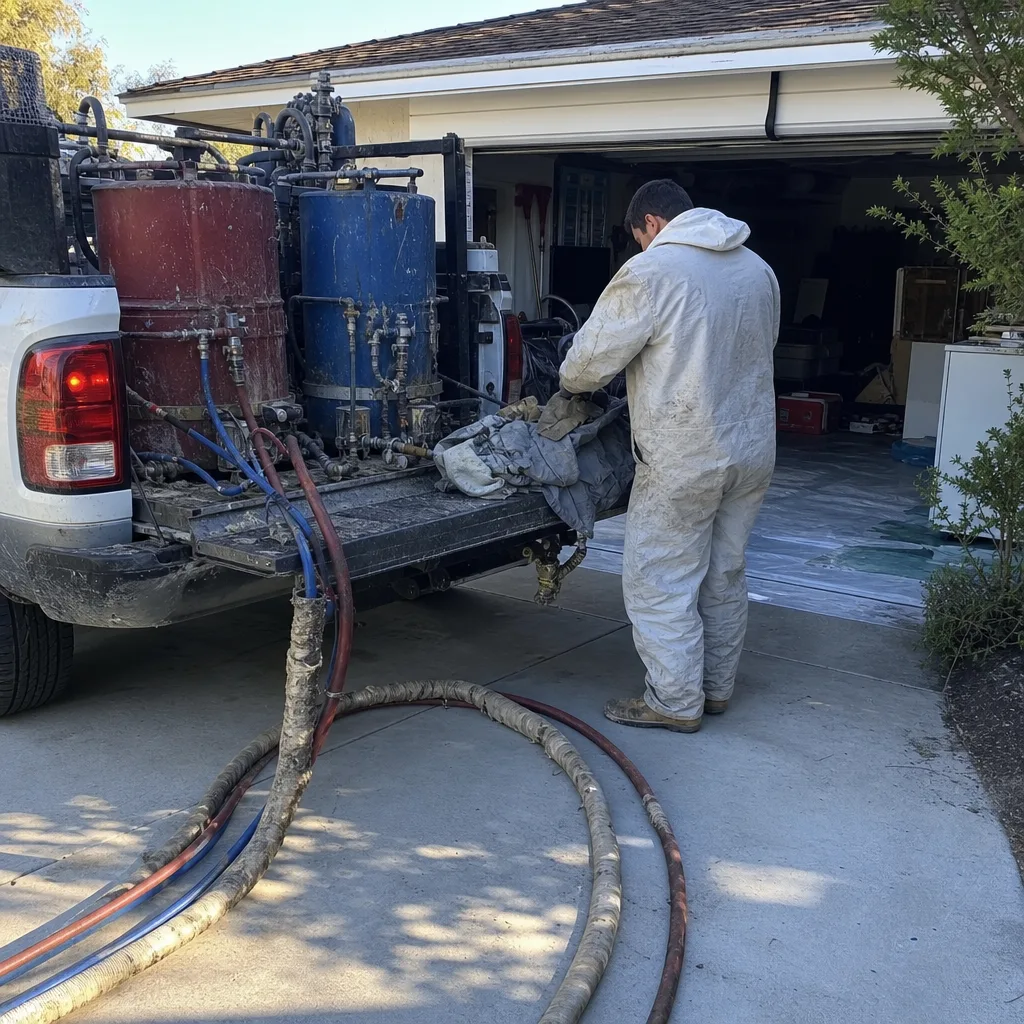
Fast, Reliable Spray Foam Insulation Across Crestline
Spray foam insulation in Crestline runs $2,400 to $7,200 for a typical full-home application, with rim joist work landing between $900 and $2,800 and crawl space encapsulation from $2,800 to $6,500. Most Crestline jobs are completed in one to two days. We’ve worked the 92325 ridge roads and Lake Gregory shoreline long enough to know that mountain cabins here need a different approach than a low-desert house an hour down the hill. The wildfire code, the hard freezes, the 2×4 framing, the pier-and-beam floors – all of it changes how insulation should be scoped and installed. Call Placentia Insulation at (855) 773-6429 for a free estimate from a team that actually understands Spray Foam Insulation in mountain conditions.
Why Placentia Insulation Is Crestline’s Preferred Spray Foam Insulation Company
Most insulation contractors carry one or two product lines. We carry eight brands – Owens Corning, Johns Manville, Knauf, Rockwool, CertainTeed, Icynene, Demilec, and GreenFiber – so your home gets what it actually needs, not whatever happens to be on the truck. For Crestline specifically, that matters a great deal. A 1968 cabin off Lake Gregory Drive with open soffit vents has zero in common with a 2010 tract home in Rancho Cucamonga. We match the material to the job – not the job to whatever we have in the warehouse.
Crestline homeowners keep calling us back because we scope for wildfire hardening alongside thermal performance. That combination is rare. Alan Whitcomb, our owner, has led the team through hundreds of mountain insulation projects, and the pattern is consistent: homes here need closed-cell foam paired with vent screening, not blanket R-value. Our crews know the Chapter 7A WUI requirements that govern construction in the San Bernardino Mountains. We don’t guess at code. We build to it.
Single-trade specialization is the other piece. Every crew member, every tool, and every conversation is about insulation – not plumbing today and insulation tomorrow. When you call Placentia Insulation, you get an insulation specialist answering the phone, not a dispatcher juggling six trades. That focus means faster diagnostics on Crestline jobs and recommendations that hold up under a mountain winter.
Rim Joist Spray Foam in Crestline
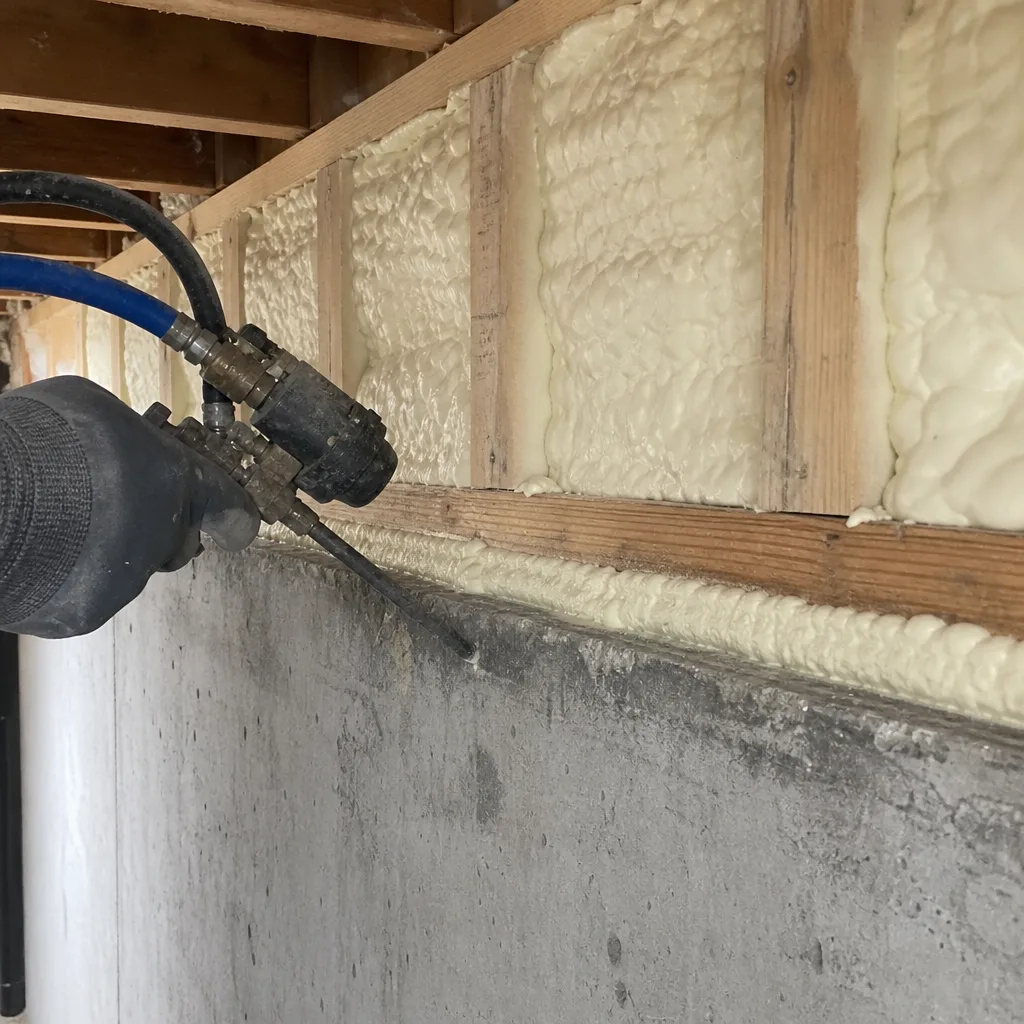
Rim joist spray foam in Crestline is the highest-ROI insulation upgrade for most 92325 cabins, because it seals the single biggest air leak in pier-and-beam construction – the band board where the floor framing meets the foundation. Cold mountain air pours through that joint all winter, and in wildfire season it’s a gap that can pull embers toward the structure. Sealing it properly requires closed-cell foam, which adds R-value and acts as an air barrier in one pass, typically running $900 to $2,800 depending on access and linear footage.
Closed-Cell Chemistry for Rim Cavities
We spec Demilec closed-cell foam for rim joists in Crestline because it cures rigid, adds structural shear strength to older 2×4 cabins, and blocks air movement even at 4,600 feet where temperatures swing hard. Open-cell foam doesn’t give you the same moisture-resistance or ember-sealing performance in a foundation cavity. On sloped lots off Crest Forest Drive, where crawl space access is often tight or angled, the closed-cell application is also faster and cleaner.
When a Cabin Needs This Now
If your floors feel like ice in January even with the propane furnace running, or you can see daylight through the band joist from inside the crawl space, the rim is leaking. The fix pays for itself in a single heating season on most cabin-sized homes. We also flag rim joist sealing on any home where the crawl space shows rodent entry or water staining under the band board – both are signs of open air paths.
Crawl Space Spray Foam Insulation in Crestline
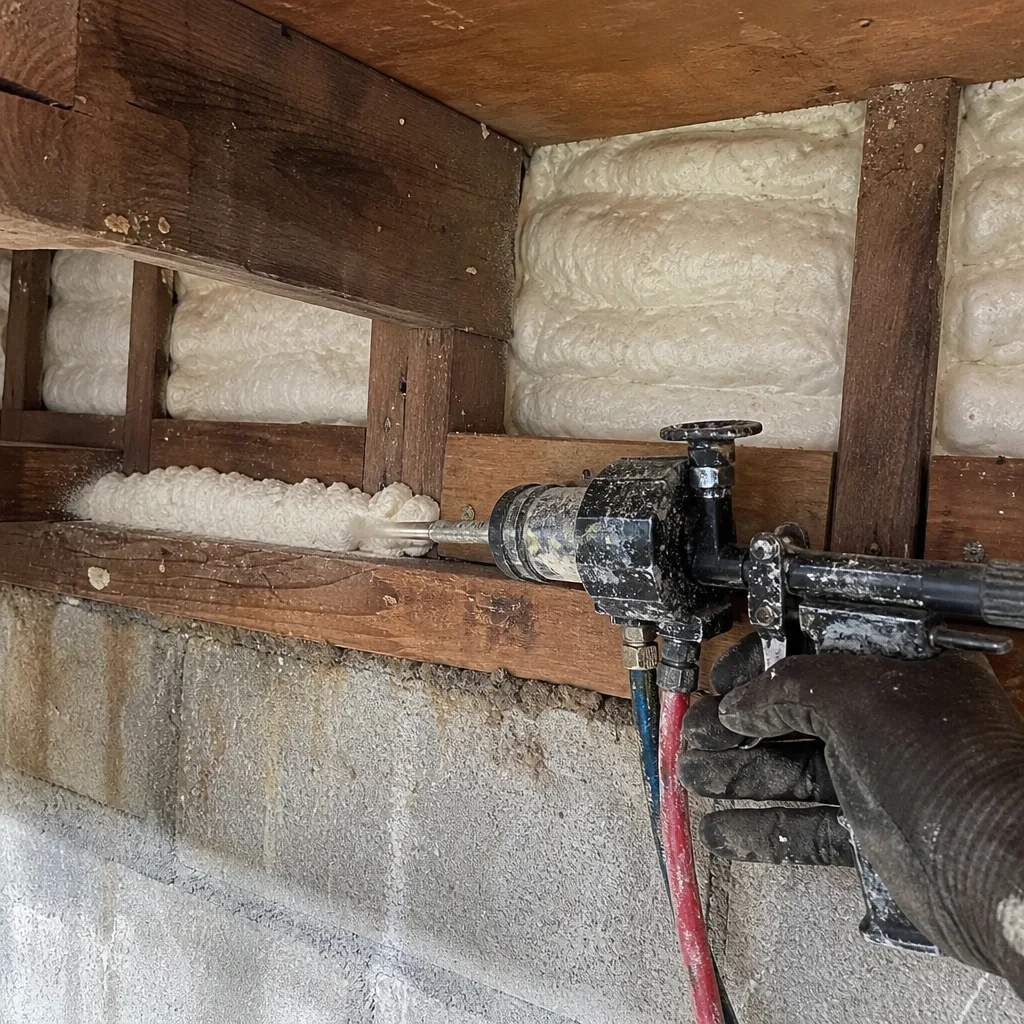
Crawl space spray foam insulation in Crestline typically runs $2,800 to $6,500 for a full encapsulation scope, and it changes how a mountain cabin holds heat. Older 92325 homes built on pier-and-beam foundations frequently have bare dirt floors, open unscreened vents, and zero separation between the living space and the outside air under the house. We spray closed-cell foam on the crawl space walls and rim areas, then pair it with vent screening and ground cover so the envelope is actually sealed – not just half-treated.
Underside Sealing and Vapor Management
Closed-cell Icynene on crawl space walls stops moisture migration from mountain soil and blocks cold air at the source. In Crestline, the snowmelt and spring rains saturate the ground under many cabins, and an unsealed crawl space lets that humidity climb straight into floor framing. Spraying the walls rather than fiberglass batts between the joists keeps the floor dry and the propane bill down.
Ember-Intake Points and Vent Screening
This is the Crestline piece most out-of-area contractors miss entirely. Chapter 7A WUI requirements mean open foundation vents are ember intake points during wildfire events. If we seal the crawl space but leave those vents unscreened, we’ve fixed the thermal leak and ignored the fire risk. On Lake Gregory and the ridge roads we routinely bundle vent screening with crawl space foam so both problems are solved in the same visit.
Trusted Brands We Service in Crestline
We service and install Icynene and Demilec spray foam systems, and we stock the associated sealing materials needed for proper Crestline installations. What we don’t do is push one product on every home. A tight 2×4 attic in a mid-century cabin benefits from different chemistry than a large open crawl space on a 1970s A-frame. That’s why we maintain eight brands across fiberglass, mineral wool, spray foam, and cellulose. For Crestline customers, Rockwool mineral wool is often specified alongside spray foam for fire-rated assemblies and sound control on the Lake Gregory side, where homes sit closer together. Icynene open-cell works well in tight, irregular joist bays where closed-cell density would be overkill. The material follows the job.
Common Spray Foam Insulation Problems We See in Crestline Homes
- Closed-cell foam sprayed over open, unscreened vents. We see this on 92325 cabins where a previous contractor sealed the rim and walls but left the gable and foundation vents wide open. In Crestline, those are ember intake points. Foam and vent screening must go together, so we re-scope those jobs with fire-rated mesh and correct the assembly.
- Foam applied thick in shallow 2×4 attic bays without ventilation detailing. Mountain cabins often have roof pitches and shallow cavities that weren’t designed for any insulation, let alone high-density foam. Thick closed-cell in a low-slope ceiling can trap summer moisture and block the airflow the cabin needs during hot spells and Santa Ana events.
- Rim joist spray without addressing the pier-and-beam cold-air path. If the crawl space walls remain bare, the floor stays cold even after the rim is sealed. The underfloor air column – from the dirt, past the piers, and up through the floorboards – has to be interrupted at the walls, not just the rim.
- Open-cell foam used where moisture resistance matters. In a crawl space or on a rim joist at 4,600 feet, open-cell absorbs moisture and loses performance. Closed-cell is the correct call for foundation-level applications in Crestline. We see misapplied open-cell in cabins more often than we’d like.
Pricing for Spray Foam Insulation in Crestline, CA
Rim joist spray foam in Crestline runs $900 to $2,800, depending on linear footage and crawl space access. Full crawl space encapsulation with closed-cell foam, vent screening, and a ground cover typically lands between $2,800 and $6,500. Whole-home spray foam for a 900 to 1,600 square foot mountain cabin usually falls in the $2,400 to $7,200 range. What changes the number? Access under the cabin, the condition of existing vents and sheathing, and whether the home sits on a steep Lake Gregory slope or a flatter Crest Forest lot. We price by the job, not by the square foot alone, and we’ll walk the property with you before quoting anything. Call (855) 773-6429 for a free estimate – we’ll measure, scope, and give you an exact number, not a ballpark.
We Also Serve Cities Near Crestline
Our crews work across the San Bernardino Mountains and the adjacent valley. If you’re in Lake Arrowhead, Muscoy, San Bernardino, or Highland, we handle spray foam and full insulation scopes there too. Many of our Crestline customers have rental cabins or second homes in nearby mountain communities, so we’re set up to manage multi-property work across the 92325 area and beyond.
Serving Crestline, CA — Our Local Coverage Area
We’re based in the Crestline area and know this community well. Use the map below to see our service coverage — if you’re nearby, we can almost certainly help.
FAQs About Spray Foam Insulation in Crestline
Yes. Closed-cell spray foam seals the air leaks that force a propane furnace to run constantly through Crestline’s long heating season. On most cabin-sized homes, rim joist sealing plus crawl space encapsulation reduces heating fuel use by 20 to 35 percent, sometimes more on homes with previously uninsulated floors. The colder the winter, the faster the payback. Call (855) 773-6429 for a property-specific assessment.
We schedule estimates in Crestline within a few business days, and emergency scopes – like an open crawl space freezer-burning pipes during a hard freeze – can often be pushed sooner. Since we work the San Bernardino Mountains regularly, we’re already routing crews through the area on most weeks.
Yes. We cover the entire 92325 ZIP, including Lake Gregory Drive, Crest Forest Drive, and the ridge roads off Highway 138. Properties on steep or narrow lots with tight access are routine for us, not a reason to add an upcharge or turn down the job.
Crestline spray foam projects run 10 to 20 percent higher than valley jobs on average, mostly because mountain access, WUI code requirements, and the older 2×4 and pier-and-beam construction add labor and detailing. The price difference pays for itself in the first winter from propane savings alone. A free estimate will give you an exact number for your cabin.
Workmanship and material coverage follow the manufacturer specifications for the Icynene or Demilec system we install, and any callbacks on our installation are handled promptly. For mountain applications, proper vent screening and code-compliant detailing are part of the scope – so the warranty isn’t undermined by a wildfire-mitigation miss. Call (855) 773-6429 and we’ll walk through the warranty language for the exact product we’d recommend on your home.
Written by Alan Whitcomb, Owner at Placentia Insulation, serving Crestline and the San Bernardino Mountains.